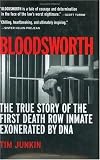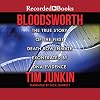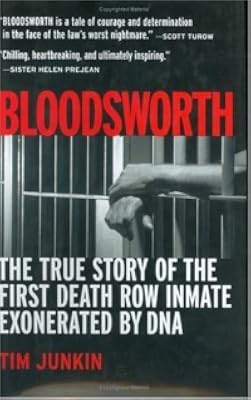
Bloodsworth: The True Story of the First Death Row Inmate Exonerated by DNA
by Tim Junkin
On This Page
Description
Fans of "Serial" and "Making a Murderer", meet Kirk Bloodsworth, the first death row inmate exonerated by DNA evidence. Charged with the rape and murder of a nine-year-old girl in 1984, Bloodsworth was tried, convicted, and sentenced to die in Maryland's gas chamber. From the beginning, he proclaimed his innocence, but when he was granted a new trial because his prosecutors improperly withheld evidence, the second trial also resulted in conviction. Bloodsworth read every book on criminal law show more in the prison library and persuaded a new lawyer to petition for the then-innovative DNA testing. After nine years in one of the harshest prisons in America, Bloodsworth was vindicated by DNA evidence. Intense and hard-hitting, "Bloodsworth" is the story of a man's tireless fight against a justice system that failed him. show lessTags
Recommendations








Member Reviews
I became interested in reading this book when it passed through my hands as a donation to my Little Free Library. I saw that it had been a One Book Maryland choice, and I liked that since I live in Maryland. I saw that the author also lives in Maryland so I thought I’d like to read a local author at this time. I began to read the story and familiar words came up: Cambridge, Baltimore, Choptank
River, and, oddly enough, PCR, a laboratory test for genetic material which I only became aware of since the onset of the COVID-19 pandemic. It was this test which proved that the incarcerated man on death row, Kirk Bloodsworth, was not the person who brutally murdered and raped a nine-year-old girl, making him innocent of the charges which put show more him behind bars in the Maryland Penitentiary. This is the story of how an innocent man was finally freed from being wrongfully imprisoned. It is a moving and troublesome story.
This story is upsetting on so many levels, among them the ease with which an innocent person can be imprisoned for a crime, the lack of careful and correct handling of forensic evidence, and the powerlessness of the wrongly imprisoned.
One “wow” moment of this book occurred before the jury’s verdict in this case. Kirk Bloodsworth had been in a cell with another prisoner who told him that he would be all right. There never had been another prisoner in that cell. Had that man been an angel?
If this book did anything, the gruesome description of the execution process in the Maryland Penitentiary not only firmed up my belief against the death penalty, but for sure my belief that death by gassing should not even exist. In this book I learned that in my state of Maryland death by gas was later changed to death by lethal injection. Following my read of this book which had been published in 2004, I learned that
capital punishment was abolished via the legislative process on May 2, 2013, in Maryland. For that I am grateful.
I cannot begin to imagine what it feels like to be imprisoned, but what it must have felt like to Kirk Bloodsworth, an innocent man to be sentenced to death, is beyond what I can imagine. Such a grim story. Such unfairness. So hard to read. However, it did happen. This is a fascinating read, but horrible nonetheless. show less
River, and, oddly enough, PCR, a laboratory test for genetic material which I only became aware of since the onset of the COVID-19 pandemic. It was this test which proved that the incarcerated man on death row, Kirk Bloodsworth, was not the person who brutally murdered and raped a nine-year-old girl, making him innocent of the charges which put show more him behind bars in the Maryland Penitentiary. This is the story of how an innocent man was finally freed from being wrongfully imprisoned. It is a moving and troublesome story.
This story is upsetting on so many levels, among them the ease with which an innocent person can be imprisoned for a crime, the lack of careful and correct handling of forensic evidence, and the powerlessness of the wrongly imprisoned.
One “wow” moment of this book occurred before the jury’s verdict in this case. Kirk Bloodsworth had been in a cell with another prisoner who told him that he would be all right. There never had been another prisoner in that cell. Had that man been an angel?
If this book did anything, the gruesome description of the execution process in the Maryland Penitentiary not only firmed up my belief against the death penalty, but for sure my belief that death by gassing should not even exist. In this book I learned that in my state of Maryland death by gas was later changed to death by lethal injection. Following my read of this book which had been published in 2004, I learned that
capital punishment was abolished via the legislative process on May 2, 2013, in Maryland. For that I am grateful.
I cannot begin to imagine what it feels like to be imprisoned, but what it must have felt like to Kirk Bloodsworth, an innocent man to be sentenced to death, is beyond what I can imagine. Such a grim story. Such unfairness. So hard to read. However, it did happen. This is a fascinating read, but horrible nonetheless. show less
A riveting account of the criminal justice system gone wrong amidst the powerful drive to solve an horrific crime. And it's a compelling story of an innocent man who never gives up trying to clear his name and push for the true perpetrator to be caught. It shows human nature at it best and worst. This is the 2018 One Maryland One Book selection by Maryland Humanities- a worthy read.
Bloodsworth would have made a good feature article in the newspaper. As a book, it's much too long. So much misbehavior by the police and lawyers - but it's nothing new. And the book doesn't leave you guessing. It's all sad, repetitious, unsurprising, and ultimately not worthwhile. There certainly are some particularly good sections - for example, the explanation of the intense pressure on everyone to rush to judgment. But the failings of the US justice system are well known and have been written about many times. If there was something more worthwhile about this case, the author didn't make it clear.
I suppose the DNA analysis made it important for being the first death row case to be exonerated but again, DNA analysis is well known. show more Even PCR is well known now. As the author described it, it didn't seem particularly gripping.
The writing was ok except that so many people and details are mentioned that it's hard to remember them all, so you stop memorizing them and later when it turns out someone is important, you have long since forgotten their background story or connection. But the author gives no reminders.
I feel sad giving such a harsh review because obviously the author did his research thoroughly and carefully. No stone was left unturned. But it just didn't make for a good read. show less
I suppose the DNA analysis made it important for being the first death row case to be exonerated but again, DNA analysis is well known. show more Even PCR is well known now. As the author described it, it didn't seem particularly gripping.
The writing was ok except that so many people and details are mentioned that it's hard to remember them all, so you stop memorizing them and later when it turns out someone is important, you have long since forgotten their background story or connection. But the author gives no reminders.
I feel sad giving such a harsh review because obviously the author did his research thoroughly and carefully. No stone was left unturned. But it just didn't make for a good read. show less
Highly recommended: a very compelling read.
Excellent choice for the One Maryland, One Book program by the Maryland Humanities Council, especially since both the author and the subject of the book are Maryland natives, and the case occurred recently enough that it is still in living memory.
Excellent choice for the One Maryland, One Book program by the Maryland Humanities Council, especially since both the author and the subject of the book are Maryland natives, and the case occurred recently enough that it is still in living memory.
Maryland One Book 2018-19
Ratings
Members
- Recently Added By
Author Information

4 Works 165 Members
Tim Junkin is a lawyer and award-winning novelist. He lives in Maryland
All Editions
Awards and Honors
Distinctions
Common Knowledge
- Canonical title
- Bloodsworth: The True Story of the First Death Row Inmate Exonerated by DNA
- Original publication date
- 2004
- People/Characters
- Kirk Bloodsworth (wrongfully convicted); Dawn Hamilton (rape & murder victim); Kimberly Shay Ruffner (murdered, etc.); Bob Morin (lawyer)
- Important places
- Rosedale, Maryland, USA; Maryland, USA
- Dedication
- For my children
[Kirk Bloodworth] dedicates this book to God, for without him no things are possible; to his mother, who will always be with him; to his dad, whom he loves for all he endured and has done in helping to free him; and to Dawn V... (show all)enice Hamilton and the Hamilton family. (from the Author's Note and Acknowledgments, p.288) - First words
- 1865 was a momentous year. (Preface by Sir Alec Jeffreys)
In the late afternoon of April 27, 1993, Bob Morin sat in his law office located near the city courthouse in Washington, D. C., and stared out his window at the new Olsson's bookstore across the street. - Quotations
- The Court recognized that eyewitness identification, particularly in the criminal context, is by its nature difficult and fraught with possible error.
Capital punishment is the most premeditated of murders, to which no criminal’s deed, however calculated, can be compared. (Albert Camus) - Last words
- (Click to show. Warning: May contain spoilers.)"And now we can both find some peace . . ."
(Click to show. Warning: May contain spoilers.)Freedom, Kirk Bloodworth's workboat, at least when her skipper's in town, can usually be seen plying the tributaries of the Chesapeake Bay, trot-lining for hard crabs, occasionally trolling for stripers, a fine example of a waterman's craft, not particularly fast but stable and sturdy, steadily moving forward through the waves, a white gem on a river of blue. (Epilogue, Spring 2004)
Classifications
- Genres
- Nonfiction, Politics and Government, Biography & Memoir, General Nonfiction, Science & Nature, History
- DDC/MDS
- 364.66 — Society, government, & culture Social problems and social services Crime Punishment Death penalty
- LCC
- HV8701 .B56 .J85 — Social sciences Social pathology. Social and public welfare. Criminology Social pathology. Social and public welfare. Criminal justice administration Penology. Prisons. Corrections
- BISAC
Statistics
- Members
- 117
- Popularity
- 279,907
- Reviews
- 5
- Rating
- (3.91)
- Languages
- English
- Media
- Paper, Audiobook, Ebook
- ISBNs
- 6
- UPCs
- 1
- ASINs
- 2