On This Page
Description
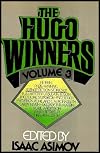
Fifteen prize winning stories.Tags
Recommendations










Member Reviews
The work that I read from this collection was "The Word for World is Forest" by Ursula K. Le Guin. And what a work it is, varying from gut-punch to joy and back again. I've heard about this story of hers for years and something always held me back from reading it. Now I know.
Written in the early 70's when Vietnam was still at its height, the story begins with on a planet colonized by Earth-based humans. In this future dystopia, there are no more trees left on Earth and a colony has been established on New Tahiti or World 41 or Haimish. The humans in their outposts have made servants of the Atheans, the native humanoid species, despite their slowness and because of their passivity.
Davidson, one of those authoritarian military types, show more simply does not understand why these furry sub-humans are seen as valuable by the Terran and Intergalactic Councils. There are instances of unprovoked attack that are reminiscent of the worst atrocities during the Vietnam War and it was heart-wrenching to read them. Also brought forward is the culture of the Athsheans by the Terran Captain Lyubov who has befriended and saved Selver, though he could not save Selver's wife.
Drawing on her background in anthropology, Ms. Le Guin has created a difficult though beautiful work of writing in the science fiction genre that could as easily be written about Earth and any human species at any time in our history. show less
Written in the early 70's when Vietnam was still at its height, the story begins with on a planet colonized by Earth-based humans. In this future dystopia, there are no more trees left on Earth and a colony has been established on New Tahiti or World 41 or Haimish. The humans in their outposts have made servants of the Atheans, the native humanoid species, despite their slowness and because of their passivity.
Davidson, one of those authoritarian military types, show more simply does not understand why these furry sub-humans are seen as valuable by the Terran and Intergalactic Councils. There are instances of unprovoked attack that are reminiscent of the worst atrocities during the Vietnam War and it was heart-wrenching to read them. Also brought forward is the culture of the Athsheans by the Terran Captain Lyubov who has befriended and saved Selver, though he could not save Selver's wife.
Drawing on her background in anthropology, Ms. Le Guin has created a difficult though beautiful work of writing in the science fiction genre that could as easily be written about Earth and any human species at any time in our history. show less
The only story I truly liked from this was [b:The Word for World is Forest|276767|The Word for World is Forest|Ursula K. Le Guin|https://images.gr-assets.com/books/1283091038s/276767.jpg|3256815], but even that was flawed, too earnest, and too cliched (just once I'd like to see humans try to go all conquistador on natives that aren't small & cute & childlike).
'Eurema's Dam' was interesting. Parts of me made me think that if Albert had been named Steve, Mark, or Elon the author would have been truly prescient. "Nothing rises without a leaven, but the yeast is itself a fungus and a disease.... When there are no longer any deprived or insufficient, who will invent?"
[b:A Song for Lya|11348958|A Song for Lya|George R.R. show more Martin|https://images.gr-assets.com/books/1328336355s/11348958.jpg|45393625] makes me wish Martin hadn't gotten involved in epic fantasy. I've no interest in his juggernaut, but this was good and so was [b:Tuf Voyaging|776212|Tuf Voyaging|George R.R. Martin|https://images.gr-assets.com/books/1178248788s/776212.jpg|925829], imo. This has an interesting variant of a 'grok' thing going.
I tried to read almost everything, but of course there were a few I skipped because they were familiar from other anthologies. Which is good, because now it's off my shelf, and also I don't have to decide how to round 1.5 star rating because it's a DNF and I have a policy to avoid rating those. show less
'Eurema's Dam' was interesting. Parts of me made me think that if Albert had been named Steve, Mark, or Elon the author would have been truly prescient. "Nothing rises without a leaven, but the yeast is itself a fungus and a disease.... When there are no longer any deprived or insufficient, who will invent?"
[b:A Song for Lya|11348958|A Song for Lya|George R.R. show more Martin|https://images.gr-assets.com/books/1328336355s/11348958.jpg|45393625] makes me wish Martin hadn't gotten involved in epic fantasy. I've no interest in his juggernaut, but this was good and so was [b:Tuf Voyaging|776212|Tuf Voyaging|George R.R. Martin|https://images.gr-assets.com/books/1178248788s/776212.jpg|925829], imo. This has an interesting variant of a 'grok' thing going.
I tried to read almost everything, but of course there were a few I skipped because they were familiar from other anthologies. Which is good, because now it's off my shelf, and also I don't have to decide how to round 1.5 star rating because it's a DNF and I have a policy to avoid rating those. show less
Ship of Shadows
Ill Met in Lankham
Slow Sculpture (World's Best Sf 1971)
Queen of Air & Darkness
Inconsistant Moon (Sun Shines Bright)
What the World is Forest
Goat Song (1973)
Meeting (Nemesis)
Euemi's Dream
The Girl Who Was Plugged in
Deathbird (1974)
Ones Who Walk Away From Omelas
Song for Lya (1975)
Adrift Just Off the Islets of Langerhous
Hole Man
Ill Met in Lankham
Slow Sculpture (World's Best Sf 1971)
Queen of Air & Darkness
Inconsistant Moon (Sun Shines Bright)
What the World is Forest
Goat Song (1973)
Meeting (Nemesis)
Euemi's Dream
The Girl Who Was Plugged in
Deathbird (1974)
Ones Who Walk Away From Omelas
Song for Lya (1975)
Adrift Just Off the Islets of Langerhous
Hole Man
Ratings
Members
- Recently Added By
Author Information

Isaac Asimov was born in Petrovichi, Russia, on January 2, 1920. His family emigrated to the United States in 1923 and settled in Brooklyn, New York, where they owned and operated a candy store. Asimov became a naturalized U.S. citizen at the age of eight. As a youngster he discovered his talent for writing, producing his first original fiction at show more the age of eleven. He went on to become one of the world's most prolific writers, publishing nearly 500 books in his lifetime. Asimov was not only a writer; he also was a biochemist and an educator. He studied chemistry at Columbia University, earning a B.S., M.A. and Ph.D. In 1951, Asimov accepted a position as an instructor of biochemistry at Boston University's School of Medicine even though he had no practical experience in the field. His exceptional intelligence enabled him to master new systems rapidly, and he soon became a successful and distinguished professor at Columbia and even co-authored a biochemistry textbook within a few years. Asimov won numerous awards and honors for his books and stories, and he is considered to be a leading writer of the Golden Age of science fiction. While he did not invent science fiction, he helped to legitimize it by adding the narrative structure that had been missing from the traditional science fiction books of the period. He also introduced several innovative concepts, including the thematic concern for technological progress and its impact on humanity. Asimov is probably best known for his Foundation series, which includes Foundation, Foundation and Empire, and Second Foundation. In 1966, this trilogy won the Hugo award for best all-time science fiction series. In 1983, Asimov wrote an additional Foundation novel, Foundation's Edge, which won the Hugo for best novel of that year. Asimov also wrote a series of robot books that included I, Robot, and eventually he tied the two series together. He won three additional Hugos, including one awarded posthumously for the best non-fiction book of 1995, I. Asimov. "Nightfall" was chosen the best science fiction story of all time by the Science Fiction Writers of America. In 1979, Asimov wrote his autobiography, In Memory Yet Green. He continued writing until just a few years before his death from heart and kidney failure on April 6, 1992. (Bowker Author Biography) show less
All Editions
Series

Belongs to Publisher Series
Science Fiction Book Club (1845)
Work Relationships
Is contained in
Common Knowledge
- Canonical title
- The Hugo Winners, Volume 3 (1971-1975) (1971-1975)
- Original title
- The Hugo Winners, Volume Three
- Original publication date
- 1977
- Dedication
- To Sharon Jarvis and to Cathleen Jordan
for helping, but mostly for being around
Classifications
- Genres
- Science Fiction, Fiction and Literature
- DDC/MDS
- 808.838 — Literature & rhetoric Literature, rhetoric & criticism Composition Literature Collections Collections of fiction Genre fiction
- LCC
- PZ1 — Language and Literature Fiction and juvenile belles lettres Fiction and juvenile belles lettres Fiction in English
Statistics
- Members
- 300
- Popularity
- 106,573
- Reviews
- 3
- Rating
- (3.73)
- Languages
- English
- Media
- Paper
- ISBNs
- 1
- ASINs
- 11