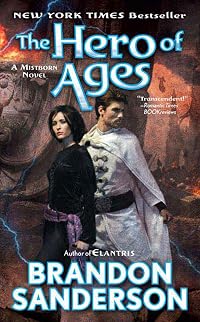
On This Page
Description
To end the Final Empire and restore freedom, Vin killed the Lord Ruler. But as a result, the Deepness--the lethal form of the ubiquitous mists--is back, along with increasingly heavy ashfalls and ever more powerful earthquakes. Humanity appears to be doomed unless Emperor Elend Venture can find clues left behind by the Lord Ruler that will allow him to save the world.Tags
Recommendations

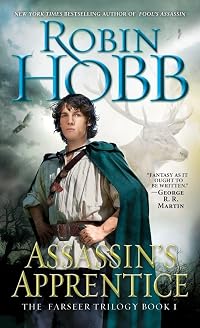
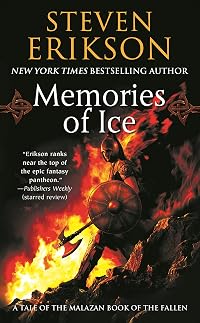
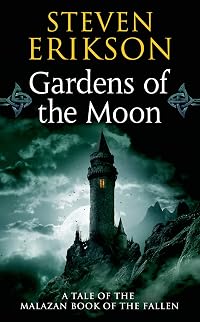
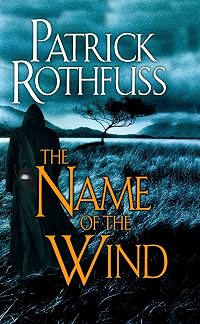



Member Recommendations
Member Reviews
After enjoying, if not loving, the first two Mistborn books, I found book three to be a dismal slog. The whole book seems to be oriented to do things I don't enjoy. While the first two books used chapter epigrams from in-universe to hint at a mystery, and to reveal characterization, the third book uses them to explain away seeming inconsistencies in the narrative and provide exposition about the mystical forces manipulating our heroes. ("Well Ruin had enough power to do x, but that might make you think he should have done y, but in fact he didn't have quite enough power to do that because of z." It made me think of this DM of the Rings strip.) The problem is that I've always been interested in the people and the politics of this series; show more the godlike entities have never interested me for their own sake. This volume, however, seems to think I'll find vast cosmic entities interesting just, uh, because? This might be what other people read fantasy fiction for, but I just can't get into it.
Instead of paying off character and thematic threads from the first two books, the book seems more interested in paying off mysteries of backstory that I didn't even know were mysteries! Like, one of the big reveals of this book is "where did the kandra and koloss come from." I didn't know that the kandra and koloss were supposed to come from anywhere! They're weird fantasy creatures, this is a fantasy novel, why would I think they come from anywhere any more than a dog comes from somewhere in a piece of mimetic fiction? But there's an explanation that ties it into the novel's "magic system." So many things get explained that I never wanted an explanation for. Especially reading it in conjunction with Brandon Sanderson's annotations, I started to come to the perception that this book Was Just Not Written For Me. At one he writes something like, "Many people have written me want to ask what would happen if a Mistborn burned duralumin and aluminum at the same time." This is a question it never would have occurred to me to ask in a million years. Having seen it asked, I cannot possibly imagine how it could have an interesting answer. He's writing his book for these people, not me. The book is filled with explanations of how the "magic system" coheres.
What I wanted was more character stuff, especially for Vin and Elend. There are hints of it, but really their arcs seem to have ended in book two. I can see how you could use the material here to have a final character point about "being a good leader" for Elend: he keeps wrestling with the question of what sacrifices are ethical for a leader to make. But he wrestles with it, and then that throughline just vanishes; the climax of Elend's story has nothing to do with, and it never gets paid off. Vin has even less to do, I think.
In my review of book two, I complained that Sanderson doesn't always marry the immediate things his characters are doing to the big-picture ideas running in the background. Book two pulled it off in the end, but this is even more a failing in book three. Supposedly the fate of the world is at stake, but for most of the book it feels like you're reading about someone trying to get into a cave. There technically are stakes to this, but you never feel the stakes enough to care.
It's not all bad. Two of my favorite characters from the previous two books were TenSoon and Sazed, and both of them get good payoffs here, especially Sazed. Sazed's final reveal is an effective one, because it doesn't just pay off a worldbuilding mystery, but it also pays off a characterization point that's been emphasized through all three novels. Sanderson is capable of uniting plot, character, and world satisfactorily. I was very impressed by that moment, and I wish he could have had more like it. show less
Instead of paying off character and thematic threads from the first two books, the book seems more interested in paying off mysteries of backstory that I didn't even know were mysteries! Like, one of the big reveals of this book is "where did the kandra and koloss come from." I didn't know that the kandra and koloss were supposed to come from anywhere! They're weird fantasy creatures, this is a fantasy novel, why would I think they come from anywhere any more than a dog comes from somewhere in a piece of mimetic fiction? But there's an explanation that ties it into the novel's "magic system." So many things get explained that I never wanted an explanation for. Especially reading it in conjunction with Brandon Sanderson's annotations, I started to come to the perception that this book Was Just Not Written For Me. At one he writes something like, "Many people have written me want to ask what would happen if a Mistborn burned duralumin and aluminum at the same time." This is a question it never would have occurred to me to ask in a million years. Having seen it asked, I cannot possibly imagine how it could have an interesting answer. He's writing his book for these people, not me. The book is filled with explanations of how the "magic system" coheres.
What I wanted was more character stuff, especially for Vin and Elend. There are hints of it, but really their arcs seem to have ended in book two. I can see how you could use the material here to have a final character point about "being a good leader" for Elend: he keeps wrestling with the question of what sacrifices are ethical for a leader to make. But he wrestles with it, and then that throughline just vanishes; the climax of Elend's story has nothing to do with, and it never gets paid off. Vin has even less to do, I think.
In my review of book two, I complained that Sanderson doesn't always marry the immediate things his characters are doing to the big-picture ideas running in the background. Book two pulled it off in the end, but this is even more a failing in book three. Supposedly the fate of the world is at stake, but for most of the book it feels like you're reading about someone trying to get into a cave. There technically are stakes to this, but you never feel the stakes enough to care.
It's not all bad. Two of my favorite characters from the previous two books were TenSoon and Sazed, and both of them get good payoffs here, especially Sazed. Sazed's final reveal is an effective one, because it doesn't just pay off a worldbuilding mystery, but it also pays off a characterization point that's been emphasized through all three novels. Sanderson is capable of uniting plot, character, and world satisfactorily. I was very impressed by that moment, and I wish he could have had more like it. show less
"I am, unfortunately, the Hero of Ages."
That’s it. That’s the review.
No, but seriously—The Hero of Ages is one of the most satisfying conclusions to a fantasy trilogy I have ever read. Sanderson sticks the landing with the force of a coin-shot punching through steel.
What’s it about?
The world is ending. Literally. The Deepness—the same force the Lord Ruler supposedly held back for a thousand years—has returned. Red ash falls like snow. Mysterious mists are killing people. Giant, terrifying creatures called koloss rampage unchecked. And Vin? She’s now the most powerful Allomancer in history, wielding the mists themselves. But power isn't the same as knowledge.
Meanwhile, Spook is trapped in a burning city, hearing voices show more from… somewhere. TenSoon, the kandra, is on the run with a terrible secret. Elend has become a mistborn himself, leading what’s left of humanity in a desperate fight. And through it all, Sazed—faithful, scholarly, heartbroken Sazed—carries a book that might hold the key to everything.
The good (and there’s so much):
Everything pays off. Every. Single. Thing. That weird line in book one? It matters. The epigraphs you skipped in book two? They’re the skeleton key. The eleventh metal, the kandra Contracts, the Terris religion, the meaning of the number 16—Sanderson closes every loop so elegantly that you’ll want to reread the trilogy immediately.
Sazed’s arc is the soul of the book. Vin and Elend are the action heroes, but Sazed carries the emotional weight. His crisis of faith—having studied hundreds of religions yet believing in none—is handled with genuine respect and tenderness. His resolution is beautiful, earned, and made me cry.
The scope expands perfectly. The first book was a heist. The second was a siege. This one is an apocalypse—and Sanderson balances massive set pieces (attacks by koloss, infiltration of kandra strongholds, a final confrontation that spans the entire continent) with intimate character moments.
Spook gets his moment. The kid who barely registered in book one becomes a POV character with his own hero’s journey. His chapters—bleak, hopeful, terrifying—are some of the best in the trilogy.
The ending. I won’t spoil it, but I will say: it’s melancholy, it’s hopeful, it’s surprising, and it’s right. Sanderson doesn’t cheat. He earns every tear and every cheer. The final line is perfection.
Minor quibbles:
The pacing is front-loaded with recap. Sanderson spends the first 100 pages re-explaining the magic system and the state of the world. For newcomers joining mid-trilogy, this is helpful. For binge-readers, it’s a bit repetitive.
Some middle chapters drag. The group splits up, and a few POVs (especially Elend’s political maneuvering) feel like treading water before the avalanche.
The romance. Vin and Elend’s relationship is sweet, but the “I can’t lose you” conversations happen a lot. A few less declarations of undying love would have made the big moments hit harder.
Who will love this:
Readers who worship tight, foreshadowed plotting (this is Sanderson at his “Chekhov’s arsenal” best)
Anyone who wants a fantasy ending that is logical yet emotional
Fans of hard magic systems pushed to their absolute limits
Readers who appreciate melancholy, bittersweet conclusions over happily-ever-after
Who might be disappointed:
If you hated the slower politics of book two, book three starts slow too. Push through.
If you need your heroes to survive untouched by tragedy… prepare yourself.
Final verdict:
The Hero of Ages isn't just a great sequel. It's a masterclass in how to end a series. Sanderman takes every dangling thread, every unanswered question, every “but what about…” from the first two books, and weaves them into a conclusion that is simultaneously shocking and inevitable. I finished it at 2 AM, sat in the dark for ten minutes, then immediately reread the prologue.
The Hero of Ages delivers. And then some.
Bottom line: A stunning, heartbreaking, hopeful masterpiece. The original Mistborn trilogy is now one of my all-time favorites. On to The Alloy of Law (after I recover emotionally). show less
That’s it. That’s the review.
No, but seriously—The Hero of Ages is one of the most satisfying conclusions to a fantasy trilogy I have ever read. Sanderson sticks the landing with the force of a coin-shot punching through steel.
What’s it about?
The world is ending. Literally. The Deepness—the same force the Lord Ruler supposedly held back for a thousand years—has returned. Red ash falls like snow. Mysterious mists are killing people. Giant, terrifying creatures called koloss rampage unchecked. And Vin? She’s now the most powerful Allomancer in history, wielding the mists themselves. But power isn't the same as knowledge.
Meanwhile, Spook is trapped in a burning city, hearing voices show more from… somewhere. TenSoon, the kandra, is on the run with a terrible secret. Elend has become a mistborn himself, leading what’s left of humanity in a desperate fight. And through it all, Sazed—faithful, scholarly, heartbroken Sazed—carries a book that might hold the key to everything.
The good (and there’s so much):
Everything pays off. Every. Single. Thing. That weird line in book one? It matters. The epigraphs you skipped in book two? They’re the skeleton key. The eleventh metal, the kandra Contracts, the Terris religion, the meaning of the number 16—Sanderson closes every loop so elegantly that you’ll want to reread the trilogy immediately.
Sazed’s arc is the soul of the book. Vin and Elend are the action heroes, but Sazed carries the emotional weight. His crisis of faith—having studied hundreds of religions yet believing in none—is handled with genuine respect and tenderness. His resolution is beautiful, earned, and made me cry.
The scope expands perfectly. The first book was a heist. The second was a siege. This one is an apocalypse—and Sanderson balances massive set pieces (attacks by koloss, infiltration of kandra strongholds, a final confrontation that spans the entire continent) with intimate character moments.
Spook gets his moment. The kid who barely registered in book one becomes a POV character with his own hero’s journey. His chapters—bleak, hopeful, terrifying—are some of the best in the trilogy.
The ending. I won’t spoil it, but I will say: it’s melancholy, it’s hopeful, it’s surprising, and it’s right. Sanderson doesn’t cheat. He earns every tear and every cheer. The final line is perfection.
Minor quibbles:
The pacing is front-loaded with recap. Sanderson spends the first 100 pages re-explaining the magic system and the state of the world. For newcomers joining mid-trilogy, this is helpful. For binge-readers, it’s a bit repetitive.
Some middle chapters drag. The group splits up, and a few POVs (especially Elend’s political maneuvering) feel like treading water before the avalanche.
The romance. Vin and Elend’s relationship is sweet, but the “I can’t lose you” conversations happen a lot. A few less declarations of undying love would have made the big moments hit harder.
Who will love this:
Readers who worship tight, foreshadowed plotting (this is Sanderson at his “Chekhov’s arsenal” best)
Anyone who wants a fantasy ending that is logical yet emotional
Fans of hard magic systems pushed to their absolute limits
Readers who appreciate melancholy, bittersweet conclusions over happily-ever-after
Who might be disappointed:
If you hated the slower politics of book two, book three starts slow too. Push through.
If you need your heroes to survive untouched by tragedy… prepare yourself.
Final verdict:
The Hero of Ages isn't just a great sequel. It's a masterclass in how to end a series. Sanderman takes every dangling thread, every unanswered question, every “but what about…” from the first two books, and weaves them into a conclusion that is simultaneously shocking and inevitable. I finished it at 2 AM, sat in the dark for ten minutes, then immediately reread the prologue.
The Hero of Ages delivers. And then some.
Bottom line: A stunning, heartbreaking, hopeful masterpiece. The original Mistborn trilogy is now one of my all-time favorites. On to The Alloy of Law (after I recover emotionally). show less
Wow! What a conclusion to the first Mistborn trilogy. What I especially found neat about this installment was the focus on the kandra: learning how they came into being, what their powers are, and how the different Generations interact with one another. And it was great to spend more time with Spook as he came into his own as a full-fledged leader and not just the tag-along member of Kelsier's original crew.
Although there are a lot of battles and fight scenes, Sanderson is economical with his description -- he is especially good at dropping the casual bombshells that make one gasp out loud while reading the book in public (and by "one", I mean me).
And now I want to read the trilogy again to pick up on all the clues I was missing show more earlier. So glad I decided to plunge into the Cosmere this year. show less
Although there are a lot of battles and fight scenes, Sanderson is economical with his description -- he is especially good at dropping the casual bombshells that make one gasp out loud while reading the book in public (and by "one", I mean me).
And now I want to read the trilogy again to pick up on all the clues I was missing show more earlier. So glad I decided to plunge into the Cosmere this year. show less
I think this is my first reread since originally completed the trilogy- I may have done one at some point for era 2, but it's been so long that once again, I seemingly forgot say, what Sazed does in the last third of the book which is Pretty Dang Important (I was also surprised to find MeLaan here this early, which tells me I definitely did not do a reread before [b:Shadows of Self|16065004|Shadows of Self (Mistborn, #5)|Brandon Sanderson|https://i.gr-assets.com/images/S/compressed.photo.goodreads.com/books/1659900268l/16065004._SY75_.jpg|21855448]).
The Final Empire is a strong entry, but The Hero of Ages solidly sticks the landing for both the trilogy and within itself. Several chekov's guns that were laid in the first book finally go show more off, some incredibly late (this is also what I'd consider a classic Sanderlanche of plot in part 5/the last 100 pages). Sazed continues to be remarkably well-written, someone having a crisis of faith written by a devout Mormon and believably so. show less
The Final Empire is a strong entry, but The Hero of Ages solidly sticks the landing for both the trilogy and within itself. Several chekov's guns that were laid in the first book finally go show more off, some incredibly late (this is also what I'd consider a classic Sanderlanche of plot in part 5/the last 100 pages). Sazed continues to be remarkably well-written, someone having a crisis of faith written by a devout Mormon and believably so. show less
Well, I'm impressed. The first two books did perhaps feel a tad more focused and engrossing than this final installment, but Sanderson's wonderful ability to have virtually any event have two or three separate layers of story purpose, gradually revealing each as the books proceed, is really shining here. Things I noticed and wondered about are explained, things I never noticed are explained, and things I thought had already been explained turn out to have additional implications. The sheer volume of intricacy in the mythology and plotting ensures that while I might predict many of his plot twists, I cannot possibly predict them all. This is important to me in fiction, as seeing things coming becomes an ever greater problem the more show more books I read. There are only so many ways things can go, and only so many reasons an author will bother to convey a piece of seemingly irrelevant information to you. One of Sanderson's great gifts is disguising nearly all important information for later as urgently important information right _now_, obscuring for the reader the notion that it might have other implications for the future.
Emotionally, I think the first two books grabbed me a bit more, but there is an elegance and thematic resonance to the arcs in t his book that is skillfully pulled off. I still read this book at twice the pace I read most, which to me is a huge rule of thumb for separating the books I love from the ones I merely like. I'll be checking out his centuries-later-sequel series much sooner than I'd originally planned, methinks. show less
Emotionally, I think the first two books grabbed me a bit more, but there is an elegance and thematic resonance to the arcs in t his book that is skillfully pulled off. I still read this book at twice the pace I read most, which to me is a huge rule of thumb for separating the books I love from the ones I merely like. I'll be checking out his centuries-later-sequel series much sooner than I'd originally planned, methinks. show less
*SPOILER ALERT* The conclusion of the Mistborn trilogy ties up all the loose ends with a twist or two I did not expect. It shows that the author plotted the series with great care and attention. I appreciate that. I have reservations about the ending, but I certainly recommend the book to those who have read the first two. Still, in my opinion, this book is the weakest of the three. There are some things that almost had me gritting my teeth, in fact. The most annoying is that there are pages and pages of whiny and repetitive introspection. The character Sazed is the worst offender. He's reacting to the death of his recently found love interest by searching for a reason to convince himself that she somehow still exists (like in heaven or show more something). So, he reviews the beliefs of about 300 distinct religions, discarding each and every one of them for internal inconsistencies, logical flaws, and conflicts with observed reality. His angst-ridden musings become annoying quickly, to the point that you really want some other character to slap him, give a mug of strong coffee, and tell him to get over it. His ultimate decision about this seems to be that he's going to stop thinking about it and believe whatever makes him feel better. The reader has to suffer through a lot of internal dialog to get to this point, which is essentially that he does not have the strength of character to admit she's dead. His metaphysical musings also eventually lead him to see that there are two opposing yet complementing forces at work on this planet, Preservation and Ruin. They seem a bit more like Yin and Yang than they do polar opposites of good and evil. Since this is fantasy, the two forces are sentient, and they manifest themselves in an act of divine intervention in a deus ex machina final conflict. This shifted the story from one in which we had interesting characters using sword and sorcery to accomplish things they thought meaningful, to a conflict between gods using and manipulating people to accomplish their own objectives. It seemed like a weak ending to an otherwise strong story. show less
Reread March 2021: Yet again, that ending hit me right in the feels. Even knowing where everything is heading I read the final 200ish pages in one sitting, unable to put the book down. This story just works for me. Time to take a break from Epic fantasy and go nurse my book hangover with some lighter fare as I don't think much else will hold up right now.
Original review from 2017 below.
-----------------------------------
The Hero of Ages is the third and final book of Brandon Sanderson's Mistborn trilogy. And what an end it is! The stakes for the final battle are quite clear. The world is literally ending. Having been tricked at the Well of Ascension, Vin has released a great evil on the world. The ashmounts are erupting constantly and show more plants are starting to die due to a heavy coating of ash and lack of sun. The ground is being rent apart by violent earthquakes and lava flows. The mists continue to kill. Life will soon be unsustainable. Vin and Elend must follow clues left by the Lord Ruler in the hope they can save the world.
While most authors who write stories like these leave hints and clues for the reader throughout their books, Sanderson is a master. Every single clue, no matter how small, that has been laid out since the beginning are tied together and explained. And they all work. Some of the clues I was able to figure out myself, some I missed entirely and a few I was completely wrong about. It was great fun to be kept guessing until the very end. He even leaves a couple tantalizing nuggets that I'm sure are going to feature in the next Mistborn series.
All the characters that we've come to know and love are back. It's plain to see just how events have changed them. A heavy sense of dread, frustration and helplessness influences all the characters, even the bad guys. Gone is the naive, scholarly Elend Venture and instead we're shown a ruler who is willing to do anything it takes to try and save his people, even if he's not sure what it is he should do. Vin is still quite the bad ass, though she has no idea how to fight a force of nature. Poor Sazed. I alternated between feeling badly for him and wanting to shake him out of his melancholy after he loses his faith. Some characters that had minor roles before are given bigger ones. Spook comes into his own. He grows from a shy, timid youth into a confident man and revolutionary. It's also interesting how we're shown with his character can happen to someone who over uses their allomantic power, what it does to their mind and body. Marsh, another background character, has been given more page time. Through Marsh we're given an inside look at what it's like to be an Inquisitor and just how awful Ruin's power is. I was also really glad to see the kandra TenSoon back. The kandra had really grown on me. I'm glad he had an important part to play.
The world building continues as well. Just when you think there isn't much more to learn, Sanderson proves you wrong. Turns out there's a third aspect of metal magic that's been in play all along. We're also given insight into just what the koloss and kandra are, which was fascinating.
As to the ending itself, it is quite bittersweet. So many reveals. So many twists and turns. I devoured the last 200 pages in about an hour it was so engaging. All story lines are resolved and it's absolutely brilliant. It is fully satisfying end to the trilogy even though I knew going in that not everyone would survive. It would not have felt authentic to the characters or the world had everything been a perfect, happy ending. That said, the story ends with hope and I cannot wait to read more in the Mistborn universe after the final book of the second series is written. show less
Original review from 2017 below.
-----------------------------------
The Hero of Ages is the third and final book of Brandon Sanderson's Mistborn trilogy. And what an end it is! The stakes for the final battle are quite clear. The world is literally ending. Having been tricked at the Well of Ascension, Vin has released a great evil on the world. The ashmounts are erupting constantly and show more plants are starting to die due to a heavy coating of ash and lack of sun. The ground is being rent apart by violent earthquakes and lava flows. The mists continue to kill. Life will soon be unsustainable. Vin and Elend must follow clues left by the Lord Ruler in the hope they can save the world.
While most authors who write stories like these leave hints and clues for the reader throughout their books, Sanderson is a master. Every single clue, no matter how small, that has been laid out since the beginning are tied together and explained. And they all work. Some of the clues I was able to figure out myself, some I missed entirely and a few I was completely wrong about. It was great fun to be kept guessing until the very end. He even leaves a couple tantalizing nuggets that I'm sure are going to feature in the next Mistborn series.
All the characters that we've come to know and love are back. It's plain to see just how events have changed them. A heavy sense of dread, frustration and helplessness influences all the characters, even the bad guys. Gone is the naive, scholarly Elend Venture and instead we're shown a ruler who is willing to do anything it takes to try and save his people, even if he's not sure what it is he should do. Vin is still quite the bad ass, though she has no idea how to fight a force of nature. Poor Sazed. I alternated between feeling badly for him and wanting to shake him out of his melancholy after he loses his faith. Some characters that had minor roles before are given bigger ones. Spook comes into his own. He grows from a shy, timid youth into a confident man and revolutionary. It's also interesting how we're shown with his character can happen to someone who over uses their allomantic power, what it does to their mind and body. Marsh, another background character, has been given more page time. Through Marsh we're given an inside look at what it's like to be an Inquisitor and just how awful Ruin's power is. I was also really glad to see the kandra TenSoon back. The kandra had really grown on me. I'm glad he had an important part to play.
The world building continues as well. Just when you think there isn't much more to learn, Sanderson proves you wrong. Turns out there's a third aspect of metal magic that's been in play all along. We're also given insight into just what the koloss and kandra are, which was fascinating.
As to the ending itself, it is quite bittersweet. So many reveals. So many twists and turns. I devoured the last 200 pages in about an hour it was so engaging. All story lines are resolved and it's absolutely brilliant. It is fully satisfying end to the trilogy even though I knew going in that not everyone would survive. It would not have felt authentic to the characters or the world had everything been a perfect, happy ending. That said, the story ends with hope and I cannot wait to read more in the Mistborn universe after the final book of the second series is written. show less
Members
- Recently Added By
Published Reviews
ThingScore 100
Sanderson's conclusion to the epic that began with Mistborn and continued in Well of Ascension resonates with all the elements of classic heroic fantasy, along with unusual forms of magic and strong, believable characters.
added by Katya0133
Sanderson pulls loose ends together, explains vague prophecies, and produces the Hero of Ages, and the Mistborn trilogy concludes satisfactorily.
added by Katya0133
Sanderson's saga of consequences offers complex characters and a compelling plot, asking hard questions about loyalty, faith and responsibility.
added by Katya0133
Lists

NPRs your picks: top 100 Sci-Fi/Fantasy books
297 works; 80 members

Books I've Read More Than Once
602 works; 49 members

Books Read in 2023
5,547 works; 145 members

Best-selling Books by Latter-day Saints
58 works; 2 members

Books Read in 2016
4,666 works; 199 members
Five star books
1,767 works; 110 members

Books Read in 2018
4,360 works; 110 members

Books Read in 2020
4,379 works; 124 members

Books Read in 2021
5,361 works; 114 members

Books Read in 2014
2,343 works; 89 members

BookTok Adult
115 works; 2 members

Recommend Fantasy Books
100 works; 1 member

Books Read in 2022
5,168 works; 114 members

Top Five Books of 2025
954 works; 303 members

Books - Sanderson, Brandon: Mistborn
7 works; 1 member
Author Information

Brandon Sanderson was born on December 19, 1975 in Lincoln, Nebraska. He received a bachelor's degree in English and a master's degree in creative writing from Brigham Young University. His first book, Elantris, was published in 2005. His other works include the Mistborn series, the Stormlight Archive series, Alcatraz Versus the Evil Librarians show more series, and the Reckoners series. In 2007, he was chosen by Harriet Rigney to complete A Memory of Light, book twelve in Robert Jordan's Wheel of Time series. He has continued the series with Towers of Midnight and A Memory of Light. In 2018 his title, White Sand Volume 2, made the Best Seller List. (Bowker Author Biography) show less

Brandon Sanderson is a LibraryThing Author, an author who lists their personal library on LibraryThing.
All Editions
Some Editions
Awards and Honors
Awards
Notable Lists
Series


Work Relationships
Is contained in
Contains
Has the adaptation
Common Knowledge
- Canonical title
- The Hero of Ages
- Original title
- The Hero of Ages
- Original publication date
- 2008-10-14
- People/Characters
- Elend Venture; Vin; Sazed; Spook [Mistborn]; Marsh [Mistborn]; Tensoon (show all 27); Demoux; Kelsier; Ruin [Mistborn]; Human; Fatren; Druffel; Cett; Breeze; Hammond; VarSell; KenPaar; Quellion (The Citizen); Allrianne Cett; MeLaan; Durn; Noorden; Slowswift; Yomen; Lady Patresen; Telden; Beldre
- Important places
- The Final Empire; Urteau; Vetitan; Homeland; Lekal City; Pits of Hathsin (show all 7); Fadrex City
- Dedication
- For Jordan Sanderson,
Who can explain to any who ask
What it's like to have a brother
Who spends most of his time dreaming.
(Thanks for putting up with me.) - First words
- Marsh struggled to kill himself.
- Last words
- (Click to show. Warning: May contain spoilers.)"Finally."
- Publisher's editor
- Feder, Moshe
- Original language
- English
Classifications
Statistics
- Members
- 10,491
- Popularity
- 921
- Reviews
- 304
- Rating
- (4.29)
- Languages
- 15 — Chinese, Czech, Dutch, English, Finnish, French, German, Hungarian, Italian, Polish, Portuguese, Romanian, Russian, Spanish, Turkish
- Media
- Paper, Audiobook, Ebook
- ISBNs
- 67
- ASINs
- 28
