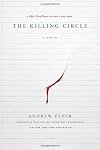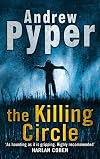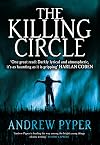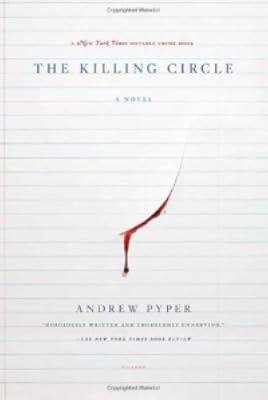
The Killing Circle
by Andrew Pyper
On This Page
Description
Superbly chilling psychological thriller in which a writing circle is haunted by a serial killer, from the bestselling author of 'Lost Girls'.Tags
Recommendations












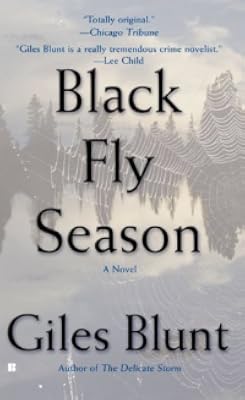


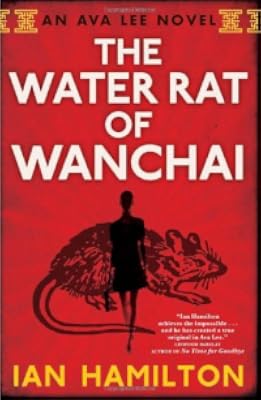
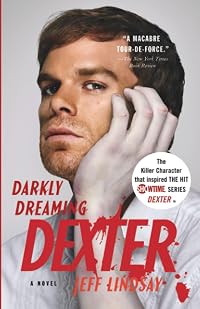
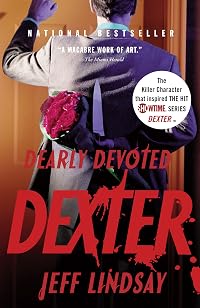




Member Recommendations
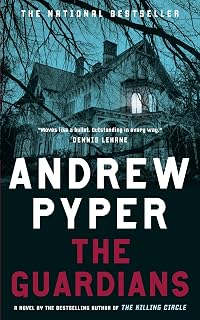
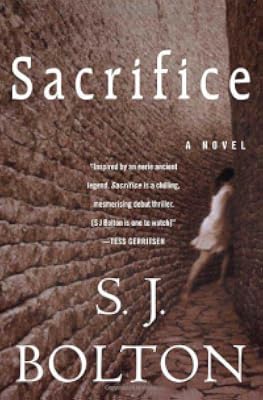
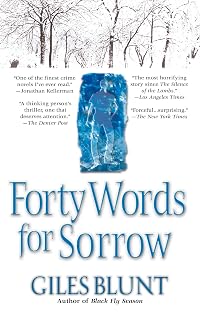
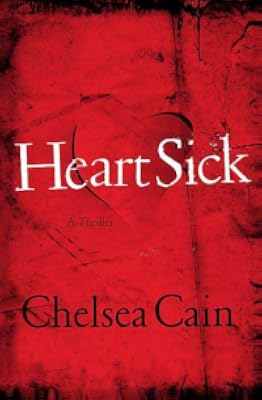
Firmin by Sam Savage
ShelfMonkey Both books have tremendous fun with authors and writing.
Member Reviews
Ah, the life of the lowly author who realizes that his output is not one that reaches the subjective level of high art, but rather belongs quite snugly under that dreaded (and equally subjective) label of popular fiction. What a crushing blow to the psyche it must be to aspire to join the esteemed ranks of Bellow, Roth, and Findley, and instead find oneself lumped in with the likes of Grisham, Koontz, and Patterson.
Canadian author Andrew Pyper has been battling with this conundrum for quite some time now. A writer with a poet’s eye for atmosphere and an entertainer’s skill at building crackerjack entertainments, Pyper has found himself more often than not consigned to the shelves of popular fiction. But a) why should that be show more considered a bad thing, and b) who ever said an author couldn’t be both? It’s a hoary old chestnut (but true nonetheless) that Charles Dickens wrote his stories to entertain the masses, and his artistry was only truly understood and appreciated through the passage of time.
Take Pyper’s debut novel Lost Girls, a story initially marketed as a John Grishamesque legal thriller. Using the well-worn plot device of a lawyer, Pyper wove a story far more thrilling than anything Grisham ever produced, layering on the themes of death, loss, grief, and memory with an artist’s touch. Lost Girls was an ‘entertainment’ in the sense that it followed a linear plot, had exciting characters and plot twists, and was in every sense a ‘page-turner’. But it was ‘literary’ in its complexity of character, its crafting of mood, its evocation of dread. Lost Girls was to a John Grisham construction as a microbrewed lager is to a can of Busch Lite; the ingredients are more or less the same, but only one shows care, craft, and character. Only one, in other words, is really any good.
Pyper belongs to the rarified sphere of thriller authors who bring far more to the table than a performer’s understanding of how to draw an audience in. Like Walter Mosley and George Pelecanos, Pyper writes novels that exhilarate first and foremost, yet explore themes that would cripple lesser writers. No one of any sense would write that Mosley’s Easy Rawling novels were simply mysteries that, once solved, were to be tossed aside. They aren’t confections filled with empty calories. They stick with you; big juicy three-course meals.
But maybe I’m reading too much into it. Or maybe I’m overcome with gratitude that finally, someone has written a novel with a book reviewer as the main protagonist. Either way, The Killing Circle, Pyper’s fourth novel, is his best to date.
The hero is Patrick Rush, a former National Star book reviewer who has slowly descended the hierarchy of the newspaper to become what is surely the nadir of journalistic identity, the television reviewer. Stuck watching taped programs with titles such as Falling from Buildings! and Animals that Kill!, Patrick longs for what every book reviewer secretly wants; “I longed to be an embossed name on a spine, to belong to the knighthood of those selected to stand alongside their alphabetical neighbours on bookshop and library shelves. The great and nearly so, the famous and wrongly overlooked. The living and the dead.” Patrick suffers from a malady common to the frustrated author; “I could no longer open the Book Review of the Sunday Times without causing physical pain to myself. The publishers. The authors’ names. The titles. All belonging to books that weren’t mine.” No self-respecting book reviewer (or wanna-be author) will be able to resist Pyper’s accurate and caustically funny depictions of the deep-seated cravings for fame common to every person who has attempted to pen a story of their own.
The problem for Patrick is not the drive to write, but rather the fact that he has nothing to say − although if you consider that he is now writing his story (or is he?), you must then assume that something interesting must have happened. Patrick joins a writing circle to help jumpstart his writing, but instead of finding an avenue into his own stories, he finds himself entranced by the disturbed writings of Angela, a member who tells stories of a childhood tragedy and a “terrible man who does terrible things.” While Patrick worries that assuming that Angela’s tales were based on fact would reveal himself as “that most lowly drooler of the true-crime racks, the literal-minded rube who demands the promise of Based on a True Story! from his paperbacks and popcorn flicks,” there are eerie parallels in the story to certain news items making headlines.
It spoils nothing to reveal that the terrible man does show up and begin committing terrible things, as Pyper expertly turns the screws on the suspense, and takes a few unexpected turns along the way. The Killing Circle offers some sick and twisted fun, especially when Patrick realizes that he is living “[not] the life of one who writes or even writes about books, but a malingering lowbrow who wrongly thinks he deserves better. No wonder, when his life decides to assume the shape of literature, it isn’t a novel of ideas, but a chronicle of murder and suspicion… A bloody page-turner.”
An author becoming a part of his own personal horror story is not exactly a new literary theme − Stephen King has created an entire cottage industry around the conceit − but Pyper layers his serial killer tale with a meta-layer on the importance of stories themselves to the individual. Are the stories we live important to others? When is a story truly our own? Are we even the main characters in our own lives? As Patrick muses, “Nobody lives their life as though they’ve only been cast in a grisly cameo.” Pyper takes full delight in keeping the reader guessing as to the true identity of the killer, so much so that Patrick himself cannot guarantee that he’s not making the whole thing up. He might not even be telling the story, if it’s his to tell at all.
Pyper does a splendid job of lampooning the literary types who dismiss popular fictions while at the same time straddling both worlds. The Killing Circle is a terrific thriller for those who want it simple, and an exploration into personal myths and stories for those who demand a little more meat on their bones. show less
Canadian author Andrew Pyper has been battling with this conundrum for quite some time now. A writer with a poet’s eye for atmosphere and an entertainer’s skill at building crackerjack entertainments, Pyper has found himself more often than not consigned to the shelves of popular fiction. But a) why should that be show more considered a bad thing, and b) who ever said an author couldn’t be both? It’s a hoary old chestnut (but true nonetheless) that Charles Dickens wrote his stories to entertain the masses, and his artistry was only truly understood and appreciated through the passage of time.
Take Pyper’s debut novel Lost Girls, a story initially marketed as a John Grishamesque legal thriller. Using the well-worn plot device of a lawyer, Pyper wove a story far more thrilling than anything Grisham ever produced, layering on the themes of death, loss, grief, and memory with an artist’s touch. Lost Girls was an ‘entertainment’ in the sense that it followed a linear plot, had exciting characters and plot twists, and was in every sense a ‘page-turner’. But it was ‘literary’ in its complexity of character, its crafting of mood, its evocation of dread. Lost Girls was to a John Grisham construction as a microbrewed lager is to a can of Busch Lite; the ingredients are more or less the same, but only one shows care, craft, and character. Only one, in other words, is really any good.
Pyper belongs to the rarified sphere of thriller authors who bring far more to the table than a performer’s understanding of how to draw an audience in. Like Walter Mosley and George Pelecanos, Pyper writes novels that exhilarate first and foremost, yet explore themes that would cripple lesser writers. No one of any sense would write that Mosley’s Easy Rawling novels were simply mysteries that, once solved, were to be tossed aside. They aren’t confections filled with empty calories. They stick with you; big juicy three-course meals.
But maybe I’m reading too much into it. Or maybe I’m overcome with gratitude that finally, someone has written a novel with a book reviewer as the main protagonist. Either way, The Killing Circle, Pyper’s fourth novel, is his best to date.
The hero is Patrick Rush, a former National Star book reviewer who has slowly descended the hierarchy of the newspaper to become what is surely the nadir of journalistic identity, the television reviewer. Stuck watching taped programs with titles such as Falling from Buildings! and Animals that Kill!, Patrick longs for what every book reviewer secretly wants; “I longed to be an embossed name on a spine, to belong to the knighthood of those selected to stand alongside their alphabetical neighbours on bookshop and library shelves. The great and nearly so, the famous and wrongly overlooked. The living and the dead.” Patrick suffers from a malady common to the frustrated author; “I could no longer open the Book Review of the Sunday Times without causing physical pain to myself. The publishers. The authors’ names. The titles. All belonging to books that weren’t mine.” No self-respecting book reviewer (or wanna-be author) will be able to resist Pyper’s accurate and caustically funny depictions of the deep-seated cravings for fame common to every person who has attempted to pen a story of their own.
The problem for Patrick is not the drive to write, but rather the fact that he has nothing to say − although if you consider that he is now writing his story (or is he?), you must then assume that something interesting must have happened. Patrick joins a writing circle to help jumpstart his writing, but instead of finding an avenue into his own stories, he finds himself entranced by the disturbed writings of Angela, a member who tells stories of a childhood tragedy and a “terrible man who does terrible things.” While Patrick worries that assuming that Angela’s tales were based on fact would reveal himself as “that most lowly drooler of the true-crime racks, the literal-minded rube who demands the promise of Based on a True Story! from his paperbacks and popcorn flicks,” there are eerie parallels in the story to certain news items making headlines.
It spoils nothing to reveal that the terrible man does show up and begin committing terrible things, as Pyper expertly turns the screws on the suspense, and takes a few unexpected turns along the way. The Killing Circle offers some sick and twisted fun, especially when Patrick realizes that he is living “[not] the life of one who writes or even writes about books, but a malingering lowbrow who wrongly thinks he deserves better. No wonder, when his life decides to assume the shape of literature, it isn’t a novel of ideas, but a chronicle of murder and suspicion… A bloody page-turner.”
An author becoming a part of his own personal horror story is not exactly a new literary theme − Stephen King has created an entire cottage industry around the conceit − but Pyper layers his serial killer tale with a meta-layer on the importance of stories themselves to the individual. Are the stories we live important to others? When is a story truly our own? Are we even the main characters in our own lives? As Patrick muses, “Nobody lives their life as though they’ve only been cast in a grisly cameo.” Pyper takes full delight in keeping the reader guessing as to the true identity of the killer, so much so that Patrick himself cannot guarantee that he’s not making the whole thing up. He might not even be telling the story, if it’s his to tell at all.
Pyper does a splendid job of lampooning the literary types who dismiss popular fictions while at the same time straddling both worlds. The Killing Circle is a terrific thriller for those who want it simple, and an exploration into personal myths and stories for those who demand a little more meat on their bones. show less
I won this through the Goodreads giveaways and I'm so glad. I stayed up all night to finish it, which I haven't felt compelled to do for a book in a long time, and I found it unnerving enough that I had to check the lock on the door and look in the closets about halfway through. I naturally have an overactive imagination anyway, but I haven't been this creeped out by a book in years. The story is intricate and nonlinear, and even though the narrator Patrick is kind of distant (which is appropriate for his character), the present tense narration made his story feel very close and immediate. That was especially good for the scary bits when Patrick felt someone had been in his house or in his yard or following him. The way the writing show more circle worked in and the novel that Patrick writes -- the idea that our lives, our identities, are stories that can be told and therefore stolen -- gave the book depth, as well. I couldn't guess where the story was going so the ending had real impact. This was a great, chilling read and I'm going to have to look up Pyper's other books. show less
Patrick Rush is on a downward spiral. His wife has died, leaving him to raise their son alone. He is systematically being demoted at the newspaper where he works as the arts section becomes the entertainment section and he finds himself being the TV critic with the unflattering moniker of The Couch Potato for his column.
Feeling the need to recapture some enthusiasm for something in his life, Rush joins a writing group hoping to start on the novel he feels is buried somewhere inside of him. Unfortunately, no one in the writing group seems to have much in the way of talent. Except for Angela who tells a haunting story of abuse and an evil man who does evil things: the Sandman. As Angela reveals snippets each week, Rush finds himself show more showing up just to know how the story ends.
When a serial killer appears who’s technique is just like the Sandman, the need to know how the story ends takes on more urgency. Especially when all signs point to Rush being the killer.
That’s as much I can tell you without giving the plot away. This is one of the best thrillers that I’ve read in a long time (and I realize that I recently said something similar about Reich’s Rules of Deception). If I had to boil it down to a single element, it is Pyper’s refusal to stick to conventions that makes this book for me. The main character doesn’t act the way I would expect him to and the book doesn’t end the way I expect thrillers to end. And those are all good things, great in fact.
Now I’m going to geek out a bit about the fact that Pyper is Canadian. If you’re not Canadian, you may not realize that much of our publishing industry is either devoted to CanLit (literary fiction which is often also very self-consciously Canadian) or imported popular fiction (mostly from the US). Finding Canadian popular fiction writers is difficult. Finding Canadian popular fiction writers who set their stories in Canada and manage to sneak in some Canadian pop culture while they are at it is even more difficult. Pyper does both, which thrills me as a Canadian reader (hence the geek out in progress).
I have nothing against reading American popular fiction (or British, or Australian, or New Zealand-ish?). In fact, I read quite a lot of it and I’m used to having stories set in Boston or New York or wherever. As long as it’s a good story and good writing, I’m happy. But it’s nice, ever once in a while, to have the extra bonus of sharing the culture of the protagonist and not having to translate things like Barnes & Noble to Chapters (not actually mentioned in Pyper’s book, but you get the idea).
No matter where you live, if you love a good thriller this is definitely a book to buy. As soon as I get through my current stack of books (which keeps multiplying when I’m not looking—why is that?), I’m going to track down Pyper’s other books: The Wildfire Season, The Trade Mission, and The Lost Girls.
Visit Booklorn.com for more reviews. show less
Feeling the need to recapture some enthusiasm for something in his life, Rush joins a writing group hoping to start on the novel he feels is buried somewhere inside of him. Unfortunately, no one in the writing group seems to have much in the way of talent. Except for Angela who tells a haunting story of abuse and an evil man who does evil things: the Sandman. As Angela reveals snippets each week, Rush finds himself show more showing up just to know how the story ends.
When a serial killer appears who’s technique is just like the Sandman, the need to know how the story ends takes on more urgency. Especially when all signs point to Rush being the killer.
That’s as much I can tell you without giving the plot away. This is one of the best thrillers that I’ve read in a long time (and I realize that I recently said something similar about Reich’s Rules of Deception). If I had to boil it down to a single element, it is Pyper’s refusal to stick to conventions that makes this book for me. The main character doesn’t act the way I would expect him to and the book doesn’t end the way I expect thrillers to end. And those are all good things, great in fact.
Now I’m going to geek out a bit about the fact that Pyper is Canadian. If you’re not Canadian, you may not realize that much of our publishing industry is either devoted to CanLit (literary fiction which is often also very self-consciously Canadian) or imported popular fiction (mostly from the US). Finding Canadian popular fiction writers is difficult. Finding Canadian popular fiction writers who set their stories in Canada and manage to sneak in some Canadian pop culture while they are at it is even more difficult. Pyper does both, which thrills me as a Canadian reader (hence the geek out in progress).
I have nothing against reading American popular fiction (or British, or Australian, or New Zealand-ish?). In fact, I read quite a lot of it and I’m used to having stories set in Boston or New York or wherever. As long as it’s a good story and good writing, I’m happy. But it’s nice, ever once in a while, to have the extra bonus of sharing the culture of the protagonist and not having to translate things like Barnes & Noble to Chapters (not actually mentioned in Pyper’s book, but you get the idea).
No matter where you live, if you love a good thriller this is definitely a book to buy. As soon as I get through my current stack of books (which keeps multiplying when I’m not looking—why is that?), I’m going to track down Pyper’s other books: The Wildfire Season, The Trade Mission, and The Lost Girls.
Visit Booklorn.com for more reviews. show less
Let me be frank. I love fiction of almost all kinds, but what really hooks me into any book is its characters. Without well-drawn, richly layered characters, I find it very difficult to connect with any story, be it never so well-plotted. I am an avid mystery reader, and I love the thrill of trying to keep up with the intricacies of an unfolding plot. But I found it very hard to keep my attention focused on this book. There was simply nothing in any of the characters I could grab hold of – they seemed more like hollow shells than real people I cared about. That may be why the murder mystery itself failed to engage me.
The first part of Andrew Pyper’s latest murder mystery THE KILLING CIRCLE, races right along. Literary critic show more Patrick Rush has always dreamt of writing a novel, of being a published author instead of the one who reports on other people’s work. Rush has been waiting all his life for that magical first line, “the way in” to the book he feels it is his destiny to write. He’s worked his way up in the world of journalism, from writing freelance articles for little read periodicals to a regular position as a columnist at a national newspaper.
But all is not well in Patrick Rush’s world. After a brief period of married happiness and new fatherhood, Patrick’s wife dies and leaves him to cope with the myriad issues of single parenting; and he sees his job at the newspaper shrinking from literary critic to entertainment reporter to TV show reviewer. Since Rush despises television and popular culture in general, this is anything but his ideal job. He still dreams of opening the New York Times Review of Books to see a review of his yet unbirthed novel.
Rush joins a neighborhood literary circle – a small group of would be writers who meet weekly under the auspices of an older, published literary name, to listen to each others’ work in progress and engage, not in criticism, but in conversation with each other.
The literary circle has more than its share of odd, and even frightening characters. There’s the hulking, almost silent giant, who work is painfully banal and whose very presence is menacing. There’s the subway train driver who is too shy to make eye contact, but dreams of making the people he glimpses on train platforms live as individuals through his words. Add in the rich divorcee for whom the literary circle is another attempt at self-improvement, and the overweight, blubber-lipped twenty-something geek, who likes to write because it allows him to become different people, and the elusive, wraith-like Angela, whose very appearance eludes description.
As the circle begins to operate, Patrick discovers that not only has he still not found his magical “way in” to his dreamed of novel, but his writing talent pales in comparison to Angela’s. Not only that, but people in his neighborhood start turning up dead; and folks in his literature circle begin to report strange stalking incidents. Rush believes his own home may be a target of the stalker.
THE KILLING CIRCLE has all the ingredients of a terrific murder mystery – even if many of these have already been used by other authors in other books. And Pyper is a skilled writer. But I felt oddly distant from all the characters peopling this book. Even Rush, the bereaved single father, who ends up both unemployed and later on a famous published author, seems oddly unrealized. For a single parent, Patrick Rush seems strangely unconcerned with both the daily nuts and bolts of fatherhood, and the normal concerns of any unemployed person with a mortgage to meet, grocery bills to pay, and childcare to arrange. Even his major moment of moral turpitude is strangely devoid of any real emotional turmoil. Considering he’s the novel’s protagonist, Patrick Rush seemed strangely removed from everything going on his life. Repeated questioning of his own sanity and observations don’t add the needed depth to this oddly incomplete character. Even an unreliable narrator should be interesting enough, real enough to keep the reader’s interest, but Patrick Rush seems more like a roughly drawn sketch than a fully realized human being. And the rest of the novel’s cast is equally obscure, when they’re not simple caricatures. There simply was no character in this novel whose fate I cared about.
So there you have it. This book has all the ingredients for a great thriller, but even the clever plot could not compensate for its one and two dimensional characters. The book reads much more like a screenplay than a fully fleshed out novel. I was not at all surprised to read that THE KILLING CIRCLE has already been optioned for a feature film. It will probably make a better movie than it did a novel. show less
The first part of Andrew Pyper’s latest murder mystery THE KILLING CIRCLE, races right along. Literary critic show more Patrick Rush has always dreamt of writing a novel, of being a published author instead of the one who reports on other people’s work. Rush has been waiting all his life for that magical first line, “the way in” to the book he feels it is his destiny to write. He’s worked his way up in the world of journalism, from writing freelance articles for little read periodicals to a regular position as a columnist at a national newspaper.
But all is not well in Patrick Rush’s world. After a brief period of married happiness and new fatherhood, Patrick’s wife dies and leaves him to cope with the myriad issues of single parenting; and he sees his job at the newspaper shrinking from literary critic to entertainment reporter to TV show reviewer. Since Rush despises television and popular culture in general, this is anything but his ideal job. He still dreams of opening the New York Times Review of Books to see a review of his yet unbirthed novel.
Rush joins a neighborhood literary circle – a small group of would be writers who meet weekly under the auspices of an older, published literary name, to listen to each others’ work in progress and engage, not in criticism, but in conversation with each other.
The literary circle has more than its share of odd, and even frightening characters. There’s the hulking, almost silent giant, who work is painfully banal and whose very presence is menacing. There’s the subway train driver who is too shy to make eye contact, but dreams of making the people he glimpses on train platforms live as individuals through his words. Add in the rich divorcee for whom the literary circle is another attempt at self-improvement, and the overweight, blubber-lipped twenty-something geek, who likes to write because it allows him to become different people, and the elusive, wraith-like Angela, whose very appearance eludes description.
As the circle begins to operate, Patrick discovers that not only has he still not found his magical “way in” to his dreamed of novel, but his writing talent pales in comparison to Angela’s. Not only that, but people in his neighborhood start turning up dead; and folks in his literature circle begin to report strange stalking incidents. Rush believes his own home may be a target of the stalker.
THE KILLING CIRCLE has all the ingredients of a terrific murder mystery – even if many of these have already been used by other authors in other books. And Pyper is a skilled writer. But I felt oddly distant from all the characters peopling this book. Even Rush, the bereaved single father, who ends up both unemployed and later on a famous published author, seems oddly unrealized. For a single parent, Patrick Rush seems strangely unconcerned with both the daily nuts and bolts of fatherhood, and the normal concerns of any unemployed person with a mortgage to meet, grocery bills to pay, and childcare to arrange. Even his major moment of moral turpitude is strangely devoid of any real emotional turmoil. Considering he’s the novel’s protagonist, Patrick Rush seemed strangely removed from everything going on his life. Repeated questioning of his own sanity and observations don’t add the needed depth to this oddly incomplete character. Even an unreliable narrator should be interesting enough, real enough to keep the reader’s interest, but Patrick Rush seems more like a roughly drawn sketch than a fully realized human being. And the rest of the novel’s cast is equally obscure, when they’re not simple caricatures. There simply was no character in this novel whose fate I cared about.
So there you have it. This book has all the ingredients for a great thriller, but even the clever plot could not compensate for its one and two dimensional characters. The book reads much more like a screenplay than a fully fleshed out novel. I was not at all surprised to read that THE KILLING CIRCLE has already been optioned for a feature film. It will probably make a better movie than it did a novel. show less
 This review was written for LibraryThing Early Reviewers.
Roared through in two days. The end felt anticlimactic, but I sure liked the ride. I liked how Pyper played with the protagonist's desires for writing and audience, which felt grossly familiar to me. I read this right before Richard Price's Lush Life, which interestingly also plays with the question of writing and identity and failure in a thriller setting.
Patrick Rush is a widow who is bringing up his son Sam. He decides to join a writing group which has a mixed bag of members. One by one the members start to end up dead or missing. Then there is only Patrick left.
This book I found quite different. For a change it was a crime story but not police procedure. At times I felt that the book was bordering on horror /fantasy.
I enjoyed Patricks narrative of events and was really into the story. I was hoping for a satisfactory ending and was not disappointed on that score at all.
I enjoyed the story and didn't guess who was the perp and was even more pleased with the twist as it gave the book that final edge. There were a couple of events in the book that I felt were slightly unbelievable but show more it didn't detract from the story.
I haven't read any books by this author before and having read this one I would read more by this author show less
This book I found quite different. For a change it was a crime story but not police procedure. At times I felt that the book was bordering on horror /fantasy.
I enjoyed Patricks narrative of events and was really into the story. I was hoping for a satisfactory ending and was not disappointed on that score at all.
I enjoyed the story and didn't guess who was the perp and was even more pleased with the twist as it gave the book that final edge. There were a couple of events in the book that I felt were slightly unbelievable but show more it didn't detract from the story.
I haven't read any books by this author before and having read this one I would read more by this author show less
The Killing Circle is a novel about the flagging success of Patrick Rush, a recent widower, single dad, and columnist at the city paper. The economy of print news combined with Patrick’s indifference and bad attitude quickly lead to unemployment. Having always dreamt of writing the great Canadian novel, Patrick joins a writing circle, where he quickly discovers that he’s really got nothing to contribute. When strange things start happening in Patrick’s city and writing circle, he’s drawn into a sequence of events that ultimately sets his life back on track – or so it seems.
Though that sounds like the complete story, in fact, it’s just act 1 and I haven’t spoiled anything for future readers. The story is told in two chunks show more – 2003 and 2007. The 2003 section almost entirely serves as back story. In that sense, the story takes some time to evolve. However, the writing and the characters make the time pass quickly. In 2007, we discover even more about the protagonist that makes us question his moral fiber, and from there the mystery takes unexpected twists and turns. Is Patrick the next victim? The prime suspect? An unwitting pawn in someone else’s game?
On the thriller spectrum from Koontz (the good guys always win and live to see another day) to King (sometimes evil prevails), Pyper is much closer to King. Patrick is far from perfect and I didn’t always find myself rooting for him to come out on top. Unfortunately, I didn’t really identify or connect with any of the characters which made me feel oddly disconnected from the story. At the same time, Patrick also seems slightly disconnected from his own life so perhaps the distance I felt was appropriate.
In the end, I enjoyed the book, the unique plot (I didn’t come close to guessing the ending), and the writing kept me interested until past my bedtime. I have added Pyper’s previous books to my eventual to-be-read list, but I won’t go out a buy them ASAP. Overall The Killing Circle is solid read that I’ll be happy to pass along to fellow mystery readers, but not something that I’d highly recommend. show less
Though that sounds like the complete story, in fact, it’s just act 1 and I haven’t spoiled anything for future readers. The story is told in two chunks show more – 2003 and 2007. The 2003 section almost entirely serves as back story. In that sense, the story takes some time to evolve. However, the writing and the characters make the time pass quickly. In 2007, we discover even more about the protagonist that makes us question his moral fiber, and from there the mystery takes unexpected twists and turns. Is Patrick the next victim? The prime suspect? An unwitting pawn in someone else’s game?
On the thriller spectrum from Koontz (the good guys always win and live to see another day) to King (sometimes evil prevails), Pyper is much closer to King. Patrick is far from perfect and I didn’t always find myself rooting for him to come out on top. Unfortunately, I didn’t really identify or connect with any of the characters which made me feel oddly disconnected from the story. At the same time, Patrick also seems slightly disconnected from his own life so perhaps the distance I felt was appropriate.
In the end, I enjoyed the book, the unique plot (I didn’t come close to guessing the ending), and the writing kept me interested until past my bedtime. I have added Pyper’s previous books to my eventual to-be-read list, but I won’t go out a buy them ASAP. Overall The Killing Circle is solid read that I’ll be happy to pass along to fellow mystery readers, but not something that I’d highly recommend. show less
This review was written for LibraryThing Early Reviewers.Members
- Recently Added By
Lists

Books Set in Canada
80 works; 16 members

100 Hemskaste
81 works; 1 member

ALA The Reading List
490 works; 28 members

Evergreen Award™ Winners and Nominees 2005–2024
200 works; 3 members
Author Information

20+ Works 3,114 Members
Andrew Pyper was born in Stratford, Ontario, in 1968. He received a B.A. and an M.A. in English Literature from McGill University in Montreal, as well as a law degree from the University of Toronto, although he has never practiced. Kiss Me, his first book of short stories, was published to in 1996. Pyper the went on to the position of show more Writer-in-Residence at Berton House, Dawson City, Yukon, as well as at Champlain College, Trent University. His first novel, Lost Girls, was a national bestseller in Canada and a Globe and Mail Notable Book selection in 1999 as well as a Notable Book selection in the New York Times Book Review and the London Evening Standard in 2000. Lost Girls won the Arthur Ellis Award for Best First Novel. Pyper's second novel, The Trade Mission, was published in 2002, and was selected by The Toronto Star as one of the Best Books of the Year. Outside of fiction writing, Pyper is a regular contributor of essays and criticism to Canadian magazines and newspapers, including The Globe and Mail, Ottawa Citizen, Quill & Quire and Saturday Night. He is also a Contributing Editor for Gear magazine. (Bowker Author Biography) show less
Awards and Honors
Awards
Common Knowledge
- Canonical title
- The Killing Circle
- Original publication date
- 2008
- People/Characters
- Patrick Rush; Sam Rush; Tamara Rush; The Sandman; Angela Whitmore; Petra Dunn (show all 20); Len Innes; William Feld; Conrad White; Evelyn; Ivan; Ian Ramsay (Detective); Raymond Mull; Michelle Carruthers; Tim Earheart; Carol Ulrich; Ronald Pevencey; Jane Whirter; David Percy; Marion Percy
- Important places
- Toronto, Ontario, Canada; Whitley, Ontario, Canada
- Dedication
- For Heidi
- First words
- I didn't know my son could tell directions from the stars.
- Last words
- (Click to show. Warning: May contain spoilers.)The laughter of a man without a story who sees that what has brought him here might have made a good one, if there was only someone else, one Dear Reader to tell it to.
- Publisher's editor*
- Seal Books
- Blurbers
- Coben, Harlan
*Some information comes from Common Knowledge in other languages. Click "Edit" for more information.
Classifications
Statistics
- Members
- 312
- Popularity
- 102,644
- Reviews
- 42
- Rating
- (3.32)
- Languages
- 7 — Dutch, English, French, German, Italian, Portuguese, Spanish
- Media
- Paper, Audiobook, Ebook
- ISBNs
- 24
- ASINs
- 2