On This Page
Description
A woman wittily portrays her everyday experiences, family life, and relations with her friends and neighbors in a small English town.Tags
Recommendations






















Member Recommendations

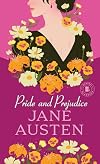
lydiabarr Austen and Delafield are often compared...both have shrewdly observational sense of humor and an elaborately deadpan style. I love them both.
40

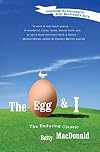
Bjace Seems odd, but both Delafield and MacDonald were city gals transplanted to country situations and their reactions and sense of humor were similar.

nessreader Domestic, uppermiddle class, very English, 1930s delafield, 1940s anderson. Thirkell's barsetshire novels, though more insubstantial, mine tge same vein of humour.
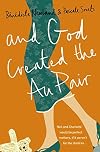
mumoftheanimals Similar class and wit but set in England between WW1 and WWII.
Member Reviews
"I am writing my Diary. Robert replies kindly but quite definitely that In his opinion That is a Waste of Time"
By sally tarbox on 5 Nov. 2013
Format: Paperback
Wonderful little 1930 work, cataloguing the minutiae of the narrator's life in a highly humorous and pithy manner.
From Our Vicar's wife and her lengthy visits
("she says...she won't keep me a minute. Tells me long story about the Vicar having a stye on one eye. I retaliate with Cook's sore throat. This leads to draughts, the heating apparatus in church, and news of Lady Boxe in South of France...She goes but turns back at the door to tell me about wool next the skin, nasal douching and hot milk last thing at night.")
to the narrator's taciturn husband, her children, problems with show more unruly servants, and constant irritations with patronising neighbour Lady B: even our Lady's final attempt at one-upmanship by announcing a forthcoming trip to France is spoilt by Lady B leaning out of her Bentley to offer to find out about quite inexpensive pensions.
Although this is set in a world vastly different from our own, every reader will recognise the people who make up this society.
The Virago edition, which I have, also contains 3 sequels, following our heroine to London, to America and lastly through the war.(which I've not yet read - I think one book at a time is probably sufficient.)
Light, but highly enjoyable and observant writing. show less
By sally tarbox on 5 Nov. 2013
Format: Paperback
Wonderful little 1930 work, cataloguing the minutiae of the narrator's life in a highly humorous and pithy manner.
From Our Vicar's wife and her lengthy visits
("she says...she won't keep me a minute. Tells me long story about the Vicar having a stye on one eye. I retaliate with Cook's sore throat. This leads to draughts, the heating apparatus in church, and news of Lady Boxe in South of France...She goes but turns back at the door to tell me about wool next the skin, nasal douching and hot milk last thing at night.")
to the narrator's taciturn husband, her children, problems with show more unruly servants, and constant irritations with patronising neighbour Lady B: even our Lady's final attempt at one-upmanship by announcing a forthcoming trip to France is spoilt by Lady B leaning out of her Bentley to offer to find out about quite inexpensive pensions.
Although this is set in a world vastly different from our own, every reader will recognise the people who make up this society.
The Virago edition, which I have, also contains 3 sequels, following our heroine to London, to America and lastly through the war.(which I've not yet read - I think one book at a time is probably sufficient.)
Light, but highly enjoyable and observant writing. show less
Diary of a Provincial Lady by E.M. Delafield was originally published in 1930 and although dated, the wry, self-depreciating humor of a mother trying to run a house, deal with a remote husband and raise two children still has facets that ring true today. This is a light, amusing read that is chock full of peculiar characters amid the varied incidents that a occur in an rural English village. As the main character muddles through her daily life, from cocktail hour to picnics, the author skilfully mocks the narrow village society that she moves in and one can’t help but be reminded of both Stella Gibbons and E.F. Benson with dashes of P.G. Wodehouse thrown in.
I have come to realize that I am a fan of these gentle satires that lightly show more ridicule while at the same time leave us with both a fascination and admiration for both the times and this type of lifestyle. In Diary of a Provincial Lady the authors’ deft writing and light touch make this book a gem about domestic life in the 1930’s. show less
I have come to realize that I am a fan of these gentle satires that lightly show more ridicule while at the same time leave us with both a fascination and admiration for both the times and this type of lifestyle. In Diary of a Provincial Lady the authors’ deft writing and light touch make this book a gem about domestic life in the 1930’s. show less
This book is a delightful light read. The heroine chronicles daily events and inner thoughts in a quite witty diary. Daily life in "the provinces," i.e.; well outside London, revolves around relationships with her husband, her children, the servants, and fellow villagers. She pokes fun at all of this, while simultaneously revealing her own feelings of inadequacy as wife, parent, employer, friend, or woman of intellect. Several humorous situations are followed through the diary: an attempt to grow garden bulbs, an adopted stray cat who has kittens, vain attempts to stay one step ahead of a bank overdraft, the eccentric behavior of certain villagers, and her husband's general reticence. All are described in a wonderful style, such as this show more comment about the husband: Very marked difference between the sexes is male tendency to procrastinate doing practically everything in the world except sitting down to meals and going up to bed. Should like to purchase little painted motto: 'Do it now', so often on sale at inferior stationers' shops, and present it to Robert, but on second thoughts qutie see that this would not conduce to domestic harmony, and abandon scheme at once. (p. 156)
The "provincial lady" 'is so engaging, and so easy to identify with, and yet is never given a name. Perhaps this is because she is "everywoman"? In any case, this fun little book had me smiling and laughing to myself from page 1 to the end. Delightful. show less
The "provincial lady" 'is so engaging, and so easy to identify with, and yet is never given a name. Perhaps this is because she is "everywoman"? In any case, this fun little book had me smiling and laughing to myself from page 1 to the end. Delightful. show less
Free to read on Project Gutenberg: http://gutenberg.net.au/ebooks08/0800661h.html
Delightful! If Bridget Jones were a wife and mother in the 1930s. A likeable, unglamorous, ordinary character with whom many can empathize. The tone of delivery is perfect: exasperation at husband and anxiety over the domestic country life's many little vexations, without ever getting too woe-is-me that we would find her tiresome. So many keen insights into human behavior / society, that if persona were on Twitter today, she would be a hit. Wish I had read this sooner. The title makes it seem boring but this was a quick weekend read.
Delightful! If Bridget Jones were a wife and mother in the 1930s. A likeable, unglamorous, ordinary character with whom many can empathize. The tone of delivery is perfect: exasperation at husband and anxiety over the domestic country life's many little vexations, without ever getting too woe-is-me that we would find her tiresome. So many keen insights into human behavior / society, that if persona were on Twitter today, she would be a hit. Wish I had read this sooner. The title makes it seem boring but this was a quick weekend read.
My enjoyment of this book was hurt by a couple of things.
1. I was reading A Tree Grows in Brooklyn at the same time I was reading this. Concern about Francie's starvation and her family's hard work to keep a roof (albeit a squalid roof) over their heads, made my concern for the Provincial Lady's (whose name escapes me right now) constantly overdrawn bank account quite a bit less. I'm sorry you had such a hard search for a housemaid, Provincial Lady, when other people are picking through trash to take to the junkman for a penny a load. I know that is probably unfair, and I might have enjoyed it more had it not constantly been juxtaposed in my mind with A Tree Grows in Brooklyn . Except for this:
2. I love and adore, with all of my heart, show more the Mrs. Tim books by D.E. Stevenson. Those are also written in diary form and in the same time period. However, I was so much less invested in the characters in the Provincial Lady. They all seemed shallow and unsympathetic. Whereas just about every character we meet in the Mrs. Tim books are a joy, and I feel like they are my family.
So, while this book was frothy and amusing, I won't remember anyone in it by tomorrow and it made absolutely no lasting impact on me. show less
1. I was reading A Tree Grows in Brooklyn at the same time I was reading this. Concern about Francie's starvation and her family's hard work to keep a roof (albeit a squalid roof) over their heads, made my concern for the Provincial Lady's (whose name escapes me right now) constantly overdrawn bank account quite a bit less. I'm sorry you had such a hard search for a housemaid, Provincial Lady, when other people are picking through trash to take to the junkman for a penny a load. I know that is probably unfair, and I might have enjoyed it more had it not constantly been juxtaposed in my mind with A Tree Grows in Brooklyn . Except for this:
2. I love and adore, with all of my heart, show more the Mrs. Tim books by D.E. Stevenson. Those are also written in diary form and in the same time period. However, I was so much less invested in the characters in the Provincial Lady. They all seemed shallow and unsympathetic. Whereas just about every character we meet in the Mrs. Tim books are a joy, and I feel like they are my family.
So, while this book was frothy and amusing, I won't remember anyone in it by tomorrow and it made absolutely no lasting impact on me. show less
This charming novel, told in journal entries, gives readers a picture of a suburban, upper-middle-class British housewife's life in the late 1920s. She oscillates between duties (real or imagined) to her family, to her neighbors, to the local aristocracy, to the Women's Institute, and (lastly) to herself. In her own words, she shares her thoughts and opinions with her diary but keeps a very reserved, stereotypically British, outer self. She would rather maintain order and consistency than to speak her mind freely and openly, even when doing so would be beneficial.
At face value, this is a rather funny story about the madcap situations in which the housewife finds herself in everydaily life. She tries her utmost to do nice things - show more picnics, holiday trips, visits with friends & neighbors - which more often than not backfire and cause embarrassment, illness/injury, or an overdraft of her bank account. However, the book can also be read as a study of character types which may perpetuate cultural stereotypes.
Characters are seen as belonging to either the Domestic Sphere, or the Social Sphere. Of the family, there is the husband who spends more time reading (and falling asleep with) the daily paper than he does interacting with his family. He seems most at ease in his own home, and has no particular interest in going anywhere or doing anything. There is no mention of intimacy between him and his wife at all. The housewife worries constantly over finances, and wants so desperately to fit in with her community that she finds it difficult to live within her means. She is overly polite and deferential. The French governess, who never speaks English, alternates between strong outbursts of emotion and reprimand, and reserved comfort. The domestic servants perform their duties, but spare no occasion to voice their displeasure or to gently bully the housewife. The children are present sporadically, and are sometimes accompanied by a boarding school friend.
As for the social sphere, it is also full of interesting characters. The Vicar's wife pays many visits, and always overstays her welcome. The Women's Institute takes advantage of the housewife's nature and asks her to undertake lengthy speaking trips, to chair pointless committees, and to judge endless competitions. The local aristocrat, Lady Boxe, holds the position that her time is more valuable than anyone else's and shows great impertinence in most situations. One of the saddest characters in the entire novel is the elderly Mrs. Blenkinsop. When we are first introduced to her, she is a warm, vibrant, intelligent woman. When her adult daughter moves to The Himalayas with her fiance, Cousin Maude is sent to live with her. Through subsequent visits by the housewife, the reader sees Mrs. B's sharp intellectual and physical decline, under the constant belittlement and childlike treatment by Cousin Maude. This speaks sharply to the way older British citizens are treated by younger generations. There are encounters with feminists in London, highly educated folk who talk beyond the housewife's comprehension, and many others who lend color and commentary to the story.
Whilst reading this, I couldn't help but think of Helen Fielding's BRIDGET JONES' DIARY. The similarities are rather striking between the two stories. There's even a scene involving mistaken dress code, that leads to great embarrassment. They are by no means the same book, but it would be difficult for me to believe that Fielding was not in some way inspired by E.M. Delafield.
Overall, I found this to be a highly entertaining and enlightening story of British life and British society. It was a very brisk read, due mostly to the diary entry format, and is something I would very much like to reread in the future. show less
At face value, this is a rather funny story about the madcap situations in which the housewife finds herself in everydaily life. She tries her utmost to do nice things - show more picnics, holiday trips, visits with friends & neighbors - which more often than not backfire and cause embarrassment, illness/injury, or an overdraft of her bank account. However, the book can also be read as a study of character types which may perpetuate cultural stereotypes.
Characters are seen as belonging to either the Domestic Sphere, or the Social Sphere. Of the family, there is the husband who spends more time reading (and falling asleep with) the daily paper than he does interacting with his family. He seems most at ease in his own home, and has no particular interest in going anywhere or doing anything. There is no mention of intimacy between him and his wife at all. The housewife worries constantly over finances, and wants so desperately to fit in with her community that she finds it difficult to live within her means. She is overly polite and deferential. The French governess, who never speaks English, alternates between strong outbursts of emotion and reprimand, and reserved comfort. The domestic servants perform their duties, but spare no occasion to voice their displeasure or to gently bully the housewife. The children are present sporadically, and are sometimes accompanied by a boarding school friend.
As for the social sphere, it is also full of interesting characters. The Vicar's wife pays many visits, and always overstays her welcome. The Women's Institute takes advantage of the housewife's nature and asks her to undertake lengthy speaking trips, to chair pointless committees, and to judge endless competitions. The local aristocrat, Lady Boxe, holds the position that her time is more valuable than anyone else's and shows great impertinence in most situations. One of the saddest characters in the entire novel is the elderly Mrs. Blenkinsop. When we are first introduced to her, she is a warm, vibrant, intelligent woman. When her adult daughter moves to The Himalayas with her fiance, Cousin Maude is sent to live with her. Through subsequent visits by the housewife, the reader sees Mrs. B's sharp intellectual and physical decline, under the constant belittlement and childlike treatment by Cousin Maude. This speaks sharply to the way older British citizens are treated by younger generations. There are encounters with feminists in London, highly educated folk who talk beyond the housewife's comprehension, and many others who lend color and commentary to the story.
Whilst reading this, I couldn't help but think of Helen Fielding's BRIDGET JONES' DIARY. The similarities are rather striking between the two stories. There's even a scene involving mistaken dress code, that leads to great embarrassment. They are by no means the same book, but it would be difficult for me to believe that Fielding was not in some way inspired by E.M. Delafield.
Overall, I found this to be a highly entertaining and enlightening story of British life and British society. It was a very brisk read, due mostly to the diary entry format, and is something I would very much like to reread in the future. show less
I loved this -- in part because I like almost all the English satires of the period between the 2 World Wars. But this thinly disguised memoir wouldn't be the classic it is if it didn't contain commentary & queries about situations women face in other times & places. While problems with servants, lack of money (relatively speaking!), and the Women's Institute are not universal, who hasn't had the experience of someone saying something unpleasant, then "Think of several rather tart and witty rejoinders to this, but unfortunately not until Lady B.'s Bentley has taken her away."
One question which occurred frequently was about why societal conventions & common politeness require adults to lie so often: "Lady Boxe calls. I say, untruthfully, show more how nice to see her..."; in reply to an old school friend asking to stay for a few nights: "Reply that we shall be delighted to see her, and what a lot we shall have to talk about, after all these years! (This, I find on reflection, is not true, but cannot re-write letter on that account)."; The Vicar's wife has had a picture postcard from her (which she produces from bag), with small cross marking bedroom window of hotel. She says, It's rather interesting, isn't it? to which I reply Yes, it is, which is not in the least true."
This juxtaposition of the conventional polite behavior and the true thoughts of the author is the source of much of the humor. show less
One question which occurred frequently was about why societal conventions & common politeness require adults to lie so often: "Lady Boxe calls. I say, untruthfully, show more how nice to see her..."; in reply to an old school friend asking to stay for a few nights: "Reply that we shall be delighted to see her, and what a lot we shall have to talk about, after all these years! (This, I find on reflection, is not true, but cannot re-write letter on that account)."; The Vicar's wife has had a picture postcard from her (which she produces from bag), with small cross marking bedroom window of hotel. She says, It's rather interesting, isn't it? to which I reply Yes, it is, which is not in the least true."
This juxtaposition of the conventional polite behavior and the true thoughts of the author is the source of much of the humor. show less
Members
- Recently Added By
Lists

The Guardian's 1000 Novels Everyone Must Read
1,005 works; 546 members

wilfully eccentric little england (cosy read novels, england)
45 works; 15 members

Classics you know you should have read but probably haven't
421 works; 407 members

Classic British Humor
41 works; 8 members

Folio Society
831 works; 53 members

Comfort Reads
221 works; 41 members

Books Read in 2023
5,547 works; 145 members

1930s
262 works; 5 members

Books Read in 2020
4,379 works; 124 members

COMFORT READS. ~ Feelgood fic
13 works; 1 member

Read This Next
120 works; 3 members

Books Read in 2013
1,629 works; 51 members

Books referenced in A Very Great Profession: The Woman's Novel 1914-39
199 works; 6 members

Mustich's 1000 Books to Read Before You Die: A Life Changing List
1,001 works; 18 members

Books Read in 2024
4,623 works; 126 members

Persephone
148 works; 3 members

Reading LIst
648 works; 1 member
Author Information

98+ Works 4,012 Members
Some Editions
Awards and Honors
Series

Belongs to Publisher Series
Work Relationships
Common Knowledge
- Canonical title
- Diary of a Provincial Lady
- Original publication date
- 1930
- People/Characters
- Cissie Crabbe; Crosbie Carruthers; Howard Fitzsimmons
- First words
- November 7th.--Plant the indoor bulbs.
- Last words
- (Click to show. Warning: May contain spoilers.)Can only leave reply to Posterity.
- Original language
- English
- Disambiguation notice
- Note: This book, Diary of a Provincial Lady (Prion, 1853753688) (Virago, 1844085228) (Remploy, 0706610342) (Chicago, 0897330536) is NOT the same as the omnibus editions, The Diary of a Provincial Lady (Vi... (show all)rago, 0860685225) and The Provincial Lady (Macmillan, pre-ISBN) which contain 4 stories: "Diary of a Provincial Lady"; "The Provincial Lady Goes Further", "The Provincial Lady in War Time"; and, "The Provincial Lady in America".
Please do not combine this work with The Diary of a Provincial Lady (Virago, 0860685225) or The Provincial Lady (Macmillan, pre-ISBN).
17.05.14 All the Virago editions are omnibus editions as are some of ... (show all)the other recent editions. They have already been mixed up.
Classifications
- Genres
- General Fiction, Fiction and Literature
- DDC/MDS
- 828.91203 — Literature & rhetoric English & Old English literatures English miscellaneous writings English miscellaneous writings 1900- English miscellaneous writings 1900-1999 English miscellaneous writings 1900-1945 Diaries,journals, notebooks, reminiscences
- LCC
- PR6007 .E33 .Z463 — Language and Literature English English Literature 1900-1960
- BISAC
Statistics
- Members
- 1,270
- Popularity
- 19,126
- Reviews
- 42
- Rating
- (4.06)
- Languages
- 7 — Danish, English, French, German, Italian, Polish, Spanish
- Media
- Paper, Audiobook, Ebook
- ISBNs
- 34
- ASINs
- 33