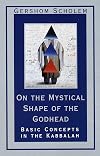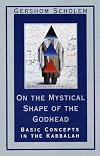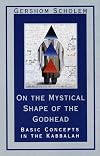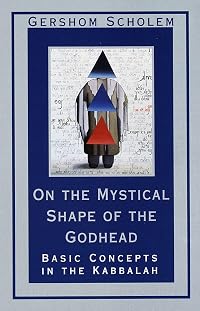
On the Mystical Shape of the Godhead: Basic Concepts in the Kabbalah (Mysticism & Kabbalah)
by Gershom Scholem
On This Page
Description
"A major contribution to our understanding of the Kabbalah." --Arthur Green, Professor of Jewish Thought, Brandeis University In the Zohar and other writings of the Kabbalah, Jewish mystics developed concepts and symbols to help them penetrate secrets of the cosmos that cannot be understood through reason or intellect. These ideas about God, human beings, and creation continue to fascinate and influence spiritual seekers of all persuasions today. In clear and easy-to-understand prose, show more Gershom Scholem, the pioneer of the modern study of Jewish mysticism explains the basic concepts of the Kabbalah: the mystical "form of the imageless God"; good and evil; the Tsaddik or righteous soul; the Shekhinah, the feminine aspect of God; gilgul, the transmigration of souls; and tselem, the concept of the astral body. For anyone seeking to taste the mysteries of the Kabbalah, this is an essential book. show lessTags
Recommendations














Member Reviews
Scholem here analyzes six concepts from Kabbalistic writings (foregoing the usual harping on the Kabbalists' strange methods of exegesis), using a cold and removed German modernist style. Each passage quoted is stranger than the last. The text is like a smooth and reflective column marbled with grotesque veins.
Scholem is the most competent and scholarly scholar of the kabbalah, and this book throws out some thought-inducing and important stuff.
I enjoy studying Kabbalah and Judaism, but I found this book hard to relate to. My own personal theological beliefs are quite different from the mainstream of either Judaism or Christianity, and so it is understandable to me that I would find certain ideas that wouldn't resonate with my understanding. Usually, however, I am able to find some applicable ideas within someone else's theological view, that I can, with minor alterations, integrate into my own understanding. For whatever reason, this book just didn't click with me.
That being said, it is probably a fine book for someone with a traditional theology.
That being said, it is probably a fine book for someone with a traditional theology.
Recommended by Harold Bloom.
Ratings
Members
- Recently Added By
Author Information

98+ Works 5,402 Members
Gershom Scholem's contribution to the understanding of Jewish mysticism is so dramatic that it warrants a separate introduction. As a young student of mathematics, he became a Zionist and his interest shifted to Jewish history. Scholem moved from Germany to become the librarian of the new University and National Library in Jerusalem in 1923 and show more served as a professor at Hebrew University from 1935 to 1965. Before him, Jewish historians during the nineteenth and early twentieth centuries scorned the ignored mystical dimension of Judaism as a relic of premodern superstition and ignorance. Scholem's erudition and deep insight gave Cabala a scholarly audience. His writings are often difficult to read, but they are indispensable for any thorough knowledge of the subject of Jewish mysticism. (Bowker Author Biography) show less
Some Editions
Common Knowledge
- First words
- The revolution wrought by biblical monotheism in the history of religion is tied to the imageless worship of God.
- Last words
- (Click to show. Warning: May contain spoilers.)The seeing of one's own self is thus turned from a prophetic into a messianic experience: man encounters himself at the moment of redemption where, accodrding to this religious nihilism, all other forms and shapes drop away from him and sink into the abyss of nothingness.
Classifications
Statistics
- Members
- 272
- Popularity
- 118,314
- Reviews
- 4
- Rating
- (4.42)
- Languages
- English, German, Polish
- Media
- Paper, Ebook
- ISBNs
- 8
- ASINs
- 3