
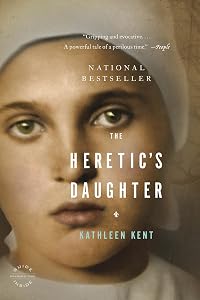
The Heretic's Daughter
by Kathleen Kent
On This Page
Description
Martha Carrier was one of the first women to be accused, tried and hanged as a witch in Salem, Massachusetts. Like her mother, young Sarah Carrier is bright and willful, openly challenging the small, brutal world in which they live. Often at odds with one another, mother and daughter are forced to stand together against the escalating hysteria of the trials and the superstitious tyranny that led to the torture and imprisonment of more than 200 people accused of witchcraft. This is the story show more of Martha's courageous defiance and ultimate death, as told by the daughter who survived. show lessTags
Recommendations
















Member Recommendations


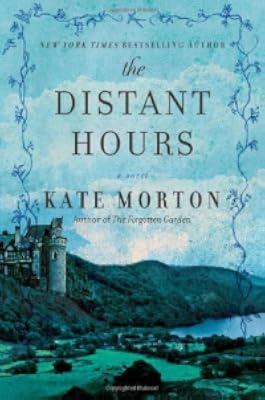
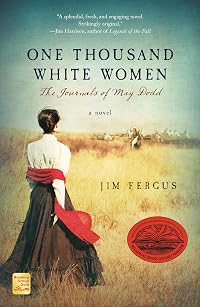
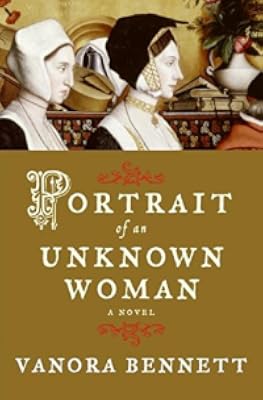
Ladyfong Female protagonist, persecuted for her religious beliefs, complicated mother-daughter relationship.
Member Reviews
I picked the Heretic’s Daughter off my shelf thinking I could just blow through it, that it would be just “okay” and I could give it away. I was pleasantly surprised when I blew through it, not because it was mediocre, but because it was very interesting. I like that it is a framed narrative, and that the whole story is a letter to the main character’s granddaughter. It feels like Kathleen Kent put a lot of research into the book. The honest sense of the struggle to survive in harsh conditions with harsher neighbors permeates the book. Kent gives us the bitter cold in the winter, the fact that if your father did not successfully hunt you went hungry, the real danger of a fire, or rot in your fields that will make your entire show more winter not just miserable but life-threatening. And on top of that there is mass hysteria running rampant through the countryside and being a social outcaste was much more a cause to be blamed for witchcraft than any dabbling in the black arts.
Kent did a good job making this a multi-layered story without it becoming cluttered or confusing. Uncle Roger tells stories to and spends a lot of time with Margaret and Sarah, but he also drinks and runs out on his wife. He is very kind to Sarah while she is in his house, but also insulting of Sarah’s father. And there is still a feeling that there is something beyond what we know-not necessarily witchcraft, but her mother and grandmother’s sight—that they sometimes have a feeling that someone is coming or something is going to happen, and her cousin Margaret’s “elfin look” and her little people in the cupboard who tell her to do things. Uncle Roger’s use of “conjuration” to get rid of witches. But of course, these are not the kinds of things that get people condemned of witchcraft. You are much more likely to be condemned if your crops do better than your neighbors, or you have a sharp tongue—or if you bring disease to town or are a foreigner. show less
Kent did a good job making this a multi-layered story without it becoming cluttered or confusing. Uncle Roger tells stories to and spends a lot of time with Margaret and Sarah, but he also drinks and runs out on his wife. He is very kind to Sarah while she is in his house, but also insulting of Sarah’s father. And there is still a feeling that there is something beyond what we know-not necessarily witchcraft, but her mother and grandmother’s sight—that they sometimes have a feeling that someone is coming or something is going to happen, and her cousin Margaret’s “elfin look” and her little people in the cupboard who tell her to do things. Uncle Roger’s use of “conjuration” to get rid of witches. But of course, these are not the kinds of things that get people condemned of witchcraft. You are much more likely to be condemned if your crops do better than your neighbors, or you have a sharp tongue—or if you bring disease to town or are a foreigner. show less
As God in heaven knows, changing a name cannot change the history of a place.
Nothing can change the history of Salem, Massachusetts, so the inhabitants have embraced it. They have built a memorial to the innocents who died there, they have made a kind of tourist industry of it, but the reality of what transpired stills the heart when truly contemplated.
...on that exact hour, a four-year-old girl, Dorcas Good, was examined by those judges in Salem Town jail. Her little feet and hands were bound by iron manacles so she could not send her spirit out and torment further the girls who were her accusers.
The reality of what happened to 20 innocent men and women in Salem, and to countless others who were not hanged, reads like a twisted show more fairytale; but of course, it is all too real and all too revealing of who we humans can be in our worst hours. Look around, closely, and see the blame game and hysteria of our own times.
Most of us are familiar with the events, and perhaps even with the details, but Kathleen Kent has put such a human face on Martha Carrier and her family that it all seems imbued with a fresh kind of horror and terror. What could you do in the face of such accusations? How long could you stand up for your innocence or that of your loved ones when sanity has taken a vacation and your mere denial places others in jeopardy? Who hasn’t uttered words that might be twisted and reshaped until they are swords in the hands of the unscrupulous fanatic?
Kent writes beautifully, with a sharpness and wisdom in her words:
A red wasp crawled across my hand and I froze lest he bury his stinger in my flesh. He was beautiful and frightful with his soulless black eyes and quivering barb and it came harshly to me that this garden was the world and from the world there would be no hiding.
The book is sprinkled with words I wished to remember and quotes I stopped to ponder:
Life is not what you have or what you can keep. It is what you can bear to lose.
Men are always the last to ken what women know by sniffing the air. That’s why God gave bodily might to Adam, to balance the inequities in strength.
The tension in this novel begins to build from the first page. The sense of foreboding is palpable. Sarah, our narrator, says The dread that had poured over me on the way to Samuel Preston’s farm returned to lick its way from my eyes to my neck. It congealed and tightened there like an insect caught in an amber necklace. That pretty much describes the way I felt throughout the book.
We know where it is going, we know it will not end well, we know reason did not win this battle, and yet I sat on the edge of my seat, hoping and wishing for another outcome. But, this is not a book about fantasy, this is a book about reality--in 1692 this was a world and an event that was all too real. Like [b:The Crucible|17250|The Crucible|Arthur Miller|https://i.gr-assets.com/images/S/compressed.photo.goodreads.com/books/1547467608l/17250._SX50_.jpg|1426723] before it, it is about strength; strength of character, impossible endurance, maintaining who you are in the face of unspeakable injustice. It is a reminder that there are different ways to define victory, some victories are shallow and some are intangible and worth remembering for ages.
If I am ever able to make the trip to Massachusetts, I would like to stand before the memorial they have built there and say a prayer for the souls of the twenty, and for all the other lives that were touched and changed by what happened to them there. For now, I pray for us, that we will have more wisdom, judgment and compassion than our ancestors had. show less
Nothing can change the history of Salem, Massachusetts, so the inhabitants have embraced it. They have built a memorial to the innocents who died there, they have made a kind of tourist industry of it, but the reality of what transpired stills the heart when truly contemplated.
...on that exact hour, a four-year-old girl, Dorcas Good, was examined by those judges in Salem Town jail. Her little feet and hands were bound by iron manacles so she could not send her spirit out and torment further the girls who were her accusers.
The reality of what happened to 20 innocent men and women in Salem, and to countless others who were not hanged, reads like a twisted show more fairytale; but of course, it is all too real and all too revealing of who we humans can be in our worst hours. Look around, closely, and see the blame game and hysteria of our own times.
Most of us are familiar with the events, and perhaps even with the details, but Kathleen Kent has put such a human face on Martha Carrier and her family that it all seems imbued with a fresh kind of horror and terror. What could you do in the face of such accusations? How long could you stand up for your innocence or that of your loved ones when sanity has taken a vacation and your mere denial places others in jeopardy? Who hasn’t uttered words that might be twisted and reshaped until they are swords in the hands of the unscrupulous fanatic?
Kent writes beautifully, with a sharpness and wisdom in her words:
A red wasp crawled across my hand and I froze lest he bury his stinger in my flesh. He was beautiful and frightful with his soulless black eyes and quivering barb and it came harshly to me that this garden was the world and from the world there would be no hiding.
The book is sprinkled with words I wished to remember and quotes I stopped to ponder:
Life is not what you have or what you can keep. It is what you can bear to lose.
Men are always the last to ken what women know by sniffing the air. That’s why God gave bodily might to Adam, to balance the inequities in strength.
The tension in this novel begins to build from the first page. The sense of foreboding is palpable. Sarah, our narrator, says The dread that had poured over me on the way to Samuel Preston’s farm returned to lick its way from my eyes to my neck. It congealed and tightened there like an insect caught in an amber necklace. That pretty much describes the way I felt throughout the book.
We know where it is going, we know it will not end well, we know reason did not win this battle, and yet I sat on the edge of my seat, hoping and wishing for another outcome. But, this is not a book about fantasy, this is a book about reality--in 1692 this was a world and an event that was all too real. Like [b:The Crucible|17250|The Crucible|Arthur Miller|https://i.gr-assets.com/images/S/compressed.photo.goodreads.com/books/1547467608l/17250._SX50_.jpg|1426723] before it, it is about strength; strength of character, impossible endurance, maintaining who you are in the face of unspeakable injustice. It is a reminder that there are different ways to define victory, some victories are shallow and some are intangible and worth remembering for ages.
If I am ever able to make the trip to Massachusetts, I would like to stand before the memorial they have built there and say a prayer for the souls of the twenty, and for all the other lives that were touched and changed by what happened to them there. For now, I pray for us, that we will have more wisdom, judgment and compassion than our ancestors had. show less
In The Heretic’s Daughter, Kathleen Kent tells the story of her ancestor Martha Carrier, one of the women convicted for witchcraft in Salem during the Salem witch trials of 1692-1693, through the eyes of Martha’s daughter Sarah. Over the course of a couple years, we see how events – starting with a breakout of small pox – can cause people to turn on one another, how resentments can grow, and how rumours can ruin the lives of people.
This was a slow-moving book, but that in no way took away from the power of the book. I had tears in my eyes at numerous points in the last three chapters of the book. It was raw, poignant and heartfelt. I can’t imagine having to live through what all those people had to go through, and even reading show more about it just about broke my heart. To imagine having your friends and neighbours, and in some cases your family, turn against you and allow you to be condemned to hang as a witch… it’s just so depressing.
But not everything about the book was depressing. It was wonderful to see the layers of the relationships between all the family members peeled away as the book progressed. How the book starts with Sarah resenting her parents, to respecting, loving and understanding them by the end; how we understood by the end why Sarah’s father was always so standoffish; how Sarah’s mother really counted on Sarah to do the right thing. Kent wrote about real family dynamics that made that part of the book so relatable for anyone, and I think that definitely made the book that much more powerful. Because, when Sarah’s mother tells Sarah that Sarah must tell the judges whatever they want to hear, even if it means telling them that her mother is a witch… it breaks your heart. Can you even imagine having to tell people that your mother is a witch during the witch trials?
Part of what made this book so heart-wrenching was the fact that it is not only based on real-life events, but also on real people, people who really got condemned and hanged because they were believed to be witches.
This was Kent’s debut novel, and I’m definitely looking forward to what she does next. show less
This was a slow-moving book, but that in no way took away from the power of the book. I had tears in my eyes at numerous points in the last three chapters of the book. It was raw, poignant and heartfelt. I can’t imagine having to live through what all those people had to go through, and even reading show more about it just about broke my heart. To imagine having your friends and neighbours, and in some cases your family, turn against you and allow you to be condemned to hang as a witch… it’s just so depressing.
But not everything about the book was depressing. It was wonderful to see the layers of the relationships between all the family members peeled away as the book progressed. How the book starts with Sarah resenting her parents, to respecting, loving and understanding them by the end; how we understood by the end why Sarah’s father was always so standoffish; how Sarah’s mother really counted on Sarah to do the right thing. Kent wrote about real family dynamics that made that part of the book so relatable for anyone, and I think that definitely made the book that much more powerful. Because, when Sarah’s mother tells Sarah that Sarah must tell the judges whatever they want to hear, even if it means telling them that her mother is a witch… it breaks your heart. Can you even imagine having to tell people that your mother is a witch during the witch trials?
Part of what made this book so heart-wrenching was the fact that it is not only based on real-life events, but also on real people, people who really got condemned and hanged because they were believed to be witches.
This was Kent’s debut novel, and I’m definitely looking forward to what she does next. show less
Book 2
"I am amazed that this is a first novel. The book is a very fine specimen of very fine historical fiction.
Not only that but the author is a tenth generation descendant of this family from 1690s Massachusetts during the height of the Salem Witch Trials.
The novel is from the perspective of Sarah Carrier, a ten year old girl, who experiences the difficulties and challenges of this historical period in New England. This author is such an amazing storyteller. She describes the landscapes, townscapes to a vivid degree, the minutiae of daily life,the complex sociology of the community to the interelationships and inner lives of the inhabitants.
The conditions at the best of times are challenging but at the worst of times the author takes show more you into the suffering to such a degree that you start to panic and frantically want to skip pages or take long breaks from reading.
Until reading this book I did not fully understand how these atrocities could occur at the hysterical rantings of a few teenage girls. The book unfolds in such a careful yet hypnotic fashion that not only are you a reader but you become a witness to the plight of not only the Carrier family but to the adult and child witches that were accused and convicted of such utter nonsense !!
The writing is rich, intelligent and interesting:
"And what finally of the tortures of a guilty soul? What concoction is there that can be chewed and swallowed and downed in the belly to force the poison of self-recrimination back through the the pores in the skin? In what organ of the body does it reside ? A seeping wound can be bound. Salve can be dabbed to a burn or a swelling bubo. Poison can be drawn with a leech, or a lance. But guilt is a ghost that takes the shape of the body it inhabits and consumes all that is tender within its shell: brain, bowels, and heart. I cannot pluck it out like a splinter of glass or treat it with herbal brew. " "
-review by Jaidee on GoodReads show less
"I am amazed that this is a first novel. The book is a very fine specimen of very fine historical fiction.
Not only that but the author is a tenth generation descendant of this family from 1690s Massachusetts during the height of the Salem Witch Trials.
The novel is from the perspective of Sarah Carrier, a ten year old girl, who experiences the difficulties and challenges of this historical period in New England. This author is such an amazing storyteller. She describes the landscapes, townscapes to a vivid degree, the minutiae of daily life,the complex sociology of the community to the interelationships and inner lives of the inhabitants.
The conditions at the best of times are challenging but at the worst of times the author takes show more you into the suffering to such a degree that you start to panic and frantically want to skip pages or take long breaks from reading.
Until reading this book I did not fully understand how these atrocities could occur at the hysterical rantings of a few teenage girls. The book unfolds in such a careful yet hypnotic fashion that not only are you a reader but you become a witness to the plight of not only the Carrier family but to the adult and child witches that were accused and convicted of such utter nonsense !!
The writing is rich, intelligent and interesting:
"And what finally of the tortures of a guilty soul? What concoction is there that can be chewed and swallowed and downed in the belly to force the poison of self-recrimination back through the the pores in the skin? In what organ of the body does it reside ? A seeping wound can be bound. Salve can be dabbed to a burn or a swelling bubo. Poison can be drawn with a leech, or a lance. But guilt is a ghost that takes the shape of the body it inhabits and consumes all that is tender within its shell: brain, bowels, and heart. I cannot pluck it out like a splinter of glass or treat it with herbal brew. " "
-review by Jaidee on GoodReads show less
Kathleen Kent's debut novel, The Heretic's Daughter (releasing this week from Little, Brown) is a very impressive first book indeed. It tells the story of Martha Carrier, one of those hanged as a witch at Salem in 1692, through the eyes of her 10-year old daughter Sarah who, along with four of her five siblings, was jailed alongside her mother on suspicion of witchcraft. Kent turns their harrowing real-life experiences into an absorbing study of family loyalty and the social brutality that marked the New England witchcraft scares of the late seventeenth century.
Kent pulls off a feat that is notoriously tricky to do, narrating a book from the perspective of a young child. She allows Sarah to control the narrative, not endowing her with show more wisdom or foresight beyond her years but capturing the innocence and incomplete understanding of the events happening around her as her family is dragged into the drama of the witchcraft accusations.
The characters here are all human, real in their grittiness and their faults, their spirit and their power. There are no caricatures here, but portraits. Kent's deep research into the people and the Puritan culture of the time is evident in every page, and my only serious gripe with this book is the lack of a historical note explaining the departures taken from the historical record. I read an ARC, though, so hopefully this fault is remedied in the final published version.
I don't recall reading a better fictional treatment of the Salem crisis, so for those interested in the period or the subject matter, I do suggest this one.
http://philobiblos.blogspot.com/2008/09/book-review-heretics-daughter.html show less
Kent pulls off a feat that is notoriously tricky to do, narrating a book from the perspective of a young child. She allows Sarah to control the narrative, not endowing her with show more wisdom or foresight beyond her years but capturing the innocence and incomplete understanding of the events happening around her as her family is dragged into the drama of the witchcraft accusations.
The characters here are all human, real in their grittiness and their faults, their spirit and their power. There are no caricatures here, but portraits. Kent's deep research into the people and the Puritan culture of the time is evident in every page, and my only serious gripe with this book is the lack of a historical note explaining the departures taken from the historical record. I read an ARC, though, so hopefully this fault is remedied in the final published version.
I don't recall reading a better fictional treatment of the Salem crisis, so for those interested in the period or the subject matter, I do suggest this one.
http://philobiblos.blogspot.com/2008/09/book-review-heretics-daughter.html show less
Wow. Well written but terrifying and sad, it is the best book I’ve read on the Salem Witch trials. The horrors and the unbelievable stupidity and over zealousness of the accusers and the judges is eerily familiar in these dark days as we strive to save our country and our world from the incompetence, greed, and ignorance of Trump and his minions.
The Heretic's Daughter is so much more than a book about the Salem Witch Trials, though throughout the story the reader is aware of the gradually growing underlying tension that will eventually give way to the hysteria that led to the deaths of over 200 men and women. And we also know that the narrator's mother, Martha Carrier is one of the first victims of the Salem Witch Trials.
Sharp-tongued, strong-willed and unwilling to participate in Puritan church life, it is no wonder that Martha Carrier and her family were targeted by the animosity of the community. It is even less of a surprise when we learn of a acrimonious dispute over land that has sundered family ties. And Martha's daughter Sarah, the narrator and titular character, show more cannot help but feel hostile towards a mother more often harsh than affectionate, especially since the two of them are alike in too many ways to allow for harmony between them.
When Sarah takes refuge from the smallpox with her aunt and uncle, she is exposed to their more affectionate family life. How she yearns for that kind of closeness, and how she misses the companionship of her cousin. But despite their good qualities, the reader sees the less attractive side of the Toothaker family. While affectionate with his family, Sarah's uncle is closed-minded and downright vicious when it comes to Native Americans, or 'outsiders' in general. And although Sarah's own mother is vitriolic and short-tempered at times, she is brave enough to stand up for what she believes in - even to the point of losing her own life.
Possible Spoilers:
But the aspect of the story that really appealed to me was that in her martyrdom, Martha Carrier displays none of the closed-minded zeal that I so often find repugnant in those willing to die for their beliefs. Although she refuses to knuckle under to her oppressors, she ensures that her family will live - even if it means that they must lie and denounce her to the judges.
(end spoilers)
This is a thoroughly touching story not so much about the Salem Witch Trials themselves as about a mother-daughter relationship. The Witch Trials form a sort of crucible for mother and daughter. A very interesting read, and emotionally compelling. I definitely recommend this for anyone who is interested in historical fiction.
Also posted at my blog.
FTC Disclosure: I received a free copy of this book in a blog contest. show less
Sharp-tongued, strong-willed and unwilling to participate in Puritan church life, it is no wonder that Martha Carrier and her family were targeted by the animosity of the community. It is even less of a surprise when we learn of a acrimonious dispute over land that has sundered family ties. And Martha's daughter Sarah, the narrator and titular character, show more cannot help but feel hostile towards a mother more often harsh than affectionate, especially since the two of them are alike in too many ways to allow for harmony between them.
When Sarah takes refuge from the smallpox with her aunt and uncle, she is exposed to their more affectionate family life. How she yearns for that kind of closeness, and how she misses the companionship of her cousin. But despite their good qualities, the reader sees the less attractive side of the Toothaker family. While affectionate with his family, Sarah's uncle is closed-minded and downright vicious when it comes to Native Americans, or 'outsiders' in general. And although Sarah's own mother is vitriolic and short-tempered at times, she is brave enough to stand up for what she believes in - even to the point of losing her own life.
Possible Spoilers:
But the aspect of the story that really appealed to me was that in her martyrdom, Martha Carrier displays none of the closed-minded zeal that I so often find repugnant in those willing to die for their beliefs. Although she refuses to knuckle under to her oppressors, she ensures that her family will live - even if it means that they must lie and denounce her to the judges.
(end spoilers)
This is a thoroughly touching story not so much about the Salem Witch Trials themselves as about a mother-daughter relationship. The Witch Trials form a sort of crucible for mother and daughter. A very interesting read, and emotionally compelling. I definitely recommend this for anyone who is interested in historical fiction.
Also posted at my blog.
FTC Disclosure: I received a free copy of this book in a blog contest. show less
Members
- Recently Added By
Lists

Historical Fiction
889 works; 91 members

Female Protagonist
1,056 works; 56 members

Books Set in Massachusetts
41 works; 8 members

Mothers and Daughters
114 works; 11 members

Books Read in 2010
631 works; 10 members

KayStJ's to-read list
1,616 works; 11 members

Authors from the United States
245 works; 3 members

Books Read in 2019
4,052 works; 108 members

Novels About Witchcraft
8 works; 1 member
Author Information

10+ Works 3,802 Members
Awards and Honors
Series
Belongs to Publisher Series
Goldmann (46838)
Common Knowledge
- Canonical title
- The Heretic's Daughter
- Original title
- The Heretic's Daughter
- Alternate titles
- Sarah's Lot
- Original publication date
- 2008-09-03
- People/Characters
- Sarah Carrier; Martha Carrier; Thomas Carrier; Mercy Williams; Roger Toothaker; Allen Toothaker (show all 14); Mary Toothaker; Margaret Toothaker; Hannah Carrier; Tom Carrier; Richard Carrier; Sarah Carrier Chapman; Andrew Carrier; John Hathorne
- Important places
- Salem, Massachusetts, USA; Andover, Massachusetts, USA; Billerica, Massachusetts, USA
- Important events
- Salem witch trials (1692)
- Epigraph
- Ah, children, be afraid of going prayerless to bed, lest the Devil be your bedfellow.
—Cotton Mather from a funeral service - Dedication
- This book is dedicated to Mitchell and Joshua
And to my parents, John and Audrey, for giving me the stories. - First words
- The distance by wagon from Billerica to neighboring Andover is but nine miles.
- Quotations
- The chief judge then asked Mother, "What do you say to this you are charged with?"
Mother's voice sounded loud and clear through to the back of the room, "I have not done it."
I see the world, Sarah, and call it by what I feel it should be, not by what others who in their dull reveries think it is. - Last words
- (Click to show. Warning: May contain spoilers.)And always it was there, like a step-stone in a swift-moving river.
- Publisher's editor
- Arthur, Reagan
- Blurbers
- Shreve, Anita; Cain, Chelsea
Classifications
Statistics
- Members
- 2,605
- Popularity
- 7,232
- Reviews
- 190
- Rating
- (3.80)
- Languages
- 8 — Chinese, Dutch, English, French, German, Italian, Portuguese, Spanish
- Media
- Paper, Audiobook, Ebook
- ISBNs
- 33
- UPCs
- 1
- ASINs
- 9