
On This Page
Description
While readying her grandmother's abandoned home for sale, Connie Goodwin discovers an ancient key in a seventeenth-century Bible with a scrap of parchment bearing the name Deliverance Dane. In her quest to discover who this woman was and seeking a rare artifact--a physick book--Connie begins to feel haunted by visions of the long-ago witch trials and fears that she may be more tied to Salem's past than she could have imagined.Tags
Recommendations
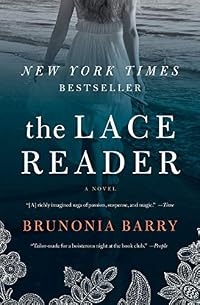
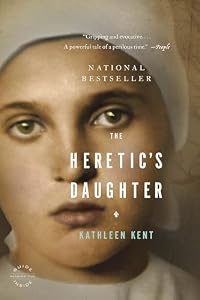
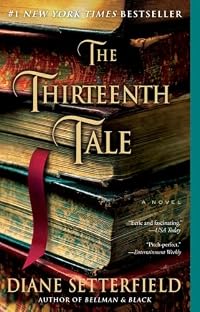
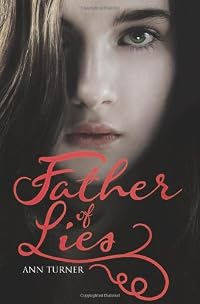
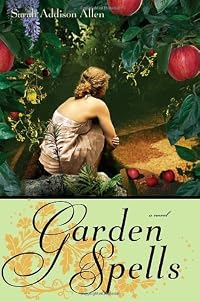
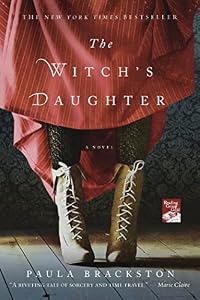









Member Recommendations





Member Reviews
“When I started thinking about the story in The Physick Book of Deliverance Dane, I decided to take the Salem villagers at their word for once: what if witchcraft was real?”
— “The Physick Book of Deliverance Dane,” Katherine Howe, p 363 (Postscript)
Stupidly simple thing I learned reading this book: I like stories about girls who sweat. The refreshing thing about Howe’s 1991 graduate student protagonist, Connie, was how realistically Howe used her sensations to describe what it is like to physically be in the human body as a woman who is interested in things beyond being attractive to men. Her realistic priority was the work she had to do, and her interactions formally and loosely professional were the driving force behind show more the book’s action. Her relationship with Sam did not seem to undergird her every thought, and it seemed more realistic because of that. My perception of an undercurrent of romantic thought in a significant amount of fiction by and about women may be a subjective result of my perspective, but for some reason Connie seemed free of this, and was as a result easier to read. She surely had faults, but no more than the protagonists of any story the reader is supposed to piece together before its characters: she is dense, to the degree that the author needs her to be for the sake of her pacing. Her relationship with her mother is a great example of this, because though it improved, their communication did not. As someone who has had an unrealistically good relationship with her mother throughout her growing up years, I was simultaneously pleased and frustrated by this insight into different lives than mine. I think the complicated relationships of all the women both past and in the 1991 sections, alive and dead, are the centerpiece of the book.
Though this book was theoretically about the twin narratives of the three ancestors and the three modern women, the historic sections played as a second priority, as they take up less space and the author writes them at more of a distance. Hearing her say in an online lecture (via the Coursera program Plagues, Witches, and Wars) that she could more easily write the historic sections because she did not have to do the work of making sure that she was not projecting too much of her own experiences of 1991 was a revelation. Perhaps the writing she considers formally better has less of the sweat and other physical realities that made her prose work, when it did.
Howe’s shortcomings were evidenced most when she brings Connie into contact with her graduate advisor, Chilton Manning, or Manning Chilton, either of them being similarly ridiculous names. My opinion may be different if I had more experience with academia, but he seemed like a caricature of the sexist academic, and his research into alchemy seemed improbable in the modern climate, although all these thoughts are filtered through a 2019 mentality. The standards to which academics are held are constantly changing, and it seems perhaps more so since 2000 than they did before that. So maybe Manning Chilton the IIIs really did exist and perform this way in the early ’90s Harvard history department.
After all this: the book has no heart. Its ability to keep me speedily turning the pages did not, unfortunately, relieve me of this opinion. That said, the theoretical approach to historical fiction, taking those who lived in the past at their word on the more supernatural aspects of their existence, is a fascinating take and I look forward to someday finding a book that explores this further. show less
— “The Physick Book of Deliverance Dane,” Katherine Howe, p 363 (Postscript)
Stupidly simple thing I learned reading this book: I like stories about girls who sweat. The refreshing thing about Howe’s 1991 graduate student protagonist, Connie, was how realistically Howe used her sensations to describe what it is like to physically be in the human body as a woman who is interested in things beyond being attractive to men. Her realistic priority was the work she had to do, and her interactions formally and loosely professional were the driving force behind show more the book’s action. Her relationship with Sam did not seem to undergird her every thought, and it seemed more realistic because of that. My perception of an undercurrent of romantic thought in a significant amount of fiction by and about women may be a subjective result of my perspective, but for some reason Connie seemed free of this, and was as a result easier to read. She surely had faults, but no more than the protagonists of any story the reader is supposed to piece together before its characters: she is dense, to the degree that the author needs her to be for the sake of her pacing. Her relationship with her mother is a great example of this, because though it improved, their communication did not. As someone who has had an unrealistically good relationship with her mother throughout her growing up years, I was simultaneously pleased and frustrated by this insight into different lives than mine. I think the complicated relationships of all the women both past and in the 1991 sections, alive and dead, are the centerpiece of the book.
Though this book was theoretically about the twin narratives of the three ancestors and the three modern women, the historic sections played as a second priority, as they take up less space and the author writes them at more of a distance. Hearing her say in an online lecture (via the Coursera program Plagues, Witches, and Wars) that she could more easily write the historic sections because she did not have to do the work of making sure that she was not projecting too much of her own experiences of 1991 was a revelation. Perhaps the writing she considers formally better has less of the sweat and other physical realities that made her prose work, when it did.
Howe’s shortcomings were evidenced most when she brings Connie into contact with her graduate advisor, Chilton Manning, or Manning Chilton, either of them being similarly ridiculous names. My opinion may be different if I had more experience with academia, but he seemed like a caricature of the sexist academic, and his research into alchemy seemed improbable in the modern climate, although all these thoughts are filtered through a 2019 mentality. The standards to which academics are held are constantly changing, and it seems perhaps more so since 2000 than they did before that. So maybe Manning Chilton the IIIs really did exist and perform this way in the early ’90s Harvard history department.
After all this: the book has no heart. Its ability to keep me speedily turning the pages did not, unfortunately, relieve me of this opinion. That said, the theoretical approach to historical fiction, taking those who lived in the past at their word on the more supernatural aspects of their existence, is a fascinating take and I look forward to someday finding a book that explores this further. show less
This dual narrative alternates between Connie Goodwin, a 20th century PhD candidate in history searching for that elusive beast, an original primary source, and the story of a peculiar line of women in 17th and 18th century Salem who are accused of witchcraft, perhaps not entirely without basis. Connie’s life is about little other than history; she is thrilled when she stumbles on clues towards what may be a lost Salem witch. As she makes friends - perhaps more than friends - with attractive restorer Sam, digs around in archives, and attempts to clean her grandmother’s colonial house, Connie realizes that there are larger forces at work than just her search for the physick book of Deliverance Dane.
I’m not sure what I was expecting show more when I picked this up, but I certainly got more than that! I loved this book. I could relate to Connie very, very well. She’s a PhD student and I’m only a lowly MA student, but much of our experience and love for history is very similar. I loved reading about her research, poking through archives full of that old book smell, and her discoveries. I haven’t been able to poke through archives on my own yet but I can’t wait for an excuse! Anyway, being able to relate to the protagonist so well made this book for me.
I also found the idea very clever. We’re so caught up in the fact that there weren’t witches at Salem that we miss out on the fun of pretending that there were, and moreover that magic exists. I loved this idea and I found the way it was executed very well done; it fits with what I know of the Salem witch trials but still provides something new and different.
As far as the villain goes, I figured that out, but I enjoyed the journey to Connie’s discovery. Her relationship with her mother was particularly interesting; she seems to be able to “see” her mother over the phone without even realizing that she’s doing it or that it’s unusual. That was the first hint I had regarding any abilities. I also liked the way things developed between them over time. I loved the character of Sam, who restores old buildings for a living. Can I have his job? Someone please say yes.
Anyway, I’m doing a very sorry job of expressing how much I liked this book! Its 350+ pages flew by. I had dreams about it. I thought it was well told, fast paced, engrossing, and interesting. If I had to pick one thing I didn’t like, it was a few of the longer flashbacks; some of the characters felt like their stories had already been told. Regardless, I liked Deliverance, and I didn’t mind when we heard about her or her daughter.
I would definitely recommend this book. It works as historical fiction but it also works as a regular novel. I loved reading it and maybe you would too.
http://chikune.com/blog/?p=1070 show less
I’m not sure what I was expecting show more when I picked this up, but I certainly got more than that! I loved this book. I could relate to Connie very, very well. She’s a PhD student and I’m only a lowly MA student, but much of our experience and love for history is very similar. I loved reading about her research, poking through archives full of that old book smell, and her discoveries. I haven’t been able to poke through archives on my own yet but I can’t wait for an excuse! Anyway, being able to relate to the protagonist so well made this book for me.
I also found the idea very clever. We’re so caught up in the fact that there weren’t witches at Salem that we miss out on the fun of pretending that there were, and moreover that magic exists. I loved this idea and I found the way it was executed very well done; it fits with what I know of the Salem witch trials but still provides something new and different.
As far as the villain goes, I figured that out, but I enjoyed the journey to Connie’s discovery. Her relationship with her mother was particularly interesting; she seems to be able to “see” her mother over the phone without even realizing that she’s doing it or that it’s unusual. That was the first hint I had regarding any abilities. I also liked the way things developed between them over time. I loved the character of Sam, who restores old buildings for a living. Can I have his job? Someone please say yes.
Anyway, I’m doing a very sorry job of expressing how much I liked this book! Its 350+ pages flew by. I had dreams about it. I thought it was well told, fast paced, engrossing, and interesting. If I had to pick one thing I didn’t like, it was a few of the longer flashbacks; some of the characters felt like their stories had already been told. Regardless, I liked Deliverance, and I didn’t mind when we heard about her or her daughter.
I would definitely recommend this book. It works as historical fiction but it also works as a regular novel. I loved reading it and maybe you would too.
http://chikune.com/blog/?p=1070 show less
I wanted to like this book, even though I have friends who found it very disappointing. I mean: witchcraft! Salem! Hunting through libraries for an old book! It should work! It doesn't.
(There are spoilers all over the place ahead, because I don't recommend you read the book.)
A large part of the problem is our heroine. When we are introduced to her, we are told that she just presented the most brilliant Ph.D. defense in Harvard's history, but what we are shown for the rest of the book is someone really, really slow on the uptake. The most egregious example is when she, hunting for the lost "physick book", finds the journal of Deliverance Dane's daughter, and discovers an entry that reads, "Mother asked about her almanack. Angry to hear show more I gave it to Social Lib."
"To the Social Library!" says the reader.
Says our heroine: "What is it about this entry that feels important? Why would it? What could a mention of an 'almanack' possibly have to do with my quest for a book?" (I'm not exaggerating at all. That is exactly what we are told the character is thinking.) Her mental gears then grind for forty pages before she puts two and two together, and when she does it's presented as her nascent witch powers providing intuition, not as an ability to grasp synonyms for the word "book". The unforgivable offense here is that Howe thinks her readers are no smarter. It's like Dan Brown assuming that his readers won't know Leonardo da Vinci wrote in mirror image, and so he can have a Leonardo da Vinci expert not know that. "I'm sure my readers won't know that an 'almanack' could refer to a book, so I don't have to have my doctoral candidate in American history know that!" Seriously, Howe? What do you think we think an almanac IS? A wall calendar? A raincoat? What?
You are an author. I am a reader. I am trusting you with my time and attention. What I ask in return is that you trust me to be at least as intelligent as you are. Why would you want to write for me if you don't think I am?
Our heroine's evil advisor (that isn't even really a spoiler, unless you are a Harvard doctoral candidate, because apparently they are a slow breed) is after her to find the book so he can take it from her, and at no point did I understand why he thought this would be faster than finding it himself. Her "hunt" consists of rambling around Salem with her love interest most of the time, and clues have to literally fall out of bookcases into her magical destined hands for her to find them.
The book is set in two time periods: the late 1600's and 1991. The period pieces are okay except for when any character opens his or her mouth, because Howe decided to write the dialogue in heavy Ye Olde Dialect and with a phonetically-indicated colonial Boston accent. It's unreadable. The modern setting appears to have chosen in order to eliminate computers from the search. I don't think this was necessary; one of my friends is a historian, and she has spent several of the last few years in archives with original sources. I do not think there was much googling involved. The other problem is that our heroine and her love interest are supposed to be attractive sexy young people, and I can tell you with all the authority of someone who was a fourteen-year-old girl in 1991 that no one in the world was attractive that year (Eddie Vedder came close, but you could just tell he smelled awful). When we're told that the love interest looks like he should be in a grunge band, I gagged a little bit.
Also, the end? The blocking? What is happening? First our heroine is tearing up herbs with both hands (including a mandrake root, which I don't think tears easily), but then with no transition she's holding the book to her chest, and then suddenly it's a "manuscript" of only a few pages instead, and then she throws it on the fire, but at the very end she claims the book is fine and hidden in the library...? What?
So. Not impressed. show less
(There are spoilers all over the place ahead, because I don't recommend you read the book.)
A large part of the problem is our heroine. When we are introduced to her, we are told that she just presented the most brilliant Ph.D. defense in Harvard's history, but what we are shown for the rest of the book is someone really, really slow on the uptake. The most egregious example is when she, hunting for the lost "physick book", finds the journal of Deliverance Dane's daughter, and discovers an entry that reads, "Mother asked about her almanack. Angry to hear show more I gave it to Social Lib."
"To the Social Library!" says the reader.
Says our heroine: "What is it about this entry that feels important? Why would it? What could a mention of an 'almanack' possibly have to do with my quest for a book?" (I'm not exaggerating at all. That is exactly what we are told the character is thinking.) Her mental gears then grind for forty pages before she puts two and two together, and when she does it's presented as her nascent witch powers providing intuition, not as an ability to grasp synonyms for the word "book". The unforgivable offense here is that Howe thinks her readers are no smarter. It's like Dan Brown assuming that his readers won't know Leonardo da Vinci wrote in mirror image, and so he can have a Leonardo da Vinci expert not know that. "I'm sure my readers won't know that an 'almanack' could refer to a book, so I don't have to have my doctoral candidate in American history know that!" Seriously, Howe? What do you think we think an almanac IS? A wall calendar? A raincoat? What?
You are an author. I am a reader. I am trusting you with my time and attention. What I ask in return is that you trust me to be at least as intelligent as you are. Why would you want to write for me if you don't think I am?
Our heroine's evil advisor (that isn't even really a spoiler, unless you are a Harvard doctoral candidate, because apparently they are a slow breed) is after her to find the book so he can take it from her, and at no point did I understand why he thought this would be faster than finding it himself. Her "hunt" consists of rambling around Salem with her love interest most of the time, and clues have to literally fall out of bookcases into her magical destined hands for her to find them.
The book is set in two time periods: the late 1600's and 1991. The period pieces are okay except for when any character opens his or her mouth, because Howe decided to write the dialogue in heavy Ye Olde Dialect and with a phonetically-indicated colonial Boston accent. It's unreadable. The modern setting appears to have chosen in order to eliminate computers from the search. I don't think this was necessary; one of my friends is a historian, and she has spent several of the last few years in archives with original sources. I do not think there was much googling involved. The other problem is that our heroine and her love interest are supposed to be attractive sexy young people, and I can tell you with all the authority of someone who was a fourteen-year-old girl in 1991 that no one in the world was attractive that year (Eddie Vedder came close, but you could just tell he smelled awful). When we're told that the love interest looks like he should be in a grunge band, I gagged a little bit.
Also, the end? The blocking? What is happening? First our heroine is tearing up herbs with both hands (including a mandrake root, which I don't think tears easily), but then with no transition she's holding the book to her chest, and then suddenly it's a "manuscript" of only a few pages instead, and then she throws it on the fire, but at the very end she claims the book is fine and hidden in the library...? What?
So. Not impressed. show less
This was an early reviewer book, and I was so excited to receive it. However, for whatever reason, this book took me FOREVER to read. The first 200 pages just seemed to drag on and on, with not much happening. I'm glad that I stuck with it though, as the story did pick up in the last quarter of the book.
The Physick Book of Deliverance Dane tells two stories. Connie Goodwin is busy preparing to write her PhD dissertation on American History when she gets the call from her mother to help clean her grandmother's house and get it ready to sell. Connie reluctantly agrees to help her mother, and in doing so discovers a rolled up piece of paper that is inserted into a key that is found in an ancient family bible. On the piece of paper is show more written a name, Deliverance Dane. What Connie soon discovers is that Deliverance Dane may be a previously unknown Salem witch, and what ensues is her journey to discover the location of Deliverance's recipe book and the secrets that are hidden within. The second story is that of Deliverance and her descendants.
I really enjoyed the historical setting for Deliverance and her family. I found that portion of the book to be very well written and since there isn't much to tell, per se, that portion of the book moved along quite well. However, it was during the bulk of the story that dealt with Connie that I felt the story to drag on. I wouldn't even know what I could put my finger on that would make the story move along. All the characters have their roles to play, and they are all believable, but the story just didn't seem to move, at all, for the first 200 pages of the book. As the pieces of the puzzle started to fall into place during the last quarter of the book, however, I was glad that I stuck with it as the story moved along.
What makes the historical aspect of the story even more interesting is the fact that the author, Katherine Howe, is a descendent of two of the actual Salem witches, Elizabeth Howe and Elizabeth Proctor. The scenes that dealt with the witch trials were very well written, really giving a sense of the mania that had swept through the village and surrounding area. I can honestly say that I enjoyed these interludes even more than I did the rest of the book. I'd like to see Katherine Howe expand these sections into an actual retelling, fictionalized or not, of the Salem witch trials. I think that she could create a very accessible account of the hysteria and trials of 1692.
Overall, The Physick Book of Deliverance Dane is not a bad book. It is thoroughly researched, and you can tell that Katherine Howe really loved her characters and this story, but the book could have benefitted from faster pacing. If you are a fan of witches, or are interested in the history and stories behind the Salem witch trials, I don't think that you'd be disappointed in this book. show less
The Physick Book of Deliverance Dane tells two stories. Connie Goodwin is busy preparing to write her PhD dissertation on American History when she gets the call from her mother to help clean her grandmother's house and get it ready to sell. Connie reluctantly agrees to help her mother, and in doing so discovers a rolled up piece of paper that is inserted into a key that is found in an ancient family bible. On the piece of paper is show more written a name, Deliverance Dane. What Connie soon discovers is that Deliverance Dane may be a previously unknown Salem witch, and what ensues is her journey to discover the location of Deliverance's recipe book and the secrets that are hidden within. The second story is that of Deliverance and her descendants.
I really enjoyed the historical setting for Deliverance and her family. I found that portion of the book to be very well written and since there isn't much to tell, per se, that portion of the book moved along quite well. However, it was during the bulk of the story that dealt with Connie that I felt the story to drag on. I wouldn't even know what I could put my finger on that would make the story move along. All the characters have their roles to play, and they are all believable, but the story just didn't seem to move, at all, for the first 200 pages of the book. As the pieces of the puzzle started to fall into place during the last quarter of the book, however, I was glad that I stuck with it as the story moved along.
What makes the historical aspect of the story even more interesting is the fact that the author, Katherine Howe, is a descendent of two of the actual Salem witches, Elizabeth Howe and Elizabeth Proctor. The scenes that dealt with the witch trials were very well written, really giving a sense of the mania that had swept through the village and surrounding area. I can honestly say that I enjoyed these interludes even more than I did the rest of the book. I'd like to see Katherine Howe expand these sections into an actual retelling, fictionalized or not, of the Salem witch trials. I think that she could create a very accessible account of the hysteria and trials of 1692.
Overall, The Physick Book of Deliverance Dane is not a bad book. It is thoroughly researched, and you can tell that Katherine Howe really loved her characters and this story, but the book could have benefitted from faster pacing. If you are a fan of witches, or are interested in the history and stories behind the Salem witch trials, I don't think that you'd be disappointed in this book. show less
This pretty-looking book was urged upon me by a fellow LTer whose previous urged reading, The Hummingbird's Daughter, was so ghastly and generally unpleasant to read that I was worried this book would be a stinker too. After all, hype + feminism + supernatural goins-on = *groan* for the typical Y-chromosome bearer.
I was completely wrong. I'm sorry I waited to read it.
Don't mistake me, it's a first novel with first-novel flaws, but it's a very good read and it's a promising debut. The basic story, a grad student in American History's discovery of a previously unknown primary source for data on the Salem witch trials, is built to excite the historian in me. The book itself, being a recipes-and-remedies book written by multiple generations show more of gifted women, also hooks my attention immediately.
The author, who is descended from an accused witch from Salem and who counts another, who died there, among her connections, is uniquely placed to make this story exciting. She is also a grad student, and she's made of storytelling stuff. No one who comes from such a lineage could escape the desire to make use of such great material. Considering the number of books, fiction and non, published about Salem, not many have tried. But Howe makes us invest in so much more than just the Salem-ness of the tale. She brings her creations to a simmer early in the book, and then lets 'em fly on the boil with a finely adjusted sense of pacing that I wish she'd teach to other novelists.
The first-novel blues come when Howe writes about her male characters. They're not well drawn, and their actions aren't very believeable. She also has some data withheld from her main character that I simply can't believe a mother would fail to mention to a daughter. (So as to avoid spoilers, I can't say what, but it's a pretty big omission IMHO.)
Hey, pobody's nerfect, right? I forgive these flaws because the story is so tightly paced, and so much of the time is spent with delightful characters, that it's an overall joy to read. Buy it new, in paperback, and you'll a) love the object itself since the publisher made a beautiful book, and b) support an author whose future work bids fair to make your dollars well spent. Very much recommended. show less
I was completely wrong. I'm sorry I waited to read it.
Don't mistake me, it's a first novel with first-novel flaws, but it's a very good read and it's a promising debut. The basic story, a grad student in American History's discovery of a previously unknown primary source for data on the Salem witch trials, is built to excite the historian in me. The book itself, being a recipes-and-remedies book written by multiple generations show more of gifted women, also hooks my attention immediately.
The author, who is descended from an accused witch from Salem and who counts another, who died there, among her connections, is uniquely placed to make this story exciting. She is also a grad student, and she's made of storytelling stuff. No one who comes from such a lineage could escape the desire to make use of such great material. Considering the number of books, fiction and non, published about Salem, not many have tried. But Howe makes us invest in so much more than just the Salem-ness of the tale. She brings her creations to a simmer early in the book, and then lets 'em fly on the boil with a finely adjusted sense of pacing that I wish she'd teach to other novelists.
The first-novel blues come when Howe writes about her male characters. They're not well drawn, and their actions aren't very believeable. She also has some data withheld from her main character that I simply can't believe a mother would fail to mention to a daughter. (So as to avoid spoilers, I can't say what, but it's a pretty big omission IMHO.)
Hey, pobody's nerfect, right? I forgive these flaws because the story is so tightly paced, and so much of the time is spent with delightful characters, that it's an overall joy to read. Buy it new, in paperback, and you'll a) love the object itself since the publisher made a beautiful book, and b) support an author whose future work bids fair to make your dollars well spent. Very much recommended. show less
Howe’s first novel received quite a bit of attention in the summer of 2009, showing up on multiple “Must Read” lists. And for very good reason. This is a fast-paced, well-researched and engaging look at women’s history, the Salem witch trials, and a good, old-fashioned mystery.
Connie Goodwin, a scholar in the final stages of her degree program, heads to her grandmother’s spooky old house in Massachusetts to spend the summer getting it ready for sale. While there, she discovers a mysterious, ancient looking key in an old book that starts her on a quest to learn everything she can about Deliverance Dane, who lived during the Salem trials. Connie’s ultimate goal is to find Dane’s “physick book,” or book of knowledge, a show more powerful and rare volume that would solidly establish her reputation as a women’s history scholar.
There are all the elements of an entertaining story here – a wacky mother, a hidden family history, a devious school advisor, a handsome hero and a plucky heroine. There is a little bit of Barbara Michaels here, a little Esther Forbes, and a lot of fun. his could easily become a movie. Well done and highly show less
Connie Goodwin, a scholar in the final stages of her degree program, heads to her grandmother’s spooky old house in Massachusetts to spend the summer getting it ready for sale. While there, she discovers a mysterious, ancient looking key in an old book that starts her on a quest to learn everything she can about Deliverance Dane, who lived during the Salem trials. Connie’s ultimate goal is to find Dane’s “physick book,” or book of knowledge, a show more powerful and rare volume that would solidly establish her reputation as a women’s history scholar.
There are all the elements of an entertaining story here – a wacky mother, a hidden family history, a devious school advisor, a handsome hero and a plucky heroine. There is a little bit of Barbara Michaels here, a little Esther Forbes, and a lot of fun. his could easily become a movie. Well done and highly show less
While clearing out her grandmother's cottage for sale, Connie Goodwin finds a parchment inscribed with the name Deliverance Dane. And so begins the hunt to uncover the woman behind the name, a hunt that takes her back to Salem in 1692 . . . and the infamous witchcraft trials. But nothing is entirely as it seems and when Connie unearths the existence of Deliverance's spell book, the Physick Book, the situation takes on a menacing edge as interested parties reveal their desperation to find this precious artefact at any cost. What secrets does the Physick Book contain? What magic is scrawled across its parchment pages? Connie must race to answer these questions - and reveal the truth about Salem's women - before an ancient family curse show more once more fulfils its dark and devastating prophecy
My Thoughts:
I really enjoyed this book. I picked it up to start of my halloween reads. The book however wasn’t scary but did have a witchy theme.
It was a refreshing take on the Salem witch trails and wasn’t dark and gritty like some books I have read. Connie in the present is searching her family going way back to the Salem witches which did make the book a bit of a ‘grail tale’. I felt there was more of the story in present and would have like to have read a little more about the Salem witches but it didn’t spoil the book for me.
A very pleasing read and I would look for more books by this author. show less
My Thoughts:
I really enjoyed this book. I picked it up to start of my halloween reads. The book however wasn’t scary but did have a witchy theme.
It was a refreshing take on the Salem witch trails and wasn’t dark and gritty like some books I have read. Connie in the present is searching her family going way back to the Salem witches which did make the book a bit of a ‘grail tale’. I felt there was more of the story in present and would have like to have read a little more about the Salem witches but it didn’t spoil the book for me.
A very pleasing read and I would look for more books by this author. show less
Members
- Recently Added By
Published Reviews
ThingScore 88
I absolutely love the setup of having someone in the present investigating a story from the past, with the action moving between the two periods, but so very few authors do it well and get the balance right. Howe is one of those few. The action takes place mostly in the present, with the sparse sections set at the times of Deliverance and her descendents exactly enough to enrich the show more investigation and mirror and illustrate some of the developments in Connie's story.
I also loved that Connie had to do proper detective work to uncover what had gone on in Deliverance's time. The last few books I read with this setup ...had the present-day protagonist just stumbling on stuff, and then doing nothing more strenuous than reading a diary. Connie isn't so lucky. She has to follow up on all sorts of sources, and since the book is set in 1991, this doesn't mean just going online and running a few searches. She needs to actually visit a variety of places and consult a whole lot of potential documents, from church archives to probate records, and when she does find something, she needs to interpret and decode what ambiguous records might mean and imply. ...
Something I really ended up liking, though were the relationships in the book. There are a few false steps in the characterisations at the beginning, with people sounding a bit off... Howe soon hits her stride, and things feel much more natural. I liked Connie and Sam's romance, but I think my favourite was the way Howe develops the concept of mother-daughter relationships show less
I also loved that Connie had to do proper detective work to uncover what had gone on in Deliverance's time. The last few books I read with this setup ...had the present-day protagonist just stumbling on stuff, and then doing nothing more strenuous than reading a diary. Connie isn't so lucky. She has to follow up on all sorts of sources, and since the book is set in 1991, this doesn't mean just going online and running a few searches. She needs to actually visit a variety of places and consult a whole lot of potential documents, from church archives to probate records, and when she does find something, she needs to interpret and decode what ambiguous records might mean and imply. ...
Something I really ended up liking, though were the relationships in the book. There are a few false steps in the characterisations at the beginning, with people sounding a bit off... Howe soon hits her stride, and things feel much more natural. I liked Connie and Sam's romance, but I think my favourite was the way Howe develops the concept of mother-daughter relationships show less
added by feeling.is.first
"The Physick Book of Deliverance Dane" is smart, and Howe's research translates into a vividly imagined narrative. The social forces driving Deliverance's life come alive, as do the realities of the not so distant pre-Internet and cellphone realities of Connie's world. The novel is a page-turner, but the characters, not the plot, dominate... The novel's weakness lies in the final pages, which show more beg credulity. That flaw shouldn't be a deal-killer. "The Physick Book of Deliverance Dane," up to that point, not only goes down smoothly but raises questions about society, and what might be taken for magic, that linger after the final page is turned. show less
added by Shortride
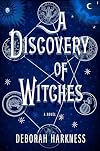
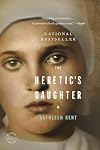
“The Physick Book of Deliverance Dane” does indeed perform a work of magic. Through a type of literary alchemy the current interest in novels tied to the Salem witch trial (“The Heretic’s Daughter” by Kathleen Kent and “The Lace Reader” by Brunonia Barry are just two examples), commingles with the plot of A.S. Byatt’s “Possession” (in which a graduate student stumbles upon show more a secret powerful enough to upend recorded history) and produces a new compound – in this case, one powerful enough to deliver a charming summer read. show less
added by Shortride
Lists

Books Read in 2022
5,164 works; 111 members

Witch Hunts
30 works; 7 members

KayStJ's to-read list
1,616 works; 11 members

Indie Next Picks
196 works; 4 members

Witchy Fiction
253 works; 126 members

Books Read in 2024
4,623 works; 126 members
Author Information

10 Works 9,157 Members
Katherine Howe's family has lived in the area around Salem Massachusetts for generations dating back to the 1620s. She is a descendant of two accused Salem witches - Elizabeth Proctor and Elizabeth Howe. Katherine is currently a Ph.D. candidate at Boston University. (Bowker Author Biography)
Some Editions
Awards and Honors
Series

Belongs to Publisher Series
Goldmann (47374)
Common Knowledge
- Canonical title
- The Physick Book of Deliverance Dane
- Original title
- The Physick Book of Deliverance Dane
- Alternate titles
- The Lost Book of Salem
- Original publication date
- 2009-06-09
- People/Characters
- Connie Goodwin; Manning Chilton; Deliverance Dane; Mercy Dane Lamson; Sam Hartley; Janine Silva (show all 49); Harold Beaumont; Arlo (dog); Grace Goodwin; Liz Dowers; Sophia "Granna" Goodwin; Peter Petford; Martha Petford; Prudence Lamson Bartlett; Patience "Patty" Bartlett; Josiah Bartlett; Nathaniel Dane; Sarah Bartlett; Jedediah Lamson; Jonas Oliver; Thomas; Larry Smith; Leonard Jacobs; Lemuel Goodwin; Major Samuel Appleton; Lieutenant Davenport; William Thorne; Goodman Palfrey; Elias Alder; Susanna Cory; Mary Oliver [The Physick Book of Deliverance Dane]; Richard Saltonstall; Joseph Hubbard; Robert Hooper; Mary Hubbard; Mr. Beeton; Michael Hartley; Linda Hartley; Mary Sibley; Reverend Parris; Junius Lawrence; Dorcas Good; Sarah Good; Mary Josephs; William Stoughton; Rebecca Nurse; Susannah Martin; Sarah Wildes; Elizabeth Howe
- Important places
- Boston, Massachusetts, USA; Cambridge, Massachusetts, USA; Harvard University, Cambridge, Massachusetts, USA; Marblehead, Massachusetts, USA; Massachusetts, USA; Salem, Massachusetts, USA (show all 7); Salem Town, Massachusetts, USA
- Important events
- Salem witch trials
- Epigraph
- "I watch'd today as Giles Corey was presst to death between the stones. He had lain so for two days mute. With each stone they tolde him he must plead, lest more rocks be added. But he only whisperd, More weight. Standing in ... (show all)the crowde I found Goodwyfe Dane, who, as the last stone lower'd, went white, grippt my hand, and wept."
--Letter fragment dated "Salem Towne, September 16, 1692"
Division of Rare Manuscripts, Boston Athenaeum - Dedication
- For my family
- First words
- Peter Petford slipped a long wooden spoon into the simmering iron pot of lentils hanging over the fire and tried to push the worry from his stomach.
- Last words
- (Click to show. Warning: May contain spoilers.)Though if one looked closely, the first letter of the name on the headstone might have been a D.
- Blurbers
- Pearl, Matthew; Langer, Cathy; Fraser, Matthew
- Original language
- English
- Disambiguation notice
- The Physick Book of Deliverance Dane (U.S.) is also known as The Lost Book of Salem (U.K.)
Classifications
Statistics
- Members
- 4,884
- Popularity
- 2,868
- Reviews
- 349
- Rating
- (3.66)
- Languages
- 10 — Dutch, English, French, German, Greek, Italian, Portuguese, Serbian, Spanish, Turkish
- Media
- Paper, Audiobook, Ebook
- ISBNs
- 45
- ASINs
- 25