On This Page
Description
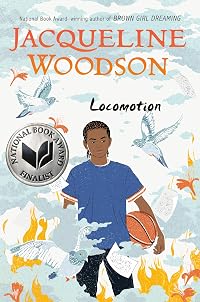
In a series of poems, eleven-year-old Lonnie writes about his life, after the death of his parents, separated from his younger sister, living in a foster home, and finding his poetic voice at school.Tags
Recommendations

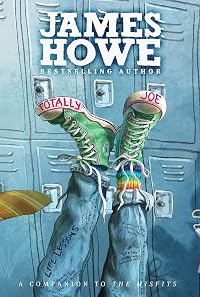
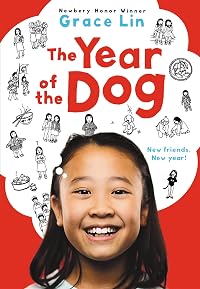
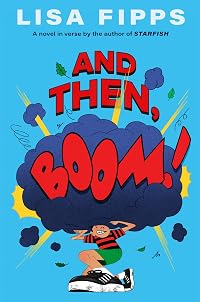
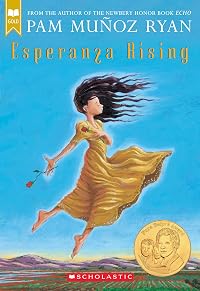




Member Recommendations

by anonymous user
Member Reviews
Just beautiful...a narrative told in a series of poems by boy who lost his parents in a tragic fire, then was separated from his little sister as they went into foster care. Sounds dreadful, and it is heartbreaking, but we can bear it because Lonnie's poet's soul is nurtured (mostly) by the adults in his life, because his grief never turns bitter, because we are better for having met him and heard his story. Brilliantly done.
At just seven years old, Lonnie lost both of his parents to a fire. He is still struggling with their death a few years later, and we get to read/feel exactly how he is coping. He tells his story, and experiences, through a series of poems. We learn about Miss Edna, his foster mom, and his sister Lili. Lili was adopted by another family, Lonnie didn't go with her because the family did not want a boy. Lonnie and Lili are able to spend more time together, and Lili thinks Lonnie is the best brother in the world. It is hard for Lonnie to deal with his emotions, so learning to put them into words helps him a lot. As we follow Lonnie on his emotional/spiritual journey, we get to see the things he has dealt with at such a young age. Making show more this book a powerful conversation starter for, not only young readers, but also adults.
I cried when reading a few of these poems. I had never read a book in this format, and I really loved it. I get bored easily, so having the different poems to read was right up my alley. I loved how genuine, and raw, this book was. I really dislike when stories have "happy endings", which is such an American thing to do. I mean, of course I like happy endings, but I love reading REAL stories. I understand that books can be an escape from reality, but sometimes you need the heavy stuff to help you relate things to what is happening in your life. Each poem was powerful, and the shortest ones seemed the most powerful to me. Haiku, was one that spoke to me because there have been days in my life where I just don't care. I related to Lonnie on so many levels, and I think that is why this book was powerful for me. Each poem was a memory from his life, and when I think back on my life experiences they would be in a format of a poem. Going through those experiences, they felt like a novel, but looking back on them they are powerful poems that make me who I am today. show less
I cried when reading a few of these poems. I had never read a book in this format, and I really loved it. I get bored easily, so having the different poems to read was right up my alley. I loved how genuine, and raw, this book was. I really dislike when stories have "happy endings", which is such an American thing to do. I mean, of course I like happy endings, but I love reading REAL stories. I understand that books can be an escape from reality, but sometimes you need the heavy stuff to help you relate things to what is happening in your life. Each poem was powerful, and the shortest ones seemed the most powerful to me. Haiku, was one that spoke to me because there have been days in my life where I just don't care. I related to Lonnie on so many levels, and I think that is why this book was powerful for me. Each poem was a memory from his life, and when I think back on my life experiences they would be in a format of a poem. Going through those experiences, they felt like a novel, but looking back on them they are powerful poems that make me who I am today. show less
I didn't want to put this book down. This was my first time reading a book set up as poems and it was surprising how well it flowed. I was totally emotionally connected to Lonnie. To go from having so much love and laughter in your life and then to be left trying to make sense of loss and rejection at 11 years old seems impossible. Now if only I can get the locomotion song out of my head.
I really liked this chapter book for several reasons. My favorite part of the book was the variety in poetry styles. I think this really helps portray the narrators changing emotions and feelings. For example, Lonnie writes an epistle poem, or a letter poem, to his dad. I really felt how much Lonnie missed his dad and how much he wished that he was still there to go to the park and eat hotdogs. Another poem in the book was a haiku. It describes Lonnie’s bad day where he does not even care. I really liked how the book utilized many different styles to highlight and show Lonnie’s emotions day to day. Another part of the book I really enjoyed was the way in which is pushed the reader to look through a window and see a different show more perspective. I am lucky to still have both of my parents alive and well however after reading the book I was able to see the life of a child who has lost his parents and was put into the foster system. This book showed me a completely different life from my own and reminded me how lucky I am and the things I may take for granted. For example, the song Locomotion comes on and Lonnie and his mom and sister get up and dance around their living room. If my mom and sister started dancing around our house I would most likely laugh at them instead of joining them. Finally, the last thing I liked about the book was the writing style. The book read more like a journal. It documented the observations, feelings, and life of Lonnie. Some of the entries were not about Lonnie. For instance, New Boy Poem III is about the new student Clyde and the names he is called since he is from the south. Other poems are about school, Miss Edna, and his old group home. The writing style allowed me to feel like I was Lonnie and that I was feeling his emotions and living life with him. The big idea/message of this book is overcoming adversity in your life. show less
Locomotion by Jacqueline Woodson is the moving story of Lonnie Collins Motion, an 11 year old boy who, orphaned and separated from his sister, is trying to come to terms with his life at it is now. We learn Lonnie’s story through a series of poems that he’s written. Lonnie records his good days, his bad days, and his feelings of isolation created by the loss of his family.
He has been separated from his younger sister, Lili and misses both her and his sense of family identity
Lili’s new mama didn’t want no boys
Just a sweet little girl. Nobody told me that
I just know it
Not a lot of people want boys
That ain’t babies …
He dreams of the day that he and Lili can be together as a family again, but realizes that this is an show more impossible dream and that he must lean to accept seeing Lili on a supervised visit, once a month.
Lonnie’s poems reveal other issues that he is facing such as his relationship with his teacher, his feelings upon learning that his friend is sick with sickle cell leukemia, and his search for God.
A truly remarkable book, this author has captured the voice of one young boy with a handful of simple, heart-felt poems that resound with insight and truth. show less
He has been separated from his younger sister, Lili and misses both her and his sense of family identity
Lili’s new mama didn’t want no boys
Just a sweet little girl. Nobody told me that
I just know it
Not a lot of people want boys
That ain’t babies …
He dreams of the day that he and Lili can be together as a family again, but realizes that this is an show more impossible dream and that he must lean to accept seeing Lili on a supervised visit, once a month.
Lonnie’s poems reveal other issues that he is facing such as his relationship with his teacher, his feelings upon learning that his friend is sick with sickle cell leukemia, and his search for God.
A truly remarkable book, this author has captured the voice of one young boy with a handful of simple, heart-felt poems that resound with insight and truth. show less
"This whole book’s a poem ’cause every time I try to / tell the whole story my mind goes Be quiet! / Only it’s not my mind’s voice, / it’s Miss Edna’s over and over and over / Be quiet! . . . So this whole book’s a poem because poetry’s short and / this whole book’s a poem ’cause Ms. Marcus says / write it down before it leaves your brain.”
Lonnie's voice writes and writes, chugging along to let the reader learn more about his foster mother, parents, little sister, and classmates. He offers a fascinating viewpoint into the world around him and shines as a character. I wanted to cover my ears and eyes and somehow guard myself against discovering more hardship, but Lonnie was too engaging. I loved the way that the show more structure could lend itself to teaching poetry at any level. The authenticity of the story, narrator, and observation shine through, creating bountiful opportunities for discussion. show less
Lonnie's voice writes and writes, chugging along to let the reader learn more about his foster mother, parents, little sister, and classmates. He offers a fascinating viewpoint into the world around him and shines as a character. I wanted to cover my ears and eyes and somehow guard myself against discovering more hardship, but Lonnie was too engaging. I loved the way that the show more structure could lend itself to teaching poetry at any level. The authenticity of the story, narrator, and observation shine through, creating bountiful opportunities for discussion. show less
'Locomotion' is an endearing book about an eleven-year-old boy named Lonnie who has lost both parents to a house fire and then lost his little sister to a foster mother who "didn't want no boys." Lonnie is allowed to visit his sister for one hour a week and he appreciates every minute they are together.
Lonnie is encouraged to write poetry by his fifth-grade teacher Ms. Marcus and through his poetry writing, he is able to express his feelings about the loss of his family, the foster home he has come to think of as 'home', and his classmates.
I love how Lonnie alludes to the fact his teacher is white when she admonishes him for describing someone as 'white' in a writing assignment he had. She claims race is unimportant, but Lonnie show more understood he was to be discriptive and race is something his teacher doesn't see because "she can't see all the whiteness around her."
Throughout the book, we are privy to Lonnie's good days as well as his bad. His dark days seem to get better as the book progresses and his book of poetry has proven to be therapeutic.
The author's choice to create this story through poems in the first person narrative is a creative choice that gives the main character some range and ability to switch mood and attitude without a transition, much like his life changed abruptly without a transition.
The author also lovingly crafted letters from Lonnie to his sister Lili at the end of the book to continue the story for the reader. This reminds me of the little snippit at the end of a movie after all the credits have ended. The book as a whole was a cathartic look at a young man's life who, through no fault of his own, has experienced the sort of tragedy people cannot imagine. It is beautiful, insightful and an interesting read. show less
Lonnie is encouraged to write poetry by his fifth-grade teacher Ms. Marcus and through his poetry writing, he is able to express his feelings about the loss of his family, the foster home he has come to think of as 'home', and his classmates.
I love how Lonnie alludes to the fact his teacher is white when she admonishes him for describing someone as 'white' in a writing assignment he had. She claims race is unimportant, but Lonnie show more understood he was to be discriptive and race is something his teacher doesn't see because "she can't see all the whiteness around her."
Throughout the book, we are privy to Lonnie's good days as well as his bad. His dark days seem to get better as the book progresses and his book of poetry has proven to be therapeutic.
The author's choice to create this story through poems in the first person narrative is a creative choice that gives the main character some range and ability to switch mood and attitude without a transition, much like his life changed abruptly without a transition.
The author also lovingly crafted letters from Lonnie to his sister Lili at the end of the book to continue the story for the reader. This reminds me of the little snippit at the end of a movie after all the credits have ended. The book as a whole was a cathartic look at a young man's life who, through no fault of his own, has experienced the sort of tragedy people cannot imagine. It is beautiful, insightful and an interesting read. show less
Members
- Recently Added By
Lists

Novels in verse -- children's/young adult fiction
28 works; 7 members

Books Mentioned in The Wedding Planner's Daughter series
107 works; 2 members

Newbery Adjacent
747 works; 3 members

Books by Black Women
108 works; 2 members
Author Information

53+ Works 36,854 Members
Jacqueline Woodson was born in Columbus, Ohio on February 12, 1963. She received a B.A. in English from Adelphi University in 1985. Before becoming a full-time writer, she worked as a drama therapist for runaways and homeless children in New York City. Her books include The House You Pass on the Way, I Hadn't Meant to Tell You This, Lena, and The show more Day You Begin. She won the Coretta Scott King Award in 2001 for Miracle's Boys. After Tupac and D Foster, Feathers, and Show Way won Newbery Honors. Brown Girl Dreaming won the E. B. White Read-Aloud Award in 2015. Her other awards include the Margaret A. Edwards Award for lifetime achievement in writing for young adults, the Los Angeles Times Book Prize, and the 2018 Astrid Lindgren Memorial Award. She was also selected as the Young People's Poet Laureate in 2015 by the Poetry Foundation. (Bowker Author Biography) show less
Some Editions
Awards and Honors
Awards
Distinctions
Series

Work Relationships
Common Knowledge
- Original publication date
- 2003
- People/Characters
- Miss Edna; Lonnie Collins Motion; Eric; Lili Motion; La Tenya; Ms. Marcus (show all 7); Angel
- Important places
- Ms. Marcus' classroom
- Epigraph
- Name all the people
You're always thinking about People are poems - Dedication
- For Toshi Georginanna and Juna Franklin
- First words
- This whole book's a poem 'cause every time I try to tell the whole story my mind goes Be quiet! Only it's not my mind's voice,
It's Miss Edna's over and over and over Be quiet! - Quotations
- You see God everywhere these days. Especially when Miss Edna makes her sweet potato pie and when your little sister smiles
- Last words
- (Click to show. Warning: May contain spoilers.)And I was right, Lili says, looking at me. Wasn't I?
Classifications
Statistics
- Members
- 2,548
- Popularity
- 7,488
- Reviews
- 379
- Rating
- (4.21)
- Languages
- English
- Media
- Paper, Audiobook, Ebook
- ISBNs
- 31
- UPCs
- 3
- ASINs
- 17