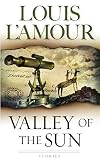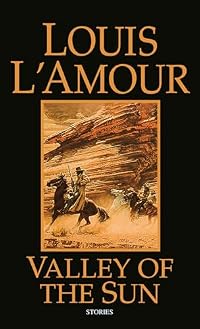
Valley of the Sun
by Louis L'Amour
On This Page
Description
Fiction. Western. Thriller. Historical Fiction. Cattlemen ride alone across the open range under the deadly aim of roving desperadoes. . . . Gamblers stake their fortunes and their lives on a deck of cards. . . . Strong-willed señoritas seek independence through an enticing combination of beauty, audacity, and spirit. . . . Lawmen and outlaws walk the same dusty streets and speak a common language: Colt, Winchester, Smith & Wesson. Gritty, tough, and unflinchingly authentic, here is the show more West as it really was: a land where for every friend there is an enemy, for every handshake a fist, for every dispute a resolution—usually in an explosive showdown of blood and bullets. In these remarkable tales, Louis L'Amour—like the very heroes he depicts—blazes a trail across the American frontier and takes us on an unforgettable journey into the heart of our western heritage. show lessTags
Recommendations















Member Reviews
Contains nine short stories that are typical L'Amour fiction- fast moving, full of what life in the early western America may have been like. In "That Slash Seven Kid" a rich ranchers' eastern nephew comes for a stay on the ranch. His bravado turns off the ranch crew and his uncle assumes he is a neophyte and doesn't expect much from him. Unknown to all, he has learned to box in New York, visited shooting galleries and rode horses too.
When he catches a butcher with the hides from three of his Uncle's cattle, he demands the butcher pay for them and beats him to a pulp when the butcher refuses. The crew quickly realize the nephew can take care of himself.
In "Gila Crossing", a ranger is sent out to prevent a range war.
When he catches a butcher with the hides from three of his Uncle's cattle, he demands the butcher pay for them and beats him to a pulp when the butcher refuses. The crew quickly realize the nephew can take care of himself.
In "Gila Crossing", a ranger is sent out to prevent a range war.
The are eight million stories in the naked west and this is nine of them. Simple entertainment. Big iron. Good guys, bad guys, and a pretty girl (usually with a double barreled shotgun).
The included stories are: We Shaped the Land with Our Guns • West of the Pilot Range • When a Texan Takes Over • No Man's Mesa • Gila Crossing • Medicine Ground • Valley of the Sun • That Slash Seven Kid • In Victorio's Country
I think 'Medicine Ground' was the only story I didn't care for. It features 'The Cactus Kid' who is apparently a recurring character in some of L'Amour's short stories. The initial tone of the story was different than the others. L'Amour is telling the tale with a sort of snarky humor (presumably the Cactus Kid's show more worldview) and there are a few funny lines but the story suffered for it. Other readers may love that one.
All of these stories are great on the descriptions of the landscape and setting, which I can say is L'Amour's real strength. I'm sure anyone who likes L'Amour would enjoy this collection.
I think most or all of these stories appeared in a variety of Western magazines in the 1940's and 1950's (Read in 2019) show less
The included stories are: We Shaped the Land with Our Guns • West of the Pilot Range • When a Texan Takes Over • No Man's Mesa • Gila Crossing • Medicine Ground • Valley of the Sun • That Slash Seven Kid • In Victorio's Country
I think 'Medicine Ground' was the only story I didn't care for. It features 'The Cactus Kid' who is apparently a recurring character in some of L'Amour's short stories. The initial tone of the story was different than the others. L'Amour is telling the tale with a sort of snarky humor (presumably the Cactus Kid's show more worldview) and there are a few funny lines but the story suffered for it. Other readers may love that one.
All of these stories are great on the descriptions of the landscape and setting, which I can say is L'Amour's real strength. I'm sure anyone who likes L'Amour would enjoy this collection.
I think most or all of these stories appeared in a variety of Western magazines in the 1940's and 1950's (Read in 2019) show less
I believe that the short story was the best area to showcase Louis L'Amour's writing talents, and this collection is a good example of what he could write in a couple dozen pages. As I read each tale, I again saw the author's sense of humor displayed, as is not always evident in the Western genre. In one example from this collection, a gambler is caught cheating, and reaches for his gun just as the victim of the crime starts shooting. To quote: "Lead, received in those proportions and with that emphasis and range, is reliably reported to be indigestible."
As usual, these are entertaining stories, with believable characters, and definitely worth a read. Recommended.
As usual, these are entertaining stories, with believable characters, and definitely worth a read. Recommended.
From Library Journal
A posthumous collection of short stories never before available in book form.
Copyright 1995 Reed Business Information, Inc. Product Description Cattlemen ride alone across the open range under the deadly aim of roving desperadoes—Gamblers stake their fortunes and their lives on a deck of cardsÂStrong-willed senoritas seek independence through an enticing combination of beauty, audacity, and spiritÂLawmen and outlaws walk the same dusty streets and speak a common language: Colt, Winchester, Smith & Wesson. Gritty, tough, and unflinchingly authentic, here is the West as it really was: a land where for every friend there is an enemy, for every handshake a fist, for every dispute a resolution--usually in an show more explosive showdown of blood and bullets. In these remarkable tales, Louis L'AmourÂlike the very heroes he depictsÂblazes a trail across the American frontier and takes us on an unforgiving journey into the heart of our western heritage. show less
Copyright 1995 Reed Business Information, Inc. Product Description Cattlemen ride alone across the open range under the deadly aim of roving desperadoes—Gamblers stake their fortunes and their lives on a deck of cardsÂStrong-willed senoritas seek independence through an enticing combination of beauty, audacity, and spiritÂLawmen and outlaws walk the same dusty streets and speak a common language: Colt, Winchester, Smith & Wesson. Gritty, tough, and unflinchingly authentic, here is the West as it really was: a land where for every friend there is an enemy, for every handshake a fist, for every dispute a resolution--usually in an show more explosive showdown of blood and bullets. In these remarkable tales, Louis L'AmourÂlike the very heroes he depictsÂblazes a trail across the American frontier and takes us on an unforgiving journey into the heart of our western heritage. show less
Ratings
Members
- Recently Added By
Author Information

870+ Works 99,425 Members
Born in Jamestown, North Dakota on March 22, 1908, Louis L'Amour's adventurous life could have been the subject of one of his novels. Striking out on his own in 1923, at age 15, L'Amour began a peripatetic existence, taking whatever jobs were available, from skinning dead cattle to being a sailor. L'Amour knew early in life that he wanted to be a show more writer, and the experiences of those years serve as background for some of his later fiction. During the 1930s he published short stories and poetry; his career was interrupted by army service in World War II. After the war, L'Amour began writing for western pulp magazines and wrote several books in the Hopalong Cassidy series using the pseudonym Tex Burns. His first novel, Westward the Tide (1950), serves as an example of L'Amour's frontier fiction, for it is an action-packed adventure story containing the themes and motifs that he uses throughout his career. His fascination with history and his belief in the inevitability of manifest destiny are clear. Also present and typical of L'Amour's work are the strong, capable, beautiful heroine who is immediately attracted to the equally capable hero; a clear moral split between good and evil; reflections on the Native Americans, whose land and ways of life are being disrupted; and a happy ending. Although his work is somewhat less violent than that of other western writers, L'Amour's novels all contain their fair share of action, usually in the form of gunfights or fistfights. L'Amour's major contribution to the western genre is his attempt to create, in 40 or more books, the stories of three families whose histories intertwine as the generations advance across the American frontier. The novels of the Irish Chantry, English Sackett, and French Talon families are L'Amour's most ambitious project, and sadly were left unfinished at his death. Although L'Amour did not complete all of the novels, enough of the series exists to demonstrate his vision. L'Amour's strongest attribute is his ability to tell a compelling story; readers do not mind if the story is similar to one they have read before, for in the telling, L'Amour adds enough small twists of plot and detail to make it worth the reader's while. L'Amour fans also enjoy the bits of information he includes about everything from wilderness survival skills to finding the right person to marry. These lessons give readers the sense that they are getting their money's worth, that there is more to a L'Amour novel than sheer escapism. With over 200 million copies of his books in print worldwide, L'Amour must be counted as one of the most influential writers of westerns in this century. He died from lung cancer on June 10, 1988. (Bowker Author Biography) Louis L'Amour, truly America's favorite storyteller, was the first fiction writer ever to receive the Congressional Gold Medal from the United States Congress in honor of his life's work, & was also awarded the Medal of Freedom. There are over 260 million copies of his books in print worldwide. (Publisher Provided) show less
Common Knowledge
- Original publication date
- 1995; 1995-05
- People/Characters
- Brett Larane; Marta Malone; Joe Creet; Indian Frank; Gay Tomason
- Important places
- Rattlesnake Butte, The West, USA; Hidden Valley Ranch, The West, USA
- First words
- We moved into the place on South Fork just before the snow went off.
Sprawled on his face beside the cholla, the man was not dead. - Last words
- (Click to show. Warning: May contain spoilers.)Shore haven't, Bill. Reckon I must have lost mine, back yonder.
(Click to show. Warning: May contain spoilers.)"You sure couldn't!" - Disambiguation notice
- This is a collection of short stories tha includes one with the same name. The short story will be named "YOTS" in my library.
Classifications
Statistics
- Members
- 492
- Popularity
- 60,976
- Reviews
- 6
- Rating
- (3.64)
- Languages
- English
- Media
- Paper, Audiobook, Ebook
- ISBNs
- 14
- ASINs
- 9