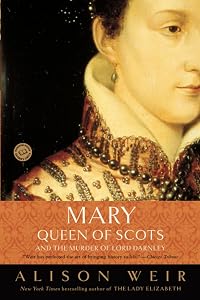
Mary Queen of Scots and the Murder of Lord Darnley
by Alison Weir
On This Page
Description
This book is an excursion into Britain's bloodstained, power-obsessed past. The author's investigation into Lord Darnley's murder is set against one of the most dramatic periods in English history. Its conclusions shed light on the actions and motives of the conspirators and, in particular, the extent of Mary's own involvement. Tall, handsome, accomplished, and charming, Henry Stuart, Lord Darnley, had it all, including a strong claim to the English throne, a fact that threatened the already show more insecure Elizabeth I. She therefore opposed any plan for Darnley to marry her cousin, Mary, Queen of Scots, who herself claimed to be Queen of England. But in 1565 Mary met and fell in love with Darnley and defied Elizabeth by marrying him. It was not long before she discovered that her new husband was weak and vicious, and interested only in securing sovereign power for himself. On February 10, 1567, an explosion at his lodgings left Darnley dead. There were many who might have had a motive for murdering him, not least Mary herself. The intrigue thickened after it was discovered that apparently he had been suffocated before the blast. Emerging from the tragedy were more mysteries than any historian has ever satisfactorily solved. Mary and Darnley's marriage had been an adulterous disaster. After Darnley's death, Mary showed favor to the powerful Earl of Bothwell, causing her enemies to accuse her of being his partner in both infidelity and murder. Mary insisted that the murder conspiracy had been aimed at her, and that she had escaped only by changing her plans at the last minute. It has even been suggested that Darnley himself had planned the explosion in order to kill her. The murder of Darnley ultimately led to Mary's ruin. After her deposition, there conveniently came to light a box of documents, the notorious Casket Letters, that her enemies claimed were proof of her guilt. But Mary was never allowed to see them, and they disappeared in 1584. The question of their authenticity has haunted historians ever since. After exhaustive reexamination and reevaluation of the source material, the author has come up with a solution to this enduring mystery that can be substantiated by contemporary evidence, and in the process has shattered many of the misconceptions about Mary, Queen of Scots. show lessTags
Recommendations



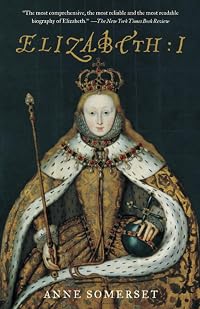
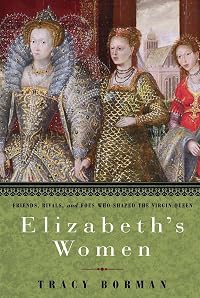
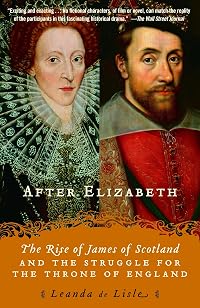
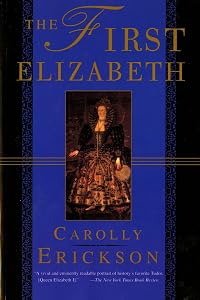




Member Recommendations
AnnaClaire These two books cover more or less the same ground, but each with its own focus.
Member Reviews
Alison Weir writes wonderfully. Her discussion is crisp, engaging, and even by turns charming. She has a knack for pulling out telling detail, and weaves original source material deftly through each passage. In introducing Lord Darnley, the then-future husband of Mary, Queen of Scots, she notes that his parents doted on him, holding him particularly precious as most of his siblings died in infancy. She finds a letter he wrote at 8 that sheds insight on his ambition and religion. Detail by detail, she paints his personality, bringing him to life before us. This is a book that is hard to put down.
Yet, Weir also has a knack for building assumption on frail assumption, trying to build a house of bricks on a foundation of straw. As an show more example, she speculates that the illness that plagued Darnley in the months before his death was not smallpox (as commonly assumed) but rather an intermediate stage of syphilis. She acknowledges that this is not clear from the record, but merely speculation, and outlines both the pros and cons for her view. Weir is clear enough: there's some reasonable chance she is right, but she acknowledges that, across the years, it is impossible to establish her position with certainty. Weir then builds on this assumption, suggesting it was "inconceivable" that Mary did not find out that syphilis ailed her husband, making assumptions about Mary's state of mind, whether or not she may have had another pregnancy, and how she interacted with other men and her husband based on the speculations about Darnley's disease. This is but one example. Again and again, as one works through the book, speculations which are carefully qualified and limited on first argument become certainties when repeated a few pages later, so that as one finally reaches her conclusion, gets her point, and steps back to consider whether she is right, her logic simply melts away. In the end, she adds nothing to the history but her pretty words.
Had this been a work of historical fiction, I would praise it. Weir is a wonderful story teller. Alas, the book masquerades as history. But, oh, if only other historians could write like Weir! show less
Yet, Weir also has a knack for building assumption on frail assumption, trying to build a house of bricks on a foundation of straw. As an show more example, she speculates that the illness that plagued Darnley in the months before his death was not smallpox (as commonly assumed) but rather an intermediate stage of syphilis. She acknowledges that this is not clear from the record, but merely speculation, and outlines both the pros and cons for her view. Weir is clear enough: there's some reasonable chance she is right, but she acknowledges that, across the years, it is impossible to establish her position with certainty. Weir then builds on this assumption, suggesting it was "inconceivable" that Mary did not find out that syphilis ailed her husband, making assumptions about Mary's state of mind, whether or not she may have had another pregnancy, and how she interacted with other men and her husband based on the speculations about Darnley's disease. This is but one example. Again and again, as one works through the book, speculations which are carefully qualified and limited on first argument become certainties when repeated a few pages later, so that as one finally reaches her conclusion, gets her point, and steps back to consider whether she is right, her logic simply melts away. In the end, she adds nothing to the history but her pretty words.
Had this been a work of historical fiction, I would praise it. Weir is a wonderful story teller. Alas, the book masquerades as history. But, oh, if only other historians could write like Weir! show less
Like many people, I'm aware of who Mary Queen of Scots is, how she died and the death of her husband. But, I knew little about the actual details of the case, the atmosphere of the time, and the specific evidence against her. In this book, Alison Weir reveals her theory of what happened to Lord Darnley and how his wife Mary was involved.
Since this mystery is many hundreds of years old, there is no concrete forensic evidence to lay it to rest. Some historians and readers will no doubt disagree with Weir's solution. She doesn't present new "facts," she provides her interpretation of the existing ones. However, she has done meticulous research, which is readily apparent, and presents a solid circumstantial case for Mary's guilt or show more innocence (I won't ruin it!). In one way, Weir's conclusion is irrelevant. Some reviewers have already mentioned Weir's take on the Casket Letters. Weir is not the only historian to doubt their validity, so I had no problem seeing that viewpoint. What makes this worth reading is learning what evidence was used at the time, the placement of people and events, and an examination of it all. I appreciated learning more about this famous, ill-fated woman.
Weir's trademark easy writing style makes this flow like a novel, while still remaining non-fiction. It is a long book, but I don't feel it was bogged down. Readers need more details on the political mood, Mary and the events leading up to Darley's death to get the full picture. I don't think this is as good as The Princes in the Tower. That read like a true-crime novel, and I found myself convinced by her argument at the end. I'm still uncertain what I think really happened to Darnley, but I still found Weir somewhat persuasive in her view. Most of Weir's books are worth reading, but this is definitely one of her best efforts via a vis a mystery. Highly recommended. show less
Since this mystery is many hundreds of years old, there is no concrete forensic evidence to lay it to rest. Some historians and readers will no doubt disagree with Weir's solution. She doesn't present new "facts," she provides her interpretation of the existing ones. However, she has done meticulous research, which is readily apparent, and presents a solid circumstantial case for Mary's guilt or show more innocence (I won't ruin it!). In one way, Weir's conclusion is irrelevant. Some reviewers have already mentioned Weir's take on the Casket Letters. Weir is not the only historian to doubt their validity, so I had no problem seeing that viewpoint. What makes this worth reading is learning what evidence was used at the time, the placement of people and events, and an examination of it all. I appreciated learning more about this famous, ill-fated woman.
Weir's trademark easy writing style makes this flow like a novel, while still remaining non-fiction. It is a long book, but I don't feel it was bogged down. Readers need more details on the political mood, Mary and the events leading up to Darley's death to get the full picture. I don't think this is as good as The Princes in the Tower. That read like a true-crime novel, and I found myself convinced by her argument at the end. I'm still uncertain what I think really happened to Darnley, but I still found Weir somewhat persuasive in her view. Most of Weir's books are worth reading, but this is definitely one of her best efforts via a vis a mystery. Highly recommended. show less
This was rather dry and considerably too long. It is my least favourite Alison Weir book. But, on the positive side, it is very well researched and extremely, indeed exhaustively, detailed. I find it mostly convincing in its central thesis that Mary did not procure Darnley's death, but I think she showed her customary lack of judgement in trusting others not to kill him and displayed in general reckless naivety and plain unfitness to rule. Indeed, she is a classic example of the weakness of the hereditary principle of monarchy. So my sympathy for Mary is rather more narrowly focused than Weir's description of her as one of the most wronged women in history.
3.5 stars
Mary, Queen of Scots was suspected of murdering her second husband, Lord Darnley. Darnley died in an explosion, but it was definitely murder. Many people at the time thought she’d done it, as well as many historians since. Weir looks at many sources to try to sort out whether or not Mary was, indeed, involved. This does pretty much amount to a biography, with a strong focus on events as relating to Darnley.
This is a long book! With lots of detail. That being said, I went back and forth between being really interested and falling back a bit with some of the detail. Now, Weir really was looking at a lot of information to try to sort out who was involved. Boy, talk about “fake news” of the time! And sham trials with a show more political bent (i.e. predetermined outcome)... Overall, I’m rating it good, but it does take a while to read. show less
Mary, Queen of Scots was suspected of murdering her second husband, Lord Darnley. Darnley died in an explosion, but it was definitely murder. Many people at the time thought she’d done it, as well as many historians since. Weir looks at many sources to try to sort out whether or not Mary was, indeed, involved. This does pretty much amount to a biography, with a strong focus on events as relating to Darnley.
This is a long book! With lots of detail. That being said, I went back and forth between being really interested and falling back a bit with some of the detail. Now, Weir really was looking at a lot of information to try to sort out who was involved. Boy, talk about “fake news” of the time! And sham trials with a show more political bent (i.e. predetermined outcome)... Overall, I’m rating it good, but it does take a while to read. show less
I have been reading this book almost this year now, as it is a very long, very fascinating history of Mary Queen of Scots, and how the murder of her second husband set off a chain of events that resulted in her being removed from her throne, and eventually executed. I first became interested in learning more about Mary after reading The Italian Secretary, which centers around the murder of her confidant, Rizzio, and once I actually visited Holyrood Palace, I began looking for a book that could teach me more. I found a copy of Allison Weir's tome at a book sale, and snatched it up.
Weir has clearly done her research, and whether or not you agree with her final conclusion that Mary was innocent in the murder of Darnley, you can't help but show more get drawn into this amazing true story of intrigue, violence, mystery, love, betrayal, and the fate of two kingdoms. It is occasionally hard to keep straight who is who, but Weir does an excellent job of making all the facts easy to follow and easy to understand. show less
Weir has clearly done her research, and whether or not you agree with her final conclusion that Mary was innocent in the murder of Darnley, you can't help but show more get drawn into this amazing true story of intrigue, violence, mystery, love, betrayal, and the fate of two kingdoms. It is occasionally hard to keep straight who is who, but Weir does an excellent job of making all the facts easy to follow and easy to understand. show less
Normally, I love Alison Weir's books. The reader can always count on extensive research and astute reasoning, but this one was a slog. We're talking about one of the most perplexing historical figures of all time in Mary, Queen of Scots and yet, it just dragged on. And on and on.
She was the bosom serpent. The 16th Century Princess Diana of her day. Emotional, needy, irrational, and limelight-loving, she just couldn't handle the heat. Her first husband was the King of France and her second was found dead after his abode blew apart in the middle of the night (though he himself was not blown apart). Who actually killed Lord Darnley? History always seemed to be written by the powerful Tudors, so Mary probably received too much blame, but show more she didn't appear to be the brightest stalk in the field.
Granted, there is excitement in the beginning, as we learn of her early life and the constant non-stop intrigues of the always-false Scot Lords. Then it all bogs down, as Weir tries to convince us of Mary's non-compliance. Yes, I get that Buchanan and Knox and Morton and Moray were her enemies and lied. I just didn't need several hundred pages of the he said/she said paragraphing.
In fact, the most exciting character in the book is Lord Bothwell, who was Mary's, and Scotland's, one loyal subject...until he raped her and married her...and then died stark, raving mad in a horrible Swedish dungeon. Poor Mary.
Book Season = Winter (Snow. Scotland. Enough said) show less
She was the bosom serpent. The 16th Century Princess Diana of her day. Emotional, needy, irrational, and limelight-loving, she just couldn't handle the heat. Her first husband was the King of France and her second was found dead after his abode blew apart in the middle of the night (though he himself was not blown apart). Who actually killed Lord Darnley? History always seemed to be written by the powerful Tudors, so Mary probably received too much blame, but show more she didn't appear to be the brightest stalk in the field.
Granted, there is excitement in the beginning, as we learn of her early life and the constant non-stop intrigues of the always-false Scot Lords. Then it all bogs down, as Weir tries to convince us of Mary's non-compliance. Yes, I get that Buchanan and Knox and Morton and Moray were her enemies and lied. I just didn't need several hundred pages of the he said/she said paragraphing.
In fact, the most exciting character in the book is Lord Bothwell, who was Mary's, and Scotland's, one loyal subject...until he raped her and married her...and then died stark, raving mad in a horrible Swedish dungeon. Poor Mary.
Book Season = Winter (Snow. Scotland. Enough said) show less
This was a mammoth undertaking. Alison Weir explores the evidence that comes from one of the great mysteries of the Tudor period: Mary, Queen of Scots, and the murder of Lord Darnley. The book can be mind numbing in its detail. Weir certainly did her homework and makes no apology for the detail or the length of the book. The reader can get bogged down with it all, but many parts are of interest. In the end, Weir makes the conclusion that Mary did not murder her husband, though it was certainly in her interest to do so.
A die hard fan of Mary, Queen of Scots, would enjoy this.
A die hard fan of Mary, Queen of Scots, would enjoy this.
Members
- Recently Added By
Lists

Works with inappropriate subject headings on LibraryThing
35 works; 5 members

In Our Time books
4,934 works; 2 members
Author Information

75+ Works 37,471 Members
Alison Weir was born in London, England on July 8, 1951. She received training to be a teacher with a concentration in history from the North Western Polytechnic. Before becoming a full-time writer, she worked as a civil servant and ran her own school for children with learning difficulties from 1991 to 1997. Her first book, Britain's Royal show more Families, was published in 1989. Her other books include The Six Wives of Henry VIII; Children of England; Eleanor of Aquitaine; Henry VIII: King and Court; Mary, Queen of Scots; and Isabella. Her first novel, Innocent Traitor, was published in 2006. Her other novels include The Lady Elizabeth, The Lady in the Tower: The Fall of Anne Boleyn, The Captive Queen, A Dangerous Inheritance, and Katherine of Aragon, the True Queen. (Bowker Author Biography) show less
Some Editions
Common Knowledge
- Canonical title
- Mary Queen of Scots and the Murder of Lord Darnley
- Original publication date
- 2003
- People/Characters
- Mary, Queen of Scots; Henry Stuart, Lord Darnley; Archibald Campbell, 5th Earl of Argyll; Sir James Balfour; William Cecil, 1st Baron Burghley; Matthew Stewart, 4th Earl of Lennox (show all 31); Margaret Douglas, Countess of Lennox; Elizabeth I, Queen of England; William Maitland of Lethington; Alexander Cunningham, 5th Earl of Glencairn; James VI and I, King of Scots and King of England; Francis Russell, 2nd Earl of Bedford; James Hepburn, 4th Earl of Bothwell; George Buchanan; Charles IX, King of France; Philibert du Croc; Sir William Drury; John Erskine, 18th Earl of Mar; Marie de Guise; James V, King of Scots; Sir James Melville; Catherine de Medici; James Stewart, 1st Earl of Moray; James Douglas, 4th Earl of Morton; Claude Nau; Sir James Ormiston, Laird of Ormiston; Nicholas Hubert; David Rizzio; John Leslie, Bishop of Ross; Guzman de Silva; Sir Nicholas Throckmorton
- Important places
- Scotland, UK (as Scotland); Dunbar Castle, Dunbar, East Lothian, Scotland, UK; Edinburgh Castle, Edinburgh, Scotland, UK; Holyrood Palace, Edinburgh, Scotland, UK; Kirk o' Field, Edinburgh, Scotland, UK; Seton Palace, East Lothian, Scotland, UK (show all 9); St Giles's Kirk, Edinburgh, Scotland, UK; Stirling Castle, Stirling, Scotland, UK; Linlithgow Palace, Linlithgow, West Lothian, Scotland, UK
- Epigraph
- God will never permit such a mischief to remain hidden.
- written by the Scottish Privy Council to Catherine de Medici, Queen of France, on the morning after Darnley's murder - Dedication
- This book is dedicated to the memory of Joyce Masterton and David Knowles, two great Scots
- First words
- Few souls were abroad in Edinburgh after midnight on 9 February 1567. (prologue)
The murder of Lord Darnley is the most celebrated mystery in Scottish history; it has been endlessly recounted by numerous historians and writers, and the question that has most exercised all of them is this: was Mary, Queen ... (show all)of Scots the instigator of, or a party to, the murder of her husband? (introduction)
To everyone's dismay, the baby born to James V of Scotland and his second wife, Marie de Guise, on 8 December 1542 at Linlithgow Palace was a girl. - Last words
- (Click to show. Warning: May contain spoilers.)In the circumstances, she must, with justice, be regarded as one of the most wronged women in history.
(Click to show. Warning: May contain spoilers.)Having read my conclusions, you, the reader, must decide if you agree with them. (postscript)
Classifications
- Genres
- History, General Nonfiction, Nonfiction, Biography & Memoir
- DDC/MDS
- 941 — History & geography History of Europe British Isles
- LCC
- DA787 .D3 .W45 — History of Europe, Asia, Africa and Oceania Great Britain History of Great Britain Scotland History By period Early and medieval to 1603 Stuarts, 1371-1603
- BISAC
Statistics
- Members
- 1,205
- Popularity
- 20,586
- Reviews
- 20
- Rating
- (3.71)
- Languages
- English, French
- Media
- Paper, Audiobook, Ebook
- ISBNs
- 14
- ASINs
- 11