
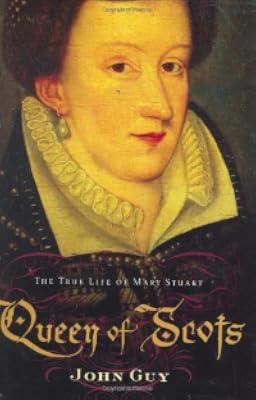
Queen of Scots: The True Life of Mary Stuart
by John Guy
On This Page
Description
This Whitbread Award–winning biography and basis for the film Mary Queen of Scotsstarring Saoirse Ronan and Margot Robbie "reads like Shakespearean drama" (The Atlanta Journal-Constitution)."A triumph . . . A masterpiece full of fire and tragedy." —Amanda Foreman, author of Georgiana
In the first full-scale biography of Mary Stuart in more than thirty years, John Guy creates an intimate and absorbing portrait of one of history's greatest women, depicting her world and her place in the show more sweep of history with stunning immediacy. Bringing together all surviving documents and uncovering a trove of new sources for the first time, Guy dispels the popular image of Mary Queen of Scots as a romantic leading lady—achieving her ends through feminine wiles—and establishes her as the intellectual and political equal of Elizabeth I.
Through Guy's pioneering research and superbly readable prose, we come to see Mary as a skillful diplomat, maneuvering ingeniously among a dizzying array of factions that sought to control or dethrone her. Queen of Scots is an enthralling, myth-shattering look at a complex woman and ruler and her time.
"The definitive biography . . . Gripping . . . A pure pleasure to read." —The Washington Post Book World
"Reads like Shakespearean drama, with all the delicious plotting and fresh writing to go with it." —The Atlanta Journal-Constitution
. show less
Tags
Recommendations


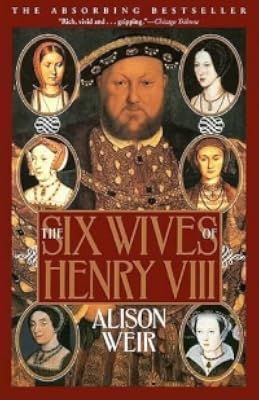
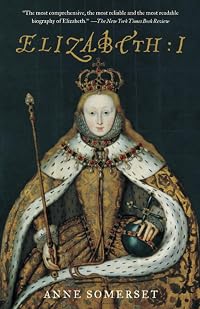
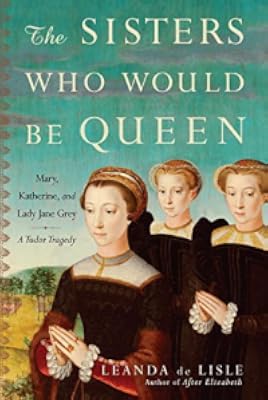

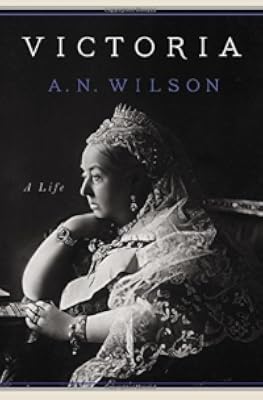

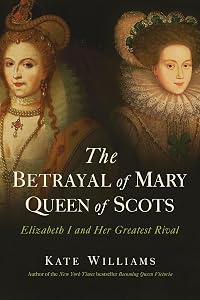
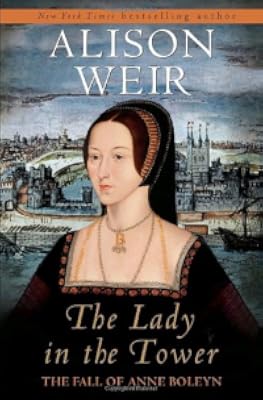
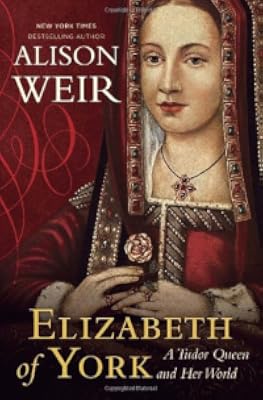

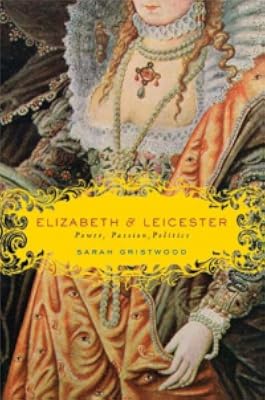


Member Recommendations
Member Reviews
Before we begin, I have no mind for what's considered a spoiler and what isn't so, fair warning - POSSIBLE SPOILERS ahead. I also use bad language, so read at your risk.
Let me start by saying that holy shit is this book long. Remind me to never pick up a 500+ page book again, good lord. I thought I would never finish it! I also want to say that I watched the movie first and later found out that there was a book about it so I was excited because I loved the movie. History is not my strongest interest and most are boring to me. I have so many problems in my life, I don't care to read about the problems of my ancestors, but there are a few points in history that, if told right, really interest me. This is one of them.
John Guy did an show more excellent job of going through fact and fiction to provide the best possible account of Mary's life and the problems she faced. And boy is it a ride.
Even now, after finishing the book, I'm left wondering if Mary was truly a victim or not. I feel like she was a victim of greedy assholes who cared only for their own wants and using her a simple stepping stone despite being a goddamn queen. How could this shit happen to her? She's a QUEEN, is that not the highest role possible? How could they get away with so much shit against her without even facing consequences for it? I felt so annoyed and angry while I read this book and I truly hope that the rebel lords and that dickbag Cecil are burning in hell for their treachery.
I feel like I didn't fully understand this book for two reasons:
1. I don't understand how ANYONE understood what people were saying back then. When he included inserts of what they wrote, I had to read it several times before my brain could process the words as they were written.
2. So many words I've never heard of or couldn't pronounce. If I had written down each one to look up and try to learn the meaning of, I think I would have had a book of my own lol John Guy is much smarter than I am.
I really can't stand the rebel lords. They are power-hungry bastards and THEY GOT AWAY WITH IT. That's what pisses me off the most. And Cecil, I fucking HATE Cecil and to think that he had a wonderful life after Mary's execution frustrates me to no fucking end. And And HER SON. Like, what the fuck, kid? It's not her fault you never got to know her, SHE WAS FECKIN' IMPRISONED HALF HER LIFE. For him to completely denounce her, I.... I am getting way too heated over this.
Elizabeth wasn't innocent either. She refused to meet with Mary because she was a fucking coward. She IMPRISONED her because she was naive enough to think that her beloved cousin would actually help her and then she was shocked when Mary "accepted" a plot for her assassination. Anyone that trusted her and then got imprisoned for half their feckin' life for it would eventually grow desperate enough to agree to an assassination to find their freedom. And then she wanted her murdered in the middle of the night without claiming responsibility! The most cowardly queen in the entire world. What a bitch.
And who is she to dictate who Mary can and can't marry?? It isn't her life and they are BOTH queens on equal footing, she has no fucking right. Elizabeth clearly thought she was higher in status than she was. Pathetic.
Mary wasn't innocent, either, though. She trusted time and time again even after being betrayed. She made questionable choices on several occassions, as well. Still, she got royally fucked over by all fronts. From the time she was a child, she was being targeted. Cecil had a serious hard on for her, it's fucking disgusting.
It just goes to show how terrible human beings are. Even family will betray you in a second if they think they can get something out of it. Mary's biggest flaw was that she was far too trusting, too loving for this world. Everyone she knew, that she trusted, betrayed her except for her own mother and the leader of the four Maries. Just shows me that my hatred of human beings is just.
Kids growing up always want to be princesses and princes, kings and queens, but they never realize that in being so, you become a target for everyone. Humans covet power above all else and they will do anything to get it, even if they have to destroy their own family. Mary's story is proof of this.
Wherever her soul may be today, I hope she finds peace.
Another thing I'd like to mention - fuck religion. That's one of the main reasons there was so much turmoil. "My religion is the only religion." "My religion is right, fuck your religion." It's so fucking stupid. What does one person believing something have to do with you? In my opinion, Cecil was so insecure in his own religion and in himself that he was TERRIFIED that Mary's religion would overcome his own and it's stupid. Who cares what someone else believes? Live your own damn life and stop worrying so much about what other people are doing. If you truly believe that your religion is true and just, you don't give a fuck what other people are doing with their own beliefs (unless it's something like killing others who don't believe the same as you, then you should care.) To me, that just proves have pathetic Cecil was. Can you tell I hate him? If not, well... I hate him.
I don't think I've ever gotten so emotionally involved in a historic story before but jesus I hate how this played out. So frustrating!
This book is super detailed and it's obvious that the author put in a lot of effort to get all the facts and to find the proof to tie everything together. He did a great job and, while it was hard for me to read because of it's length, I'm glad I did and I think he deserves praise for this.
Also, fuck Cecil. show less
Let me start by saying that holy shit is this book long. Remind me to never pick up a 500+ page book again, good lord. I thought I would never finish it! I also want to say that I watched the movie first and later found out that there was a book about it so I was excited because I loved the movie. History is not my strongest interest and most are boring to me. I have so many problems in my life, I don't care to read about the problems of my ancestors, but there are a few points in history that, if told right, really interest me. This is one of them.
John Guy did an show more excellent job of going through fact and fiction to provide the best possible account of Mary's life and the problems she faced. And boy is it a ride.
Even now, after finishing the book, I'm left wondering if Mary was truly a victim or not. I feel like she was a victim of greedy assholes who cared only for their own wants and using her a simple stepping stone despite being a goddamn queen. How could this shit happen to her? She's a QUEEN, is that not the highest role possible? How could they get away with so much shit against her without even facing consequences for it? I felt so annoyed and angry while I read this book and I truly hope that the rebel lords and that dickbag Cecil are burning in hell for their treachery.
I feel like I didn't fully understand this book for two reasons:
1. I don't understand how ANYONE understood what people were saying back then. When he included inserts of what they wrote, I had to read it several times before my brain could process the words as they were written.
2. So many words I've never heard of or couldn't pronounce. If I had written down each one to look up and try to learn the meaning of, I think I would have had a book of my own lol John Guy is much smarter than I am.
I really can't stand the rebel lords. They are power-hungry bastards and THEY GOT AWAY WITH IT. That's what pisses me off the most. And Cecil, I fucking HATE Cecil and to think that he had a wonderful life after Mary's execution frustrates me to no fucking end. And And HER SON. Like, what the fuck, kid? It's not her fault you never got to know her, SHE WAS FECKIN' IMPRISONED HALF HER LIFE. For him to completely denounce her, I.... I am getting way too heated over this.
Elizabeth wasn't innocent either. She refused to meet with Mary because she was a fucking coward. She IMPRISONED her because she was naive enough to think that her beloved cousin would actually help her and then she was shocked when Mary "accepted" a plot for her assassination. Anyone that trusted her and then got imprisoned for half their feckin' life for it would eventually grow desperate enough to agree to an assassination to find their freedom. And then she wanted her murdered in the middle of the night without claiming responsibility! The most cowardly queen in the entire world. What a bitch.
And who is she to dictate who Mary can and can't marry?? It isn't her life and they are BOTH queens on equal footing, she has no fucking right. Elizabeth clearly thought she was higher in status than she was. Pathetic.
Mary wasn't innocent, either, though. She trusted time and time again even after being betrayed. She made questionable choices on several occassions, as well. Still, she got royally fucked over by all fronts. From the time she was a child, she was being targeted. Cecil had a serious hard on for her, it's fucking disgusting.
It just goes to show how terrible human beings are. Even family will betray you in a second if they think they can get something out of it. Mary's biggest flaw was that she was far too trusting, too loving for this world. Everyone she knew, that she trusted, betrayed her except for her own mother and the leader of the four Maries. Just shows me that my hatred of human beings is just.
Kids growing up always want to be princesses and princes, kings and queens, but they never realize that in being so, you become a target for everyone. Humans covet power above all else and they will do anything to get it, even if they have to destroy their own family. Mary's story is proof of this.
Wherever her soul may be today, I hope she finds peace.
Another thing I'd like to mention - fuck religion. That's one of the main reasons there was so much turmoil. "My religion is the only religion." "My religion is right, fuck your religion." It's so fucking stupid. What does one person believing something have to do with you? In my opinion, Cecil was so insecure in his own religion and in himself that he was TERRIFIED that Mary's religion would overcome his own and it's stupid. Who cares what someone else believes? Live your own damn life and stop worrying so much about what other people are doing. If you truly believe that your religion is true and just, you don't give a fuck what other people are doing with their own beliefs (unless it's something like killing others who don't believe the same as you, then you should care.) To me, that just proves have pathetic Cecil was. Can you tell I hate him? If not, well... I hate him.
I don't think I've ever gotten so emotionally involved in a historic story before but jesus I hate how this played out. So frustrating!
This book is super detailed and it's obvious that the author put in a lot of effort to get all the facts and to find the proof to tie everything together. He did a great job and, while it was hard for me to read because of it's length, I'm glad I did and I think he deserves praise for this.
Also, fuck Cecil. show less
Centuries after her execution, Mary Queen of Scots remains one of the most divisive and enigmatic figures in British history. Was she manipulated and betrayed by those around her? Or was she conniving, untrustworthy, and perhaps even a party to the murder of her own husband?
Those wanting to find out the truth (insofar as “the truth” can be recovered after so much time) could do far worse than to read John Guy’s scholarly, masterful biography. Guy presents Mary as a sympathetic, generous woman who was actually – for a short period, at least – also rather a shrewd political leader. The Scotland of which she was Queen was a divided place, torn apart by competing religious, political and familial factions. She lacked the support show more of a loyal nobility (one of the considerable advantages possessed by Queen Elizabeth, who is, of necessity, also a major presence in the book). She perhaps did well to hold the country together for as long as she did.
Where did it all go wrong for Mary? Perhaps it all began with her marriage to Darnley – a good husband from the vantage point of a monarch who wanted to bolster her claim to the English throne, but a disastrous one from a personal perspective. Darnley was selfish, scheming, and an inveterate plotter, and while Mary almost certainly had no direct involvement in his assassination – she actually stood to lose a great deal from his death – she could hardly have been expected to mourn the passing of a man who had proved such a disappointment to her.
It was, though, with her marriage to Bothwell that Mary’s tottering reign began to utterly crumble. Bothwell himself is presented as a more rounded figure than is usual – both rough and smooth, he could boast a French education and was charming when it suited him, but he also placed personal ambition far above his feelings for Mary. By marrying him, Mary hoped to unite her factious nobles; in fact, she just exacerbated the country’s internal divisions, and probably sealed her own doom.
Whatever Mary’s flaws and mistakes, however, she ultimately comes across as a warm-hearted, well-rounded woman who might – had things been just slightly different – have been a uniting, rather than a dividing, force. Her accomplishments are not glossed over: despite her personal commitment to Catholicism, she was tolerant of differing views (the same cannot always be said of her opponents, most notably the Protestant preacher John Knox). During her brief reign, she could on occasion be every bit as astute a politician as Elizabeth, which counters her usual image as a woman ruled by her heart rather than her head. Ultimately, though, this was a woman destroyed by in-fighting, political machinations, and the misogyny of her own times. Well worth a read for anyone interested in this most charismatic of monarchs, or in Scottish or British history in general. show less
Those wanting to find out the truth (insofar as “the truth” can be recovered after so much time) could do far worse than to read John Guy’s scholarly, masterful biography. Guy presents Mary as a sympathetic, generous woman who was actually – for a short period, at least – also rather a shrewd political leader. The Scotland of which she was Queen was a divided place, torn apart by competing religious, political and familial factions. She lacked the support show more of a loyal nobility (one of the considerable advantages possessed by Queen Elizabeth, who is, of necessity, also a major presence in the book). She perhaps did well to hold the country together for as long as she did.
Where did it all go wrong for Mary? Perhaps it all began with her marriage to Darnley – a good husband from the vantage point of a monarch who wanted to bolster her claim to the English throne, but a disastrous one from a personal perspective. Darnley was selfish, scheming, and an inveterate plotter, and while Mary almost certainly had no direct involvement in his assassination – she actually stood to lose a great deal from his death – she could hardly have been expected to mourn the passing of a man who had proved such a disappointment to her.
It was, though, with her marriage to Bothwell that Mary’s tottering reign began to utterly crumble. Bothwell himself is presented as a more rounded figure than is usual – both rough and smooth, he could boast a French education and was charming when it suited him, but he also placed personal ambition far above his feelings for Mary. By marrying him, Mary hoped to unite her factious nobles; in fact, she just exacerbated the country’s internal divisions, and probably sealed her own doom.
Whatever Mary’s flaws and mistakes, however, she ultimately comes across as a warm-hearted, well-rounded woman who might – had things been just slightly different – have been a uniting, rather than a dividing, force. Her accomplishments are not glossed over: despite her personal commitment to Catholicism, she was tolerant of differing views (the same cannot always be said of her opponents, most notably the Protestant preacher John Knox). During her brief reign, she could on occasion be every bit as astute a politician as Elizabeth, which counters her usual image as a woman ruled by her heart rather than her head. Ultimately, though, this was a woman destroyed by in-fighting, political machinations, and the misogyny of her own times. Well worth a read for anyone interested in this most charismatic of monarchs, or in Scottish or British history in general. show less
This is a history of the world in which Mary Queen of Scot's was born into, lived her life in and eventually died in. The Renaissance of Europe. Although this is not an historical novel, by the end of the first chapter it had that feeling. Although the book is full of quotes, cites, etc., it is written in more of a narrative style than many other histories I have read. The reader does not need to have a strong background in Renaissance Europe (esp. Scotland, France, & England), the author, John Guy, is quite masterful at integrating needed historical knowledge with the story at hand. This history not only tells the story of Queen Mary, but much of Queen Elizabeth and her court, the French court (with whom Queen Mary had strong familial show more ties), etc. It is well worth the time... I found reading this story extremely enjoyable! show less
Very well-written, though sometimes you can get mired in the details. It would almost seem that Mary Stuart was doomed from birth. What would have happened if Francois hadn't died? What if Scotland had retained the Catholic faith, or what if Mary herself had converted to Protestantism?
This is one of my favorite biographies about Mary. Some of the other biographies I have read make her out to be some sort of impulsive, hysterical woman. Perhaps she was on some points, and yes, I think she ruled more with her heart than her head (as opposed to Elizabeth I of England). She was, however, a refined, educated woman who deserved better. Her half-brother, of course, being the snake-in-the-grass that he was, should have been executed long before.
This is one of my favorite biographies about Mary. Some of the other biographies I have read make her out to be some sort of impulsive, hysterical woman. Perhaps she was on some points, and yes, I think she ruled more with her heart than her head (as opposed to Elizabeth I of England). She was, however, a refined, educated woman who deserved better. Her half-brother, of course, being the snake-in-the-grass that he was, should have been executed long before.
What a soap opera of a story! Intrigue, murder, sex, politics, lies, forgery and power plays - you name it this story has it. I enjoyed reading this book a lot.
Very well researched and sometimes too detailed, this is a fascinating look at one of the most charismatic queens of Europe.
Eminently readable but I don't buy his take on the Bothwell episode and I tend to view Cecil in a better light than he does...
Members
- Recently Added By
Lists

Books Read in 2019
4,052 works; 110 members
Author Information

55+ Works 3,885 Members
Awards and Honors
Work Relationships
Has the adaptation
Common Knowledge
- Alternate titles
- My Heart Is My Own: The Life of Mary Queen of Scots; Mary Queen of Scots (Tie-In): The True Life of Mary Stuart (Tie-In)
- Original publication date
- 2004
- People/Characters
- Mary, Queen of Scots; Fernando Álvarez de Toledo y Pimentel, 3rd Duke of Alba; Angelo Ambrogini; Jacques Amyot; Thomas Andrews, Sheriff of Northamptonshire; Sir Walter Aston (show all 189); Athalia (queen of Israel, compared to Mary, Queen of Scots); Guillaume de l'Aubespine, baron de Châteauneuf; Anthony Babington; Sir Nicholas Bacon; Gilbert Balfour; Sir James Balfour; Robert Balfour; John Ballard; Robert Beale; David Beaton, Archbishop of Glasgow (as David Cardinal Beaton); Mary Beaton; Lady Margaret Beaufort; Jean de Beaugué; Francis Russell, 2nd Earl of Bedford; Eustache du Bellay, Bishop of Paris (as unnamed Archbishop of Paris, which was not then an archbishopric); Joachim du Bellay; Pierre Belon; Bess of Hardwick; Adam Blackwood; Pierre de Bocosel, Seigneur de Chastelard; Anne Boleyn; Lord Borthwick; Adam Bothwell, Bishop of Orkney; Antoine de Bourbon, King of Navarre (as Anthony of Bourbon and as Anthony of Navarre); Antoinette de Bourbon; Charles, Cardinal de Bourbon (as Archbishop of Rouen); Louis I de Bourbon, prince de Condé; Pierre de Bourdeille, seigneur and abbé de Brantôme; Dominique Bourgoing; Lord Boyd; Artus de Maillé, Sieur de Brézé; Jacques de la Brosse; Marjorie Bruce; George Buchanan; Thomas Buchanan; Guillaume Budé; George Sinclair, 4th Earl of Caithness; George Calder (Captain, killed the Earl of Lennox); John Calvin (1509-1564); William Camden; Archibald Campbell, 4th Earl of Argyll; Archibald Campbell, 5th Earl of Argyll; John Carswell; Margaret Carwood; Michel de Castelnau, Sieur de la Mauvissiere; Baldassare Castiglione; Madame de Castres; Catherine of Aragon; William Cecil, 1st Baron Burghley; Benvenuto Cellini; David Chalmers; Charles II, Archduke of Austria; Charles, Duke of Lorraine; Charles V, King of Spain; Charles IX, King of France; William Chisolm; Gaspard de Coligny (as Gaspard de Châ | tillon, Admiral Coligny); John Clarke; Claude de Guise; Princess Claude; Clement VII, Pope (Giulio de' Medici, 1478-1534); Monsieur de Clernault; François Clouet; Captain Cockburn, Laird of Ormiston; James Cockburn, Laird of Skirling; Françoise de Contay, Lady Humières; John Craig; Allison Craik; Bessie Crawford; David Lindsay, 10th earl of Crawford; Meg Crokat; James Cullen; Madame de Curel; Elizabeth Curie; Lord Dacre; Pierre Danés; Pierre Danjou; Charles Darnley; John Day; Luis de Paz; Alvarez, Bishop de Quadra; Guerau de Spes; Diane de Poitiers, Duchess of Valentinois, 1499-1566; Don Carlos; Jane Dormer; Archibald Douglas, 8th Earl of Angus; George Douglas; James Douglas, 4th Earl of Morton; Margaret Douglas, Countess of Lennox; Sir William Douglas, Laird of Lochleven; Willie Douglas (Little Willie); Sir Drue Drury; Sir William Drury; Philibert du Croc; John Dudley, 1st Duke of Northumberland; Robert Dudley, 1st Earl of Leicester; Bishop of Dunblaine; Edward I, King of England; Edward VI, King of England; René d'Elbeuf (Marquis); Elisabeth of Valois (as Elizabeth of Valois); Elizabeth I, Queen of England; Elizabeth of York; Martin Elwood; Emmanuel Philibert of Savoy; Desiderius Erasmus (ca. 1469-1536); Arthur Erskine; John Erskine, 18th Earl of Mar; Lady Margaret Erskine; Anne d'Este, Duchess of Guise; Hercules d'Este; Ferdinand I, Holy Roman Emperor; Jean Fernel; Laurent Feron; Henry FitzAlan, 12th Earl of Arundel (as Earl of Arundel); Lady Mary FitzAlan; Lady Fleming; Mary Fleming; John Fletcher; Richard Fletcher (doctor); Paul de Foix; Sir John Forster; Antoine Fouquelin; Francis (son of Lord John of Coldingham); Francoise d'Orléans-Longueville (as Francis, son of Marie de Guise); François I, King of France; François II, King of France; François-Hercule, Duke of Anjou and Alençon (as Francis, younger son of Henri II); François de Lorraine II, Prince of Joinville, Duke of Guise, Duke of Aumale; Frederick II, King of Denmark (King of Norway and Denmark); George III, King of the United Kingdom (in reference to porphyria); Conrad Gesner; Gilbert Gifford; William Cunningham, 6th Earl of Glencairn; George Gordon, 4th Earl of Huntly; Lady Jean Gordon; Sir John Gordon; Lady Catherine Grey; Henry Grey, 6th Earl of Kent; Lady Jane Grey; Lady Mary Grey; Charles de Guise, Cardinal of Lorraine (as Archbishop of Rheims); Louise de Guise, Duchess of Arschot; Marie de Guise; James Hamilton (Moray's assassin); James Hamilton, Bishop of Argyll; James Hamilton, 2nd Earl of Arran; James Hamilton, 3rd Earl of Arran; Sir Christopher Hatton; Henri II, King of France (1519-1559); Henri III, King of France (as Duke of Anjou); Henry VII, King of England; Henry VIII, King of England; James Hepburn, 4th Earl of Bothwell; Patrick Hepburn, 3rd Earl of Bothwell; Thomas Howard, 4th Duke of Norfolk; Nicholas Hubert; James IV, King of Scots; James V, King of Scots; James VI and I, King of Scots and King of England; Gilbert Kennedy, 4th Earl of Cassilis; Sir Francis Knollys; John Knox; Mary I, Queen of England; Catherine de Medici; Sir James Melville; Philip II, King of Spain; Pius V (1504-1572); Thomas Randolph; David Riccio (as David Rizzio); Mary Seton; Edward Seymour, Duke of Somerset; Sir Henry Sidney; James Stewart, 1st Earl of Moray; Lady Jean Stewart, Countess of Argyll (wife of Archibald Campbell, 5th Earl of Argyll | also called Jane Stuart); John Stewart, 3rd Earl of Atholl; John Stewart, 4th Earl of Atholl; Matthew Stewart, 4th Earl of Lennox; Henry Stuart, Lord Darnley; George Talbot, 6th Earl of Shrewsbury; Francis Throckmorton; Sir Nicholas Throckmorton; Sir Francis Walsingham
- Important places
- Scotland, UK; France; Spain; Aberdeen, Scotland, UK; Edinburgh, Scotland, UK; Glasgow, Scotland, UK
- Related movies
- Mary Queen of Scots (2018 | IMDb)
- Canonical DDC/MDS
- 941.105092
- Canonical LCC
- DA787.A1
Classifications
- Genres
- History, Nonfiction, Biography & Memoir, General Nonfiction
- DDC/MDS
- 941.105092 — History & geography History of Europe British Isles Scotland 1542-1603 Reformation period Biography
- LCC
- DA787 .A1 — History of Europe, Asia, Africa and Oceania Great Britain History of Great Britain Scotland History By period Early and medieval to 1603 Stuarts, 1371-1603
- BISAC
Statistics
- Members
- 1,106
- Popularity
- 22,902
- Reviews
- 13
- Rating
- (3.94)
- Languages
- English, Estonian, French, Portuguese
- Media
- Paper, Audiobook, Ebook
- ISBNs
- 28
- UPCs
- 2
- ASINs
- 11