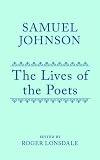
Lives of the English poets
by Samuel Johnson 
On This Page
Description
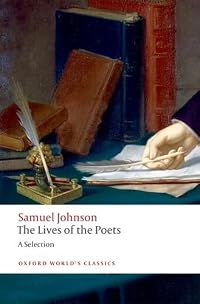
Samuel Johnson's last literary work, the Lives of the Poets, offers a detailed survey of English poetry from the early seventeenth century down to Johnson's own time. Always recognized as a major contribution to English biography and criticism, it is also one of Johnson's most readable and eloquent achievements. This is the first scholarly edition since 1905 and includes a full introduction and critical apparatus. This is volume four of four. - ;Johnson himself wrote in 1782: 'I know not show more that I have written any thing more generally commended than the Lives of the Poets'. Always recognized as a show lessTags
Recommendations






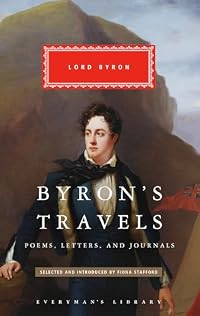




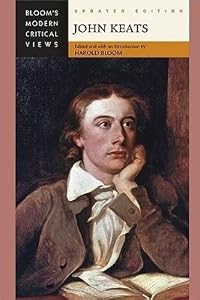
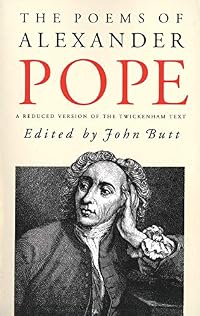











Member Reviews
In 1779, Johnson gave the world a luminous proof that the vigour of his mind in all its faculties, whether memory, judgement, or imagination, was not in the least abated; for this year came out the first four volumes of his Prefaces, biographical and critical, to the most eminent of the English Poets, published by the booksellers of London. The remaining volumes came out in the year 1780.
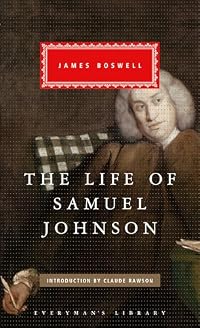
--James Boswell, in Life of Johnson
--James Boswell, in Life of Johnson
" The booksellers having determined to publish a body of English Poetry, I was persuaded to promise them a preface to the works of each author; an undertaking, as it was then presented to my mind, not very tedious or difficult. My purpose was only to have allotted to every poet an advertisement, like that which we find in the French Miscellanies, containing a few dates, and a general character; but I have been led beyoud my intention, I hope by the honest desire of giving useful pleasure." From the bookseller’s advertisement, quoted by Boswell in Life of Johnson. He also quotes Johnson’s comment: " Some time in March I finished ' The Lives of the Poets,' which I wrote in my usual way, dilatorily and hastily, unwilling to work, and show more working with vigour and haste." In a memorandum previous to this, he says of them :—" Written, I hope, in such a manner as may tend to the promotion of piety." show less
"...but a succession of prefaces..." -Through the Magic Door, p. 57
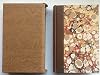
FJIRST LONDON EDITION RAISED BANDS VOL. ONE AND TWO WITH FRONTIESPIECE
2 v.1920 printing. 1977 printing
Ratings
Members
- Recently Added By
Lists

Literary Theory and Criticism: What Happens and Why
37 works; 5 members

W. S. Maugham's Reading Suggestions for Spiritual Enrichment: British
24 works; 3 members

How to Read a Book's Recommended Reading List
309 works; 10 members

Greatest Books, allegedly
484 works; 9 members

Recommended Reading : 600 Classics Reviewed, Editors of Salem Press, 2015
634 works; 6 members
Author Information

491+ Works 9,446 Members
Samuel Johnson was born in 1709, in Lichfield, England. The son of a bookseller, Johnson briefly attended Pembroke College, Oxford, taught school, worked for a printer, and opened a boarding academy with his wife's money before that failed. Moving to London in 1737, Johnson scratched out a living from writing. He regularly contributed articles and show more moral essays to journals, including the Gentleman's Magazine, the Adventurer, and the Idler, and became known for his poems and satires in imitation of Juvenal. Between 1750 and 1752, he produced the Rambler almost single-handedly. In 1755 Johnson published Dictionary of the English Language, which secured his place in contemporary literary circles. Johnson wrote Rasselas in a week in 1759, trying to earn money to visit his dying mother. He also wrote a widely-read edition of Shakespeare's plays, as well as Journey to the Western Isles of Scotland and Lives of the Poets. Johnson's writing was so thoughtful, powerful, and influential that he was considered a singular authority on all things literary. His stature attracted the attention of James Boswell, whose biography, Life of Johnson, provides much of what we know about its subject. Johnson died in 1784. (Bowker Author Biography) show less
Samuel Johnson has a Legacy Library. Legacy libraries are the personal libraries of famous readers, entered by LibraryThing members from the Legacy Libraries group.
Some Editions
Awards and Honors
Series
Belongs to Publisher Series
Work Relationships
Common Knowledge
- Original publication date
- 1779
- People/Characters
- Samuel Butler; Charles II, King of England, Scotland, and Ireland; Abraham Cowley; Oliver Cromwell; Sir John Denham; Wentworth Dillon, 4th Earl of Roscommon (show all 17); John Dryden; John Milton; Thomas Otway; John Philips; John Pomfret; Alexander Pope; Charles Sackville, 6th Earl of Dorset; George Stepney; Jonathan Swift; Edmund Waller; John Wilmot, 2nd Earl of Rochester
- First words
- The life of Cowley, notwithstanding the penury of English biography, has been written by Dr. Sprat, an author whose pregnancy of imagination and elegance of language have deservedly set him high in the ranks of literature ...
- Quotations
- [The Earl of Rochester] had very early an inclination to intemperance ... when he became a courtier, he unhappily addicted himself to dissolute and vitious [sic] company, by which his principles were corrupted, and his man... (show all)ners depraved. He lost all sense of religious restraint; and, finding it not convenient to admit the authority of laws which he was resolved not to obey, sheltered his wickedness behind infidelity.... As he excelled in that noisy and licentious merriment which wine incites, his company eagerly encouraged him in excess, and he willingly indulged it; till, as he confessed to Dr. Burnet, he was for five years together continually drunk, or so much inflamed by frequent ebriety [sic], as in no interval to be master of himself.... In this state he played many frolicks, which it is not for his honour that we should remember ... He often pursued low amours in mean disguises, and always acted with great exactness and dexterity the characters which he assumed. ... Thus in a course of drunken gaiety, and gross sensuality, with intervals of study perhaps yet more criminal, with an avowed contempt of all decency and order, total disregard to every moral, and a resolute denial of every religious obligation, he lived worthless and useless and blazed out his youth and his health in lavish voluptuousness; till, at the age of one and thirty, he had exhausted the fund of life, and reduced himself to a state of weakness and decay.
In 1668 Dryden succeeded Sir William Davenant as poet-laureate. The salary of the laureate had been raised in favour of Ben Jonson, by Charles the First, from an hundred marks to one hundred pounds a year, and a tierce of win... (show all)e.
Classifications
- Genres
- Literature Studies and Criticism, Biography & Memoir, Nonfiction, Fiction and Literature
- DDC/MDS
- 821.009 — Literature & rhetoric English & Old English literatures British Poetry English poetry {by more than one author} Modified standard subdivisions History, description, critical appraisal of English poetry not limited by time period or kind of form
- LCC
- PR553 .J7 — Language and Literature English English Literature Poetry By period
- BISAC
Statistics
- Members
- 323
- Popularity
- 98,206
- Reviews
- 6
- Rating
- (4.05)
- Languages
- English, Spanish
- Media
- Paper, Ebook
- ISBNs
- 36
- ASINs
- 16