On This Page
Description
Fiction. Literature. HTML:This slyly funny, moving novel about a blue-collar town in upstate New York—and in the life of Sully, of one of its unluckiest citizens, who has been doing the wrong thing triumphantly for fifty years—is a classic American story.Divorced from his own wife and carrying on halfheartedly with another man's, saddled with a bum knee and friends who make enemies redundant, Sully now has one new problem to cope with: a long-estranged son who is in imminent danger of show more following in his father's footsteps. With its uproarious humor and a heart that embraces humanity's follies as well as its triumphs, Nobody's Fool, from Pulitzer Prize-winning author, Richard Russo, is storytelling at its most generous.
Nobody's Fool was made into a movie starring Paul Newman, Bruce Willis, Jessica Tandy, and Melody Griffith. show less
Tags
Recommendations




Member Reviews
It took me over a month to finish Nobody's Fool but that had more to do with me than with this excellent novel. I ended up loving it and connecting with it in a way I did not expect, and much more so than with Russo's Pulitzer winner, Empire Falls. I think this was mostly due to my familiarity with the area in which the novel takes place (upstate New York, north of Albany and near a fictionalized version of Saratoga Springs which I visited often as a child) and my familiarity with the characters peopling Russo's world. They were so real to me, all their foibles and kindnesses and self-destructive behavior, all the quiet despair of living on the edge in a dying town. But it's all rendered very subtly, with humor and grace.
The show more protagonist, Sully, is a ne'er do well handyman with an ex-wife, a mistress, a resentful son, confused grandson, and devoted best friend upon whom he heaps (usually good-natured) abuse.
This is how Sully's life goes:
"He didn’t know for sure, of course, but it just made fatalistic sense the truck would die today. Yesterday he’d had a job offer that was contingent upon having a truck, which meant the truck had to die.” (page 227)
And this is the enigma that is Sully - a good man with a good heart who mostly seems to make bad decisions and has trouble connecting with other people on anything but a superficial level (Ralph is his ex-wife's husband and Peter is his son):
“'People like Sully,' he said. 'I do myself. He’s…' Ralph tried to think what Sully was.
'Right,' Peter said. 'He sure is.'” (page 386)
There is not a huge moment of redemption in this novel, where the sun suddenly shines on Sully and all becomes clear. But he does seem to begin to come to have a sense of his impact on people and to care what that impact is. His former carelessness becomes unacceptable in the face of the growing affection between him and his grandson. He remains implacable in some things though, including his hatred of his deceased father who was a mean and bullying drunk who abused his wife and sons.
“But Sully could only surrender so much, and he understood that if he and Ruth married, she’d eventually have him visiting Big Jim’s grave with fresh flowers. She’d go with him and make sure he left them. And where was the justice in that? It would mean that in the end Big Jim had fooled them all and beat the rap, walked out of court on some flimsy Christian loophole called forgiveness. No. Fuck him. Eternally.” (page 543)
Harsh, yes, but I feel the same way about certain people and circumstances in my life, so again, the bell rang clear and true for me.
And a final quote, which I just loved, because it perfectly describes the complexity and mystery of love and what ties us to other people:
“For fairness and loyalty, however important to the head, were issues that could seldom be squared in the human heart, at the deepest depths of which lay the mystery of affection, of love, which you either felt or you didn’t, pure as instinct, which seized you, not the other way around, making a mockery of words like ‘should’ and ‘ought’. The human heart, where compromise could not be struck, not ever.” (page 545)
Highly, highly recommended, if you can tolerate a book in which not much seems to happen. Still waters run deep. show less
The show more protagonist, Sully, is a ne'er do well handyman with an ex-wife, a mistress, a resentful son, confused grandson, and devoted best friend upon whom he heaps (usually good-natured) abuse.
This is how Sully's life goes:
"He didn’t know for sure, of course, but it just made fatalistic sense the truck would die today. Yesterday he’d had a job offer that was contingent upon having a truck, which meant the truck had to die.” (page 227)
And this is the enigma that is Sully - a good man with a good heart who mostly seems to make bad decisions and has trouble connecting with other people on anything but a superficial level (Ralph is his ex-wife's husband and Peter is his son):
“'People like Sully,' he said. 'I do myself. He’s…' Ralph tried to think what Sully was.
'Right,' Peter said. 'He sure is.'” (page 386)
There is not a huge moment of redemption in this novel, where the sun suddenly shines on Sully and all becomes clear. But he does seem to begin to come to have a sense of his impact on people and to care what that impact is. His former carelessness becomes unacceptable in the face of the growing affection between him and his grandson. He remains implacable in some things though, including his hatred of his deceased father who was a mean and bullying drunk who abused his wife and sons.
“But Sully could only surrender so much, and he understood that if he and Ruth married, she’d eventually have him visiting Big Jim’s grave with fresh flowers. She’d go with him and make sure he left them. And where was the justice in that? It would mean that in the end Big Jim had fooled them all and beat the rap, walked out of court on some flimsy Christian loophole called forgiveness. No. Fuck him. Eternally.” (page 543)
Harsh, yes, but I feel the same way about certain people and circumstances in my life, so again, the bell rang clear and true for me.
And a final quote, which I just loved, because it perfectly describes the complexity and mystery of love and what ties us to other people:
“For fairness and loyalty, however important to the head, were issues that could seldom be squared in the human heart, at the deepest depths of which lay the mystery of affection, of love, which you either felt or you didn’t, pure as instinct, which seized you, not the other way around, making a mockery of words like ‘should’ and ‘ought’. The human heart, where compromise could not be struck, not ever.” (page 545)
Highly, highly recommended, if you can tolerate a book in which not much seems to happen. Still waters run deep. show less
Scamp, rascal, rogue – all descriptions that Donald Sullivan, Sully to his friends, wears like a comfortable old coat, thread bare from years of use but perfectly fitted in shape and movement. Sully is the subject of Richard Russo’s novel, [Nobody’s Fool], and Sully is a subject that could inspire decades of examination.
Blue-collar to his very pores, Sully angles for ‘off-the-book’ construction work in Bath, NY, a dilapidated and nearly forgotten town that perfectly matches Sully’s life. He rooms in the home of Beryl Peoples, his widowed high-school English teacher, greeting each new morning by asking her if she’s still alive. A busted-up knee keeps him from engaging any steady work, but he’s hoping that his one-legged show more attorney will complete a disability scam that will keep him flush. When he eats, he eats at the local pub, but mostly he drinks. He flirts, with every female he meets, including a most fervent flirtation with the man who employs him most frequently. And every day, like a visit to the holy confines of a cathedral, he bets the same 1-2-3 trifecta, knowing that his persistent faith will reward him someday.
None of that description does Sully justice, though. Because, at heart, Sully is more than a scamp. The scamp is a mask that Sully dons to cover the good-hearted, loyal friend that he is deep down. It helps him to suffer through the remaining pain of a brutally abusive father, one who made him believe that he would amount to little more than a bum. It helps him to weather the guilt and regret he feels for having failed as a husband and father. None of these truths ever cracks the confines of Sully’s mask, until he meets his grandson. In that moment he feels deeply what he is only able to admit to his friend Mrs. Peoples. She asks him if it ever bothers him that he hasn’t made more of the life God gave him. Sully responds, “Not often. Now and then.” That subtle, if sage, reflection sums up Sully and Russo’s book perfectly.
[Nobody’s Fool] is not populated with beautiful and charmed people, people whose life we envy or would like to assume. It is full of normal, broken-hearted people, battling regret and failure each day in hopes that the day will be bright and full of the hope they feel slipping away. Sully and his cohorts don’t make all the right choices and they don’t make all the wrong ones. They do the best they can with what they see before them.
Easily, the best part of Russo’s novel is the dialog that he writes for his characters. The banter is dripping with the sound of having been pinched from the friendly confines of a broken-down pub like the one Russo places in Bath, NY. Each page has a new surprise and a laugh, though often those laughs sink into melancholy thoughts.
The only knock on the book is that, toward the end of the book, Russo spins Sully into a well so deep and so debauched that it doesn’t seem humanly possible that Sully could ever make it out. It was the only time that the book didn’t feel absolutely authentic. Russo could have spared even a character like Sully some indignity and still made his point.
Bottom Line: A book full of normal people plodding through regret and the yearning to be better, even if it is outside their grasp.
4 ½ bones!!!!! show less
Blue-collar to his very pores, Sully angles for ‘off-the-book’ construction work in Bath, NY, a dilapidated and nearly forgotten town that perfectly matches Sully’s life. He rooms in the home of Beryl Peoples, his widowed high-school English teacher, greeting each new morning by asking her if she’s still alive. A busted-up knee keeps him from engaging any steady work, but he’s hoping that his one-legged show more attorney will complete a disability scam that will keep him flush. When he eats, he eats at the local pub, but mostly he drinks. He flirts, with every female he meets, including a most fervent flirtation with the man who employs him most frequently. And every day, like a visit to the holy confines of a cathedral, he bets the same 1-2-3 trifecta, knowing that his persistent faith will reward him someday.
None of that description does Sully justice, though. Because, at heart, Sully is more than a scamp. The scamp is a mask that Sully dons to cover the good-hearted, loyal friend that he is deep down. It helps him to suffer through the remaining pain of a brutally abusive father, one who made him believe that he would amount to little more than a bum. It helps him to weather the guilt and regret he feels for having failed as a husband and father. None of these truths ever cracks the confines of Sully’s mask, until he meets his grandson. In that moment he feels deeply what he is only able to admit to his friend Mrs. Peoples. She asks him if it ever bothers him that he hasn’t made more of the life God gave him. Sully responds, “Not often. Now and then.” That subtle, if sage, reflection sums up Sully and Russo’s book perfectly.
[Nobody’s Fool] is not populated with beautiful and charmed people, people whose life we envy or would like to assume. It is full of normal, broken-hearted people, battling regret and failure each day in hopes that the day will be bright and full of the hope they feel slipping away. Sully and his cohorts don’t make all the right choices and they don’t make all the wrong ones. They do the best they can with what they see before them.
Easily, the best part of Russo’s novel is the dialog that he writes for his characters. The banter is dripping with the sound of having been pinched from the friendly confines of a broken-down pub like the one Russo places in Bath, NY. Each page has a new surprise and a laugh, though often those laughs sink into melancholy thoughts.
The only knock on the book is that, toward the end of the book, Russo spins Sully into a well so deep and so debauched that it doesn’t seem humanly possible that Sully could ever make it out. It was the only time that the book didn’t feel absolutely authentic. Russo could have spared even a character like Sully some indignity and still made his point.
Bottom Line: A book full of normal people plodding through regret and the yearning to be better, even if it is outside their grasp.
4 ½ bones!!!!! show less
I've been thinking of reading this author for some time, and I'm so glad I finally did. The writing is delicious and accessible, and the characters in this story really stay with you. Sully is the 'fool' in the story, damaged by his childhood and a regrettable tendency to do exactly what he shouldn't, even when he knows his choices are wrong. But he has friends - his 80 year old landlady Beryl Persons, his on-again, off-again lover Ruth, his work partner Rub, his lawyer Wirf, his sometime employer Carl, his long-absent son Peter. He's nursing a bad knee, a broken family and a disability claim. But he is generous and even kind in his own way.
The town of North Bath in upstate New York is emblematic of the decline of small towns show more everywhere, when one inexplicable change can ruin an economy. But people stay, perhaps because their web of connections is strong.
I almost gave up on this book about 50 pages in, wondering why I should care about such a ne'er-do-well, self-destructive man, but my book group was reading it so I persevered, and not long after that became another of Sully's supportive friends.
There are two sequels - I'll be sure to read on. show less
The town of North Bath in upstate New York is emblematic of the decline of small towns show more everywhere, when one inexplicable change can ruin an economy. But people stay, perhaps because their web of connections is strong.
I almost gave up on this book about 50 pages in, wondering why I should care about such a ne'er-do-well, self-destructive man, but my book group was reading it so I persevered, and not long after that became another of Sully's supportive friends.
There are two sequels - I'll be sure to read on. show less
“Maybe Sully’s young philosophy professor at the college had been right. Maybe free will was just something you thought you had. Maybe Sully’s sitting there trying to figure out what he should do next was silly. Maybe there was no way out of this latest fix he’d gotten himself into. Maybe even the trump card he’d been saving, or imagined he was saving, wasn’t in his hand at all. … Still, Sully felt the theory to be wrong. It made everything slack. He’d never considered life to be as tight as some people…made it out to be, but it wasn’t that loose either.” - Richard Russo - Nobody's Fool
Deep character study about a self-destructive stubborn man, his family and friends, living in a small town in upstate New York in show more the mid-1980’s. Donald “Sully” Sullivan is a sixty-year-old construction worker who has recently injured his knee and is collecting partial disability but wants to get back to work. We follow Sully as he experiences one of his “stupid streaks,” where nothing goes right for him. Sully’s adult son and his family come to town, further complicating his life. Sully battles his demons, stemming from abuse at the hands of his now-deceased father. Themes include the cycle of abuse, trust, change, free will, and responsibility. Russo is a keen observer of human behavior and is adept at describing human foibles. His male characters are particularly well-developed, with the females serving primarily as foils for their dysfunctional relationship issues.
This book requires a bit of patience. Russo begins by describing the Adirondack area of New York, then zooms in on the small town of North Bath, then narrows the focus to the building where Sully lives in a flat upstairs from his octogenarian landlady. The author excels at creating a sense of community. We follow Sully in the rhythms of his typical day and get to know his local haunts: Hattie’s for breakfast, his boss’s office for the day’s odd job, the OTB where he places his daily wager, and The Horse for drinks after work with his cronies.
The rather thin plotline revolves around a banker attempting to close a deal for an amusement park and a lawyer trying to gain full disability for his reluctant client, Sully. This novel contains lots of adolescent behavior from so-called adults, and the reader gradually becomes aware of the reasons behind what, on the surface, appears to be mean-spiritedness. It follows the cycle of physical and emotional abuse and its impact on the self-esteem of three generations of males, though it takes place within the space of only a few weeks.
I found it most successful when examining freedom of choice and personal responsibility. How much of life is based on talent, actions, luck, or fate? While Sully shows some character growth, I would have preferred more. I also found it rather lengthy for a novel where not a lot happens. Recommended to those with a preference for slowly-developing character-driven stories that comment on interpersonal relationships, especially fathers and sons. show less
"For fairness and loyalty, however important to the head, were issues that could seldom be squared in the human heart, at the deepest depths of which lay the mystery of affection, of love, which you either felt or you didn’t, pure as instinct, which seized you, not the other way around, making a mockery of words like ‘should’ and ‘ought.’ The human heart, where compromise could not be struck, not ever. Where transgressions exacted a terrible price. Where tangled black limbs fell. Where the boom got lowered.”
This is just my second book by Richard Russo, but already I can mark him as a favorite author. His writing speaks to me - I like how he tells a story where basically nothing much happens but the characters are so real show more that you feel you know them personally. That's how life happens - not so much in the big moments but in the small forgotten ones that help to define who we are.
This is mostly the story of Sully and the lives that intersect his, and what I love about Sully is that he knows how to be kind. And he doesn't take any shit. At first glance, Sully seems like a failure - he seems reckless and thoughtless in his decision making. But Sully is actually very thoughtful - he thinks things through and then goes ahead and does things his way even when he knows that it is not "the smartest thing". Is it better to be smart or to be genuine?
Sully lives with Miss Beryl (renting out her upstairs), mother of the selfish and greedy Clive Jr., widow of Clive Sr. Miss Beryl used to teach eight grade and she has taught and remembers most everyone in town. Miss Beryl is another very interesting and deeply conflicted character - she loves Sully better than her own son, who has an agenda that does not meet with Miss Beryl's approval. Miss Beryl knows that she cannot trust her own son, but she feels guilty about this knowledge.
I loved the thoughtful progression through Miss Beryl's and Sully's thoughts and actions as they navigate the course of their journey. Miss Beryl understands that Sully is a product of his abusive father's violent behavior. She understands his stubbornness even when she doesn't condone it, and she definitely understands that forgiveness is not always an option or even necessary for redemption. Why do people always want us to forgive what should never be forgiven? And why do they think we cannot have closure without it? Acceptance and forgiveness are not the same thing. I wanted to applaud Sully for refusing to forgive his father, who, after all, never even asked for forgiveness. I didn't think Sully should have to relinquish his anger or his hurt.
“To Ruth’s way of thinking, Sully’s unwillingness to forgive as the source of his own stubborn failures, and in the past she’d been capable of being very persuasive on this subject, would in fact have persuaded about anyone but Sully. Her failure to convince him was probably the best single explanation for why things never worked out between them. She made it clear he could not have them both - herself and his stubborn, fixed determination. For a while he’s allowed her to undermine it in subtle ways. Once they’d even visited Big Jim in his nursing home. But Sully could only surrender so much, and he understood that if he and Ruth married, she’d eventually have him visiting Big Jim’s grave with fresh flowers. She’d go with him and make sure he left them. And where was the justice in that? It would mean that in the end Big Jim had fooled them all and beat the rap, walked out of court on some flimsy Christian loophole called forgiveness. No. Fuck him. Eternally."
This book is such a wonderful character study. Quiet and unassuming, it is packed full of humor and wit. Of charm and ugliness and truth. It spoke to me. Highly recommended and one I know I will reread. Thank you, Katie, for recommending this one. show less
This is just my second book by Richard Russo, but already I can mark him as a favorite author. His writing speaks to me - I like how he tells a story where basically nothing much happens but the characters are so real show more that you feel you know them personally. That's how life happens - not so much in the big moments but in the small forgotten ones that help to define who we are.
This is mostly the story of Sully and the lives that intersect his, and what I love about Sully is that he knows how to be kind. And he doesn't take any shit. At first glance, Sully seems like a failure - he seems reckless and thoughtless in his decision making. But Sully is actually very thoughtful - he thinks things through and then goes ahead and does things his way even when he knows that it is not "the smartest thing". Is it better to be smart or to be genuine?
Sully lives with Miss Beryl (renting out her upstairs), mother of the selfish and greedy Clive Jr., widow of Clive Sr. Miss Beryl used to teach eight grade and she has taught and remembers most everyone in town. Miss Beryl is another very interesting and deeply conflicted character - she loves Sully better than her own son, who has an agenda that does not meet with Miss Beryl's approval. Miss Beryl knows that she cannot trust her own son, but she feels guilty about this knowledge.
I loved the thoughtful progression through Miss Beryl's and Sully's thoughts and actions as they navigate the course of their journey. Miss Beryl understands that Sully is a product of his abusive father's violent behavior. She understands his stubbornness even when she doesn't condone it, and she definitely understands that forgiveness is not always an option or even necessary for redemption. Why do people always want us to forgive what should never be forgiven? And why do they think we cannot have closure without it? Acceptance and forgiveness are not the same thing. I wanted to applaud Sully for refusing to forgive his father, who, after all, never even asked for forgiveness. I didn't think Sully should have to relinquish his anger or his hurt.
“To Ruth’s way of thinking, Sully’s unwillingness to forgive as the source of his own stubborn failures, and in the past she’d been capable of being very persuasive on this subject, would in fact have persuaded about anyone but Sully. Her failure to convince him was probably the best single explanation for why things never worked out between them. She made it clear he could not have them both - herself and his stubborn, fixed determination. For a while he’s allowed her to undermine it in subtle ways. Once they’d even visited Big Jim in his nursing home. But Sully could only surrender so much, and he understood that if he and Ruth married, she’d eventually have him visiting Big Jim’s grave with fresh flowers. She’d go with him and make sure he left them. And where was the justice in that? It would mean that in the end Big Jim had fooled them all and beat the rap, walked out of court on some flimsy Christian loophole called forgiveness. No. Fuck him. Eternally."
This book is such a wonderful character study. Quiet and unassuming, it is packed full of humor and wit. Of charm and ugliness and truth. It spoke to me. Highly recommended and one I know I will reread. Thank you, Katie, for recommending this one. show less
“(I)t reminded Sully of one of those cockamamie theories his young philosophy professor had so enjoyed tossing out. According to him, everybody, all the people in the world, were linked by invisible strings, and when you moved you were really exerting influence on other people. Even if you couldn't see the strings pulling, they were there just the same.” — Richard Russo, “Nobody's Fool”
I have often enjoyed the movie version of Richard Russo's 1993 novel “Nobody's Fool” featuring Paul Newman, Jessica Tandy (her last film), Bruce Willis, Melanie Griffith and a host of other capable actors. As good as the movie is, the novel itself is even better, I have finally discovered. While Robert Benton's film is, despite a number of show more shortcuts, faithful to the novel, both in terms of its plot and its spirit, Russo gives us the whole story, and what a story it is.
Donald Sullivan (Sully) is a man in his early sixties who when facing a choice will almost invariably choose wrong. Although collecting government checks for full disability because of an injured knee, he decides to go back to work anyway. We could compile quite a list of other bad choices, including slugging a cop, in a story that covers just a few weeks between Thanksgiving and New Year's Eve in an upstate New York small town, but Russo's novel is less about bad choices than it is about those "invisible strings" Sully discovers that tie him to other people.
The son he ignored in his youth returns to town after losing both his job and his wife, and looks to his father for emotional support. Sully's timid grandson, Will, needs his grandpa to teach him how to be brave. His elderly landlady depends upon him for snow removal and a host of other things. His friends depend upon him more than he ever imagined. Maybe independent, carefree Sully needs these people, too.
Perhaps the most significant invisible string connects Sully to his long-dead father, whom he has never forgiven for his abusive treatment of him, his brother and his mother. Sully's self-destructive behavior stems from his father and that string he cannot sever.
A plot summary cannot suggest how funny this novel is. Sully, for all his flaws, is a witty conversationalist, and the banter between him and other characters constantly entertains, even when his banter also becomes self-destructive.
Having enjoyed Russo's novel as much as I did, I hope I will be able to continue to enjoy Benton's film. show less
I have often enjoyed the movie version of Richard Russo's 1993 novel “Nobody's Fool” featuring Paul Newman, Jessica Tandy (her last film), Bruce Willis, Melanie Griffith and a host of other capable actors. As good as the movie is, the novel itself is even better, I have finally discovered. While Robert Benton's film is, despite a number of show more shortcuts, faithful to the novel, both in terms of its plot and its spirit, Russo gives us the whole story, and what a story it is.
Donald Sullivan (Sully) is a man in his early sixties who when facing a choice will almost invariably choose wrong. Although collecting government checks for full disability because of an injured knee, he decides to go back to work anyway. We could compile quite a list of other bad choices, including slugging a cop, in a story that covers just a few weeks between Thanksgiving and New Year's Eve in an upstate New York small town, but Russo's novel is less about bad choices than it is about those "invisible strings" Sully discovers that tie him to other people.
The son he ignored in his youth returns to town after losing both his job and his wife, and looks to his father for emotional support. Sully's timid grandson, Will, needs his grandpa to teach him how to be brave. His elderly landlady depends upon him for snow removal and a host of other things. His friends depend upon him more than he ever imagined. Maybe independent, carefree Sully needs these people, too.
Perhaps the most significant invisible string connects Sully to his long-dead father, whom he has never forgiven for his abusive treatment of him, his brother and his mother. Sully's self-destructive behavior stems from his father and that string he cannot sever.
A plot summary cannot suggest how funny this novel is. Sully, for all his flaws, is a witty conversationalist, and the banter between him and other characters constantly entertains, even when his banter also becomes self-destructive.
Having enjoyed Russo's novel as much as I did, I hope I will be able to continue to enjoy Benton's film. show less
I grew up in a bustling suburb in Southern California, which is about as far away from the world that Russo writes about as you can get. Nobody’s Fool, like most of his other books, takes place in a small town in the northeastern part of the United States that, for various reasons, has become disenfranchised from the mainstream American Dream. The people who call North Bath, New York home tackle life’s pressing issues as best they can, which means with a mild sense of resignation and usually on a day-to-day basis.
While the contrast between the life he describes and my own was interesting enough, the real reason I love Russo is the complex, witty, and compassionate way he draws his characters. Although nothing much happens in this show more novel from a plot standpoint, I became so attached to the various personalities—particularly Sully, who is very much his own fool if nobody else’s—that I found myself more than a little sad to see it end. (Shouldn’t that be one way of defining great fiction?) This guy really is a wonderful writer. show less
While the contrast between the life he describes and my own was interesting enough, the real reason I love Russo is the complex, witty, and compassionate way he draws his characters. Although nothing much happens in this show more novel from a plot standpoint, I became so attached to the various personalities—particularly Sully, who is very much his own fool if nobody else’s—that I found myself more than a little sad to see it end. (Shouldn’t that be one way of defining great fiction?) This guy really is a wonderful writer. show less
Members
- Recently Added By
Lists

Read the book and saw the movie
1,170 works; 195 members

Top Five Books of 2020
982 works; 350 members

Favourite Books
1,819 works; 316 members

Top Five Books of 2016
795 works; 229 members

What are your favourite books?
121 works; 11 members

Books Read in 2020
4,379 works; 123 members

A Novel Cure
742 works; 23 members

NPR Readers Poll: 100 Favorite Funny Books
100 works; 5 members
Author Information

36+ Works 29,010 Members
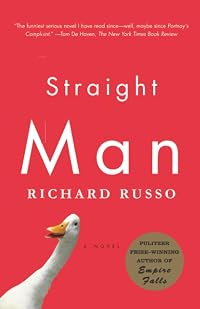
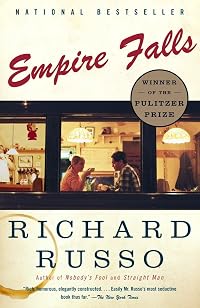
Richard Russo was born in Johnstown, New York on July 15, 1949. He received a Bachelor's degree, a Master of Fine Arts degree, and a Doctor of Philosophy degree from the University of Arizona. He taught at numerous colleges including Southern Illinois University Carbondale and Colby College. He has written numerous books including Mokawk, The Risk show more Pool, Straight Man, Bridge of Sighs, and That Old Cape Magic, as well as a short story collection, The Whore's Child. His novel Empire Falls won the 2002 Pulitzer Prize for Fiction and Nobody's Fool was made into a movie starring Paul Newman, Bruce Willis and Melanie Griffith. His memoir was entitled Elsewhere. He also co-wrote the 1998 film Twilight with director Robert Benton and the teleplay for the HBO adaptation of Empire Falls. (Bowker Author Biography) Richard Russo lives in coastal Maine with his wife & two daughters. (Publisher Fact Sheets) show less
Awards and Honors
Distinctions
Series

Work Relationships
Has the adaptation
Has as a student's study guide
Common Knowledge
- Canonical title
- Nobody's Fool
- Original title
- Nobody's Fool
- Original publication date
- 1993
- People/Characters
- Donald "Sully" Sullivan; Beryl Peoples; Rub Squeers; Carl Roebuck
- Important places
- Bath, New York, USA
- Related movies
- Nobody's Fool (1994 | IMDb)
- Dedication
- For Jean Levarn Findlay
- First words
- Upper Main Street in the village of North Bath, just above the town's two-block-long business district, was quietly residential for three more blocks, then became even more quietly rural along old Route 27A, a serpentine two-... (show all)lane blacktop that snaked its way through the Adirondacks of northern New York, with their tiny, down-at-the-heels resort towns, all the way to Montreal and prosperity.
- Last words
- (Click to show. Warning: May contain spoilers.)The dog apparently understood, because it loped past her, collapsing again with another massive sigh at the foot of the Queen Anne, its nub of a tail twitching in what--who could know?--just might contentment.
Classifications
Statistics
- Members
- 2,657
- Popularity
- 7,021
- Reviews
- 55
- Rating
- (4.15)
- Languages
- 7 — Danish, Dutch, English, French, German, Italian, Spanish
- Media
- Paper, Audiobook, Ebook
- ISBNs
- 35
- ASINs
- 15