
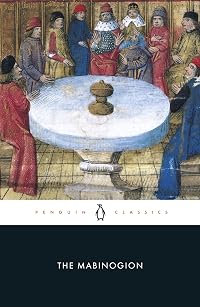
The Mabinogion
by Anonymous
On This Page
Description
Then they took the flowers of the oak, and the flowers of the broom, and the flowers of the meadowsweet, and from those they conjured up the fairest and most beautiful maiden that anyone had ever seen. Celtic mythology, Arthurian romance, and an intriguing interpretation of British history-these are just some of the themes embraced by the anonymous authors of the eleven tales that make up the Welsh medieval masterpiece known as The Mabinogion. They tell of Gwydion the shape-shifter, who can show more create a woman out of flowers; of Math the magician whose feet must lie in the lap of a virgin; of hanging a pregnant mouse and hunting a magical boar. Dragons, witches, and giants live alongside kings and heroes, and quests of honor, revenge, and love are set against the backdrop of a country struggling to retain its independence. Sioned Davies's lively translation re-creates the storytelling world of medieval Wales and reinvests the tales with the power of performance. show lessTags
Recommendations












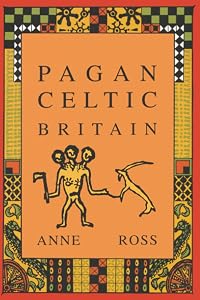
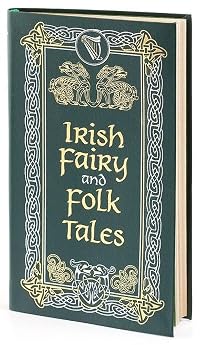
Member Recommendations
CGlanovsky A culturally important piece of medieval lit. consisting of mythological/historical incidents involving warriors.
Member Reviews
My new favorite translation of The Mabinogion. Davies does a great job of respecting the oral tradition lying underneath the medieval text, but without letting it club you over the head. The foot notes are useful. It was just a pleasure to read. (Except for "The Dream of Rhonabwy", which is a satire of the other tales. So, it is intentionally tiresome.)
The first four stories are really excellent, weird old stuff from pre-christian Wales that move quickly and are consistently entertaining and surprising. I found the Arthurian stories a little less interesting, though not terrible by any stretch. The Welsh taxonomy is just fantastic, and puzzling out the correct pronunciation of character and place names (with the help of the pronunciation guide) is a great game. Wales seems to get short shrift among Celt-crazy Americans, and it seems a bit unfair after reading this.
Also recommended if you enjoyed Lloyd Alexander in your youth, as he clearly drew heavily from this and similar sources.
Also recommended if you enjoyed Lloyd Alexander in your youth, as he clearly drew heavily from this and similar sources.
Professor Davies’s translations of these eleven middle Welsh tales tell of ancient Celtic British heroes besting opponents that are both human and supernatural. She notes that the tales have the distinctive style of oral storytelling, and although written down in the 13th and 14th centuries, they were clearly originally recited by performers who had memorized them. Indeed, the last one in the book, Rhonabwy's dream, ends with this boast from the storyteller:
"And this story is called the Dream of Rhonabwy. This is why no one knows the dream—neither poet or storyteller—without a book, because of the number of colours on the horses, and the many unusual colours of the armour and their trappings, and on the precious mantles and the show more magic stones."
It’s clearly someone bragging about their ability to memorize stories with long lists of characters, and exactly what they and their horses all wore.
The translation into modern English is lively and captures the rhythmic repetition of sound of the original Welsh. It also includes a thoughtful introduction, translator’s note, a guide to pronunciation of Welsh names, extensive explanatory notes, and indexes of personal and place names. show less
"And this story is called the Dream of Rhonabwy. This is why no one knows the dream—neither poet or storyteller—without a book, because of the number of colours on the horses, and the many unusual colours of the armour and their trappings, and on the precious mantles and the show more magic stones."
It’s clearly someone bragging about their ability to memorize stories with long lists of characters, and exactly what they and their horses all wore.
The translation into modern English is lively and captures the rhythmic repetition of sound of the original Welsh. It also includes a thoughtful introduction, translator’s note, a guide to pronunciation of Welsh names, extensive explanatory notes, and indexes of personal and place names. show less
The Penguin edition's introduction goes to enormous pains to tell me that the contents of the Mabinogian today probably do not reflect the original versions. They are only the oldest capturing we have of legends which were told orally for as many as several centuries prior. Further, we do not know exactly when this recording took place. Nor can we say for certain that it does not bear a heavy French influence which colors the lost originals. Nor is there much evidence that these stories held much influence over the development of Welsh culture. By the time I'd finished this detailed and inspiring intro, I almost reconsidered reading it at all.
Happily the Welsh legends of the Mabinogian have several memorable bits, loaded with show more mythological elements, curious reasoning and fantastic events. It has the usual conflicts and cruel acts of violence encountered in most peoples' mythologies, but there's also some humour laced into it that I thought was more unusual. The most fantastical elements are met by the characters with forthright aplomb. This seems like a characteristic of most people of legend but here it's perhaps especially worth noting. As the (otherwise unhelpful) introduction notes, it's a recurring theme to see the fantastical and the real intertwined, and to see a crossing between the two come as naturally as fording a stream. I find Greek and Norse mythology more engaging and this is not all casual reading, but enough of it is entertaining. show less
Happily the Welsh legends of the Mabinogian have several memorable bits, loaded with show more mythological elements, curious reasoning and fantastic events. It has the usual conflicts and cruel acts of violence encountered in most peoples' mythologies, but there's also some humour laced into it that I thought was more unusual. The most fantastical elements are met by the characters with forthright aplomb. This seems like a characteristic of most people of legend but here it's perhaps especially worth noting. As the (otherwise unhelpful) introduction notes, it's a recurring theme to see the fantastical and the real intertwined, and to see a crossing between the two come as naturally as fording a stream. I find Greek and Norse mythology more engaging and this is not all casual reading, but enough of it is entertaining. show less
Reading/listening to this book at one go is like eating too much cotton candy. As anyone who has read ancient literature can tell you, there are tropes within them that are the legacy of an oral tradition behind the tales. I find these tropes to be extremely tiresome when taken in large quantity over a short time. And in The Mabinogion, this is made even harder to get through due to Superlatives Overload. Every woman is "the fairest ever seen", every castle or suit of armor or your-noun-here is the best that ever was.
It probably does not help that I chose a very old translation. But the audiobook narrator is a native Welsh speaker, and I wanted his delivery of the many (many!) names within the book. He is the reason I give this 3 stars. show more Otherwise, it would languish with a 2-star rating. show less
It probably does not help that I chose a very old translation. But the audiobook narrator is a native Welsh speaker, and I wanted his delivery of the many (many!) names within the book. He is the reason I give this 3 stars. show more Otherwise, it would languish with a 2-star rating. show less
The Mabinogion is a compilation of Welsh mythology and Arthurian stories from a variety of authors and a variety of time periods. This means that the stories have a different feel. The first half of the collection is a bit speedier, with shorter stories. The Arthurian stories are much longer in the telling and contain staggering lists of warriors and horses of varying colours. Davies’s explanatory notes are well worth reading—I bookmarked the back so that I could read a tale and then the associated explanatory notes. Davies explains translation choices to convey alliteration and rhythm, the connections between the various tales, and how the Arthurian ones intersect with other sources of these tales (e.g., Geoffrey of Monmouth, show more Chrétien de Troyes). It is not a light read, but worth checking out if you like Arthur and Wales. Next step for me will be hunting down a good audio, to hear the Welsh names pronounced properly and to get the rhythm of the story. show less
I love to read history and while these tales are not histories, they do give a perspective of what was of on the minds of early medieval readers. These are traditional Welch tales, some pre-Christian era, some related to the myths of Arthur. I found Davies translations very readable and the extensive notes were for the most part helpful in providing background and context.
The 11 stories in this collection are likely more than 1000 years old (perhaps some are much older but the written versions are in that range), and yet they are both similar to and different from modern stories. Similar in that sex and violence are common themes. Many of the fantastical elements form the basis for modern fantasy stories. Different in the way the show more stories are told and the expectation of what the reader will understand / accept as part of a good story. A couple of examples of that:
1. The mix of pagan, pre-Christian notions with references to the Christian God. God, for instance, in one story curses a king and his men by turning them into pigs.
2. In the "romances" in this collection, knights are constantly running about and killing people to win the hand of the "woman they love best", even to the point of killing other men to take their wives for themselves, and those wives scheming with them to do so. Perhaps an early form of "a code of chivalry" (and the medieval notion of love at first sight) when these tales were told, but certainly not a modern understanding of appropriate behavior between the sexes.
3. The understanding that children of the noble class were commonly given away to be reared by "foster parents".
I have not read the other translations that people mention in other reviews, but I enjoyed reading this enough to (at some point) seek out some of those translations. show less
The 11 stories in this collection are likely more than 1000 years old (perhaps some are much older but the written versions are in that range), and yet they are both similar to and different from modern stories. Similar in that sex and violence are common themes. Many of the fantastical elements form the basis for modern fantasy stories. Different in the way the show more stories are told and the expectation of what the reader will understand / accept as part of a good story. A couple of examples of that:
1. The mix of pagan, pre-Christian notions with references to the Christian God. God, for instance, in one story curses a king and his men by turning them into pigs.
2. In the "romances" in this collection, knights are constantly running about and killing people to win the hand of the "woman they love best", even to the point of killing other men to take their wives for themselves, and those wives scheming with them to do so. Perhaps an early form of "a code of chivalry" (and the medieval notion of love at first sight) when these tales were told, but certainly not a modern understanding of appropriate behavior between the sexes.
3. The understanding that children of the noble class were commonly given away to be reared by "foster parents".
I have not read the other translations that people mention in other reviews, but I enjoyed reading this enough to (at some point) seek out some of those translations. show less
Members
- Recently Added By
Lists

Best Arthurian Fiction
104 works; 33 members

Unread books
1,063 works; 87 members

Favourite Medieval Books
49 works; 17 members

Epic Fiction
42 works; 12 members

Best of World Literature
432 works; 51 members

Classics you know you should have read but probably haven't
421 works; 408 members

100 Books to Read in a Lifetime (That Are Older Than 200 Years)
415 works; 175 members

Philip Ward's Lifetime Reading Plan
592 works; 22 members

European fiction, prose
2 works; 1 member

el
1,139 works; 1 member
Author Information
1 Work 5,046 Members
Some Editions
Awards and Honors
Series
Belongs to Publisher Series
Work Relationships
Contains
Has the adaptation
Is abridged in
Inspired
Common Knowledge
- Canonical title
- The Mabinogion
- Original publication date
- c. 1300 (White Book of Rhydderch) (White Book of Rhydderch)
- People/Characters
- Geraint ap Erbin; Culhwch; Olwen; Peredur (son of Efrawg); King Arthur; Angharad (Angharad Golden-Hand) (show all 32); Pwyll (prince of Dyfed); Rhiannon; Pryderi; Brân (Bendigeidfran); Arawn (king of Annwn); Hafgan; Gwawl; Hefeydd (the Old); Teyrnon; Bendigeidfran (Bendigaidfran, Brân); Branwen (daughter of Llyr); Matholwch (king of Ireland); Efnisien; Taliesin; Cigfa (Kicua); Manawydan; Math ap Mathonwy; Gwydion (son of Don); Gilfaethwy (son of Don); Aranrhod; Lleu Llaw Gyffes; Gronw Pebyr; Blodeuedd; Ysbaddaden Pencawr; Teyrnon's Wife; Nisien
- Important places
- Celliwig, Cornwall, England, UK; a' Chuimrigh; Wales, UK; Benoic; Albion; Almesbury (show all 7); Annwn
- Important events
- Quest for Olwen; Middle Ages
- Dedication
- to my family
- First words
- Brothers transformed into animals of both sexes who bring forth children; dead men thrown into a cauldron who rise the next day; a woman created out of flowers, transformed into an owl for infidelity; a king turned into a wil... (show all)d boar for his sins - these are just some of the magical stories that together make up the Mabinogi.
INTRODUCTION (to the Jones/Jones translation)
-----------------------------
The eleven prose tales upon which the title 'Mabinogion' has been at once happily and arbitrarily bestowed are among the finest flowerings of t... (show all)he Celtic genius and, taken together, a masterpiece of our medieval European literature.
The eleven stories known as the Mabinogion are among the finest flowerings of the Celtic genius and, taken together, a masterpiece of our medieval European literature.
Introduction (Gwyn Jones and Thomas Jones,... (show all) Everyman Library, ed.).
This translation of the Mabinogion into English appeared in Everyman's Library, with some revision of the original Golden Cockerel text and an expanded introduction, just twenty-five years ago.
Introduction (Gw... (show all)yn Jones, Everyman Library, 1974 ed.).
Pwyll prince of Dyfed was lord over the seven cantrefs of Dyfed; and once upon a time he was at Arberth, a chief court of his, and it came into his head and heart to go a-hunting.
Pwyll prince of Dyfed (Everyma... (show all)n Library, 1975 ed.). - Last words
- (Click to show. Warning: May contain spoilers.)And he ruled it from that time forth prosperously, he and his prowess and valour continuing with fame and renown for him and for Enid from that time forth.
Gereint son of Erbin (Everyman Library, 1975 ed.). - Original language
- Welsh; Old Welsh
- Disambiguation notice
- Please do not combine incomplete works, such as The Mabinogion (Phoenix 60p paperbacks), which contains only two tales.
There are two "Alan Lee" Mabinogions.
The original, which used the Everyman text, transla... (show all)ted by Gwyn Jones and Thomas Jones, was published by Dragon's Dream.
The second, which used Lady Charlotte Guest's translation, was published by Voyager/HarperCollins. See also LT entry for the Mabinogion by Lady Charlotte Guest.
Classifications
- Genre
- Fiction and Literature
- DDC/MDS
- 891.6631 — Literature & rhetoric Asian Literature East Indo-European and Celtic literatures Celtic languages Welsh Welsh fiction –1600
- LCC
- PB2363 .M2 .G3 — Language and Literature Modern languages. Celtic languages and literature Modern languages. Celtic languages Celtic languages and literature Brittanic group Welsh. Cymric
- BISAC
Statistics
- Members
- 5,083
- Popularity
- 2,721
- Reviews
- 47
- Rating
- (3.88)
- Languages
- 8 — Dutch, English, French, German, Scottish Gaelic, Portuguese, Spanish, Welsh
- Media
- Paper, Audiobook, Ebook
- ISBNs
- 101
- UPCs
- 4
- ASINs
- 78
