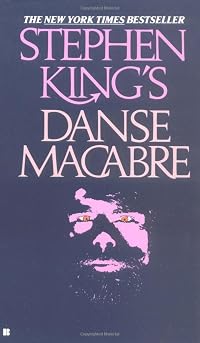
Danse Macabre
by Stephen King
On This Page
Description
The author addresses the topic of what makes horror horrifying and what makes terror terrifying. King delivers one colorful observation after another about the great stories, books and films that comprise of the horror genre--from Frankenstein and Dracula to The exorcist, The twilight zone and Earth vs. The flying saucers.Tags
Recommendations



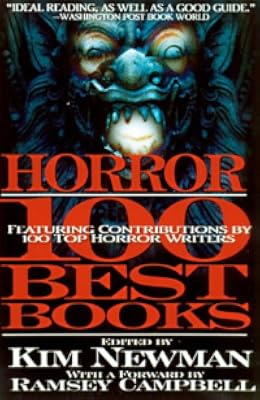
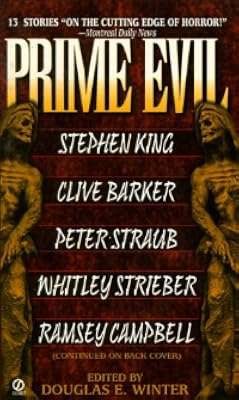



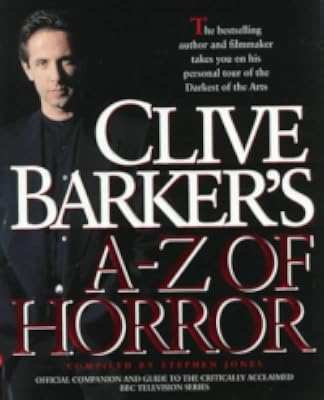

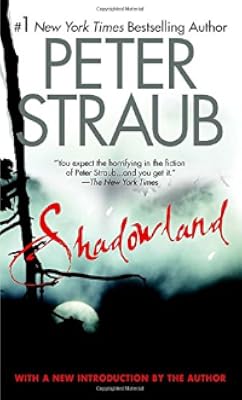
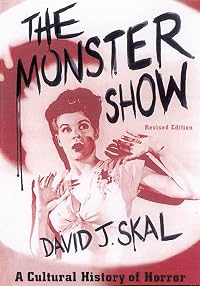


Member Recommendations
artturnerjr Another fascinating overview of the horror genre in the 20th century.
40
kraaivrouw Look here for Stephen King's take on The Haunting of Hill House.
30
Member Reviews
This is a reread for me - after a little over twenty years. It's interesting to see how the first reading of this book influenced some of my later reading - [[Shirley Jackson]], [[Jack Finney]], [[Richard Matheson]], etc. But I went into this reading intent upon a closer inspection of the literary references in horror and science fiction. So, armed with pad and pen, I embarked. At the end, I had almost 30 pages of notes, a nine-page listing of books and authors, and a feeling I'd just taken a graduate class in horror literature.
There are quite a few chapters on film and television that were interesting, especially from a perspective of how they helped to shape and foster these realms. Some folks coming to the book now will not have the show more cultural context to connect with these chapters, but I found them fascinating.
The best bits of the book, though, are the passages where Uncle Stevie waxes on about his influences, what he read, and how it shaped his own work. There's a deep comparison of [Dracula] and ['Salem's Lot], including a passage where he describes his own real life childhood incursion into the actual Marsten House. There's also a long recollection about how he begun writing [The Stand], a Patty Hearst story, and who is the real life inspiration for Randall Flagg. Additionally, King lays out what horror does for readers, what function it serves - this book is the origins of one of his famous quotes, "We make up horrors to cope with the real ones."
On that note, I thought it appropriate to include a quotation from the book here - not a King quote, but his transcription of a [[Harlan Ellison]] passage from a letter, to identify how well this book holds up some 40+ years later:
"The man has become the most important public figure of our times. In short, he has manipulated reality simply by being bold. In this madman we have an example of one who understands, even subcutaneously, that the real world is manipulable. He has dreamed, and forced the rest of the word to live in his dream."
You probably think you know who that quote references, but you'd be wrong because you're forgetting the part about how this book is 40+ years old - the quote references Ayatollah Khomeini - an indication about the cycles of history and hate and horror.
The book ends with, essentially a Coda from King about writing, and reading, horror fiction. It's fashioned from an interview he did with a reporter who asked him how he could live with himself writing things that played on people's fears. He then narrates the rest of the interview, peppering in vignettes about real life awful violent crimes, essentially bringing home the point that horror fiction accentuates real life horror to help cope that real life horror.
If you're a horror or science fiction or King fan - you really have to read this book. If you're a writer yourself, you should read this book. Oh, heck, just read the damn book.
Highly recommended!!!!!
5 bones!!!!! show less
There are quite a few chapters on film and television that were interesting, especially from a perspective of how they helped to shape and foster these realms. Some folks coming to the book now will not have the show more cultural context to connect with these chapters, but I found them fascinating.
The best bits of the book, though, are the passages where Uncle Stevie waxes on about his influences, what he read, and how it shaped his own work. There's a deep comparison of [Dracula] and ['Salem's Lot], including a passage where he describes his own real life childhood incursion into the actual Marsten House. There's also a long recollection about how he begun writing [The Stand], a Patty Hearst story, and who is the real life inspiration for Randall Flagg. Additionally, King lays out what horror does for readers, what function it serves - this book is the origins of one of his famous quotes, "We make up horrors to cope with the real ones."
On that note, I thought it appropriate to include a quotation from the book here - not a King quote, but his transcription of a [[Harlan Ellison]] passage from a letter, to identify how well this book holds up some 40+ years later:
"The man has become the most important public figure of our times. In short, he has manipulated reality simply by being bold. In this madman we have an example of one who understands, even subcutaneously, that the real world is manipulable. He has dreamed, and forced the rest of the word to live in his dream."
You probably think you know who that quote references, but you'd be wrong because you're forgetting the part about how this book is 40+ years old - the quote references Ayatollah Khomeini - an indication about the cycles of history and hate and horror.
The book ends with, essentially a Coda from King about writing, and reading, horror fiction. It's fashioned from an interview he did with a reporter who asked him how he could live with himself writing things that played on people's fears. He then narrates the rest of the interview, peppering in vignettes about real life awful violent crimes, essentially bringing home the point that horror fiction accentuates real life horror to help cope that real life horror.
If you're a horror or science fiction or King fan - you really have to read this book. If you're a writer yourself, you should read this book. Oh, heck, just read the damn book.
Highly recommended!!!!!
5 bones!!!!! show less
what an overview of horror movies, tv, and books (not enough about books, if you ask me) and why we read/write/watch them in the first place. he finds redeeming qualities to many movies that i'm sure i couldn't find anything positive in, but i still found his analysis interesting, even if i didn't always agree with it. i was most interested in (and ultimately surprised by) what he considers "horror," because i've never felt he was mainly a horror writer, and many of the writers he cites i also wouldn't call horror writers.
i am re/reading all of his books (except the dark tower series) in order of publication and even this early on it's clear to me in his fiction that he's a man who believes in equality. many, many of his characters in show more his books do not, and he writes them so well that i recall questioning his personal belief in the past. so i especially appreciated his identification of sexism in the film alien in a scene that "Enabl[es] the males in the audience, of course, to relax, roll their eyes at each other, and say either aloud or telepathically, 'Isn't that just like a woman?' It is a plot twist which depends upon a sexist idea for its believability, and we might well answer the question asked above by asking in turn, 'Isn't that just like a male chauvinist pig of a Hollywood scriptwriter?'"
this is a man who knows so much, not just about his genre, and i enjoyed seeing that on display here. this felt a bit like a dissertation that went out of control, but it will serve as a great reference for the future, and as always, i so like his voice and his tone. and he put some anecdotes and explanations of his own work and life in here, making me very much look forward to reading his on writing.
"We take refuge in make-believe terrors so the real ones don't overwhelm us, freezing us in place and making it impossible to function in our day-to-day lives."
"...I will try to terrorize the reader. But if I find I cannot terrify him/her, I will try to horrify; and if I find I cannot horrify, I'll go for the gross-out. I'm not proud."
"...the primary duty of literature - to tell us the truth about ourselves by telling us lies about people who never existed."
while he gives a lot of credence to what seem to be pretty bad movies, he's not as forgiving with other writers. what a great insult:
"No Saul Bellow, no Bernard Malamud, but at least not down there in steerage with people like Harold Robbins and Sidney Sheldon, who apparently wouldn't know the difference between a balanced line of prose and a shit-and-anchovy pizza."
"What powers the rockets is Popular Mechanics stuff. The province of the writer is what powers the people."
"My stories all speak of courage and ethic and friendship and toughness. Sometimes they do it with love, sometimes with violence, sometimes with pain or sorrow or joy. But they all present the same message: the more you know, the more you can do."
"The novelist is, after all, God's liar, and if he does his job well, keeps his head and his courage, he can sometimes find the truth that lives at the center of the lie." show less
i am re/reading all of his books (except the dark tower series) in order of publication and even this early on it's clear to me in his fiction that he's a man who believes in equality. many, many of his characters in show more his books do not, and he writes them so well that i recall questioning his personal belief in the past. so i especially appreciated his identification of sexism in the film alien in a scene that "Enabl[es] the males in the audience, of course, to relax, roll their eyes at each other, and say either aloud or telepathically, 'Isn't that just like a woman?' It is a plot twist which depends upon a sexist idea for its believability, and we might well answer the question asked above by asking in turn, 'Isn't that just like a male chauvinist pig of a Hollywood scriptwriter?'"
this is a man who knows so much, not just about his genre, and i enjoyed seeing that on display here. this felt a bit like a dissertation that went out of control, but it will serve as a great reference for the future, and as always, i so like his voice and his tone. and he put some anecdotes and explanations of his own work and life in here, making me very much look forward to reading his on writing.
"We take refuge in make-believe terrors so the real ones don't overwhelm us, freezing us in place and making it impossible to function in our day-to-day lives."
"...I will try to terrorize the reader. But if I find I cannot terrify him/her, I will try to horrify; and if I find I cannot horrify, I'll go for the gross-out. I'm not proud."
"...the primary duty of literature - to tell us the truth about ourselves by telling us lies about people who never existed."
while he gives a lot of credence to what seem to be pretty bad movies, he's not as forgiving with other writers. what a great insult:
"No Saul Bellow, no Bernard Malamud, but at least not down there in steerage with people like Harold Robbins and Sidney Sheldon, who apparently wouldn't know the difference between a balanced line of prose and a shit-and-anchovy pizza."
"What powers the rockets is Popular Mechanics stuff. The province of the writer is what powers the people."
"My stories all speak of courage and ethic and friendship and toughness. Sometimes they do it with love, sometimes with violence, sometimes with pain or sorrow or joy. But they all present the same message: the more you know, the more you can do."
"The novelist is, after all, God's liar, and if he does his job well, keeps his head and his courage, he can sometimes find the truth that lives at the center of the lie." show less
The last time I read this was when the hardcover was published, more than forty years ago, so it was very current then.
Now, he's talking about horror stuff from almost 45 years ago...to almost 75 years ago. As someone else said, it would be great to let King have a second Danse...or maybe even a third.
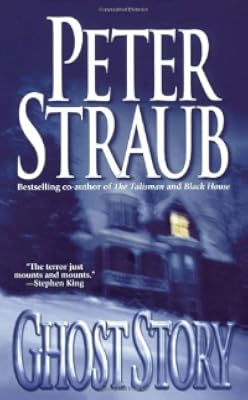
That said, this is far from perfect. King gives a lot of insight, but he also does belabor a couple of points right into the ground. He also wears his favourites on his sleeve, giving a ton of page count to a couple of his obvious inspirations, Richard Matheson and Shirley Jackson...and maybe these two are owed, because reading early King really does show his love of both of these authors. However, you can also see he was buddies with show more Peter Straub, as he gives far too much space to Straub's first mainstream bestseller, that likely could have been better served on some more seasoned and better authors.
But, through his journey through radio, television, movies, comics, and novels, and King's inevitable digressions that are often more fun than the main point, he does cover a lot of ground, and he made me think. A lot.
Always a good thing. show less
Now, he's talking about horror stuff from almost 45 years ago...to almost 75 years ago. As someone else said, it would be great to let King have a second Danse...or maybe even a third.
That said, this is far from perfect. King gives a lot of insight, but he also does belabor a couple of points right into the ground. He also wears his favourites on his sleeve, giving a ton of page count to a couple of his obvious inspirations, Richard Matheson and Shirley Jackson...and maybe these two are owed, because reading early King really does show his love of both of these authors. However, you can also see he was buddies with show more Peter Straub, as he gives far too much space to Straub's first mainstream bestseller, that likely could have been better served on some more seasoned and better authors.
But, through his journey through radio, television, movies, comics, and novels, and King's inevitable digressions that are often more fun than the main point, he does cover a lot of ground, and he made me think. A lot.
Always a good thing. show less
Yes, it's a little dated now, but the observations are just as relevant, the wit just as sharp. The difference this time around is, with very few exceptions, I've actually managed to read the bulk of the novels and view the bulk of the movies King discusses here.
The last time I read it, I remember feeling like I was a pretty well-educated horror aficionado...until I realized I wasn't familiar with most of the stuff King had discussed. This time around, I've found the intervening 35 years have remedied that.
A great dissertation--with a lot of Uncle Stevie's wit--on the world of horror. With side trips into fantasy and SF and thrillers.
I find myself wishing he'd do follow up to this, covering the next 30 years.
The last time I read it, I remember feeling like I was a pretty well-educated horror aficionado...until I realized I wasn't familiar with most of the stuff King had discussed. This time around, I've found the intervening 35 years have remedied that.
A great dissertation--with a lot of Uncle Stevie's wit--on the world of horror. With side trips into fantasy and SF and thrillers.
I find myself wishing he'd do follow up to this, covering the next 30 years.
This is a fascinating and humorous book, worth reading and enjoyable for fans of horror in any form, film or television or fiction. I'd also go so far as to say that readers and watchers of sci-fi or readers who simply like to talk about books and writing would enjoy this. King spends equal amounts of attention on writing, film, and fiction, and his insights well worth looking into. If you're interested, I'd strongly recommend this book. King's voice makes it an enjoyable read, and it reads more like fiction than anything else. The one warning? Your list of to-be-watched movies and to-be-read books is sure to grow....
Interesting read. It was fascinating to read this after having read 2000's [b:On Writing|10569|On Writing|Stephen King|http://d.gr-assets.com/books/1348431774s/10569.jpg|150292]. King's voice is different here, as in 1983 he was a rocket-hot best-selling author still in his thirties, rather than an established best-selling author in his fifties. Here he writes like a man with something to prove, to himself as well as you. Also, this book was clearly written before King openly recognized he was an alcoholic, as he rather gleefully mentions multiple instances of getting shitfaced.
The book itself is meandering and discursive, and it reads more like a set of informal lectures than a "proper" work of literary criticism. King touches on show more thirty years of horror in the form of films, television shows, and books, taking a few examples of each medium and discussing them at length. In keeping with King's utter inability to write about anything other than himself (that sounds snide, but it's a wonderful quality and I mean it as a compliment), he discusses many of these pieces in terms of how they shaped him as a person and a writer.
Perhaps the best compliment I can pay this book is that it made me wish I were more familiar with the material discussed. It made me want to become a Roger Corman completist, a Twilight Zone completist, reread [b:Frankenstein|18490|Frankenstein|Mary Shelley|http://d.gr-assets.com/books/1311647465s/18490.jpg|4836639] with a kinder eye, and then come back and read this book again.
King also takes aim at the notion that violent or horrific media cause violent and horrific acts. In an reasoned yet impassioned essay, he argues that if anything, horror fiction serves as a release valve rather than a focus for violent feelings. It's one of the best parts of the book.
I enjoyed this book, not quite as much as On Writing, but well worth the read, as a glimpse both into the horror genre, and King's own development as an author. show less
The book itself is meandering and discursive, and it reads more like a set of informal lectures than a "proper" work of literary criticism. King touches on show more thirty years of horror in the form of films, television shows, and books, taking a few examples of each medium and discussing them at length. In keeping with King's utter inability to write about anything other than himself (that sounds snide, but it's a wonderful quality and I mean it as a compliment), he discusses many of these pieces in terms of how they shaped him as a person and a writer.
Perhaps the best compliment I can pay this book is that it made me wish I were more familiar with the material discussed. It made me want to become a Roger Corman completist, a Twilight Zone completist, reread [b:Frankenstein|18490|Frankenstein|Mary Shelley|http://d.gr-assets.com/books/1311647465s/18490.jpg|4836639] with a kinder eye, and then come back and read this book again.
King also takes aim at the notion that violent or horrific media cause violent and horrific acts. In an reasoned yet impassioned essay, he argues that if anything, horror fiction serves as a release valve rather than a focus for violent feelings. It's one of the best parts of the book.
I enjoyed this book, not quite as much as On Writing, but well worth the read, as a glimpse both into the horror genre, and King's own development as an author. show less
There's something about the way Stephen King writes that just seems like he's sitting across the table from you, chit-chatting. It's conversational while educational and it makes me wish that I was alive and in college those twenty years ago so I could have benefited first hand from the lectures.
This is King's view on the horror genre in film, television and writing from the 1950s until the 1980s. While not the most up-to-date information, what he says holds true even today. Each film/novel/show he analyzes can bring a sense of nostalgia to the reader or give them a whole buffet of horror classics to go check out. (Yes, I went to my library and rented a good chunk of movies. Next week are the books...)
He says, and holds true to that show more promise, that he won't analyze things like an English professor and I enjoy that the most. He shares in something I've said for years: sometimes, a story is just a story and there's no subtext when we write it. And that horror and humor are linked, as they should be. It makes me feel not so bad knowing that I'm not the only person who laughs ridiculously loud at horror movies...
I'd recommend this book as a fresh view of what's happened in the horror genre, and to see where the roots lie. The roots before everything became the gross-out factor. show less
This is King's view on the horror genre in film, television and writing from the 1950s until the 1980s. While not the most up-to-date information, what he says holds true even today. Each film/novel/show he analyzes can bring a sense of nostalgia to the reader or give them a whole buffet of horror classics to go check out. (Yes, I went to my library and rented a good chunk of movies. Next week are the books...)
He says, and holds true to that show more promise, that he won't analyze things like an English professor and I enjoy that the most. He shares in something I've said for years: sometimes, a story is just a story and there's no subtext when we write it. And that horror and humor are linked, as they should be. It makes me feel not so bad knowing that I'm not the only person who laughs ridiculously loud at horror movies...
I'd recommend this book as a fresh view of what's happened in the horror genre, and to see where the roots lie. The roots before everything became the gross-out factor. show less
Members
- Recently Added By
Lists

Non-Fiction Worth Reading
1,016 works; 262 members

Blue Pyramid 1,276 Best Books of All Time
1,248 works; 32 members

Books Read in 2015
3,299 works; 126 members

Stephen King Bibliography
77 works; 3 members

Pleasant Surprises: Books That Exceeded Our Expectations
418 works; 142 members

KING of Scare
48 works; 2 members

Eerie eTales
192 works; 3 members

Sinister AudioTales
65 works; 1 member

Books Cited in Wasteland by W. Scott Poole
120 works; 1 member
Stephen King books
81 works; 1 member
Author Information

966+ Works 867,771 Members
Stephen King was born in Portland, Maine, on September 21, 1947. After graduating with a Bachelor's degree in English from the University of Maine at Orono in 1970, he became a teacher. His spare time was spent writing short stories and novels. King's first novel would never have been published if not for his wife. She removed the first few show more chapters from the garbage after King had thrown them away in frustration. Three months later, he received a $2,500 advance from Doubleday Publishing for the book that went on to sell a modest 13,000 hardcover copies. That book, Carrie, was about a girl with telekinetic powers who is tormented by bullies at school. She uses her power, in turn, to torment and eventually destroy her mean-spirited classmates. When United Artists released the film version in 1976, it was a critical and commercial success. The paperback version of the book, released after the movie, went on to sell more than two-and-a-half million copies. Many of King's other horror novels have been adapted into movies, including The Shining, Firestarter, Pet Semetary, Cujo, Misery, The Stand, and The Tommyknockers. Under the pseudonym Richard Bachman, King has written the books The Running Man, The Regulators, Thinner, The Long Walk, Roadwork, Rage, and It. He is number 2 on the Hollywood Reporter's '25 Most Powerful Authors' 2016 list. King is one of the world's most successful writers, with more than 100 million copies of his works in print. Many of his books have been translated into foreign languages, and he writes new books at a rate of about one per year. In 2003, he received the National Book Foundation Medal for Distinguished Contribution to American Letters. In 2012 his title, The Wind Through the Keyhole made The New York Times Best Seller List. King's title's Mr. Mercedes and Revival made The New York Times Best Seller List in 2014. He won the Edgar Allan Poe Award in 2015 for Best Novel with Mr. Mercedes. King's title Finders Keepers made the New York Times bestseller list in 2015. Sleeping Beauties is his latest 2017 New York Times bestseller. (Bowker Author Biography) Stephen King is the author of more than thirty books, all of them worldwide bestsellers. Among his most recent are "Hearts in Atlantis", "The Girl Who Loved Tom Gordon", "Bag of Bones", & "The Green Mile". "On Writing" is his first book of nonfiction since "Danse Macabre", published in 1981. He served as a judge for Prize Stories: The Best of 1999, The O. Henry Awards. He lives in Bangor, Maine with his wife, novelist Tabitha King. King's book, The Bazaar of Bad Dreams: Stories, made the 2015 New York Times bestseller list. (Publisher Provided) show less
Some Editions
Awards and Honors
Awards
Distinctions
Series
Belongs to Publisher Series
Science Fiction Book Club (3309)
Work Relationships
Is contained in
Contains
Common Knowledge
- Canonical title*
- Anatomie de l'horreur
- Original title
- Danse macabre
- Alternate titles
- Stephen King's Danse Macabre
- Original publication date
- 1981-04-14
- People/Characters
- Peter Straub; Shirley Jackson; Ray Bradbury
- Epigraph
- Enter, Stranger, at your Riske: Here there be Tygers.
"What was the worst thing you've ever done?"
"I won't tell you that, but I'll tell you the worst thing that ever happened to me...the most dreadful thing..." Peter Straub, Ghost Story
"Well we'll really have a party but we gotta post a guard outside..." Eddie Cochran, "Come On Everybody" - Dedication
- It's easy enough--perhaps too easy--to memorialize the dead. This book is for six great writers of the macabre who are still alive. Robert Bloch, Jorge Luis Borges, Ray Bradbury, Frank Belknap Long, Donald Wandrei, Manly Wade... (show all) Wellman.
- First words
- For me, the terror--the real terror, as opposed to whatever demons and boogeys which might have been living in my own mind--began on an afternoon in October of 1957.
- Quotations
- Have you ever stood in a bookshop, glanced furtively around, and turned to the end of an Agatha Christie to see who did it, and how? Have you ever turned to the end of a horror novel to see if the hero made it out of the dark... (show all)ness and into the light? If you have ever done this, I have three simple words which I feel it is my duty to convey: SHAME ON YOU! It is low to mark your place in a book by folding down the corner of the page where you left off; TURNING TO THE END TO SEE HOW IT CAME OUT is even lower. If you have this habit, I urge you to break it...break it at once!
Being who I am, I cannot find it in my heart to wish you pleasant dreams.
“I recognize terror as the finest emotion and so I will try to terrorize the reader. But if I find that I cannot terrify, I will try to horrify, and if I find that I cannot horrify, I'll go for the gross-out. I'm not proud.... (show all)” - Last words
- (Click to show. Warning: May contain spoilers.)Yeah. I think maybe that's what I want to leave you with, in lieu of a goodnight kiss, that word which children respect instinctively, that word whose truth we only rediscover as adults in our stories...and in our dreams: Magic.
- Original language
- English
- Canonical DDC/MDS
- 302.23
- Canonical LCC
- P96.H65
- Disambiguation notice
- The French book Danse macabre is the translation of Night Shift, a collection of short stories. The English non-fiction book Danse macabre, on the other hand, was published in French translation under the... (show all) title Anatomie de l'horreur.
*Some information comes from Common Knowledge in other languages. Click "Edit" for more information.
Classifications
- Genres
- Literature Studies and Criticism, General Nonfiction
- DDC/MDS
- 302.23 — Society, government, & culture Social sciences, sociology & anthropology Mass Communication & Media Communication Media (Means of communication)
- LCC
- P96 .H65 — Language and Literature Philology. Linguistics Communication. Mass media
- BISAC
Statistics
- Members
- 4,905
- Popularity
- 2,865
- Reviews
- 60
- Rating
- (3.76)
- Languages
- 10 — Dutch, English, French, German, Hungarian, Italian, Polish, Spanish, Swedish, Portuguese (Portugal)
- Media
- Paper, Audiobook, Ebook
- ISBNs
- 83
- UPCs
- 1
- ASINs
- 30