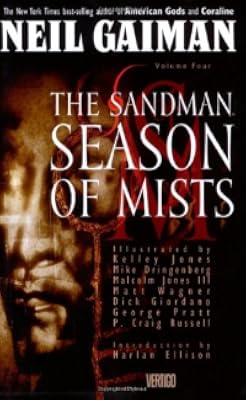
The Sandman: Season of Mists
by Neil Gaiman
The Sandman (04 (Issues 21-28)), The Sandman {1989-1996} (Collections and Selections — TPB, issues 21-28)
On This Page
Description
The fourth installment of Neil Gaiman's seminal series, THE SANDMAN VOL. 4: SEASON OF MISTS, celebrates its 30th anniversary with all all-new edition! Ten thousand years ago, Morpheus condemned a woman who loved him to Hell. Now the other members of his immortal family, The Endless, have convinced the Dream King that this was an injustice. To make it right, Morpheus must return to Hell to rescue his banished love -- and Hell's ruler, the fallen angel Lucifer, has already sworn to destroy him.Tags
Recommendations








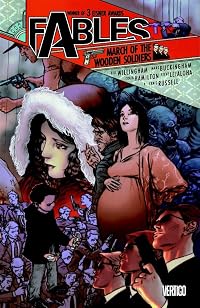
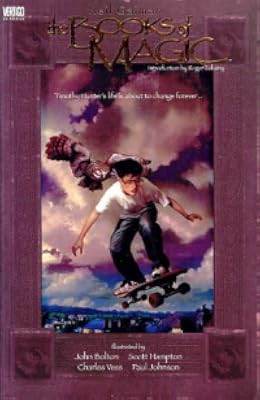
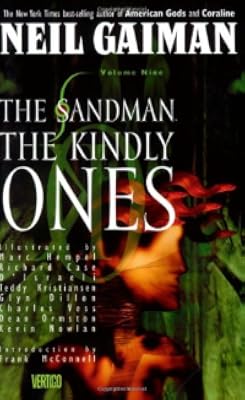
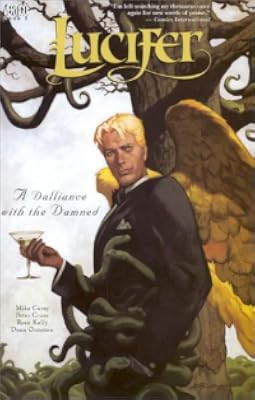






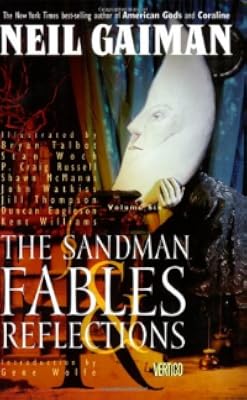

Member Recommendations
Euryale A Sandman spin-off that's well worth reading on its own merits.
20
Member Reviews
This might be my favorite volume so far. Neil Gaiman thrives when he writes about mythology - Norse Mythology and American Gods are standouts. Here - he takes Western mythology for a spin - with Lucifer handing over the keys to hell to Dream. When Lucifer abdicates the throne of Hell, sending the damned back to earth, and turns the keys over to Dream. Dream doesn’t really want the property—he just wants to make amends with Nada - but a lot of other beings want hell, including demons, angels, fairies, and a ton of gods: Odin, Thor, Loki, Anubis, Bes, Bast, the Shinto storm god Susano-o-no-Mikoto, and the personifications of Order (a cardboard box carried by a genie) and Chaos (a little girl dressed like a clown). All the beings make show more their bid. One of these offers interests Dream greatly: a chance to rescue his lover Queen Nada from the consequences of his youthful anger. In the end, Dream goes with the choice that restores order, and what this order says about Western Christianity is horrifying.
And of course, in the end, Dream gets to reconcile with Nada. I still think he is a jerk for what he did to her but at least Nada has a chance at life again in the end. show less
And of course, in the end, Dream gets to reconcile with Nada. I still think he is a jerk for what he did to her but at least Nada has a chance at life again in the end. show less
In which Morpheus, the Dream King, the Sandman is scolded by his family and goes to right a wrong, Lucifer Morningstar does something completely unexpected, and the deities of the world gather to vie for something that shouldn't belong to any one of them. This feels a little bit like a restart of the series in that we are formally introduced to the Endless family and because it has one single story arc that doesn't owe its key moments to other DC characters or storylines.
Although Gaiman isn't really afraid of making his "hero" into quite an unlikeable character, it is nice to see that the seeds that were sown at his imprisonment are starting to sprout and that Dream is beginning to become more aware of his surroundings - we can only show more assume that "old" Dream would not have been affected by his siblings' words (or they would have already said something in the 10,000 that preceded this moment). And so, his farewells to his realms, his preparations for battle, and his subsequent bafflement at Lucifer's action so much more heartfelt; his old assumptions (and his inherent acceptance of obligation and responsibility) of the order of the world are nicely juxtapositioned with his new awareness of other beings working in a manner different from his own. Although it's the dutiful part of Dream that accepts Lucifer's "gift" so it's clearly a state of being not easily changed.
As much as this is Dream's story, the star is (at least partially) Lucifer. His cat-canary smirk when he is planning how to greet Dream is just too funny - his opinion of his own ingenuity knows no bounds. However, Dream is his impetus in more ways than he realizes - it's Lucifer's revenge at having been beaten by Dream, indisputably, but it would never have come about had Lucifer not been able to dream of it. So, there's that circularity again.
As far as concerns the various pantheons that show up to stake their claims, I must admit my bias here; being Swedish, my favorite characters must be the representatives from the Nordic pantheon: Odin, Thor, and Loki. It's not just the inherent familiarity, but some of my affection comes from their unintentional hilarity - a storm cloud following Thor around when he's hung over is just such a great idea. Not sure why they made Mjölner a tiny little hammer, though - it's the handle that's short, not the whole thing. It does give Thor the reason for a few crude quips, though, so that is partially worth the error.
I do have one problem with this installment and it's the art. Fair enough, the art in the previous installment hasn't been perfect, but I simply can't stand Kelley Jones' close-ups on the characters; he seems unable to draw expressive faces without using a photograph to copy, which would be fine, except he has used pictures of famous people and in some instances I even know which specific photograph he has used. It's beyond distracting to see a bunch of celebrities in Dream's face. Fortunately, this is the only installment in the series that Jones has penciled. show less
Although Gaiman isn't really afraid of making his "hero" into quite an unlikeable character, it is nice to see that the seeds that were sown at his imprisonment are starting to sprout and that Dream is beginning to become more aware of his surroundings - we can only show more assume that "old" Dream would not have been affected by his siblings' words (or they would have already said something in the 10,000 that preceded this moment). And so, his farewells to his realms, his preparations for battle, and his subsequent bafflement at Lucifer's action so much more heartfelt; his old assumptions (and his inherent acceptance of obligation and responsibility) of the order of the world are nicely juxtapositioned with his new awareness of other beings working in a manner different from his own. Although it's the dutiful part of Dream that accepts Lucifer's "gift" so it's clearly a state of being not easily changed.
As much as this is Dream's story, the star is (at least partially) Lucifer. His cat-canary smirk when he is planning how to greet Dream is just too funny - his opinion of his own ingenuity knows no bounds. However, Dream is his impetus in more ways than he realizes - it's Lucifer's revenge at having been beaten by Dream, indisputably, but it would never have come about had Lucifer not been able to dream of it. So, there's that circularity again.
As far as concerns the various pantheons that show up to stake their claims, I must admit my bias here; being Swedish, my favorite characters must be the representatives from the Nordic pantheon: Odin, Thor, and Loki. It's not just the inherent familiarity, but some of my affection comes from their unintentional hilarity - a storm cloud following Thor around when he's hung over is just such a great idea. Not sure why they made Mjölner a tiny little hammer, though - it's the handle that's short, not the whole thing. It does give Thor the reason for a few crude quips, though, so that is partially worth the error.
I do have one problem with this installment and it's the art. Fair enough, the art in the previous installment hasn't been perfect, but I simply can't stand Kelley Jones' close-ups on the characters; he seems unable to draw expressive faces without using a photograph to copy, which would be fine, except he has used pictures of famous people and in some instances I even know which specific photograph he has used. It's beyond distracting to see a bunch of celebrities in Dream's face. Fortunately, this is the only installment in the series that Jones has penciled. show less
This collection of Sandman comics follows a single storyline. Morpheus, urged on by his sister Death at a family reunion, embarks on a journey to Hell in order to release Nada, a woman he had once loved and then banished there. When he reaches Hell, he meets Lucifer who declares that he is abandoning Hell, releasing all its inhabitants, and passing the keys into the care of Morpheus. Morpheus must then contend with the various gods who all stake a claim to the property.
There were many things I loved about this collection: the cohesion of the volume, the bringing together of gods and myths from around the world, the revelation that Morpheus has a conscience, the wonderful portrayal of Lucifer, and finally, the recurring theme that the show more inhabitants of hell choose to be there. My favourite story was "Charles Rowland Concludes his Education", which seemed to me at first to be a standalone story but actually fits in well with the rest of the collection. show less
There were many things I loved about this collection: the cohesion of the volume, the bringing together of gods and myths from around the world, the revelation that Morpheus has a conscience, the wonderful portrayal of Lucifer, and finally, the recurring theme that the show more inhabitants of hell choose to be there. My favourite story was "Charles Rowland Concludes his Education", which seemed to me at first to be a standalone story but actually fits in well with the rest of the collection. show less
In volume four of the Sandman series, Gaiman reaches back and pulls at a thread that he first established back in Preludes and Nocturnes: Dream's less than successful love life, and his less than compassionate nature. Dream is, after all, one of the Endless, and indifferent at best to human concerns. Season of Mists uses as its backdrop one of the largest possible mythological venues possible: Hell. Despite a tale that deals with the rulership of the infernal domain, ultimately the story is one of personal choice and personal redemption.
But Dream is apparently not immune to human emotions and human pettiness. Because once long ago he fell in love with a woman named Nada, and she doesn't reciprocate. Or at least not in the way Dream show more expects that she will. And Dream's response to being spurned was to cast his lover in to Hell, a fact alluded to in Preludes and Nocturnes and expanded upon later. And so in this volume the Endless Destiny, spurred by a meeting with the Grey Ladies, calls upon his siblings to gather together: Death, Dream, Despair, Desire, and Delirium so they can meet and talk about nothing in particular. And this meeting results in Dream deciding that perhaps condemning his former love to millennia of torment in the depths of Hell was possibly uncalled for and a may have been mite unjust. This determined, Dream sets out to free his condemned lover from Lucifer's grasp, despite Dream having earned the Prince of Hell's animosity recovering one of the badges of his office in Preludes and Nocturnes.
On his way to Hell, Dream stops off and visits his one friend Hob who we first met in Dream Country. As he is Morpheus, he visits his friend in a dream, and Hob toasts him, with a slightly prophetic toast that gives this volume its name. This meeting blurs the line between dream and reality in a way that unsettles Hob, showing that even a man who has lived for centuries is not so jaded as to be blase when dealing with one of the Endless. Prepared for confrontation, Morpheus enters Hell, but finds it strangely quiet. He does not find Nada. He is instead met by Lucifer who tells the Dreamlord that he has tired of ruling Hell and is closing the place down. Having ejected all the condemned souls and demons from its environs, Lucifer takes Dream to close the last remaining Gates of Hell before asking him to sever his wings, an act that demotes Lucifer from the ranks of angels (or even fallen angels) and terminates his reign as ruler of Hell. But as he travels about Hell ejecting the last few heoldouts who refuse to leave and locking the remaining gates, Lucifer expounds upon theology, absolving himself of responsibility for the sins of mankind, and placing the blame squarely upon humanity's own shoulders. In this, it seems, Gaiman posits a decidedly humanistic vision of the world. And in one scene it seems that Gaiman is making a statement concerning the self-aggrandizement of humanity. Finally, Lucifer gets his revenge on Dream by handing the Key to Hell over to him. Dream, it seems, must choose the next ruler of Hell.
And Lucifer's gift to Dream does not go unnoticed as he is almost immediately beset by numerous suitors hoping to claim the now-vacated real estate. But first Dream speaks with his sister Death. She has little to say concerning his predicament, but she does reveal something of ominous import: the dead are returning to the Earth. And it only takes a second for the reader to realize it is not all the dead. Just those who had formerly been confined to Hell, a situation that certainly does not bode well for the living. Once again, Gaiman demonstrates his mastery of storytelling by delivering information to the reader subtly, and letting the reader put the pieces of the puzzle together rather than spelling everything out. Gaiman trusts his readers to understand subtlety, and as a result, his storytelling is that much more powerful. But soon the gods and powers arrive on Dream's doorstep: Odin recovers Loki from his underground torment and recruits Thor to keep Loki in line, the angels Duma and Remiel journey from the Silver City, and the demons Azael, Merkin, and Chonizon set out hoping to win their home back. They are joined by the Egyptian gods Anubis and Bast, the Japanese god Susano-o-no-Mikoto, Kilderkin the Lord of Order, Shivering Jemmy, a Princess of Chaos, and eventually Cluracan and Nuala of the Faerie Court. And each seeks the key to Hell, and each, it seems, has an offer to make to Dream.
But first the story returns to Earth to tell the story of a single unremarkable boy named Charles Rowland. In the midst of the tales concerning the disposition of Hell amidst the schemes and machinations of angels, gods, and demons, the story of an English schoolboy living a sad and lonely life as the only student left behind in between terms seems trivial and unimportant. But Charles Rowland is tormented by the spirits of the dead who returned from Hell and had nowhere else to go other than return to the boarding school where they taught, worked, or studied. And with nothing better to do, they repeat history, tormenting and killing Rowland just as they tormented and killed one of their own classmates a hundred years earlier. And it is this that drives home the true impact that Lucifer's abdication of his responsibilities has. When the damned are free to walk the Earth, they are free to inflict chaos and misery upon the living. The true cost of Lucifer's petty revenge upon Dream is shown in this seemingly unimportant interlude.
But the action then shifts back to Dream's domain, and the banquet he has offered his guests while he contemplates the disposal of the Key to Hell. And the reader gets treated to a view of the representatives of the various factions rubbing shoulders with one another; a hugely muscled, crude, and drunken Thor sloppily hits on the finicky Egyptian goddess Bast, Prince Cluracan of Faerie offers his sister Nuala as a gift to Dream and then stumbles off to a sexual encounter with one of the Egyptian delegation's servants, and all the while Loki observes all the other participants with a watchful eye, as do the two angels sent from the celestial city. Eventually, of course, each presents themselves before Dream to make the case that they should be handed the Key to Hell.
But what is more interesting than the threats, offers, and pleas is the background of events. As usual in the Sandman books, the things happening in the interstitial spaces of the story are the most interesting - the dinner's entertainment is the recurring character Cain, performing a magic act with his brother Abel in which he yet again kills his sibling. And turns him into sausages. Merkin and Azazel betray their companion Choronzon. Susano-O-No-Mikoto admits to petitioning Dream on his own, without the support of his pantheon. And in a single panel aside one of Dream's servants, a human experiencing Dream's realm in a dream-state, tries to connect with another. And so on. Each of these threads is not a part of the main story line of Season of Mists, but as usual with Gaiman's writing, one can be assured that most of them will become critical elements in later installments of the series.
And in the morning, we get a resolution of sorts. And as is often the case, the events happening in the background seem to suggest more than the main story. Nuala is awakened by her brother and in an aside says that all she hopes for is a good night sleep before chewing up some paper. Nuala's entire demeanor speaks of someone who has been sexually abused, with the implication that Cluracan may be the abuser. After wandering the halls of Dream's mansion and overhearing snippets of conversation from some other factions, Nuala comes to Dream's great hall and we see that the factions we have seen in the story make up only a portion of the petitioners seeking the Key to Hell (with the noted exception of the Greek gods, who apparently declined to attend). In the end the rule of Hell is determined, but not exactly as one might have foreseen. And once again Gaiman returns to the question of what purpose does Hell serve, and what role it's ruler must play - casting Lucifer once again in a sympathetic light and throwing doubt upon the justness of his exile. And Gaiman also makes a commentary on the nature of Hell, and why sometimes love is worse than hate.
But as usual, the important element of the story is not really the disposition of the Key to Hell, but rather the changes to the lives of the characters. And what the idea of Hell means. The faerie princess Nuala is surprised to learn that she was not merely a bargaining chip, but an unconditional gift to Dream. And we learn of Dream's dislike for illusions. As the representatives of the various pantheons depart, it turns out that at least one of them is not who he seems, and one ends up owing Dream a favor, a development that is certain to feature later in the series. And the story of Nada is resolved, although in a somewhat bittersweet manner, and with Dream once again tangling with one of the powers of Hell in the process.
Although by setting the story against the backdrop of the question of who gets to rule Hell, Gaiman runs the risk of the smaller and more important elements getting lost, I think that it allows him to highlight these story elements all the more. Because the stakes are so high for the various factions that desire the Key, they lay all their cards on the table and we are able to see what their fears and desires are, and everything that they would have to offer Dream. And we also get to see just what Dream does and does not care about - which often seems to surprise his petitioners as well. And we also get a glimpse of how this conflict affects the lives of the mere mortals who live in the shadows of the doings of the gods and the Endless, and this is, in my opinion, the touch that makes this series so good. It would have been easy to deal with the sweeping issues of the series, but it brings the events into much sharper focus to show what effect the doings of the mighty have upon the meek, and how petty and unfair the actions of the mighty seem when this is shown. The story, as a result, seems epic, but only until the implications of the squabbling of the players is shown, which makes this volume so much more compelling to read. Overall, Season of Mists is the strongest volume of the series thus far, and definitely worth reading.
This review has also been posted to my blog Dreaming About Other Worlds. show less
But Dream is apparently not immune to human emotions and human pettiness. Because once long ago he fell in love with a woman named Nada, and she doesn't reciprocate. Or at least not in the way Dream show more expects that she will. And Dream's response to being spurned was to cast his lover in to Hell, a fact alluded to in Preludes and Nocturnes and expanded upon later. And so in this volume the Endless Destiny, spurred by a meeting with the Grey Ladies, calls upon his siblings to gather together: Death, Dream, Despair, Desire, and Delirium so they can meet and talk about nothing in particular. And this meeting results in Dream deciding that perhaps condemning his former love to millennia of torment in the depths of Hell was possibly uncalled for and a may have been mite unjust. This determined, Dream sets out to free his condemned lover from Lucifer's grasp, despite Dream having earned the Prince of Hell's animosity recovering one of the badges of his office in Preludes and Nocturnes.
On his way to Hell, Dream stops off and visits his one friend Hob who we first met in Dream Country. As he is Morpheus, he visits his friend in a dream, and Hob toasts him, with a slightly prophetic toast that gives this volume its name. This meeting blurs the line between dream and reality in a way that unsettles Hob, showing that even a man who has lived for centuries is not so jaded as to be blase when dealing with one of the Endless. Prepared for confrontation, Morpheus enters Hell, but finds it strangely quiet. He does not find Nada. He is instead met by Lucifer who tells the Dreamlord that he has tired of ruling Hell and is closing the place down. Having ejected all the condemned souls and demons from its environs, Lucifer takes Dream to close the last remaining Gates of Hell before asking him to sever his wings, an act that demotes Lucifer from the ranks of angels (or even fallen angels) and terminates his reign as ruler of Hell. But as he travels about Hell ejecting the last few heoldouts who refuse to leave and locking the remaining gates, Lucifer expounds upon theology, absolving himself of responsibility for the sins of mankind, and placing the blame squarely upon humanity's own shoulders. In this, it seems, Gaiman posits a decidedly humanistic vision of the world. And in one scene it seems that Gaiman is making a statement concerning the self-aggrandizement of humanity. Finally, Lucifer gets his revenge on Dream by handing the Key to Hell over to him. Dream, it seems, must choose the next ruler of Hell.
And Lucifer's gift to Dream does not go unnoticed as he is almost immediately beset by numerous suitors hoping to claim the now-vacated real estate. But first Dream speaks with his sister Death. She has little to say concerning his predicament, but she does reveal something of ominous import: the dead are returning to the Earth. And it only takes a second for the reader to realize it is not all the dead. Just those who had formerly been confined to Hell, a situation that certainly does not bode well for the living. Once again, Gaiman demonstrates his mastery of storytelling by delivering information to the reader subtly, and letting the reader put the pieces of the puzzle together rather than spelling everything out. Gaiman trusts his readers to understand subtlety, and as a result, his storytelling is that much more powerful. But soon the gods and powers arrive on Dream's doorstep: Odin recovers Loki from his underground torment and recruits Thor to keep Loki in line, the angels Duma and Remiel journey from the Silver City, and the demons Azael, Merkin, and Chonizon set out hoping to win their home back. They are joined by the Egyptian gods Anubis and Bast, the Japanese god Susano-o-no-Mikoto, Kilderkin the Lord of Order, Shivering Jemmy, a Princess of Chaos, and eventually Cluracan and Nuala of the Faerie Court. And each seeks the key to Hell, and each, it seems, has an offer to make to Dream.
But first the story returns to Earth to tell the story of a single unremarkable boy named Charles Rowland. In the midst of the tales concerning the disposition of Hell amidst the schemes and machinations of angels, gods, and demons, the story of an English schoolboy living a sad and lonely life as the only student left behind in between terms seems trivial and unimportant. But Charles Rowland is tormented by the spirits of the dead who returned from Hell and had nowhere else to go other than return to the boarding school where they taught, worked, or studied. And with nothing better to do, they repeat history, tormenting and killing Rowland just as they tormented and killed one of their own classmates a hundred years earlier. And it is this that drives home the true impact that Lucifer's abdication of his responsibilities has. When the damned are free to walk the Earth, they are free to inflict chaos and misery upon the living. The true cost of Lucifer's petty revenge upon Dream is shown in this seemingly unimportant interlude.
But the action then shifts back to Dream's domain, and the banquet he has offered his guests while he contemplates the disposal of the Key to Hell. And the reader gets treated to a view of the representatives of the various factions rubbing shoulders with one another; a hugely muscled, crude, and drunken Thor sloppily hits on the finicky Egyptian goddess Bast, Prince Cluracan of Faerie offers his sister Nuala as a gift to Dream and then stumbles off to a sexual encounter with one of the Egyptian delegation's servants, and all the while Loki observes all the other participants with a watchful eye, as do the two angels sent from the celestial city. Eventually, of course, each presents themselves before Dream to make the case that they should be handed the Key to Hell.
But what is more interesting than the threats, offers, and pleas is the background of events. As usual in the Sandman books, the things happening in the interstitial spaces of the story are the most interesting - the dinner's entertainment is the recurring character Cain, performing a magic act with his brother Abel in which he yet again kills his sibling. And turns him into sausages. Merkin and Azazel betray their companion Choronzon. Susano-O-No-Mikoto admits to petitioning Dream on his own, without the support of his pantheon. And in a single panel aside one of Dream's servants, a human experiencing Dream's realm in a dream-state, tries to connect with another. And so on. Each of these threads is not a part of the main story line of Season of Mists, but as usual with Gaiman's writing, one can be assured that most of them will become critical elements in later installments of the series.
And in the morning, we get a resolution of sorts. And as is often the case, the events happening in the background seem to suggest more than the main story. Nuala is awakened by her brother and in an aside says that all she hopes for is a good night sleep before chewing up some paper. Nuala's entire demeanor speaks of someone who has been sexually abused, with the implication that Cluracan may be the abuser. After wandering the halls of Dream's mansion and overhearing snippets of conversation from some other factions, Nuala comes to Dream's great hall and we see that the factions we have seen in the story make up only a portion of the petitioners seeking the Key to Hell (with the noted exception of the Greek gods, who apparently declined to attend). In the end the rule of Hell is determined, but not exactly as one might have foreseen. And once again Gaiman returns to the question of what purpose does Hell serve, and what role it's ruler must play - casting Lucifer once again in a sympathetic light and throwing doubt upon the justness of his exile. And Gaiman also makes a commentary on the nature of Hell, and why sometimes love is worse than hate.
But as usual, the important element of the story is not really the disposition of the Key to Hell, but rather the changes to the lives of the characters. And what the idea of Hell means. The faerie princess Nuala is surprised to learn that she was not merely a bargaining chip, but an unconditional gift to Dream. And we learn of Dream's dislike for illusions. As the representatives of the various pantheons depart, it turns out that at least one of them is not who he seems, and one ends up owing Dream a favor, a development that is certain to feature later in the series. And the story of Nada is resolved, although in a somewhat bittersweet manner, and with Dream once again tangling with one of the powers of Hell in the process.
Although by setting the story against the backdrop of the question of who gets to rule Hell, Gaiman runs the risk of the smaller and more important elements getting lost, I think that it allows him to highlight these story elements all the more. Because the stakes are so high for the various factions that desire the Key, they lay all their cards on the table and we are able to see what their fears and desires are, and everything that they would have to offer Dream. And we also get to see just what Dream does and does not care about - which often seems to surprise his petitioners as well. And we also get a glimpse of how this conflict affects the lives of the mere mortals who live in the shadows of the doings of the gods and the Endless, and this is, in my opinion, the touch that makes this series so good. It would have been easy to deal with the sweeping issues of the series, but it brings the events into much sharper focus to show what effect the doings of the mighty have upon the meek, and how petty and unfair the actions of the mighty seem when this is shown. The story, as a result, seems epic, but only until the implications of the squabbling of the players is shown, which makes this volume so much more compelling to read. Overall, Season of Mists is the strongest volume of the series thus far, and definitely worth reading.
This review has also been posted to my blog Dreaming About Other Worlds. show less
This was an enjoyable tale to re-read. It seems like this is the point at which the Sandman hit a consistent stride, balancing tales of larger-than-life mythological figures with some human (and nonhuman) drama. I particularly liked the way an epic plot point (the dead coming back to life worldwide) was dramatized by a story of one boy's encounter with the souls that flood back to their old boarding school. It was a nice departure from the parade of gods and superhumans, and it had that pleasantly creepy touch that Gaiman does so well.
WARNING - SLIGHT SPOILERS
There was much to like about The Sandman Vol. 4: Season of Mists starting with the gathering of the clan, seeing how the Endless react with each other, and having Morpheus’s error of judgement pointed out to him by his siblings. We are taken back to the story of Nada and how Morpheus condemned her to Hell. Now he is on a quest to correct his mistake and in typical Gaiman style the story is epic and brings in the gods of mythology, as well as deities from various religions and even visitors from the fey. A typical mixed bag that this author seems to delight in writing about.
So what happens when Lucifer decides to quit, and the gates of Hell are closed? Where do the dead go? Where indeed does Lucifer go? These show more questions are all answered in Season of Mists, and answered to my great satisfaction. Gaiman has once again provided a story that makes the reader think on a wider scale, but he also never hesitates to give us an appreciation of the smaller moments in life, be it the birth of a baby or a beautiful sunset.
My biggest delight in Season of the Mists was probably my surprise in the direction that the story took. It started off looking like this was going to be a tale of epic battle. Showing Dream storming the gates of Hell, battling Lucifer to get back the women he condemned to be there. Instead, with a simple twist, the story is taken into another direction entirely, and Lucifer gets his revenge by trapping Dream into a responsibility that he did not look for or want.
I can't wait to see where we are going to be taken next. show less
There was much to like about The Sandman Vol. 4: Season of Mists starting with the gathering of the clan, seeing how the Endless react with each other, and having Morpheus’s error of judgement pointed out to him by his siblings. We are taken back to the story of Nada and how Morpheus condemned her to Hell. Now he is on a quest to correct his mistake and in typical Gaiman style the story is epic and brings in the gods of mythology, as well as deities from various religions and even visitors from the fey. A typical mixed bag that this author seems to delight in writing about.
So what happens when Lucifer decides to quit, and the gates of Hell are closed? Where do the dead go? Where indeed does Lucifer go? These show more questions are all answered in Season of Mists, and answered to my great satisfaction. Gaiman has once again provided a story that makes the reader think on a wider scale, but he also never hesitates to give us an appreciation of the smaller moments in life, be it the birth of a baby or a beautiful sunset.
My biggest delight in Season of the Mists was probably my surprise in the direction that the story took. It started off looking like this was going to be a tale of epic battle. Showing Dream storming the gates of Hell, battling Lucifer to get back the women he condemned to be there. Instead, with a simple twist, the story is taken into another direction entirely, and Lucifer gets his revenge by trapping Dream into a responsibility that he did not look for or want.
I can't wait to see where we are going to be taken next. show less
Ahhh. Happy sigh. I feel like I got my reading mojo back a bit. I almost finished the next volume last night, but made myself wait til this morning. I am enjoying these graphic novels. I decided to get these ones (volumes 1-5) in paperback and now am wishing I had done the same with my The Dark Tower graphic novels, ah well. It was nice to visit Morpheus/Dream again. Gaiman also plays once more with Biblical figures (we have Cain, Lucifer Morningstar, Azazel) and then of course figures we have read about in Greek, Egyptian, and other mythologies. The story was quite moving in parts and I did like the final resolution with Nada.
"Season of Mists" begins with a gathering of the Endless family. FYI, they are all kind of a mess. Things get show more ugly though (for them) when Desire pretty much calls Dream out for what he did to his former lover Nada. Death takes Desire's side as well though because it is really [expletive] up that he sent his ex lover to Hell for 10,000 years to be tortured cause in his eyes she said no to him. So this volume follows Dream as he realizes this was a messed up thing to do and decides to do what he can to free Nada even though he knows that Lucifer will do what he can to take revenge against him. Things go haywire though when Lucifer decides to just quit Hell and gives Dream the key to it after tossing out all the demons, tortured souls, and whatnot that were there.
So Morpheus/Dream seems to be working things out in his way to understanding that some of the things he has done were just wrong. This volume has him thinking through the implications of what may happen after Lucifer throws a monkey in the wrench with his attempts to free Nada. I feel...sympathy for Dream in some aspects. He loves Nada (in his own way) and does not understand why she killed herself. In his eyes she rejected him and so him condemning her to Hell for eternity was a just punishment (it was not). I think though Death is the only one who can ever talk some sense into Dream and when they do Dream finally gets that yes, he was an ass. So he is ready to just say goodbye to many of his "friends" and others because he thinks he is walking to certain doom.
Of the other Endless, Death continues to be my favorite. Desire works my nerves. Destiny continues to freak me out.
The other characters in this one are well done, I maybe laughed a bit at the messed up family dynamics between Odin, Thor, and Loki. But it was interesting to play around in the fairy world along with some celestial beings as well.
The writing was very good and so was the flow of this volume.
The illustrations are top notch and several panels were really well done. My favorite was episode 4 following Charles Rowland which also features Death.
The ending leaves you surprised, I definitely did not see that coming, but it makes sense. Now I am wondering about what parts some characters have to play since we left some in some very different situations. Now onto volume 5. show less
"Season of Mists" begins with a gathering of the Endless family. FYI, they are all kind of a mess. Things get show more ugly though (for them) when Desire pretty much calls Dream out for what he did to his former lover Nada. Death takes Desire's side as well though because it is really [expletive] up that he sent his ex lover to Hell for 10,000 years to be tortured cause in his eyes she said no to him. So this volume follows Dream as he realizes this was a messed up thing to do and decides to do what he can to free Nada even though he knows that Lucifer will do what he can to take revenge against him. Things go haywire though when Lucifer decides to just quit Hell and gives Dream the key to it after tossing out all the demons, tortured souls, and whatnot that were there.
So Morpheus/Dream seems to be working things out in his way to understanding that some of the things he has done were just wrong. This volume has him thinking through the implications of what may happen after Lucifer throws a monkey in the wrench with his attempts to free Nada. I feel...sympathy for Dream in some aspects. He loves Nada (in his own way) and does not understand why she killed herself. In his eyes she rejected him and so him condemning her to Hell for eternity was a just punishment (it was not). I think though Death is the only one who can ever talk some sense into Dream and when they do Dream finally gets that yes, he was an ass. So he is ready to just say goodbye to many of his "friends" and others because he thinks he is walking to certain doom.
Of the other Endless, Death continues to be my favorite. Desire works my nerves. Destiny continues to freak me out.
The other characters in this one are well done, I maybe laughed a bit at the messed up family dynamics between Odin, Thor, and Loki. But it was interesting to play around in the fairy world along with some celestial beings as well.
The writing was very good and so was the flow of this volume.
The illustrations are top notch and several panels were really well done. My favorite was episode 4 following Charles Rowland which also features Death.
The ending leaves you surprised, I definitely did not see that coming, but it makes sense. Now I am wondering about what parts some characters have to play since we left some in some very different situations. Now onto volume 5. show less
Members
- Recently Added By
Lists

NPRs your picks: top 100 Sci-Fi/Fantasy books
297 works; 80 members

Recommended Comics / Graphic Novels
595 works; 122 members

Slipstream or Interstitial Fiction
160 works; 19 members

Best Pern Books
79 works; 11 members

Autumn books
31 works; 8 members

Best Fantasy Novels
821 works; 361 members

Books I've Read More Than Once
602 works; 49 members

Faerie Mythology
87 works; 13 members
Speculative Fiction to Read
706 works; 31 members

To Read - Horror
137 works; 14 members

Books Read in 2012
816 works; 34 members

Books Read in 2018
4,360 works; 110 members

Books Read in 2022
5,226 works; 115 members

Overdue Podcast
808 works; 9 members
Author Information

Neil Gaiman was born in Portchester, England on November 10, 1960. He worked as a journalist and freelance writer for a time, before deciding to try his hand at comic books. Some of his work has appeared in publications such as Time Out, The Sunday Times, Punch, and The Observer. His first comic endeavor was the graphic novel series The Sandman. show more The series has won every major industry award including nine Will Eisner Comic Industry Awards, three Harvey Awards, and the 1991 World Fantasy Award for best short story, making it the first comic ever to win a literary award. He writes both children and adult books. His adult books include The Ocean at the End of the Lane, which won a British National Book Awards, and the Locus Award for Best Fantasy Novel for 2014; Stardust, which won the Mythopoeic Award as best novel for adults in 1999; American Gods, which won the Hugo, Nebula, Bram Stoker, SFX, and Locus awards; Anansi Boys; Trigger Warning: Short Fictions and Disturbances; and The View from the Cheap Seats: Selected Nonfiction, which is a New York Times Bestseller. His children's books include The Day I Swapped My Dad for Two Goldfish; Coraline, which won the Elizabeth Burr/Worzalla, the BSFA, the Hugo, the Nebula, and the Bram Stoker awards; The Wolves in the Walls; Odd and the Frost Giants; The Graveyard Book, which won the Newbery Award in 2009 and The Sandman: Overture which won the 2016 Hugo Awards Best Graphic Story. (Bowker Author Biography) show less
All Editions
Some Editions
Awards and Honors
Awards
Series

The Sandman
11 works (04 (Issues 21-28))

The Sandman {1989-1996}
76 works (Collections and Selections — TPB, issues 21-28)
Belongs to Publisher Series
Work Relationships
Is contained in
Contains
Is retold in
Has as a reference guide/companion
Has as a supplement
Common Knowledge
- Canonical title
- The Sandman: Season of Mists
- Alternate titles
- The Sandman Vol. 04: Season of Mists
- Original publication date
- 1992-07-21
- People/Characters
- Anubis (deity); Bast (deity); Cluracan; Death of the Endless; Delirium of the Endless; Desire of the Endless (show all 21); Despair of the Endless; Destiny of the Endless; Dream (Morpheus); Duma; Loki (deity); Lucifer Morningstar; Nada; Nuala [Sandman]; Odin (deity); Edwin Paine; Remiel; Charles Rowland; Shivering Jemmy of the Shallow Brigade; Susano-O-No-Mikoto; Thor (deity)
- Important places
- The Dreaming; Hell; St. Hilarion's School for Boys, England, UK; The Silver City
- Epigraph
- There is a dreadful Hell,
And everlasting pains;
There sinners must with devils dwell
In darkness, fire, and chains.
Isaac Watts (1674–1748) from Divine and Moral Songs for Children. 1720.
You don't have to stay anywhere forever.
Edwin Paine (1901–1914), in conversation, December 1990. - First words
- Walk any path in Destiny's Garden, and you will be forced to choose, not once but many times.
- Quotations
- To absent friends, lost loves, old gods, and the Season of Mists, and may each and every one of us always give the Devil his due.
You killed a number of people who by now would be long-since dead anyway. So what?
There must be a Hell. There must be a place for the demons; a place for the damned. Hell is Heaven's reflection. It is Heaven's shadow. They define each other. Reward and Punishment; hope and despair. There must be a Hell, fo... (show all)r without Hell, Heaven has no meaning. - Last words
- (Click to show. Warning: May contain spoilers.)Happily ever after, in Hell.
- Publisher's editor
- Berger, Karen; Kahan, Bob
- Blurbers
- McConnell, Frank; Delany, Samuel R.; Mailer, Norman; Murray, Charles Shaar
- Original language
- English
Classifications
- Genres
- Graphic Novels & Comics, Horror, Fiction and Literature
- DDC/MDS
- 741.5973 — Arts & recreation Drawing & decorative arts Drawing Comic books, graphic novels, fotonovelas, cartoons, caricatures, comic strips History, geographic treatment, biography North American United States (General)
- LCC
- PN6728 .S26 .G35 — Language and Literature Literature (General) Literature (General) Collections of general literature Comic books, strips, etc.
- BISAC
Statistics
- Members
- 7,245
- Popularity
- 1,612
- Reviews
- 112
- Rating
- (4.44)
- Languages
- 15 — Czech, English, Finnish, French, German, Hungarian, Italian, Norwegian (Bokmål), Norwegian, Polish, Romanian, Russian, Spanish, Turkish, Portuguese (Portugal)
- Media
- Paper, Ebook
- ISBNs
- 42
- UPCs
- 1
- ASINs
- 12