
Dick Giordano (1932–2010)
Author of Superman: The Man of Steel, Vol. 1
About the Author
Image credit: Dick Giordano
Series
Works by Dick Giordano
Dracula (Marvel Illustrated) (2005) — Illustrator; Cover artist, some editions — 119 copies, 2 reviews
House of Secrets #087 (DC Comics) — Editor — 3 copies
Crossover Classics The Marvel / DC Collection '91 (Crossover Classics The Marvel / DC Collection) (1991) 3 copies
Dracula [2010] #4 (of 4) (Marvel Illustrated) — Illustrator — 2 copies
Dracula [2010] #3 (of 4) (Marvel Illustrated) — Illustrator — 2 copies
Dracula [2010] #2 (of 4) (Marvel Illustrated) — Illustrator — 2 copies
House of Secrets #086 (DC Comics) — Editor — 2 copies
DC Special (1968) #6 2 copies
Star Reach 02 2 copies
Witching Hour # 2 — Editor — 1 copy
House of Secrets #088 (DC Comics) — Editor — 1 copy
Secrets of Haunted House # 39 — Editor — 1 copy
Witching Hour # 15 — Editor — 1 copy
Witching Hour # 11 — Editor — 1 copy
Witching Hour # 12 — Editor — 1 copy
Heroes Against Hunger 1 copy
House of Secrets #089 1 copy
Super DC Giant No. S-14 1 copy
Star*Reach Classics 2 1 copy
Associated Works
Transmetropolitan Vol. 01: Back on the Street (1998) — Inker, some editions — 1,882 copies, 41 reviews
The Big Book of the Weird Wild West: How the West was Really Won! (Factoid Books) (1998) — Illustrator — 117 copies
The Big Book of Thugs: Tough as Nails True Tales of the World's Baddest Mobs, Gangs, and Ne'er do Wells! (Factoid Books) (1996) — Illustrator — 92 copies
Comics About Cartoonists: Stories About the World's Oddest Profession (2013) — Contributor — 18 copies
Phoenix # 2 — Cover artist — 3 copies
Phoenix # 1 — Cover artist — 3 copies
Legion of Monsters [1975] #1 — Illustrator — 3 copies
Superman's Girl Friend Lois Lane, no. 112, August 1971 (1971) — Cover artist; Illustrator — 2 copies
The New Teen Titans, Vol. 2 #18 — Writer, some editions — 2 copies
Marvel Premiere #19 (Iron Fist) — Artist — 1 copy
I Love You #45, April 1963 — Cover artist — 1 copy
Superman's Girl Friend Lois Lane, no. 119 — Cover artist — 1 copy
Superman's Girl Friend Lois Lane, no. 115 — Cover artist — 1 copy
Tagged
Common Knowledge
- Canonical name
- Giordano, Dick
- Legal name
- Giordano, Richard Joseph
- Birthdate
- 1932-07-20
- Date of death
- 2010-04-03
- Gender
- male
- Education
- School of Industrial Art
- Occupations
- comic book artist and editor
- Awards and honors
- Alley Award for Best Editor (1969)
Shazam Award for Best Inker (1970, 1971, 1973, 1974) - Nationality
- USA
- Places of residence
- Manhattan, New York, USA
Palm Coast, Florida, USA - Associated Place (for map)
- USA
Members
Reviews
Doctor Strange: A Separate Reality (Ultimate Marvel Graphic Novel Collection issue 94) by Steve Englehart
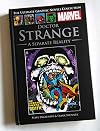
Of all the books which reflect the batshit insanity of the Marvel Bullpen of the '70s Howard the Duck's only real rival is Doctor Strange. He was always at the far end of weird, even by the Steve Ditko's early standards and Englehart and Brunner build on that by bringing Strange into the far out post-hippie '70s where meditation and psychedelia could melt the mind and a Buddhist oneness with the cosmos is the highest goal (although the existence of absolute evil might suggest a flaw in the show more underlying philosophy somewhere).
All this means we end up with some self-consciously epic tales, beginning with the death of a key character and working through a backwards trip to creation and a voyage through the realm of Death. Englehart's exuberant storytelling is matched by Brunner's visuals. Whilst they lack Ditko's oddness there's a trippiness there that the straight-edge could never bring. What's also noticeable is a willingness to take potshots at Christianity; the Sise Neg and Silver Dagger storylines criticise the notion of godhood and the dark places where organised religion may lead respectively. It's a brave move at any time in US history and it's mildly surprising that it made it to print, let alone that it didn't cause a large scale controversy. Another winner from the madness of '70s Marvel. show less
All this means we end up with some self-consciously epic tales, beginning with the death of a key character and working through a backwards trip to creation and a voyage through the realm of Death. Englehart's exuberant storytelling is matched by Brunner's visuals. Whilst they lack Ditko's oddness there's a trippiness there that the straight-edge could never bring. What's also noticeable is a willingness to take potshots at Christianity; the Sise Neg and Silver Dagger storylines criticise the notion of godhood and the dark places where organised religion may lead respectively. It's a brave move at any time in US history and it's mildly surprising that it made it to print, let alone that it didn't cause a large scale controversy. Another winner from the madness of '70s Marvel. show less

Access a version of the below that includes illustrations on my blog.
This book collects three four-issue miniseries that feature Commissioner Gordon and/or the Gotham City Police Department; it's a precursor of sorts to Gotham Central, though I am pretty sure that the only main character here who is also a main character there is the ubiquitous Renee Montoya. Each of the stories here has a slightly different focus.
"Gordon's Law" is pretty squarely focused on Commissioner Gordon himself, as show more he discovers that there's possibly some corruption in the GCPD, which means he can't trust anyone on the force-- and to make things worse, he only wants cops to go after cops, which means he rejects Batman's offer of assistance as well. The story is kinda complicated; there are a lot of characters, and most of them were new to me (if not new to everyone), and though I really like the gritty tone established by Klaus Janson's artwork, he didn't always make it easy to remember who was who. Its biggest weakness is probably that it's one of those stories where tons of "old friends" we've never seen before turn up, and the narrative expects us to be surprised when an "old friend" we've never seen before turns out to not be altogether trustworthy. And that's not the only obvious twist, but there were some good ones as well. Overall, it's an okay tale: some good crime fiction influences, but it doesn't really have anything to say about Gordon, about the GCPD, or about Batman.
"GCPD" is the most like Gotham Central of all the stories here; the commissioner is just a minor part of a sprawling, ensemble tale of various members of the GCPD pursuing various cases. Harvey Bullock struggles with anger management, a new partner, and a serial killer; Renee Montoya goes undercover as a diplomat's wife to help catch an assassin; two cops named Kitch (a trained lawyer) and Cav (a grizzled old vet) track down art thieves and an insurance scam; an administrator named Hendricks tries to figure out who's stealing stationery. As you might imagine, some of these stories are better than others: I always enjoy a Montoya tale, but Chuck Dixon doesn't really make her very unique, and the circumstance she ends up in seems incredibly contrived to say the least. (Do local cops really handle assassination plots against foreign officials? Would there really be no plan for cancelling the operation when it all goes wrong and the diplomat deliberately endangers Montoya's life?) On the other hand, I did enjoy the Harvey Bullock plot. This was my first real exposure to the character (he was retired during Gotham Central), and he gets to do some good old-fashioned investigating that shows off his intelligence as well as his human side, and I liked his contentious relationship with his new partner.
The Kitch/Cav plot had its moments, but some of its beats were very familiar. Is the lawyer-turned-cop who is mocked for his education by the cops and for his slumming it by the lawyers, and flirts with going back to law only to be reminded that lawyers are corrupt, a thing? I am pretty sure I read this exact story last year in Fort Freak. I liked Cav, though. The best character of all, however, was Hendricks: of course a desk officer grimly determined to catch an office supplies thief in the fact of mockery from his colleagues was my fave. The law begins and ends with him! I've previously struggled with Jim Aparo art on stories of the "gritty" type, but to my surprise, he paired really well with Bill Sienkiewicz on inks: Aparo does great figures and great storytelling, but Sienkiewicz's rough inks add the right tone for an urban cop story. Best art in the book.
"Gordon of Gotham" is even less about the GCPD than "Gordon's Law," as it's mostly a present-day Gordon telling Batman about his last year as a Chicago cop, leading into the events of Batman: Year One. As anyone who read my review of that story would know, I love Jim Gordon, and Dennis O'Neil really captures what it is that I like about him. Gordon is just a man trying to do the right thing in a world that will never reward him for it, because it is a world that needs Batman. Gordon argues with his wife (there's a callback to his struggle with domestic violence from Night Cries, another quality Jim Gordon tale), but ends up stopping a diner holdup almost by accident, then decides to go after corruption, but the world itself is corrupt, and he quickly gets in deeply over his head and ends up making choices that violate his moral core... or so he had thought. O'Neil piles on the twists and the action in a compelling way, and I really liked how this set us up for the Gordon of Year One, down to his decision to grow a mustache. The only real weakness is the frame; I wonder why they didn't just do this story in pure flashback.
Gotham Central: Next in sequence » show less
This book collects three four-issue miniseries that feature Commissioner Gordon and/or the Gotham City Police Department; it's a precursor of sorts to Gotham Central, though I am pretty sure that the only main character here who is also a main character there is the ubiquitous Renee Montoya. Each of the stories here has a slightly different focus.
"Gordon's Law" is pretty squarely focused on Commissioner Gordon himself, as show more he discovers that there's possibly some corruption in the GCPD, which means he can't trust anyone on the force-- and to make things worse, he only wants cops to go after cops, which means he rejects Batman's offer of assistance as well. The story is kinda complicated; there are a lot of characters, and most of them were new to me (if not new to everyone), and though I really like the gritty tone established by Klaus Janson's artwork, he didn't always make it easy to remember who was who. Its biggest weakness is probably that it's one of those stories where tons of "old friends" we've never seen before turn up, and the narrative expects us to be surprised when an "old friend" we've never seen before turns out to not be altogether trustworthy. And that's not the only obvious twist, but there were some good ones as well. Overall, it's an okay tale: some good crime fiction influences, but it doesn't really have anything to say about Gordon, about the GCPD, or about Batman.
"GCPD" is the most like Gotham Central of all the stories here; the commissioner is just a minor part of a sprawling, ensemble tale of various members of the GCPD pursuing various cases. Harvey Bullock struggles with anger management, a new partner, and a serial killer; Renee Montoya goes undercover as a diplomat's wife to help catch an assassin; two cops named Kitch (a trained lawyer) and Cav (a grizzled old vet) track down art thieves and an insurance scam; an administrator named Hendricks tries to figure out who's stealing stationery. As you might imagine, some of these stories are better than others: I always enjoy a Montoya tale, but Chuck Dixon doesn't really make her very unique, and the circumstance she ends up in seems incredibly contrived to say the least. (Do local cops really handle assassination plots against foreign officials? Would there really be no plan for cancelling the operation when it all goes wrong and the diplomat deliberately endangers Montoya's life?) On the other hand, I did enjoy the Harvey Bullock plot. This was my first real exposure to the character (he was retired during Gotham Central), and he gets to do some good old-fashioned investigating that shows off his intelligence as well as his human side, and I liked his contentious relationship with his new partner.
The Kitch/Cav plot had its moments, but some of its beats were very familiar. Is the lawyer-turned-cop who is mocked for his education by the cops and for his slumming it by the lawyers, and flirts with going back to law only to be reminded that lawyers are corrupt, a thing? I am pretty sure I read this exact story last year in Fort Freak. I liked Cav, though. The best character of all, however, was Hendricks: of course a desk officer grimly determined to catch an office supplies thief in the fact of mockery from his colleagues was my fave. The law begins and ends with him! I've previously struggled with Jim Aparo art on stories of the "gritty" type, but to my surprise, he paired really well with Bill Sienkiewicz on inks: Aparo does great figures and great storytelling, but Sienkiewicz's rough inks add the right tone for an urban cop story. Best art in the book.
"Gordon of Gotham" is even less about the GCPD than "Gordon's Law," as it's mostly a present-day Gordon telling Batman about his last year as a Chicago cop, leading into the events of Batman: Year One. As anyone who read my review of that story would know, I love Jim Gordon, and Dennis O'Neil really captures what it is that I like about him. Gordon is just a man trying to do the right thing in a world that will never reward him for it, because it is a world that needs Batman. Gordon argues with his wife (there's a callback to his struggle with domestic violence from Night Cries, another quality Jim Gordon tale), but ends up stopping a diner holdup almost by accident, then decides to go after corruption, but the world itself is corrupt, and he quickly gets in deeply over his head and ends up making choices that violate his moral core... or so he had thought. O'Neil piles on the twists and the action in a compelling way, and I really liked how this set us up for the Gordon of Year One, down to his decision to grow a mustache. The only real weakness is the frame; I wonder why they didn't just do this story in pure flashback.
Gotham Central: Next in sequence » show less
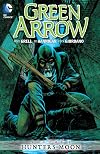
The first volume in Grell's long follow-up to [The Longbow Hunters]. I enjoyed this very much and am definitely falling for this version of Oliver Queen. (This version of OQ can be spotted wearing an ugly Christmas sweater what matches his socks. Be still my heart.) As with The Longbow Hunters, jeez the violence against woman, though. Also, TW for graphic gay bashing in the last set of issues collected here.

The Dennis O'Neil story that concludes the volume is a decent-but-nothing-special story about Gordon's brief career in Chicago before coming to Gotham, but the two Chuck Dixon stories forming the rest of this collection are excellent, gripping crime stories, and warmly recommended to anyone who enjoys the grounded end of the tales set in Gotham City, where Batman is at most a distant background figure and police, criminals and politicians take centre stage.
Lists
You May Also Like


Associated Authors
Statistics
- Works
- 48
- Also by
- 99
- Members
- 862
- Popularity
- #29,693
- Rating
- 4.3
- Reviews
- 18
- ISBNs
- 42
- Languages
- 4