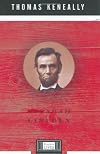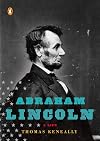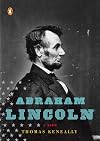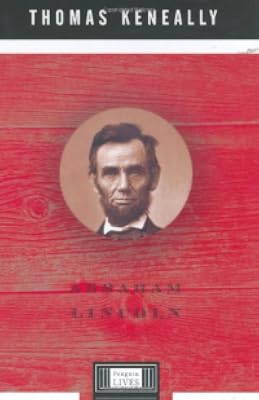
Abraham Lincoln
by Thomas Keneally
On This Page
Description
Abraham Lincoln--the great orator, the Emancipator, the savior of the Union, the martyr--rose from obscurity to lead the nation through its most tumultuous time. This book depicts all this amazing man's triumphs, insecurities, and crushing defeats; his early poverty and the ambition that propelled him out of it; the shaping of the man and his political philosophy by his youthful exposure to Christianity, slavery, and business; his tempestuous marriage and his fatherly love. We see him, show more elected to the presidency by a twist of fate, unswerving in the grim day-to-day conduct of the war as his vision and acumen led the country forward. Abraham Lincoln is an incisive study of a turning point in our history and a revealing portrait of its pivotal figure, his greatness etched more clearly in this touching human story. show lessTags
Recommendations







Member Reviews
A quick and servicable biography of Lincoln. It places a good deal of emphasis on his rise to the presidency, and thus serves to place LIncoln in his context: a man from nothing who entered the "rich man's party," a man who lived around slaves but hated it, and a man of principle. And a hoot to boot! You learn some odd things about Lincoln, I only wish Keneally would have spent a bit more time on Lincoln's turn from deist to theist.
The idea behind the “Penguin Lives” series was to select a varied collection of ~30 historical figures (from Mao Zedong to Elvis Presley) and assign them to writers with little or no experience writing biographies. The results are badly mixed: the 15 “Penguin Lives” books that I've read range from reasonably good to downright terrible.
True to form, in lieu of the numerous academic scholars and other well- qualified writers of history, to author this work the editors chose Thomas Keneally-- an Australian novelist who is mainly known for a book on which the film "Schindler's List" was based. His account of Abraham Lincoln's life is brief, conventional, and somewhat pedestrian. The facts are laid out in a straightforward fashion, show more in pleasant mellifluous prose that reflects the author’s talents as a writer. The biography offers no new insights (to no great surprise) but at least has the merit of not having been written from an ideological viewpoint. (Thus, in contrast to other recent works, we get no speculations about Lincoln's sexuality, no false claims of his supposed Christian beliefs, and no disreputable silliness about an assassination plot involving his own Secretary of War).
At least a few mistakes mar this work. Contrary to Keneally's account, assassin John Wilkes Booth did not climb down from the theatre balcony – he leapt over the rail, a fall of 12 feet, breaking his leg in the process. Likewise, the fatal bullet did not exit the right side of Lincoln’s head, it lodged in his brain. These are peculiar mistakes and lead the reader to wonder what other misconceptions might have crept through. Further, the work ends abruptly with Lincoln’s death, without mention of the aftermath of his death, the capture of his assassins, the fate of his plans for post- war reconstruction, or the historical legacy of his life. It’s as if the author ran out of space and chose to end the book with Stanton’s alleged words: “Now he belongs to the ages.”
Nonetheless, this work offers a serviceable if brief account of Lincoln’s life, an introduction that may well stimulate some readers to delve deeper. show less
True to form, in lieu of the numerous academic scholars and other well- qualified writers of history, to author this work the editors chose Thomas Keneally-- an Australian novelist who is mainly known for a book on which the film "Schindler's List" was based. His account of Abraham Lincoln's life is brief, conventional, and somewhat pedestrian. The facts are laid out in a straightforward fashion, show more in pleasant mellifluous prose that reflects the author’s talents as a writer. The biography offers no new insights (to no great surprise) but at least has the merit of not having been written from an ideological viewpoint. (Thus, in contrast to other recent works, we get no speculations about Lincoln's sexuality, no false claims of his supposed Christian beliefs, and no disreputable silliness about an assassination plot involving his own Secretary of War).
At least a few mistakes mar this work. Contrary to Keneally's account, assassin John Wilkes Booth did not climb down from the theatre balcony – he leapt over the rail, a fall of 12 feet, breaking his leg in the process. Likewise, the fatal bullet did not exit the right side of Lincoln’s head, it lodged in his brain. These are peculiar mistakes and lead the reader to wonder what other misconceptions might have crept through. Further, the work ends abruptly with Lincoln’s death, without mention of the aftermath of his death, the capture of his assassins, the fate of his plans for post- war reconstruction, or the historical legacy of his life. It’s as if the author ran out of space and chose to end the book with Stanton’s alleged words: “Now he belongs to the ages.”
Nonetheless, this work offers a serviceable if brief account of Lincoln’s life, an introduction that may well stimulate some readers to delve deeper. show less
I agree with Tucker. The book is quick read, and puts Lincoln's person into perspective. As a high school history teacher, it helps build my appreciation of the characters and important people of American History.
Biography of Lincoln; short, but easy reading
Ratings
Members
- Recently Added By
Author Information

85+ Works 19,992 Members
Thomas Keneally was born in Sydney, Australia on October 7, 1935. Although he initially studied for the Catholic priesthood, he abandoned that idea in 1960, turning to teaching and clerical work before writing and publishing his first novel, The Place at Whitton, in 1964. Since that time he has been a full-time writer, aside from the occasional show more stint as a lecturer or writer-in-residence. He won the Booker Prize in 1982 for Schindler's Ark, which Stephen Spielberg adapted into the film Schindler's List. He won the Miles Franklin Award twice with Bring Larks and Heroes and Three Cheers for the Paraclete. His other fiction books include The Chant of Jimmy Blacksmith, Gossip from the Forest, Confederates, The People's Train, Bettany's Book, An Angel in Australia, The Widow and Her Hero, and The Daughters of Mars. His nonfiction works include Searching for Schindler, Three Famines, The Commonwealth of Thieves, The Great Shame, and American Scoundrel. In 1983, he was awarded the order of Australia for his services to Australian Literature. Thomas Keneally is the recipient of the 2015 Australia Council Award for Lifetime Achievement in Literature. The award, formerly known as the Writers' Emeritus Award, recognises 'the achievements of eminent literary writers over the age of 60 who have made an outstanding and lifelong contribution to Australian literature. (Bowker Author Biography) show less
Series
Belongs to Publisher Series
Common Knowledge
- Canonical title
- Abraham Lincoln
- Original publication date
- 2003
- People/Characters
- Edward Bates; Orville Hickman Browning; Francis Preston Blair; Montgomery Blair; John Wilkes Booth; James Buchanan (show all 39); Simon Cameron; Salmon P. Chase; Stephen A. Douglas; Frederick Douglass; Edward Everett; John J. Hardin (as John Hardin); Clara Harris Rathbone; Ira Harris; John Hay; William Henry Herndon; Ward Hill Lamon; Abraham Lincoln; Eddie Lincoln; Mary Todd Lincoln; Robert Todd Lincoln; Tad Lincoln; Willie Lincoln; George B. McClellan; John G. Nicolay; Denton Offut; Henry Reed Rathbone; William Henry Seward; Caleb Smith; Joshua Fry Speed; Edwin M. Stanton; John Todd Stuart; Charles Sumner; John Harrison Surratt, Jr.; Mary Surratt; Elizabeth 'Betsey' Humphreys Todd; John Usher; Gideon Welles; Richard Yates
- Important places
- USA; Illinois, USA; Indiana, USA; New Salem, Illinois, USA; Sangamon County, Illinois, USA; Soldiers' Home, Washington, D.C., USA (show all 8); Springfield, Illinois, USA; Washington, D.C., USA
Classifications
- Genres
- History, Nonfiction, Biography & Memoir, General Nonfiction
- DDC/MDS
- 973.7092 — History & geography History of North America United States Civil War Era (1857-1865) Civil War
- LCC
- E457 .K424 — History of the United States United States Civil War period, 1861-1865 Lincoln's administrations, 1861-April 15, 1865
- BISAC
Statistics
- Members
- 305
- Popularity
- 104,503
- Reviews
- 4
- Rating
- (3.44)
- Languages
- English, French
- Media
- Paper, Ebook
- ISBNs
- 11
- ASINs
- 5