
Johnny Tremain: A Story of Boston in Revolt
by Esther Forbes
On This Page
Description
After injuring his hand, a silversmith's apprentice in Boston becomes a messenger for the Sons of Liberty in the days before the American Revolution.Tags
Recommendations
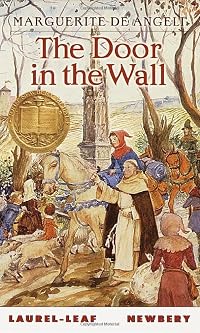
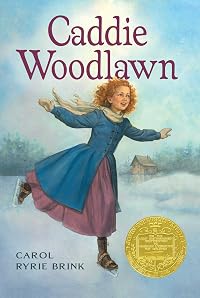
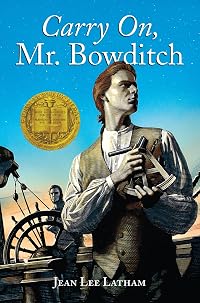

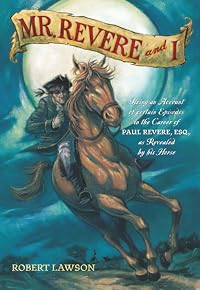
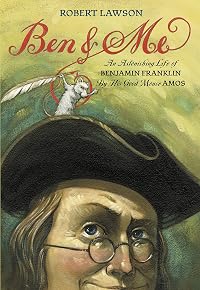
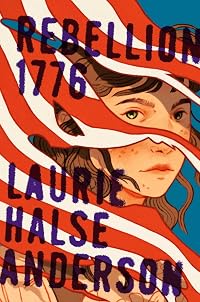

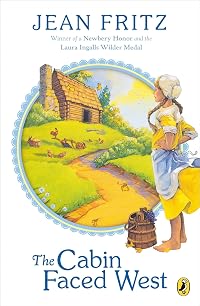
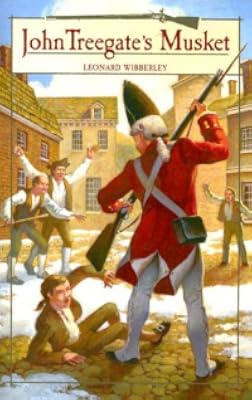





Member Recommendations

Member Reviews
This was an amazing book. Beautiful, powerful, heartbreaking, healing, inspiring, courageous, sweet, and so much more. It's not my favorite historical fiction or Revolutionary War book, and not quite as amazing as the best I've read - but it comes incredibly close. It was so wonderful. It was very, very well-written, and incredibly powerful, in characterization, plot, writing style, historical accuracy, setting, and theme.
I really, really love Johnny. For so many reasons. He's a fabulous character and protagonist. I was eager to experience his character arc, since he started out so proud and selfish and angry. And though I knew it would be good, it still blew me away. It was wonderful to watch him grow - and heal. A paragraph in a show more review can't sum up his wonderful mix of determination and courage, tenderness and heart, laughter and anger, bitterness and sweetness. I felt each emotion along with him, from joy and victory, to despair and shame, to horror and grief. I was completely caught up in his story, his adventures, his hopes and defeats. And his character arc was fabulous in all its fascinating, well-developed threads and facets.In addition to the parts relating to his inner healing, I loved seeing him realize he didn't want the riches and depravity of the Lyte family.
Every character in this book is incredibly vivid and real and alive. Johnny most of all, but each and every other character, as well. The author is one of those ones with the rare skill of choosing the exact right details of appearance, speech, and mannerisms to bring each person to life and make them walk off the page. I could see each and every character - and their appearances and movements - so clearly in my mind,down to the last detail, which only happens for me in those rare books with incredibly skillful characterization.
I loved how even the nicest characters were flawed, but still sweet. And how the nasty characters were despicable - but still human, understandable, and easy to sympathize with. Fictional characters and real-life historical figures were equally vivid and real. I felt like I knew them just as well as Johnny did. Paul Revere most of all, for me - he was my favorite - but all the others too. The author really made me care about them. One of my very favorite characters was Doctor Warren - another character who seemed so real and wonderful to me. I have a special place in my heart for kind and skilled medical characters, and I became more attached than I knew.I was really heartbroken to find out that in real life, he died a mere few months after the book's end.
I really, really loved Johnny's friendship with Rab, and his friendship with Cilla. Of course I adored both Rab and Cilla so very much, though I adored Johnny far more. Cilla was so sweet and saucy, and I loved her grit and everything else. And Rab was so wonderful, almost perfect, but still flawed, which I love. I loved his calm and unflappability, his bravery and determination, his unfailing understanding, and the way he helped everyone he met - especially Johnny, for Rab was the one who helped him most to heal. And I both loved and was alarmed by his fierce, dark side that takes joy in a fight. I loved seeing them through Johnny's changing perspective, and of course, in addition to the individuals, I was caught up and invested in the highs and lows of both of Johnny's friendships with them. And then there were things with those characters that brought me heartbreak - one in particular, even though I had been spoiled and was prepared. It really tore me up, unsurprisingly. I love the understated way the author wrote things, and Johnny's understated reactions - so much more powerful than melodrama.
The author made the historical setting of pre-Revolution Boston come to life, just as much as the people involved. I felt I was there, and could see and smell and feel and hear it all. The tense, explosive air, like a powder keg about to burst into flame, was tangible. And even the peaceful, quiet moments in nature swept over me so vividly. I loved Johnny's up-close view of the events going on, and the men who made them happen - and Johnny's own vital part in those events. The author made me believe it really did happen that way - from the words of the Sons of Liberty in private, to Johnny's secret spying. It really helped me understand the events that started the war, and the opening battles. And all the intricate machinations that brought them about. Also, the author made both sides so human. She didn't shy away from honestly portraying the horrible violence on both sides - for the Patriots were often cruel and violent, as well as the British. I really appreciated how Johnny was bothered and even sickened by the violence - but he was courageous and strong and determined, and chose to face danger and the threat of death over and over, even though he was deeply afraid. I respect that more than someone who is unaffected by fear. In addition to portraying the callous, unfeeling, often extreme cruelty of the British Redcoats, the author showed their humanity, and the fact that they were often pleasant and even nice, rather than being a one-dimensional caricature of evil. I know that both sides of them were true to history, and I'm glad it was reflected in such a balanced and vivid way in the book.
I also really, really adore the author's portrayal of the cause of freedom and the brave men and women who fought and died for that cause - and were determined and ready and willing to do both. The author's writing makes me feel the hope and glory and fiery light of it, even as she portrays its messiness. It reminds me how proud I am of my country and of my ancestors who began this country and fought to make and keep it free, in the 1700s and over the last 250 years. I could say more on that part of the book, but it's hard to describe the poignancy and power of that aspect of it. "A man can stand up . . ."
Above all, this is a story of Johnny's heartbreak and hope and healing. And that is what I loved most about it. (Some spoilers ahead in this section.) I have a special place in my heart for characters who become crippled or disabled, and have to keep pressing on through life, and must heal in different ways. And I identify with that experience, since it's similar in some ways to my own - the characters who are physically crippled or have a physical disability often go through a similar experience to what I've been through with my own less-physical disability. I felt for Johnny even more than I would otherwise, because I've had my own life, dreams, hopes, and career seemingly destroyed by what I've been through. This book was especially well-written in that aspect of the story, as well as nearly every other way. It was heartwrenching to watch Johnny as he went through such a terrible event, and its aftermath. It was also interesting to watch a proud, selfish character go through that, and the character development was fabulous. I loved watching Johnny grow and change for the better because of it. And I was rooting for him to find life and healing and friendship. (More spoilers ahead.) Halfway through the book, the author intentionally gave me hope that his disability could be healed and reversed. I hoped for that so much, especially after the book portrayed his horrible expecting as a punishment for pride, and the just judgement of God - which seemed too legalistic to me. But that gave me hope, and I wanted the book to end with physical healing. I didn't know if it would, but I hoped it might. But later on, I realized that far more important than physical healing, Johnny needed healing in other ways - and he was being healed in those ways. And even more than that - even if he was never healed, and was crippled for life - Johnny and the reader both learned and saw that he could do great and meaningful and important things, even though he was unable to shoot a musket. And that's just as important than the hope of physical healing.I really loved that he did receive the opportunity for physical healing in the end - but first he had to heal in other ways, and I was so glad he did. And I was overjoyed when his physical healing came at the end. It's healing and hopeful to read about, for me in particular.
I was so satisfied by the ending, for the above reasons as well as many others. I really love bittersweet endings, and this one was perfect. I loved how it looked forward at the war and victory to come, and Johnny's new role in it - taking up the fight that others had already died for, to give birth to a new land of freedom that Johnny loved and believed in and belonged to.
4.5 stars
I highly recommend this book to fans of quality young adult historical fiction, young teens and up. I'm so glad I tried this book again on the high recommendations of so many Goodreads friends, and one friend in particular. I enjoyed it from the beginning, but I thought for a while it would be 4 stars. It surprised me in that I enjoyed it more and more as the book went on - my rating grew higher, and the book quietly snuck up on me and became a favorite without me even realizing it.
Content Overview:
I wouldn't recommend this to anyone below the age of a preteen, or to a sensitive preteen. It's best for young teens and up.
- Though understated and never graphic in the least, the book contains mention of violence, death, killing, execution, wounded soldiers, torture (e.g. tarring and feathering), peril/danger/threat of death, and other violence.
- There's very mild swearing, limited to quite a few instances of h**l and d**n from British soldiers (never anyone else), and mention of other swearing and oaths that are omitted from the dialogue.
- The book contains no sexual content, but some mild romantic elements. It talks briefly several times about people falling in love, marrying, and eloping, and includes arranged betrothals between two young teenagers and between a young girl and a middle-aged man. A young man enjoys dancing with girls, and he courts a girl he seems interested in. A young man is jealous of another young man paying attention to a girl he cares about. A teenaged boy has a crush on or infatuation with a beautiful woman in her twenties - he merely thinks she's beautiful - but it was handled well by the author, was never inappropriate, and was never anything that made me uncomfortable in the least.
All of this is very understated and appropriate but sometimes blunt.
Reviewed January 2019
Reread February/March 2020 show less
I really, really love Johnny. For so many reasons. He's a fabulous character and protagonist. I was eager to experience his character arc, since he started out so proud and selfish and angry. And though I knew it would be good, it still blew me away. It was wonderful to watch him grow - and heal. A paragraph in a show more review can't sum up his wonderful mix of determination and courage, tenderness and heart, laughter and anger, bitterness and sweetness. I felt each emotion along with him, from joy and victory, to despair and shame, to horror and grief. I was completely caught up in his story, his adventures, his hopes and defeats. And his character arc was fabulous in all its fascinating, well-developed threads and facets.
Every character in this book is incredibly vivid and real and alive. Johnny most of all, but each and every other character, as well. The author is one of those ones with the rare skill of choosing the exact right details of appearance, speech, and mannerisms to bring each person to life and make them walk off the page. I could see each and every character - and their appearances and movements - so clearly in my mind,down to the last detail, which only happens for me in those rare books with incredibly skillful characterization.
I loved how even the nicest characters were flawed, but still sweet. And how the nasty characters were despicable - but still human, understandable, and easy to sympathize with. Fictional characters and real-life historical figures were equally vivid and real. I felt like I knew them just as well as Johnny did. Paul Revere most of all, for me - he was my favorite - but all the others too. The author really made me care about them. One of my very favorite characters was Doctor Warren - another character who seemed so real and wonderful to me. I have a special place in my heart for kind and skilled medical characters, and I became more attached than I knew.
I really, really loved Johnny's friendship with Rab, and his friendship with Cilla. Of course I adored both Rab and Cilla so very much, though I adored Johnny far more. Cilla was so sweet and saucy, and I loved her grit and everything else. And Rab was so wonderful, almost perfect, but still flawed, which I love. I loved his calm and unflappability, his bravery and determination, his unfailing understanding, and the way he helped everyone he met - especially Johnny, for Rab was the one who helped him most to heal. And I both loved and was alarmed by his fierce, dark side that takes joy in a fight. I loved seeing them through Johnny's changing perspective, and of course, in addition to the individuals, I was caught up and invested in the highs and lows of both of Johnny's friendships with them. And then there were things with those characters that brought me heartbreak - one in particular, even though I had been spoiled and was prepared. It really tore me up, unsurprisingly. I love the understated way the author wrote things, and Johnny's understated reactions - so much more powerful than melodrama.
The author made the historical setting of pre-Revolution Boston come to life, just as much as the people involved. I felt I was there, and could see and smell and feel and hear it all. The tense, explosive air, like a powder keg about to burst into flame, was tangible. And even the peaceful, quiet moments in nature swept over me so vividly. I loved Johnny's up-close view of the events going on, and the men who made them happen - and Johnny's own vital part in those events. The author made me believe it really did happen that way - from the words of the Sons of Liberty in private, to Johnny's secret spying. It really helped me understand the events that started the war, and the opening battles. And all the intricate machinations that brought them about. Also, the author made both sides so human. She didn't shy away from honestly portraying the horrible violence on both sides - for the Patriots were often cruel and violent, as well as the British. I really appreciated how Johnny was bothered and even sickened by the violence - but he was courageous and strong and determined, and chose to face danger and the threat of death over and over, even though he was deeply afraid. I respect that more than someone who is unaffected by fear. In addition to portraying the callous, unfeeling, often extreme cruelty of the British Redcoats, the author showed their humanity, and the fact that they were often pleasant and even nice, rather than being a one-dimensional caricature of evil. I know that both sides of them were true to history, and I'm glad it was reflected in such a balanced and vivid way in the book.
I also really, really adore the author's portrayal of the cause of freedom and the brave men and women who fought and died for that cause - and were determined and ready and willing to do both. The author's writing makes me feel the hope and glory and fiery light of it, even as she portrays its messiness. It reminds me how proud I am of my country and of my ancestors who began this country and fought to make and keep it free, in the 1700s and over the last 250 years. I could say more on that part of the book, but it's hard to describe the poignancy and power of that aspect of it. "A man can stand up . . ."
Above all, this is a story of Johnny's heartbreak and hope and healing. And that is what I loved most about it. (Some spoilers ahead in this section.) I have a special place in my heart for characters who become crippled or disabled, and have to keep pressing on through life, and must heal in different ways. And I identify with that experience, since it's similar in some ways to my own - the characters who are physically crippled or have a physical disability often go through a similar experience to what I've been through with my own less-physical disability. I felt for Johnny even more than I would otherwise, because I've had my own life, dreams, hopes, and career seemingly destroyed by what I've been through. This book was especially well-written in that aspect of the story, as well as nearly every other way. It was heartwrenching to watch Johnny as he went through such a terrible event, and its aftermath. It was also interesting to watch a proud, selfish character go through that, and the character development was fabulous. I loved watching Johnny grow and change for the better because of it. And I was rooting for him to find life and healing and friendship. (More spoilers ahead.) Halfway through the book, the author intentionally gave me hope that his disability could be healed and reversed. I hoped for that so much, especially after the book portrayed his horrible expecting as a punishment for pride, and the just judgement of God - which seemed too legalistic to me. But that gave me hope, and I wanted the book to end with physical healing. I didn't know if it would, but I hoped it might. But later on, I realized that far more important than physical healing, Johnny needed healing in other ways - and he was being healed in those ways. And even more than that - even if he was never healed, and was crippled for life - Johnny and the reader both learned and saw that he could do great and meaningful and important things, even though he was unable to shoot a musket. And that's just as important than the hope of physical healing.
I was so satisfied by the ending, for the above reasons as well as many others. I really love bittersweet endings, and this one was perfect. I loved how it looked forward at the war and victory to come, and Johnny's new role in it - taking up the fight that others had already died for, to give birth to a new land of freedom that Johnny loved and believed in and belonged to.
4.5 stars
I highly recommend this book to fans of quality young adult historical fiction, young teens and up. I'm so glad I tried this book again on the high recommendations of so many Goodreads friends, and one friend in particular. I enjoyed it from the beginning, but I thought for a while it would be 4 stars. It surprised me in that I enjoyed it more and more as the book went on - my rating grew higher, and the book quietly snuck up on me and became a favorite without me even realizing it.
Content Overview:
I wouldn't recommend this to anyone below the age of a preteen, or to a sensitive preteen. It's best for young teens and up.
- Though understated and never graphic in the least, the book contains mention of violence, death, killing, execution, wounded soldiers, torture (e.g. tarring and feathering), peril/danger/threat of death, and other violence.
- There's very mild swearing, limited to quite a few instances of h**l and d**n from British soldiers (never anyone else), and mention of other swearing and oaths that are omitted from the dialogue.
- The book contains no sexual content, but some mild romantic elements. It talks briefly several times about people falling in love, marrying, and eloping, and includes arranged betrothals between two young teenagers and between a young girl and a middle-aged man. A young man enjoys dancing with girls, and he courts a girl he seems interested in. A young man is jealous of another young man paying attention to a girl he cares about. A teenaged boy has a crush on or infatuation with a beautiful woman in her twenties - he merely thinks she's beautiful - but it was handled well by the author, was never inappropriate, and was never anything that made me uncomfortable in the least.
All of this is very understated and appropriate but sometimes blunt.
Reviewed January 2019
Reread February/March 2020 show less
At the ripe old age of 60 I finally read Johnny Tremain. When I was growing up, books were separated into "boy's books" and "girl's books". Hardy Boys was for boys and Nancy Drew for girls. Books about horses and science fiction were for boys. Books about fantasy and romance were for girls. Don't get me wrong. I'm not defending this. Yes, it's silly. But that's the world I grew up in and following this pattern was actively encouraged by parents and teachers. But not, happily, by librarians. So I read the books about horses and science fiction and left most romance and most fantasy for the girley girls.
Books about war were for boys unless it was a story of a romance in wartime or about nurses. These genres were of too little interest to show more me to challenge the boy-girl definition. But I've heard so much that Johnny Tremain is a wonderful story that I decided to finally read it. (Especially since it also fulfills one of the subject areas for my Library's Summer Read Challenge.) And I agree it's a wonderful story and I'm most glad I can put it in my "I've read this" list.
And, no, I've never read Hardy Boys. But I've never read Nancy Drew either. So there. show less
Books about war were for boys unless it was a story of a romance in wartime or about nurses. These genres were of too little interest to show more me to challenge the boy-girl definition. But I've heard so much that Johnny Tremain is a wonderful story that I decided to finally read it. (Especially since it also fulfills one of the subject areas for my Library's Summer Read Challenge.) And I agree it's a wonderful story and I'm most glad I can put it in my "I've read this" list.
And, no, I've never read Hardy Boys. But I've never read Nancy Drew either. So there. show less
I was amazed by how much I liked this. I don't normally like historical fiction and had never read this as a child, but I wish I had. All the details of life in the colonies as the Tories and the Whigs became more extremist come alive. I feel I know a lot more about how disagreements can lead to war in general, and a lot more about Boston in the early 1770s especially.
Johnny's story isn't just young boy makes good, but a true coming-of-age, despite exterior challenges and inner demons. The other characters are richly and sympathetically drawn, whether a black laundress or Sam Adams. The language is beautiful, graceful & poetic but not at all self-conscious. It's interesting, and exciting, and even often funny - one hardly knows one is show more learning anything.
In fact, I'd started out to rate this 4 stars, but now I have to bump it up. I really do recommend it to everyone. show less
Johnny's story isn't just young boy makes good, but a true coming-of-age, despite exterior challenges and inner demons. The other characters are richly and sympathetically drawn, whether a black laundress or Sam Adams. The language is beautiful, graceful & poetic but not at all self-conscious. It's interesting, and exciting, and even often funny - one hardly knows one is show more learning anything.
In fact, I'd started out to rate this 4 stars, but now I have to bump it up. I really do recommend it to everyone. show less
This book is more compelling as an audiobook, classic middle grade story set in the revolutionary war era Boston. I had more of a feel for Johnny's high regard for himself as well as his senseless bullying. It was interesting watching Paul Revere and Sam Adams come alive through Johnny's eyes. A good companion to this book would be Oliver Wiswell By Kenneth Roberts.
I loved reading this book when I was younger and I enjoyed it just as much as an adult, rereading it. There is action for anyone seeking adventure, there is a coming of age plot that appeals to younger readers, and there is the aspect of reliving history, which appeals to many. For me, it is the quality of writing that hits home the most. A reader can read about a group of soldiers and see them as soldiers, or you can focus on the descriptions of the guns and their "eyes" that stare at you. They can read about learning to ride a horse, or they can experience what it is like to feel the movement and sound of that horse become a part of your life. All of these things are accomplished with simple, but amazing descriptions that draw a show more reader fully in to the story. You half expect to smell the horse or see the streets beneath someone's feet as they walk along, not because the descriptions are eloquent or lengthy or astounding, but because their simplicity is simply perfectly matched to the mental eye that processes them. Read when you're young and experience the adventure in history, but come back when you're older and experience a life in the past. show less
Mom first read this book to me in school, and I remember being captivated by the story. Several years later, I was able to find a cassette recording of the story in our local library, and enjoyed going through it again. Then just recently, I remembered it had been a while since I read it, and decided to enjoy it again.
At this point, I’m not sure how many times I’ve heard or read the story—Mom has read it aloud at least once since she first read it to me. But no matter how many times I’ve read it, it’s managed to retain its place as one of my top favorite Revolutionary War novels.
This book has depth, intensity, and rich, relatable characters. You feel like you’re right there, trying to smuggle messages under the British show more soldiers’ noses, or riding free on Goblin’s back after winning the right to ride him. This book brings to life the trials and hopes of apprentices, as well as giving a glimpse into the world of the wealthy at the time. There’s history, a dash of romance, family, and deep friendship…this book has it all, and Forbes does an excellent job pulling it all together into one magnificent, unforgettable tale.
If you enjoy reading about American history but haven’t read this book yet, I’d highly recommend you pick this up. It’s a gem. show less
At this point, I’m not sure how many times I’ve heard or read the story—Mom has read it aloud at least once since she first read it to me. But no matter how many times I’ve read it, it’s managed to retain its place as one of my top favorite Revolutionary War novels.
This book has depth, intensity, and rich, relatable characters. You feel like you’re right there, trying to smuggle messages under the British show more soldiers’ noses, or riding free on Goblin’s back after winning the right to ride him. This book brings to life the trials and hopes of apprentices, as well as giving a glimpse into the world of the wealthy at the time. There’s history, a dash of romance, family, and deep friendship…this book has it all, and Forbes does an excellent job pulling it all together into one magnificent, unforgettable tale.
If you enjoy reading about American history but haven’t read this book yet, I’d highly recommend you pick this up. It’s a gem. show less
I read this classic work at some time when I was ten to twelve for school and I liked it. I thought about it from time to time, as I recalled several scenes and incidents from the story. (Also, that great cutaway from Family Guy. Google "Family Guy - Reading While Intoxicated.") Re-reading it again as an adult, it is still a good book. It is written for children, but still gripping enough for an adult. It's a good story, especially if you like the history of the American Revolution. Having now done some research on many of the events described in the work (for a project about someone about the same age as the protagonist) it rings true historically. It's an engaging story and still holds up well. (Except, in one respect, I doubt black show more slaves/servants in 1770s Boston talked like early twentieth-century Jim Crow caricatures.) Forbes won a Pulitzer for her history work on the same era and events, and you can tell. It is a good book, a good story, and a good moral. show less
Members
- Recently Added By
Published Reviews
Marilyn Courtot (Children's Literature)
To read Johnny Tremain is to live through two dramatic years of our country's history, and to see these great events through the shrewd eyes of an observant boy. After injuring his hand, this silversmith's apprentice in Boston becomes a messenger for the Sons of Liberty in the days before the American Revolution. His new role brings Johnny Tremain in show more contact with the great men of history: John Hancock, John and Samuel Adams, and other Boston patriots. The story leads up to the Tea Party and Battle of Lexington. Ward has sharpened the drama of the story by adding full-page illustrations. 1944 Newbery Award. show less
To read Johnny Tremain is to live through two dramatic years of our country's history, and to see these great events through the shrewd eyes of an observant boy. After injuring his hand, this silversmith's apprentice in Boston becomes a messenger for the Sons of Liberty in the days before the American Revolution. His new role brings Johnny Tremain in show more contact with the great men of history: John Hancock, John and Samuel Adams, and other Boston patriots. The story leads up to the Tea Party and Battle of Lexington. Ward has sharpened the drama of the story by adding full-page illustrations. 1944 Newbery Award. show less
added by kthomp25
Recorded Books (Recorded Books, LLC.)
There was a purpose in what happened to Johnny Tremain, but he couldn’t see it at the time. Johnny had been Mr. Lapham’s star pupil, a clever, industrious apprentice silversmith, if not always well liked, at least envied by all who knew him around Hancock’s Wharf. His skills had even been admired by Paul Revere, the finest silversmith in Boston. But show more when Johnny seriously burns his hand in a furnace, he finds himself crippled, without an occupation, and with no means of taking care of himself. It seems that fate has literally dealt him a cruel hand. Soon, trouble reaches Johnny’s life in a new way. Swept along in the tide of events leading to the Boston Tea Party and the first skirmishes of Lexington and Concord, Johnny finds a job as message-carrier for the Sons of Liberty. As young and old men alike make sacrifices for a new country, Johnny prepares to take his own stand in the cause for freedom. show less
There was a purpose in what happened to Johnny Tremain, but he couldn’t see it at the time. Johnny had been Mr. Lapham’s star pupil, a clever, industrious apprentice silversmith, if not always well liked, at least envied by all who knew him around Hancock’s Wharf. His skills had even been admired by Paul Revere, the finest silversmith in Boston. But show more when Johnny seriously burns his hand in a furnace, he finds himself crippled, without an occupation, and with no means of taking care of himself. It seems that fate has literally dealt him a cruel hand. Soon, trouble reaches Johnny’s life in a new way. Swept along in the tide of events leading to the Boston Tea Party and the first skirmishes of Lexington and Concord, Johnny finds a job as message-carrier for the Sons of Liberty. As young and old men alike make sacrifices for a new country, Johnny prepares to take his own stand in the cause for freedom. show less
added by kthomp25
Lists

Favorite Childhood Books
1,651 works; 519 members

Best Newbery Medal Winners
97 works; 54 members
1001 Children's Books You Must Read Before You Grow Up
774 works; 101 members

Read the book and saw the movie
1,170 works; 195 members

Childhood Favorites
427 works; 24 members

Sonlight Books
1,487 works; 25 members

Works That Inspired Disney Movies
119 works; 13 members
Honey For a Child's Heart
1,152 works; 25 members

my children books reading list-from 100 great books
101 works; 7 members

Mensa for Kids Excellence in Reading Award Program (Grades 7-8)
62 works; 3 members

Newbery Medal Winners - By Year
105 works; 7 members

Satori Smiles Children's Book List
262 works; 7 members
Ambleside Books
459 works; 18 members

Ryan's Books
34 works; 1 member

CCE 1000 Good Books List
1,033 works; 12 members

Children's Literature, Briefly Historical Fiction Reading List
44 works; 4 members

Books We Loved As Children
610 works; 254 members

Ambleside Online Year 4
46 works; 1 member

THE WAR ROOM
813 works; 24 members

1970s
657 works; 23 members

Elementary Reads
15 works; 1 member

Classical Conversations Challenge I Exposition
20 works; 1 member

Mustich's 1000 Books to Read Before You Die: A Life Changing List
1,001 works; 20 members
Historical Fiction
889 works; 90 members
Before Austen Comes Aesop
318 works; 9 members

Books Read in 2021
5,361 works; 114 members

Mensa for Kids Excellence in Reading Award Program (Grades 7-8)
62 works; 1 member
GCS 6th grade summer reading list
171 works; 4 members

End of Your Life Book Club
134 works; 4 members

Fiction Set During a Revolution
55 works; 24 members
Overdue Podcast
808 works; 9 members

Geek Dad Read to Your Kids Additions List
66 works; 4 members

Books We Want To Read Again For The First Time
384 works; 160 members
Author Information

15+ Works 12,553 Members
Forbes was the author of six historical novels and four books of nonfiction for adults, as well as the recipient of the Pulitzer Prize in history in 1942 for her adult biography, Paul Revere and the World He Lived In Paul Revere and the World He Lived In (1942). Yet Forbes's reputation is primarily as a children's writer, resting particularly on show more Johnny Tremain (1942), an offshoot of her research for the adult Paul Revere biography and considered by many the best example of historical fiction ever written for children. Johnny Tremain follows the story of a silversmith's apprentice as he stumbles into the American Revolution and gains insight into his own character. In writing about the life of an ordinary citizen of Boston at that time, Forbes wanted to show, in her words, "not merely what was done but why and how people felt." Originally intending to keep Johnny neutral during the Revolution, she changed her mind as a result of the advent of World War II, because she saw parallels between the two wars and wanted to show young readers those parallels. Although this may have resulted in some pushing of contemporary ideology onto a historical setting, most critics have praised the story's accuracy. It was and remains an important book for promoting the idea that young readers can grasp mature writing. Forbes's only other book for children, America's Paul Revere, summarizes that man's life. (Bowker Author Biography) show less
Some Editions
Awards and Honors
Awards
Distinctions
Series
Belongs to Publisher Series
Work Relationships
Is contained in
Has the adaptation
Has as a reference guide/companion
Has as a student's study guide
Common Knowledge
- Canonical title
- Johnny Tremain: A Story of Boston in Revolt
- Original publication date
- 1943
- People/Characters
- Johnny Tremain; Paul Revere; Goblin, Johnny's horse; Cilla Lapham; Rab; Dove (show all 11); Lavinia Lyte; Miss Bessie; Samuel Adams; John Hancock; Joseph Warren
- Important places
- Boston, Massachusetts, USA; Massachusetts, USA; USA
- Important events
- American Revolution (1775 | 1783)
- Related movies
- Johnny Tremain (1957 | IMDb)
- Dedication
- To Pamela, Emily, John and Molly Taylor
- First words
- On rocky islands gulls woke.
- Last words
- (Click to show. Warning: May contain spoilers.)A man can stand up...
- Original language
- English
Classifications
Statistics
- Members
- 10,922
- Popularity
- 865
- Reviews
- 91
- Rating
- (3.78)
- Languages
- English, Portuguese
- Media
- Paper, Audiobook, Ebook
- ISBNs
- 82
- UPCs
- 2
- ASINs
- 70