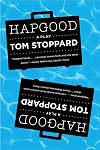
Hapgood
by Tom Stoppard
On This Page
Description
With his characteristically brilliant wordplay and extraordinary scope, Tom Stoppard has in Hapgood devised a play that 'spins an end-of-the-Cold-War tale of intrigue and betrayal, interspersed with explanations of the quixotic behavior of the electron and the puzzling properties of light' (New York Times). It falls to Hapgood, an extraordinary British intelligence officer, to try to unravel the mystery of who is passing along top-secret scientific discoveries to the Soviets, but as she does show more so, the web of personal and professional betrayals-doubles and triples and possibly quadruples-continues to multiply. show lessTags
Recommendations


















Member Reviews
One of the most convoluted Stoppard works I've ever read - and that's setting a high bar, since Stoppard is noted for his convoluted plots. This one involves agents and double agents, with twins moving in and out to complicate things. At one point or another, everyone is suspect. Red herrings draw you first one way, then the other, and a few traces of quantum physics lend an air of strategic importance to the goings on. In the end, the scheming of the agents and moles renders the activities of the various intelligence agencies (mostly British, in this case, but with a short nod to the KGB and CIA, as well) ridiculous and buffoonish. Which, if one follows the news, is not a difficult conclusion to reach. Stoppard presents it all with wit show more and style, but it does not match some of his other, more sublime plays. show less
A charming play about a convoluted spy network involving twins, double crosses, various affairs, and a whole slew of intelligence secrets. Follow the titular character as she tries to track down the weak link in her team all the while keeping her private life hush hush.
Double-agents, double crosses, double helices, double entendres, 'double, double, toil and trouble.' Double-bluff, double-bogey, double-density, double fault, doublespeak, doublethink, double vision, and the ultimate double-whammy. Dual purposes, dual-citizenships, and dual personalities. The properties, relationships, and interactions of people, nations, and sub-atomic particles.
Plays are meant to be seen not read. Dramaturgy should forever be outlawed, and and the dramaturg should never be allowed to attend a rehearsal. BUT...if one is unable to sit in the theatre and experience the action on the stage THEN reading the likes of Shakespeare, Sheppard, and Stoppard are the next best thing. Always a joy to read Sir Tom's words. show more Top-drawer, top-notch, top-shelf. Once more unto the breach... show less
Plays are meant to be seen not read. Dramaturgy should forever be outlawed, and and the dramaturg should never be allowed to attend a rehearsal. BUT...if one is unable to sit in the theatre and experience the action on the stage THEN reading the likes of Shakespeare, Sheppard, and Stoppard are the next best thing. Always a joy to read Sir Tom's words. show more Top-drawer, top-notch, top-shelf. Once more unto the breach... show less
Read before seeing staged reading at ACT. Like most plays, hard to get full picture from own reading - much more fun to see performance. Nice, intricate-if-minor Stoppard.
Stoppard was having fun reading about quantum mechanics, so he wrote a parody of Le Carre-style spy thrillers as a vehicle to share it. The original 1988 version didn't do well in London, this is the 1994 revision that was a success in New York.
Ratings
Members
- Recently Added By
Lists

My Play Collection
769 works; 3 members
Author Information

113+ Works 23,599 Members
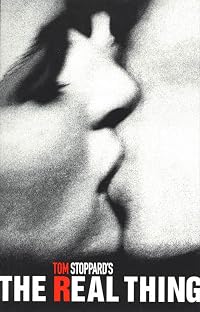
When the National Theatre needed a last-minute substitute for a canceled production of As You Like It, Kenneth Tynan decided to stage Rosencrantz and Guildenstern Are Dead, a work by an unfamiliar author that had received discouraging notices from provincial critics at its Edinburgh Festival debut. Of course, the play, when it opened in April show more 1967, met with universal acclaim. In New York the next year, it was chosen best play by the Drama Critics Circle. In such an unlikely way, Tom Stoppard came to light. Born in Czechoslovakia, a country he left (for Singapore) when he was an infant, he began his literary career as a journalist in Bristol, where play reviewing led to playwriting. After Rosencrantz and Guildenstern, Stoppard's reputation suffered through the production of a number of minor works, whose intellectual preoccupations were shrugged off by reviewers: Enter a Free Man (1968; "an adolescent twinge of a play," N.Y. Times), The Real Inspector Hound (1968; "lightweight," N.Y. Times), and After Magritte. But in the 1970s, the initial enthusiasms aroused by Rosencrantz and Guildenstern were more than vindicated by the production of two full-length plays, Jumpers (1974) and the antiwar play Travesties (1975), whose immense verbal and theatrical inventiveness made them absolute successes on both sides of the Atlantic. Stoppard's method from the start has been to contrive explanations for highly unlikely encounters---of objects (the ironing board, old lady, and bowler hat of After Magritte), characters (Joyce, Lenin, and Tzara in Travesties), and even plays (Hamlet, Rosencrantz and Guildenstern, The Importance of Being Earnest, Travesties, and The Real Thing, 1982). In the 1970s, Tynan called for Stoppard---as a Czech and as an artist---to engage himself politically. But although political subjects have since found their way into pieces from Every Good Boy Deserves Favor (1977) to Squaring the Circle (1985), politics and art seem to have become just two more of the playwright's irreconcilables, which meet, but never join, in the logical frames of his comedy. The presence of political material---such as the Lenin sections that nearly ruin the second part of Travesties---has occasionally strained the structure of the plays. But in The Real Thing Stoppard is comfortable enough with the satire on art and activism to bring a third subject, love, into the mix. Stoppard has acknowledged his Eastern European heritage nonpolitically, in a series of adaptations of plays by Arthur Schnitzler (see Vol. 2), Johann Nestroy, and Ferenc Molnar. (Bowker Author Biography) Tom Stoppard is the author of many plays, including Rosencrantz and Guildenstern Are Dead, Jumpers, Travesties, and The Invention of Love. He lives in London. (Publisher Provided) show less
Awards and Honors
Notable Lists
Work Relationships
Common Knowledge
- Original title
- Hapgood
- Original publication date
- 1988
- People/Characters
- Hapgood; Blair; Kerner; Ridley; Wates; Merryweather (show all 9); Maggs; Joe; Russian
- Original language
- English
Classifications
Statistics
- Members
- 225
- Popularity
- 144,241
- Reviews
- 6
- Rating
- (3.81)
- Languages
- English
- Media
- Paper, Ebook
- ISBNs
- 9
- ASINs
- 5