
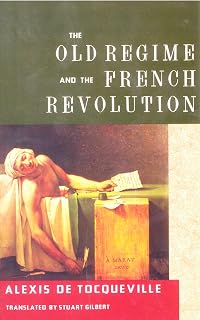
The Old Regime and the French Revolution
by Alexis de Tocqueville
On This Page
Description
One of the most important books ever written about the French Revolution, this treatise is the work of a celebrated political thinker and historian. Alexis de Tocqueville reveals the rebellion's origins and consequences by examining France's political and cultural environment during the late eighteenth century. His view of the revolution as part of a gradual and ongoing social process, rather than a sudden occurrence, offers timeless insights into the pursuit of individual and political show more freedom. Originally published in 1856, the survey begins with a consideration of the contradictory opinions surrounding the revolution's outbreak. It takes an in-depth look at the old regime, including its administration, tribunals, official manners and customs, internecine quarrels, and class divisions. Tocqueville explores a range of influences on the rebellion's development, including the political rise of the nation's literary figures, the growth of antireligious attitudes, and the widespread desire for reform and liberty. This modestly priced edition of his scholarly study is essential reading for anyone with an interest in political philosophy, Enlightenment history, and the French Revolution. show lessTags
Recommendations
























Member Reviews
In The Ancien Régime and the Revolution, Tocqueville investigates the conditions within the political system of the ancien régime that led to the Revolution. He has done an impressive amount of research for the book, not only by reading the pertinent eighteenth century literature, but also by trawling through public documents of every kind, looking into the reports of the Estates and the provincial assemblies, as well as the registers of grievances (cahiers) of the different electoral districts. One of Tocqueville’s main points is (in his own words) "That the Centralization of the Administration Belongs to the Ancien Régime and is not the Work of the Revolution or of the Empire as is Maintained" – this is actually a direct quote show more of the heading of Chapter 2, Part 2. This centralization was one of the underpinnings of the absolute monarchy; more precisely it facilitated the collection of taxes and direct governmental control of all the provinces, not the least through the administrative offices of the Intendants (one in every province) and their sub-delegates, who all reported to the Controller-General (head of finances). At the same time, the Physiocrats were in full swing; these économistes who with their grand schemes of agricultural reform gave the government reason to sometimes even dictate which types of crops that should be grown in specific areas. As Tocqueville points out: "all those institutions which could pass as the Revolution’s own achievement had been heralded by them in advance and preached with enthusiasm." .... "we can already recognize in their books that revolutionary and democratic outlook which we know so well. Not only did they loathe certain privileges, diversity itself was odious. They worshipped equality even if it meant servitude. Whatever impeded them in implementing their plans was fit only for abolition. Contracts carried little respect; they had no regard for private rights, or rather there were for them no private rights strictly speaking but only public utility." (p. 159)
"According to the Economists, the state had not only to command the nation, but to shape it in a certain way. It was up to the state to fashion citizen’s minds according to a certain model they had predetermined; its duty was to fill their minds with certain ideas and their hearts with certain feeling considered necessary. In real terms, no boundaries were set to the state’s rights nor to what it could enact; not merely did it reform men, it totally changed them. It would perhaps be up to the state alone to make different people out of them! ‘The state makes men into whatever it wishes them to be,’ said [abbé] Bodeau. That saying sums up all the Economists' theories." .... "This unbounded power (...) was impersonal; no longer called the king, but the state... The rights of each citizen had to yield to the will of all." (p. 162)
Tocqueville presents a picture of a society where little is left untouched by the desire for reform - and sometimes the enacted reforms were given up only a few years later, adding to the confusion. The Estates had become isolated from each other, very much in spite of the official rhetoric of the time. The nobility had lost more and more of both their political and local influence, leaving them only with pointless privileges. The clergy on the other hand was more involved in local affairs, but they also (like the nobles) enjoyed tax exemption, while the peasants were left with the increasingly crushing burden of tax as well as the corvée (forced labour) – and (further aggravating this burden) with remnants of feudal order that had survived locally in large parts of the country. The bourgeoisie, on the other hand, could manage to evade paying tax by securing (or, indeed: buying) positions within local government. "Not only did the provinces increasingly resemble each other but, in every one of them, men of different social class, at least those of higher status than the common people, became ever more alike despite the individual differences in rank." (p. 86) Along with the nobility and gentry that still had sufficient means, many among the more prosperous peasants left the countryside and flocked to the small towns, the number of which were increasing in France more than in any other country in Europe. "Should a farmer work hard and finally succeed in acquiring a small property, he immediately persuaded his son to drop the plough, sent him to the town and bought him a public position." (p. 127) - And it would be conceivable that his son in turn would decide to buy the grandson a noble title, which the crown also sold to help fill its coffers..
The loss of political influence among the aristocracy meant the loss of the entire political class, and Tocqueville writes rather scathingly about the eighteenth century philosophes in France who, while they had lost all connection with and thereby also insight into practical politics, indulged in abstract theories kindled by "a desire to rebuild the society of their time following an entirely new plan which each of them traced by the light of his reason alone." (p. 142) .... "We had preserved .... one freedom from the ruins of all the others; we were able to philosophize almost without restriction.... All those men chafing from the daily practice of legislation soon fell in love with this literary form of politics. The taste for it affected even those whose nature and social position naturally kept them as far away as possible from abstract speculations. Not a single taxpayer bruised by the uneven distribution of the taille was not warmed by the idea that all men should be equal; any small landowner stripped bare by an aristocratic neighbour's rabbits was pleased to hear that every kind of privilege without exception was condemned by reason. Each public enthusiasm was thus cloaked in philosophy; public life was forced back into literature. Writers took hold of public opinion and found themselves for a time occupying the position which party leaders usually occupied in free countries.” (p. 143-44)
It is a pity that Tocqueville never got to write his planned book on the actual Revolution. His unique voice provides an invaluable contribution to the understanding of the time leading up to it, why it happened and also why it failed. And while some of his theories may have been made obsolete by historians of later times, that is of lesser importance - because it doesn't in any way diminish his analysis regarded as a whole. Also, his personal style makes it both a fascinating and engaging read. In the Introduction, Hugh Brogan writes of Tocqueville: "As he said himself, he belonged to no coterie, no party; as a writer and thinker he was something of a solitary, though his views were not always as unusual as he supposed. At any rate, he was not a socialist, a republican, or even a professor. Nevertheless, he was by background very much a man of his time." – Which is just another reason for reading him. His immediacy of style is another. I suppose that is one aspect of this book that adds to its' value as a classic – I actually found it hard to put down at times. This penetrating, in-depth analysis is still very much both relevant and thought-provoking, as well as immensely satisfying reading.
This work is licensed under a Creative Commons Attribution-NonCommercial-ShareAlike 3.0 Unported License. show less
"According to the Economists, the state had not only to command the nation, but to shape it in a certain way. It was up to the state to fashion citizen’s minds according to a certain model they had predetermined; its duty was to fill their minds with certain ideas and their hearts with certain feeling considered necessary. In real terms, no boundaries were set to the state’s rights nor to what it could enact; not merely did it reform men, it totally changed them. It would perhaps be up to the state alone to make different people out of them! ‘The state makes men into whatever it wishes them to be,’ said [abbé] Bodeau. That saying sums up all the Economists' theories." .... "This unbounded power (...) was impersonal; no longer called the king, but the state... The rights of each citizen had to yield to the will of all." (p. 162)
Tocqueville presents a picture of a society where little is left untouched by the desire for reform - and sometimes the enacted reforms were given up only a few years later, adding to the confusion. The Estates had become isolated from each other, very much in spite of the official rhetoric of the time. The nobility had lost more and more of both their political and local influence, leaving them only with pointless privileges. The clergy on the other hand was more involved in local affairs, but they also (like the nobles) enjoyed tax exemption, while the peasants were left with the increasingly crushing burden of tax as well as the corvée (forced labour) – and (further aggravating this burden) with remnants of feudal order that had survived locally in large parts of the country. The bourgeoisie, on the other hand, could manage to evade paying tax by securing (or, indeed: buying) positions within local government. "Not only did the provinces increasingly resemble each other but, in every one of them, men of different social class, at least those of higher status than the common people, became ever more alike despite the individual differences in rank." (p. 86) Along with the nobility and gentry that still had sufficient means, many among the more prosperous peasants left the countryside and flocked to the small towns, the number of which were increasing in France more than in any other country in Europe. "Should a farmer work hard and finally succeed in acquiring a small property, he immediately persuaded his son to drop the plough, sent him to the town and bought him a public position." (p. 127) - And it would be conceivable that his son in turn would decide to buy the grandson a noble title, which the crown also sold to help fill its coffers..
The loss of political influence among the aristocracy meant the loss of the entire political class, and Tocqueville writes rather scathingly about the eighteenth century philosophes in France who, while they had lost all connection with and thereby also insight into practical politics, indulged in abstract theories kindled by "a desire to rebuild the society of their time following an entirely new plan which each of them traced by the light of his reason alone." (p. 142) .... "We had preserved .... one freedom from the ruins of all the others; we were able to philosophize almost without restriction.... All those men chafing from the daily practice of legislation soon fell in love with this literary form of politics. The taste for it affected even those whose nature and social position naturally kept them as far away as possible from abstract speculations. Not a single taxpayer bruised by the uneven distribution of the taille was not warmed by the idea that all men should be equal; any small landowner stripped bare by an aristocratic neighbour's rabbits was pleased to hear that every kind of privilege without exception was condemned by reason. Each public enthusiasm was thus cloaked in philosophy; public life was forced back into literature. Writers took hold of public opinion and found themselves for a time occupying the position which party leaders usually occupied in free countries.” (p. 143-44)
It is a pity that Tocqueville never got to write his planned book on the actual Revolution. His unique voice provides an invaluable contribution to the understanding of the time leading up to it, why it happened and also why it failed. And while some of his theories may have been made obsolete by historians of later times, that is of lesser importance - because it doesn't in any way diminish his analysis regarded as a whole. Also, his personal style makes it both a fascinating and engaging read. In the Introduction, Hugh Brogan writes of Tocqueville: "As he said himself, he belonged to no coterie, no party; as a writer and thinker he was something of a solitary, though his views were not always as unusual as he supposed. At any rate, he was not a socialist, a republican, or even a professor. Nevertheless, he was by background very much a man of his time." – Which is just another reason for reading him. His immediacy of style is another. I suppose that is one aspect of this book that adds to its' value as a classic – I actually found it hard to put down at times. This penetrating, in-depth analysis is still very much both relevant and thought-provoking, as well as immensely satisfying reading.
This work is licensed under a Creative Commons Attribution-NonCommercial-ShareAlike 3.0 Unported License. show less
The French Revolution was not a sudden outburst of violence, but the coming to the fore of a new socio-political ideal those shattering impact will go beyond borders and resonate with mankind as a whole. Few historical events could then compared to it, apart from, perhaps, as de Tocqueville recognises here, past religious revolutions (eg Christianity supplanting paganism…).
Here, he describes why feudalism was such a crippled and outdated system that is was ripe for crashing down. Through numerous examples, he reminds how arbitrary, unfair, burdensome, and contemptuous such a system was to the commoners; especially the peasants, a crucial demographic in what was then a predominantly rural society. He also shows how the nobility had show more gradually turned itself into a cast, a flock of courtesans leaving their localities and having forfeited their duties to society, thus alienating itself from the people yet, still, clinging rapaciously to its privileges. Here's therefore a brilliant snapshot of why these two social classes (the Third Estate and the Nobility) would end up hating each other, announcing many of the violence to come. Here's also, denouncing feudalism, a nice exposé of why the French Revolution will be welcomed in those countries then still burdened by such an archaic system (eg modern day Germany).
For here's the point: contrary to what reading a Edmund Burke (for all its prescience) may let you think, the French Revolution was not brutality instigated by atheists to overthrow Christianity. It was, at its core, the more than needed redefining of a whole new social order, in which oppressors from the past had no place. The revolutionaries were not anti-religious. They just targeted all symbols of the oppressive system they fought against, and of which the Church was a part.
Did they succeed?
De Tocqueville, of course, admits that French people are better off after the Revolution than under the Old Regime. But, what he points at and warns against is, interestingly, the continuity of centralisation that is, a way of governance which, ironically, had led to the Revolution itself. Indeed, if under the Bourbon monarchy all political power had been centralised in Paris, leading all aristocrats to flock there and turn themselves into useless courtesans disassociated from the people, under the new regime (he is writing in the 1850s) the picture remains roughly the same. This time, France is under the spell of a bourgeoisie, ruling through an overbearing bureaucracy that he sees more as an hindrance than an efficient system to actively involve citizens in the political arena. That's here the crucial question: are people really empowered?
'The only substantial difference between the custom of those days and our own resides in the price paid for office. Then they were sold by government, now they are bestowed; it is no longer necessary to pay money; the object can be attained by selling one's soul.'
Take that! Here again we see him, as he had famously done in his 'Democracy in America', turning his eyes towards the US; another country that had embraced revolutionary ideals, but which, fortunately for itself and unlike France, could have started it all from scratch...
Here's a wonderful read! Historically, it teaches a great deal about the motives and reasons behind the French Revolution; not least because he simply exposes not only the intolerable abuses of the feudal system but, also, criticises how the nobility had made itself useless through the centralisation of power in Paris. Politically, because by questioning centralisation (this form of governance which 'preponderates, acts, regulates, controls, undertakes every thing, provides for every thing, know far more about the subject's business than he does himself - is, in short, incessantly active and sterile') he is toying with a question that hasn't ceased to haunt every society ever since: how far a government can be centralised without, if not turn into despotism, at least contribute to disempower the people it is supposed to serve? A sharp analysis, those tenets still echo nowadays. show less
Here, he describes why feudalism was such a crippled and outdated system that is was ripe for crashing down. Through numerous examples, he reminds how arbitrary, unfair, burdensome, and contemptuous such a system was to the commoners; especially the peasants, a crucial demographic in what was then a predominantly rural society. He also shows how the nobility had show more gradually turned itself into a cast, a flock of courtesans leaving their localities and having forfeited their duties to society, thus alienating itself from the people yet, still, clinging rapaciously to its privileges. Here's therefore a brilliant snapshot of why these two social classes (the Third Estate and the Nobility) would end up hating each other, announcing many of the violence to come. Here's also, denouncing feudalism, a nice exposé of why the French Revolution will be welcomed in those countries then still burdened by such an archaic system (eg modern day Germany).
For here's the point: contrary to what reading a Edmund Burke (for all its prescience) may let you think, the French Revolution was not brutality instigated by atheists to overthrow Christianity. It was, at its core, the more than needed redefining of a whole new social order, in which oppressors from the past had no place. The revolutionaries were not anti-religious. They just targeted all symbols of the oppressive system they fought against, and of which the Church was a part.
Did they succeed?
De Tocqueville, of course, admits that French people are better off after the Revolution than under the Old Regime. But, what he points at and warns against is, interestingly, the continuity of centralisation that is, a way of governance which, ironically, had led to the Revolution itself. Indeed, if under the Bourbon monarchy all political power had been centralised in Paris, leading all aristocrats to flock there and turn themselves into useless courtesans disassociated from the people, under the new regime (he is writing in the 1850s) the picture remains roughly the same. This time, France is under the spell of a bourgeoisie, ruling through an overbearing bureaucracy that he sees more as an hindrance than an efficient system to actively involve citizens in the political arena. That's here the crucial question: are people really empowered?
'The only substantial difference between the custom of those days and our own resides in the price paid for office. Then they were sold by government, now they are bestowed; it is no longer necessary to pay money; the object can be attained by selling one's soul.'
Take that! Here again we see him, as he had famously done in his 'Democracy in America', turning his eyes towards the US; another country that had embraced revolutionary ideals, but which, fortunately for itself and unlike France, could have started it all from scratch...
Here's a wonderful read! Historically, it teaches a great deal about the motives and reasons behind the French Revolution; not least because he simply exposes not only the intolerable abuses of the feudal system but, also, criticises how the nobility had made itself useless through the centralisation of power in Paris. Politically, because by questioning centralisation (this form of governance which 'preponderates, acts, regulates, controls, undertakes every thing, provides for every thing, know far more about the subject's business than he does himself - is, in short, incessantly active and sterile') he is toying with a question that hasn't ceased to haunt every society ever since: how far a government can be centralised without, if not turn into despotism, at least contribute to disempower the people it is supposed to serve? A sharp analysis, those tenets still echo nowadays. show less
I read this excellent first volume of de Tocqueville's planned history of the French Revolution (he didn't live to complete it, alas) in my senior year in college, in a senior seminar on the Russian Revolution. A thorough exegesis of why the French ancien regime was ripe for downfall in 1789.
Toqueville's study of how the development of institutions under the Ancien Régime laid the ground for the Revolution.
900 DET 1
susanna's rec
Members
- Recently Added By
Author Information

209+ Works 15,738 Members
French writer and politician Alexis de Tocqueville was born in Verneuil to an aristocratic Norman family. He entered the bar in 1825 and became an assistant magistrate at Versailles. In 1831, he was sent to the United States to report on the prison system. This journey produced a book called On the Penitentiary System in the United States (1833), show more as well as a much more significant work called Democracy in America (1835--40), a treatise on American society and its political system. Active in French politics, Tocqueville also wrote Old Regime and the Revolution (1856), in which he argued that the Revolution of 1848 did not constitute a break with the past but merely accelerated a trend toward greater centralization of government. Tocqueville was an observant Catholic, and this has been cited as a reason why many of his insights, rather than being confined to a particular time and place, reach beyond to see a universality in all people everywhere. (Bowker Author Biography) show less
Some Editions
Awards and Honors
Series
Belongs to Publisher Series
Work Relationships
Common Knowledge
- Canonical title
- The Old Regime and the Revolution Volume. 1 : The complete text; The Old Regime and the French Revolution
- Original title
- L'Ancien regime el la revolution
- Original publication date
- 1856
- People/Characters
- Louis XVI, King of France
- Important places
- France
- Important events
- French Revolution (1789)
- First words
- No great historical event is better calculated than the French Revolution to teach political writers and statesmen to be cautious in their speculations; for never was any such event, stemming from factors so far back in the p... (show all)ast, so inevitable yet so completely unforseen.
- Original language
- French; Frans
Classifications
- Genres
- History, Nonfiction, General Nonfiction, Politics and Government, Philosophy
- DDC/MDS
- 944.04 — History & geography History of Europe France and Monaco France Revolution 1789-1804
- LCC
- DC138 .T6335 — History of Europe, Asia, Africa and Oceania France – Andorra – Monaco History of France Modern, 1515- 1715-1789. 18th century. Louis XV, Louis XVI
- BISAC
Statistics
- Members
- 1,525
- Popularity
- 15,047
- Reviews
- 9
- Rating
- (4.11)
- Languages
- 15 — Catalan, Chinese, Czech, Dutch, English, French, German, Hungarian, Italian, Norwegian (Bokmål), Polish, Portuguese, Spanish, Swedish, Turkish
- Media
- Paper, Ebook
- ISBNs
- 79
- ASINs
- 31