

Hugh Brogan (1936–2019)
Author of The Longman history of the United States of America
About the Author
Hugh Brogan was R. A. Butler Professor of History at the University of Essex, when he retired from full-time teaching. Since then he has been designated Research Professor at Essex
Works by Hugh Brogan
The war of the birds and the beasts and other Russian tales (1984) — Editor; Introduction, some editions — 44 copies, 1 review
Associated Works
The Old Regime and the French Revolution (1856) — Introduction, some editions — 1,525 copies, 9 reviews
The Arthur Ransome Society : transcripts from the literary weekends (1993) — Contributor, some editions — 1 copy
Tagged
Common Knowledge
- Canonical name
- Brogan, Hugh
- Legal name
- Brogan, Denis Hugh Vercingetorix
- Birthdate
- 1936-03-20
- Date of death
- 2019-07-26
- Gender
- male
- Education
- St Faith's School, Cambridge, England, UK
Repton School, Derbyshire, England, UK
University of Cambridge (St John's College - BA, MA) - Occupations
- historian
biographer
professor - Organizations
- The Economist
University of Cambridge (Fellow, St John's College)
University of Essex (1974-1998) - Awards and honors
- Harkness Fellow (1962)
- Relationships
- Brogan, Sir Denis William (father)
Brogan, Colm (uncle) - Nationality
- UK
- Birthplace
- Oxford, Oxfordshire, England, UK
- Places of residence
- Cambridge, Cambridgeshire, England, UK
- Associated Place (for map)
- England, UK
Members
Reviews
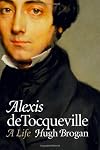
Hugh Brogan's masterful new biography Alexis de Tocqueville: A Life (Yale University Press, 2007) earned many plaudits across the Pond last year, and after completing my read of it I can only conclude that they were justified indeed. Brogan's research was exhaustive, and his richly detailed account of Tocqueville's life, works and thoughts proves it.
Many of us in America know Tocqueville - if at all - as the chronicler of 'our' culture in Democracy in America. But that book, researched when show more the author was just 26 and written just a few years thereafter, formed only a small portion of Tocqueville's intellectual life (though I suspect the observations he made in America stuck with him for the duration). Tocqueville's life in France, during one of the most turbulent and unsettled periods in that nation's long history, must of necessity claim pride of place in any complete biography (of course whole books have been written just about Tocqueville's trip to America).
I learned much from Brogan about AT's role in the various French governments up to the establishment of the Second Empire, and even more about the troubled family dynamics and near-constant health problems which clearly had a tremendous impact on the man's works throughout his career (the ultimate chapters covering his final illness and death, it must be said, are grippingly vivid). Here was a man who truly didn't know what place he was to hold in a society which seemed to be changing around him with shocking frequency - it's a great wonder that he ever got any work done at all.
Brogan's book is a hefty volume, and its 644 pages of narrative are densely packed (the notes are excellent too, but then I'm a sucker for those). This is not a book to read over a weekend (even a long weekend), but one which I enjoyed in short bursts of about one chapter at a time. If you read it, take your time with it as well; like Tocqueville's own writings, I think this book rewards the careful reader. It's no breezy biography - it's more, and it's better for being so.
http://philobiblos.blogspot.com/2007/05/book-review-alexis-de-tocqueville.html show less
Many of us in America know Tocqueville - if at all - as the chronicler of 'our' culture in Democracy in America. But that book, researched when show more the author was just 26 and written just a few years thereafter, formed only a small portion of Tocqueville's intellectual life (though I suspect the observations he made in America stuck with him for the duration). Tocqueville's life in France, during one of the most turbulent and unsettled periods in that nation's long history, must of necessity claim pride of place in any complete biography (of course whole books have been written just about Tocqueville's trip to America).
I learned much from Brogan about AT's role in the various French governments up to the establishment of the Second Empire, and even more about the troubled family dynamics and near-constant health problems which clearly had a tremendous impact on the man's works throughout his career (the ultimate chapters covering his final illness and death, it must be said, are grippingly vivid). Here was a man who truly didn't know what place he was to hold in a society which seemed to be changing around him with shocking frequency - it's a great wonder that he ever got any work done at all.
Brogan's book is a hefty volume, and its 644 pages of narrative are densely packed (the notes are excellent too, but then I'm a sucker for those). This is not a book to read over a weekend (even a long weekend), but one which I enjoyed in short bursts of about one chapter at a time. If you read it, take your time with it as well; like Tocqueville's own writings, I think this book rewards the careful reader. It's no breezy biography - it's more, and it's better for being so.
http://philobiblos.blogspot.com/2007/05/book-review-alexis-de-tocqueville.html show less
A great biography of the famed French author and politician, renowned for his observations of America and his native France. Brogan writes in a lively fashion, with plenty of great quotes and witty asides, many applicable two centuries later. Since Brogan's writing about a famous author, significant portions of this book are devoted to analyzing Tocqueville's writings, so readers who are familiar with Democracy In America or L'Ancien Régime will perhaps get more out of this, but even those show more who aren't but have an interest in this period of history will enjoy this. show less
I knew Alexis de Tocqueville had written Democracy in America, but little else about him. This extensively researched book by Hugh Brogan examines his subject's personal life, public life, and his political philosophy. It seems that, in his public life, de Tocqueville was always slightly out of step. He believed in the equalization of status based on hard work and effort, yet was an aristocrat. He believed that the culture of a people was more important than the specific institutions they show more built to govern themselves yet was part of many of those institutions. He was at his best when he traveled, speaking to people, learning about their culture and ways of governance.
The book was, at times, hard to follow...it was hard to keep track of who was who. Often, the book read more like a history and M. de Tocqueville wasn't a robust enough frame on which to hang a history of France. At other times, it read like a biography, but the author then introduced names and events assumed to be known to the reader, which wasn't necessarily the case.
And it ended with references to a Moliere play I've never read (I've read others). What a disappointment after 644 pages! It would have been better to end with some analysis of why M. de Tocqueville and his writing remain important today. There's a reason why I studied his writing in 1982 at university on the Canadian Prairies. That kind of conclusion would have been much more satisfying.
So, a mixed bag for me. Best to know some French history before reading this one. show less
The book was, at times, hard to follow...it was hard to keep track of who was who. Often, the book read more like a history and M. de Tocqueville wasn't a robust enough frame on which to hang a history of France. At other times, it read like a biography, but the author then introduced names and events assumed to be known to the reader, which wasn't necessarily the case.
And it ended with references to a Moliere play I've never read (I've read others). What a disappointment after 644 pages! It would have been better to end with some analysis of why M. de Tocqueville and his writing remain important today. There's a reason why I studied his writing in 1982 at university on the Canadian Prairies. That kind of conclusion would have been much more satisfying.
So, a mixed bag for me. Best to know some French history before reading this one. show less
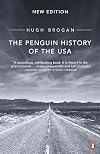
You would think an overview of US history would either be boring or slanted in some dubious way, but this one isn't. If you've been educated in the United States, the author, who appears to be British, offers you a slightly new perspective from what you may have received in school. He is clearly pro-American without feeling he has to lay on any of the patriotic gilt (or dour pc agenda) on display in most other overview U.S. histories. There are some gaps I've noticed, like pieces of the show more history of Texas and Mexico. But Brogan's storytelling talent is prodigious and the book is a gripping read, particularly the chapters on slavery and the approach to the Civil War. Throw away your high school textbook and buy this small paperback, for entertainment and for reference, instead. show less
Lists
Awards


You May Also Like


Associated Authors
Statistics
- Works
- 16
- Also by
- 2
- Members
- 1,429
- Popularity
- #18,005
- Rating
- 3.9
- Reviews
- 10
- ISBNs
- 44
- Languages
- 4