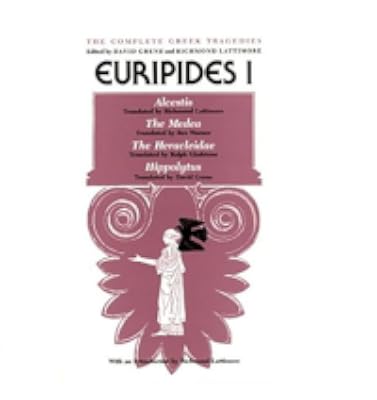
4 Plays: Alcestis / Children of Heracles / Hippolytus / Medea
by Euripides
On This Page
Description
In nine paperback volumes, the Grene and Lattimore editions offer the most comprehensive selection of the Greek tragedies available in English. Over the years these authoritative, critically acclaimed editions have been the preferred choice of over three million readers for personal libraries and individual study as well as for classroom use.Tags
Recommendations
















Member Reviews
This is great drama with passion, gods, plot complications, and difficult family relationships. But what else would you expect from Euripides, whose dramas have lasted for thousands of years and have inspired great dramatists well into our current times.
This classic volume of four plays, edited by David Grene and Richmond Lattimore, includes Medea, Hippolytus, Alcestis, and The Children of Heracles. There are few dramas that demonstrate passion in the way that Medea does. When her husband Jason leaves her for adventure and other women Medea plots to exact a revenge that raises the question whether she is exacting justice or merely mad.
In Hippolytus it is the relationships among the characters that stood out for me amidst a complicated show more plot influenced by rivalry among the gods (Aphrodite and Artemis). The drama highlights the relationship between Hippolytus and his father Theseus, but also brings in to play the importance of the Nurse and her relationship with Phaedra. This is notable because Euripides, unlike his predecessor Aeschylus, included characters that were lower-class working people.
Throughout these plays the influence of the gods is important in determining the fate of the characters leading to questions about the nature of fate and destiny. Just as important are large questions about justice and honor as when Athens protects the children of Heracles when they seek asylum. This example also demonstrates how relevant these plays are to our life today and explains, in part, why they have been so influential over the centuries. We are indebted to Euripides for his examination of the nature of humanity with both its flaws and greatness. I would recommend these plays to all who want to understand what it means to be human. show less
This classic volume of four plays, edited by David Grene and Richmond Lattimore, includes Medea, Hippolytus, Alcestis, and The Children of Heracles. There are few dramas that demonstrate passion in the way that Medea does. When her husband Jason leaves her for adventure and other women Medea plots to exact a revenge that raises the question whether she is exacting justice or merely mad.
In Hippolytus it is the relationships among the characters that stood out for me amidst a complicated show more plot influenced by rivalry among the gods (Aphrodite and Artemis). The drama highlights the relationship between Hippolytus and his father Theseus, but also brings in to play the importance of the Nurse and her relationship with Phaedra. This is notable because Euripides, unlike his predecessor Aeschylus, included characters that were lower-class working people.
Throughout these plays the influence of the gods is important in determining the fate of the characters leading to questions about the nature of fate and destiny. Just as important are large questions about justice and honor as when Athens protects the children of Heracles when they seek asylum. This example also demonstrates how relevant these plays are to our life today and explains, in part, why they have been so influential over the centuries. We are indebted to Euripides for his examination of the nature of humanity with both its flaws and greatness. I would recommend these plays to all who want to understand what it means to be human. show less
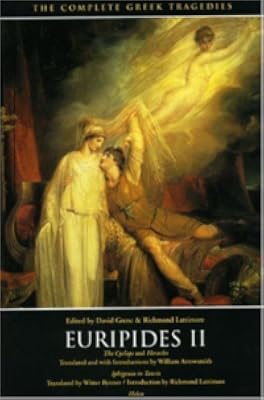
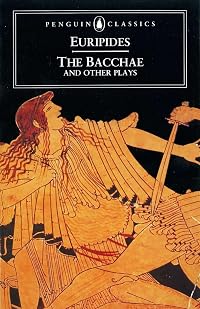
Wow Medea is a fascinating character. While she does kill her own children, (spoiler alert I guess... Is it a spoiler if the cover shows it happening and its 2000 years old?) which is something that his hard to sympathize with, Euripides somehow still made like and empathize with her. She really had given up everything to be with him and yet he almost casually just throws her out with no support.
Jason on the other hand I couldn't stand, especially with his "well actually, me throwing you and my sons out for my new lover is good for you" logic that Medea rightfully gets angry about. I think she was right to refuse him access to his sons' bodies since he only seemed to care about them after their deaths.
One thing I found interesting show more about the play was that Medea does not accept any responsibility or blame for killing her children. She claims that it all rests on Jason and his actions. I might not personally agree with this assessment, but found it an interesting decision by Euripiedes to have her make that argument.
Anyways, I'm glad I read the play (thanks to the great podcast https://literatureandhistory.com/ for covering it and making me aware of it), and I'm looking forward to seeing the couple again when I get to reading Jason and the Argonauts.
Brief thoughts on the other plays in this edition:
Hecabe: More child killing for revenge. Definitely interesting with the Trojan war setting. I like how the play (and this may be due to a modern eye, I'm not sure) compares the death and revenge of the two killed children of Hecabe (one was a "noble" death/sacrifice, the other was a murder for money), especially since the one revenged against was a male heir and not the former, which was a woman. Overall, I enjoyed it, but not as much as Medea
Electra: Mixing it up with children revenge killing their parents. I also enjoyed this one, but it mostly just makes me want to read the Orestes trilogy (I did enjoy the fact/realization that ancient playwrights made fun of each other in their plays. I guess we've been finding "plot holes" in stories for millennia)
Heracles: Lots of child killing but this time no revenge! I didn't enjoy this one much. It may be that I'm just not as interested in Herecles as a character, unlike the other plays in this edition.
Edition review: No qualms about the translation (Vellacott). I found it fairly easy to read and the notes were useful. The only issue I had was I wish that they had a mark on the line where there were footnotes show less
Jason on the other hand I couldn't stand, especially with his "well actually, me throwing you and my sons out for my new lover is good for you" logic that Medea rightfully gets angry about. I think she was right to refuse him access to his sons' bodies since he only seemed to care about them after their deaths.
One thing I found interesting show more about the play was that Medea does not accept any responsibility or blame for killing her children. She claims that it all rests on Jason and his actions. I might not personally agree with this assessment, but found it an interesting decision by Euripiedes to have her make that argument.
Anyways, I'm glad I read the play (thanks to the great podcast https://literatureandhistory.com/ for covering it and making me aware of it), and I'm looking forward to seeing the couple again when I get to reading Jason and the Argonauts.
Brief thoughts on the other plays in this edition:
Hecabe: More child killing for revenge. Definitely interesting with the Trojan war setting. I like how the play (and this may be due to a modern eye, I'm not sure) compares the death and revenge of the two killed children of Hecabe (one was a "noble" death/sacrifice, the other was a murder for money), especially since the one revenged against was a male heir and not the former, which was a woman. Overall, I enjoyed it, but not as much as Medea
Electra: Mixing it up with children revenge killing their parents. I also enjoyed this one, but it mostly just makes me want to read the Orestes trilogy (I did enjoy the fact/realization that ancient playwrights made fun of each other in their plays. I guess we've been finding "plot holes" in stories for millennia)
Heracles: Lots of child killing but this time no revenge! I didn't enjoy this one much. It may be that I'm just not as interested in Herecles as a character, unlike the other plays in this edition.
Edition review: No qualms about the translation (Vellacott). I found it fairly easy to read and the notes were useful. The only issue I had was I wish that they had a mark on the line where there were footnotes show less
This is a random book in my library - I probably picked it up in a library book sale - at the end when the books are given away. I think I had grand aspirations to read it, but didn't actually think I would. So, when I needed a new difficult to read book at night (it puts me to sleep while learning something), I choose this one. And I am glad that I did.
The book was very accessible. The translations from old Greek to common English, without all the flowery language - made it a very easy to read. The only thing you need to remember is that these stories are part of a larger saga - the audience will know the story, and what came before and after. So, the stories just start - without any explanations or introductions. Luckily, there are show more modern day introductions to each play.
And, lastly, a few of these stories feel very modern - especially "The Medea". I can't recommend reading these stories enough. show less
The book was very accessible. The translations from old Greek to common English, without all the flowery language - made it a very easy to read. The only thing you need to remember is that these stories are part of a larger saga - the audience will know the story, and what came before and after. So, the stories just start - without any explanations or introductions. Luckily, there are show more modern day introductions to each play.
And, lastly, a few of these stories feel very modern - especially "The Medea". I can't recommend reading these stories enough. show less
Most of this collection made sense to me. "The Medea" is the best known of the four plays in this collection, and while I clearly knew what was going on in that play--As well as in "Hippolytus" and for the most part in "Alcestis"--"The Heracleidae" was so confusing, long-winded and ultimately baffling that I actually put this collection aside for a few weeks before I could resume it. In spite of that--Overall I continue to be impressed with the modernity of Euripides' writing ("..... Euripides marks the beginning of modern psychological tragedy"--David Greene (on page 160 of this text). It's amazing that 2,400 years after these plays were written--The very human issues brought to the fore by the playwright still resonate. Still--As an show more autodidactic academic--I'm not an expert in this genre. So after completing this book, I re-read the general introduction to this compilation by Richmond Lattimore (who translated "Alcestis"), as well the respective introductions by the three other translators--Rex Warner, Ralph Gladstone and David Greene. I was also inspired to read the Wikipedia Synopsis / Motivations of "Alcestis", as well as Wikipedia background information on "The Heracleidae", to help me to better understand those plays--If only superficially. In closing--I also recommend the film "Phaedra" that I saw a couple of years ago (starring Melina Mercouri and Anthony Perkins)--That picture being an excellent adaptation of "Hippolytus". show less
I don't even remember which edition I read. One of the best things to come out of my experiences as an erstwhile Classical Studies minor is being introduced to the philosophies and tragedies that shaped Western Civ. as I know it now. Euripedes: you're a genius, is all I'm saying. The depth of a mother's love and the passion of a betrayed woman... Woosh!
Nothing terribly special going on with this one. I think people generally know what to expect from Greek mythology.
Powerful women, powerful drama.
Members
- Recently Added By
Lists

Books to Read in 2015
13 works; 1 member

Kilobook
19 works; 1 member

sotiris' favourites circa january 2023
43 works; 2 members

Abridged Western Canon
14 works; 1 member
Author Information

1,345+ Works 34,147 Members
Euripides was born in Attica, Greece probably in 480 B.C. He was the youngest of the three principal fifth-century tragic poets. In his youth he cultivated gymnastic pursuits and studied philosophy and rhetoric. Soon after he received recognition for a play that he had written, Euripides left Athens for the court of Archelaus, king of Macedonia. show more Fragments of about fifty-five plays survive. Among his best-known plays are Alcestis, Medea and Philoctetes, Electra, Iphigenia in Tauris, The Trojan Women, and Iphigenia in Aulis Iphigenia. He died in Athens in 406 B.C. (Bowker Author Biography) show less
All Editions
Some Editions
Series
Belongs to Publisher Series
The Complete Greek Tragedies-Chicago 1960 (set v. 3, Euripides v. 1)
Work Relationships
Common Knowledge
- Canonical title
- 4 Plays: Alcestis / Children of Heracles / Hippolytus / Medea
- Original publication date
- 1955
- People/Characters
- David Green, Editor; Richmond Lattimore, Editor
- Important places
- Argos, Greece
- Original language
- Greek (Ancient) (Ancient)
- Disambiguation notice
- This work includes all editions containing these four plays.
Classifications
Statistics
- Members
- 2,670
- Popularity
- 6,958
- Reviews
- 10
- Rating
- (3.90)
- Languages
- English
- Media
- Paper, Ebook
- ISBNs
- 10
- UPCs
- 1
- ASINs
- 28