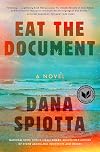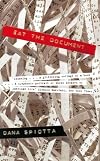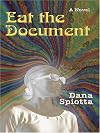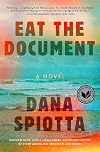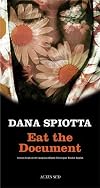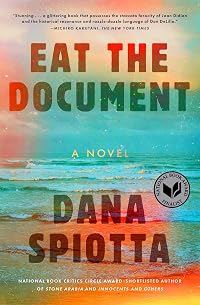
Eat the Document
by Dana Spiotta
On This Page
Description
In the heyday of the 1970s underground, Bobby DeSoto and Mary Whittaker-passionate, idealistic, and in love-design a series of radical protests against the Vietnam War. When one action goes wrong, the course of their lives is forever changed. The two must erase their past, forge new identities, and never see each other again. Now it is the 1990s. Mary lives in the suburbs with her fifteen-year-old son, who spends hours immersed in the music of his mother's generation. She has no idea where show more Bobby is, whether he is alive or dead. Shifting between the protests in the 1970s and the consequences of those choices in the 1990s, Dana Spiotta deftly explores the connection between the two eras-their language, technology, music, and activism. Character-driven and brilliant, this is an important and revelatory novel about the culture of rebellion, with particular resonance now. show lessTags
Recommendations
Member Recommendations
Member Reviews
This National Book Award finalist from 2006 largely lives up to its praise. Every paragraph is a small wonder of astute observation expressed in seemingly effortless perfect prose, and the characters are fascinating and well drawn. Much of it is set in Seattle in the late 1990s, and as a resident of Seattle at that time, I can attest that it’s spot on, and it wasn’t hard to identify the named and unnamed Capital Hill landmarks, some of whose names were changed in amusing ways. (The book’s “Shrink Wrap” music store is obviously Cellophane Square, while the 15th Avenue Mall’s Urban Outfitters store becomes “Suburban Guerilla.”) As I read on, though, the book’s underlying tone of sadness became stronger and stronger, and show more I’m sorry to say it never abated. If you’re made of strong stuff, this uncompromising quality may strike you as the only honest way of developing the book’s plot and themes, and I’ll admit that my wish for a happier resolution is decidedly naïve and uncool. Still, I can’t help feeling that at the end, the book’s incredible character-building--the quality that was its greatest strength in the early chapters--took a back seat to its message about what’s happened to society in general. And at this point, in 2022, I think we’ve all seen enough to have absorbed that message.
Speaking of the SF writer Robert Heinlein’s penchant for upfront preachiness in his later works, Heinlein’s contemporary Theodore Sturgeon accused him of having “sold his birthright for a pot of message.” (See note.) Maybe it’s never a good thing when a book shunts its characters aside to make a Statement. And while here it’s done both subtilely and, I think, accurately, I was left with the feeling that I had been duped into thinking that the book was going to be about what happened to the sad, damaged characters I had grown to care about so much. Instead, their story fizzled, and the book ends not with a bang, but with a whimper, taking the same path, as the writer may be trying to say, as did the promise of the idealistic 1960s.
(Note) The wordplay is on the story of Jacob and Esau in the King James Bible; it’s a long story, but the KJB tells us that Esau “sold his birthright for a mess of pottage.” show less
Speaking of the SF writer Robert Heinlein’s penchant for upfront preachiness in his later works, Heinlein’s contemporary Theodore Sturgeon accused him of having “sold his birthright for a pot of message.” (See note.) Maybe it’s never a good thing when a book shunts its characters aside to make a Statement. And while here it’s done both subtilely and, I think, accurately, I was left with the feeling that I had been duped into thinking that the book was going to be about what happened to the sad, damaged characters I had grown to care about so much. Instead, their story fizzled, and the book ends not with a bang, but with a whimper, taking the same path, as the writer may be trying to say, as did the promise of the idealistic 1960s.
(Note) The wordplay is on the story of Jacob and Esau in the King James Bible; it’s a long story, but the KJB tells us that Esau “sold his birthright for a mess of pottage.” show less
This is a perfectly mediocre book, reasonably entertaining, but absolutely wonderful for understanding today's literature. Its successes and its flaws are all so widespread, it's as if I'd found the Platonic form of the Contemporary Novel. Which means this review got a little out of hand.
**
I periodically fall victim to an odd complex of ideas when choosing a book to read:
* that because a novel is supposed to be about important themes, it will treat them as if they were important.
* that a novel ostensibly about history will be about history.
* that a novel about radicalism will take some risks.
* that a novel ostensibly about ideas will be more intelligent than the average novel.
EtheD seems to be well loved, but I can't at all work show more out why.* Like Jennifer Egan's 'Look at Me,' it's a philosophical novel with all the philosophy taken out; it raises very important questions (here: the history/decline of political radicalism on the one hand, and the morality of revolution on the other), but can't stay in one place for long enough to tease out that idea in any interesting way.
The book's structure makes real thought impossible: the main reveal (there are others) is just what our main characters did back in the 70s. They blew up a house with a housemaid in it. Was it worth doing? Since we don't know what they did until the last twenty pages, there's not much time to think about it. I suspect we're meant to be instinctively disgusted by this act. The characters keep insisting that "intentions matter", but ultimately they accept their guilt and go to prison. Meanwhile, we're told that we have to see the complexities of the owners of the homes they blew up, i.e., sometimes you just have to make chemicals that cause cancer and sell them to people. Sometimes you just have to make weapons and sell them and it's not up to you if others use them. They're just so complex!
"That's the truth. I showed the truth. The truth is complicated. More complicated than we would like," Bobby said.
The novel's form also makes it hard to really think with. As with *so many* contemporary books, we have a rotating point of view, one character per chapter, with only very, very occasional dips into a more distant third person perspective. In other words, the narrator does all s/he can to efface itself. The only perspectives we get are the characters'.
But at heart the book doesn't want us to think about the morality of radicalism, because that question has already been answered. Instead it wants us to think about the changes between the sixties and seventies and the 2000s. Then, we had radicals who would fight for a cause and set out on their own adventures and try to live free. Now, we have cynics who'll sell out as soon as is humanly possible. Then, we had the Beach Boys. Now, we fetishize the Beach Boys (and the rest of 60s and 70s pop music), because instead of being good consumers, we're really bad consumers (???)
There is a lot to like about the book, too. The sheer breadth of the themes destroy the limits of contemporary literature; you just can't write a book about this stuff that is also just a love story--so the love story is overwhelmed by the story about a chemical company and an adbuster. There is a good depiction of the slide from Flower Power Hope and Smiling to internet cynicism and merely symbolic protest of the "being sad is subversive" or "free yourself from your mind-chains" type. There's good stuff about how nostalgia is merely personal, never political. There's a hint that the main characters' real crime wasn't accidentally killing a woman so much as it was giving birth to the idiocies of the late twentieth century.
But really all of this is overwhelmed by the love story. EtheD is somehow sprawling (so many strands! so much jumping around in time!) and obsessively limited (it's really about true love). It's both perfectly historical (seventies communes! noughties vinyl collectors!) and entirely unrealistic. It's perfectly formed (the characters all have their own convincing PoV; the reveals are spaced out) and a complete mess (the multiple reveals have nothing to do with each other). It tries to write about group dynamics and historical change by focusing on individual identities and family relationships.
Spiotta tried to do the impossible here: write a novel in a contemporary form that didn't stick to domestic/romantic/existential maunderings. Since Stone Arabia is about rock music and siblings, I suspect she tried to do the same thing there. Perhaps she pulled it off? I'll give it a try.
* That's not true, I know exactly why: it's a perfectly generic novel about something cool and interesting. There's a place for that. More often than I will admit, I love novels that are about something in which I'm interested, even if they're really mediocre in every other way. show less
**
I periodically fall victim to an odd complex of ideas when choosing a book to read:
* that because a novel is supposed to be about important themes, it will treat them as if they were important.
* that a novel ostensibly about history will be about history.
* that a novel about radicalism will take some risks.
* that a novel ostensibly about ideas will be more intelligent than the average novel.
EtheD seems to be well loved, but I can't at all work show more out why.* Like Jennifer Egan's 'Look at Me,' it's a philosophical novel with all the philosophy taken out; it raises very important questions (here: the history/decline of political radicalism on the one hand, and the morality of revolution on the other), but can't stay in one place for long enough to tease out that idea in any interesting way.
The book's structure makes real thought impossible: the main reveal (there are others) is just what our main characters did back in the 70s. They blew up a house with a housemaid in it. Was it worth doing? Since we don't know what they did until the last twenty pages, there's not much time to think about it. I suspect we're meant to be instinctively disgusted by this act. The characters keep insisting that "intentions matter", but ultimately they accept their guilt and go to prison. Meanwhile, we're told that we have to see the complexities of the owners of the homes they blew up, i.e., sometimes you just have to make chemicals that cause cancer and sell them to people. Sometimes you just have to make weapons and sell them and it's not up to you if others use them. They're just so complex!
"That's the truth. I showed the truth. The truth is complicated. More complicated than we would like," Bobby said.
The novel's form also makes it hard to really think with. As with *so many* contemporary books, we have a rotating point of view, one character per chapter, with only very, very occasional dips into a more distant third person perspective. In other words, the narrator does all s/he can to efface itself. The only perspectives we get are the characters'.
But at heart the book doesn't want us to think about the morality of radicalism, because that question has already been answered. Instead it wants us to think about the changes between the sixties and seventies and the 2000s. Then, we had radicals who would fight for a cause and set out on their own adventures and try to live free. Now, we have cynics who'll sell out as soon as is humanly possible. Then, we had the Beach Boys. Now, we fetishize the Beach Boys (and the rest of 60s and 70s pop music), because instead of being good consumers, we're really bad consumers (???)
There is a lot to like about the book, too. The sheer breadth of the themes destroy the limits of contemporary literature; you just can't write a book about this stuff that is also just a love story--so the love story is overwhelmed by the story about a chemical company and an adbuster. There is a good depiction of the slide from Flower Power Hope and Smiling to internet cynicism and merely symbolic protest of the "being sad is subversive" or "free yourself from your mind-chains" type. There's good stuff about how nostalgia is merely personal, never political. There's a hint that the main characters' real crime wasn't accidentally killing a woman so much as it was giving birth to the idiocies of the late twentieth century.
But really all of this is overwhelmed by the love story. EtheD is somehow sprawling (so many strands! so much jumping around in time!) and obsessively limited (it's really about true love). It's both perfectly historical (seventies communes! noughties vinyl collectors!) and entirely unrealistic. It's perfectly formed (the characters all have their own convincing PoV; the reveals are spaced out) and a complete mess (the multiple reveals have nothing to do with each other). It tries to write about group dynamics and historical change by focusing on individual identities and family relationships.
Spiotta tried to do the impossible here: write a novel in a contemporary form that didn't stick to domestic/romantic/existential maunderings. Since Stone Arabia is about rock music and siblings, I suspect she tried to do the same thing there. Perhaps she pulled it off? I'll give it a try.
* That's not true, I know exactly why: it's a perfectly generic novel about something cool and interesting. There's a place for that. More often than I will admit, I love novels that are about something in which I'm interested, even if they're really mediocre in every other way. show less
Eat the Document would have had me sold just on the basis of Mary's teenage son's awe-struck descriptions of the Beach Boys' music. Luckily that's paired with some of the most knowing commentary on the end of a generation I've yet read, and some of the more believable characters in modern fiction.
I picked up this book after reading Hari Kunzru’s My Revolutions. Here, Spiotta tells the story of life underground, rather than focusing on the politics and day to day activities of a Revolutionary cell. And it is more interesting and somehow more relevant. Mary Whittaker is involved in a bombing that has unintended consequences - not the least of which is a life forgone and lived on the run. We follow Mary as she moves from place to place over the years, changing her appearance and name until finally ending up in the Pacific Northwest.
Her partner and lover (Bobby Desoto) who we also meet (but only in the present day as Nash Davis) runs a little alternative bookshop in the same area as it turns out (unbeknownst to Mary). Mary has had show more a son, Jason, who becomes interested in discovering who his mother really is. Many fascinating characters along the way, as well. Only one didn’t work for me - Nash’s benefactor Henry.
Spiotta has wonderful insights into her character Mary, especially as related to the life of living a constant lie. Mary re-invents herself a number of times through the years, and it’s here where Spiotta really excels.
Her underground status had convoluted all context - the fact that she could change her identity so completely changed the very possibility of engagement, or precluded the possibility of real engagement. She regarded everything and everyone from a distance, both ephemeral and abstract.
Much is made in our culture of the ability to start with nothing and become a success - to start a whole new life. To re-invent, the religion of makeover. The ease with which this is possible has a dark underside, which Spiotta muses over
Anyone can start a new life, even in a small town. Everyone moves so much these days. You get a divorce, you move and start over. Try it. See how little people ask about you. See how little people listen. Or, more precisely, think about how little you really know about the people you know. Where they were born, for instance. Have you met their parents? Or siblings? There was a time, maybe, when just being new in a town made you seem suspect. Because you were suspect - people didn’t have any way to verify you were who you said you were. And why did you have to leave where you came from? But there is a long history (seldom spoken of in the gloriously amnesiac everyday) in America, and in a democracy, of starting over. It was almost an imperative, wasn’t it? America was founded, of course, by people who invented new lives, who wanted nothing more than to jettison the weight of all that history, all that burden and all that memory of Europe. That was one form of freedom. Freedom from memory and history and accounting. moves so much these days.
She also does some good writing regarding Josh’s fascination with his parents’ generation music and culture. All the while subtly skewering what it all has wrought. A sly book, an accomplished book. An ultimately satisfying book. show less
Her partner and lover (Bobby Desoto) who we also meet (but only in the present day as Nash Davis) runs a little alternative bookshop in the same area as it turns out (unbeknownst to Mary). Mary has had show more a son, Jason, who becomes interested in discovering who his mother really is. Many fascinating characters along the way, as well. Only one didn’t work for me - Nash’s benefactor Henry.
Spiotta has wonderful insights into her character Mary, especially as related to the life of living a constant lie. Mary re-invents herself a number of times through the years, and it’s here where Spiotta really excels.
Her underground status had convoluted all context - the fact that she could change her identity so completely changed the very possibility of engagement, or precluded the possibility of real engagement. She regarded everything and everyone from a distance, both ephemeral and abstract.
Much is made in our culture of the ability to start with nothing and become a success - to start a whole new life. To re-invent, the religion of makeover. The ease with which this is possible has a dark underside, which Spiotta muses over
Anyone can start a new life, even in a small town. Everyone moves so much these days. You get a divorce, you move and start over. Try it. See how little people ask about you. See how little people listen. Or, more precisely, think about how little you really know about the people you know. Where they were born, for instance. Have you met their parents? Or siblings? There was a time, maybe, when just being new in a town made you seem suspect. Because you were suspect - people didn’t have any way to verify you were who you said you were. And why did you have to leave where you came from? But there is a long history (seldom spoken of in the gloriously amnesiac everyday) in America, and in a democracy, of starting over. It was almost an imperative, wasn’t it? America was founded, of course, by people who invented new lives, who wanted nothing more than to jettison the weight of all that history, all that burden and all that memory of Europe. That was one form of freedom. Freedom from memory and history and accounting. moves so much these days.
She also does some good writing regarding Josh’s fascination with his parents’ generation music and culture. All the while subtly skewering what it all has wrought. A sly book, an accomplished book. An ultimately satisfying book. show less
In 1972, a young woman called Mary (then Freya, then Caroline) goes on the run after involvement in bombing the houses of executives of companies involved in producing munitions for the Vietnam War. The novel alternates between her story and that of a group of people in the 1990s - three in their forties and the rest young people with varying degrees of alienation.
So, is this a book about the decline in activism since the 1970s? I can't make my mind up. On the surface, yes - there is some pretty heavy-handed satire on disaffected 1990s youth. But at the same time, the 1970s narrative effectively shows the wide range of approaches to the counter-culture, from the deeply committed and active to the people who were attracted for the show more lazing around and smoking drugs.
In fact, the 1970s storyline is much more interesting - both the way that Mary is affected by having to go on the run (having to discard her identity, and never sure that she has any future) and in the spectrum of how the counter-culture affected different groups of people. The 1990s story, as I said, is mostly heavy parody, but reading parody of something I know almost nothing about feels quite exclusionary!
There were a couple of interesting ideas - I liked a thread of conversation about why people choose to dress a certain way: "to remind you of who you want to be", because "you get treated in a certain way and it helps you become what you want to be", or so that "you control what people believe about you". But overall it didn't hang together.
Recommended for: someone who believes that kids today just appropriate radical imagery with no understanding of what it really means! show less
So, is this a book about the decline in activism since the 1970s? I can't make my mind up. On the surface, yes - there is some pretty heavy-handed satire on disaffected 1990s youth. But at the same time, the 1970s narrative effectively shows the wide range of approaches to the counter-culture, from the deeply committed and active to the people who were attracted for the show more lazing around and smoking drugs.
In fact, the 1970s storyline is much more interesting - both the way that Mary is affected by having to go on the run (having to discard her identity, and never sure that she has any future) and in the spectrum of how the counter-culture affected different groups of people. The 1990s story, as I said, is mostly heavy parody, but reading parody of something I know almost nothing about feels quite exclusionary!
There were a couple of interesting ideas - I liked a thread of conversation about why people choose to dress a certain way: "to remind you of who you want to be", because "you get treated in a certain way and it helps you become what you want to be", or so that "you control what people believe about you". But overall it didn't hang together.
Recommended for: someone who believes that kids today just appropriate radical imagery with no understanding of what it really means! show less
It's been a long time since a book really touched me. I want to make a pun about bombing my heart, but Eat the Document is way too subtle for that. I am so glad I read Stone Arabia before this because Stone Arabia book feels like a little offshoot of this one. Eat the Document has much more scope and accomplishes so much more. It does kind of feel like Spiotta is purging herself of all her thoughts about the American left. But at its bombed out heart Eat the Document is a love story between Mary and Bobby. Where to go from here? Please take your time Dana and write something better than Dissident Gardens.
I listened to the audio and the big reveal would have been wonderful if I didn't already know the plot. Rachael Warren does a great show more job shifting between decades and voices--not an easy job for a reader.
And there is a bunch of music snob fandom BS thrown in too and I love that. show less
I listened to the audio and the big reveal would have been wonderful if I didn't already know the plot. Rachael Warren does a great show more job shifting between decades and voices--not an easy job for a reader.
And there is a bunch of music snob fandom BS thrown in too and I love that. show less
Parallel stories of 2 60s radicals (of the good-intentioned politically naive genre) forced underground by a political action gone awry. Too many stock characters. She tries to contrast with youth of the 90's but presents a limited view of the political outlooks/actions of that group. I didn't feel the author understood the characters well enough.
Members
- Recently Added By
Lists

Vulture's 100 Best Books of the 21st Century (So Far)
98 works; 9 members

National Book Award Finalists - Fiction
377 works; 12 members
Author Information

6+ Works 1,724 Members
Awards and Honors
Distinctions
Notable Lists
Common Knowledge
- Canonical title
- Eat the Document
- Original publication date
- 2006
- Important places
- Pacific Northwest, USA
- Blurbers
- Ellis, Bret Easton
Classifications
Statistics
- Members
- 590
- Popularity
- 49,925
- Reviews
- 20
- Rating
- (3.57)
- Languages
- English, French, German, Portuguese
- Media
- Paper, Audiobook, Ebook
- ISBNs
- 13
- UPCs
- 1
- ASINs
- 6