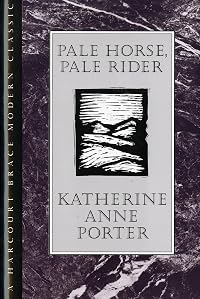
Pale Horse, Pale Rider: Three Short Novels
by Katherine Anne Porter
On This Page
Description
The classic 1939 collection of 3 novellas by the Pulitzer Prize and National Book Award winning author and journalist, including the famous title story set during the influenza epidemic of 1918In Noon Wine? a family struggling to live on a farm in Texas is saved by the unexpected arrival of a mysterious stranger—only to have their world upended again by the arrival, nine years later, of a second stranger. The three parts of Old Mortality introduce the teenager Miranda and chronicle her show more journey of self-discovery, as she gradually realizes her family’s romantic nostalgia for her absent uncle and late aunt bears little resemblance to the truth.
Miranda returns in the title story, Pale Horse, Pale Rider. She is now working as a drama critic for a newspaper in Denver, where she falls in love with a soldier, Adam, during the influenza epidemic of 1918. When Miranda falls ill, Adam cares for her until she is moved to a hospital. Throughout her ordeal, on everyone’s mind is “the war, the war, the WAR to end WAR, war for Democracy, for humanity, a safe world forever and ever.”
Available in this exclusive Library of America e-book edition. show less
Tags
Recommendations








Member Reviews
“Blue was never my color.” She sighed with a humorous bitterness. The humor seemed momentary, but the bitterness was a constant state of mind.
William Gass's Fifty Literary Pillars, which is a list of the 50 books that influenced him most, contains this book: one of only 4 by female authors (the others were Virginia Woolf, Colette, and Gertrude Stein), so I thought I had to check this out.
It's a book of 3 novellas (or long short stories). Immediately I was gripped by the voice in 'Old Mortality': smart and observant with a subtle humor. It reminded me of Elizabeth Bishop's poetry at times. The story itself wasn't that special, but sweet Lord, the telling of it was! You’re led to see the characters one way and then slowly more show more layers get revealed. The story doesn’t progress chronologically (although it does do that on the surface) but the real story (of the family) progresses along the z axis, deeper and richer, with counter stories laid upon them so that there are multiple versions you can see through. The characters are funny, but dark, and believable. Not much else to say, other than perfect. 5/5
On the positive side, all the stories in this collection are completely different, so she's not like one of those writers who writes the same story over and over again. On the downside, I really loved the first story, so the rest of the collection seemed like a bit of a let-down. I especially missed the humor mixed with the bitterness. Like the quote above, the humor seemed to have left after the first story.
The second story 'Noon Wine' was more of a traditional story. I get the impression that the author had a dark view of knowledge, what can be gained from it and what will inevitably be lost. Or what will be gained against one’s will. Insanity infects Mr. Thompson as if the mere suggestion was all it took. Then, he couldn’t get the facts straight in his head, and the lack of knowledge drives him insaner. 3.5/5
'Pale Horse, Pale Rider' was also really good, with descriptive lines like this:
His eyes were pale tan with orange flecks in them, and his hair was the color of a haystack when you turn the weathered top back to the clear straw beneath.
The prose shines, and then takes a wild turn when she goes through the delirium of her illness, mirroring her sick state. A sad story that captures well what it would have been like to be alive and young during the end of the first world war, and when the flu epidemic was spreading. show less
William Gass's Fifty Literary Pillars, which is a list of the 50 books that influenced him most, contains this book: one of only 4 by female authors (the others were Virginia Woolf, Colette, and Gertrude Stein), so I thought I had to check this out.
It's a book of 3 novellas (or long short stories). Immediately I was gripped by the voice in 'Old Mortality': smart and observant with a subtle humor. It reminded me of Elizabeth Bishop's poetry at times. The story itself wasn't that special, but sweet Lord, the telling of it was! You’re led to see the characters one way and then slowly more show more layers get revealed. The story doesn’t progress chronologically (although it does do that on the surface) but the real story (of the family) progresses along the z axis, deeper and richer, with counter stories laid upon them so that there are multiple versions you can see through. The characters are funny, but dark, and believable. Not much else to say, other than perfect. 5/5
On the positive side, all the stories in this collection are completely different, so she's not like one of those writers who writes the same story over and over again. On the downside, I really loved the first story, so the rest of the collection seemed like a bit of a let-down. I especially missed the humor mixed with the bitterness. Like the quote above, the humor seemed to have left after the first story.
The second story 'Noon Wine' was more of a traditional story. I get the impression that the author had a dark view of knowledge, what can be gained from it and what will inevitably be lost. Or what will be gained against one’s will. Insanity infects Mr. Thompson as if the mere suggestion was all it took. Then, he couldn’t get the facts straight in his head, and the lack of knowledge drives him insaner. 3.5/5
'Pale Horse, Pale Rider' was also really good, with descriptive lines like this:
His eyes were pale tan with orange flecks in them, and his hair was the color of a haystack when you turn the weathered top back to the clear straw beneath.
The prose shines, and then takes a wild turn when she goes through the delirium of her illness, mirroring her sick state. A sad story that captures well what it would have been like to be alive and young during the end of the first world war, and when the flu epidemic was spreading. show less
I had read nothing by Katherine Anne Porter up until this year. I was missing out on a perceptive, powerful, profound author and now I'm just worried about reading through all her work too quickly. PH,PR was on my pandemic reading list and it was a wonderful (and dark) personal account, not only of someone who experienced the Spanish flu firsthand, suffering the illness and the loss of someone she loved, but someone experiencing the culture of the First World War from a critical, sometimes cynical, perspective. I began to highlight on every other page, gems like:
[T]he worst of war is the fear and suspicion and the awful expression in all the eyes you meet...as if they had pulled down the shutters over their minds and their hearts and show more were peering out at you, ready to leap if you make one gesture or say one word they do not understand instantly...It's what war does to the mind and heart...
And:
The body is a curious monster, no place to live in, how could anyone feel at home there? Is it possible I can ever accustom myself to this place? she asked herself.
I could go on. The way that she weaves dreams and fevered visions through her prose is masterful.
I could go on...but better you go pick up a copy and read it straight from Porter. show less
[T]he worst of war is the fear and suspicion and the awful expression in all the eyes you meet...as if they had pulled down the shutters over their minds and their hearts and show more were peering out at you, ready to leap if you make one gesture or say one word they do not understand instantly...It's what war does to the mind and heart...
And:
The body is a curious monster, no place to live in, how could anyone feel at home there? Is it possible I can ever accustom myself to this place? she asked herself.
I could go on. The way that she weaves dreams and fevered visions through her prose is masterful.
I could go on...but better you go pick up a copy and read it straight from Porter. show less
Consisting of three short novels, this collection is preoccupied with the role of Time: how the past shapes the present, how the past is shaped by the present, and how the future is just this state of limbo towards which we are all spiralling.
Old Mortality: my favourite story, it showcases the power of words and stories in our everyday lives, our compulsion to craft stories about ourselves, our lives, and those of the people around us, as a way in which we can better understand ourselves or each other. Here, Porter expertly explores this need to fictionalise and mythologise in the framework of family legends by constructing them from the viewpoints of children and subsequently deconstructing them as the children grow up.
Noon Wine: show more essentially a Willa Cather prairie story morphing into Crime and Punishment halfway through, each half separately was enjoyable in their own right even if they did not cohere so well.
Pale Horse, Pale Rider: some excellently expressed existential ideas about mortality, exacerbated by war and an interesting history lesson on the influenza epidemic at the end of WWI. However, whirlwind wartime romances always make me sceptical, as they often seem like a quick cheap storytelling trick to make me feel. And the hazy ephemeral hallucinations made me a bit dizzy and sleepy, which - well done to Porter for the marvellous literary special effects, but also made it difficult to fully contemplate the futility of life that she presented. show less
Old Mortality: my favourite story, it showcases the power of words and stories in our everyday lives, our compulsion to craft stories about ourselves, our lives, and those of the people around us, as a way in which we can better understand ourselves or each other. Here, Porter expertly explores this need to fictionalise and mythologise in the framework of family legends by constructing them from the viewpoints of children and subsequently deconstructing them as the children grow up.
Noon Wine: show more essentially a Willa Cather prairie story morphing into Crime and Punishment halfway through, each half separately was enjoyable in their own right even if they did not cohere so well.
Pale Horse, Pale Rider: some excellently expressed existential ideas about mortality, exacerbated by war and an interesting history lesson on the influenza epidemic at the end of WWI. However, whirlwind wartime romances always make me sceptical, as they often seem like a quick cheap storytelling trick to make me feel. And the hazy ephemeral hallucinations made me a bit dizzy and sleepy, which - well done to Porter for the marvellous literary special effects, but also made it difficult to fully contemplate the futility of life that she presented. show less
The more I explored the lit crit and discussed these stories in book club and read about Porter's life, the more meaningful the work was. The story of Miranda's gentile Southern upbringing and the delusions family members maintained about family legends as she seeks her independence mirrored the author's experiences. "Noon Wine" was an incongruous middle story of a different class of people but brought out similar themes of the falsehoods that bind families and the importance of appearance while morality is called into question.
The more I explored the lit crit and discussed these stories in book club and read about Porter's life, the more meaningful the work was. The story of Miranda's gentile Southern upbringing and the delusions family members maintained about family legends as she seeks her independence mirrored the author's experiences. "Noon Wine" was an incongruous middle story of a different class of people but brought out similar themes of the falsehoods that bind families and the importance of appearance while morality is called into question.
Pale Horse, Pale Rider is the collection of Katherine Anne Porter’s three short novels that was first published in 1939, offering three pieces of fiction that very much helped to make and secure Porter’s reputation as one of this country’s best short fiction writers. Calling these pieces “short novels” may be a bit of a stretch for most readers, however, and it may be more appropriate to look at them as “long short stories.” After all, the book is only 150 pages in length.
Porter herself weighed in on the question and seems to have preferred the term “short novels” asking of readers and critics, “please do not call my short novels Novelettes, or even worse, Novellas. Novelette is classical usage for a trivial, show more dime-novel sort of thing; Novella is a slack, boneless, affected word that we do not need to describe anything. Please call my books by their right names...” However we choose to categorize these stories, it is easy to see why they are still being read today, almost seventy years after they were first published, and why they solidify Porter’s reputation.
The first and last stories in Pale Horse, Pale Rider share a main character, Miranda, who is portrayed in “Old Mortality,” the first story, as a child growing up in the shadows of her almost legendary Aunt Amy, a beauty who died young but still seems to be the family “star.” Miranda and her sister spend much of their childhood trying to unravel the legend of their aunt’s life and to make some sense of all the family personalities involved in her history, including that of their own father. As is always the real strength of Porter’s fiction, this story is filled with interesting characters and astute observations about the dynamics of family life.
The book’s last story, “Pale Horse, Pale Rider,” centers again on Miranda, now a young newspaper columnist struggling to make a living completely on her own during the trying times of World War I. Porter captures the home front atmosphere well, including the often overzealous characters who tried to shame their fellow citizens into buying war bonds they could not always afford and the friction between the young men still at home and the women who had been left behind by their own soldier husbands, sons and boy friends. But her story centers on the flu epidemic that so devastated the world during the war years. Her description of the surreal dreams and confusion Miranda experiences in her struggle to survive an attack of the flu is an intense, and sometimes tiring, experience for the reader.
But it is the middle short novel, “Noon Wine,” that is my favorite. “Noon Wine” takes place on a tiny Texas farm between 1896 and 1905. As the story opens, the farm is going nowhere and its owner resents the fact that his sickly wife has insisted upon expanding into the dairy business. Even on such a small scale, this lazy man is not at all happy with the daily requirements of tending to his milk cows. His savior arrives in the person of a foreign drifter willing to work for low wages while practically running the farm for its owner. Several years later when a stranger comes to the farm asking questions about the drifter, events suddenly go out of control to the extent that lives are changed forever. Nothing that happens is black and white and Porter does a remarkable job in presenting all the gray tones involved in the situation.
Pale Horse, Pale Rider is an impressive collection that should not be missed by Katherine Anne Porter fans. At the very least, pick up a copy of the book long enough to read “Noon Wine.” You will be happy that you did.
Rated at: 4.0 show less
Porter herself weighed in on the question and seems to have preferred the term “short novels” asking of readers and critics, “please do not call my short novels Novelettes, or even worse, Novellas. Novelette is classical usage for a trivial, show more dime-novel sort of thing; Novella is a slack, boneless, affected word that we do not need to describe anything. Please call my books by their right names...” However we choose to categorize these stories, it is easy to see why they are still being read today, almost seventy years after they were first published, and why they solidify Porter’s reputation.
The first and last stories in Pale Horse, Pale Rider share a main character, Miranda, who is portrayed in “Old Mortality,” the first story, as a child growing up in the shadows of her almost legendary Aunt Amy, a beauty who died young but still seems to be the family “star.” Miranda and her sister spend much of their childhood trying to unravel the legend of their aunt’s life and to make some sense of all the family personalities involved in her history, including that of their own father. As is always the real strength of Porter’s fiction, this story is filled with interesting characters and astute observations about the dynamics of family life.
The book’s last story, “Pale Horse, Pale Rider,” centers again on Miranda, now a young newspaper columnist struggling to make a living completely on her own during the trying times of World War I. Porter captures the home front atmosphere well, including the often overzealous characters who tried to shame their fellow citizens into buying war bonds they could not always afford and the friction between the young men still at home and the women who had been left behind by their own soldier husbands, sons and boy friends. But her story centers on the flu epidemic that so devastated the world during the war years. Her description of the surreal dreams and confusion Miranda experiences in her struggle to survive an attack of the flu is an intense, and sometimes tiring, experience for the reader.
But it is the middle short novel, “Noon Wine,” that is my favorite. “Noon Wine” takes place on a tiny Texas farm between 1896 and 1905. As the story opens, the farm is going nowhere and its owner resents the fact that his sickly wife has insisted upon expanding into the dairy business. Even on such a small scale, this lazy man is not at all happy with the daily requirements of tending to his milk cows. His savior arrives in the person of a foreign drifter willing to work for low wages while practically running the farm for its owner. Several years later when a stranger comes to the farm asking questions about the drifter, events suddenly go out of control to the extent that lives are changed forever. Nothing that happens is black and white and Porter does a remarkable job in presenting all the gray tones involved in the situation.
Pale Horse, Pale Rider is an impressive collection that should not be missed by Katherine Anne Porter fans. At the very least, pick up a copy of the book long enough to read “Noon Wine.” You will be happy that you did.
Rated at: 4.0 show less
Three novellas, but the best was the one that became a name for this book. What happens when you become part of an epidemic? Do you know the effect you may have on those around you? "Pale Horse, Pale Rider" lets you experience these questions. Well done.
Members
- Recently Added By
Lists

Female Author
1,234 works; 65 members

20th Century Literature
1,161 works; 54 members

Great American Novels
158 works; 40 members

Favourite Books
1,820 works; 311 members

In or About the 1930s
198 works; 27 members

Books That Made Me Cry
199 works; 104 members

Hidden Classics
73 works; 15 members
LibraryThingers' 1001 Books You Must Read Before You Die
442 works; 30 members

1930s
262 works; 5 members
Best Books of the 20th Century
193 works; 5 members

Schwob Nederland
207 works; 2 members
Read These Too
458 works; 9 members

Leah Eady's Book Mentions
18 works; 2 members

Books Read in 2013
1,630 works; 51 members

Short Story and Novella Collections
47 works; 6 members

Recommended Reading : 600 Classics Reviewed, Editors of Salem Press, 2015
634 works; 6 members
Author Information

64+ Works 5,368 Members
Katherine Anne Porter is known for her subtle and delicate perception; her careful, disciplined technique; and her precision of word and phrase. She wrote slowly and with restraint but achieved an impression of ease and naturalness that is close to perfection. She was born in Texas, schooled in Louisiana convents, and, working as a newspaper show more reporter and freelance journalist, traveled to such places as Paris, Majorca, Berlin, Vienna, and Mexico. Her Collected Stories (1965), which won both the Pulitzer Prize and the National Book Award in 1966, was written over a long lifetime. It includes works that have been a standard part of high school and college literature courses for a half-century. Among the best are "Noon Wine," "The Jilting of Granny Weatherall," and "Flowering Judas." "Pale Horse, Pale Rider," long enough to be considered a novelette, is one of several stories about a character named Miranda who as a girl and young woman undergoes experiences not unlike those of Porter. Other Miranda stories are "Old Mortality" and a group of seven gathered under the title "The Old Order" that deal with her childhood. Her one and only full-length novel, Ship of Fools (1962), 20 years in the writing, "is the story of a voyage... . A novel of character rather than of action, it has as its main purpose a study of the German ethos shortly before Hitler's coming to power in Germany... ."Ship of Fools' is also a human comedy and a moral allegory" (New Yorker). To some critics, the book was a disappointment, but all recognized its importance and it appeared on the bestseller list for 28 weeks in 1962. "In my view," wrote Robert Penn Warren in a tribute published in Saturday Review after Porter's death in 1980, "the final importance of Katherine Anne Porter is not merely that she has written a number of fictions which have enlarged and deepened the nature of the story, both short and long, in our time, but that she has created an oeuvre---a body of work including fiction, essays, letters, and journals---that bears the stamp of a personality, distinctive, delicately perceptive, keenly aware of the depth and darkness of human experience, delighted by the beauty of the world and the triumphs of human kindness and warmth, and thoroughly committed to a quest for meaning in the midst of the ironic complexities of man's lot." Much of the nonfictional part of that body of work was gathered into The Collected Essays and Occasional Writings of Katherine Anne Porter. (Bowker Author Biography) show less
Some Editions
Awards and Honors
Notable Lists
Series
Belongs to Publisher Series
Work Relationships
Common Knowledge
- Canonical title
- Pale Horse, Pale Rider: Three Short Novels
- Original title
- Pale Horse, Pale Rider: Three Short Novels
- Original publication date
- 1939
- Related movies
- American Playhouse: Noon Wine (1985 | IMDb); Noon Wine (1966 | IMDb)
- Disambiguation notice
- Please distinguish between this Work and each of the three short novels contained therein:
-- "Noon Wine;"
-- "Old Mortality"; and
-- "Pale Horse, Pale Rider."
Please also distinguish between this Work and... (show all) any Work that contains more than the three short novels identified above. This Work is just for any editions that contain only those three short novels.
Thank you.
Classifications
Statistics
- Members
- 1,005
- Popularity
- 26,082
- Reviews
- 19
- Rating
- (3.82)
- Languages
- 13 — Arabic, Catalan, Dutch, English, French, German, Galician, Italian, Japanese, Romanian, Serbian, Spanish, Portuguese (Brazil)
- Media
- Paper, Audiobook, Ebook
- ISBNs
- 22
- ASINs
- 22