
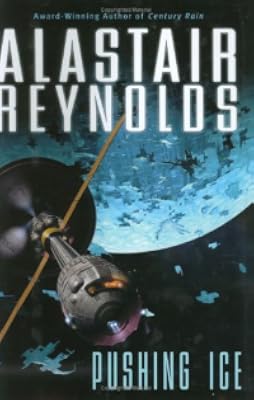
Pushing Ice
by Alastair Reynolds
On This Page
Description
2057. Humanity has raised exploiting the solar system to an art form. Bella Lind and the crew of her nuclear-powered ship, the Rockhopper, push ice. They mine comets. And they're good at it. The Rockhopper is nearing the end of its current mission cycle, and everyone is desperate for some much-needed R & R, when startling news arrives from Saturn: Janus, one of Saturn's ice moons, has inexplicably left its natural orbit and is now heading out of the solar system at high speed. As layers of show more camouflage fall away, it becomes clear that Janus was never a moon in the first place. It's some kind of machine-and it is now headed toward a fuzzily glimpsed artifact 260 light-years away. The Rockhopper is the only ship anywhere near Janus, and Bella Lind is ordered to shadow it for the few vital days before it falls forever out of reach. In accepting this mission, she sets her ship and her crew on a collision course with destiny-for Janus has more surprises in store, and not all of them are welcome. show lessTags
Recommendations



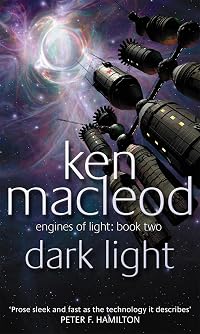
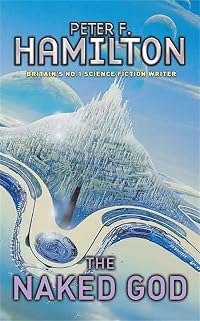
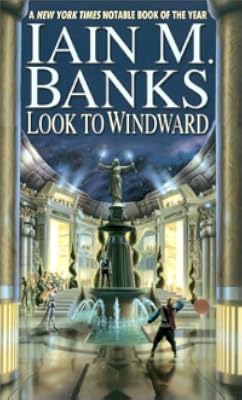

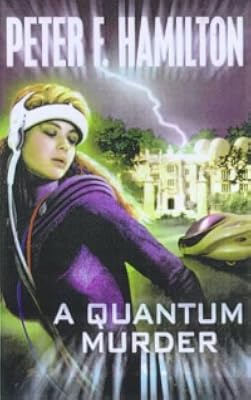


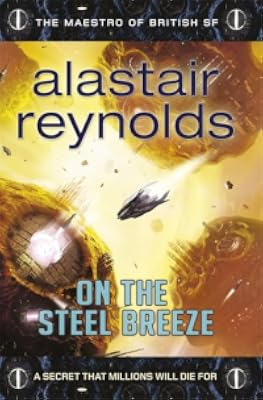

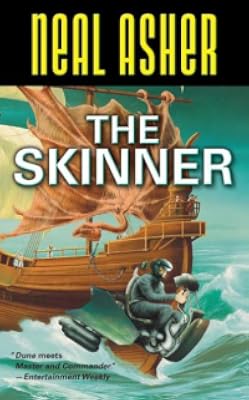
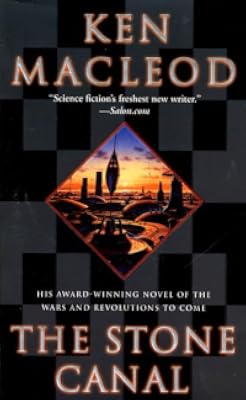
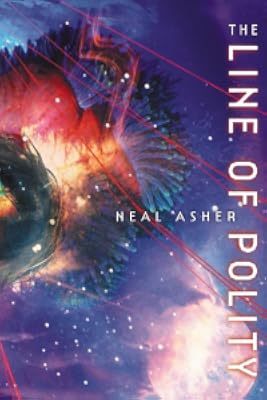
Member Recommendations

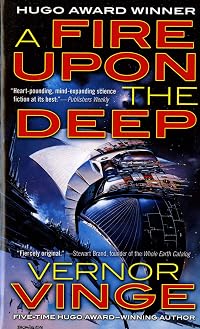
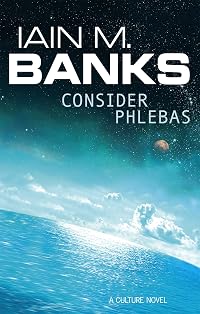
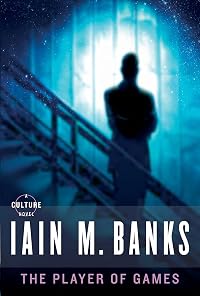
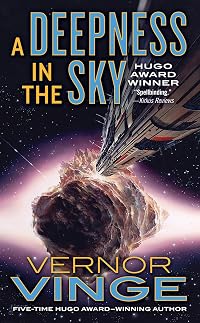
AndrewL Similar far-future story device
Member Reviews
No one does big-concept far-future hard SF quite like Reynolds, and I love him more with every book I read by him. This one has the flavor of court intrigue thrown in, which I greatly enjoyed. Plus there's big alien artifacts, actual aliens, mysterious purposes - how can you go wrong?
Another space opera from Alastair Reynolds. this time not set in his 'Revelation Space' universe. I was expecting a novel mainly about cometary mining, and whilst we get some of that just to set the scene, fairly quickly there is a change of gear as the protagonists are diverted to investigate a Big, (not so) Dumb Object - the Saturnian moon, Janus - that is behaving not as moons are supposed to behave. Very quickly, the characters find themselves in a situation going rapidly out of control.
It is the characterisation that drives this book rather than the events. Opinions have differed over how good the characterisation is in this book; I found it better than expected, and also I was suprised to find the characterisation being, for me at show more least, the key part of the book. The conflict between two powerful women for control of the ship, and their convincing turn and turn abouts as to just who is in the ascendant at ony one time I found very convincing and political.
I was also very taken with the way that Reynolds deals with a spaceship with a crew of 150 or so. Most writers, given this premise, focus on a handful of major characters and leave it at that, leaving the rest as mere spear-carriers. Not so Reynolds. Characters keep turning up and then disappearing, either through death or - more commonly - through just not being involved in that part of the story. They are named, they play parts, and the overall impression is just the same as working in any medium to large organisation; there are people you know well, there are people you deal with from time to time, and there are people you hardly ever speak to or hardly recognise in a corridor. This is one of the few novels to put that idea over in any context; and in a way it also underlined the Way of this particular future, where working on a spaceship mining comets in the outer reaches of the Solar System would be a job like any other.
The intervention of aliens, when it occurs about two-thirds of the way through the book, is interesting and the aliens themselves are well-drawn. They come bearing gifts, and like most gifts come with a price. The Musk Dogs in particular are very well realised.
The denouement was, for me, signalled a few pages in advance with respect to the fates of the two major characters, but that didn't spoil the book for me. Sequels are possible, but none have emerged as yet; perhaps Reynolds is too busy spinning off new ideas for his current multi-book deal with his publisher to draw breath and revisit earlier works? show less
It is the characterisation that drives this book rather than the events. Opinions have differed over how good the characterisation is in this book; I found it better than expected, and also I was suprised to find the characterisation being, for me at show more least, the key part of the book. The conflict between two powerful women for control of the ship, and their convincing turn and turn abouts as to just who is in the ascendant at ony one time I found very convincing and political.
I was also very taken with the way that Reynolds deals with a spaceship with a crew of 150 or so. Most writers, given this premise, focus on a handful of major characters and leave it at that, leaving the rest as mere spear-carriers. Not so Reynolds. Characters keep turning up and then disappearing, either through death or - more commonly - through just not being involved in that part of the story. They are named, they play parts, and the overall impression is just the same as working in any medium to large organisation; there are people you know well, there are people you deal with from time to time, and there are people you hardly ever speak to or hardly recognise in a corridor. This is one of the few novels to put that idea over in any context; and in a way it also underlined the Way of this particular future, where working on a spaceship mining comets in the outer reaches of the Solar System would be a job like any other.
The intervention of aliens, when it occurs about two-thirds of the way through the book, is interesting and the aliens themselves are well-drawn. They come bearing gifts, and like most gifts come with a price. The Musk Dogs in particular are very well realised.
The denouement was, for me, signalled a few pages in advance with respect to the fates of the two major characters, but that didn't spoil the book for me. Sequels are possible, but none have emerged as yet; perhaps Reynolds is too busy spinning off new ideas for his current multi-book deal with his publisher to draw breath and revisit earlier works? show less
I received “Pushing Ice” as a Christmas present, it was on a list of books I wanted. I enjoyed Reynolds’ “Revelation Space” as a Teen or a young adult, although I can’t remember much about it anymore (I should reread it!). In addition, for some reason, Reynolds’ “Diamond Dogs” short story is one that blew me away and firmly lodged itself in my long-term memory, so I’ve been wanting to read some more Alastair Reynolds for a while now.
I would classify the book as hard science fiction. Due to the title, I assumed this book was going to be set in our solar system and focus on space mining. I was right about the initial setting, but to my surprise, it’s really a first contact story. That’s not a problem, I like my SF show more filled with mystery, wonder, and big ideas and first contact books typically fit that bill. I found it an easy read with plenty of intrigue and high SF concepts. On the downside, there were some nagging things that limited my complete enjoyment, but certainly didn’t stop me from finishing the story.
I appreciated going into this book blindly and I want to avoid spoilers, so I’m not going to describe much of the plot. I’ll go this far, as these plot points are on the back of the book: A crew from the ship ‘Rockhopper’ are mining a comet, when a call comes in -- the ice moon Janus, has unnaturally exited it’s orbit of Saturn, and is accelerating out of the solar system. It appears to be under it’s own power, and the ‘Rockhopper’ is in the best position to intercept it before it becomes unreachable.
There is a great deal to love about this book – alien artifacts, high stakes, strange alien species, space opera politics, space megastructures, and plenty of adventure. It maintains a rapid pace, skipping ahead to the good parts on a regular basis. We get four or five well-developed characters who face complicated challenges and tough decisions.
So what were the nagging issues, well, I can’t describe them all without spoiling the plot. But I will say the emotional intelligence of the two main characters was disappointing and frustrating for me. These are leaders hardened by danger and rigor of space mining, but they occasional show the relationship skills and self-control of a first grader. I get that the high stakes and life/death decisions create stress that can impair decision making, but these are long-term grudges and resentment that goes well beyond the heat of the moment. This drives one of them to make a decision with an alien race that had me pounding my head against the wall in exasperation. In addition, there are some minor plot holes, actually probably not holes, just very unlikely circumstances that are very convenient for the plot. Ultimately, the wonder outweighs the frustration and I never thought about abandoning this story. And finally, while the primary questions are answered, there are several tangential questions that are never answered. I’m assuming this is intentional, leaving the door open for sequels.
Four sinewy, gristly stars for this highly entertaining first contact story that pulls you through nearly unimaginable time and distance with surprise and wonder. show less
I would classify the book as hard science fiction. Due to the title, I assumed this book was going to be set in our solar system and focus on space mining. I was right about the initial setting, but to my surprise, it’s really a first contact story. That’s not a problem, I like my SF show more filled with mystery, wonder, and big ideas and first contact books typically fit that bill. I found it an easy read with plenty of intrigue and high SF concepts. On the downside, there were some nagging things that limited my complete enjoyment, but certainly didn’t stop me from finishing the story.
I appreciated going into this book blindly and I want to avoid spoilers, so I’m not going to describe much of the plot. I’ll go this far, as these plot points are on the back of the book: A crew from the ship ‘Rockhopper’ are mining a comet, when a call comes in -- the ice moon Janus, has unnaturally exited it’s orbit of Saturn, and is accelerating out of the solar system. It appears to be under it’s own power, and the ‘Rockhopper’ is in the best position to intercept it before it becomes unreachable.
There is a great deal to love about this book – alien artifacts, high stakes, strange alien species, space opera politics, space megastructures, and plenty of adventure. It maintains a rapid pace, skipping ahead to the good parts on a regular basis. We get four or five well-developed characters who face complicated challenges and tough decisions.
So what were the nagging issues, well, I can’t describe them all without spoiling the plot. But I will say the emotional intelligence of the two main characters was disappointing and frustrating for me. These are leaders hardened by danger and rigor of space mining, but they occasional show the relationship skills and self-control of a first grader. I get that the high stakes and life/death decisions create stress that can impair decision making, but these are long-term grudges and resentment that goes well beyond the heat of the moment. This drives one of them to make a decision with an alien race that had me pounding my head against the wall in exasperation. In addition, there are some minor plot holes, actually probably not holes, just very unlikely circumstances that are very convenient for the plot. Ultimately, the wonder outweighs the frustration and I never thought about abandoning this story. And finally, while the primary questions are answered, there are several tangential questions that are never answered. I’m assuming this is intentional, leaving the door open for sequels.
Four sinewy, gristly stars for this highly entertaining first contact story that pulls you through nearly unimaginable time and distance with surprise and wonder. show less
I'm most familiar with Reynolds 'Revelation Space' series, so I was afraid that I'd be in for more war-criminals war-criming against a cosmos so dark that black holes could be used as light sources. I was pleasantly surprised when Pushing Ice magnified Reynolds' better qualities.
The comet miner Rockhopper is the only ship in position to intercept Janus, a moon of Saturn, when it begins to accelerate out of the solar system. A mission that is at first a simple scientific flyby turns into the adventure of a lifetime. This is still Reynolds, and it isn't cheerful, but the agressively competent crew of the Rockhopper having to make difficult decisions to survive, and living with the consequences of command against a very strange universe.
The comet miner Rockhopper is the only ship in position to intercept Janus, a moon of Saturn, when it begins to accelerate out of the solar system. A mission that is at first a simple scientific flyby turns into the adventure of a lifetime. This is still Reynolds, and it isn't cheerful, but the agressively competent crew of the Rockhopper having to make difficult decisions to survive, and living with the consequences of command against a very strange universe.
A book club pick :)
This is not the Reynolds I was looking for
Alastair Reynolds is an author from whom I expect nice things. There have been some exceptions over the years. Unfortunately, Pushing Ice turned out to be one of them.
I was very optimistic in the beginning. Reynolds writes space exploration very well. The year is 2057, a mission is mining a comet. Then something strange happens to one of Saturn’s moons. It’s taking off, ladies and gentlemen! It’s flying away! Our comet people are the only ones with a ship that is close enough to give chase. Do you think they will find something interesting? ;)
The writing and the plotting felt like old school classic sci-fi, improved by women in leadership positions. I settled in for a show more nice ride. Then the characters happened. I know that Reynolds is not a character writer, this is not why I read his books. But friends forever to enemies forever dynamic was exhausting here. It’s not exactly unrealistic for a human to hold a grudge for years and years and years and… It’s just that the stupid feud that dominated the book was not written well enough. It wasn’t even juvenile or YA level. It was telenovela level. I wanted to scream.
Oh, and the second half of the book happened to me too. Things were slow. We jumped many years ahead in jarring ways. Aliens from a bad TV show appeared. The plot kept getting more and more ridiculous, nonsensical and artificial. Out of sheer self-preservation I wondered whether I was reading a parody. Nope.
Such a shame! A great sci-fi plot and interesting concepts are there, they are just buried deep. This is an outlier review, since Pushing Ice has pretty high ratings. I am fine with it. Outlier Island is a wonderful place, I’ll just sit on the beach and sip my drink. Thank you.
One good quote:
”She loved sarcasm, especially from engineers.”
P. S. Starfleet would never! show less
This is not the Reynolds I was looking for
Alastair Reynolds is an author from whom I expect nice things. There have been some exceptions over the years. Unfortunately, Pushing Ice turned out to be one of them.
I was very optimistic in the beginning. Reynolds writes space exploration very well. The year is 2057, a mission is mining a comet. Then something strange happens to one of Saturn’s moons. It’s taking off, ladies and gentlemen! It’s flying away! Our comet people are the only ones with a ship that is close enough to give chase. Do you think they will find something interesting? ;)
The writing and the plotting felt like old school classic sci-fi, improved by women in leadership positions. I settled in for a show more nice ride. Then the characters happened. I know that Reynolds is not a character writer, this is not why I read his books. But friends forever to enemies forever dynamic was exhausting here. It’s not exactly unrealistic for a human to hold a grudge for years and years and years and… It’s just that the stupid feud that dominated the book was not written well enough. It wasn’t even juvenile or YA level. It was telenovela level. I wanted to scream.
Oh, and the second half of the book happened to me too. Things were slow. We jumped many years ahead in jarring ways. Aliens from a bad TV show appeared. The plot kept getting more and more ridiculous, nonsensical and artificial. Out of sheer self-preservation I wondered whether I was reading a parody. Nope.
Such a shame! A great sci-fi plot and interesting concepts are there, they are just buried deep. This is an outlier review, since Pushing Ice has pretty high ratings. I am fine with it. Outlier Island is a wonderful place, I’ll just sit on the beach and sip my drink. Thank you.
One good quote:
”She loved sarcasm, especially from engineers.”
P. S. Starfleet would never! show less
A gripping and crunchy (yet character-centric) story about competent technicians doing a difficult job which blossoms into something unpredictably bizarre and hauntingly otherworldly. Listening to the first part while I did chores had me volunteering for more chores. I read the second part in ebook format in one captivated sitting that kept me up until 4am. So: caveat lector.
Reynolds has a problem with his books lingering too long. While Pushing Ice does serve adequately as an entertainment-focused airport novel, it doesn't do anything else particularly well.
The plot, which begins with a group of asteroid miners being tasked with investigating an alien spacecraft leaving the solar system, mostly revolves around two women on the ship developing a blood feud against each other. Bella Lind, the captain of the ship, doesn't take the advice from her best friend on the ship, Svetlana Barseghian, that they may indeed not have enough fuel to return to Earth after their frantic chase of the ship. From here, the crew turns to tribalism as their competing visions for the future clash with one another. The middle show more third of the novel has a lot of time skips as the crew explore the spaceship (formerly one of Saturn's moons, Janus) and attempts to make a life for themselves. Think Rendezvous with Rama with more emphasis placed on the social aspect between the crew members.
Reynolds attempts to cram a lot of space opera/aliens/big ideas into the last third of book, but really doesn't have enough bandwidth to pull it all together. Not that the ideas aren't neat, I suppose, but he really didn't give them space to breath/enough analysis to make them really much other than an afterthought. I also just can't believe that the grudge between Bella and Svetlana would last so god dang long. Years and years and years of refusing to even talk to one another. To put such focus on such a childish issue broke my suspension of disbelief on several occasions.
I can't tell whether my cold-derived brain fog or the book itself is to fault for me not having much to say about it. It's okay. I really haven't been blown away by Reynolds despite his notoriety, and it's unfortunate that a lot of the problems that I had with The Prefect transferred to this work as well. Systemic issues like that are never a great sign. show less
The plot, which begins with a group of asteroid miners being tasked with investigating an alien spacecraft leaving the solar system, mostly revolves around two women on the ship developing a blood feud against each other. Bella Lind, the captain of the ship, doesn't take the advice from her best friend on the ship, Svetlana Barseghian, that they may indeed not have enough fuel to return to Earth after their frantic chase of the ship. From here, the crew turns to tribalism as their competing visions for the future clash with one another. The middle show more third of the novel has a lot of time skips as the crew explore the spaceship (formerly one of Saturn's moons, Janus) and attempts to make a life for themselves. Think Rendezvous with Rama with more emphasis placed on the social aspect between the crew members.
Reynolds attempts to cram a lot of space opera/aliens/big ideas into the last third of book, but really doesn't have enough bandwidth to pull it all together. Not that the ideas aren't neat, I suppose, but he really didn't give them space to breath/enough analysis to make them really much other than an afterthought. I also just can't believe that the grudge between Bella and Svetlana would last so god dang long. Years and years and years of refusing to even talk to one another. To put such focus on such a childish issue broke my suspension of disbelief on several occasions.
I can't tell whether my cold-derived brain fog or the book itself is to fault for me not having much to say about it. It's okay. I really haven't been blown away by Reynolds despite his notoriety, and it's unfortunate that a lot of the problems that I had with The Prefect transferred to this work as well. Systemic issues like that are never a great sign. show less
Members
- Recently Added By
Lists

Arthur C. Clarke Award Winners and Shortlisted Books
219 works; 14 members

Top Five Books of 2018
802 works; 265 members

Isaac Arthur’s Book Recommendations
98 works; 3 members

Best Books With Aliens
67 works; 10 members

Books Read in 2024
4,623 works; 126 members
Author Information

141+ Works 39,979 Members
Some Editions
Awards and Honors
Awards
Distinctions
Notable Lists
Work Relationships
Is contained in
Common Knowledge
- Canonical title
- Pushing Ice
- Original title
- Pushing Ice
- Original publication date
- 2005-11
- People/Characters
- Bella Lind; Svetlana Barseghian
- Important places
- Janus
- Epigraph
- "Stars have their moment, then they die" -- Nick Cave
- Dedication
- For my wife, with love.
- First words
- Her name was Chromis Pasqueflower Bowerbird and she had travelled a long way to make her case.
- Last words
- (Click to show. Warning: May contain spoilers.)"Now let's go down there and make the most of it, while it lasts."
- Original language
- English
Classifications
Statistics
- Members
- 2,611
- Popularity
- 7,206
- Reviews
- 65
- Rating
- (3.81)
- Languages
- 6 — Czech, English, Finnish, French, German, Russian
- Media
- Paper, Audiobook, Ebook
- ISBNs
- 25
- ASINs
- 19