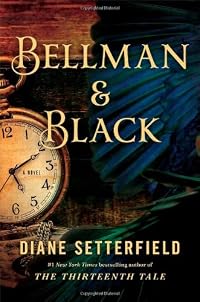
Bellman and Black
by Diane Setterfield
On This Page
Description
Killing a bird with his slingshot as a boy, William Bellman grows up a wealthy family man unaware of how his act of childhood cruelty will have terrible consequences until a wrenching tragedy compels him to enter into a macabre bargain with a stranger in black.Tags
Recommendations

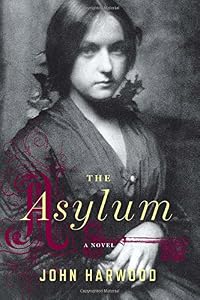
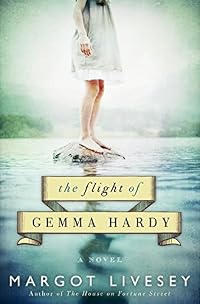
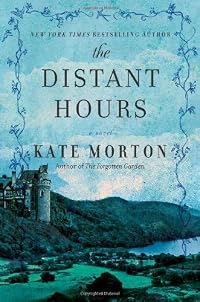
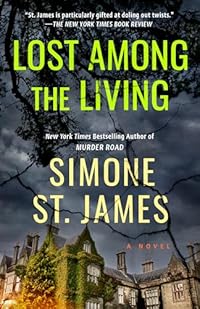



Member Recommendations
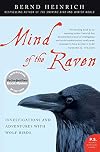
ehines If all the business about rooks in Bellman & Black was intriguing, you can read lots of interesting facts about their cousins the ravens in Heinrich's closely studied book.
Member Reviews
The novel traces the events in the life of William Bellman, a promising youth – handsome, talented, ambitious, beloved – whose destiny is subsequently shaped by tragedy, hubris, and (possibly) supernatural intervention.
The book is billed as a gothic tale due to the whole “supernatural intervention” thing, with extra atmosphere contributed by Setterfield’s invocation of rooks (crows) as a metaphor for thought and memory. In this, the author appears to be riffing on Norse mythology: the god Odin is customarily described as being accompanied by his two raven companions, Huggin (thought) and Munnin (mind), who continually observe the earth and report what they learn to their master. Setterfield’s rooks, stand-ins for Odin’s show more ravens, are primarily observers and storytellers ... but perhaps not above demonstrating a more intimate interest where their own are concerned.
Will’s original sin? A youthful indiscretion in which he kills a rook with a bolt from his catapult. Thereafter, the rooks (sometimes in bird form, sometimes in human form as the mysterious “Mr. Black”) reappear at various decision points in Will’s life, not so much shaping Will’s decisions as being there to bear witness to his increasingly tragic choices, for as Will’s hubris drives him towards increasing success in the business world (first optimizing his family business, a cloth mill, before moving on to establish Bellman & Black, the wildly profitable emporium of all things mourning – because is there anything more hubris-y than transforming your own personal tragedy into a profit-making opportunity?), he increasingly turns his back on thought (recognizing the importance of human connections) and memory (remembering how to love). Which will ultimately prevail – Will’s hubris or his humanity?
I read this in one sitting, a tribute to Setterfield’s storytelling prowess. Reflecting back, I can appreciate how much craft has gone into maintaining forward momentum given large parts of the story are about relatively dry business dealings and affairs, with relevant but somewhat uneventful rook-related passages interspersed. But Setterfield’s lean, imaginative prose is a pleasure to read and while this book may not be “gothic” in the horror sense, she does an adept job of infusing her tale with plenty of ambiguity and uncertainty, which are the staples of all good gothic literature. Overall, I enjoyed the tale, and would willingly read other novels by this author. show less
The book is billed as a gothic tale due to the whole “supernatural intervention” thing, with extra atmosphere contributed by Setterfield’s invocation of rooks (crows) as a metaphor for thought and memory. In this, the author appears to be riffing on Norse mythology: the god Odin is customarily described as being accompanied by his two raven companions, Huggin (thought) and Munnin (mind), who continually observe the earth and report what they learn to their master. Setterfield’s rooks, stand-ins for Odin’s show more ravens, are primarily observers and storytellers ... but perhaps not above demonstrating a more intimate interest where their own are concerned.
Will’s original sin? A youthful indiscretion in which he kills a rook with a bolt from his catapult. Thereafter, the rooks (sometimes in bird form, sometimes in human form as the mysterious “Mr. Black”) reappear at various decision points in Will’s life, not so much shaping Will’s decisions as being there to bear witness to his increasingly tragic choices, for as Will’s hubris drives him towards increasing success in the business world (first optimizing his family business, a cloth mill, before moving on to establish Bellman & Black, the wildly profitable emporium of all things mourning – because is there anything more hubris-y than transforming your own personal tragedy into a profit-making opportunity?), he increasingly turns his back on thought (recognizing the importance of human connections) and memory (remembering how to love). Which will ultimately prevail – Will’s hubris or his humanity?
I read this in one sitting, a tribute to Setterfield’s storytelling prowess. Reflecting back, I can appreciate how much craft has gone into maintaining forward momentum given large parts of the story are about relatively dry business dealings and affairs, with relevant but somewhat uneventful rook-related passages interspersed. But Setterfield’s lean, imaginative prose is a pleasure to read and while this book may not be “gothic” in the horror sense, she does an adept job of infusing her tale with plenty of ambiguity and uncertainty, which are the staples of all good gothic literature. Overall, I enjoyed the tale, and would willingly read other novels by this author. show less
When I closed this book for the last time yesterday my husband asked, "did you like it?" and my immediate response was, "I'm not sure." Today I woke up thinking about it, and I have a feeling I'll think of it often in the future. It didn't feel the kind of rapturous love I've felt after reading other books, and as I read it I wasn't even loving it the way I did Setterfield's "Thirteen Tales," but I was compelled to keep turning pages - questioning, thinking, wondering - not so much about what would happen next in the plot, but about Setterfield had really set out to say to her readers.
I like books that do that to me, so I'm going with, "Yes."
I like books that do that to me, so I'm going with, "Yes."
What a glorious read. Setterfield paints an ethereal landscape populated with believable characters and a hauntingly good tale. A thoughtless and forgotten boyish act of killing a rook, haunts William Bellman's life; and as he prospers, the haunting gathers apace. Setterfield's novel is dreamy and otherworldly - the literary equivalent of a Tim Burton film. The theme of rooks and glistening black-green beauty flows throughout the novel. Birds are everywhere and even Bellman's daughter takes on a bird-like appearance.
Bellman pays dearly for his moment of childhood cruelty, although he fails to understand this until the very end.
The lyrical nature of this book kept me wanting to read every delicious word and devour the story of show more Bellman's life as he leaves his colour-filled world behind and becomes absorbed in the ever increasing shades of black that envelop him and his life. A truly feather-filled delight. show less
Bellman pays dearly for his moment of childhood cruelty, although he fails to understand this until the very end.
The lyrical nature of this book kept me wanting to read every delicious word and devour the story of show more Bellman's life as he leaves his colour-filled world behind and becomes absorbed in the ever increasing shades of black that envelop him and his life. A truly feather-filled delight. show less
Confession, I thought this book was trippy as hell and half the time I had no idea where it was going. BUT I really liked it. People try to mimic the Gothic style a lot, and few succeed. I felt like Setterfield really got what makes a Gothic novel a Gothic novel including the eeriness, and the way that sometimes you feel like you're fighting through a veil to understand what's really going on. The setting definitely helped in that regard. I wasn't a fan of the happy life of Bellman hour in the beginning of the book but it was so clear that something terrible (wonderful) was going to happen that it was worth it. Loved the ending, loved the whole funeral store in general, and the daughter's story line was interesting, if incomplete.
‘’In the few minutes since the boys had left the place, rooks had come. They circled above the oak, fifteen or twenty of them. More were arriving from all directions. They stretched across the sky, loose skeins of dark marks, converging on this place. One by one they descended to alight in the branches of the tree. Ordinarily such a congregation would be accompanied by the noise of strong chatter as the birds flung sound at each other like gravel. This gathering was different: it took place in intent and purposeful silence.
Every bird on every branch was looking at his direction.’’
First things first. This novel is the very definition, the epitome of the Gothic Victorian story. It is the child of a contemporary Dickens, a dark show more masterpiece by one of the finest writers of our times. Diane Setterfield has a knack for the haunting, the mysterious. Bellman & Black is a book that requires you to think and try to explain. It doesn’t give you tailor-made answers. It demands to be read with an open mind, to accept the impossible and investigate. That’s what brains are for, anyway…
William Bellman is an intelligent, hard-working young man with a bright future ahead of him. He has been blessed with perception and immense organizing skills and with a beautiful family. But soon, Fate strikes and strikes again. A black-clad man seems to follow him in the darkest moments and William becomes convinced that a bargain should be made. This is how Bellman & Black, a truly macabre and fascinating endeavour, is created. But William cannot understand that the past is a prison no one can escape.
‘’They used to put the dead out on stone platforms for their bones to be picked clean by the rooks. Did you know that? Long time ago. Before our crosses and spires and prayer books.’’
In my opinion, this is the darkest book by Diane Setterfield. I’ve read and adored all three, each one so different and so complex but they all have one thing in common: a sharply accurate perception of the human soul and the external forces that shape and define a great number of the choices we make. In Bellman & Black the themes are many, all profound and relevant.
Death is our greatest fear, whoever states the opposite is a lying fool who thinks we’re idiots. William starts seeing and breathing Death and decides to exorcise it by setting up an enterprise of mourning and ceremonies. He wants to honour it by providing the very best of services in an attempt to rescue the only treasure that matters. His child. And then, his aim becomes an obsession. Where are the boundaries - if there are any, that is. Where does one begin to understand that he is actually a victim of a strange desire? On the other hand, how can a human being, even one as gifted as William, battle against forces that are so much stronger than us?
What about the past? How can a good life that aims in helping others attone for an act of violence? How can we escape the whims of Fate that haunts our steps? Can there be a second chance to make up for the horrible fault of a child? We often talk about revenge against each other? What can we do when Nature is set on taking revenge against us? These are only a few of the questions that this book poses on the reader. And if we read books, we do so because we want to think and question. If we approach books as we approach the items in a supermarket, then novels like this are not for us.
‘’The tree still stands. Even now you can go and see it - yes, right now, in your time - but you will not see a single rook alight in its branches. They still know what happened. Rooks are made of thought and memory. They know everything and they do not forget.’’
Setterfield creates a foreboding atmosphere, honouring the vast British tradition of Gothic Literature and elevating to new standards. Visions, nightmares. Churches and graveyards. And the crows, the rooks, the ravens are always at the heart of the action. They define the course of the characters. They observe. And they punish. There are chapters with outstanding trivia on crows, with Huginn and Munnin, Odin’s spies, as the sovereigns of the species that is greatly loved and feared in British culture. Apart from the natural (or supernatural) world, the writer takes us into the secrets of the textile industry with brilliant information of the craft of the colours and the life inside the workshops of the Victorian era. And, obviously, our next stop is the industry of Death, the business of mourning, from the organizing of a burial to the fashion and the window display reserved for those who stay behind. Waiting for their turn…
In outstanding prose, beautiful dialogue, shuttering imagery and in the company of a very memorable main character, Setterfield creates a dark tale, a Death fairy tale of the fears, misfortunes and choices that set our course in life. How much of it is our own doing? How many of our ‘’choices’’ are actually dictated by a severe hand of a power we cannot defeat? Read this Gothic work of Art and draw your own conclusions.
‘’All stories must come to an end. This one. Everyone’s. Your own.
The rook is a great lover of stories. He has been harvesting them for as long as there have been stories to harvest, which means for as long as there have been gods and men and rooks. And he has a good long memory for them.’’
My reviews can also be found on https://theopinionatedreaderblog.wordpress.com/ show less
Every bird on every branch was looking at his direction.’’
First things first. This novel is the very definition, the epitome of the Gothic Victorian story. It is the child of a contemporary Dickens, a dark show more masterpiece by one of the finest writers of our times. Diane Setterfield has a knack for the haunting, the mysterious. Bellman & Black is a book that requires you to think and try to explain. It doesn’t give you tailor-made answers. It demands to be read with an open mind, to accept the impossible and investigate. That’s what brains are for, anyway…
William Bellman is an intelligent, hard-working young man with a bright future ahead of him. He has been blessed with perception and immense organizing skills and with a beautiful family. But soon, Fate strikes and strikes again. A black-clad man seems to follow him in the darkest moments and William becomes convinced that a bargain should be made. This is how Bellman & Black, a truly macabre and fascinating endeavour, is created. But William cannot understand that the past is a prison no one can escape.
‘’They used to put the dead out on stone platforms for their bones to be picked clean by the rooks. Did you know that? Long time ago. Before our crosses and spires and prayer books.’’
In my opinion, this is the darkest book by Diane Setterfield. I’ve read and adored all three, each one so different and so complex but they all have one thing in common: a sharply accurate perception of the human soul and the external forces that shape and define a great number of the choices we make. In Bellman & Black the themes are many, all profound and relevant.
Death is our greatest fear, whoever states the opposite is a lying fool who thinks we’re idiots. William starts seeing and breathing Death and decides to exorcise it by setting up an enterprise of mourning and ceremonies. He wants to honour it by providing the very best of services in an attempt to rescue the only treasure that matters. His child. And then, his aim becomes an obsession. Where are the boundaries - if there are any, that is. Where does one begin to understand that he is actually a victim of a strange desire? On the other hand, how can a human being, even one as gifted as William, battle against forces that are so much stronger than us?
What about the past? How can a good life that aims in helping others attone for an act of violence? How can we escape the whims of Fate that haunts our steps? Can there be a second chance to make up for the horrible fault of a child? We often talk about revenge against each other? What can we do when Nature is set on taking revenge against us? These are only a few of the questions that this book poses on the reader. And if we read books, we do so because we want to think and question. If we approach books as we approach the items in a supermarket, then novels like this are not for us.
‘’The tree still stands. Even now you can go and see it - yes, right now, in your time - but you will not see a single rook alight in its branches. They still know what happened. Rooks are made of thought and memory. They know everything and they do not forget.’’
Setterfield creates a foreboding atmosphere, honouring the vast British tradition of Gothic Literature and elevating to new standards. Visions, nightmares. Churches and graveyards. And the crows, the rooks, the ravens are always at the heart of the action. They define the course of the characters. They observe. And they punish. There are chapters with outstanding trivia on crows, with Huginn and Munnin, Odin’s spies, as the sovereigns of the species that is greatly loved and feared in British culture. Apart from the natural (or supernatural) world, the writer takes us into the secrets of the textile industry with brilliant information of the craft of the colours and the life inside the workshops of the Victorian era. And, obviously, our next stop is the industry of Death, the business of mourning, from the organizing of a burial to the fashion and the window display reserved for those who stay behind. Waiting for their turn…
In outstanding prose, beautiful dialogue, shuttering imagery and in the company of a very memorable main character, Setterfield creates a dark tale, a Death fairy tale of the fears, misfortunes and choices that set our course in life. How much of it is our own doing? How many of our ‘’choices’’ are actually dictated by a severe hand of a power we cannot defeat? Read this Gothic work of Art and draw your own conclusions.
‘’All stories must come to an end. This one. Everyone’s. Your own.
The rook is a great lover of stories. He has been harvesting them for as long as there have been stories to harvest, which means for as long as there have been gods and men and rooks. And he has a good long memory for them.’’
My reviews can also be found on https://theopinionatedreaderblog.wordpress.com/ show less
When William Bellman is a child, he uses his catapult to hit a rook on a tree that is much too far away. Against all odds, and to the amazement of his boyhood friends and his own chagrin, Young Will’s shot makes the perfect arc, and the bird is killed. Adding insult to injury, the dead bird is then used as a plaything by Will’s friends until they lose interest in it and toss it away. The next day, Will develops a fever, and as his blood warms, he accomplishes an even greater feat than killing the distant rook: he manages to forget the whole thing ever happened.
This one event symbolizes the rest of Bellman’s life. Just like the stone’s arc, Will’s life begins to rush forward and upward, and with great momentum, Will attains show more blessings and prosperity greater than he dared to dream. Everything he touches turns to gold. Then one day…just as the stone’s arc turns downward, so do the events in Bellman’s home life.
Bellman, who was so good at forgetting, ended up forgetting much of what is genuinely important in life, and only at the end of his days does he truly learn the value of Memory and Thought.
I enjoyed the story, the writing, the symbolism, the snippets of rook mythology and information. The narrator takes time to weave the tale, and I felt the pacing was perfect. There’s a strong message in here that I, in the hurriedness of my day to day life, would do well to keep it mind: At the end of my days, what will matter is not the money I made or the empire I built, but my relationships with others and the memories we made along the way. show less
This one event symbolizes the rest of Bellman’s life. Just like the stone’s arc, Will’s life begins to rush forward and upward, and with great momentum, Will attains show more blessings and prosperity greater than he dared to dream. Everything he touches turns to gold. Then one day…just as the stone’s arc turns downward, so do the events in Bellman’s home life.
Bellman, who was so good at forgetting, ended up forgetting much of what is genuinely important in life, and only at the end of his days does he truly learn the value of Memory and Thought.
I enjoyed the story, the writing, the symbolism, the snippets of rook mythology and information. The narrator takes time to weave the tale, and I felt the pacing was perfect. There’s a strong message in here that I, in the hurriedness of my day to day life, would do well to keep it mind: At the end of my days, what will matter is not the money I made or the empire I built, but my relationships with others and the memories we made along the way. show less
I think I may have enjoyed an advantage that people who did not like this book did not have. This is my first Setterfield book. I have not read The Thirteenth Tale so I had nothing to contrast and compare. Since everyone raves about it, I'll definitely add it to my queue.
That being said, I loved Bellman and Black. It was a sad, mournful and gray book, melancholy in its delivery but beautifully written. It was absolutely a ghost story, but not necessarily of the usual variety. It moves with a solemn reverence. It makes you remember that which is important to you.
The audiobook is well done. Jack Davenport is an excellent narrator and his voices are well delineated. Thoroughly enjoyed his work and I look forward to hearing more of show more him.
Recommended. show less
That being said, I loved Bellman and Black. It was a sad, mournful and gray book, melancholy in its delivery but beautifully written. It was absolutely a ghost story, but not necessarily of the usual variety. It moves with a solemn reverence. It makes you remember that which is important to you.
The audiobook is well done. Jack Davenport is an excellent narrator and his voices are well delineated. Thoroughly enjoyed his work and I look forward to hearing more of show more him.
Recommended. show less
Members
- Recently Added By
Lists

Top Five Books of 2013
1,564 works; 722 members

Put a Bird On It
75 works; 12 members

Haunted Places and Ghost Stories Reading List
99 works; 4 members

2023 Christmas Gifts
39 works; 11 members

Books Read in 2024
4,623 works; 126 members

Books Read in 2025
4,090 works; 97 members
Author Information

6 Works 23,168 Members
Awards and Honors
Distinctions
Series
Belongs to Publisher Series
Work Relationships
Is contained in
Common Knowledge
- Canonical title
- Bellman and Black
- Original publication date
- 2013-10-01
- People/Characters
- William Bellman; Mr. Black; Luke Smith; Fred Armstrong; Charles Bellman; Paul Bellman (show all 10); Rose Bellman; Dora Bellman; Lizzie; Mr. Critchlow
- Important places
- Whittingford; Stroud, Gloucestershire, England, UK; Regent Street, London, England, UK
- Epigraph
- You will have seen rooks.
Don’t be put off by any sense of familiarity.
Rooks are enveloped in a glorious sky-cloak of mystery.
They’re not what you think they are.
— MARK COCKER, FROM CROW COUNTRY - Dedication
- For my parents Pauline and Jeffrey Setterfield who, amongst other things, taught me everything I needed to know about catapults.
- First words
- I have heard it said, by those that cannot possibly know, that in the final moments of a man’s existence he sees his whole life pass before his eyes.
- Last words
- (Click to show. Warning: May contain spoilers.)You are, to us, an entertainment of humans.
Classifications
Statistics
- Members
- 1,543
- Popularity
- 14,757
- Reviews
- 174
- Rating
- (3.30)
- Languages
- 9 — Catalan, English, German, Italian, Norwegian (Bokmål), Polish, Portuguese, Croatian, Spanish
- Media
- Paper, Audiobook, Ebook
- ISBNs
- 36
- ASINs
- 14