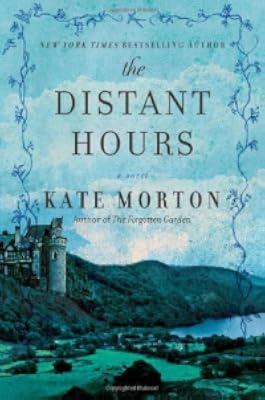
The Distant Hours
by Kate Morton
On This Page
Description
A long-lost letter arriving at its destination fifty years after it was sent lures Edie Burchill to crumbling Milderhurst Castle, home of the three elderly Blythe sisters, where Edie's mother was sent to stay as a teenager during World War II.Tags
Recommendations
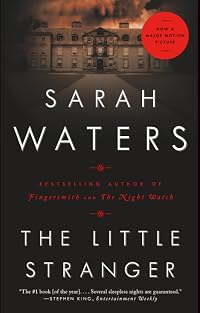
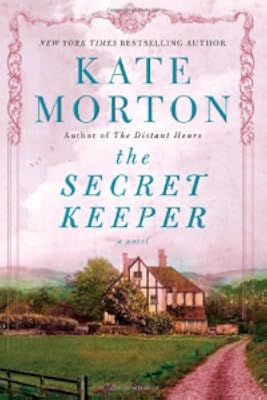
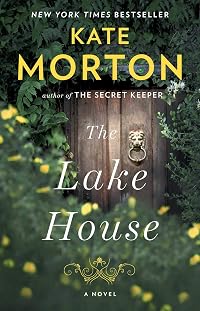
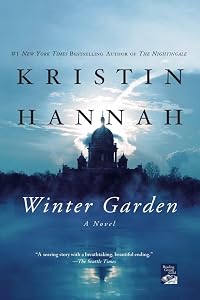




Member Recommendations
Becchanalia Pretty much the same plot.
Also recommended by library_gal
201
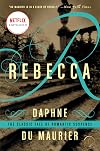
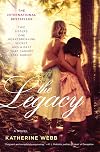
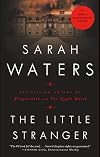
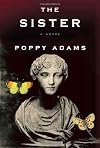
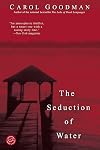
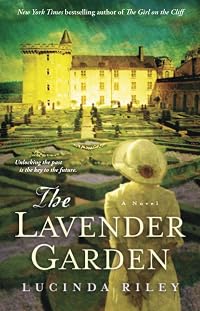
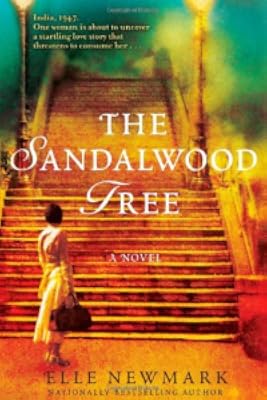
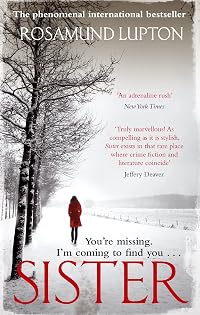
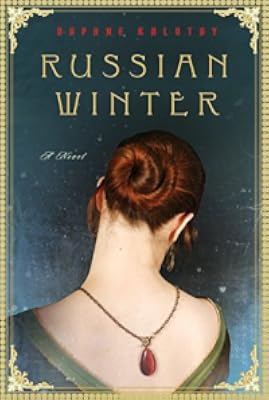
BookshelfMonstrosity In both The Distant Hours and The Seduction of Water a children's story drives daughters to unravel the secrets of their mothers' pasts. Atmospheric settings, storylines past and present, mysteries, and Gothic trappings propel these polished, character-centered tales.
Member Reviews
In previous novels, Kate Morton flashes back to the Roaring 20s, when big estates were still fairly numerous and the families prestigious. In The Distant Hours, Ms. Morton advances a few decades with the primary flashbacks occurring during World War II and the Blitz. Her heroine this time around is feisty Edie, a book publisher at a personal crossroads. The arrival of a long-delayed letter, and more specifically, her mother’s reaction to it, sets the stage for a journey she never expects to take, involving people she never knew existed, and resulting in an ending that is better suited for fiction than real life. The Distant Hours takes readers through the English countryside, back to one of the more terrifying decades in English show more history when the horrors of war were the backdrop for romance and intrigue and the final years of the big family estates, exploring love, loss, and the dangerous nature of secrets.
Edie is an absolutely delightful heroine. Her issues with her mother are heartbreakingly real, and her awkwardness is endearing. Edie is one of the few characters Ms. Morton wrote that feels natural, as if she really is the girl down the street. Her work within the publishing industry as well as her love of books makes her that much more appealing. Meanwhile, her fascination with Milderhurst Castle and learning more about her mother’s past is addicting and completely understandable. All of Ms. Morton’s heroines have been memorable, but there is a special spark within Edie that strengthens the entire story and makes it that much more engrossing.
The Gothic element is something new, or at least more firmly established in The Distant Hours, and is something Ms. Morton should continue to explore. Milderhurst really becomes a character in its own right. Deliciously dilapidated and casting a pall on everyone who encounters it, there is no doubt as to the reasons for the ongoing fascination with the castle itself as well as the family who owns it. Ms. Morton perfectly captures the voyeuristic glee and horror that occurs at the decay of such familial behemoths. Similarly, the mysterious past of the Blythe girls, June’s sudden decline, and Edie’s connection to Milderhurst and the Blythe family is appropriately spooky and tragic. The pacing of the entire novel, a key element of any Gothic novel, is perfect. The plot twists help engage a reader while preventing the ending from being anything but a surprise, and this is one ending where having it as a surprise is half the enjoyment.
The Distant Hours may just be Ms. Morton’s best book to date. Her writing shows a continuing maturity that adds depth to her characters and even greater detail to her settings. The transitions between past and present are absolutely seamless, and both settings are beautifully executed. Her prose, always wonderful, has poetic elements that enhance her descriptions and make them so wonderful to enjoy. In addition, Edie has a vibrancy to her that makes her refreshingly realistic and fun. If someone is looking to finally get around to reading a novel by Ms. Morton, The Distant Hours is the perfect selection, as it brilliantly showcases her talent for historical, Gothic fiction.
Acknowledgments: Thank you to Atria Books for my review copy! show less
Edie is an absolutely delightful heroine. Her issues with her mother are heartbreakingly real, and her awkwardness is endearing. Edie is one of the few characters Ms. Morton wrote that feels natural, as if she really is the girl down the street. Her work within the publishing industry as well as her love of books makes her that much more appealing. Meanwhile, her fascination with Milderhurst Castle and learning more about her mother’s past is addicting and completely understandable. All of Ms. Morton’s heroines have been memorable, but there is a special spark within Edie that strengthens the entire story and makes it that much more engrossing.
The Gothic element is something new, or at least more firmly established in The Distant Hours, and is something Ms. Morton should continue to explore. Milderhurst really becomes a character in its own right. Deliciously dilapidated and casting a pall on everyone who encounters it, there is no doubt as to the reasons for the ongoing fascination with the castle itself as well as the family who owns it. Ms. Morton perfectly captures the voyeuristic glee and horror that occurs at the decay of such familial behemoths. Similarly, the mysterious past of the Blythe girls, June’s sudden decline, and Edie’s connection to Milderhurst and the Blythe family is appropriately spooky and tragic. The pacing of the entire novel, a key element of any Gothic novel, is perfect. The plot twists help engage a reader while preventing the ending from being anything but a surprise, and this is one ending where having it as a surprise is half the enjoyment.
The Distant Hours may just be Ms. Morton’s best book to date. Her writing shows a continuing maturity that adds depth to her characters and even greater detail to her settings. The transitions between past and present are absolutely seamless, and both settings are beautifully executed. Her prose, always wonderful, has poetic elements that enhance her descriptions and make them so wonderful to enjoy. In addition, Edie has a vibrancy to her that makes her refreshingly realistic and fun. If someone is looking to finally get around to reading a novel by Ms. Morton, The Distant Hours is the perfect selection, as it brilliantly showcases her talent for historical, Gothic fiction.
Acknowledgments: Thank you to Atria Books for my review copy! show less
Remember sinking into a great long story and being GLAD it was almost 600 pages long? Never thinking "I must hurry and finish this so I can read another one"? That's what happened to me with this novel. I won't say I didn't want it to end, because I desperately wanted to know the answers to everything, but I also knew I'd miss being in this book with the characters when it was over.
By accident, Edie Burchill learns that her mother Meredith was one of the children evacuated from London into the countryside for safety during WWII...a fact her mother had never seen fit to share with her. It also appears that the period of time her mother spent as a guest of the Blythe sisters at Milderhurst Castle was one of the happiest in her life, so show more why has she kept it a secret for over half a century? Edie's relationship with her mother doesn't allow for pressing on this nerve, but she is determined to learn what she can about Meredith's past, especially when she realizes that Milderhurst Castle was the home of Raymond Blythe, author of The True History of the Mud Man, the book that started Edie on her life-long love of all things book-related. Moving back and forth between 1992 and 1939-1941, telling the often tragic tale from varying points of view, Morton builds suspense, piles on mystery, and parcels out details in classic fashion. Modern gothic is tricky to pull off, but it's handled marvelously well here. Shades of Miss Havisham, the mad woman in the attic, Manderley...all the good stuff. show less
By accident, Edie Burchill learns that her mother Meredith was one of the children evacuated from London into the countryside for safety during WWII...a fact her mother had never seen fit to share with her. It also appears that the period of time her mother spent as a guest of the Blythe sisters at Milderhurst Castle was one of the happiest in her life, so show more why has she kept it a secret for over half a century? Edie's relationship with her mother doesn't allow for pressing on this nerve, but she is determined to learn what she can about Meredith's past, especially when she realizes that Milderhurst Castle was the home of Raymond Blythe, author of The True History of the Mud Man, the book that started Edie on her life-long love of all things book-related. Moving back and forth between 1992 and 1939-1941, telling the often tragic tale from varying points of view, Morton builds suspense, piles on mystery, and parcels out details in classic fashion. Modern gothic is tricky to pull off, but it's handled marvelously well here. Shades of Miss Havisham, the mad woman in the attic, Manderley...all the good stuff. show less
The year is 1992. Edie Burchill is visiting her parents one day when her mother receives a letter. This is not an ordinary piece of mail, as her normally stoic mother releases a troubled gasp and leaves the room quickly. After some exploring, Edie finds that her mother was a resident of Milderhurst Castle of the English countryside during World War II evacuations; the letter had been lost in the mail since 1941. One day while attempting to make her way back to London after a rare trip for work, Edie finds herself lost but sees a sign for Milderhurst Village. What she sees and who she meets along this first chance encounter piques her interest and causes her to question her mother's past and the actual history lying within the ancient show more walls of Milderhurst Castle.
My summary does this book no justice. I read Kate Morton's first novel (The House at Riverton) in November; it was an engrossing read, but the foreshadowing was too obvious. Not so, in The Distant Hours. All 560 pages kept me guessing and making predictions (a few correct, but most incorrect) along the way as to how it would all come together. What I was most impressed by was Morton's ability to weave accounts from the 1940's into the novel's 'main plot' occurring in 1992. So, there was the life of Edie Burchill, and there was the great mystery of the three Blythe sisters (inhabitants of Milderhurst Castle). The separate accounts and various time periods were combined in a way that was ingenious and beautiful. Plus, the characters were very well written. I felt like I knew them personally after awhile.
Kate Morton is becoming one of my favorite, newly discovered authors. I can't help but love a war-time setting and foreboding gothic castle mixed with mental illness, romance, and several family secrets. I highly recommend The Distant Hours to all fans of historical fiction and family sagas! show less
My summary does this book no justice. I read Kate Morton's first novel (The House at Riverton) in November; it was an engrossing read, but the foreshadowing was too obvious. Not so, in The Distant Hours. All 560 pages kept me guessing and making predictions (a few correct, but most incorrect) along the way as to how it would all come together. What I was most impressed by was Morton's ability to weave accounts from the 1940's into the novel's 'main plot' occurring in 1992. So, there was the life of Edie Burchill, and there was the great mystery of the three Blythe sisters (inhabitants of Milderhurst Castle). The separate accounts and various time periods were combined in a way that was ingenious and beautiful. Plus, the characters were very well written. I felt like I knew them personally after awhile.
Kate Morton is becoming one of my favorite, newly discovered authors. I can't help but love a war-time setting and foreboding gothic castle mixed with mental illness, romance, and several family secrets. I highly recommend The Distant Hours to all fans of historical fiction and family sagas! show less
Edie Burchill has never been close to her mother Meredith, who was evacuated from London to Milderhurst Castle in Kent at the beginning of WWII, where she stayed with the three Blythe sisters and their writer father, Raymond. One day a lost letter arrives for Edie's mother, originally sent by one of the sisters during the war, and Edie, observing her mother's reaction, sets out to investigate, unearthing secrets and mysteries that had been hidden for a long time.
The novel starts with a fictitious prologue of The True History of the Mud Man, a children's book written by Raymond Blythe which plays a major role in The Distant Hours, and which sets the scene with its atmospheric beginning and whets the appetite for the mystery to come. But show more be warned: the reader has no choice but to be patient, as Kate Morton has decided to narrate in split time frames again (becoming a bit of a speciality of hers?), and has to endure lengthy character studies of the twins and their younger sister Juniper. Don't get me wrong, I perceived it as a sort of exquisite torture and sneaked off every so often to read a quick chapter in order to get to the bottom of the mystery and the characters' long-harboured secrets. Apart from the literary and personal mysteries surrounding the Mud Man story, the novel also deals with the various guises of love: parental love, love for a parent, love between siblings, love between lovers, selfish love and unconditional love, in turns touching, tragic and romantic; in short, even though I felt the characterisations of the characters, and not just the main protagonists, a little bit too detailed at times, they did help to imbue everyone with life (even the dogs) and turned them into dear friends by the end of the last page, so that I was sad to leave them. And even though I felt the setting for the epilogue was a coincidence too far, in my opinion this is Kate Morton's best novel yet. I can't wait for her next one to be published.
P.S.: An appeal to the author: If you ever felt devoid of ideas about what to write next (not that there's any chance of that for the time being, I imagine), could you please, please do a J K Rowling and write up The True History of the Mud Man; I'm sure there'd be a legion of fans who would eagerly devour it. show less
The novel starts with a fictitious prologue of The True History of the Mud Man, a children's book written by Raymond Blythe which plays a major role in The Distant Hours, and which sets the scene with its atmospheric beginning and whets the appetite for the mystery to come. But show more be warned: the reader has no choice but to be patient, as Kate Morton has decided to narrate in split time frames again (becoming a bit of a speciality of hers?), and has to endure lengthy character studies of the twins and their younger sister Juniper. Don't get me wrong, I perceived it as a sort of exquisite torture and sneaked off every so often to read a quick chapter in order to get to the bottom of the mystery and the characters' long-harboured secrets. Apart from the literary and personal mysteries surrounding the Mud Man story, the novel also deals with the various guises of love: parental love, love for a parent, love between siblings, love between lovers, selfish love and unconditional love, in turns touching, tragic and romantic; in short, even though I felt the characterisations of the characters, and not just the main protagonists, a little bit too detailed at times, they did help to imbue everyone with life (even the dogs) and turned them into dear friends by the end of the last page, so that I was sad to leave them. And even though I felt the setting for the epilogue was a coincidence too far, in my opinion this is Kate Morton's best novel yet. I can't wait for her next one to be published.
P.S.: An appeal to the author: If you ever felt devoid of ideas about what to write next (not that there's any chance of that for the time being, I imagine), could you please, please do a J K Rowling and write up The True History of the Mud Man; I'm sure there'd be a legion of fans who would eagerly devour it. show less
I am a sucker for ancient, decaying castles with occupants who are eccentric and obviously have secrets to hide. When Morton sets the stage and begins to play out the lives of the Blythe sisters, children of a famous and ultimately bizarre writer, during the time of WWII, she has me hooked. At the same time, she introduces the modern-day story of Edie Burchill, the daughter of a WWII child evacuee who was sent to the castle to wait out the war. It is her mother's story that Edie is determined to unearth, but in the process she finds herself enmeshed in the story of the Blythe sisters as well. This contrivance of running parallel stories in different time lines is fairly common and seldom well done. Morton does it well. She makes us show more equally interested in both stories and anxious to see how they converge one upon the other.
I would never argue that Morton's books are great literature. They are pure enjoyment. Now and then, that is what we need and what we seek. I never feel disappointed by having spent my time with her characters and she keeps me straining to figure out what the truth of the mystery will be (which I never do). show less
I would never argue that Morton's books are great literature. They are pure enjoyment. Now and then, that is what we need and what we seek. I never feel disappointed by having spent my time with her characters and she keeps me straining to figure out what the truth of the mystery will be (which I never do). show less
I will officially read whatever Morton writes. After my experience with The Forgotten Garden last year I knew I liked her style, but this book cemented it for me. Her books can certainly run a bit longer than they need to be, but when it comes to a gothic mystery with old ruined castles and buried secrets, I like a bit of meandering. I don’t read it sitting on the edge of my seat for the big reveal in the end. I guessed some plot twists and was surprised by others, but the twist isn't really the point with her books. You're so fascinated by the characters that you want to know what happens, but you’re also comfortable slowly peeling back the layers.
Three elderly sisters, Juniper, Saffy and Percy, live alone in Milderhurst Castle. show more The story’s central character, Edie, stumbles upon their home after her mother reveals that she lived with them for a short time during the London bombings in WWII.
The story bounces back and forth between WWII and 1992. There are about five minor and major plots that weave together; Edie’s personal life, her mother’s story, the back story of each of the three sisters, their father’s history and the story behind his famous book (The True History of the Mud Man). It sounds like a lot, but it never becomes confusing. There’s a bit of love, broken hearts, abandoned dreams and, of course, family secrets.
The sisters are wonderful characters. Juniper, the baby of the family, is a recreation of Miss Havisham from Great Expectations. Saffy is a sweet-natured woman who can’t seem to stand up to her twin sister. Percy is the headstrong eldest sister and she takes care of everyone in her family, whether they like it or not. The trio has a great dynamic, both as elderly women in 1992 and young women during the war. There’s an intense protective nature in everything they do they speaks to the unbreakable bonds of a family.
The Forgotten Garden is my favorite of Morton’s books so far, but I really enjoyed this one. I’m looking forward to reading The House at Riverton and whatever she writes next. If you loved The Thirteenth Tale or Rebecca, I would highly recommend this one.
“It’s a funny thing, character, the way it brands people as they age, rising from within to leave its scar.”
“Lack of potatoes left a person’s stomach growling, but absence of beauty hardened the soul.”
“I can’t imagine facing the end of the day without a story to drop into on my way towards sleep.”
“Insecurities and hurts, anxieties and fears grow teeth at night.” show less
Three elderly sisters, Juniper, Saffy and Percy, live alone in Milderhurst Castle. show more The story’s central character, Edie, stumbles upon their home after her mother reveals that she lived with them for a short time during the London bombings in WWII.
The story bounces back and forth between WWII and 1992. There are about five minor and major plots that weave together; Edie’s personal life, her mother’s story, the back story of each of the three sisters, their father’s history and the story behind his famous book (The True History of the Mud Man). It sounds like a lot, but it never becomes confusing. There’s a bit of love, broken hearts, abandoned dreams and, of course, family secrets.
The sisters are wonderful characters. Juniper, the baby of the family, is a recreation of Miss Havisham from Great Expectations. Saffy is a sweet-natured woman who can’t seem to stand up to her twin sister. Percy is the headstrong eldest sister and she takes care of everyone in her family, whether they like it or not. The trio has a great dynamic, both as elderly women in 1992 and young women during the war. There’s an intense protective nature in everything they do they speaks to the unbreakable bonds of a family.
The Forgotten Garden is my favorite of Morton’s books so far, but I really enjoyed this one. I’m looking forward to reading The House at Riverton and whatever she writes next. If you loved The Thirteenth Tale or Rebecca, I would highly recommend this one.
“It’s a funny thing, character, the way it brands people as they age, rising from within to leave its scar.”
“Lack of potatoes left a person’s stomach growling, but absence of beauty hardened the soul.”
“I can’t imagine facing the end of the day without a story to drop into on my way towards sleep.”
“Insecurities and hurts, anxieties and fears grow teeth at night.” show less
Morton's first two books were good but I had reservations about each because I thought the mysteries were obvious too early in the stories. Still, I liked them enough to keep giving her books a try and here, in her third novel, I was finally satisfied. This was a strong tale of family and secrets, alternating between a WWII plot line and a present day one. There's a country manor, Morton's specialty, some eccentric old women, and a young one who is pining for a sense of belonging, to something or someone. I really enjoyed almost every aspect of this story and now I'm even more interested to see what Morton has come up with next.
http://webereading.com/2012/08/girls-having-adventures.html
http://webereading.com/2012/08/girls-having-adventures.html
Members
- Recently Added By
Published Reviews
ThingScore 42
"There are a few genuine surprises amid the gothic denouement, but the narrative proceeds at such an excruciatingly slow pace that it is a struggle to stay awake long enough to reach it."
added by MustangAly
"By the time Edie unravels the sad truth within the castle, it is too late for some - no surprise in a Gothic tale - but not too late for others. The revelations involving these characters' "distant hours" make this a rich treat for fans of historical fiction."
added by MustangAly
Milderhurst Castle is as enchanting to the reader as it is to Edie and her mother but the cast is rarely quite as absorbing because Meredith, Juniper and Thomas are sketchily drawn.
added by riverwillow
Lists

Best Books With Sisters
130 works; 30 members

Historical Fiction
889 works; 91 members

Best family sagas
244 works; 34 members

Books Set in Australia.
45 works; 9 members

Books about World War II
241 works; 22 members

Books Read in 2017
4,249 works; 129 members

Great Audiobooks
96 works; 10 members

Books With Time Words in the Title
160 works; 4 members

Books Read in 2021
5,361 works; 113 members

Books Read in 2013
65 works; 1 member

el
1,139 works; 1 member
Talk Discussions
Past Discussions
Found: Mystery novel: elderly women in historic old house in Name that Book (February 2021)
Author Information

19+ Works 30,798 Members
Kate Morton was born in South Australia in 1976. She earned a degree in speech and drama from Trinity College London, an English literature degree from the University of Queensland, and a master's degree focusing on tragedy in Victorian literature from the University of Queensland. She also completed a summer Shakespeare course at the Royal show more Academy of Dramatic Art in London. She is currently enrolled in a Ph.D. program researching contemporary novels that marry elements of gothic and mystery fiction. She won the Australian Book Industry Award for General Fiction Book of the Year in 2007 for her debut novel, The Shifting Fog, also known as The House at Riverton. Her other books include The Distant Hours, and The Forgotten Garden, which won the Australian Book Industry Award for General Fiction Book of the Year in 2009. Her books The Secret Keeper and The Lake House were New York Times bestsellers. (Bowker Author Biography) show less
Some Editions
Awards and Honors
Awards
Series
Belongs to Publisher Series
Diana (35656)
Work Relationships
Common Knowledge
- Canonical title
- The Distant Hours
- Original title
- The Distant Hours
- Original publication date
- 2010-10-14 (UK) (UK)
- People/Characters
- Edith "Evie" Burchill; Juniper "June" Blythe; Seraphina "Saffy" Blythe; Persephone "Percy" Blythe; Meredith Baxter (Burchill); Raymond Blythe (show all 12); Thomas "Tom" Cavill; Adam Gilbert; Rita Burchill; Herbert Billing; Theo Cavill; "The Mud Man"
- Important places
- Milderhurst Castle, Kent, England, UK; Kent, England, UK; London, England, UK
- Important events
- World War II
- Epigraph
- Hush. . . Can you hear him?
The Trees can. They are the first to know that he is coming.
Listen! The trees of the deep, dark wood, shivering and jittering their leaves like papery hulls of beaten silver; the sly wind,... (show all) snaking through their tops, whispering that soon it will begin.
The trees know, for they are old and they have seen it all before.
- "The True History of the Mud Man, Chapter 1" - Dedication
- For Kim Wilkins,
who encouraged me to start;
and
Davin Patterson,
who was with me to the last full stop - First words
- Hush ... can you hear him?
- Quotations
- She was the breeze on a summer's day, the first drops of rain when the earth was parched, light from the evening star.
My fingers positively itched to drift at length along their spines, to arrive at one whose lure I could not pass, to pluck it down, to inch it open, then to close my eyes and inhale the soul-sparking scent of old and literate... (show all) dust.
It was the sibling thing, I suppose. I was fascinated by the intricate tangle of love and duty and resentment that tied them together. The glances they exchanged; the complicated balance of power established over decades; the... (show all) games I would never play with rules I would never fully understand. And perhaps that was key: they were such a natural group that they made me feel remarkably singular by comparison. To watch them together was to know strongly, painfully, all that I'd been missing. - Last words
- (Click to show. Warning: May contain spoilers.)The door closes behind her, leaving the ghostly lovers alone once more in the quiet and the warm.
- Original language
- English
Classifications
Statistics
- Members
- 4,302
- Popularity
- 3,503
- Reviews
- 219
- Rating
- (3.80)
- Languages
- 16 — Catalan, Czech, Danish, Dutch, English, Finnish, French, German, Italian, Norwegian (Bokmål), Norwegian, Polish, Portuguese, Romanian, Spanish, Swedish
- Media
- Paper, Audiobook, Ebook
- ISBNs
- 115
- ASINs
- 28