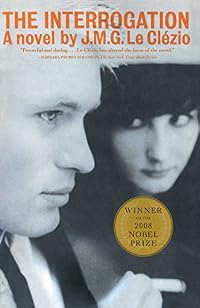
The Interrogation
by J.M.G. Le Clézio
On This Page
Description
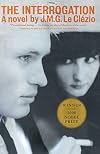
From the original Atheneum edition jacket, 1964. "J.M.G. Le Clézio, revelation of the literary year" ran the headline of the Paris Express after last year's prizes had been awarded. The Goncourt jury was locked five to five until its president used his double vote to give the prize to the older candidate. Ten minutes later the Renaudot jury elected the candidate they thought they might lose to the other prize. Most of the literary sections ran their prize news putting the Renaudot first, in show more order to feature the twenty-three-year-old discovery that was rocking Paris literary circles. What is The Interrogation? Most likely a myth without distinct delineations. A very solitary young man, Adam Pollo, perhaps the first man, perhaps the last, has a very remarkable interior adventure. He concentrates and he discovers ways of being, ways of seeing. He enters into animals, into a tree.... He has no business, no distractions; he is at the complete disposal of life. All of life, that is, except the society of his own species -- and so the story ends. "This is the next phase after the 'the new novel,'" wrote the critics. Kafka they said; a direct descendant of Joyce, they said. Beckett they said. Like nothing else, they said. One hundred thousand Frenchmen bought it. They said it was strange and beautiful. Finally the real voice of the young, said the critics. "I like J. D. Salinger," said Mr. Le Clézio, and that was all he said. His remarkable first book will soon be published all over the world and much more will be said. show lessTags
Recommendations




























Member Recommendations


Member Reviews
This book, and this author, art irredeemably poor. If you think this is an expressive conjuring of the mental state of a disturbed young man, if you think this is a fair representation of tortured imagination, you should read Schreber's "Memoirs of My Mental Illness," or Artaud, or Genet, or Burroughs, or anyone! Read Emil Nolde's Memoirs, read something by A.L. Kennedy, read anything!
Le Clézio writes whatever comes into his head at any moment. There are some sustained passages in which he is imagining something from one point of view, as one experience -- there's a chapter about a rat, and one about a dead man washed up on a beach -- but he continuously interrupts himself with random notions, names, places, and ideas. He seems to show more think this is how novels work, and he may also think this is how abnormal mental states feel. It is childish, in the bad sense of that word.
And the Nobel Prize: clearly, it is evidence that for many people, this kind of scattered, adventitious, random, opportunistic bricolage is an adequate representation of states of consciousness. Such people have apparently never experienced real depths of imagination. It is tremendously sad to think of that. show less
Le Clézio writes whatever comes into his head at any moment. There are some sustained passages in which he is imagining something from one point of view, as one experience -- there's a chapter about a rat, and one about a dead man washed up on a beach -- but he continuously interrupts himself with random notions, names, places, and ideas. He seems to show more think this is how novels work, and he may also think this is how abnormal mental states feel. It is childish, in the bad sense of that word.
And the Nobel Prize: clearly, it is evidence that for many people, this kind of scattered, adventitious, random, opportunistic bricolage is an adequate representation of states of consciousness. Such people have apparently never experienced real depths of imagination. It is tremendously sad to think of that. show less
First published in French in 1963 with the title Le proces verbal--The Interrogation was 2008 Nobel prize winner J. M. G. Le Clezio's first book. This novel vied for that years' Prix Goncourt (arguably the most prestigious French literary prize) but in the end won the Prix Renaudot instead. Le Clezio at the time was 23 years old.
In the preface to this work the young novelist sees his work as flawed--even so he does show off his prodigious talent. The novel follows one Adam Pollo--a young man in his late 20's--an army deserter or not?--from a well to do family. It is summer and Adam has busted into and is living in a beach house. He has broken contact with his family. He has rejected his upbringing and survives off of odd jobs, mooching show more and shoplifting. He hangs out around the beach and the small town nearby. He has an off and on relationship with Michele which includes at least occasional sex. As the novel moves along Adam's behavior becomes more extreme and erratic--his actions more desperate. When he finds out the Michele is hanging around an American he initiates a confrontation that turns physical and not to his benefit. Eventually he is arrested and put under psychiatric care--the novel ending with an interview he gives--and an attempt to explain his universal world vision to a group of young psychology students.
In his forward Le Clezio did not see his first work as entirely successful. ' It is perhaps too serious, too mannered and wordy; it's style ranges from para-realistic dialogue to pendantically aphoristical bombast'. He may have been at that time a little harsh on himself. It is a very interesting novel that nods to the Nouveau Romantist writers especially Robbe-Grillet and Butor. One might also see a similarity between his character Adam Pollo and Meursault-- the Albert Camus' main protagonist in The Stranger. At least I do. Le Clezio's work will of course evolve in several directions from that point in time to now. All in all it's a very good beginning. show less
In the preface to this work the young novelist sees his work as flawed--even so he does show off his prodigious talent. The novel follows one Adam Pollo--a young man in his late 20's--an army deserter or not?--from a well to do family. It is summer and Adam has busted into and is living in a beach house. He has broken contact with his family. He has rejected his upbringing and survives off of odd jobs, mooching show more and shoplifting. He hangs out around the beach and the small town nearby. He has an off and on relationship with Michele which includes at least occasional sex. As the novel moves along Adam's behavior becomes more extreme and erratic--his actions more desperate. When he finds out the Michele is hanging around an American he initiates a confrontation that turns physical and not to his benefit. Eventually he is arrested and put under psychiatric care--the novel ending with an interview he gives--and an attempt to explain his universal world vision to a group of young psychology students.
In his forward Le Clezio did not see his first work as entirely successful. ' It is perhaps too serious, too mannered and wordy; it's style ranges from para-realistic dialogue to pendantically aphoristical bombast'. He may have been at that time a little harsh on himself. It is a very interesting novel that nods to the Nouveau Romantist writers especially Robbe-Grillet and Butor. One might also see a similarity between his character Adam Pollo and Meursault-- the Albert Camus' main protagonist in The Stranger. At least I do. Le Clezio's work will of course evolve in several directions from that point in time to now. All in all it's a very good beginning. show less
A young man, Adam Pollo, has taken over an unoccupied house by the sea in a Mediterranean beach resort. He seems to be on the run, and may be a deserter from the army and/or a fugitive from a mental hospital — we aren't quite sure, and neither is he. He stares out of the window, scribbles letters to his girlfriend Michèle in a school exercise book, and occasionally goes to the beach or into town to try to establish some kind of contact with the world, usually unsuccessfully. He follows a strange dog, teases the animals in the zoo, watches the drowned body of an unknown man being retrieved from the sea, gets drunk, goes bin-diving, preaches to a crowd, and eventually gets picked up by the police and sent off for psychiatric show more evaluation. A strange, disconnected, jumpy sort of novel, full of gimmicks like inserted pages from the local paper, and very much of its time, but it seems to work. show less
I came across this author not by the Nobel route but rather by a quote by Le Clezio on Stig Dagerman. Reading about the title piqued my interest as I'll read almost anything on themes of alienation. On the other hand I'm not always a fan of very involved description but what the author achieves here is impressively vivid. A flaw is probably that it's a bit overwritten. The language is not as obscure as Beckett but the themes and style have something in common with Sartre and Camus. Also it's focus on all objects with an equal gaze brought to mind Handke's Goalie. Although not meant to be realistic it's nevertheless a powerful portrait of almost complete solipsism. The 'interrogation' at the end consists of a psychiatric examination and show more is illuminating of the character's previous condition of 'driftomania'. I know it's bad form to refer to other reviews but in general the author's early work seems little appreciated which seems a pity. I wonder if reader's reactions are partly dictated by fashion rather than an immediate reaction to the work. For instance Clarice Lispector is highly regarded but covers similar ground in probably a more abstruse style. This work makes more sense to me than her. show less
My second read by the 2008 winner of the Nobel Prize for Literature has as many peculiarities as Onitsha, which I read last year. I have little interest in detective novels or murder mysteries, but that does not mean I do not enjoy a good puzzler.
Le Clézio has provided me with a mysterious story of a young man in the form of experimental fiction with alternating narrators and viewpoints, gaps in the narrative with only brackets to mark the beginning and the end – sometimes a paragraph, and in one instance, more than a page. The 18 chapters are lettered from A through P, then R. A news paper, inserted after 17, fills in some of the details of the main character’s story, but bears no letter. Why did Le Clézio skip the letter Q? My show more first thought led me to think he wanted to write a novel without using the letter Q, but several words in “R” had that letter.
Adam Pollo, by his own admission, has either escaped from an insane asylum or deserted from the army – he is not sure. Adam lives alone in an empty house on the shore of the Mediterranean near Marseille. He spends a lot of time scrounging for discarded newspapers and magazines. Adam also writes letters in a notebook to a woman named Michelle. He seems to have some sort of relationship with her, but the details are as murky as the rest of Adam’s life, and as difficult as his relationship with his parents. He may have amnesia, he may be hallucinating, he may be depressed, he may be hypochondriac, he may be obsessive-compulsive, he may be a pack rat at best, or a disposaphobe at worst, and he may be schizophrenic. The eponymous interrogation in Chapter “R” may or may not eliminate some, or any, or all of these possibilities.
I can only describe Le Clézio’s prose as “hypermicrocosmic.” He doesn’t only mention Adam seeing his reflection in a store window, he sees “two eyes, one nose, one mouth, ears, a trunk, four limbs, shoulders and hips” (185). His descriptions verge on the hypnotic. At one point, Adam sees a young woman, and he notices her beauty: “she had the soft cheeks of a little girl in quite good health, nut-brown hair, and her best feature was a pair of full lips, not made up but very red, which were now parting silently so that a pearly drop sparkled in the middle of the warm cavity of her mouth; her voice would certainly flow from deep down in her throat and, with four vibrations in the upper vocal chords, put an end to that faint quivering at the corners of her mouth, complete the most recent of human apotheoses, half desire, half habit” (102).
One line particularly caught my attention. Le Clézio wrote, “He who writes is shaping a destiny for himself” (116). That line might need to be my new e-mail signature. If you enjoy a novel which requires heavy concentration, and if you enjoy deep and thorough psychological journeys in search of the self, then The Interrogation is a must read. 5 stars
--Jim, 11/6/09 show less
Le Clézio has provided me with a mysterious story of a young man in the form of experimental fiction with alternating narrators and viewpoints, gaps in the narrative with only brackets to mark the beginning and the end – sometimes a paragraph, and in one instance, more than a page. The 18 chapters are lettered from A through P, then R. A news paper, inserted after 17, fills in some of the details of the main character’s story, but bears no letter. Why did Le Clézio skip the letter Q? My show more first thought led me to think he wanted to write a novel without using the letter Q, but several words in “R” had that letter.
Adam Pollo, by his own admission, has either escaped from an insane asylum or deserted from the army – he is not sure. Adam lives alone in an empty house on the shore of the Mediterranean near Marseille. He spends a lot of time scrounging for discarded newspapers and magazines. Adam also writes letters in a notebook to a woman named Michelle. He seems to have some sort of relationship with her, but the details are as murky as the rest of Adam’s life, and as difficult as his relationship with his parents. He may have amnesia, he may be hallucinating, he may be depressed, he may be hypochondriac, he may be obsessive-compulsive, he may be a pack rat at best, or a disposaphobe at worst, and he may be schizophrenic. The eponymous interrogation in Chapter “R” may or may not eliminate some, or any, or all of these possibilities.
I can only describe Le Clézio’s prose as “hypermicrocosmic.” He doesn’t only mention Adam seeing his reflection in a store window, he sees “two eyes, one nose, one mouth, ears, a trunk, four limbs, shoulders and hips” (185). His descriptions verge on the hypnotic. At one point, Adam sees a young woman, and he notices her beauty: “she had the soft cheeks of a little girl in quite good health, nut-brown hair, and her best feature was a pair of full lips, not made up but very red, which were now parting silently so that a pearly drop sparkled in the middle of the warm cavity of her mouth; her voice would certainly flow from deep down in her throat and, with four vibrations in the upper vocal chords, put an end to that faint quivering at the corners of her mouth, complete the most recent of human apotheoses, half desire, half habit” (102).
One line particularly caught my attention. Le Clézio wrote, “He who writes is shaping a destiny for himself” (116). That line might need to be my new e-mail signature. If you enjoy a novel which requires heavy concentration, and if you enjoy deep and thorough psychological journeys in search of the self, then The Interrogation is a must read. 5 stars
--Jim, 11/6/09 show less
58. The interrogation by J.M.G. Le Clézio (1963, 245 page trade paperback, read Aug 19-25)
translated from French in 1964 by Daphne Woodward
Rating: 4 stars
Adam Pollo has hidden himself away in an empty house above the beach, right in his own hometown. There he sits in the sun all day, or does various rather odd and nonproductive activities. There is an insanity about him, but there is also a quest for a sort of full complete consciousness, a sense of being one with everything...well, maybe. It has a logic to it. It's a bit tough to read, as, although it's told in 3rd person, the text gets very intimate with Adam's wandering and confused thoughts and activities.
This is Le Clezio's first novel, published when he was still in his early show more 20's (He was born in 1940). It's quite different from the other books I've read by him. It has that same wandering yet finessed prose, but here that writing style is applied to Adam's wandering state of mind, giving it both a claustrophobic and disorienting feel.
So, after saying all that, you might wonder why I liked it. It has it's appeal. But, if you want to try Le Clezio, don't start here.
2015
https://www.librarything.com/topic/191940#5254875 show less
translated from French in 1964 by Daphne Woodward
Rating: 4 stars
Adam Pollo has hidden himself away in an empty house above the beach, right in his own hometown. There he sits in the sun all day, or does various rather odd and nonproductive activities. There is an insanity about him, but there is also a quest for a sort of full complete consciousness, a sense of being one with everything...well, maybe. It has a logic to it. It's a bit tough to read, as, although it's told in 3rd person, the text gets very intimate with Adam's wandering and confused thoughts and activities.
This is Le Clezio's first novel, published when he was still in his early show more 20's (He was born in 1940). It's quite different from the other books I've read by him. It has that same wandering yet finessed prose, but here that writing style is applied to Adam's wandering state of mind, giving it both a claustrophobic and disorienting feel.
So, after saying all that, you might wonder why I liked it. It has it's appeal. But, if you want to try Le Clezio, don't start here.
2015
https://www.librarything.com/topic/191940#5254875 show less
The Interrogation is Le Clézio's debut novel, which won the Prix Renaudot in 1963, written when he was only 23.
Adam Pollo is an almost 30 year old man who "is not sure whether he has just left the army or a mental home", as Le Clézio mentions in the Introduction. He breaks into a deserted house at the top of a hill overlooking a town on the southern French coast, and spends his days alone at the house or on the beach, observing but not interacting with people. He identifies with certain animals, and even imagines himself as metamorphosing into them, in particular a dog on the beach and a rat that he discovers in the house.
His only meaningful contact is with Michèle, a young woman from the town, who seems to be attracted to him but show more clearly does not understand him, particularly his metaphysical outbursts.
His behavior becomes more erratic and his thoughts become nonlinear, and he is eventually arrested and committed to a mental institution, where he appears to be most content. The story ends as he is interviewed by several medical students, as he unsuccessfully attempts to explain to them how he has reached this state.
This was an interesting but uneven read, but quite impressive given Le Clézio's young age. show less
Adam Pollo is an almost 30 year old man who "is not sure whether he has just left the army or a mental home", as Le Clézio mentions in the Introduction. He breaks into a deserted house at the top of a hill overlooking a town on the southern French coast, and spends his days alone at the house or on the beach, observing but not interacting with people. He identifies with certain animals, and even imagines himself as metamorphosing into them, in particular a dog on the beach and a rat that he discovers in the house.
His only meaningful contact is with Michèle, a young woman from the town, who seems to be attracted to him but show more clearly does not understand him, particularly his metaphysical outbursts.
His behavior becomes more erratic and his thoughts become nonlinear, and he is eventually arrested and committed to a mental institution, where he appears to be most content. The story ends as he is interviewed by several medical students, as he unsuccessfully attempts to explain to them how he has reached this state.
This was an interesting but uneven read, but quite impressive given Le Clézio's young age. show less
Members
- Recently Added By
Lists

Le Monde - Les 100 livres du siècle
121 works; 25 members

Nobel Price Winners
222 works; 20 members

Big Jubilee List
70 works; 3 members

Canon de la narrativa universal del s. XX (cicutadry)
499 works; 3 members

Biggest Disappointments
606 works; 168 members
Author Information

118+ Works 6,276 Members
Jean-Marie Gustave Le Clézio, who was born in Nice, France on April 13, 1940, is usually identified as J. M. G. Le Clézio. After studying at the University of Bristol in England from 1958 to 1959, he finished his undergraduate degree at Institut d'etudes Litteraires in Nice. In 1964, he received a master's degree from the University of show more Aix-en-Provence with a thesis on Henri Michaux and wrote a doctoral thesis in 1983 on Mexico's early history for the University of Perpignan. He has taught at numerous universities throughout the world and has written around 30 books including novels, essays, and short stories. He received the Prix Renaudot Prize for his novel Le Procès-Verbal in 1963 and the Nobel Prize for Literature in 2008. (Bowker Author Biography) show less
Some Editions
Awards and Honors
Series
Belongs to Publisher Series
Work Relationships
Has as a student's study guide
Common Knowledge
- Canonical title
- The Interrogation
- Original title
- Le procès-verbal
- Original publication date
- 1963 (original) (original); 1966-10-05 (Japanese translation) (Japanese translation)
- People/Characters
- Adam Pollo
- Epigraph
- Poll, as if he had been my favorite, was the only person permitted to talk to me." Robinson Crusoe
- First words
- Ik koester heimelijk twee ambities.
I have two secret ambitions. - Last words
- (Click to show. Warning: May contain spoilers.)Het zou mij werkelijk verbazen als er in de toekomst, n.a.v. Adam of iemand anders van zijn slag, niet iets te zeggen viel.
(Click to show. Warning: May contain spoilers.)It would be really strange if one of these days there were not something more to say about Adam or some other among him. - Blurbers
- Seaman, Donna; Stegner, Page; Shinoda, Hajime
- Original language
- French
Classifications
Statistics
- Members
- 527
- Popularity
- 56,364
- Reviews
- 15
- Rating
- (3.27)
- Languages
- 11 — Dutch, English, Finnish, French, German, Italian, Japanese, Norwegian (Bokmål), Polish, Spanish, Swedish
- Media
- Paper, Ebook
- ISBNs
- 23
- ASINs
- 19