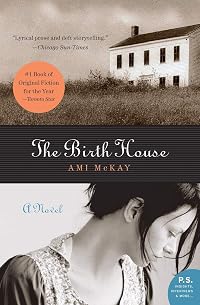
The Birth House
by Ami McKay 
On This Page
Description
In this breathtaking debut novel, Ami McKay has created an unforgettable portrait of the struggles that women have faced to control their own bodies and to keep the best parts of tradition alive in the world of modern medicine. The Birth House is the story of Dora Rare-the first daughter in five generations of Rares. As apprentice to the outspoken Acadian midwife Miss Babineau, Dora learns to assist the women of an isolated Nova Scotian village through infertility, difficult labors, breech show more births, unwanted pregnancies, and even unfulfilling sex lives. During the turbulent World War I era, uncertainty and upheaval accompany the arrival of a brash new medical doctor and his promises of progress and fast, painless childbirth. Dora soon finds herself fighting to protect the rights of women as well as the wisdom that has been put into her care. A tale of tradition and science, matriarchy and paternalism, past and future, The Birth House is "a dazzling first novel." (Library Journal), and a story more timely than ever. show lessTags
Recommendations

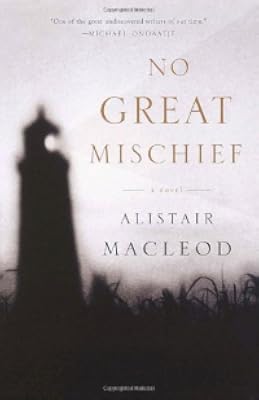

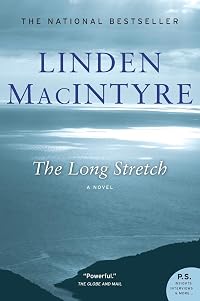
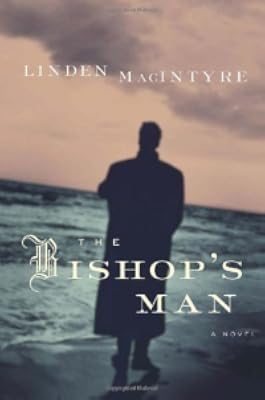
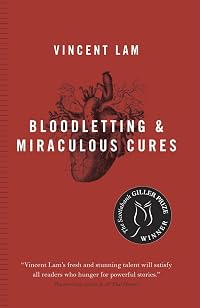


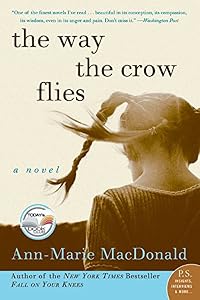

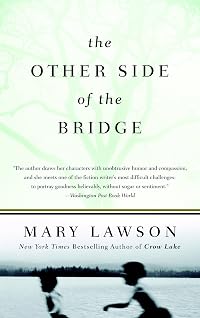
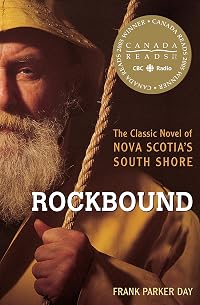
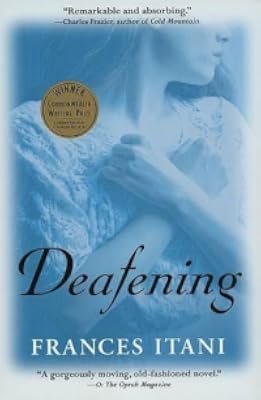






Member Recommendations
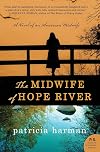
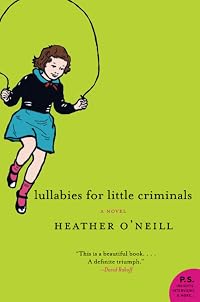
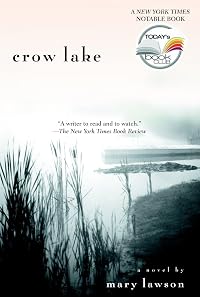
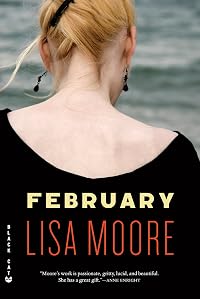
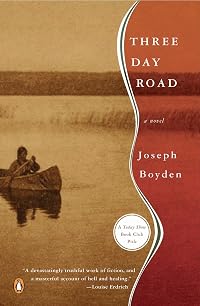
vancouverdeb Both books are about midwifery in the early 1920's ,1930's. Both also tackles social issues.

4leschats Also looks at historical issues within the context of women, births, and midwifery
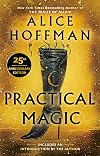
JolieLouise Has a similar "feel" to The Birth House. The difference being that the "remedies" used in The Birth House are more passed down folklore/wisdom whereas the "remedies, etc..." in Practical Magic are more magic/witchcraft. Both books have females as the main characters and the females have the power of healing/magic . . .
12
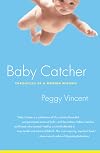
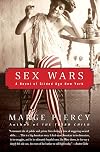
tangledthread also deals with the historical issues of gender politics.
Member Reviews
What an excellent book—a huge shoutout to the power of women over misogyny early last century, mostly set in Canada but a few important moments in Boston. The main character was raised to be a midwife. When a male doctor comes to town, he insists the old ways are dangerous and his newfangled ways (including forceps) are safer. There is so much to unpack about this book a short review cannot do it justice. In general, it speaks to the power of women in the face of a culture that deems men smarter, stronger, saner, safer, etc. And it does it, for the most part, in a beautiful and subtle way. The book is set during World War I and the Spanish flu. The author doesn’t miss a beat with current events in Canada and Boston at the time. show more Easily one of the best books I’ve read this year. show less
The Birth House by Ami McKay covers a topic I didn’t think I would typically pick up to read about, but at the same time I thought it sounded fascinating. This is the concept of home birthing in rural Novia Scotia. The book essentially depicts the clash between traditional folk medicine and the new modern medicine.
The novel was written well enough that I found myself rooting against the grain of my typical belief system. I suddenly found myself immensely sympathetic towards the old world religious and spiritualistic beliefs and feeling very anti modern medicinal practice. Being a scientist at heart I would never recommend someone go for a birth based on spiritual beliefs and old style medicine, but this is not really the nature of the show more book.
I think the intent of the book was to bring to light the clash of modern versus traditional life that was felt by women in the early 20th century. It also produced some interesting perspectives on the concept of marriage in a rural environment in the early 1900s and during WWI. The book does an excellent job at providing insight into the concept of how much control a married woman at those times had over her body. There was a lot of discussion of the nature of who got say in the birthing process from conception to birth and that person was generally a man, though the main character and her companions begin to try and change this. This is where a large portion of the clash between modern science and traditional science begin to come to play. The main character is trained in the traditional sense to care for pregnant women and “catch babies,” whereas a doctor is introduced in the community who tries and performs obstetrics in a very cold and clinical sense. The men find this aspect appealing, but the women are not comforted by it and want the more traditional birthing process. This is where the fight for who truly has control over a woman’s body begins to take effect.
This review so far sounds like all this book is about is pregnant women and the birthing process, but I can’t let it end like that. The book also discusses the small community of Scots Bay, Novia Scotia. McKay does an excellent job of describing this small town and the people within it. All of the characters in the town are memorable and play well off of one another. The character play and community really make this book heartwarming and a great read. It takes place during WWI, so along with technological changes there are also personal changes going on in the community. They are losing large numbers of young people and the war is an ever present item in the book, even if it is often part of the background.
The Birth House was a great book and a fast read. It was one of those books that I couldn’t put down and was able to make me sympathetic towards the main character even if I didn’t believe what she believed. McKay is an adept writer and produced some fascinating incites on feminism in the early 20th century. The characters were not perfect, but they were believable. This is a well written book and one you could finish in a day or two so worth the read. show less
The novel was written well enough that I found myself rooting against the grain of my typical belief system. I suddenly found myself immensely sympathetic towards the old world religious and spiritualistic beliefs and feeling very anti modern medicinal practice. Being a scientist at heart I would never recommend someone go for a birth based on spiritual beliefs and old style medicine, but this is not really the nature of the show more book.
I think the intent of the book was to bring to light the clash of modern versus traditional life that was felt by women in the early 20th century. It also produced some interesting perspectives on the concept of marriage in a rural environment in the early 1900s and during WWI. The book does an excellent job at providing insight into the concept of how much control a married woman at those times had over her body. There was a lot of discussion of the nature of who got say in the birthing process from conception to birth and that person was generally a man, though the main character and her companions begin to try and change this. This is where a large portion of the clash between modern science and traditional science begin to come to play. The main character is trained in the traditional sense to care for pregnant women and “catch babies,” whereas a doctor is introduced in the community who tries and performs obstetrics in a very cold and clinical sense. The men find this aspect appealing, but the women are not comforted by it and want the more traditional birthing process. This is where the fight for who truly has control over a woman’s body begins to take effect.
This review so far sounds like all this book is about is pregnant women and the birthing process, but I can’t let it end like that. The book also discusses the small community of Scots Bay, Novia Scotia. McKay does an excellent job of describing this small town and the people within it. All of the characters in the town are memorable and play well off of one another. The character play and community really make this book heartwarming and a great read. It takes place during WWI, so along with technological changes there are also personal changes going on in the community. They are losing large numbers of young people and the war is an ever present item in the book, even if it is often part of the background.
The Birth House was a great book and a fast read. It was one of those books that I couldn’t put down and was able to make me sympathetic towards the main character even if I didn’t believe what she believed. McKay is an adept writer and produced some fascinating incites on feminism in the early 20th century. The characters were not perfect, but they were believable. This is a well written book and one you could finish in a day or two so worth the read. show less
A well told tale, focused on one woman's life but deftly merging in historical events (Acadian eviction, Boston's molasses flood, home effort in WWI, Suffragettes). Social class divisions are a factor, with more educated women being pretentious and the country women focusing more on mutual aid, and was used by Dr Thomas who shamed men into providing "the best" for the wives during childbirth and flattered women who chose the scientific approach. While the women gathered to knit socks and mittens for the soldiers, they shared what they knew about how to get pregnant or avoid it. Yes, there were deaths for women under the care of midwives, but this also happened to women in hospitals. Marie Babineau, Dora's mentor, saw some women pull show more through difficult births while others couldn't, and sadly accepted that some women's lives were so hard or were so abused, that they didn't have "enough love to make a life" (p. 102), didn't have the will to fight for their life, that the outcome was ultimately in the hands of God.
I enjoyed the folk wisdom scattered throughout the book and appreciated that these were all compiled at the end. One of my favorites was collecting the first dew of May, "Mary's Tears", used for blessing the sick. "You'd think the fruit was the prize [for growing plants]...but it's the seeds that keeps the secrets. Like any other mother, the plant done spent all her life learnin' the earth. It's her seeds that does the rememberin' for her." (p. 153) show less
I enjoyed the folk wisdom scattered throughout the book and appreciated that these were all compiled at the end. One of my favorites was collecting the first dew of May, "Mary's Tears", used for blessing the sick. "You'd think the fruit was the prize [for growing plants]...but it's the seeds that keeps the secrets. Like any other mother, the plant done spent all her life learnin' the earth. It's her seeds that does the rememberin' for her." (p. 153) show less
The first girl child born in five generations of Rare male children, Dora Rare is viewed with some caution by the locals in her small Nova Scotia town. In her isolation, she is drawn to and becomes apprentice to the eccentric Miss B, the local midwife. WWI is changing everything and Dr. Thomas arrives in the area determined to move the community into the next phase of medical practice. He charges that midwifery is out of date and offers painless childbirth through the administration of new medicines. The women of the community begin to question the age-old practices of Miss B and transfer this skepticism to Dora when she takes over the practice after Miss B's death. Dora, however, carries the spirit and wisdom of Miss B within her; her show more care and compassion fuel her determination to protect women's ownership of the birthing process and all that surrounds it, including acceptance of its pain and risk. This is a compelling story written in deceptively straightforward prose. The characters are richly developed, the plot engaging, the setting palpable. Definitely a worthwhile read. show less
The story is not so much a story about birthing as it is one of the evolution of becoming re-born. There is character development—and then there are characters that already have everything they need to engage you with ease, curiosity, nostalgia, and a little spunk.
This book is about a number of struggles…a tension between choosing and ultimately accepting the dichotomies of our lives: what it means to be a woman embedded in the rural roots of the Bay of Fundy, Maritimes and what it could mean to be a woman witnessing the narrow streets filled with heavy brick buildings of a modernizing city called Boston; to the struggle of keeping the sentimentality, spirituality, and instinctive old wisdom of traditional midwifery versus the show more collision it faces with the sterility of new and upcoming science, technology, and modern medicine.
This is a story about women, for women—the empowerment needed to realize autonomy over choices, especially of those choices having to do with a woman’s body—her fertility, her pregnancy, her labour, her sex life, and the secrets of her desires. It’s also about community, home, and the special relationship women can and do have with one another, exclusive of their partners, the male-dominated assumptions that can be imposed on them, and the circumstances of a changing world.
In the face of fierce opposition, women in this novel bond, grow, and struggle together as fiercely as labour itself, to not reclaim themselves— but to proclaim themselves according to an identity that is acceptable to each of them personally.
It’s a tribute to the female struggle and the glorious gift we have been given as women: the tolerance and endurance to suffer pain and tragedy in order to make a life, carry it, save it, and also live it. Generation by generation. One moon, one prayer, one knit, and one choice at a time. show less
This book is about a number of struggles…a tension between choosing and ultimately accepting the dichotomies of our lives: what it means to be a woman embedded in the rural roots of the Bay of Fundy, Maritimes and what it could mean to be a woman witnessing the narrow streets filled with heavy brick buildings of a modernizing city called Boston; to the struggle of keeping the sentimentality, spirituality, and instinctive old wisdom of traditional midwifery versus the show more collision it faces with the sterility of new and upcoming science, technology, and modern medicine.
This is a story about women, for women—the empowerment needed to realize autonomy over choices, especially of those choices having to do with a woman’s body—her fertility, her pregnancy, her labour, her sex life, and the secrets of her desires. It’s also about community, home, and the special relationship women can and do have with one another, exclusive of their partners, the male-dominated assumptions that can be imposed on them, and the circumstances of a changing world.
In the face of fierce opposition, women in this novel bond, grow, and struggle together as fiercely as labour itself, to not reclaim themselves— but to proclaim themselves according to an identity that is acceptable to each of them personally.
It’s a tribute to the female struggle and the glorious gift we have been given as women: the tolerance and endurance to suffer pain and tragedy in order to make a life, carry it, save it, and also live it. Generation by generation. One moon, one prayer, one knit, and one choice at a time. show less
If it wasn’t so beautifully written, with wonderfully compelling characters, this book would be depressing, infuriating and sad. Set in the town of Scots Bay, Nova Scotia in the early 1900’s, The Birth House follows Dora Rare as she grows up to become a midwife and squares off against the local Doctor, champions the rights of women to choose where to give birth, and deals with her own personal and romantic issues. Narrative sections are interspersed with diary entries, letters, articles from the local newspaper, and some very realistic-looking advertisements for products marketed to women. (One featured a motor with attachments for everything from sewing machines to vibrators!) The specific voices of these women are elucidated show more lovingly and genuinely, serving to illuminate an era and area many of us are not terribly familiar with, providing us with glimpses into an area of study not generally dealt with in historical pieces. Remedies, tinctures, and methods are described in detail; birth and other related ailments are graphically represented. This book might not be intended for the faint of heart. It was surprising to me, personally, how the ladies were able to meld their use of herbs and what some circles would refer to as “spells” or “witchcraft” with a deep faith in God and very Christian prayers and lifestyle. Healing is ascribed as much to the Virgin Mary as it is to the potions and medicines. It’s interesting to me, because I always assumed it was either one or the other, and that the local “wise woman” would probably not be too welcome in church. The most striking thing about the narrative was how it points out that it wasn’t terribly long ago that women were treated as though every ailment was “hysterical” or “neurotic” and self-induced in order to get out of doing the housework and providing a refuge for her man, in addition to giving birth to 10-12 children. It’s not that I wasn’t aware that’s how it was, it’s that this book made it so real it was upsetting. After reading, you will be truly grateful you live in this era, and thankful to the women who paved the way. show less
This book took me back to a much simpler time. It is set during the time of the First World War in rural Nova Scotia, Canada. The characters are unbelievably real, and the book is very well-written indeed. I feel like I know these women and their heartaches and their joy. Choices for women were limited here, but you can tell that change is in the air. Women are wanting to start to take charge of some things in their life, such as where and how they want to give birth to their babies. The book is very compassionately written, and McKay keeps the plot going throughout. I felt like I was there with these wonderful, brave women and I was sorry to have the book end. It is a wonderful book!
Members
- Recently Added By
Published Reviews
ThingScore 88
As with Water for Elephants, this book sat on my 'to-read' list way too long. After finally picking it up from the library, I almost returned it without reading because it just didn't appeal to me. However, I am so happy that I opted to read rather than return.
I loved how the author, Ami McKay, wrote this story. It amazes me to think that the story actually takes place in the early 1900's and show more during WWI. Other than when the story actually mentioned the war or the fact that there wasn't electricity, you wouldn't have known that it wasn't a modern day story.
Also, I really enjoyed reading about midwifery. I chose to have a 'modern' birth when I had my son (ie. hospital with doctors) but have heard of so many wonderful stories of the 'midwife experience'. By the end of The Birth House, midwifes were becoming extinct and doctors becoming the way of the world... nowadays, it seems as if things are moving back in the other direction as more and more people chose to use a midwife over a doctor for their birthing experience. If only the people of Scots Bay knew this, it would have saved so much trouble
Overall, The Birth House was a wonderful debut novel by a Canadian author. It is a must-read for anyone who enjoys a story about a mother struggle to choose between what everyone says is right and what she feels is right in her heart show less
I loved how the author, Ami McKay, wrote this story. It amazes me to think that the story actually takes place in the early 1900's and show more during WWI. Other than when the story actually mentioned the war or the fact that there wasn't electricity, you wouldn't have known that it wasn't a modern day story.
Also, I really enjoyed reading about midwifery. I chose to have a 'modern' birth when I had my son (ie. hospital with doctors) but have heard of so many wonderful stories of the 'midwife experience'. By the end of The Birth House, midwifes were becoming extinct and doctors becoming the way of the world... nowadays, it seems as if things are moving back in the other direction as more and more people chose to use a midwife over a doctor for their birthing experience. If only the people of Scots Bay knew this, it would have saved so much trouble
Overall, The Birth House was a wonderful debut novel by a Canadian author. It is a must-read for anyone who enjoys a story about a mother struggle to choose between what everyone says is right and what she feels is right in her heart show less
added by LindsayGentles
McKay sets The Birth House against the historical backdrop of war, influenza, the Halifax Explosion, and the Great Boston Molasses Flood of 1919. Issues of women’s rights and freedoms are never far from the novel’s surface. Gradually Dora becomes the guardian of age-old female knowledge under threat from modern technology. She is forced into the fray when Dr. Gilbert Thomas, an ambitious, show more unscrupulous obstetrician, arrives in Scots Bay with promises of safe, painless childbirth. Young though she is, Dora knows that pain and danger are inseparable from life. With the staunch support of the Occasional Knitters Society, she fights Thomas’s hostile takeover. He counters with charges of malpractice, precipitating her flight to Boston....Intelligent, quirky, passionate, and funny, it deserves a wide readership and a long shelf life. show less
added by vancouverdeb
The miracle of birth and the struggle to live a good life; the miracle of a good life and the struggle to be born -- these are just a few of the themes explored in Ami McKay's poignant debut novel, The Birth House.
The novel is set in a small Nova Scotia community during a period of great change: in Europe, the First World War is raging. In North America advances in medicine and social show more organization are radically altering they way people live. It's an era charged with tumult, destruction and social revolution.
A national bestseller, The Birth House won the Ontario Library Association's 2007 Evergreen Award and was named one of the best books of the decade by Chapters Indigo show less
The novel is set in a small Nova Scotia community during a period of great change: in Europe, the First World War is raging. In North America advances in medicine and social show more organization are radically altering they way people live. It's an era charged with tumult, destruction and social revolution.
A national bestseller, The Birth House won the Ontario Library Association's 2007 Evergreen Award and was named one of the best books of the decade by Chapters Indigo show less
added by vancouverdeb
Lists

CBC Books - Canada's 100 (+ bonus 10): Which have you read?
110 works; 23 members

Historical Fiction
889 works; 91 members

Female Author
1,234 works; 67 members

Canada Reads Winners and Nominees
129 works; 9 members

CBC's Great Canadian Reading List
149 works; 5 members

Canada
42 works; 3 members

Books Set in Canada
57 works; 10 members

I Could Live There
185 works; 12 members

Canadian Historical Fiction 🇨🇦
157 works; 8 members

Which house?
423 works; 16 members

Evergreen Award™ Winners and Nominees 2005–2024
200 works; 3 members
Author Information

8 Works 4,135 Members
Ami McKay was born in Indiana in 1968. She is a playwright, novelist and journalist. She started her writing career as a freelancer for CBC Radio. Her work has aired on 'This Morning' and 'The Sunday Edition'. Her documentary, Daughter of Family G won an Excellence in Journalism Medallion at the 2003 Atlantic Journalism Awards.Her first title, The show more Birth House, made the Number One Spot on Canadian best sellers list. In 2012 she won the Atlantic Independent Booksellers' Association "Bookseller's Choice of the Year" award for her title, The Virgin Cure. (Bowker Author Biography) show less
Ami McKay is a LibraryThing Author, an author who lists their personal library on LibraryThing.
Some Editions
Awards and Honors
Awards
Common Knowledge
- Canonical title
- The Birth House
- Original publication date
- 2006
- People/Characters
- Dora Rare; Miss Marie Babineau; Gilbert Thomas
- Important places
- Nova Scotia, Canada; Scots Bay, Nova Scotia, Canada; Annapolis Valley, Nova Scotia, Canada
- Dedication
- For my husband, Ian, My heart, my love, my home
- First words
- Prologue
My house stands at the edge of the earth.
Ever since I can remember, people have had more than enough to say about me. - Quotations
- A rumour is about as hard to unspread as butter.
No matter what you do, someone always knew you would.
Throw an onion after a bride and you'll throw away her tears.
The most horrible curse you can put on a woman is to kiss her on the cheeks and tells her that things couldn't get any worse. The minute you say it, they surely does.
Our little village, perched on the crook of God's finger, has always been ruled by storm and season.
If your husband smokes, be thankful he doesn't chew; if he smokes and chews both, be thankful he doesn't drink; if he does all three, be thankful he won't live long. - Last words
- (Click to show. Warning: May contain spoilers.)They are waiting for the lights to go on in the Bay.
Classifications
Statistics
- Members
- 2,142
- Popularity
- 9,538
- Reviews
- 115
- Rating
- (3.94)
- Languages
- Dutch, English, German, Spanish
- Media
- Paper, Audiobook, Ebook
- ISBNs
- 20
- ASINs
- 11