
Over the Edge of the World: Magellan's Terrifying Circumnavigation of the Globe
by Laurence Bergreen
On This Page
Description
The riveting story of Ferdinand Magellan's historic 60,000-mile ocean voyage-now updated with a new introduction commemorating the 500th anniversary of his journey. Ferdinand Magellan's daring circumnavigation of the globe in the sixteenth century was a three-year odyssey filled with sex, violence, and amazing adventure. Now in Over the Edge of the World, prize-winning biographer and journalist Laurence Bergreen entwines a variety of candid, firsthand accounts, bringing to life this show more groundbreaking and majestic tale of discovery that changed both the way explorers would henceforth navigate the oceans and history itself. Now updated to include a new introduction commemorating the 500th anniversary of Magellan's voyage. show lessTags
Recommendations






















Member Recommendations



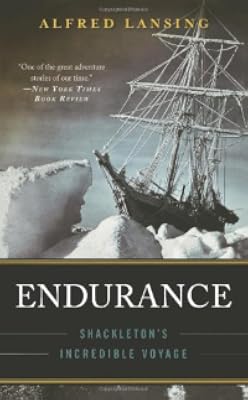
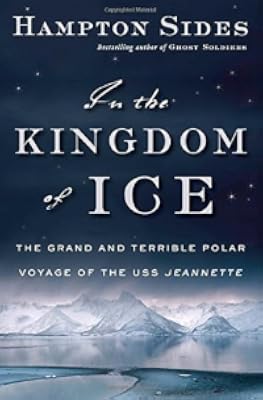
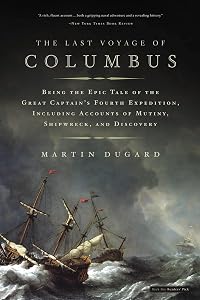
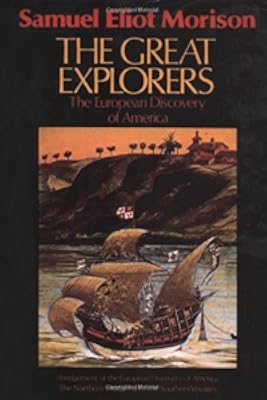
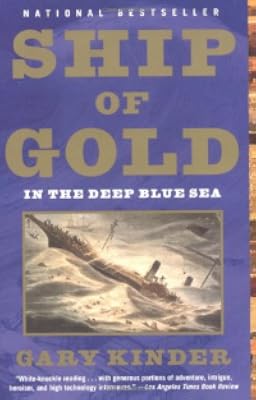
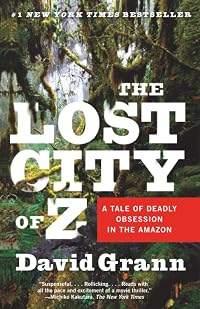
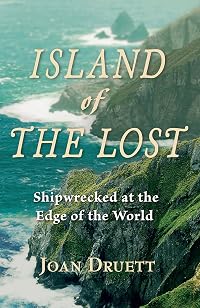
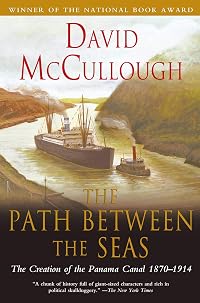
karatelpek Similar time period and readability

karatelpek Another epic voyage and historic first in the age of discovery
karatelpek Another epic, readable adventure
Member Reviews
It all began with the Treaty of Tordesillas. That hubristic bit of parchment that split newly discovered lands between Spain and Portugal. Gold, silver, and slaves were the standard, but control over the world economy was through spice.
Ferdinand Magellan came from a privileged Portuguese family. Well educated, he had sailed on trading assignments to India, and did his time in the foreign service. But what he truly desired was to travel to the Spice Islands. Three times he asked for King Manuel's sponsorship and was denied. Finally, despite years of loyalty, he entered Spain as an emigrant and swore fealty to Charles I. Eager to prove himself, he shared all he knew of secret Portuguese sea charts.
With a 260 member crew that included his show more nephew, his illegitimate son, and a crucial Venetian chronicler named Pigafetta, Magellan left Seville with 5 ships: the Trinidad, the San Antonio, the Concepcion, the Victoria and the Santiago. Along the way the men would face starvation, unearthly storms and squalls, scurvy, mutiny, and the constant threat of the Portuguese. Magellan proved to be brave but instigative and foolish, leading to his death. Only one ship, the Victoria, would make it back from around the world, with a priceless hold full of cloves, and without Magellan.
Narratively, this was an enjoyable read. It was easy to follow, despite many landfalls, names and frequent changes of the guard among the ships. Bergreen certainly knows when to summarize and when to go into significant detail. But I certainly can't give it 4 or 5 stars because of how neglectful it was in regards to native peoples. Explorers' descriptions are taken at face value, sometimes quoted directly, but never expanded, clarified or corrected. Natives are called cannibals, some as submissive and hyper-sexual, esp. the women; so in that aspect it was poorly researched. show less
Ferdinand Magellan came from a privileged Portuguese family. Well educated, he had sailed on trading assignments to India, and did his time in the foreign service. But what he truly desired was to travel to the Spice Islands. Three times he asked for King Manuel's sponsorship and was denied. Finally, despite years of loyalty, he entered Spain as an emigrant and swore fealty to Charles I. Eager to prove himself, he shared all he knew of secret Portuguese sea charts.
With a 260 member crew that included his show more nephew, his illegitimate son, and a crucial Venetian chronicler named Pigafetta, Magellan left Seville with 5 ships: the Trinidad, the San Antonio, the Concepcion, the Victoria and the Santiago. Along the way the men would face starvation, unearthly storms and squalls, scurvy, mutiny, and the constant threat of the Portuguese. Magellan proved to be brave but instigative and foolish, leading to his death. Only one ship, the Victoria, would make it back from around the world, with a priceless hold full of cloves, and without Magellan.
Narratively, this was an enjoyable read. It was easy to follow, despite many landfalls, names and frequent changes of the guard among the ships. Bergreen certainly knows when to summarize and when to go into significant detail. But I certainly can't give it 4 or 5 stars because of how neglectful it was in regards to native peoples. Explorers' descriptions are taken at face value, sometimes quoted directly, but never expanded, clarified or corrected. Natives are called cannibals, some as submissive and hyper-sexual, esp. the women; so in that aspect it was poorly researched. show less
This book was amazingly good! I had never given much thought to Magellan circumnavigating the globe before but this book promised to be a gripping page turner according to the reviews. It was just that.
For a nonfiction book, this flowed well and kept up a good pace. I learned and relearned about the Age of Discovery and about life on a ship in the 16th century. It wasn't pleasant. It seemed if the storms didn't get you, the scurvy would.
Everything is presented here: the good, the bad, and the ugly. The self-righteousness of people claiming other people's countries with the idea it was their due is the sad, unsettling, and very real undertone of this book. These men discover new lands, new wildlife, new cultures. They also burn down show more villages, kill native peoples, baptize them in the name of Christianity, and trade trinkets for treasure. They often consider mutiny against their Captain General but are usually punished according to the ways of the Spanish Inquisition. Read: Torture.
Knowing next to nothing about this journey, it was definitely a page turner for me. I had no idea what happened when they got to the Phillippines, for instance. I appreciate the work the author did in his research and also the epilogue he added. I love epilogues as I like that sense of closure.
Now I want more! There's no end of exploration novels, I expect. This was certainly a good one. show less
For a nonfiction book, this flowed well and kept up a good pace. I learned and relearned about the Age of Discovery and about life on a ship in the 16th century. It wasn't pleasant. It seemed if the storms didn't get you, the scurvy would.
Everything is presented here: the good, the bad, and the ugly. The self-righteousness of people claiming other people's countries with the idea it was their due is the sad, unsettling, and very real undertone of this book. These men discover new lands, new wildlife, new cultures. They also burn down show more villages, kill native peoples, baptize them in the name of Christianity, and trade trinkets for treasure. They often consider mutiny against their Captain General but are usually punished according to the ways of the Spanish Inquisition. Read: Torture.
Knowing next to nothing about this journey, it was definitely a page turner for me. I had no idea what happened when they got to the Phillippines, for instance. I appreciate the work the author did in his research and also the epilogue he added. I love epilogues as I like that sense of closure.
Now I want more! There's no end of exploration novels, I expect. This was certainly a good one. show less
A broad, thorough exploration of the man, myth and Moluccas. Plenty of meat on the bone here even for those familiar with the history. The winningest aspect, naturally, is how effectively the "experience" (misery, courage, et all) is lain on the page. I love a good sea yarn and, aside from Cheng Ho and Polo, few capture the imagination is the first "known" circumnavigator. Easily worth the cost of admission and a healthy tip besides. Cheers.
As others have said this is primarily a page-turning adventure on the high seas featuring endurance, fear, starvation, mutiny, scurvy, greed, death, torture etc. All for a few barrels of cloves. The backdrop is the 'Age of Discovery' and the rivalry between the then two naval superpowers of Spain and Portugal, both bidding for control over the lucrative spice economy. This was an unfamiliar period of history for me so I found the book enlightening in that respect. We are reminded that at the start of the voyage there was still no consensus that the earth was round, maps and charts were next to useless and superstitions regarding mythical sea creatures and cannibals abounded. The author successfully draws characters for the main players show more from the historical sources available. Pigafetta, the main chronicler of the voyage perhaps emerging as something of the true hero, certainly more engaging and sympathetic than Magellan. But the story is the thing here and it is quite staggering and more compelling to know that it was all true. show less
Everything I knew about Magellan I learned in 6th or 7th grade so it clearly was time for an update, but it took a desire to learn more about the 16th century exploration and colonisation of Asia by the European nations to introduce me to some of the most fascinating and entertaining books I've read in recent years. This is one of them.
Bergreen's history is one of those fun reads that includes everything from the origin of words ("Arabs...formulated elixirs and syrups derived from spices, including julab, from which the word "julep" derived its very name; and how Portugal's famous Guadalqivir River derived its name from the Arabic original Wadi al-Kabir, meaning "great river") to discovering that Magellan was once a page in the Lisbon show more royal court, together with his brother (Diogo) before seeking patronage for his planned expedition to the Indies. Three times he was turned down by the Portuguese king before he emigrated to Spain, home of Magellan's boyhood hero, Christopher Columbus, where he finally found his desired patron and hoped he would succeed where Columbus didn't. We learn that hammocks weren't yet used on board ships during Magellan's lifetime; sailors would just "appropriate a plank" or sprawl wherever there was space. That cats were only newly domesticated in Europe in the 16th century and unfortunately none had been brought onboard to keep the rat population at bay. If you're interested in obscure historical facts, you'll love Over the Edge of the World.
The story of that 1519 expedition is, of course, the main story, but it is enriched by many side stories, such as that of Faleiro, who was a brilliant cosmographer and Magellan's planned companion, but who also suffered from bipolar disorder "or some other form of extreme depression" and in the end, never went to sea. And one of the few survivors of the voyage, the Basque shipmaster Elcano, who was one of the initial mutineers.
Easy to read, fun, and a page-turner. If only secondary school history teachers would add such titles to their reading lists. show less
Bergreen's history is one of those fun reads that includes everything from the origin of words ("Arabs...formulated elixirs and syrups derived from spices, including julab, from which the word "julep" derived its very name; and how Portugal's famous Guadalqivir River derived its name from the Arabic original Wadi al-Kabir, meaning "great river") to discovering that Magellan was once a page in the Lisbon show more royal court, together with his brother (Diogo) before seeking patronage for his planned expedition to the Indies. Three times he was turned down by the Portuguese king before he emigrated to Spain, home of Magellan's boyhood hero, Christopher Columbus, where he finally found his desired patron and hoped he would succeed where Columbus didn't. We learn that hammocks weren't yet used on board ships during Magellan's lifetime; sailors would just "appropriate a plank" or sprawl wherever there was space. That cats were only newly domesticated in Europe in the 16th century and unfortunately none had been brought onboard to keep the rat population at bay. If you're interested in obscure historical facts, you'll love Over the Edge of the World.
The story of that 1519 expedition is, of course, the main story, but it is enriched by many side stories, such as that of Faleiro, who was a brilliant cosmographer and Magellan's planned companion, but who also suffered from bipolar disorder "or some other form of extreme depression" and in the end, never went to sea. And one of the few survivors of the voyage, the Basque shipmaster Elcano, who was one of the initial mutineers.
Easy to read, fun, and a page-turner. If only secondary school history teachers would add such titles to their reading lists. show less
Once again, I'm just enthralled at naval/meritime adventure books. But what a wasted opportunity for Magellan. He spends most of his life being dumped on by his homeland (Portugal), finally get his big chance to follow his dream of finding a route to the spice islands, and he blows it only half-way through! It just goes to show that the nature of man is constant and will always be subject to the same character flaws.
The book could have been a little more descriptive, more of a travelogue, regarding the various points of the voyage (the information about Patagonia was very interesting), but the author has a lot to cover, so I understand the glossing over in some areas.
Very much worth reading. I just can't imagine ever living through show more something like this, or others such as Shakleton's adventure, or the tragedy of the whaleship Essex. show less
The book could have been a little more descriptive, more of a travelogue, regarding the various points of the voyage (the information about Patagonia was very interesting), but the author has a lot to cover, so I understand the glossing over in some areas.
Very much worth reading. I just can't imagine ever living through show more something like this, or others such as Shakleton's adventure, or the tragedy of the whaleship Essex. show less
I admit to knowing little about Magellen before reading this book and came away still not knowing too much about the man but instead being somewhat gobsmacked about the voyage, the men who sailed on it and the actions of these and the people they met.
If I wasn't wincing upon reading aout the art of "palang" (genital stretching) and how men attached a bell to their testicles and the local women could claim they would recognise the ring of each man's testes bell as he wandered by, I was bemused by the story of the Chamarro people of Guam who were looking for a fun fight with the sailors and were disappointed the sailors couldn't fight back. As for the sailors' diet of rat faeces mixed with sawdust, I will try to excise it from my show more nightmares.
Reading "Over the edge of the world" did make me wonder why it is Magellen is so well known, yet barely made it 1/2 way through the voyage, while others, like Magellen's slave Enrique, who appears to be the first person to successfully circumnavigate the world, or the Basque Juan Elcano, who commanded the voyage finally back to Spain, are barely remembered?
I have read other sources that claim Elcano is not mentioned much due to the fact he was Basque. Who knows? Anyhoo, read the book; it's a ripping tale. show less
If I wasn't wincing upon reading aout the art of "palang" (genital stretching) and how men attached a bell to their testicles and the local women could claim they would recognise the ring of each man's testes bell as he wandered by, I was bemused by the story of the Chamarro people of Guam who were looking for a fun fight with the sailors and were disappointed the sailors couldn't fight back. As for the sailors' diet of rat faeces mixed with sawdust, I will try to excise it from my show more nightmares.
Reading "Over the edge of the world" did make me wonder why it is Magellen is so well known, yet barely made it 1/2 way through the voyage, while others, like Magellen's slave Enrique, who appears to be the first person to successfully circumnavigate the world, or the Basque Juan Elcano, who commanded the voyage finally back to Spain, are barely remembered?
I have read other sources that claim Elcano is not mentioned much due to the fact he was Basque. Who knows? Anyhoo, read the book; it's a ripping tale. show less
Members
- Recently Added By
Lists

r/AskHistorians' Recommended Books
1,068 works; 18 members

Top Five Books of 2019
387 works; 111 members

Non-Fiction Worth Reading
1,015 works; 261 members

Renacimiento
24 works; 1 member

Books Read in 2015
3,299 works; 126 members

Books Read in 2011
684 works; 19 members
Author Information

14+ Works 4,981 Members
Laurence Bergreen is a bestselling author of Over the Edge of the World: Magellan's Terrifying Circumnavigation of the Globe. His other books include Columbus: The Four Voyages, 1492-1504; Marco Polo: From Venice to Xanadu; and Voyage to Mars: NASA's Search for Life Beyond Earth. A graduate of Harvard, Bergreen lives in Manhattan.
Some Editions
Awards and Honors
Common Knowledge
- Canonical title
- Over the Edge of the World: Magellan's Terrifying Circumnavigation of the Globe
- Original title
- Over the Edge of the World: Magellan's Terrifying Circumnavigation of the Globe
- Alternate titles
- Over the Edge of the World
- Original publication date
- 2003
- People/Characters
- Alda de Mesquita; Fernao de Magalhaes; Rodrigo de Magalhaes; King Manuel I of Portgual; King Charles I of Castile, Aragon and Leon; Juan Rodríguez de Fonseca (show all 36); Juan de Cartagena; Sebastian Alvares; Antonio Pigafetta; Beatriz Barbosa; Gonzalo Gomez de Espinosa; Joao Lopes Carvalho; Hernando Bustamente; Luis de Mendoza; Gaspar de Quesada; Juan de Elorriaga; Alvaro de Mesquita; Juan Serrano; Duarte Barbosa; Master Andrew of Bristol; Hans Bergen; Cheng Ho; Enrique; Rajah Kolambu; Martin Barreta; King Humabon; Cristovao Rebelo; Andres de San Martin; Father Valderrama; Luis Alfonso de Gois; Sancho de Heredia; Simon de la Rochela; King Iussu of Gilolo; Martin de Ayamonte; Bartolome de Saldana; Pedro Alfonso de Lorosa
- Important places
- Seville, Andalusia, Spain; Lisbon, Estremadura, Portugal; Valladolid, Castile and León, Spain; Sanlucar de Barrameda, Cadiz, Andalucia, Spain; Cape Corrientes, Indian Ocean; Puerto San Julián, Patagonia, Santa Cruz, Argentina (show all 12); Cape of the Eleven Thousand Virgins, Santa Cruz Province, Patagonia, Argentina; Tierra del Fuego, Argentina; Guam, Micronesia; Cebu, Central Visayas, Philippines; Cimbonbon, Palawan, Philippines; Tidore, North Maluku, Indonesia
- Important events
- Treaty of Tordesillas (1494-6-7); Easter Mutiny (1520); Battle of Mactan (1521-4-27); Magellan Expedition (1519 | 1522)
- Epigraph
- How a ship having passed the Line was driven by
storms to the cold Country towards the South Pole;
and how from thence she made her course to the
tropical Latitude of the Great Pacific Ocean; and
the Ancyent Marinere came back to his own Country -- Samuel Taylor Coleridge "The Rime of the Ancient Mariner" - Dedication
- In memory of my brother and father
- First words
- On September 6, 1522, a battered ship appeared on the horizon near the port of San Lucar de Barrameda, Spain.
- Last words
- (Click to show. Warning: May contain spoilers.)Their deeds and character, for better or worse, still resonate powerfully.
- Blurbers
- Smith, Liz
Classifications
- Genres
- History, General Nonfiction, Nonfiction, Travel, Biography & Memoir
- DDC/MDS
- 910.92 — History & geography Geography & travel modified standard subdivisions of Geography and travel Explorers & Travelers Geographers, travellers, explorers regardless of country of origin
- LCC
- G420 .M2 .B47 — Geography, Anthropology and Recreation Geography (General) Special voyages and travels
- BISAC
Statistics
- Members
- 2,362
- Popularity
- 8,298
- Reviews
- 57
- Rating
- (4.00)
- Languages
- 9 — Dutch, English, Estonian, Finnish, Italian, Polish, Portuguese, Spanish, Turkish
- Media
- Paper, Audiobook, Ebook
- ISBNs
- 34
- ASINs
- 6