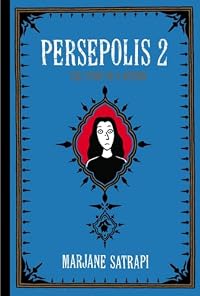
Persepolis II: The Story of a Return
by Marjane Satrapi
Persepolis (Collections and Selections — Omnibus 3-4)
On This Page
Description
The great-granddaughter of Iran's last emperor and the daughter of ardent Marxists continues her description of growing up in Tehran--a country plagued by political upheaval and vast contradictions between public and private life.Tags
Recommendations




























Member Recommendations

Member Reviews
Persepolis 2 picks up where Persepolis left off, with teenaged Marjane newly arrived in Vienna to go to school. Although her parents had arranged for her to stay with friends, after 10 days she is packed off to a boarding house run by nuns. Marjane bounces from place to place and identity to identity, eventually ending up homeless on the streets of Vienna. When she finally returns home to Iran, she finds that her country has changed as much as she has.
Satrapi is as hard on herself as she is on those she feels wronged her throughout her teen and young adult years, including some shameful incidents she could have glossed over. In one story, Satrapi is out on the streets in Iran wearing lipstick, and when a carful of Guardians of the show more Revolution arrive, she fears they will arrest her for it. To distract them, she accuses a man on the street of saying something indecent to her, and they arrest him instead. She finds this funny, and shares the story with her boyfriend and then with her grandmother. It isn't until her grandmother yells at her and storms out that Satrapi really thinks about what she has done.
I have almost no experience with the graphic format--aside from Persepolis and Persepolis 2 I have read a few short pieces--so I'm not able to judge this book against others of its type. But if they work as well as Satrapi's does, I will be looking for more graphic works. In Persepolis 2, Satrapi uses the words to get across her story and her pictures to do the real talking. Satrapi's story as a troubled teen trying to find herself is compelling, but it is her images of life in Iran after the revolution that haunt.
(A minor note for parents: I took this volume out of the library, where it was shelved under YA (as were all their graphic-format books, apparently). Satrapi depicts sex and drug use frankly in this work, and I would hesitate to call it YA.) show less
Satrapi is as hard on herself as she is on those she feels wronged her throughout her teen and young adult years, including some shameful incidents she could have glossed over. In one story, Satrapi is out on the streets in Iran wearing lipstick, and when a carful of Guardians of the show more Revolution arrive, she fears they will arrest her for it. To distract them, she accuses a man on the street of saying something indecent to her, and they arrest him instead. She finds this funny, and shares the story with her boyfriend and then with her grandmother. It isn't until her grandmother yells at her and storms out that Satrapi really thinks about what she has done.
I have almost no experience with the graphic format--aside from Persepolis and Persepolis 2 I have read a few short pieces--so I'm not able to judge this book against others of its type. But if they work as well as Satrapi's does, I will be looking for more graphic works. In Persepolis 2, Satrapi uses the words to get across her story and her pictures to do the real talking. Satrapi's story as a troubled teen trying to find herself is compelling, but it is her images of life in Iran after the revolution that haunt.
(A minor note for parents: I took this volume out of the library, where it was shelved under YA (as were all their graphic-format books, apparently). Satrapi depicts sex and drug use frankly in this work, and I would hesitate to call it YA.) show less
Marjane is now a teenager, has left Iran, and is attending school in Vienna. She feels isolated from her peers because they are rich and do not understand what her life was like in a "third-world country". She falls in with a crowd of anarchists who seem to idolize her for her expiriences, especially with death. They don't provide her with a sense of belonging any more than her rich classmates did. The isolation eventually crushes her, and she moves back to Iran. There, she has something in common with everyone: the fear and oppression of a religious extremist government.
This is really an amazingly accessible book. To a large extent Marjane's troubles are universal: she is a teenager who feels she does not fit in with anyone. She show more eventually comes around to the idea that the people she shares the most with are those she thought she shared the least with: her parents. At the same time, it's an incredible and emotional picture of Iran from inside, told from the perspective of an ordinary girl, with the assistance of simple drawings. These two graphic novels should be required reading for everyone. show less
This is really an amazingly accessible book. To a large extent Marjane's troubles are universal: she is a teenager who feels she does not fit in with anyone. She show more eventually comes around to the idea that the people she shares the most with are those she thought she shared the least with: her parents. At the same time, it's an incredible and emotional picture of Iran from inside, told from the perspective of an ordinary girl, with the assistance of simple drawings. These two graphic novels should be required reading for everyone. show less
As funny and poignant as its predecessor, Persepolis 2 is another clear-eyed and searing condemnation of the human cost of fundamentalism. In its depiction of the struggles of growing up — here compounded by Marjane's status as an outsider both abroad and at home — it is raw, honest, and incredibly illuminating.
Earlier this year, I read the first part of Marjane Satrapi’s memoirs, the graphic novel “Persepolis”. Now, I felt, was a good time to revisit her story that in this second part begins with her difficult years in Austria.
In Vienna, Marjane feels isolated: Her experiences living in Vienna as a young adult highlight the challenges of being a foreigner in a new and unfamiliar culture. Marjane's struggles with language, cultural norms, and social expectations make her feel like an outsider.
Her experiences in Vienna also highlight the cultural differences between Iran and the West, and the challenges of navigating those differences as a young person. Marjane’s rebellious streak and her desire to fit in with her Western peers often show more clash with her Iranian upbringing and cultural values, leading to feelings of confusion and isolation.
Considering she lived there during the early 80s, a time during which conservatism, xenophobia and intolerance really thrived again, it’s no wonder she had some horrible experiences and, ultimately, decided to return to Iran.
Hardly at what she considered home, though, Marjane has to face the challenges of returning to a familiar but changed culture: Her experiences living abroad had given her a new perspective on her Iranian upbringing, and she struggles to reconcile her Western-influenced worldview with the traditional values and expectations of Iranian society. Her experiences with romantic relationships, gender roles, and political activism all highlight the tensions between her personal beliefs and the expectations of Iranian society.
Marjane's candid and honest portrayal of her experiences also helps to demystify Iran and Iranian culture for readers - like myself - who are not familiar with it. By sharing her personal experiences and perspectives, Marjane allows us to see Iran as a complex and multifaceted society, rather than a monolithic or exoticized entity. This helps to bridge cultural divides and promote greater understanding and empathy between different cultures.
I also appreciate Satrapi's unflinching honesty in her storytelling. She doesn't shy away from difficult or uncomfortable subjects, and her willingness to share her personal experiences and emotions make the story all the more authentic and relatable. Her portrayal of the complexities of Iranian society and the impact of political upheaval on individuals and families is both nuanced and insightful.
Another of the strengths of "Persepolis 2" is Satrapi's unique graphic style, which is both simple and expressive. Her use of black and white illustrations adds to the starkness of the story, and the minimalism of the drawings allows the reader to focus on the emotions and experiences of the characters.
Overall, "Persepolis 2" is a powerful and moving graphic novel that offers a unique perspective on Iranian history and culture, while also exploring universal themes of identity, belonging, and resilience.
Five out of five stars.
Blog | Facebook | Twitter | Mastodon | Instagram | Pinterest | Medium | Matrix | Tumblr
Ceterum censeo Putin esse delendam show less
In Vienna, Marjane feels isolated: Her experiences living in Vienna as a young adult highlight the challenges of being a foreigner in a new and unfamiliar culture. Marjane's struggles with language, cultural norms, and social expectations make her feel like an outsider.
Her experiences in Vienna also highlight the cultural differences between Iran and the West, and the challenges of navigating those differences as a young person. Marjane’s rebellious streak and her desire to fit in with her Western peers often show more clash with her Iranian upbringing and cultural values, leading to feelings of confusion and isolation.
Considering she lived there during the early 80s, a time during which conservatism, xenophobia and intolerance really thrived again, it’s no wonder she had some horrible experiences and, ultimately, decided to return to Iran.
Hardly at what she considered home, though, Marjane has to face the challenges of returning to a familiar but changed culture: Her experiences living abroad had given her a new perspective on her Iranian upbringing, and she struggles to reconcile her Western-influenced worldview with the traditional values and expectations of Iranian society. Her experiences with romantic relationships, gender roles, and political activism all highlight the tensions between her personal beliefs and the expectations of Iranian society.
Marjane's candid and honest portrayal of her experiences also helps to demystify Iran and Iranian culture for readers - like myself - who are not familiar with it. By sharing her personal experiences and perspectives, Marjane allows us to see Iran as a complex and multifaceted society, rather than a monolithic or exoticized entity. This helps to bridge cultural divides and promote greater understanding and empathy between different cultures.
I also appreciate Satrapi's unflinching honesty in her storytelling. She doesn't shy away from difficult or uncomfortable subjects, and her willingness to share her personal experiences and emotions make the story all the more authentic and relatable. Her portrayal of the complexities of Iranian society and the impact of political upheaval on individuals and families is both nuanced and insightful.
Another of the strengths of "Persepolis 2" is Satrapi's unique graphic style, which is both simple and expressive. Her use of black and white illustrations adds to the starkness of the story, and the minimalism of the drawings allows the reader to focus on the emotions and experiences of the characters.
Overall, "Persepolis 2" is a powerful and moving graphic novel that offers a unique perspective on Iranian history and culture, while also exploring universal themes of identity, belonging, and resilience.
Five out of five stars.
Blog | Facebook | Twitter | Mastodon | Instagram | Pinterest | Medium | Matrix | Tumblr
Ceterum censeo Putin esse delendam show less
Satrapi's purpose for writing Persepolis was to show that life in Iran is much more complex than the view from the west of a country of religious fanatics and oppressed women. Marji is sent to Austria for school in the first part of the book, causing her to experience the alienation of the expatriate and then the reverse culture shock of trying to make sense of her own country when she returns.
This memoir is a warts-and-all tribute to the people of Iran - there are many extremists, but there are also many people who are trying to lead thoughtful, ethical lives, even under an oppressive theocracy. Satrapi depicts herself as at times being shockingly selfish and callous -as when she has a man arrested to distract the Guardians of the show more Revolution from her own moral code violation. Her view of the events in Iran can often be myopic, and she marries and divorces her husband without a thought to the sacrifices he has made.
Ultimately, Marji leaves Iran again for France. Does she abandon her country for her personal benefit? How moral is this choice? show less
This memoir is a warts-and-all tribute to the people of Iran - there are many extremists, but there are also many people who are trying to lead thoughtful, ethical lives, even under an oppressive theocracy. Satrapi depicts herself as at times being shockingly selfish and callous -as when she has a man arrested to distract the Guardians of the show more Revolution from her own moral code violation. Her view of the events in Iran can often be myopic, and she marries and divorces her husband without a thought to the sacrifices he has made.
Ultimately, Marji leaves Iran again for France. Does she abandon her country for her personal benefit? How moral is this choice? show less
This graphic novel has been on my TBR list for far too long. I finally had a chance to read it and I was not disappointed. The first book covers the author’s childhood in war-torn Iran, while the second deals with her teenage and adult years.
At the end of the first book, Satrapi is sent to live in Austria without her parents. Thus begins her assimilation to western culture. When she eventually returns to Iran, this creates a dichotomy in her personality. She never felt truly at home in Austria, but when she’s back in Iran, she realizes she doesn’t quite belong there either.
The second book loses a bit of the magic of the first, just as growing up in the real world always does. Instead of an innocent child’s view of a violence show more and oppression, we have a young woman trying to figure out who she is all while being influenced by both western and eastern cultures. It’s more a coming of age tale than the first book.
“When we're afraid, we lose all sense of analysis and reflection. Our fear paralyzes us.” show less
At the end of the first book, Satrapi is sent to live in Austria without her parents. Thus begins her assimilation to western culture. When she eventually returns to Iran, this creates a dichotomy in her personality. She never felt truly at home in Austria, but when she’s back in Iran, she realizes she doesn’t quite belong there either.
The second book loses a bit of the magic of the first, just as growing up in the real world always does. Instead of an innocent child’s view of a violence show more and oppression, we have a young woman trying to figure out who she is all while being influenced by both western and eastern cultures. It’s more a coming of age tale than the first book.
“When we're afraid, we lose all sense of analysis and reflection. Our fear paralyzes us.” show less
In short: everyone should read Persepolis.
Volume 1 had a charming, whimsical feel despite the backdrop of revolutionary Iran. Volume 2 is the natural extension of that, keeping its charming style but moving on to intense feelings of alienation and pain as Marjane finds herself stuck between worlds as she grows up. Even though I grew up under very different circumstances, I deeply relate to her search for herself in Austria and Iran and how she never quite fit in either culture, and the deep depression she fell into when she returned to her family. There’s so much I could say about the art style and the universality of the emotions but it would all fall short, so I can only say this: read it. Persepolis is incredible.
Volume 1 had a charming, whimsical feel despite the backdrop of revolutionary Iran. Volume 2 is the natural extension of that, keeping its charming style but moving on to intense feelings of alienation and pain as Marjane finds herself stuck between worlds as she grows up. Even though I grew up under very different circumstances, I deeply relate to her search for herself in Austria and Iran and how she never quite fit in either culture, and the deep depression she fell into when she returned to her family. There’s so much I could say about the art style and the universality of the emotions but it would all fall short, so I can only say this: read it. Persepolis is incredible.
Members
- Recently Added By
Published Reviews
ThingScore 75
Unlike the first book, it’s disjointed, tawdry, and unfocused. The story of her young adulthood doesn’t demonstrate the insight that made the first book so special.
added by lampbane
May Satrapi continue to blend the personal and the political to such extraordinary effect.
added by stephmo
Ultimately, Persepolis 2 provides another valuable window into an alien (yet all too human) way of life, but it's a far more difficult book than Persepolis. A child who lets her harsh environment interfere with her empathy for others is understandable and tragic, but an adult with the same problem borders on distressing solipsism.
added by stephmo
Lists

Recommended Comics / Graphic Novels
595 works; 122 members

Middle East and Maghreb Graphic Novels
46 works; 3 members

Female Author
1,235 works; 67 members

Women in Islam
120 works; 8 members

Best Autobiographies and Memoirs
370 works; 67 members

Adult Books for YA Readers
194 works; 6 members

Best of World Literature
431 works; 51 members
Best Graphic Novel Nonfiction
199 works; 101 members

Books Read in 2024
4,623 works; 126 members
Talk Discussions
Past Discussions
Persepolis 1 & 2 in Made into a Movie (July 2008)
Author Information

20+ Works 29,523 Members
Some Editions
Awards and Honors
Awards
Distinctions
Series

Belongs to Publisher Series
Work Relationships
Is contained in
Common Knowledge
- Canonical title
- Persepolis II: The Story of a Return
- Original title
- Persepolis 2: The Story of a Return
- Original publication date
- 2005 (English translation) (English translation)
- People/Characters
- Marjane Satrapi
- Important places
- Iran; Vienna, Austria
- Related movies
- Persepolis (2007 | IMDb)
- Dedication
- To my parents
- First words
- November 1984. I am in Austria.
- Last words
- (Click to show. Warning: May contain spoilers.)She died January 4, 1996... freedom had a price...
- Blurbers
- Pullman, Philip; Haddon, Mark; Orringer, Julie
- Original language
- French
- Disambiguation notice
- Persepolis was originally published in 4 volumes. Some later editions, especially in the U.S., combined volumes 1-2 into one work Persepolis: The Story of a Childhood; volumes 3-4 were combined into Persepoli... (show all)s: The Story of a Return. Keep this in mind when combining/separating.
Classifications
Statistics
- Members
- 4,502
- Popularity
- 3,252
- Reviews
- 117
- Rating
- (4.08)
- Languages
- 13 — Czech, Danish, English, Finnish, French, German, Greek, Hebrew, Hungarian, Italian, Polish, Spanish, Thai
- Media
- Paper
- ISBNs
- 21
- UPCs
- 1
- ASINs
- 6