
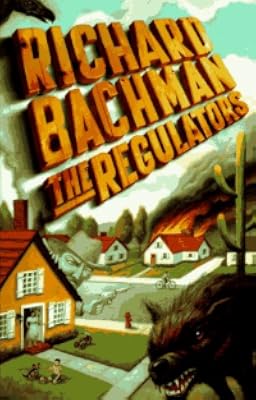
The Regulators
by Richard Bachman, Stephen King
On This Page
Description
There's a place in Wentworth, Ohio, where summer is in full swing. It's called Poplar Street. Up until now it's been a nice place to live. The idling red van around the corner is about to change all that. Let the battle against evil begin..
Tags
Recommendations

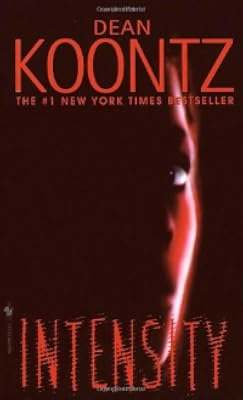
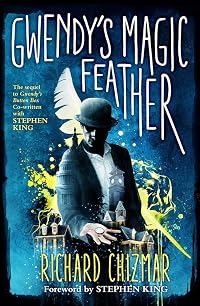

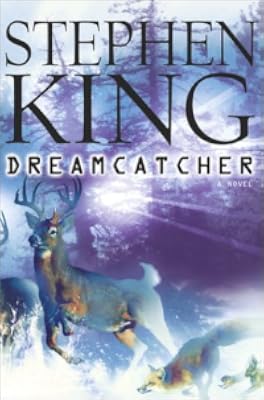





Member Recommendations
Member Reviews
between 1.5 and 2. so...well, i guess i don't really see the point here. this felt like a strange story with a lot of death and killing, and for no reason or purpose. i feel like he's usually saying something, even when it's all filled with terrible people and blood and guts, but this just seemed to be the blood and guts but was missing the core. and i don't really understand what he was doing, with this book and desperation. i guess that makes sense since i don't really see a main point, but it just leaves me wondering.
i mean, it's this parallel reality where some of the characters are the same (i mean the names of the characters match up with the same characters in the other book) and some are different. (so the carvers in desperation show more were ralph (the dad), ellen (the mom), david (the son) and kirsten (the daughter) and in this book they were david (the dad), kirsten (the mom), ellen (the daughter), and ralph (the son). i'm not sure what that's about or what he was trying to say there. some of the parallels were fun to catch, like some of the same exact lines being spoken or steve "dancing" with a wolf/coyote in both. but i don't get the fundamental point, in the end. and i'm not sure how people with autism would feel about the way he depicted seth. although, he did make him a hero, in a large sense. still not sure it would hold up well today.
it's also weird to say, but (aside from those first 200 or so pages of desperation, that read more like richard bachman (with all his excess gore) and the regulators read, for the most part, more like stephen king (although missing some of his trademark character development). i wonder if he did that on purpose, or just for fun (or if i'm overthinking it entirely). it's weird because i liked this one less than desperation and usually i'd say that i'd like king over bachman.
anyway, this was also a quick and easy read, but not a particularly enjoyable one, and one that i don't feel had a real point. it's a neat and fun idea, though, to have these parallel stories that go together, even in this odd and only partially sensical way.
"Brad and Belinda Josephson are the only black people on the block, and the block is damned proud to have them. They look just the way people in suburban Ohio like their black people to look, and it makes things just right to see them out and about." show less
i mean, it's this parallel reality where some of the characters are the same (i mean the names of the characters match up with the same characters in the other book) and some are different. (so the carvers in desperation show more were ralph (the dad), ellen (the mom), david (the son) and kirsten (the daughter) and in this book they were david (the dad), kirsten (the mom), ellen (the daughter), and ralph (the son). i'm not sure what that's about or what he was trying to say there. some of the parallels were fun to catch, like some of the same exact lines being spoken or steve "dancing" with a wolf/coyote in both. but i don't get the fundamental point, in the end. and i'm not sure how people with autism would feel about the way he depicted seth. although, he did make him a hero, in a large sense. still not sure it would hold up well today.
it's also weird to say, but (aside from those first 200 or so pages of desperation, that read more like richard bachman (with all his excess gore) and the regulators read, for the most part, more like stephen king (although missing some of his trademark character development). i wonder if he did that on purpose, or just for fun (or if i'm overthinking it entirely). it's weird because i liked this one less than desperation and usually i'd say that i'd like king over bachman.
anyway, this was also a quick and easy read, but not a particularly enjoyable one, and one that i don't feel had a real point. it's a neat and fun idea, though, to have these parallel stories that go together, even in this odd and only partially sensical way.
"Brad and Belinda Josephson are the only black people on the block, and the block is damned proud to have them. They look just the way people in suburban Ohio like their black people to look, and it makes things just right to see them out and about." show less
One of King's early works published under the name of Richard Bachman. While a companion volume, of sorts, to "Desperation", I think this should have become an unpublished manuscript found after "Bachman's" death. It does not deserve the name of Stephen King associated with. Like the companion book, King leaves subtle world of mental horror behind. No drippy faucets slowly driving you crazy here, no premonitions of disaster slowly building to the inevitable showdown between good and evil, rather the reader is held nose first and nostrils up to a gushing fire hydrant of violence.
I have no objection to situational violence in a horror story, but there needs to be a reason for the violence and any type of plot is sorely lacking here. show more Characters are introduced and blown away without giving us a chance to know who they are, to feel something, one way or the other, about them. Good violence: the gunfight between the drug kingpin, his henchmen and the reformed addict in "Drawing of the Three" by King. Very violent, but it follows a lot of character development and you feel sorry for one character and root as the others are gunned down. Here you are a witness to a poorly produced reality show where people are targets for bad guys.
Yeah, I gave it just two stars. As bad as it is, King is still a great story teller and I had to finish it regardless of how badly it offended me. If you have to have a complete collection of King and / or Bachman, you will need this to fill in your collection. Otherwise, pass it by. show less
I have no objection to situational violence in a horror story, but there needs to be a reason for the violence and any type of plot is sorely lacking here. show more Characters are introduced and blown away without giving us a chance to know who they are, to feel something, one way or the other, about them. Good violence: the gunfight between the drug kingpin, his henchmen and the reformed addict in "Drawing of the Three" by King. Very violent, but it follows a lot of character development and you feel sorry for one character and root as the others are gunned down. Here you are a witness to a poorly produced reality show where people are targets for bad guys.
Yeah, I gave it just two stars. As bad as it is, King is still a great story teller and I had to finish it regardless of how badly it offended me. If you have to have a complete collection of King and / or Bachman, you will need this to fill in your collection. Otherwise, pass it by. show less
It's so weird to keep saying, "this is the first time I've read this in almost 30 years"...because with the King books, it really doesn't seem that long ago.
Apparently it really is. I dove into this the same way I did the last time, reading the Bachman novel first, before moving to the mirror novel. The last time, I chose the Bachman book first because, when I lined up the covers, it was the first one, on the left. This time, I did it because I remember liking the King novel more than the Bachman one, so I figured I'd end (hopefully) on the same high.
I've got to say, last time I read this one, I won't say I was underwhelmed, but I didn't love it. I guess you could say I was simply...whelmed.
This time around, I will say that, overall, I show more actually quite enjoyed it. It was a bit overwritten for my taste, which is interesting because, while I know this tends to be a common complaint with King, it's not one I typically voice. I love his writing, and if he digs down into a particular detail or plot point or tangent, I'm usually completely fine to go along with him.
But I found a lot of the descriptive passages and character intros toward the front half of this novel seemed a bit too much. And it was actually surprising how much King inserted mentions of a sexual nature. I'm not used to that with him, and I found it constantly surprising.
Here's the big thing I found this time around: While I usually enjoy a "big cast" King story, this one felt overcrowded. I more enjoyed the side note sections—the diary entries, the letters, etc.—that gave a bit more context to what was happening on Poplar Street, than I did the portions with all the other characters.
I found myself wishing that King had just focused tighter on Seth and especially Audrey, with smaller side trips to that large cast of characters and what they were going through.
Again, overall, the novel was more enjoyable the second time around. And I will say, there's parts of this story that I think hold some of King's best writing. But overall, there's a fair amount of miss for me too. show less
Apparently it really is. I dove into this the same way I did the last time, reading the Bachman novel first, before moving to the mirror novel. The last time, I chose the Bachman book first because, when I lined up the covers, it was the first one, on the left. This time, I did it because I remember liking the King novel more than the Bachman one, so I figured I'd end (hopefully) on the same high.
I've got to say, last time I read this one, I won't say I was underwhelmed, but I didn't love it. I guess you could say I was simply...whelmed.
This time around, I will say that, overall, I show more actually quite enjoyed it. It was a bit overwritten for my taste, which is interesting because, while I know this tends to be a common complaint with King, it's not one I typically voice. I love his writing, and if he digs down into a particular detail or plot point or tangent, I'm usually completely fine to go along with him.
But I found a lot of the descriptive passages and character intros toward the front half of this novel seemed a bit too much. And it was actually surprising how much King inserted mentions of a sexual nature. I'm not used to that with him, and I found it constantly surprising.
Here's the big thing I found this time around: While I usually enjoy a "big cast" King story, this one felt overcrowded. I more enjoyed the side note sections—the diary entries, the letters, etc.—that gave a bit more context to what was happening on Poplar Street, than I did the portions with all the other characters.
I found myself wishing that King had just focused tighter on Seth and especially Audrey, with smaller side trips to that large cast of characters and what they were going through.
Again, overall, the novel was more enjoyable the second time around. And I will say, there's parts of this story that I think hold some of King's best writing. But overall, there's a fair amount of miss for me too. show less
I can just picture Stephen King sitting at his desk, staring at the blinking cursor on his computer screen. The little bar’s flashing on the just-finished side of the “DâÂ? of the words âÂÂTHE END.âÂ? KingâÂÂs just capped off his best book in years, a scalp-prickling, clammy-handed horror extravaganza called Desperation. The only trouble is, his writerâÂÂs brain is still sizzling. HeâÂÂs fried the eggs and spatulaed them onto the plate, but he left the pan on the burner and man, oh man, heâÂÂs on fire!
WhatâÂÂs a prolific writer to do? Well, if youâÂÂre the tireless King (until the recent traffic accident, that is), you keep your scare-mongering butt right there show more in that chair and churn out another pulse-quickening tale. ThatâÂÂs exactly what he did in 1996, the year that saw the simultaneous release of Desperation and The Regulators (not to mention The Green Mile!). The second novel, written under his Richard Bachman pseudonym (a silly marketing ploy in this case because a King by any other name is still a King), makes a nice companion piece to Desperation. The two novels share many of the same characters and KingâÂÂs knack for scaring the socks off his readers.
Apart from that, the books take different roads. While Desperation was a big book (in many ways), The Regulators is a little thinner (pardon the Bachman pun) in scope and impact. Think of it this way: Desperation is the epic, cast-of-thousands, Cecil B. DeMille blockbuster feature movie; The Regulators is the made-for-TV movie with a cast of has-been Fantasy Island guest star rejects. Which is not to say The Regulators isnâÂÂt scaryâÂÂboy, oh boy, is it ever scary (weâÂÂre talking dry mouths and all-the-lights-on-in-the-house scary)âÂÂbut when stacked up against Desperation, it falls short.
And I think King is completely comfortable with that. I donâÂÂt think he intended The Regulators to outdistance Desperation. In fact, the Bachman book reads almost like a long epilogue to the other story, which was all about unspeakable evil at the bottom of a mine shaft. (I always wondered when IâÂÂd get to use that phraseâÂÂâÂÂunspeakable evil.âÂ?)
While Desperation was set in a deserted Nevada ghost town (literally), in The Regulators, King brings the unspeakable horror to Wentworth, Ohio, a small town straight out of a Frank Capra movie. As the novel opens, itâÂÂs a postcard-perfect summer dayâÂÂbarbecue grills are getting fired up, kids are hanging out at the corner convenience store, a Little League game is in full swing and life is just about darned near perfect.
Except for that red van parked down the street, motor idling and sun glaring off its chrome bumper. Something about that van just doesnâÂÂt feel right.
YouâÂÂre only ten pages into the book and already the hairs on the nape of your neck are starting to rustle. A few pages more and the story explodes in violenceâÂÂshocking and shattering. Another couple of pages and you know you better call in sick to work and tell the rest of the family to order pizza for dinner that night because youâÂÂre deep in King territory.
The arrival of the van on Poplar Street is the start of a fantastic set of events so mind-altering it would be too convoluted for me to describe them here. Besides, I wouldnâÂÂt want to spoil any of the lip-smacking pleasures this story has to offer. Expect an over-the-top episode of The Twilight Zone and you wonâÂÂt be disappointed. Suffice to say, King is up to his usual bag of tricks hereâÂÂa gifted child, a flawed-but-heroic central character (who just happens to be a writer) and plotting that depends heavily on fate and circumstance. Along the way, thereâÂÂs a sneaky commentary on the sins of watching too much TV (and hurrah for King! I say, get them off the tube and back between the covers of great literature).
On the other hand, The Regulators is plenty sinful, too. KingâÂÂs never been one to faint at the sight of blood and here he really lavishes (wallows?) in gore and profanity. There are deaths and plenty of âÂÂem. The squeamish definitely need not apply.
Another quibble I had with The Regulators is that some of the characters seemed a little too shallowly drawn, serving mainly as cogs in the plot machine. But then, when youâÂÂve got such a lightning-paced storyâÂÂone that practically screams âÂÂTurn the page! Turn the page!âÂ?âÂÂthe argument for fleshed-out characters seems like such a weak one. I mean, hey, I knew this wasnâÂÂt D.H. Lawrence when I picked it up, right?
I read The Regulators soon after I finished Desperation and I think thatâÂÂs the best order to take these books. When you turn the last page of Desperation, youâÂÂll be, ahem, desperate for more of that unspeakable evil. ItâÂÂs like coming down off a horror high and youâÂÂll need the quick fix that The Regulators has to offer. ItâÂÂs not as deep or broad as Desperation, but itâÂÂs still the most mind-bending, heart-jolting five hours youâÂÂll spend between the covers. show less
WhatâÂÂs a prolific writer to do? Well, if youâÂÂre the tireless King (until the recent traffic accident, that is), you keep your scare-mongering butt right there show more in that chair and churn out another pulse-quickening tale. ThatâÂÂs exactly what he did in 1996, the year that saw the simultaneous release of Desperation and The Regulators (not to mention The Green Mile!). The second novel, written under his Richard Bachman pseudonym (a silly marketing ploy in this case because a King by any other name is still a King), makes a nice companion piece to Desperation. The two novels share many of the same characters and KingâÂÂs knack for scaring the socks off his readers.
Apart from that, the books take different roads. While Desperation was a big book (in many ways), The Regulators is a little thinner (pardon the Bachman pun) in scope and impact. Think of it this way: Desperation is the epic, cast-of-thousands, Cecil B. DeMille blockbuster feature movie; The Regulators is the made-for-TV movie with a cast of has-been Fantasy Island guest star rejects. Which is not to say The Regulators isnâÂÂt scaryâÂÂboy, oh boy, is it ever scary (weâÂÂre talking dry mouths and all-the-lights-on-in-the-house scary)âÂÂbut when stacked up against Desperation, it falls short.
And I think King is completely comfortable with that. I donâÂÂt think he intended The Regulators to outdistance Desperation. In fact, the Bachman book reads almost like a long epilogue to the other story, which was all about unspeakable evil at the bottom of a mine shaft. (I always wondered when IâÂÂd get to use that phraseâÂÂâÂÂunspeakable evil.âÂ?)
While Desperation was set in a deserted Nevada ghost town (literally), in The Regulators, King brings the unspeakable horror to Wentworth, Ohio, a small town straight out of a Frank Capra movie. As the novel opens, itâÂÂs a postcard-perfect summer dayâÂÂbarbecue grills are getting fired up, kids are hanging out at the corner convenience store, a Little League game is in full swing and life is just about darned near perfect.
Except for that red van parked down the street, motor idling and sun glaring off its chrome bumper. Something about that van just doesnâÂÂt feel right.
YouâÂÂre only ten pages into the book and already the hairs on the nape of your neck are starting to rustle. A few pages more and the story explodes in violenceâÂÂshocking and shattering. Another couple of pages and you know you better call in sick to work and tell the rest of the family to order pizza for dinner that night because youâÂÂre deep in King territory.
The arrival of the van on Poplar Street is the start of a fantastic set of events so mind-altering it would be too convoluted for me to describe them here. Besides, I wouldnâÂÂt want to spoil any of the lip-smacking pleasures this story has to offer. Expect an over-the-top episode of The Twilight Zone and you wonâÂÂt be disappointed. Suffice to say, King is up to his usual bag of tricks hereâÂÂa gifted child, a flawed-but-heroic central character (who just happens to be a writer) and plotting that depends heavily on fate and circumstance. Along the way, thereâÂÂs a sneaky commentary on the sins of watching too much TV (and hurrah for King! I say, get them off the tube and back between the covers of great literature).
On the other hand, The Regulators is plenty sinful, too. KingâÂÂs never been one to faint at the sight of blood and here he really lavishes (wallows?) in gore and profanity. There are deaths and plenty of âÂÂem. The squeamish definitely need not apply.
Another quibble I had with The Regulators is that some of the characters seemed a little too shallowly drawn, serving mainly as cogs in the plot machine. But then, when youâÂÂve got such a lightning-paced storyâÂÂone that practically screams âÂÂTurn the page! Turn the page!âÂ?âÂÂthe argument for fleshed-out characters seems like such a weak one. I mean, hey, I knew this wasnâÂÂt D.H. Lawrence when I picked it up, right?
I read The Regulators soon after I finished Desperation and I think thatâÂÂs the best order to take these books. When you turn the last page of Desperation, youâÂÂll be, ahem, desperate for more of that unspeakable evil. ItâÂÂs like coming down off a horror high and youâÂÂll need the quick fix that The Regulators has to offer. ItâÂÂs not as deep or broad as Desperation, but itâÂÂs still the most mind-bending, heart-jolting five hours youâÂÂll spend between the covers. show less
Book 61 of Stephen King. Enjoyed reading the novel, having read Desperation a little while ago this book was recommended by LibraryThing for me. Not his best work but worth the read none-the-less. For me being a constant reader I enjoyed my fix of plugging back into the matrix of Kings world. Enjoyed the similarities, overlap and differences between Desperation and there was also some references to the Overlook Hotel from the Shining and Doctor Sleep Easter eggs to enjoy.
This book was classic Stephen King: supernatural evil possession and deaths galore.
The characters here were an enjoyable, though at times aggravating, mishmash of level-headed thinkers and those who lose their mind at the first instant something goes wrong and everything in between.
The story itself didn't really have much substance to it other than mindless slaughter by an incorporeal monster thing. The Seth character was a pretty big cliché as well: autistic kid who has a genius inner being is the host for the demon/monster thing and ends up being the key to defeating the monster.
Though I love Stephen King, the ending left me feeling slightly disappointed, like there should have been something else.
The characters here were an enjoyable, though at times aggravating, mishmash of level-headed thinkers and those who lose their mind at the first instant something goes wrong and everything in between.
The story itself didn't really have much substance to it other than mindless slaughter by an incorporeal monster thing. The Seth character was a pretty big cliché as well: autistic kid who has a genius inner being is the host for the demon/monster thing and ends up being the key to defeating the monster.
Though I love Stephen King, the ending left me feeling slightly disappointed, like there should have been something else.
The master of horror, Stephen King, chalked up another page turner under the pseudonym of "the late" Richard Bachman, "The Regulators.". In "The Regulators" the characters are already assembled as neighbors on Poplar Street. Their glorious summer day is shattered by the arrival of a crayon red van and its armed driver. Collie Entragian, a former cop drummed off the force on trumped-up charges, attempts to protect his neighbors and preserve the crime scene but the violence quickly escalates out of control. As the street begins a nightmarish metamorphosis into something out of the worst of children's television and old westerns, the strengths and weaknesses of the inhabitants begin to work on all of them - Johnny Marinville, the show more successful author of children's books, haunted by a dissipated past and a too-vivid vision; Cynthia, the new clerk at the convenience store, whose two-toned hair and irreverent wit obscure a core of decency; Tom Billingsley, the retired veterinarian; Steve Ames, a young man drifting through life, picking up skills.
Then there's Audrey Wyler, the young widow with the autistic nephew, Seth. No one's seen her in a while and at first they scarcely notice her continuing absence amidst all the mayhem. But Audrey's particular hell has been a long time coming. There's a thing in Seth (he calls it "Tak") that can bend people to its will and the world to its malevolent vision and it's growing stronger.
While there is violence and blood, it is driven by the story and I have read alot worse. The biggest complaint I would make is that like 90% of King's books its a bit too long. show less
Then there's Audrey Wyler, the young widow with the autistic nephew, Seth. No one's seen her in a while and at first they scarcely notice her continuing absence amidst all the mayhem. But Audrey's particular hell has been a long time coming. There's a thing in Seth (he calls it "Tak") that can bend people to its will and the world to its malevolent vision and it's growing stronger.
While there is violence and blood, it is driven by the story and I have read alot worse. The biggest complaint I would make is that like 90% of King's books its a bit too long. show less
Members
- Recently Added By
Lists

Best Horror Books
281 works; 85 members

Nineties
43 works; 10 members
Stephen King Bibliography
77 works; 3 members

1990s
309 works; 17 members

Blue Pyramid 1,276 Best Books of All Time
1,248 works; 32 members

Books Set in Ohio
30 works; 6 members
Midwest
5 works; 2 members

Strange Towns
49 works; 7 members

Books Read in 2006
421 works; 8 members

Dark Tower Books
47 works; 2 members

Small-Town Horror Reading List
25 works; 3 members
Eerie eTales
192 works; 3 members

Sinister AudioTales
65 works; 1 member

Stephen King books
81 works; 1 member

ScaredyKIT 2026
10 works; 1 member

Books Read in 2026
1,884 works; 66 members
Talk Discussions
Past Discussions
April 2012's SK Flavor of the Month - The Regulators in King's Dear Constant Readers (July 2012)
Author Information
13+ Works 20,666 Members
Richard Bachman is a pseudonym of author Stephen King. Bachman was born in New York. He spent several years serving in the U.S. Coast Guard and the merchant marine before settling down on a New Hampshire dairy farm. Bachman published four novels in paperback between 1977 and 1982. The hardcover novel "Thinner" was published in 1984. In 1994, show more Bachman's widow discovered a carton containing a manuscript of the novel "The Regulators," which was published posthumously in 1996. The last Bachman title, Blaze, was publshed in 2007. Bachman died in 1985. His identity remained a well-kept secret until a bookstore clerk confronted King with his suspicions that King was Bachman. The clerk, Steve Brown, could not believe that Bachman and King were not one and the same. Brown located publisher's records at the Library of Congress and discovered a document naming King as the author of one of Bachman's novels. Afterwards he sent a letter to King's publishers, with a copy of the found documents, and asked them what to do. Two weeks later Stephen King phoned Brown personally, and suggested he write an article about how he discovered the truth, allowing himself to be interviewed. This led to a press release heralding Bachman's "death" supposedly from "cancer of the pseudonym," and an article written by Brown in the Washington Post. (Bowker Author Biography) show less

966+ Works 867,771 Members
Stephen King was born in Portland, Maine, on September 21, 1947. After graduating with a Bachelor's degree in English from the University of Maine at Orono in 1970, he became a teacher. His spare time was spent writing short stories and novels. King's first novel would never have been published if not for his wife. She removed the first few show more chapters from the garbage after King had thrown them away in frustration. Three months later, he received a $2,500 advance from Doubleday Publishing for the book that went on to sell a modest 13,000 hardcover copies. That book, Carrie, was about a girl with telekinetic powers who is tormented by bullies at school. She uses her power, in turn, to torment and eventually destroy her mean-spirited classmates. When United Artists released the film version in 1976, it was a critical and commercial success. The paperback version of the book, released after the movie, went on to sell more than two-and-a-half million copies. Many of King's other horror novels have been adapted into movies, including The Shining, Firestarter, Pet Semetary, Cujo, Misery, The Stand, and The Tommyknockers. Under the pseudonym Richard Bachman, King has written the books The Running Man, The Regulators, Thinner, The Long Walk, Roadwork, Rage, and It. He is number 2 on the Hollywood Reporter's '25 Most Powerful Authors' 2016 list. King is one of the world's most successful writers, with more than 100 million copies of his works in print. Many of his books have been translated into foreign languages, and he writes new books at a rate of about one per year. In 2003, he received the National Book Foundation Medal for Distinguished Contribution to American Letters. In 2012 his title, The Wind Through the Keyhole made The New York Times Best Seller List. King's title's Mr. Mercedes and Revival made The New York Times Best Seller List in 2014. He won the Edgar Allan Poe Award in 2015 for Best Novel with Mr. Mercedes. King's title Finders Keepers made the New York Times bestseller list in 2015. Sleeping Beauties is his latest 2017 New York Times bestseller. (Bowker Author Biography) Stephen King is the author of more than thirty books, all of them worldwide bestsellers. Among his most recent are "Hearts in Atlantis", "The Girl Who Loved Tom Gordon", "Bag of Bones", & "The Green Mile". "On Writing" is his first book of nonfiction since "Danse Macabre", published in 1981. He served as a judge for Prize Stories: The Best of 1999, The O. Henry Awards. He lives in Bangor, Maine with his wife, novelist Tabitha King. King's book, The Bazaar of Bad Dreams: Stories, made the 2015 New York Times bestseller list. (Publisher Provided) show less
Some Editions
Awards and Honors
Distinctions
Series
Belongs to Publisher Series
Work Relationships
Is contained in
Common Knowledge
- Canonical title*
- Regulator
- Original title
- The Regulators
- Original publication date
- 1996-09-24
- People/Characters
- Seth Garin; No Face; Kirsten Carver (Pie); David Carver; Ellie Carver (Ellen Margaret); Ralphie Carver (Ralph) (show all 28); Cynthia Smith; Collie Entragian (Collier); Audrey Wyler; Johnny Marinville (John Edward); Steve Ames; Brad Josephson (Bradley); Belinda Josephson; Cary Ripton; Peter Jackson; Mary Jackson [The Regulators]; Gary Soderson; Marielle Soderson; Kim Geller; Susie Geller (also spelled Susi); Frank Geller; Debbie Ross; Tom Billingsley; Jim Reed; David Reed; Cammie Reed; Charlie Reed; Tak
- Important places
- Wentworth, Ohio, USA
- Epigraph
- "Mister, we deal in lead."
—Steve McQueen
The Magnificent Seven - Dedication
- Thinking of Jim Thompson and Sam Peckinpah:
legendary shadows. - First words
- Summer's here.
- Last words
- (Click to show. Warning: May contain spoilers.)He put his head down and felt the hazy heat of the summer sun on his neck and kept walking.
- Original language
- English
- Canonical DDC/MDS
- 813.54
- Canonical LCC
- PS3561.I483
*Some information comes from Common Knowledge in other languages. Click "Edit" for more information.
Classifications
Statistics
- Members
- 7,612
- Popularity
- 1,499
- Reviews
- 70
- Rating
- (3.38)
- Languages
- 16 — Czech, Danish, Dutch, English, Finnish, French, German, Hungarian, Italian, Norwegian (Bokmål), Polish, Russian, Spanish, Swedish, Turkish, Portuguese (Portugal)
- Media
- Paper, Audiobook, Ebook
- ISBNs
- 100
- UPCs
- 1
- ASINs
- 39
