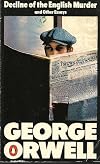
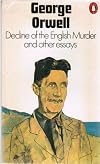
Decline of the English Murder and Other Essays
by George Orwell 
On This Page
Description
In these timeless and witty essays George Orwell explores the English love of reading about a good murder in the papers (and laments the passing of the heyday of the 'perfect' murder involving class, sex and poisoning), as well as unfolding his trenchant views on everything from boys' weeklies to naughty seaside postcards. Throughout history, some books have changed the world. They have transformed the way we see ourselves - and each other. They have inspired debate, dissent, war and show more revolution. They have enlightened, outraged, provoked and comforted. They have enriched lives - and destroyed them. Now Penguin brings you the works of the great thinkers, pioneers, radicals and visionaries whose ideas shook civilization and helped make us who we are. show lessTags
Recommendations


















Member Reviews
https://fromtheheartofeurope.eu/decline-of-the-english-murder-and-other-essays-b...
It is stunning to be reminded just how good a writer Orwell was. He applies his ethical and moral standards to all sides, and eloquently deconstructs the hypocrisy of the Left as well as the evil of the Right. There are ten essays here and each of them deserves a short note of its own.
“Decline of the English Murder“, the title piece, from 1946, is about the media coverage of real-life murder cases, the public reaction to them, and the extent to which the war had brutalised public discourse.
I had read “A Hanging” previously. "A detailed account of an execution in a jail in Burma, effectively and efficiently conveying the horror and pointlessness of show more the situation." A very vivid, short piece.
“Benefit of Clergy: Some Notes on Salvador Dali” is an excoriating review of The Secret Life of Salvador Dalí, pointing out Dalí’s many moral failings as described by the artist himself. The takeaway line is,
"One ought to be able to hold in one’s head simultaneously the two facts that Dalí is a good draughtsman and a disgusting human being."
“How the Poor Die” is about Orwell’s experiences in a city hospital in Paris, and the uncaring and unsympathetic approach of the staff. He doesn’t blame France as such, but the nineteenth-century traditions of healthcare.
“Rudyard Kipling” examines Kipling’s creative genius and defends him against T.S. Eliot’s charge of Fascism, while deeply regretting his imperialist apologetics.
"For my own part I worshipped Kipling at thirteen, loathed him at seventeen, enjoyed him at twenty-five and now again rather admire him. The one thing that was never possible, if one had read him at all, was to forget him."
“Raffles and Miss Blandish” contrasts the gentleman thief Raffles in the stories published between 1898 and 1909 by E.W. Horning, with James Hadley Chase’s novel No Orchids for Miss Blandish. I must say I was astonished to learn that James Hadley Chase’s literary career had begun so early – his last book was published in 1984. I have not read any of his books, and after reading Orwell’s blistering review of his first one, I don’t feel I need to.
“Charles Dickens“, at 62 pages, is the longest piece in the book, taking up almost a third of its length. Orwell clearly loved Dickens’ writing but was also alert to its flaws: “his greatest success is The Pickwick Papers, which is not a story at all, merely a series of sketches; there is little attempt at development — the characters simply go on and on, behaving like idiots, in a kind of eternity.” He criticises Dickens for his portrayal of working-class and poor characters, and for his conservative attitude to social change, but still finds much to praise.
"When one reads any strongly individual piece of writing, one has the impression of seeing a face somewhere behind the page. It is not necessarily the actual face of the writer. I feel this very strongly with Swift, with Defoe, with Fielding, Stendhal, Thackeray, Flaubert, though in several cases I do not know what these people looked like and do not want to know. What one sees is the face that the writer ought to have. Well, in the case of Dickens I see a face that is not quite the face of Dickens’s photographs, though it resembles it. It is the face of a man of about forty, with a small beard and a high colour. He is laughing, with a touch of anger in his laughter, but no triumph, no malignity. It is the face of a man who is always fighting against something, but who fights in the open and is not frightened, the face of a man who is generously angry — in other words, of a nineteenth-century liberal, a free intelligence, a type hated with equal hatred by all the smelly little orthodoxies which are now contending for our souls."
“The Art of Donald McGill” looks at the genre of bawdy seaside postcards and finds a lot to like about them. Orwell was a moralist, but he had a sense of humour.
"In the past the mood of the comic post card could enter into the central stream of literature, and jokes barely different from McGill’s could casually be uttered between the murders in Shakespeare’s tragedies. That is no longer possible, and a whole category of humour, integral to our literature till 1800 or thereabouts, has dwindled down to these ill-drawn post cards, leading a barely legal existence in cheap stationers’ windows. The corner of the human heart that they speak for might easily manifest itself in worse forms, and I for one should be sorry to see them vanish."
I got the most value out of “Notes on Nationalism“.
"By ‘nationalism’ I mean first of all the habit of assuming that human beings can be classified like insects and that whole blocks of millions or tens of millions of people can be confidently labelled ‘good’ or ‘bad’. But secondly — and this is much more important — I mean the habit of identifying oneself with a single nation or other unit, placing it beyond good and evil and recognising no other duty than that of advancing its interests."
He applies the same critical apparatus to English and Celtic nationalism as to German and Japanese, and lumps in both Stalinism and Trotskyism as well. I found it a very thought-provoking commentary on bigotry and prejudice, and the mind-set that leads to them.
Finally, “Why I Write” was again a piece that I had read before. It was good to read it after nine other essays, pulling the whole thing together. An interesting bit of self-reflection, in which Orwell starts by describing his own artistic growth, and then the impact of politics on his thoughts and words. But he finished with a description which I recognise from some writers who I have known:
"All writers are vain, selfish, and lazy, and at the very bottom of their motives there lies a mystery. Writing a book is a horrible, exhausting struggle, like a long bout of some painful illness. One would never undertake such a thing if one were not driven on by some demon whom one can neither resist nor understand."
This collection was put together by Penguin in 1965, though the title has also been used for other Penguin collections with different content. show less
It is stunning to be reminded just how good a writer Orwell was. He applies his ethical and moral standards to all sides, and eloquently deconstructs the hypocrisy of the Left as well as the evil of the Right. There are ten essays here and each of them deserves a short note of its own.
“Decline of the English Murder“, the title piece, from 1946, is about the media coverage of real-life murder cases, the public reaction to them, and the extent to which the war had brutalised public discourse.
I had read “A Hanging” previously. "A detailed account of an execution in a jail in Burma, effectively and efficiently conveying the horror and pointlessness of show more the situation." A very vivid, short piece.
“Benefit of Clergy: Some Notes on Salvador Dali” is an excoriating review of The Secret Life of Salvador Dalí, pointing out Dalí’s many moral failings as described by the artist himself. The takeaway line is,
"One ought to be able to hold in one’s head simultaneously the two facts that Dalí is a good draughtsman and a disgusting human being."
“How the Poor Die” is about Orwell’s experiences in a city hospital in Paris, and the uncaring and unsympathetic approach of the staff. He doesn’t blame France as such, but the nineteenth-century traditions of healthcare.
“Rudyard Kipling” examines Kipling’s creative genius and defends him against T.S. Eliot’s charge of Fascism, while deeply regretting his imperialist apologetics.
"For my own part I worshipped Kipling at thirteen, loathed him at seventeen, enjoyed him at twenty-five and now again rather admire him. The one thing that was never possible, if one had read him at all, was to forget him."
“Raffles and Miss Blandish” contrasts the gentleman thief Raffles in the stories published between 1898 and 1909 by E.W. Horning, with James Hadley Chase’s novel No Orchids for Miss Blandish. I must say I was astonished to learn that James Hadley Chase’s literary career had begun so early – his last book was published in 1984. I have not read any of his books, and after reading Orwell’s blistering review of his first one, I don’t feel I need to.
“Charles Dickens“, at 62 pages, is the longest piece in the book, taking up almost a third of its length. Orwell clearly loved Dickens’ writing but was also alert to its flaws: “his greatest success is The Pickwick Papers, which is not a story at all, merely a series of sketches; there is little attempt at development — the characters simply go on and on, behaving like idiots, in a kind of eternity.” He criticises Dickens for his portrayal of working-class and poor characters, and for his conservative attitude to social change, but still finds much to praise.
"When one reads any strongly individual piece of writing, one has the impression of seeing a face somewhere behind the page. It is not necessarily the actual face of the writer. I feel this very strongly with Swift, with Defoe, with Fielding, Stendhal, Thackeray, Flaubert, though in several cases I do not know what these people looked like and do not want to know. What one sees is the face that the writer ought to have. Well, in the case of Dickens I see a face that is not quite the face of Dickens’s photographs, though it resembles it. It is the face of a man of about forty, with a small beard and a high colour. He is laughing, with a touch of anger in his laughter, but no triumph, no malignity. It is the face of a man who is always fighting against something, but who fights in the open and is not frightened, the face of a man who is generously angry — in other words, of a nineteenth-century liberal, a free intelligence, a type hated with equal hatred by all the smelly little orthodoxies which are now contending for our souls."
“The Art of Donald McGill” looks at the genre of bawdy seaside postcards and finds a lot to like about them. Orwell was a moralist, but he had a sense of humour.
"In the past the mood of the comic post card could enter into the central stream of literature, and jokes barely different from McGill’s could casually be uttered between the murders in Shakespeare’s tragedies. That is no longer possible, and a whole category of humour, integral to our literature till 1800 or thereabouts, has dwindled down to these ill-drawn post cards, leading a barely legal existence in cheap stationers’ windows. The corner of the human heart that they speak for might easily manifest itself in worse forms, and I for one should be sorry to see them vanish."
I got the most value out of “Notes on Nationalism“.
"By ‘nationalism’ I mean first of all the habit of assuming that human beings can be classified like insects and that whole blocks of millions or tens of millions of people can be confidently labelled ‘good’ or ‘bad’. But secondly — and this is much more important — I mean the habit of identifying oneself with a single nation or other unit, placing it beyond good and evil and recognising no other duty than that of advancing its interests."
He applies the same critical apparatus to English and Celtic nationalism as to German and Japanese, and lumps in both Stalinism and Trotskyism as well. I found it a very thought-provoking commentary on bigotry and prejudice, and the mind-set that leads to them.
Finally, “Why I Write” was again a piece that I had read before. It was good to read it after nine other essays, pulling the whole thing together. An interesting bit of self-reflection, in which Orwell starts by describing his own artistic growth, and then the impact of politics on his thoughts and words. But he finished with a description which I recognise from some writers who I have known:
"All writers are vain, selfish, and lazy, and at the very bottom of their motives there lies a mystery. Writing a book is a horrible, exhausting struggle, like a long bout of some painful illness. One would never undertake such a thing if one were not driven on by some demon whom one can neither resist nor understand."
This collection was put together by Penguin in 1965, though the title has also been used for other Penguin collections with different content. show less
To borrow from Kubrick's Private Joker in Full Metal Jacket, there is some irony (or not) in the "duality" of the works of a great writer (see also Jung). I often think it is a shame when less famous works are buried in the shadows of works such as Animal Farm and 1984. But it is equally pleasing to find gems that others have not bastardised to death through popularity contests. Much like finding George Bernard Shaw's self-proclaimed masterpiece, Back to Methuselah: A Metabiological Pentateuch, this short collection of essays, particularly "Charles Dickens" and "Nationalism", still resonates today. It makes me wonder why we let such formerly exposed knowledge lapse. Yet without the "Born to Kill", I suppose there really would be no "Peace".
This is a book of ten essays, which starts with one of the shortest, titled The Decline of the English Murder, which amused me, though I think he does have a serious point. The essay on Dickens takes up about a third of the book, and is an interesting essay that analyses the reasons for his enduring appeal, what can be seen of the good character of Dickens from his stories, and also the things that seem to be absent from his writing.
I was pleased to find that Orwell shared my opinions on Dali, who I have instinctively had a moral repulsion towards since I was taken round his museum in Barcelona as an impressionable boy. Orwell goes to some length in explaining the character of Dali, which in turn explains much of the obscenity in some show more of his paintings.
Most of the the essays seem to involve some observation and analysis of society, class, politics, and changing tastes. A good example of this is the essay on comic postcards, which I thought was rather acute, despite it being a paticularly non-serious topic. show less
I was pleased to find that Orwell shared my opinions on Dali, who I have instinctively had a moral repulsion towards since I was taken round his museum in Barcelona as an impressionable boy. Orwell goes to some length in explaining the character of Dali, which in turn explains much of the obscenity in some show more of his paintings.
Most of the the essays seem to involve some observation and analysis of society, class, politics, and changing tastes. A good example of this is the essay on comic postcards, which I thought was rather acute, despite it being a paticularly non-serious topic. show less
What is indicated (at least in some of the more politically cynical group of essays) is that Orwell has had a profound impact on our contemporary and faithful oppurtunist Christopher Hitchens. Hitchens' prose as well as many of his quirks are quite easily traced back to Orwell's vitriol filled ink well. However I think that Orwell (as history has demonstrated) was no opportunist, he was quite justifiably disillusioned with left-wing politics, but at least he had hope.
My first impression is that Orwell has completely misread Trotskyism, or perhaps I have misread what Orwell's stances are on it. He couples Trotskyism with nationalism as one in the same...which quite frankly given the internationalist tendencies of "permanent revolution", show more I don't see how one could be so mistaken. In an eerie way his essays on politics and the British and American Intelligentsia mirror Hitchens' rants about "Islamofascism", (terrible term) and theocratic-friendly press and intelligentsia. Orwell employed the term "Russophile" ad nauseum in two of his essays. An immediatley contemptous term, "Russophile" applied to those who in his eyes blindly accepted the new religion of Marxism as it had been expressed in the Communist Party of Russia. He blanketed this term upon Anglo and American Stalinists, Trotskyists, and Communists...which is of course absurd, given the actual tendencies of these different groups. Both the substance and direction of these political entities (especially in the case of Stalinism and Trotskyism)were quite different.
On a lighter note, his criticism of Salvador Dali as a human being and an artist was riveting. Though it was rigorous in the decimation of his character, it oddly had me much more interested in Dali as a person and artist as nothing else did before. There's always something compelling about a "disgusting human being". His critique of Dickens, his naivete, his bourgeois dreams, and simple even childish schemes to make the world a better place, again ironically made me interested in Dickens and his body of work.
This is the craft of Orwell and of our contemporary Hitchens (who has as many of you know has written a book about Orwell); their contempt draws you in to look at what someone could be so angry about. However sadly, I think cynicism has crept slowly over both leaving their faculties immersed in a hopeless cycle of knowing too much and not knowing what to do with it. ( show less
My first impression is that Orwell has completely misread Trotskyism, or perhaps I have misread what Orwell's stances are on it. He couples Trotskyism with nationalism as one in the same...which quite frankly given the internationalist tendencies of "permanent revolution", show more I don't see how one could be so mistaken. In an eerie way his essays on politics and the British and American Intelligentsia mirror Hitchens' rants about "Islamofascism", (terrible term) and theocratic-friendly press and intelligentsia. Orwell employed the term "Russophile" ad nauseum in two of his essays. An immediatley contemptous term, "Russophile" applied to those who in his eyes blindly accepted the new religion of Marxism as it had been expressed in the Communist Party of Russia. He blanketed this term upon Anglo and American Stalinists, Trotskyists, and Communists...which is of course absurd, given the actual tendencies of these different groups. Both the substance and direction of these political entities (especially in the case of Stalinism and Trotskyism)were quite different.
On a lighter note, his criticism of Salvador Dali as a human being and an artist was riveting. Though it was rigorous in the decimation of his character, it oddly had me much more interested in Dali as a person and artist as nothing else did before. There's always something compelling about a "disgusting human being". His critique of Dickens, his naivete, his bourgeois dreams, and simple even childish schemes to make the world a better place, again ironically made me interested in Dickens and his body of work.
This is the craft of Orwell and of our contemporary Hitchens (who has as many of you know has written a book about Orwell); their contempt draws you in to look at what someone could be so angry about. However sadly, I think cynicism has crept slowly over both leaving their faculties immersed in a hopeless cycle of knowing too much and not knowing what to do with it. ( show less
The Penguin repackaging of George Orwell's essays leads to volumes with considerable overlap. To get new stuff, you get additional copies of the more famous works. There are seven essays here that I had not encountered earlier. The trend in this collection is fewer politics and more on literature. We get Orwell on Kipling, and on Dickens, as well as his take on the noire world of "Orchids For Miss Blandish". All the essays are readable, and the duplicates include some signature Orwells.
Some essays by George Orwell, a bit of a mixed bag without anything that particularly stood out for me. I liked the shorter political pieces more than the literary criticism I guess, and 'A Hanging' is a powerful short piece.
Ratings
Members
- Recently Added By
Author Information

387+ Works 220,955 Members
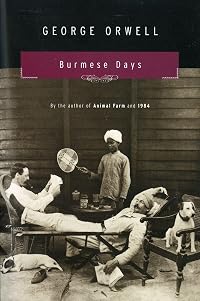
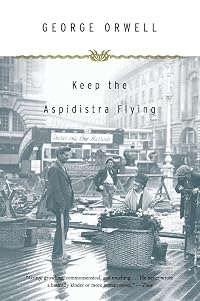
George Orwell was born Eric Arthur Blair on June 25, 1903 in Motihari in Bengal, India and later studied at Eton College for four years. He was an assistant superintendent with the Indian Imperial Police in Burma. He left that position after five years and moved to Paris, where he wrote his first two books: Burmese Days and Down and Out in Paris show more and London. He then moved to Spain to write but decided to join the United Workers Marxist Party Militia. After being decidedly opposed to communism, he served in the British Home Guard and with the Indian Service of the BBC during World War II. After the war, he wrote for the Observer and was literary editor for the Tribune. His best known works are Animal Farm and 1984. His other works include A Clergyman's Daughter, Keep the Aspidistra Flying, The Road to Wigan Pier, Homage to Catalonia, and Coming Up for Air. He died on January 21, 1950 at the age of 46. (Bowker Author Biography) show less
George Orwell has a Legacy Library. Legacy libraries are the personal libraries of famous readers, entered by LibraryThing members from the Legacy Libraries group.
Some Editions
Series
Belongs to Publisher Series
Work Relationships
Common Knowledge
- Canonical title
- Decline of the English Murder and Other Essays
- Original publication date
- 1965
Classifications
Statistics
- Members
- 380
- Popularity
- 82,153
- Reviews
- 6
- Rating
- (3.99)
- Languages
- Czech, English
- Media
- Paper, Ebook
- ISBNs
- 4
- ASINs
- 12