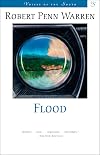
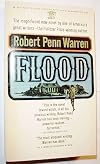
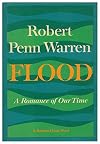
Flood
by Robert Penn Warren
On This Page
Description
Originally published in 1963, this powerful novel spools a rewarding, dramatic storyline while it probes the deeper philosophical search for self-definition in modern life and the symbolic demise of the agrarian South from technological progress. Flood begins with the arrival of two men in a small Tennessee town -- Brad Tolliver, long-absent native son and successful screenwriter, and Yasha Jones, famous director and stranger to the region. Their purpose is to create a great film about the show more town, which will soon vanish when the massive dam being built downriver is completed. The town's inhabitants come vividly to life as past and present forces prepare them for a climactic new beginning to their world. show lessTags
Recommendations
















Member Reviews
The world is not real because it isn't like Fiddlersburg. Fidllersburg is not real because it isn't like the world. And now Fiddlersburg is going to be flooded behind a TVA dam. Flood is solid Warren. A place makes a man, no matter where that man goes. But the man no longer belongs. Does the place need to be in The South. It helps.
Ratings
Members
- Recently Added By
Author Information

137+ Works 14,412 Members
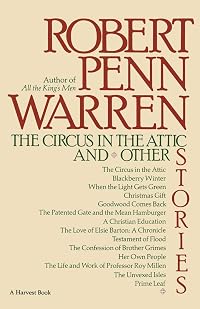
Robert Penn Warren, the first Poet Laureate of the United States, was an unusually versatile writer who tried his hand at almost every kind of literature. In all of these forms, he achieved recognition and distinction, but it is as a poet, critic, and novelist that he was most widely known. Writing almost always about his native South, Warren show more produced 10 novels and a collection of short stories, The Circus in the Attic and Other Stories (1948). By far the most successful of his novels is All the King's Men (1946), the story of a southern politician and demagogue named Willie Stark, which Warren based on the rise and fall of Huey Long. Warren was considered one of the most influential of the New Critics, whose influence on the teaching of literature in American schools and universities during the late 1940s and 1950s could scarcely be overestimated. Because All the King's Men seemed to be the very epitome of what a good work of literature should be in New Critical terms---a complicated but highly readable narrative filled with irony and ambiguity---the novel came to be used widely in courses on modern fiction. It won both the Pulitzer Prize and the Southern Authors Award in 1947. Warren's other novels are disappointing by comparison. Following the success of All the King's Men, however, Warren seemed to turn to more loosely told stories about dramatic and romantic subjects, such as the interracial theme of Band of Angels (1955) or the natural catastrophes that serve as the crisis background for The Cave (1959) and Flood: A Romance of Our Time (1964). Wilderness: A Tale of the Civil War (1961) is an allegory of a man's spiritual quest for truth about himself and the world. Meet Me in the Green Glen (1971), the story of a tragic love affair, seemed to mark a return to the tighter structure and more complex artistry of Warren's earlier novels, but A Place to Come To (1977), his last novel, in which an elderly and renowned scholar who seems to owe much to Warren himself looks back on his family's past in an effort to find the meaning of his life, struck some reviewers as a confused and tired work. Sometime midway through his career as a novelist it is as if Warren stopped thinking of himself as a southern writer in the tradition of William Faulkner and turned instead to Thomas Wolfe for inspiration. Although in retrospect that switch must be regretted, no one can deny the immense influence of Robert Penn Warren on modern letters. Warren's poetry is intellectual, rich in powerful images, and has its roots in the pre-Civil War South. He continued to write impressive poetry almost until the time of his death. (Bowker Author Biography) show less
Awards and Honors
Notable Lists
Series
Belongs to Publisher Series
Common Knowledge
- Epigraph
- And I will plant them upon their land, and they shall no more be pulled up out of their land which I have given them, saith the Lord they God. --Amos IX:15
- Dedication
- To Albert and Marisa Erskine
- First words
- It had to be the place.
- Last words
- (Click to show. Warning: May contain spoilers.)And for a moment he mistook the brightness of moisture in his eyes for the flicker of sun, far off, on the chrome and safety glass of cars passing on the new highway, yonder across the lake.
- Canonical DDC/MDS
- 813.5
- Canonical LCC
- PZ3.W2549
Classifications
Statistics
- Members
- 144
- Popularity
- 227,186
- Reviews
- 1
- Rating
- (3.23)
- Languages
- Czech, English, Hungarian
- Media
- Paper
- ISBNs
- 6
- ASINs
- 12