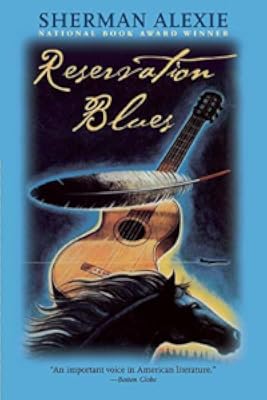
Reservation Blues
by Sherman Alexie
On This Page
Description
Winner of the American Book Award and the Murray Morgan Prize, Sherman Alexie's brilliant first novel tells a powerful tale of Indians, rock 'n' roll, and redemption Coyote Springs is the only all-Indian rock band in Washington State-and the entire rest of the world. Thomas Builds-the-Fire takes vocals and bass guitar, Victor Joseph hits lead guitar, and Junior Polatkin rounds off the sound on drums. Backup vocals come from sisters Chess and Checkers Warm Water. The band sings its own brand show more of the blues, full of poverty, pain, and loss-but also joy and laughter. It all started one day when legendary bluesman Robert Johnson showed up on the Spokane Indian Reservation with a magical guitar, leaving it on the floor of Thomas Builds-the-Fire's van after setting off to climb Wellpinit Mountain in search of Big Mom. In Reservation Blues, National Book Award winner Alexie vaults with ease from comedy to tragedy and back in a tour-de-force outing powered by a collision of cultures: Delta blues and Indian rock. This ebook features an illustrated biography including rare photos from the author's personal collection. show lessTags
Recommendations







Member Recommendations
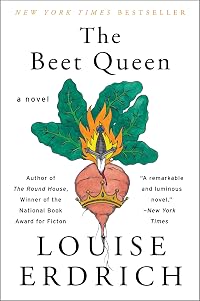
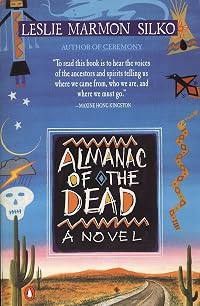
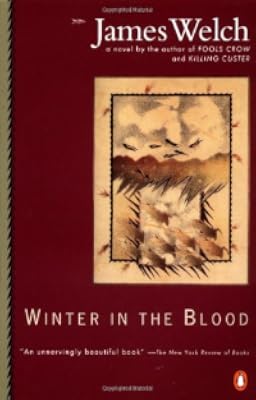
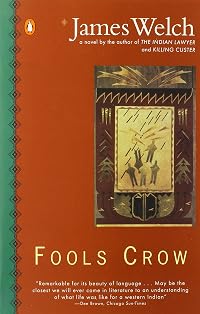
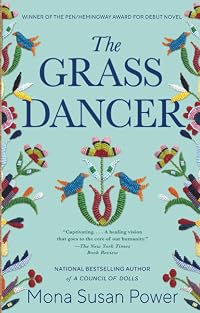
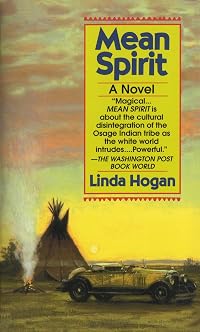
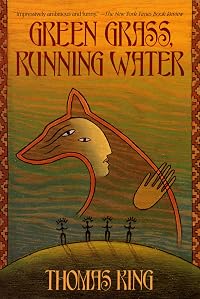
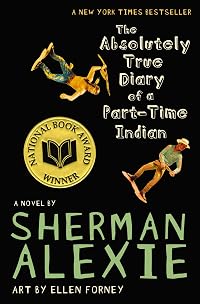
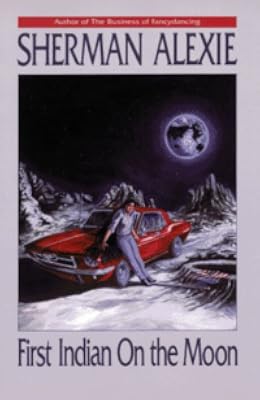
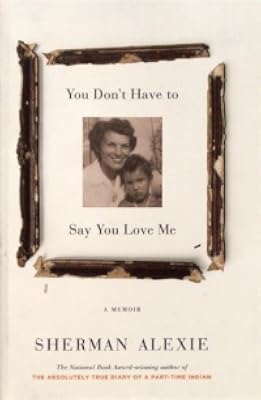
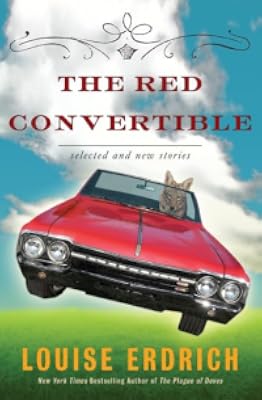
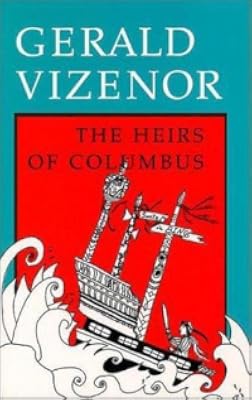
PghDragonMan Both deal with ethnic conflict and searching for identity.
30
PghDragonMan Contemporary fiction about searching for identity
30
Member Reviews
Legendary (isn’t he dead?) blues player Robert Johnson brings his accursed guitar to the Spokane Indian reservation. Although he has tried to abandon it several times before, it has always returned to him. This time however, it latches onto young Thomas Builds-the-Fire who finds himself the lead guitar player of a native band called Coyote Springs, under the tutelage of a mysterious woman called Big Mama. Big Mama says she taught Elvis how to sing and also watched the massacre of her people at Wounded Knee.
The band skyrockets from local to regional success and eventually has the opportunity of a record contract in New York City.
But all is not well on the reservation. People there resent Coyote Springs’ triumphs and failures alike. show more They are not fond of the band’s two white women groupies or that two of the band members are Salish.
This is an original, searing and sarcastic look at Reservation life, including the white people on the reservation (especially the Catholic church). It’s brutal, honest and original.
It’s also funny as all get out. Because, as the author postulates, if you can’t make fun of your problems, you are not Indian. show less
The band skyrockets from local to regional success and eventually has the opportunity of a record contract in New York City.
But all is not well on the reservation. People there resent Coyote Springs’ triumphs and failures alike. show more They are not fond of the band’s two white women groupies or that two of the band members are Salish.
This is an original, searing and sarcastic look at Reservation life, including the white people on the reservation (especially the Catholic church). It’s brutal, honest and original.
It’s also funny as all get out. Because, as the author postulates, if you can’t make fun of your problems, you are not Indian. show less
A group of Spokane Indians form a rock and blues band with the help -- if "help" is quite the right word -- of Robert Johnson's supernaturally gifted guitar. Although that description doesn't give any true sense of what this novel is about. What it's really about is the blues, both the musical and the existential kinds, about what it means be an American Indian in the modern world, and what life on a reservation can do to people. I suppose you'd call it magic realism, although what it emphatically isn't is the kind of romanticized New Age-y mysticism that white people like to associate with Native Americans. (Alexie has some rather uncomplimentary things to say about that stuff.)
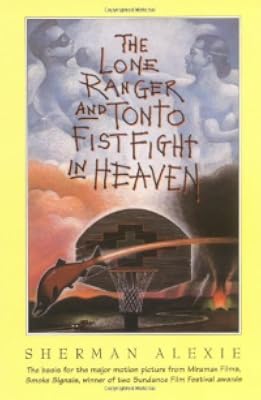
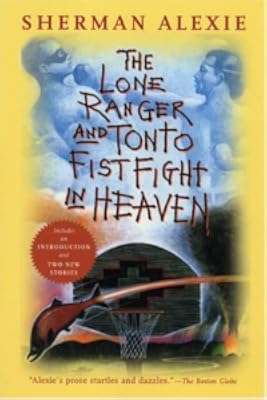
The story is a little unfocused, and I don't think this is show more nearly as sharp and powerful as his The Lone Ranger and Tonto Fistfight in Heaven. But I was deeply impressed by that book, so don't take that statement as any kind of insult. Alexie's just a damned good writer, and, fantasy elements or not, there's always a strong feeling of truth to his work. show less
The story is a little unfocused, and I don't think this is show more nearly as sharp and powerful as his The Lone Ranger and Tonto Fistfight in Heaven. But I was deeply impressed by that book, so don't take that statement as any kind of insult. Alexie's just a damned good writer, and, fantasy elements or not, there's always a strong feeling of truth to his work. show less
Witty, serious, humane, raging, life-affirming, and tragic: life among today's Spokane Indians, with their ramshackle HUD housing, their commodity applesauce, their cheap beer, and their mixed religions. No punches are pulled, and many are thrown as Thomas Builds-the-Fire, Victor Joseph, and Junior Polatkin get a hold of Robert Johnson's guitar and ride it where it takes them.
It's Indian culture that is the true protagonist of this book, the story and the characters existing mainly to draw its portrait, and not Indian culture as you've seen it in the movies and television. There are no medicine men here, no stern warriors, no elderly chiefs full of strength and wisdom. Instead we've got young people suffering the effects of abuse and show more neglect and older adults beaten by disappointment, alcoholism, and bad choices. It's grim, but it's never boring, and never quite too much to take. This is partly because of the bleak but restorative laughter that comes back again and again to lighten the mood, and partly because there's so much to learn here about the human spirit and how it survives no matter the circumstances. It leaves you strangely confident that someday, somehow, the Indians will have healed from what's been done to them. show less
It's Indian culture that is the true protagonist of this book, the story and the characters existing mainly to draw its portrait, and not Indian culture as you've seen it in the movies and television. There are no medicine men here, no stern warriors, no elderly chiefs full of strength and wisdom. Instead we've got young people suffering the effects of abuse and show more neglect and older adults beaten by disappointment, alcoholism, and bad choices. It's grim, but it's never boring, and never quite too much to take. This is partly because of the bleak but restorative laughter that comes back again and again to lighten the mood, and partly because there's so much to learn here about the human spirit and how it survives no matter the circumstances. It leaves you strangely confident that someday, somehow, the Indians will have healed from what's been done to them. show less
Musical lyrics lead into each chapter of Sherman Alexie’s Reservation Blues, their voice growing convincingly stronger as the novel progresses, providing a powerful song above the tale. Magical realism threads chapters together like guitar strings playing the tune. And heavy shadows of alcoholism and abuse form a drum-beat underneath. Reservation Blues is probably the most musical novel I’ve read recently, appropriately as it’s a haunting tale of musicians, talent and betrayal.
Is talent a gift, a labor, or a curse? Is music the stuff of dreams or of nightmares? Is the reservation a haven or a prison? And is family a treasure or a millstone? This story, told through the eyes of a native American, is stark in its portrayal of show more ill-treatment at the hands of conquerors, yet beautiful in its magical sense of hope in the face of despair. Even as everything turns to dust, the voice of Big Mom waits, offering wisdom to those who will listen, practical help to those who will pause long enough, and sorrowful regret for those she knows will do neither.
With magical realism used to perfect effect, this novel contrasts Native myth with Catholic practicality, drunken folly with the follies of power, and story with reality. It’s oddly beautiful, haunting and evocative… and musical.
Disclosure: I’ve wanted to read it for ages and I was delighted to finally get my own copy. show less
Is talent a gift, a labor, or a curse? Is music the stuff of dreams or of nightmares? Is the reservation a haven or a prison? And is family a treasure or a millstone? This story, told through the eyes of a native American, is stark in its portrayal of show more ill-treatment at the hands of conquerors, yet beautiful in its magical sense of hope in the face of despair. Even as everything turns to dust, the voice of Big Mom waits, offering wisdom to those who will listen, practical help to those who will pause long enough, and sorrowful regret for those she knows will do neither.
With magical realism used to perfect effect, this novel contrasts Native myth with Catholic practicality, drunken folly with the follies of power, and story with reality. It’s oddly beautiful, haunting and evocative… and musical.
Disclosure: I’ve wanted to read it for ages and I was delighted to finally get my own copy. show less
It takes only a page or two of Reservation Blues to realize that Sherman Alexie is a gifted writer. His characters live and breathe, move in unexpected ways through the story, and continually fascinate. The Spokane Indian Reservation feels, too, like a real place: He captures the desolation, the grinding poverty, the hopelessness, and the bonds that tie the residents to the place and to each other. Alexie spins the plot out of small things, but conveys (without ever coming out and saying so) that, for the characters, these things are immense, and the stakes enormous.
It also takes only a few pages to realize that Alexie is interested in layering the fantastic and the magical into his sharply observed story of the real. The arrival of show more Robert Johnson, the legendary bluesman – still running, after all these years, from “The Gentleman” to whom he once bartered his soul at a southern crossroads – pretty much takes care of that. Big Mom, the Indian woman to whom Johnson turns for help, likewise has only one foot in our world. So, for that matter, does Alexie’s hero: Thomas Builds-the-Fire, whose music comes from a someplace magical, and whose dreams link him (if not always in ways he understands) to the dark and troubled history of Indians in America.
It takes more than a few pages (or a few chapters) to realize that the magical-mystical elements of Alexie’s story never quite gel with the here-and-now elements (gritty social realism, leavened with humor) into a satisfying whole. It takes the better part of the book, and when it ends you’re left with a slightly baggy-feeling plot full of unresolved threads. By then, though, it doesn’t matter. By then, Alexie has you so wrapped up in the characters and their story that you don’t mind in the slightest. show less
It also takes only a few pages to realize that Alexie is interested in layering the fantastic and the magical into his sharply observed story of the real. The arrival of show more Robert Johnson, the legendary bluesman – still running, after all these years, from “The Gentleman” to whom he once bartered his soul at a southern crossroads – pretty much takes care of that. Big Mom, the Indian woman to whom Johnson turns for help, likewise has only one foot in our world. So, for that matter, does Alexie’s hero: Thomas Builds-the-Fire, whose music comes from a someplace magical, and whose dreams link him (if not always in ways he understands) to the dark and troubled history of Indians in America.
It takes more than a few pages (or a few chapters) to realize that the magical-mystical elements of Alexie’s story never quite gel with the here-and-now elements (gritty social realism, leavened with humor) into a satisfying whole. It takes the better part of the book, and when it ends you’re left with a slightly baggy-feeling plot full of unresolved threads. By then, though, it doesn’t matter. By then, Alexie has you so wrapped up in the characters and their story that you don’t mind in the slightest. show less
I'm a white woman in social work, new to Manitoba, learning to be an Indigenous ally. I'm interested in books like Reservation Blues that are written from an insider perspective. Too often, Indian experience, culture and spirituality have been appropriated by white people and filtered through white perspectives (e.g., Avatar). So that was the first reason I chose to read this book.
It's impossible not to get drawn into a relationship with the main character, storyteller Thomas Builds-the-Fire. He is humble, aware of his own failings, yet shows unexpected leadership qualities which emerge when he starts to realize his rather modest vision -- to form an Indian rock band with two other misfits who have all too often tormented and bullied show more Thomas. Actually, most of the characters are misfits, yet together they form a community. Alexie writes very poignantly, but with gentle insider humour, about the realities destroying Native people. He really shows the strengths of these people, who despite the horrendous impacts of colonization have a spiritual core that calls them to heal, a communal strength, and who use humour to deal with adversity.
I loved the Indian version of "magical realism" in this book, which brought alive the spirituality of the Spokane people of the novel. Big Mom, the music, the stories -- these are some of the means by which Spokane spirituality are woven into the fabric of this story.
As a white social worker, I run the risk of seeing alcoholism and similar problems as something needing to be addressed in order for people to be able to live good lives. At one level, this is true. But Alexie shows an acceptance of these realities and a love that shines through in how he depicts the richness of his characters' experiences, despite the harmful forces that are part of their context.
This is a book that stayed with me and continues to enrich me. I want to read more by this author. show less
It's impossible not to get drawn into a relationship with the main character, storyteller Thomas Builds-the-Fire. He is humble, aware of his own failings, yet shows unexpected leadership qualities which emerge when he starts to realize his rather modest vision -- to form an Indian rock band with two other misfits who have all too often tormented and bullied show more Thomas. Actually, most of the characters are misfits, yet together they form a community. Alexie writes very poignantly, but with gentle insider humour, about the realities destroying Native people. He really shows the strengths of these people, who despite the horrendous impacts of colonization have a spiritual core that calls them to heal, a communal strength, and who use humour to deal with adversity.
I loved the Indian version of "magical realism" in this book, which brought alive the spirituality of the Spokane people of the novel. Big Mom, the music, the stories -- these are some of the means by which Spokane spirituality are woven into the fabric of this story.
As a white social worker, I run the risk of seeing alcoholism and similar problems as something needing to be addressed in order for people to be able to live good lives. At one level, this is true. But Alexie shows an acceptance of these realities and a love that shines through in how he depicts the richness of his characters' experiences, despite the harmful forces that are part of their context.
This is a book that stayed with me and continues to enrich me. I want to read more by this author. show less
So far, Sherman Alexie is the only author who literally makes me laugh out loud and cry, cry, cry. This book isn't even my top favourite by him, yet I still love it. It is powerful, funny, moving, and makes you think. The story contrasts a realistic portrayal of what current rez life is like, and what I assume to be current, realistic, modern Native American mindsets, mixed with snapshots of tragic events that happened in Native American history. With a hilarious yet sad at the same time story of a triumphant and tragic Spokane rock band, this book has something for everyone. If you like realistic dialogue, an interesting story, cynical/truthful characters, human characters, cultural fiction, than give this read a try!
Members
- Recently Added By
Lists

Top Five Books of 2013
1,562 works; 721 members

Magic Realism
371 works; 52 members

Stream of Consciousness
87 works; 8 members

Top Five Books of 2022
736 works; 272 members

Native American / Indigenous Literature
172 works; 100 members

Top 100 books by Indigenous Masters
134 works; 7 members

International IMPAC Dublin Literary Award
179 works; 6 members

Books Read in 2017
4,249 works; 129 members

Pierce County READS
17 works; 1 member

American Lit for Eng 11 Research Project
368 works; 6 members

Books and authors mentioned by Le Clézio in his Nobel Prize speech
87 works; 3 members

AP Lit
363 works; 6 members
Books recommended by Calgary Public Library staff
1,588 works; 4 members

TBR - Older Books
92 works; 1 member
Author Information

60+ Works 31,142 Members
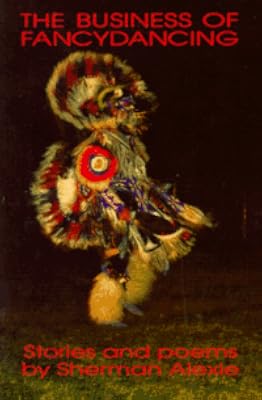
Sherman J. Alexie Jr. was born on October 7, 1966. His mother was Spokane Indian and his father was Coeur d'Alene Indian. Alexie grew up on the Spokane Indian Reservation in Wellpinit, Washington. He decided to attend high school off the reservation where he knew he would get a better education. He was the only Indian at the school, and excelled show more academically as well as in sports. After high school, he attended Gonzaga University for two years before transferring to Washington State University, where he graduated with a degree in American studies. He received the Washington State Arts Commission Poetry Fellowship in 1991 and the National Endowment for the Arts Poetry Fellowship in 1992. His collections of poetry included The Business of Fancydancing, First Indian on the Moon, The Summer of Black Widows, One Stick Song, and Face. His first collection of short stories, The Lone Ranger and Tonto Fistfight in Heaven, received a PEN/Hemingway Award for Best First Book of Fiction and a Lila Wallace-Reader's Digest Writers' Award. His other short story collections included The Toughest Indian in the World, Ten Little Indians, and War Dances. His first novel, Reservation Blues, received the Before Columbus Foundation's American Book Award and the Murray Morgan Prize. His other novels included Indian Killer, The Absolutely True Diary of a Part-Time Indian, and Flight. He won the Andrew Carnegie Medal for Excellence in Nonfiction in 2018 for You Don't Have to Say You Love Me: A Memoir. Alexie and Jim Boyd, a Colville Indian, collaborated on the album Reservation Blues, which contains the songs from the book of the same name. In 1997, Alexie collaborated with Chris Eyre, a Cheyenne/Arapaho Indian, on a film project inspired by Alexie's work, This is What it Means to Say Phoenix, Arizona, from the short story collection The Lone Ranger and Tonto Fistfight in Heaven. Smoke Signals debuted at the Sundance Film Festival in January 1998, winning two awards: the Audience Award and the Filmmakers Trophy. In 1999 the film received a Christopher Award. (Bowker Author Biography) show less
All Editions
Some Editions
Awards and Honors
Series
Belongs to Publisher Series
Work Relationships
Has as a student's study guide
Common Knowledge
- Canonical title
- Reservation Blues
- Original title
- Reservation Blues
- Original publication date
- 1995
- People/Characters
- Thomas Builds-the-Fire; Chess; Checkers; Robert Johnson (bluesman)
- Epigraph
- God's old lady, she sure is a big chick.
-- Charles Mingus
I went to the crossroad
fell down on my knees
I went to the crossroad
fell down on my knees
-- Robert Johnson - Dedication
- for Diane
for Etta Adams - First words
- In the one hundred and eleven years since the creation of the Spokane Indian Reservation in 1881, not one person, Indian or otherwise, had ever arrived there by accident.
Classifications
Statistics
- Members
- 2,257
- Popularity
- 8,942
- Reviews
- 32
- Rating
- (3.90)
- Languages
- 6 — Dutch, English, French, German, Italian, Spanish
- Media
- Paper, Ebook
- ISBNs
- 18
- ASINs
- 11