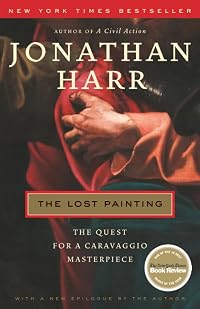
The Lost Painting: The Quest for a Caravaggio Masterpiece
by Jonathan Harr
On This Page
Description
A decaying palazzo on a hilltop near the Adriatic coast, and in the basement, cobwebbed and dusty, an archive unknown to scholars. Here, a young graduate student from Rome makes a discovery that inspires a search for a painting lost for almost two centuries. The artist was Caravaggio, a revolutionary painter beset by personal demons. Four hundred years ago, he drank and brawled in the taverns and streets of Rome, in and out of jail, all the while painting transcendent works. He rose from show more obscurity to fame and wealth, but success didn't alter his violent temperament. He died young, alone, and under strange circumstances. Caravaggio scholars estimate that between sixty and eighty of his works are in existence today. Many others--no one knows the precise number--have been lost to time. Somewhere, surely, a masterpiece lies forgotten. This quest is a synthesis of history and detective story.--From publisher description. show lessTags
Recommendations






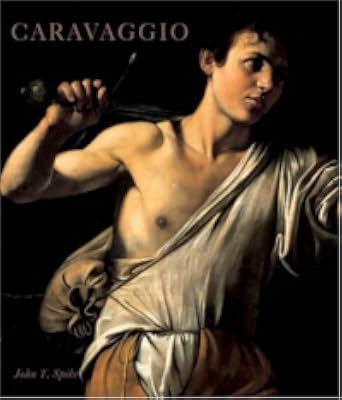
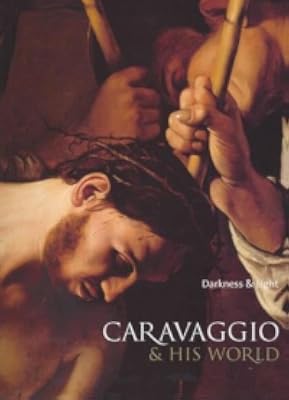
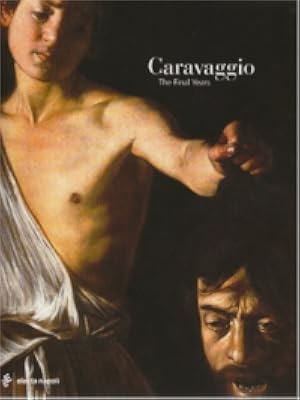








Member Recommendations
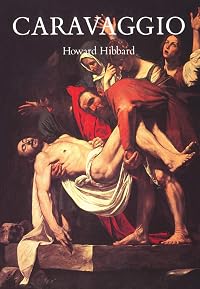
fyrefly98 Both fall into the category of "art history that's accessible to readers that know next-to-nothing about art history."
Member Reviews
There are books that, although not thrillers, have the same ability to leave you breathless as a good action novel. This is the case of “The Lost Painting: The Quest for a Caravaggio Masterpiece” by Jonathan Harr, which tells the story of the hunt for one of the masterpieces of one of the most enigmatic masters of Italian Baroque painting. From rumors to research in libraries; from a certain skepticism on the part of the experts to a completely unpredictable location; from a fraudulent sale to avoid paying taxes (nothing new under the sun) to an auction where it was sold for a pittance as warehouse stock; up to an adventurous restoration, the story of The Taking of Christ is a continuous series of twists and turns told with the show more skill typical of someone who religiously sticks to the facts, keeping the reader glued to the page. show less
Fun and light. Readers seeking a serious history of Caravaggio's work or a complete look at the business of finding, evaluating, and restoring paintings should look elsewhere. The author sometimes seems more concerned with evoking mood -- whether it's that of the present-day Italian art world or Renaissance Italy, than with anything else. But for the uninitiated -- like myself -- that might not be a terrible thing. The reader watches art historians pore through disintegrating records for the traces of lost masterpieces, surprisingly underpaid restorers bring them back to life, and hears a bit about this painter's brief, chaotic, and frequently sybaritic life. Harr also manages to portray a few of his subjects, especially Francesca and show more Laura, as fully-formed characters, and some of the novel's tension lies, for better or worse, in the choices that these two make about their love lives. "The Lost Painting" is, basically, a long magazine article. But it's not badly done, if one chooses to see it from that perspective, and it both informs and entertains well enough. The first-edition hardback, which I came across second-hand, is also a very elegant and well-designed little volume. show less
The book opens in 1980s Rome, where two young art history students assisting in the authentication of a contested work by Caravaggio stumble upon new evidence of a "lost" Caravaggio, "The Taking of Christ." Their findings cause a stir in the art world but little other consequence.
The book then jumps to Ireland, where a group of Jesuits have decided to have their neglected paintings cleaned. The art restorer charged with the job immediately suspects that one of the paintings, misattributed to another artist, may be in fact be the lost painting. Building upon the research uncovered by the art history students, he manages to piece together the painting's complex provenance and authenticate the discovery.
Along the way, we learn much about show more Rome, art restoration, Caravaggio's tumultuous life, archives, and the "Caravaggio disease," a sort of Caravaggio mania that afflicts Caravaggio scholars. (Caravaggio authors as well?)
All of which I enjoyed, don't get me wrong, but Jonathan Harr's narrative style and choices struck me as a little "off".
For one thing, he rarely employs actual dialog, preferring instead to tell us what people said. (Example: "She told him that she would come by later. He warned her not to be late. She said she would be on time.") Long conversations are recounted in which quotation marks rarely or never appear. Maybe Harr is uncomfortable actually putting words in peoples' mouths, so this is his compromise? Whatever the reason, the technique keeps readers an arms' length from both the characters and the action, making the prose feel wierdly passive.
For another thing, Harr doesn't seem to have figured out whether he is telling a story about Caravaggio or about the people who unearthed the Caravaggio. I get that there's no reason an author shouldn't do both, but because Harr's prose style prevents us from forming emotional connections to the protagonists in the story, the details he includes about their lives, loves and petty rivalries feels a little uncomfortable - like that stranger at the party who for some reason decides to tell you all about the marital problems he is having while, all the while, you're thinking: "I really don't know you well enough to be listening to this."
Suppose I'm saying that while this book is well researched and entertaining enough, I feel like a more riveting and suspenseful story could easily have been crafted from the raw material. show less
The book then jumps to Ireland, where a group of Jesuits have decided to have their neglected paintings cleaned. The art restorer charged with the job immediately suspects that one of the paintings, misattributed to another artist, may be in fact be the lost painting. Building upon the research uncovered by the art history students, he manages to piece together the painting's complex provenance and authenticate the discovery.
Along the way, we learn much about show more Rome, art restoration, Caravaggio's tumultuous life, archives, and the "Caravaggio disease," a sort of Caravaggio mania that afflicts Caravaggio scholars. (Caravaggio authors as well?)
All of which I enjoyed, don't get me wrong, but Jonathan Harr's narrative style and choices struck me as a little "off".
For one thing, he rarely employs actual dialog, preferring instead to tell us what people said. (Example: "She told him that she would come by later. He warned her not to be late. She said she would be on time.") Long conversations are recounted in which quotation marks rarely or never appear. Maybe Harr is uncomfortable actually putting words in peoples' mouths, so this is his compromise? Whatever the reason, the technique keeps readers an arms' length from both the characters and the action, making the prose feel wierdly passive.
For another thing, Harr doesn't seem to have figured out whether he is telling a story about Caravaggio or about the people who unearthed the Caravaggio. I get that there's no reason an author shouldn't do both, but because Harr's prose style prevents us from forming emotional connections to the protagonists in the story, the details he includes about their lives, loves and petty rivalries feels a little uncomfortable - like that stranger at the party who for some reason decides to tell you all about the marital problems he is having while, all the while, you're thinking: "I really don't know you well enough to be listening to this."
Suppose I'm saying that while this book is well researched and entertaining enough, I feel like a more riveting and suspenseful story could easily have been crafted from the raw material. show less
I enjoyed this to some extent, though I have serious reservations about Harr's technique.
This is one of those non-fiction books about which some will say, "It reads like a novel!", and it does. However, that is not necessarily a recommendation.
The book is about Caravaggio scholarship, particularly the serendipitous discovery of his* painting, The Taking of Christ. It delves into questions of archival access, conservation techniques and rivalry amongst art historians. All very interesting stuff.
But . . .
Although there is a bibliography, there are NO footnotes or endnotes, NO attributions, and, in a book about art, NO illustrations!
There is also a bit of false advertising about the book. Harr spends most of his time in Italy, with Italian show more researchers who are investigating another Caravaggio, doing research into various provenances, etc. He seems quite taken with one young graduate student. The difficulty, though, is that the discovery of the painting in Ireland had little to do with these people.
This absence of scholarly technique is something that is becoming all too common in non-fiction these days, and I do *not* approve! Write a strong, compelling narrative, by all means, but give your reader the necessary bibliographic information, too.
*Whether the painting about which Harr writes is the original or a copy is a matter of some dispute, something that Harr does not touch on, although his book was published *after* the controversy arose. I don't know if this was a matter of timing (the issue was apparently first raised in early 2004 and the book was published in late 2005, but that doesn't necessarily mean he had time to incorporate new information) or if he felt it would detract from his story. show less
This is one of those non-fiction books about which some will say, "It reads like a novel!", and it does. However, that is not necessarily a recommendation.
The book is about Caravaggio scholarship, particularly the serendipitous discovery of his* painting, The Taking of Christ. It delves into questions of archival access, conservation techniques and rivalry amongst art historians. All very interesting stuff.
But . . .
Although there is a bibliography, there are NO footnotes or endnotes, NO attributions, and, in a book about art, NO illustrations!
There is also a bit of false advertising about the book. Harr spends most of his time in Italy, with Italian show more researchers who are investigating another Caravaggio, doing research into various provenances, etc. He seems quite taken with one young graduate student. The difficulty, though, is that the discovery of the painting in Ireland had little to do with these people.
This absence of scholarly technique is something that is becoming all too common in non-fiction these days, and I do *not* approve! Write a strong, compelling narrative, by all means, but give your reader the necessary bibliographic information, too.
*Whether the painting about which Harr writes is the original or a copy is a matter of some dispute, something that Harr does not touch on, although his book was published *after* the controversy arose. I don't know if this was a matter of timing (the issue was apparently first raised in early 2004 and the book was published in late 2005, but that doesn't necessarily mean he had time to incorporate new information) or if he felt it would detract from his story. show less
This was a very surprising non-fiction book. It read more like a historical mystery novel than a non-fiction true story about the art and the life of Michelangelo Caravaggio, a 16 century Renaissance painter. Caravaggio had a very short and tumultuous life, but he is famous for his bright and colourful paintings, and for the way he displayed light in his work. He often used self-portraits in his paintings. His paintings are hanging in galleries all over the world, but unfortunately a lot of them have been lost. This book is a book about the treasure hunt involved with trying to find one of his lost paintings. The book starts out with a young Italian graduate student discovering a record of one of his paintings that had been lost for show more almost two centuries. She discovers the origin of the painting in a dusty old family archive, and she is determined to try to trace where this painting is now. She manages to trace it all the way to Scotland, but then the trail is lost, until a very discerning art restorer discovers what he thinks might be "The Taking of the Christ" in a small Irish Jesuit mission. I am a newbie in the world of art and art restoration, so therefore this whole book was a revelation to me. Johnathan Harr made the story so captivating and so rife with tension and discovery that it held my interest throughout. Caravaggio and his beautiful paintings came alive for me as I read. This is why I adore non-fiction. When you find a book written with such skill and about such a captivating subject, it is a exciting and a revelation. A bygone era came alive for me, and I've been introduced to a whole new world. show less
This book was so fun to read. All the sprinkling of Caravaggio, the lives of all the art historians, restorers, students, press—it was a treat for someone wanting to go into the field in some capacity. Following at times two female graduate students, Francesca Cappelletti and Laura Testa through their archival adventures in Italy, and later, Sergio Benedetti, as he restores and attempts to keep the famed found Caravaggio a secret.
While I pretty much liked the novel like writing of the book, I didn't care too much for the intimate details of some of the people's lives. Couldn't really find myself caring about Francesca's Oxford boyfriend, or something as trivial as the hours of her university's library.
Benedetti was such an show more interesting microcosm of male academic elitism, it was such a classic story of male ego being threatened and it was... to put it lightly... infuriating. I can only hope more women join the field and are undeterred by asses like that, but I digress. This was a fun book, and I recommend it for any art history lover or someone looking for light non-fiction (and I'm not just saying that because I'll be attending the author's college he works at this September either;). show less
While I pretty much liked the novel like writing of the book, I didn't care too much for the intimate details of some of the people's lives. Couldn't really find myself caring about Francesca's Oxford boyfriend, or something as trivial as the hours of her university's library.
Benedetti was such an show more interesting microcosm of male academic elitism, it was such a classic story of male ego being threatened and it was... to put it lightly... infuriating. I can only hope more women join the field and are undeterred by asses like that, but I digress. This was a fun book, and I recommend it for any art history lover or someone looking for light non-fiction (and I'm not just saying that because I'll be attending the author's college he works at this September either;). show less
Even though this book is based on a real story of the discovery of one of the lost Carravagio paintings (and should therefore be classified as non-fiction) Harr's narrative style makes the story read much more like a fictitious account of a discovery that hasn't yet been made. The search for scholars, the tricky restoration, and the miraculous outcome make for a tale which perfectly fits within tv series like Museum Secrets (or Mysteries of the Archives as we like to call it), and reaches the public on a level that scholasticism usually cannot. This type of historical research, which leads to discoveries of cultures past and lost objects, is partially what makes me want to work in this industry, because it is clear that with curation show more efforts we can keep the past alive and discover more about the origins and development of humanity. show less
Members
- Recently Added By
Published Reviews
ThingScore 100
added by doomjesse
Lists

A High School Trip to Italy
55 works; 7 members

Italian adventures
21 works; 1 member
Author Information

6+ Works 4,615 Members
Author Jonathan Harr is best known for his compelling account of a tragic toxic waste case that plagued Woburn, Massachusetts during the 1980s, entitled A Civil Action. This story traces the formulation and outcome of a legal complaint filed by eight families against three local Woburn industries for improper handling and disposal of toxic show more chemicals. A Civil Action won Harr the 1996 National Book Critics Circle Award for nonfiction and earned him a spot on the New York Times Best Sellers List for 65 weeks. He also received the 1997 Environmental Awareness Award from the League of Conservation Voters for his ability to incorporate an environmental protection issue into his work and for his efforts to help raise awareness of environmental issues. Jonathan Harr is a former staff writer at New England Monthly and has contributed to The New Yorker. He has also taught at Smith College. (Bowker Author Biography) show less
Some Editions
Awards and Honors
Common Knowledge
- Canonical title
- The Lost Painting: The Quest for a Caravaggio Masterpiece
- Alternate titles
- The Lost Painting
- Original publication date
- 2005
- People/Characters
- Michelangelo Merisi da Caravaggio; Francesca Cappelletti; Sergio Benedetti; Laura Testa; Luciano Floridi; Denis Mahon
- Important places
- Rome, Italy; Edinburgh, Scotland, UK; Dublin, Ireland; Recanati, Marche, Italy; Marche, Italy
- Dedication
- For my father, Jack
- First words
- The Englishman moves in a slow but deliberate shuffle, knees slightly bent and feet splayed, as he crosses the piazza, heading in the direction of a restaurant named Da Fortunato.
Classifications
Statistics
- Members
- 1,926
- Popularity
- 11,069
- Reviews
- 69
- Rating
- (3.82)
- Languages
- 5 — English, German, Italian, Portuguese, Spanish
- Media
- Paper, Audiobook, Ebook
- ISBNs
- 17
- ASINs
- 5