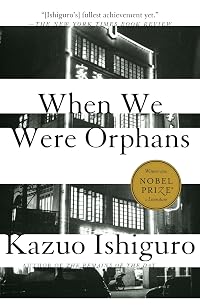
When We Were Orphans
by Kazuo Ishiguro
On This Page
Description
A masterful novel from one of the most admired writers of our time. Christopher Banks, an English boy born in early-20th-century Shanghai, is orphaned at age nine when both his mother and father disappear under suspicious circumstances. He grows up to become a renowned detective, and more than 20 years later, returns to Shanghai to solve the mystery of the disappearances. Within the layers of the narrative told in Christopher's precise, slightly detached voice are revealed what he can't, or show more wont, see: that the simplest desires-a child's for his parents, a man's for understanding-may give rise to the most complicated truths. A feat of narrative skill and soaring imagination, When We Were Orphans is Kazuo Ishiguro at his brilliant best. Performed by John Lee. show lessTags
Recommendations
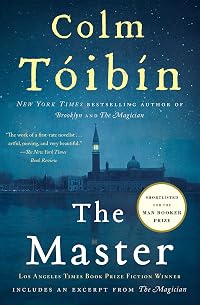
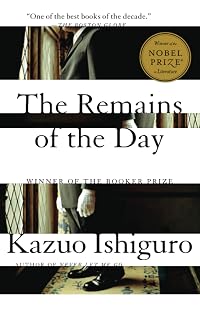
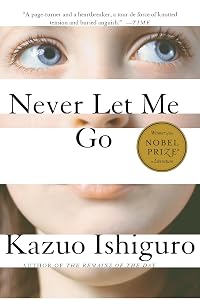
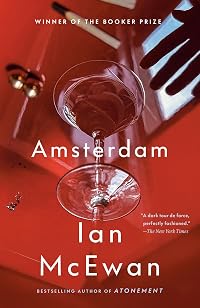

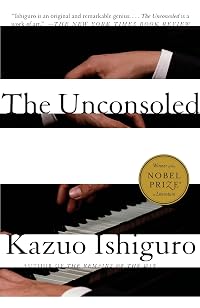



Member Recommendations
Member Reviews
Kazuo Ishiguro's greatest talent is imbuing the stories of his emotionally repressed, hopelessly English narrators with a feeling of deep and genuine sadness. While Stevens, the butler who narrates "The Remains of the Day" and Kathy H., the woman we meet in "Never Let Me Go," put on a brave face for their audiences, the feelings of loss and regret suffuse their stories. Ishiguro, in other words, is a skilled enough writer that he can show us his characters' emotional makeup without being so crass as to actually describe it to us. That, dear reader, is even harder than it sounds.
Christopher Banks, the narrator of "When We Were Orphans" is, even by Ishiguro's standards, stiff and British to a fault. In contrast with Ishiguro's most show more memorable narrators, however, his prim, formal tone never wavers. While he's eager enough to relate both the important and, frustratingly enough, the tediously insignificant incidents that make up his life story, his inner life remains something of a mystery to us. Banks seems like a young, self-regarding public school man from the novel's beginning almost right through to its very end. "When We Were Orphans" obviously draws much of its inspiration from the mystery genre, and, while it's cunningly constructed, the shallowness of Banks' character is a serious flaw. I'm sad to say that I found the first two-hundred or so pages of this book disappointingly dry and plotty.
It's a shame, really. The author places his characters at an interesting place and time, the foreign quarter of Shanghai at the very beginnings of the Second World War. The moral and cultural contradictions and conflicts that play out in this setting certainly seem like good material for a novelist of his interests. "When We Were Orphans," however, is consumed by its main character's determination to discover the fates of his parents, who disappeared almost thirty years previously. Banks's determination to solve his case is so extreme that the novel takes on a manic, feverish edge, and it's never quite revealed how closely his experience of war-torn Shanghai reflects the reality of his surroundings. Indeed, I struggled to suspend my disbelief at various points throughout the narrative and found Banks's obliviousness rather unlikable. It's also not quite clear what this superhuman focus is supposed to represent. Is it the myopia of the colonial experience? His character's yearning to resolve the pain of his childhood trauma? The callousness of the Western elite, which gets criticized at various points throughout the novel? It's hard to tell. I'll keep reading Ishiguro, of course, but "When We Were Orphans" just doesn't compare with his best work. show less
Christopher Banks, the narrator of "When We Were Orphans" is, even by Ishiguro's standards, stiff and British to a fault. In contrast with Ishiguro's most show more memorable narrators, however, his prim, formal tone never wavers. While he's eager enough to relate both the important and, frustratingly enough, the tediously insignificant incidents that make up his life story, his inner life remains something of a mystery to us. Banks seems like a young, self-regarding public school man from the novel's beginning almost right through to its very end. "When We Were Orphans" obviously draws much of its inspiration from the mystery genre, and, while it's cunningly constructed, the shallowness of Banks' character is a serious flaw. I'm sad to say that I found the first two-hundred or so pages of this book disappointingly dry and plotty.
It's a shame, really. The author places his characters at an interesting place and time, the foreign quarter of Shanghai at the very beginnings of the Second World War. The moral and cultural contradictions and conflicts that play out in this setting certainly seem like good material for a novelist of his interests. "When We Were Orphans," however, is consumed by its main character's determination to discover the fates of his parents, who disappeared almost thirty years previously. Banks's determination to solve his case is so extreme that the novel takes on a manic, feverish edge, and it's never quite revealed how closely his experience of war-torn Shanghai reflects the reality of his surroundings. Indeed, I struggled to suspend my disbelief at various points throughout the narrative and found Banks's obliviousness rather unlikable. It's also not quite clear what this superhuman focus is supposed to represent. Is it the myopia of the colonial experience? His character's yearning to resolve the pain of his childhood trauma? The callousness of the Western elite, which gets criticized at various points throughout the novel? It's hard to tell. I'll keep reading Ishiguro, of course, but "When We Were Orphans" just doesn't compare with his best work. show less
“I am beginning to see now many things aren’t as I supposed.”
As the story opens, protagonist Christopher Banks is a detective in London in the 1920s-1930s, at least that’s what he tells us. We never get any details of his cases, so we must take his word for it. It seems he wanted to be a detective to solve the disappearance of his parents when he was ten years old and living in the Shanghai. We gradually learn more about Christopher’s childhood in the International Settlement, and his Japanese friend, Akira. He believes his parents were kidnapped due to their opposition to the opium trade. He has always planned to return to Shanghai to rescue them. Along the way, Christopher goes through successes, failures, enlightenments, show more and disillusionments. Primary themes are the transience of memory and nostalgia.
Christopher is drawn to other orphans. He is effectively orphaned when his parents disappear and is reared by an aunt in London. He meets Sarah, a glamorous woman whose parents are deceased, and adopts Jennifer, a young orphan girl. As Sarah states late in the narrative, “But for those like us, our fate is to face the world as orphans, chasing through long years the shadows of vanished parents. There is nothing for it but to try and see through our missions to the end as best we can. For until we do so we will be permitted no calm.”
It shifts between a version of reality (as seen through Banks’ eyes) and an almost surreal segment when he returns to Shanghai in the midst of the Sino-Japanese war (1937). He tries to locate the house where he believes his parents are still held captive. We follow him through a war-torn region near Shanghai. In this gripping, and also bizarre, segment, the reader wonders how much of this can possibly be real. Does Banks believe what he is saying? Is he mentally ill? Is he really a detective? Is this a parody of a detective story?
Even though Christopher is an adult, he comes across as extremely naïve and sheltered. He seems to be stuck in his childhood. He is chasing memories of the halcyon days of his youth before his world was shattered. My take on the surreal segment is that he finally faces the fact that the world is a pretty horrible place (and about to get worse – this was just prior to WWII).
The novel is written in elegant prose, with parts harking back to the time period in which it is set. It will likely not be very satisfying to anyone looking for a traditional detective story. I enjoyed it quite a bit, but I tend to enjoy these types of quirky off-the-beaten path stories.
The audio book is brilliantly read by John Lee. His pacing, intonement, and voices are beautifully performed. I am going to find out what else he has narrated. show less
As the story opens, protagonist Christopher Banks is a detective in London in the 1920s-1930s, at least that’s what he tells us. We never get any details of his cases, so we must take his word for it. It seems he wanted to be a detective to solve the disappearance of his parents when he was ten years old and living in the Shanghai. We gradually learn more about Christopher’s childhood in the International Settlement, and his Japanese friend, Akira. He believes his parents were kidnapped due to their opposition to the opium trade. He has always planned to return to Shanghai to rescue them. Along the way, Christopher goes through successes, failures, enlightenments, show more and disillusionments. Primary themes are the transience of memory and nostalgia.
Christopher is drawn to other orphans. He is effectively orphaned when his parents disappear and is reared by an aunt in London. He meets Sarah, a glamorous woman whose parents are deceased, and adopts Jennifer, a young orphan girl. As Sarah states late in the narrative, “But for those like us, our fate is to face the world as orphans, chasing through long years the shadows of vanished parents. There is nothing for it but to try and see through our missions to the end as best we can. For until we do so we will be permitted no calm.”
It shifts between a version of reality (as seen through Banks’ eyes) and an almost surreal segment when he returns to Shanghai in the midst of the Sino-Japanese war (1937). He tries to locate the house where he believes his parents are still held captive. We follow him through a war-torn region near Shanghai. In this gripping, and also bizarre, segment, the reader wonders how much of this can possibly be real. Does Banks believe what he is saying? Is he mentally ill? Is he really a detective? Is this a parody of a detective story?
Even though Christopher is an adult, he comes across as extremely naïve and sheltered. He seems to be stuck in his childhood. He is chasing memories of the halcyon days of his youth before his world was shattered. My take on the surreal segment is that he finally faces the fact that the world is a pretty horrible place (and about to get worse – this was just prior to WWII).
The novel is written in elegant prose, with parts harking back to the time period in which it is set. It will likely not be very satisfying to anyone looking for a traditional detective story. I enjoyed it quite a bit, but I tend to enjoy these types of quirky off-the-beaten path stories.
The audio book is brilliantly read by John Lee. His pacing, intonement, and voices are beautifully performed. I am going to find out what else he has narrated. show less
Christopher Banks’ parents disappeared in mysterious circumstances in Shanghai when he was just a boy, and he returned to England, where he completed his education. Now he is a celebrated detective. This story vividly depicts life in Shanghai between the two World Wars. It’s also a really interesting exploration of the dilemma between duty and pleasure, 'truth', and the reliability of memory ...
It’s interesting reading a story when from very early on you start asking yourself the extent to which the narrator’s perceptions are accurate. We all have possible blind spots in the telling of the events of our lives, and it seems to me that one of Ishiguro’s strengths is the way that he’s able to make these salient in his writing, show more so we’re conscious as we read along with the narrator that there are things that he isn’t telling us, or doesn’t know to tell us. It’s even more ironic when the story is narrated by a detective ...
I really enjoyed this book, and Ishiguro is fast becoming one of my favourite authors. show less
It’s interesting reading a story when from very early on you start asking yourself the extent to which the narrator’s perceptions are accurate. We all have possible blind spots in the telling of the events of our lives, and it seems to me that one of Ishiguro’s strengths is the way that he’s able to make these salient in his writing, show more so we’re conscious as we read along with the narrator that there are things that he isn’t telling us, or doesn’t know to tell us. It’s even more ironic when the story is narrated by a detective ...
I really enjoyed this book, and Ishiguro is fast becoming one of my favourite authors. show less
It is a bit ironic that Kazuo Ishiguro is probably the writer in the world that presents the richness of the English langusge in the most beautiful way. Nearly every sentence is colourful, rich and imaginative, while at the same time concise and easily accessible. Ishiguro came to Britain as a 5-year old, so English is his mother tongue, but I still suspect he brings some of his Japanese background into his use of the language. "When We Were Orphans" is the third book I have read from Ishiguro. "The Remains of the Day" is still my favorite, but this novel is nevertheless a considerable achievement and definitely worth reading, way above average. Christopher Banks is one of the world's most famous detectives, but the greatest detective show more story he encounters is from his own early life, a case he finds it hard to solve. The novel is written in first person singular, so we only get to understand Christopher's world through his own words, and Ishiguro demands a lot from his reader to fill in the blanks. In a way he is turning me as a reader into a detective as well. As opposed to the other novels I have read from Ishiguro, this novel touches upon his own background, as it is set in Shanghai's International Settlement in the early part of last century, with both Chinese, British and Japanese main characters. show less
“I am beginning to see now many things aren’t as I supposed.”
As the story opens, protagonist Christopher Banks is a detective in London in the 1920s-1930s, at least that’s what he tells us. We never get any details of his cases, so we must take his word for it. It seems he wanted to be a detective to solve the disappearance of his parents when he was ten years old and living in the Shanghai. We gradually learn more about Christopher’s childhood in the International Settlement, and his Japanese friend, Akira. He believes his parents were kidnapped due to their opposition to the opium trade. He has always planned to return to Shanghai to rescue them. Along the way, Christopher goes through successes, failures, enlightenments, show more and disillusionments. Primary themes are the transience of memory and nostalgia.
Christopher is drawn to other orphans. He is effectively orphaned when his parents disappear and is reared by an aunt in London. He meets Sarah, a glamorous woman whose parents are deceased, and adopts Jennifer, a young orphan girl. As Sarah states late in the narrative, “But for those like us, our fate is to face the world as orphans, chasing through long years the shadows of vanished parents. There is nothing for it but to try and see through our missions to the end as best we can. For until we do so we will be permitted no calm.”
It shifts between a version of reality (as seen through Banks’ eyes) and an almost surreal segment when he returns to Shanghai in the midst of the Sino-Japanese war (1937). He tries to locate the house where he believes his parents are still held captive. We follow him through a war-torn region near Shanghai. In this gripping, and also bizarre, segment, the reader wonders how much of this can possibly be real. Does Banks believe what he is saying? Is he mentally ill? Is he really a detective? Is this a parody of a detective story?
Even though Christopher is an adult, he comes across as extremely naïve and sheltered. He seems to be stuck in his childhood. He is chasing memories of the halcyon days of his youth before his world was shattered. My take on the surreal segment is that he finally faces the fact that the world is a pretty horrible place (and about to get worse – this was just prior to WWII).
The novel is written in elegant prose, with parts harking back to the time period in which it is set. It will likely not be very satisfying to anyone looking for a traditional detective story. I enjoyed it quite a bit, but I tend to enjoy these types of quirky off-the-beaten path stories.
The audio book is brilliantly read by John Lee. His pacing, intonement, and voices are beautifully performed. I am going to find out what else he has narrated. show less
As the story opens, protagonist Christopher Banks is a detective in London in the 1920s-1930s, at least that’s what he tells us. We never get any details of his cases, so we must take his word for it. It seems he wanted to be a detective to solve the disappearance of his parents when he was ten years old and living in the Shanghai. We gradually learn more about Christopher’s childhood in the International Settlement, and his Japanese friend, Akira. He believes his parents were kidnapped due to their opposition to the opium trade. He has always planned to return to Shanghai to rescue them. Along the way, Christopher goes through successes, failures, enlightenments, show more and disillusionments. Primary themes are the transience of memory and nostalgia.
Christopher is drawn to other orphans. He is effectively orphaned when his parents disappear and is reared by an aunt in London. He meets Sarah, a glamorous woman whose parents are deceased, and adopts Jennifer, a young orphan girl. As Sarah states late in the narrative, “But for those like us, our fate is to face the world as orphans, chasing through long years the shadows of vanished parents. There is nothing for it but to try and see through our missions to the end as best we can. For until we do so we will be permitted no calm.”
It shifts between a version of reality (as seen through Banks’ eyes) and an almost surreal segment when he returns to Shanghai in the midst of the Sino-Japanese war (1937). He tries to locate the house where he believes his parents are still held captive. We follow him through a war-torn region near Shanghai. In this gripping, and also bizarre, segment, the reader wonders how much of this can possibly be real. Does Banks believe what he is saying? Is he mentally ill? Is he really a detective? Is this a parody of a detective story?
Even though Christopher is an adult, he comes across as extremely naïve and sheltered. He seems to be stuck in his childhood. He is chasing memories of the halcyon days of his youth before his world was shattered. My take on the surreal segment is that he finally faces the fact that the world is a pretty horrible place (and about to get worse – this was just prior to WWII).
The novel is written in elegant prose, with parts harking back to the time period in which it is set. It will likely not be very satisfying to anyone looking for a traditional detective story. I enjoyed it quite a bit, but I tend to enjoy these types of quirky off-the-beaten path stories.
The audio book is brilliantly read by John Lee. His pacing, intonement, and voices are beautifully performed. I am going to find out what else he has narrated. show less
This book was truly disappointing. I wanted to like it. It started off with a very promising storyline, but around a third of the way through the book it became clear that it wasn't going to pan out, and the end of the book was excruciating. Quite simply the plot, character development, and main character himself were all terrible. Very few of the motivations of characters' actions made sense, and the story itself wasn't compelling because it was so nonsensical.
After The Remains of the Day, I had assumed Ishiguro was a generically good writer, and that I would enjoy most of his books. Now I realize that Ishiguro is only worth reading when his topic is good. The Remains of the Day, while simple plot-wise, was the correct style of book show more for him to write. The plot lent itself naturally to the protagonist's introspection, and little needed to happen over the course of the book for it to remain compelling. When We Were Orphans, on the other hand, was set up initially as a very plot driven book to that point that it could not retain itself unless the speed and intrigue of the plot were maintained. I think Ishiguro's writing does not lend itself to this style, as the second half of this book demonstrates. show less
After The Remains of the Day, I had assumed Ishiguro was a generically good writer, and that I would enjoy most of his books. Now I realize that Ishiguro is only worth reading when his topic is good. The Remains of the Day, while simple plot-wise, was the correct style of book show more for him to write. The plot lent itself naturally to the protagonist's introspection, and little needed to happen over the course of the book for it to remain compelling. When We Were Orphans, on the other hand, was set up initially as a very plot driven book to that point that it could not retain itself unless the speed and intrigue of the plot were maintained. I think Ishiguro's writing does not lend itself to this style, as the second half of this book demonstrates. show less
Kazuo Ishiguro’s enigmatic novel, When We Were Orphans, is as complex and baffling a work of fiction as I have ever encountered. Christopher Banks, our narrator, is not so much an unreliable narrator as a naive narrator who believes in the internal world he has created and acts upon it as if it were truth. Through so much of the novel I kept asking myself why he could not see the illogical conclusions he was drawing, but of course that is what this novel is about, his inability to leave his childhood behind him and his biased view of the events that lead up to the loss of his parents.
Christopher Banks is a detective, but this is not a detective story. There is a mystery to be solved, but solving the mystery is not the focus of this show more tale. In fact, Banks is a detective primarily because he feels himself tied to the events of his childhood that he carries around with him like an albatross. The only way he will ever be free to live his adult life is to solve the puzzle that surrounds the disappearance of first his father and then his mother. It is the mental workings of this character that are paramount, and you must be careful here because Banks sees mainly what he wishes to see, sometimes in complete opposition to what the facts appear to reveal.
Ishiguro does not entice you to follow Banks on his journey through his life, he does not lure you into the underbelly of Shanghai, he drags you along, sometimes kicking and screaming that there is something just not right about this story. I enjoyed trying to pick the truth out from among the obvious miscues and while I never felt anything akin to affection for Banks, I did sympathize with his situation and understand his desire to reconcile his childhood memories with what had truly occurred.
I suppose what I really took away from this story was that memories are not truths. The past cannot be reconstructed and no matter how much we might like to alter it, we never can. What has happened, even to ourselves, might not be in reality what happened at all, and spending the present on chasing the past might cost you the future.
...for those like us, our fate is to face the world as orphans, chasing through long years the shadows of vanished parents. There is nothing for it but to try and see through our missions to the end, as best we can, for until we do so, we will be permitted no calm.
Perhaps we are all chasing the shadows of vanished parents. Perhaps we are all struggling to discover who we are, separate from them, standing alone. I had a discussion with my older sister once about an event in our childhood. There were only three years separating us and both of us were present for this event and witnessed it ourselves, but our memories of it were so dissimilar as to be diametrically opposed. We can never go back there and see who was right, and maybe we both were, because what is true for one is not always what is true for another. show less
Christopher Banks is a detective, but this is not a detective story. There is a mystery to be solved, but solving the mystery is not the focus of this show more tale. In fact, Banks is a detective primarily because he feels himself tied to the events of his childhood that he carries around with him like an albatross. The only way he will ever be free to live his adult life is to solve the puzzle that surrounds the disappearance of first his father and then his mother. It is the mental workings of this character that are paramount, and you must be careful here because Banks sees mainly what he wishes to see, sometimes in complete opposition to what the facts appear to reveal.
Ishiguro does not entice you to follow Banks on his journey through his life, he does not lure you into the underbelly of Shanghai, he drags you along, sometimes kicking and screaming that there is something just not right about this story. I enjoyed trying to pick the truth out from among the obvious miscues and while I never felt anything akin to affection for Banks, I did sympathize with his situation and understand his desire to reconcile his childhood memories with what had truly occurred.
I suppose what I really took away from this story was that memories are not truths. The past cannot be reconstructed and no matter how much we might like to alter it, we never can. What has happened, even to ourselves, might not be in reality what happened at all, and spending the present on chasing the past might cost you the future.
...for those like us, our fate is to face the world as orphans, chasing through long years the shadows of vanished parents. There is nothing for it but to try and see through our missions to the end, as best we can, for until we do so, we will be permitted no calm.
Perhaps we are all chasing the shadows of vanished parents. Perhaps we are all struggling to discover who we are, separate from them, standing alone. I had a discussion with my older sister once about an event in our childhood. There were only three years separating us and both of us were present for this event and witnessed it ourselves, but our memories of it were so dissimilar as to be diametrically opposed. We can never go back there and see who was right, and maybe we both were, because what is true for one is not always what is true for another. show less
Members
- Recently Added By
Published Reviews
ThingScore 67
When We Were Orphans may well be Ishiguro's most capacious book so far, in part because it stitches together his almost microscopic examination of self-delusion, as it plays out in lost men, with a much larger, often metaphorical look at complacency on a national scale.
added by jburlinson
Christopher Banks is a fashionable society detective, solving fashionably ghastly crimes in 1930s England. In his past, however, there is an unsolved and traumatic crime which continues to torment him. He was brought up in Shanghai, with a father heavily involved in Western complicity in the importation of opium
added by bergs47
Das neue Buch ist eine Überraschung. Denn es kommt so ganz anders daher, es tut so, als werde hier einmal Handfestes geboten, ein Kriminalfall! Ein Kind verliert seine Eltern. Ein schreckliches Familiendrama. Eine historische Erzählung, die sich im China der Opiumkriege entfaltet, Kolonialismus, Bandenkrieg, es birgt, natürlich, auch die Geschichte einer vergeblichen Liebe, und es gehört show more zum Abenteuerlichen dieser Lektüre, dass wir alle paar Seiten der Illusion erliegen, nun aber endlich zu erahnen, worauf wir uns hier einzulassen haben. Ahnungen, die uns mit dem Wenden einer Seite weggeschlagen werden, was die Gedanken nicht unangenehm verwirrt, so wie wenn die Achterbahn abrupt die Richtung wechselt und es uns herumschleudert und wir die Gravidität der Gehirnmasse kribbelnd spüren. Kein Wunder, es ist die Lebensgeschichte eines Verrückten. show less
added by ElBarto
Lists

Best Historical Fiction
620 works; 258 members

Best Contemporary Literary Fiction (Around the Last 30 Years)
400 works; 123 members
Booker Prize
491 works; 62 members
Booker Prize Shortlist: Titles Read
103 works; 10 members

Man Booker Prize Longlist 2000
6 works; 2 members

Books Read in 2023
5,638 works; 147 members

Books Read in 2009
464 works; 11 members

Books Read in 2016
4,666 works; 197 members

Books Read in 2022
5,226 works; 112 members
Books Read in 2015
3,299 works; 126 members

SHOULD Read Books!
354 works; 9 members

Books Read in 2020
4,379 works; 123 members

World War II Novels
28 works; 3 members

Best Private Eye stories
28 works; 8 members

Books Read in 2018
4,360 works; 110 members

Asia
178 works; 7 members

2000s (the decade, not the century)
184 works; 11 members

Allie's Wishlist
217 works; 2 members

Books Read in 2002
201 works; 8 members

Global Reads: Books Set in East Asia
139 works; 12 members

Top Cops (Detectives in Fiction)
86 works; 24 members

Novels featuring Orphans
76 works; 10 members

Missing!
18 works; 4 members
Author Information

Kazuo Ishiguro was born in Nagasaki, Japan on November 8, 1954. In 1960, his family moved to England. He received a bachelor's degree in English and philosophy from the University of Kent in 1978 and a master's degree in creative writing from the University of East Anglia in 1980. He became a British citizen in 1982. His first novel, A Pale View show more of Hills, received the Winifred Holtby Award from the Royal Society of Literature. His second novel, An Artist of the Floating World, received the Whitbread Book of the Year Award in 1986. His third novel, The Remains of the Day, received the Man Booker Prize for Fiction in 1989 and was adapted into a film starring Anthony Hopkins and Emma Thompson. His other works include The Unconsoled, When We Were Orphans, Never Let Me Go, Nocturnes: Five Stories of Music and Nightfall, and The Buried Giant. He was awarded the OBE in 1995 for services to literature and the Chevalier de l'Ordre des Arts et des Lettres by the French government in 1998. He received the 2017 Nobel Prize in Literature. He has also written several songs for jazz singer Stacey Kent and screenplays for both film and television. (Bowker Author Biography) show less
Some Editions
Awards and Honors
Awards
Notable Lists
Torchlight List (189)
Series
Belongs to Publisher Series
Common Knowledge
- Canonical title*
- Me orvot
- Original title
- When We Were Orphans
- Original publication date
- 2000
- People/Characters
- Christopher Banks; Sarah Hemmings; Akira Yamashita
- Important places
- Shanghai, China; London, England, UK; The International Settlement (Shanghai, China)
- Important events
- Sino-Japanese War
- Dedication
- To Lorna and Naomi
- First words
- It was the summer of 1923, the summer I came down from Cambridge, when despite my aunt's wishes that I return to Shropshire, I decided my future lay in the capital and took up a small flat at Number 14b Bedford Gardens in Ken... (show all)sington.
- Quotations*
- Noi bambini, mi disse, eravamo come lo spago che tiene unite le lamelle della persiana. Glielo aveva detto tempo prima un monaco giapponese. Spesso non ce ne accorgevamo, ma eravamo noi a tenere insieme non solo la famiglia, ... (show all)ma il mondo intero. Se non facevamo la nostra parte, le lamelle sarebbero finite a terra tutte sparpagliate.
… mi accorsi che urlava in mandarino e non in giapponese. Realizzare che si trattava di due persone diverse mi raggelò il sangue. Erano talmente identici i loro lamenti penosi, il modo in cui le grida si trasformavano in s... (show all)uppliche disperate per poi fondersi ancora nell'urlo, da farmi pensare che quel tormento fosse ciò a cui ciascuno di noi sarebbe andato incontro nel cammino verso la morte – che quei rumori terribili fossero universali come il pianto di ogni neonato. - Last words
- (Click to show. Warning: May contain spoilers.)Nevertheless, there are those times when a sort of emptiness fills my hours, and I shall continue to give Jennifer's invitation serious thought.
- Blurbers
- Oates, Joyce Carol
- Original language
- English
- Canonical DDC/MDS
- 823.914
- Canonical LCC
- PR6059.S5
*Some information comes from Common Knowledge in other languages. Click "Edit" for more information.
Classifications
Statistics
- Members
- 6,413
- Popularity
- 1,923
- Reviews
- 140
- Rating
- (3.47)
- Languages
- 26 — Catalan, Chinese, Czech, Danish, Dutch, English, Estonian, Finnish, French, German, Greek, Hebrew, Hungarian, Icelandic, Italian, Japanese, Norwegian (Bokmål), Norwegian, Polish, Romanian, Russian, Slovenian, Spanish, Swedish, Turkish, Portuguese (Portugal)
- Media
- Paper, Audiobook, Ebook
- ISBNs
- 100
- ASINs
- 30