On This Page
Description
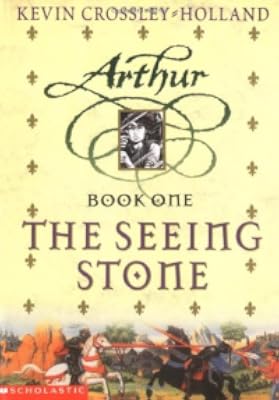
In late twelfth-century England, a thirteen-year-old boy named Arthur recounts how Merlin gives him a magical seeing stone which shows him images of the legendary King Arthur, the events of whose life seem to have many parallels to his own.Tags
Recommendations

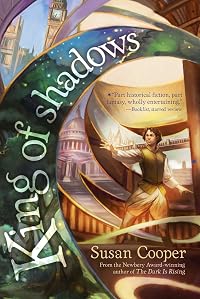
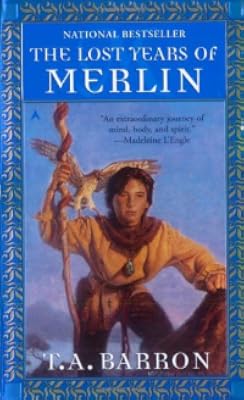
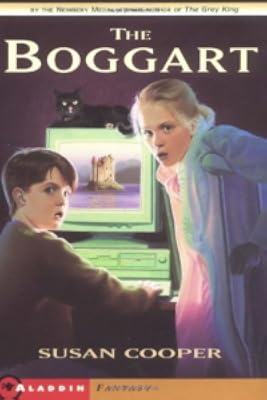
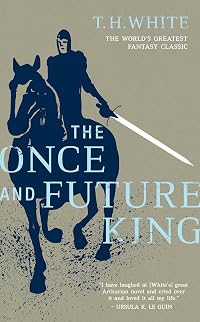
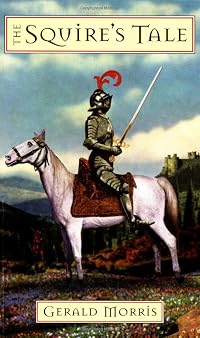
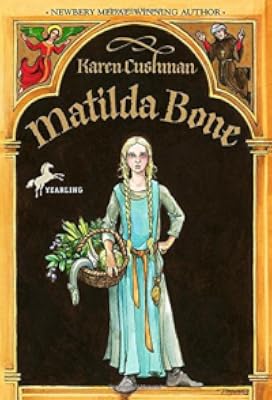
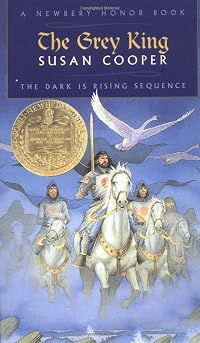
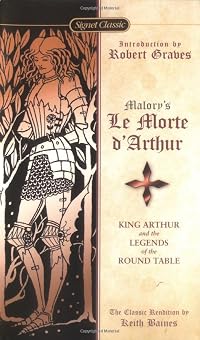

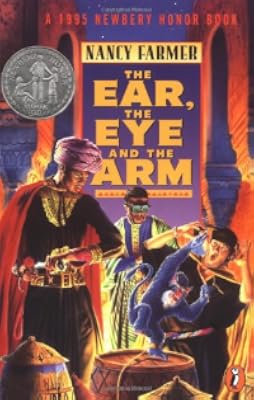
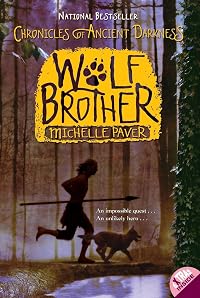

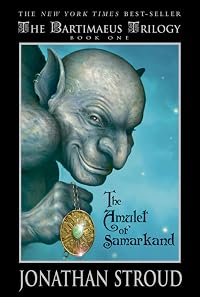
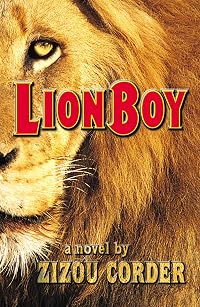

Member Recommendations

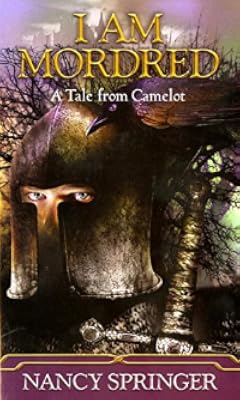
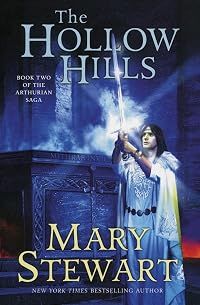
themulhern The Earl, a novel for adults, is set in England about 20 years before "The Seeing Stone" but the conflict between inclinations and the expectations of society is just as strong. The eponymous earl holds some lands on the Welsh border and one of his pages is officially a Welsh hostage.
Member Reviews
The first book in a trilogy based on the Arthurian legend, The Seeing Stone by Kevin Crossley-Holland is set in 1199, as King John has just seized the throne upon news of his brother’s death. This is a wonderful, multi-layered story that is both complex and satisfying. The main character, Arthur is a second son growing up at the family holding of Caldicot. He dreams of becoming a squire and eventual knight, but fears that as a second son, he may be given over to the church.
A rather mysterious friend of his father, Merlin, has become Arthur’s guide and mentor. On Arthur’s thirteenth birthday he presents him with a seeing stone that gives Arthur glimpses of the life of another Arthur, this one destined to become a king. As the book show more progresses, many parallels are drawn between the life of Arthur-in-the-stone and Arthur of Caldicot Manor. Both these Arthurs have their own separate destinies and as the book draws to a close we learn of the future king drawing the sword from the stone while Arthur of Caldicot is about to embark upon his own quest.
I was both entertained and engaged by this book. It’s a thoroughly researched coming of age story with a thoughtful, well defined main character who is both observant and creative. The story is laid out in many short chapters that paint a rich and vivid picture of the day to day life of a small medieval manor, along with all the different people that lived there. Although aimed at a younger audience, I found the whole concept of The Seeing Stone to be magical and I will certainly be continuing on with this trilogy. show less
A rather mysterious friend of his father, Merlin, has become Arthur’s guide and mentor. On Arthur’s thirteenth birthday he presents him with a seeing stone that gives Arthur glimpses of the life of another Arthur, this one destined to become a king. As the book show more progresses, many parallels are drawn between the life of Arthur-in-the-stone and Arthur of Caldicot Manor. Both these Arthurs have their own separate destinies and as the book draws to a close we learn of the future king drawing the sword from the stone while Arthur of Caldicot is about to embark upon his own quest.
I was both entertained and engaged by this book. It’s a thoroughly researched coming of age story with a thoughtful, well defined main character who is both observant and creative. The story is laid out in many short chapters that paint a rich and vivid picture of the day to day life of a small medieval manor, along with all the different people that lived there. Although aimed at a younger audience, I found the whole concept of The Seeing Stone to be magical and I will certainly be continuing on with this trilogy. show less
I expected the conceit to feel contrived, but it did not. I read some books by the author when I was in my early teens; it's impressive to find a book that he's written recently that can hold my interest now that I'm a middle aged adult.
The subject matter of the book is entirely natural to the author given his lifetime interest in folklore and the daily life of the middle ages.
The dialogue contains some very modern words like "bogus". At the same time, it is not unnatural; the themes and meanings seem to give a clue into the hearts and minds of the mediaeval characters.
The book reminds me somewhat of Cecilia Holland's "The Earl" (in the UK "A Hammer for Princes") which is set about 50 years earlier but shows the same conflict between show more cultural expectations and the inclinations of the characters.
Whenever a mediaeval novel is realistic, the women's and girls's lives are always much worse than those of the men. This makes the women and girls seem terrifyingly, impossibly heroic and thereby makes me feel utterly inadequate and cowardly.
The part where Merlin points out that Oliver the priest is a heretic, i.e., that he, Merlin, is better educated in Christian theology than Oliver is and knows better what Oliver is required by his superiors to believe, has amusing echoes in modern settings where so many atheists know their theology a bit better than the fundamentalists.
Merlin's "salmon leap" and other feats from Celtic mythology are there for the knowledgeable.
Michael Maloney's reading is excellent. show less
The subject matter of the book is entirely natural to the author given his lifetime interest in folklore and the daily life of the middle ages.
The dialogue contains some very modern words like "bogus". At the same time, it is not unnatural; the themes and meanings seem to give a clue into the hearts and minds of the mediaeval characters.
The book reminds me somewhat of Cecilia Holland's "The Earl" (in the UK "A Hammer for Princes") which is set about 50 years earlier but shows the same conflict between show more cultural expectations and the inclinations of the characters.
Whenever a mediaeval novel is realistic, the women's and girls's lives are always much worse than those of the men. This makes the women and girls seem terrifyingly, impossibly heroic and thereby makes me feel utterly inadequate and cowardly.
The part where Merlin points out that Oliver the priest is a heretic, i.e., that he, Merlin, is better educated in Christian theology than Oliver is and knows better what Oliver is required by his superiors to believe, has amusing echoes in modern settings where so many atheists know their theology a bit better than the fundamentalists.
Merlin's "salmon leap" and other feats from Celtic mythology are there for the knowledgeable.
Michael Maloney's reading is excellent. show less
I got this for a leisure read. Sometimes I just like to fall back into a little fantasy and let my mind explore a world that doesn't exist in the same space as mine. The Seeing Stone is told in very short chapters that were enjoyable. They move the story forward quickly while revealing tidbits about the history of the time and the family involved. It's told from the point of view of a thirteen year old boy. His mild observations about the world around him will draw you in, as you can sense that something much bigger than him is going on. Fun read.
The year is 1199. Thirteen-year-old Arthur de Caldicot longs to be a knight, but his father, Lord John, frustratingly will not tell Arthur his plans for his son's future. Arthur has carved out a little space for himself to write a bit each day as the year winds down towards the new century - a crossing-place, as Lord John's friend Merlin calls it. Merlin seems to take a special interest in Arthur, giving him an obsidian stone but not telling him what it is for. Arthur must discover its purpose for himself.
The small detail that 1301 rather than 1300 would really be the new century was a bit irritating for me, but I liked the theme of change, newness, and renewal that is made clear by the time frame. This is seen in Arthur himself, as show more well, reaching an age of endings and beginnings as he enters his teen years and discovers a lot about himself. There are definite parallels that those even a little familiar with Arthurian legend will put together much more quickly than our protagonist, but clearly divergent points as well. I'm intrigued enough to pursue the story to the next volume in the trilogy show less
The small detail that 1301 rather than 1300 would really be the new century was a bit irritating for me, but I liked the theme of change, newness, and renewal that is made clear by the time frame. This is seen in Arthur himself, as show more well, reaching an age of endings and beginnings as he enters his teen years and discovers a lot about himself. There are definite parallels that those even a little familiar with Arthurian legend will put together much more quickly than our protagonist, but clearly divergent points as well. I'm intrigued enough to pursue the story to the next volume in the trilogy show less
This is the first in a trilogy about Arthur, a young man who lives in the Marches bordering England and Wales in the late 12th Century. In a magic stone given to him by a man called Merlin, Arthur catches glimpses of the world occupied by his predecessor, the Arthur of legend. The story is woven into the day to day life of the young man and we follow his growth as he learns lessons from both his life and King Arthur's life. The most delightful parts of this book occur when Corssley-Holland allows himself to freely play with words; he is a delightful wordsmith and these little excursions into wordplay add a great deal to the charm of the book.
[This is a review I wrote in 2007]
Young Arthur, at the age of 13, in the year 1199, is given a beautiful obsidian stone by a man named Merlin. The boy Arthur lives a normal, if priveleged, existence as a page to his father on a wealthy manor in the Marches, just on the "England" side of the border with Wales. He lives together with his parents, his elder brother and younger sister, and he dreams of nothing other than one day becoming a Squire.
The stone seems perfectly normal at first, and then one day Arthur starts to see images in the stone and a story starts to emerge... a story featuring another young boy named Arthur!
The plot is really good, and with the awards that the book received, including winning the "Guardian Children's show more Fiction" prize, I was expecting it to be that good. However, I was quite disappointed to find that the text of this average-length book had been chopped up into a staggering 100 chapters, some just the length of a short paragraph!! I felt as though I literally "struggled" through to Chapter 33 as the text, for me, was lacking immediacy and flow!
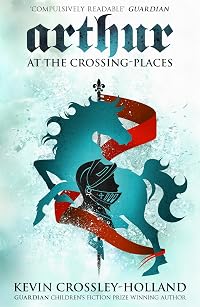
I persevered, and my annoyance at the constant disruptions of thought faded as I was drawn into the lives or Arthur, his family, and their retainers, skilfully woven with the threads of Arthurian Legend. The book is built on solid foundations of well-researched historical evidence regarding the lives and customs of Britons at the turn of the thirteenth century. I now look forward to experiencing the rest of the Arthurian Legend through the eyes of young Arthur, in books two and three ("At the Crossing Places", and "King of the Middle March"). I only hope that the chapters become more substantial and terrible chapter headings such as "Mouthfuls of Air" (Lynne Truss would have a field day with this one!!) are avoided!
A good story - worth reading if you can persevere with the numerous chapters! show less
Young Arthur, at the age of 13, in the year 1199, is given a beautiful obsidian stone by a man named Merlin. The boy Arthur lives a normal, if priveleged, existence as a page to his father on a wealthy manor in the Marches, just on the "England" side of the border with Wales. He lives together with his parents, his elder brother and younger sister, and he dreams of nothing other than one day becoming a Squire.
The stone seems perfectly normal at first, and then one day Arthur starts to see images in the stone and a story starts to emerge... a story featuring another young boy named Arthur!
The plot is really good, and with the awards that the book received, including winning the "Guardian Children's show more Fiction" prize, I was expecting it to be that good. However, I was quite disappointed to find that the text of this average-length book had been chopped up into a staggering 100 chapters, some just the length of a short paragraph!! I felt as though I literally "struggled" through to Chapter 33 as the text, for me, was lacking immediacy and flow!
I persevered, and my annoyance at the constant disruptions of thought faded as I was drawn into the lives or Arthur, his family, and their retainers, skilfully woven with the threads of Arthurian Legend. The book is built on solid foundations of well-researched historical evidence regarding the lives and customs of Britons at the turn of the thirteenth century. I now look forward to experiencing the rest of the Arthurian Legend through the eyes of young Arthur, in books two and three ("At the Crossing Places", and "King of the Middle March"). I only hope that the chapters become more substantial and terrible chapter headings such as "Mouthfuls of Air" (Lynne Truss would have a field day with this one!!) are avoided!
A good story - worth reading if you can persevere with the numerous chapters! show less
I’ve read to the end of the first book of a trilogy and I want to read on. This doesn’t happen to me very often. Usually, book one is enough. Often, more than enough.
I am not quite sure where this trilogy is going and that’s a good thing. It’s a series about King Arthur, with all the usual, yet somehow still surprising revelations: pulling the sword from the stone, enchantment of Arthur’s father for his mother, and Merlin.
But it is more. In this version, there are two Arthurs and two Merlins and two storylines that converge and diverge and twist and turn and intertwine.
Do you see why I want to read on? Yes, I think I must.
I am not quite sure where this trilogy is going and that’s a good thing. It’s a series about King Arthur, with all the usual, yet somehow still surprising revelations: pulling the sword from the stone, enchantment of Arthur’s father for his mother, and Merlin.
But it is more. In this version, there are two Arthurs and two Merlins and two storylines that converge and diverge and twist and turn and intertwine.
Do you see why I want to read on? Yes, I think I must.
Members
- Recently Added By
Lists

1001 Children's Books You Must Read Before You Grow Up
774 works; 100 members

Inkworld Trilogy Books
14 works; 1 member

Folio Society
831 works; 53 members

8x8 Challenge 2015
64 works; 1 member
Author Information

128+ Works 11,757 Members
Kevin Crossley-Holland is a well-known poet, a prize-winning children's author, and a translator. Crossley-Holland has translated Beowulf and The Exeter Book of Riddles from the Anglo-Saxon. He has collaborated with composers Nicola Lefanu (The Green Children and The Wildman), Rupert Bawden (The Sailor's Tale), Sir Arthur Bliss, William Mathias, show more and Stephen Paulus. Crossley-Holland's book The Seeing Stone won the Guardian Children's Fiction Award, the Smarties Prize Bronze Medal, and the Tir na n-Og Award. The trilogy has won critical acclaim and been translated into twenty-five languages. His recent and forthcoming books are The Hidden Roads: A Memoir of Childhood, Bracelet of Bones and his new and selected poems The Mountains of Norfolk. Crossley-Holland often lectures abroad on behalf of the British Council and offers poetry and prose workshops and talks on the Anglo-Saxons and Vikings, King Arthur, heroines and heroes, and myth, legend and folk-tale. Kevin Crossley-Holland is an Honorary Fellow of St Edmund Hall, Oxford, a patron of the Society for Storytelling, and a Fellow of the Royal Society of Literature. He lives on the north Norfolk coast in East Anglia with his wife and children. (Bowker Author Biography) show less
Some Editions
Awards and Honors
Awards
Distinctions
Series

Belongs to Publisher Series
Le livre de poche (0974)
Work Relationships
Is contained in
Common Knowledge
- Canonical title
- The Seeing Stone
- Original title
- The Seeing Stone
- Alternate titles*
- The Seeing Stone
- Original publication date
- 2000
- People/Characters
- Arthur de Caldicot (Sir Arthur de Catmole); Sir John de Caldicot; Lady Helen de Caldicot; Merlin; Gatty; King Arthur (show all 7); King Uther
- Important places*
- Caldicot; Gortanore; Holt
- Dedication
- for Nicole Crossley-Holland
with love - First words
- Tumber Hill!
- Quotations*
- Each of us needs a quest, and a person without one is lost to himself.
- Last words
- (Click to show. Warning: May contain spoilers.)"You'll take your stone with you."
- Blurbers
- Pullman, Philip
- Original language*
- Engels
*Some information comes from Common Knowledge in other languages. Click "Edit" for more information.
Classifications
- Genres
- Fiction and Literature, Kids, Tween, Fantasy
- DDC/MDS
- 823.914 — Literature & rhetoric English & Old English literatures English fiction 1900- 1901-1999 1945-1999
- LCC
- PZ7 .C88284 .S — Language and Literature Fiction and juvenile belles lettres Fiction and juvenile belles lettres Juvenile belles lettres
- BISAC
Statistics
- Members
- 2,384
- Popularity
- 8,263
- Reviews
- 26
- Rating
- (3.59)
- Languages
- 12 — Danish, Dutch, English, Finnish, French, German, Greek, Italian, Norwegian (Bokmål), Norwegian, Spanish, Swedish
- Media
- Paper, Audiobook, Ebook
- ISBNs
- 59
- ASINs
- 19