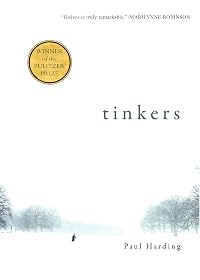
Tinkers
by Paul Harding
On This Page
Description
On his deathbed, surrounded by his family, George Washington Crosby's thoughts drift back to his childhood and the father who abandoned him when he was twelve.Tags
Recommendations
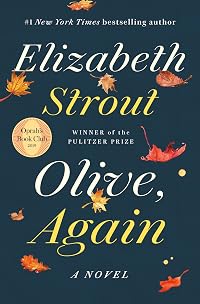
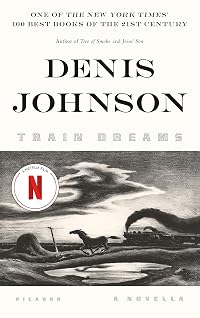
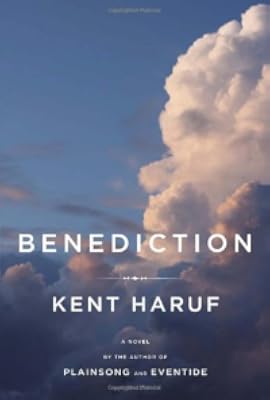
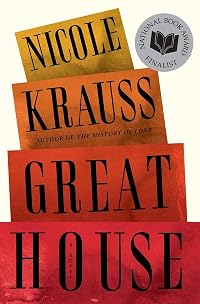

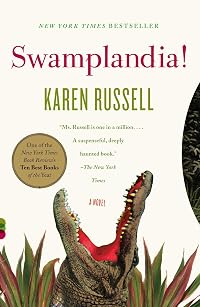
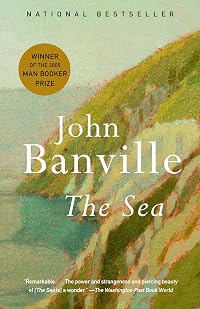
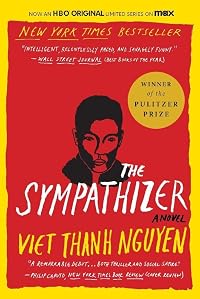

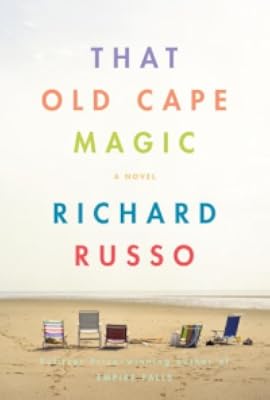

Member Recommendations

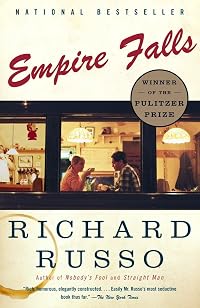
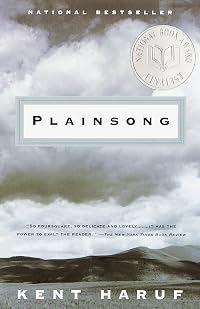
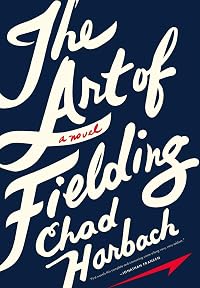
HeathMochaFrost I just finished Ancient Oceans, and the writing kept reminding me of Tinkers. The characters, location, situations, all of these are different, but many readers who enjoyed the writing style of Tinkers might like this one as well. It's from a small press so it's harder to find, but it's certainly worth it.
10

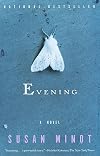
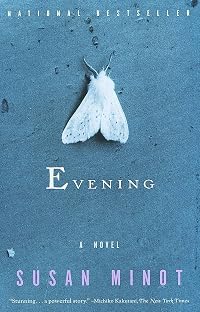
novelcommentary Both begin with a dying protagonist who clings to a memory of the past. In Minot's book, it has to do with an affair that may have been her true love.
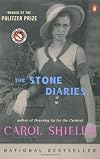
Miels Similar prose style and similar emphasis on social isolation.
11
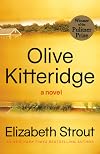
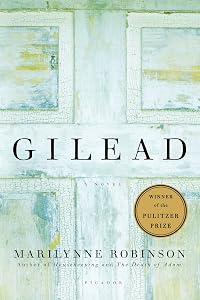
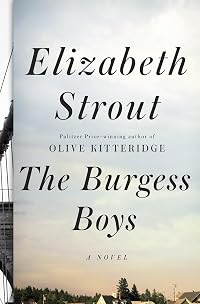
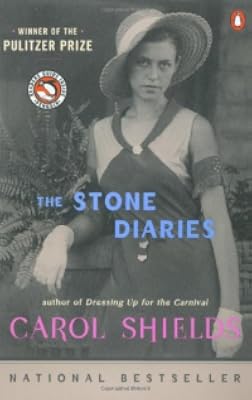
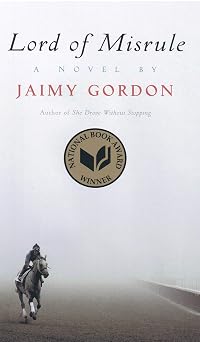
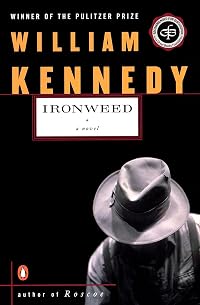
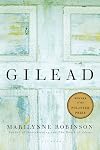
sturlington Two Pulitzer Prize winners set in Maine

aprille Similar attention to the details of nature and life
Member Reviews
lovely, truly lovely. Harding has a great eye, and a wonderful way of putting the reader in nature, whether the environment of the Maine backwoods, the urban market, or the mind of a man having a seizure that is as much visitation as affliction. The man in question, Howard, is a tinker, a itinerant fixer of pots and pans, a vendor of soaps and brooms. His father was a preacher who suffered from early dementia, his son George a successful teacher who also lovingly repairs clocks, another kind of tinkering. As George lies dying, amidst his large family, his life is counted down in hours, and he remembers his life, his father's life, their connections to nature and time, and their different philosophies.
The structure goes back and forth show more between these two men, as boys, as fathers, together and separated. Memories, hallucinations, are all mixed as the story of both men, but mainly Howard, unfold. It's quite magical show less
The structure goes back and forth show more between these two men, as boys, as fathers, together and separated. Memories, hallucinations, are all mixed as the story of both men, but mainly Howard, unfold. It's quite magical show less
Tinkers, by Paul Harding, is a novel that projects from the mind of George Washington Crosby, a dying man. The events of his harried life are replayed, as he lay dying on a hospital bed in his living room, surrounded by various family members.
His one wish, before dying, is to be able to recollect memories of his epileptic father, to be able to “see” him one last time. Within the flashbacks to George’s childhood, events are told with the precision of a clock, as George is a clock maker and repairer. In fact, the walls of his house are lined with clocks, and time is ticking away for him. Memories arise and fade, and the clocks tick the seconds away and chime away the hours.
Within his own memories, whether accurate or due to his show more unstable and hallucinatory mind, as his life is ending, characters weave in and out of his life, and the reader is given privy to their thoughts and feelings. Howard Aaron Crosby, George’s father is a salesman driving a cart out into the rural areas to sell wares. He disappeared, after having a Gran Mal seizure. His mother feels trapped in her role and feels life has given her a bad turn. Her four children cause her problems, and feels that ending her life would solve them. Both of George’s parents are trapped within their mental state. Familial dynamics are an integral part of the whole, within the pages.
The novel looks at life and death, love and loss, and the events in between that cause one to formulate their own lives. George has never quite gotten over the loss of his father, and in his last days and hours focuses on him. His dreams and hallucinations are disjointed at times, and are often difficult to follow. That does not diminish Harding’s writing style or story line, in my opinion. George’s transcendence to death is filled with disconnected thoughts and visions. I would imagine that is a normal process for those in the throes of their last moments.
Harding definitely has a way with evoking vivid images. At times the grammar and the grammatical style and structure are not consistent, but for me, it reinforces the state of mind of the dying. His word-paintings are so alive with descriptions and emotions. His prose is masterful and often verges on poetic loveliness.
Paul Harding captivated me from the first page, and I read Tinkers straight through. Tinkers is a unique novel, in the sense of what defines a family and what defines a tinker. A tinker can also be one who plays and replays moments in time, within the framework of his/her mind, tinkering with the past so to speak. show less
His one wish, before dying, is to be able to recollect memories of his epileptic father, to be able to “see” him one last time. Within the flashbacks to George’s childhood, events are told with the precision of a clock, as George is a clock maker and repairer. In fact, the walls of his house are lined with clocks, and time is ticking away for him. Memories arise and fade, and the clocks tick the seconds away and chime away the hours.
Within his own memories, whether accurate or due to his show more unstable and hallucinatory mind, as his life is ending, characters weave in and out of his life, and the reader is given privy to their thoughts and feelings. Howard Aaron Crosby, George’s father is a salesman driving a cart out into the rural areas to sell wares. He disappeared, after having a Gran Mal seizure. His mother feels trapped in her role and feels life has given her a bad turn. Her four children cause her problems, and feels that ending her life would solve them. Both of George’s parents are trapped within their mental state. Familial dynamics are an integral part of the whole, within the pages.
The novel looks at life and death, love and loss, and the events in between that cause one to formulate their own lives. George has never quite gotten over the loss of his father, and in his last days and hours focuses on him. His dreams and hallucinations are disjointed at times, and are often difficult to follow. That does not diminish Harding’s writing style or story line, in my opinion. George’s transcendence to death is filled with disconnected thoughts and visions. I would imagine that is a normal process for those in the throes of their last moments.
Harding definitely has a way with evoking vivid images. At times the grammar and the grammatical style and structure are not consistent, but for me, it reinforces the state of mind of the dying. His word-paintings are so alive with descriptions and emotions. His prose is masterful and often verges on poetic loveliness.
Paul Harding captivated me from the first page, and I read Tinkers straight through. Tinkers is a unique novel, in the sense of what defines a family and what defines a tinker. A tinker can also be one who plays and replays moments in time, within the framework of his/her mind, tinkering with the past so to speak. show less
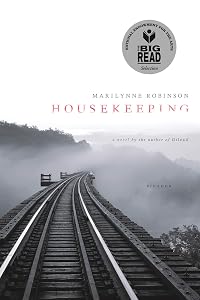
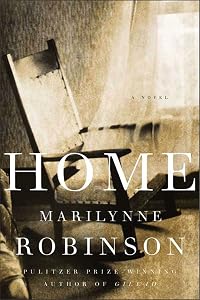
This is a brilliant book – absolutely in the same space as Marilynne Robinson – gentle, reflective, beautiful language, close observations of people and places, a delight in the simple and true – and not the least concerned with the usual issues of urban living or city life.
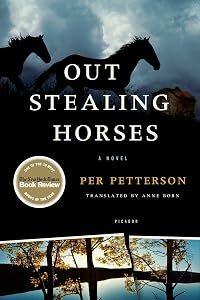
It reminded me a little of 'Rules for Old Men Waiting' – but that old man was looking back on his relationships with a family he loved. It also reminded me of 'Out Stealing Horses' – and of course 'Gilead'.
The opening scene is of an old man (George Washington Crosby in New England) close to death; he has these haunting visions that the ceiling and the roof are caving in on him. In his last days George reflects on his father’s life as a tinker, and even show more his grandfather is included. ( The gr’father was a pastor , so as with Robinson’s novels we have a religious dimension. ) The dying man himself had been a watch repairer …. and like an old clock his own mechanism is wearing out with age. It’s a reflection on time, life, death and memory - big issues, but what makes it special are the many small scenes presented in exquisite detail. He shows a great love of language. There are some terrific descriptions of his father’s epilepsy.
But…… Harding sure also loves a long sentence.... on & on. At times I just lost my way. He also loves lists – that at times added little. I found the earlier sections which focus on George and his father engrossing but in the final quarter I started to skim. Perhaps George was cutting loose from his moorings, but it became too vague and wafty. show less
It reminded me a little of 'Rules for Old Men Waiting' – but that old man was looking back on his relationships with a family he loved. It also reminded me of 'Out Stealing Horses' – and of course 'Gilead'.
The opening scene is of an old man (George Washington Crosby in New England) close to death; he has these haunting visions that the ceiling and the roof are caving in on him. In his last days George reflects on his father’s life as a tinker, and even show more his grandfather is included. ( The gr’father was a pastor , so as with Robinson’s novels we have a religious dimension. ) The dying man himself had been a watch repairer …. and like an old clock his own mechanism is wearing out with age. It’s a reflection on time, life, death and memory - big issues, but what makes it special are the many small scenes presented in exquisite detail. He shows a great love of language. There are some terrific descriptions of his father’s epilepsy.
But…… Harding sure also loves a long sentence.... on & on. At times I just lost my way. He also loves lists – that at times added little. I found the earlier sections which focus on George and his father engrossing but in the final quarter I started to skim. Perhaps George was cutting loose from his moorings, but it became too vague and wafty. show less
George, an old man, lies dying. As he dos so, we see glimpses of his memories, and of the memories of his father, who was a tinker selling household goods from a mule cart in the backwoods in the early 20th century. We also get complex, oblique philosophical musings and poetic thoughts and vivid images, some hyper-realistic, some strangely hallucinatory.
The whole thing seems like it should feel annoyingly disjointed and obscure. But holy crap did it work. There's just something about the writing. I don't know what, and I don't understand how. But you just want to to sink into it, to roll your brain around and around in it until your cortex is saturated with prose.
Well, I did, anyway. And I read it under very non-ideal circumstances. I show more think this is the kind of book you really want to read in one or two big chunks, on a quiet day when you're feeling focused. And I was the exact opposite of that: sleep-deprived, distracted, frequently interrupted. And it still had that effect on me.
I'm not much of a re-reader, in general, but I think this is one I'm going to want to come back to sometime. It feels like there's probably always going to be more to get out of it, always going to be sentences worth savoring again. show less
The whole thing seems like it should feel annoyingly disjointed and obscure. But holy crap did it work. There's just something about the writing. I don't know what, and I don't understand how. But you just want to to sink into it, to roll your brain around and around in it until your cortex is saturated with prose.
Well, I did, anyway. And I read it under very non-ideal circumstances. I show more think this is the kind of book you really want to read in one or two big chunks, on a quiet day when you're feeling focused. And I was the exact opposite of that: sleep-deprived, distracted, frequently interrupted. And it still had that effect on me.
I'm not much of a re-reader, in general, but I think this is one I'm going to want to come back to sometime. It feels like there's probably always going to be more to get out of it, always going to be sentences worth savoring again. show less
George Washington Crosby is dying. He lies on a hospital bed in his home in Maine, surrounded by his family. He reflects back on his life in a series of disjointed memories. George likes to fix clocks to make extra money and he compares his life to the winding down of a clock. He also recalls his father, Howard, a tinker, and his grandfather, a minister, and realizes how much they all had in common. This is a story of fathers and sons, life and death, love and forgiveness, told through the visions, memories, and hallucinations of a dying man.
“George Crosby remembered many things as he died, but in an order he could not control. To look at his life, to take the stock he always imagined a man would at his end, was to witness a shifting show more mass, the tiles of a mosaic spinning, swirling, reportraying, always in recognizable swaths of colors, familiar elements, molecular units, intimate currents, but also independent now of his will, showing him a different self every time he tried to make an assessment.”
I have mixed feelings about this book. The writing is beautiful. However, I found it difficult to become engaged. It does not flow in sequence, reflecting the deteriorating state of George’s mind, and the plot is sparse. It is a very creative work, and I can see why it won the Pulitzer Prize for Fiction but found I it hard to follow, at least initially. Recommended to those that enjoy experimental fiction. show less
“George Crosby remembered many things as he died, but in an order he could not control. To look at his life, to take the stock he always imagined a man would at his end, was to witness a shifting show more mass, the tiles of a mosaic spinning, swirling, reportraying, always in recognizable swaths of colors, familiar elements, molecular units, intimate currents, but also independent now of his will, showing him a different self every time he tried to make an assessment.”
I have mixed feelings about this book. The writing is beautiful. However, I found it difficult to become engaged. It does not flow in sequence, reflecting the deteriorating state of George’s mind, and the plot is sparse. It is a very creative work, and I can see why it won the Pulitzer Prize for Fiction but found I it hard to follow, at least initially. Recommended to those that enjoy experimental fiction. show less
This year’s Pulitzer Prize winner, I had some trouble with it because I just assumed that after Proust, other books would be easier to read. This isn’t easy. The lyrical writing is pleasant, beautiful, but Harding wanders off into metaphors, and prose and suddenly I found myself reading the same paragraph three or four times, putting the book down, coming back to give it another try and failing and putting it down again, and then finally finding the right mindset and getting enough of it to work through. On top of that, Harding never tells us anything regarding a point. We have to figure all that out, and I can confidently say I haven’t done that. But I liked it quite a bit and on closing (it’s a conclusive ending, it doesn’t show more just hang) I found myself going back to the beginning and skimming the 1st third of the book over again in one sitting…I’ve never done this, I didn’t even do this with Infinite Jest, a book which pretty much demands it.
Anyway, George Washington Crosby, retired and having spent years becoming an expert in repairing antique clocks, which involves a great deal of tinkering, is on his deathbed in his home surrounded by his family. As he lies there dying, he drifts between reality, memory and hallucination, exploring his own father, Howard…Except Howard also narrates, and it’s not clear whether this is really Howard, or this is inside George’s head. Howard, a wandering salesman and an epileptic, becomes the real theme – at least at stretches.
This is a beautiful and complicated little book where everything lies very softly on both the readers and characters, regardless of their trauma. As far as I got it, it was a really nice experience; but, somehow it lacked that fundamental something for me to hold on to. I really didn’t know where to mentally store it, and sadly, it has drifted away.
2010
http://www.librarything.com/topic/90167#2248917 show less
Anyway, George Washington Crosby, retired and having spent years becoming an expert in repairing antique clocks, which involves a great deal of tinkering, is on his deathbed in his home surrounded by his family. As he lies there dying, he drifts between reality, memory and hallucination, exploring his own father, Howard…Except Howard also narrates, and it’s not clear whether this is really Howard, or this is inside George’s head. Howard, a wandering salesman and an epileptic, becomes the real theme – at least at stretches.
This is a beautiful and complicated little book where everything lies very softly on both the readers and characters, regardless of their trauma. As far as I got it, it was a really nice experience; but, somehow it lacked that fundamental something for me to hold on to. I really didn’t know where to mentally store it, and sadly, it has drifted away.
2010
http://www.librarything.com/topic/90167#2248917 show less
George Washington Crosby died. That, in sum , is the plot of this short novel, but within that death there is told a story of a life, a family, and a world made interesting through the beautiful prose of Paul Harding.
The book could have been called As I Lay Dying, but that title has already been used; it could have been called Clocks, or Timepieces, for that is one motif that recurs again and again in the story of George and his family, especially his father.
"That was it, he realized; the clock had run down." (p 33)
As we count down the hours until his death we experience images of his dreams, of his life, and of nature. Harding's prose brings each small detail alive as he shares the wonder of a life lived full of things, of tinkering, show more odd jobs, family interests, and disinterests. It is written with details sure to bring personal memories to the mind of the reader. It did for me, not that the small town may have been similar to my own, or not that the incidents might suggest ones I experienced; but one reference, to a Cribbage Board, brought back fond memories of learning how to play Cribbage and playing it with my Parents, Grandparents, and family. I still have a Cribbage Board hidden away in a closet, behind my Chess set. George's memories were like that, hidden away in the closets of his past, behind events long forgotten until the last days of his delirium.
We find out that George could not, or at least felt he could not, fill his father's shoes. Yet we are not told, but shown how, in a dream, George goes looking for his father and puts on his father's old boots which are too big for his feet, requiring additional layers of socks to make them fit. That is the way of this story: "Choose any hour on the clock. It is possible, then, to conceive that the clock's purpose is to return the hands back to that time . . ." (p 179) Thus the hands on the clocks go around and signal both the past and the present and, ultimately, the end.
Paul Harding has written a simple, subtle, and surely beautiful story about a man and his memories. As a story of one man's death it reminded me of Hermann Broch's The Death of Virgil. Each story provides meaning, if that is possible, using exceptionally poetic prose to share the final dreams and thoughts of one man who has reached his end. show less
The book could have been called As I Lay Dying, but that title has already been used; it could have been called Clocks, or Timepieces, for that is one motif that recurs again and again in the story of George and his family, especially his father.
"That was it, he realized; the clock had run down." (p 33)
As we count down the hours until his death we experience images of his dreams, of his life, and of nature. Harding's prose brings each small detail alive as he shares the wonder of a life lived full of things, of tinkering, show more odd jobs, family interests, and disinterests. It is written with details sure to bring personal memories to the mind of the reader. It did for me, not that the small town may have been similar to my own, or not that the incidents might suggest ones I experienced; but one reference, to a Cribbage Board, brought back fond memories of learning how to play Cribbage and playing it with my Parents, Grandparents, and family. I still have a Cribbage Board hidden away in a closet, behind my Chess set. George's memories were like that, hidden away in the closets of his past, behind events long forgotten until the last days of his delirium.
We find out that George could not, or at least felt he could not, fill his father's shoes. Yet we are not told, but shown how, in a dream, George goes looking for his father and puts on his father's old boots which are too big for his feet, requiring additional layers of socks to make them fit. That is the way of this story: "Choose any hour on the clock. It is possible, then, to conceive that the clock's purpose is to return the hands back to that time . . ." (p 179) Thus the hands on the clocks go around and signal both the past and the present and, ultimately, the end.
Paul Harding has written a simple, subtle, and surely beautiful story about a man and his memories. As a story of one man's death it reminded me of Hermann Broch's The Death of Virgil. Each story provides meaning, if that is possible, using exceptionally poetic prose to share the final dreams and thoughts of one man who has reached his end. show less
Members
- Recently Added By
Published Reviews
ThingScore 92
"There are few perfect debut American novels. Walter Percy's The Moviegoer and Harper Lee's To Kill a Mockingbird come to mind. So does Marilynne Robinson's Housekeeping. To this list ought to be added Paul Harding's devastating first book, Tinkers, the story of a dying man drifting back in time to his hardscrabble New England childhood, growing up the son of his clock-making father. Harding show more has written a masterpiece around the truism that all of us, even surrounded by family, die alone." show less
added by blpbooks
The occasional overwriting, the looping narrative, and the almost defiant lack of plot made this a hard book to sell to publishers. An array of editors at major houses rejected the novel, no doubt afraid it would never sell. It apparently sat for several years in the writer's desk. Then an obscure house, the Bellevue Literary Press, published it to such little fanfare that the New York Times show more (like most papers) ignored it completely. Then, miracle of miracles, it won the Pulitzer. show less
added by _eskarina
Among the many triumphs of this novel, Harding enables a reader to look at the world differently, without the things that normally encumber experience. Tinkers is a considerable achievement.
added by _eskarina
Lists

Pulitzer Prize Winners for Fiction
102 works; 54 members

Best Contemporary Literary Fiction (Around the Last 30 Years)
388 works; 124 members

Top Five Books of 2013
1,562 works; 721 members

Must-Read Maine
146 works; 91 members

Pulitzer Prize-Winning Books
42 works; 10 members

Top Five Books of 2014
1,064 works; 398 members

Powell's Indiespensable
79 works; 6 members

2008-2012 Notable Books for Adults
127 works; 10 members

Contemporary Fiction
109 works; 7 members

Books Set in Maine
42 works; 6 members

Books Featured on Readers' Review of the Diane Rehm Show
161 works; 8 members

Reading Group 2010
2 works; 1 member
Novels featuring Fathers
56 works; 7 members
First Novels
373 works; 17 members

2021 - List of books read
53 works; 1 member

Books Read in 2011
684 works; 20 members

Alphabetical Books
211 works; 3 members

Fiction For Men
142 works; 11 members

2000s (the decade, not the century)
184 works; 11 members

Books Read in 2024
4,623 works; 126 members

Books We Discovered On LibraryThing
530 works; 130 members

To Read:
4 works; 1 member
Author Information

3 Works 5,560 Members
Paul Harding has an MFA from the Iowa Writers' Workshop and teaches creative writing at Harvard. He lives in Georgetown, Massachusetts.
Some Editions
Awards and Honors
Awards
Distinctions
Series
Belongs to Publisher Series
Common Knowledge
- Canonical title*
- Tinkers
- Original title
- Tinkers
- Original publication date
- 2009-01-01
- People/Characters
- George Crosby; Howard Crosby
- Important places
- Maine, USA
- Dedication
- For Meg, Samuel, and Benjamin
- First words
- George Washington Crosby began to hallucinate eight days before he died.
- Quotations
- Crosby, how are you going to be one of my twelve?
- Last words
- (Click to show. Warning: May contain spoilers.)Good-bye.
- Blurbers
- Robinson, Marilynne; Unsworth, Barry; McCracken, Elizabeth
- Original language
- English
*Some information comes from Common Knowledge in other languages. Click "Edit" for more information.
Classifications
Statistics
- Members
- 4,147
- Popularity
- 3,715
- Reviews
- 244
- Rating
- (3.47)
- Languages
- 12 — Czech, Danish, Dutch, English, French, German, Hungarian, Italian, Korean, Portuguese, Spanish, Swedish
- Media
- Paper, Audiobook, Ebook
- ISBNs
- 40
- ASINs
- 19
