On This Page
Description
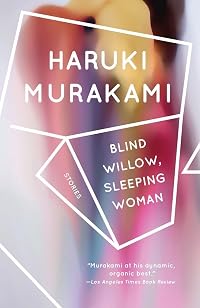
The twenty-four stories that make up Blind Willow, Sleeping Woman generously express the incomparable Haruki Murakami’s mastery of the form.Here are animated crows, a criminal monkey, and an ice man, as well as the dreams that shape us and the things we might wish for. From the surreal to the mundane, these stories exhibit Murakami’s ability to transform the full range of human experience in ways that are instructive, surprising, and entertaining.
.
Tags
Recommendations






Member Recommendations

Member Reviews
I often make the mistake with short story collections of reading them end-to-end, like a novel, so that I am struck by the discontinuity of the tales – which typically have unique provenance separated by many years that were never intended to be housed together. Thus, by the time I finish the collection the stories are just a blur. I took a far different tack with Blind Willow, Sleeping Woman by Haruki Murakami, dipping into it irregularly over many months, savoring each one. Whether it was due to this new approach or because of the quality of the selection, I found Blind Willow, Sleeping Woman a far more satisfying read than The Elephant Vanishes, another collection I read a couple of years back that left me (except for the title show more story) mostly underwhelmed.
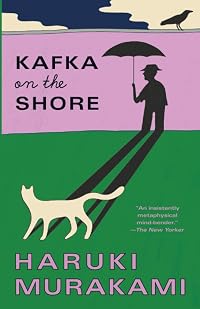
Full disclosure: I have a love-hate relationship with Haruki Murakami, whose novels are usually stirring and well-written yet often lack resolution with critical characters and plotlines so that by the last page the reader is not so much dissatisfied as unsatisfied. Still, Murakami – along with Cormac McCarthy and Richard Flanagan – remains solidly among my top three living authors of fiction. I have read eleven of his eighteen published works, and I just began another, Sputnik Sweetheart, which makes me a serious and perhaps obsessive fan. The first one I read, Kafka on the Shore, was recommended to me by a barista and remains my favorite Murakami novel as well as one of my favorite novels of the new century. I liked the celebrated Norwegian Wood far less, although most fans would take issue with me here. Two others – Wind-Up Bird Chronicle and 1Q84 – were terrific reads that left me so frustrated due to lack of resolution that I gave them less credit than they deserved at the time, yet I have not stopped thinking about either in the years that followed. Side note: I entitled my review of 1Q84 on Amazon in 2013 as “Tedious Epic” and awarded it a mere three stars. Today, despite its flaws, I would revise that to at least four stars and have even considered rereading it. That’s Murakami for you!
Many writers start with short stories and progress to novels, but in the “Introduction to the Eighth Edition” of Blind Willow, Sleeping Woman, Murakami reveals that he only began writing short stories after publishing his first two novels, and that he only writes short stories when he is not working on a novel: “The two types of writing may well engage different parts of the brain, and it takes some time to get off one track and switch to the other.” Since I am far from new to Murakami, I set off with a trained eye looking for evidence of such trends, especially curious as to whether patterns in the character development of his protagonists differed from those in his novels, as well as how these may have changed over time: Murakami’s females are generally strong, complex, sometimes flamboyant characters, while the males are often passive, complacent, even dull and wishy-washy, as evinced in Norwegian Wood, Wind-Up Bird Chronicle and 1Q84. I hoped to trace an evolution in this regard, but my edition lacked dates for the stories. Fortunately these days we have Wikipedia, where I learned that the twenty-four tales in this collection were written over the period 1980-2005, as well as where these were published. [http://en.wikipedia.org/wiki/Blind_Willow,_Sleeping_Woman]
As it was, my literary “theory of evolution” failed to materialize; although elements of both the characters and techniques apparent in his novels are evident in many of his stories, these barely changed over time. The very early “Firefly” (1983) personifies the weak-willed, complacent male protagonist. (“Firefly” actually gets new life as a segment in the novel Norwegian Wood.) The same can be said for the title story, "Blind Willow, Sleeping Woman" (1983). Most of his stories from this era – about half the collection, many of which appeared in the New Yorker – were not among my favorites, and reading “The Year of Spaghetti" (1981) and "A 'Poor Aunt' Story" (1980) especially kindled memories of the kinds of short stories that were popular in the New Yorker and elsewhere in the 1980s and 1990s by a number of authors of contemporary fiction that usually left me shaking my head at the lack of direction or resolution. The exception is in several early stories – such as “Crabs” (1984) and “Man-Eating Cats” (1991) – that hint at the magical-realism that is later so impressively developed in novels like Kafka on the Shore and 1Q84. My two favorites in the collection are magical-realism all the way: “Dabchick” (1981), which could be the script for an episode of Twilight Zone, and the masterful “The Ice Man” (1991), both of which adeptly mix magic, irony and allegory. More down to earth, it is worth mentioning the extremely well-written “Tony Takitani” (1990) that neatly captures Murakami’s gift for fine story-telling with an ever-present wisp of vague metaphor. I cannot resist pointing out that Murakami’s weird earlobe fetish shows up both in “Birthday Girl” (2002) and “Chance Traveler” (2005). My other favorite stories in the collection were all written in 2005, which perhaps implies that the author hit his stride with short story writing in that year. In addition to “Chance Traveler,” these include “Hanalei Bay,” “Where I’m Likely to Find It,” "The Kidney-Shaped Stone That Moves Every Day,” and the oddball "A Shinagawa Monkey” that strangely reminded me of something from Rudyard Kipling.
If you are a Murakami fan, this collection deserves a read. If you are new to the author, some of these stories may indeed tickle your fancy, although I would recommend instead that you start with one of the novels, such as Kafka on the Shore. Either way, you may find yourself as obsessively hooked as I am, and unable to resist going back for more.
[NOTE: For the uninitiated, a free taste of Murakami -- his outstanding 2014 short story “Scheherazade” – is available online at: http://www.newyorker.com/magazine/2014/10/13/scheherazade-3] show less
Full disclosure: I have a love-hate relationship with Haruki Murakami, whose novels are usually stirring and well-written yet often lack resolution with critical characters and plotlines so that by the last page the reader is not so much dissatisfied as unsatisfied. Still, Murakami – along with Cormac McCarthy and Richard Flanagan – remains solidly among my top three living authors of fiction. I have read eleven of his eighteen published works, and I just began another, Sputnik Sweetheart, which makes me a serious and perhaps obsessive fan. The first one I read, Kafka on the Shore, was recommended to me by a barista and remains my favorite Murakami novel as well as one of my favorite novels of the new century. I liked the celebrated Norwegian Wood far less, although most fans would take issue with me here. Two others – Wind-Up Bird Chronicle and 1Q84 – were terrific reads that left me so frustrated due to lack of resolution that I gave them less credit than they deserved at the time, yet I have not stopped thinking about either in the years that followed. Side note: I entitled my review of 1Q84 on Amazon in 2013 as “Tedious Epic” and awarded it a mere three stars. Today, despite its flaws, I would revise that to at least four stars and have even considered rereading it. That’s Murakami for you!
Many writers start with short stories and progress to novels, but in the “Introduction to the Eighth Edition” of Blind Willow, Sleeping Woman, Murakami reveals that he only began writing short stories after publishing his first two novels, and that he only writes short stories when he is not working on a novel: “The two types of writing may well engage different parts of the brain, and it takes some time to get off one track and switch to the other.” Since I am far from new to Murakami, I set off with a trained eye looking for evidence of such trends, especially curious as to whether patterns in the character development of his protagonists differed from those in his novels, as well as how these may have changed over time: Murakami’s females are generally strong, complex, sometimes flamboyant characters, while the males are often passive, complacent, even dull and wishy-washy, as evinced in Norwegian Wood, Wind-Up Bird Chronicle and 1Q84. I hoped to trace an evolution in this regard, but my edition lacked dates for the stories. Fortunately these days we have Wikipedia, where I learned that the twenty-four tales in this collection were written over the period 1980-2005, as well as where these were published. [http://en.wikipedia.org/wiki/Blind_Willow,_Sleeping_Woman]
As it was, my literary “theory of evolution” failed to materialize; although elements of both the characters and techniques apparent in his novels are evident in many of his stories, these barely changed over time. The very early “Firefly” (1983) personifies the weak-willed, complacent male protagonist. (“Firefly” actually gets new life as a segment in the novel Norwegian Wood.) The same can be said for the title story, "Blind Willow, Sleeping Woman" (1983). Most of his stories from this era – about half the collection, many of which appeared in the New Yorker – were not among my favorites, and reading “The Year of Spaghetti" (1981) and "A 'Poor Aunt' Story" (1980) especially kindled memories of the kinds of short stories that were popular in the New Yorker and elsewhere in the 1980s and 1990s by a number of authors of contemporary fiction that usually left me shaking my head at the lack of direction or resolution. The exception is in several early stories – such as “Crabs” (1984) and “Man-Eating Cats” (1991) – that hint at the magical-realism that is later so impressively developed in novels like Kafka on the Shore and 1Q84. My two favorites in the collection are magical-realism all the way: “Dabchick” (1981), which could be the script for an episode of Twilight Zone, and the masterful “The Ice Man” (1991), both of which adeptly mix magic, irony and allegory. More down to earth, it is worth mentioning the extremely well-written “Tony Takitani” (1990) that neatly captures Murakami’s gift for fine story-telling with an ever-present wisp of vague metaphor. I cannot resist pointing out that Murakami’s weird earlobe fetish shows up both in “Birthday Girl” (2002) and “Chance Traveler” (2005). My other favorite stories in the collection were all written in 2005, which perhaps implies that the author hit his stride with short story writing in that year. In addition to “Chance Traveler,” these include “Hanalei Bay,” “Where I’m Likely to Find It,” "The Kidney-Shaped Stone That Moves Every Day,” and the oddball "A Shinagawa Monkey” that strangely reminded me of something from Rudyard Kipling.
If you are a Murakami fan, this collection deserves a read. If you are new to the author, some of these stories may indeed tickle your fancy, although I would recommend instead that you start with one of the novels, such as Kafka on the Shore. Either way, you may find yourself as obsessively hooked as I am, and unable to resist going back for more.
[NOTE: For the uninitiated, a free taste of Murakami -- his outstanding 2014 short story “Scheherazade” – is available online at: http://www.newyorker.com/magazine/2014/10/13/scheherazade-3] show less
When I read Murakami, I sometimes feel that he is living inside me taking notes on my feelings and my observations about people I’ve met years ago or even this morning. Then he transcribes them to paper in ways that make the commonplace magical. “Blind Willow” is a collection of 25 short stories, though the book jacket says 24. So, if there is one you do not like, you can pretend it was never there. Murakami would be happy with that solution. Some are sweet (“Chance Traveler,” about a piano tuner who meets his soul-mate in an empty café); some are bizarre (“Nausea”) or chilling (“Ice Man”); some are sad (“Tony Takitani”, whose wife is a compulsive shopper); some are melancholic (“Hanlei Bay”, another piano show more player, who annually visits the site of her son’s death); and some are pure whimsy (“A ‘Poor Aunt’ Story.” As with his novels, many endings feel unsatisfactorily open-ended, but Murakami creates unforgettable images.
I would recommend that anyone reading these stories be of sound mind and stout heart, as they can get downright disturbing. Does this mean my mind is unsound and my heart is weak? I'm not sure. That's about as close to a descriptive review of this book as I am able to give. Read it at your own risk. show less
I would recommend that anyone reading these stories be of sound mind and stout heart, as they can get downright disturbing. Does this mean my mind is unsound and my heart is weak? I'm not sure. That's about as close to a descriptive review of this book as I am able to give. Read it at your own risk. show less
Blind Willow, Sleeping Woman was my first taste of Haruki Murakami. I’m going to give in to cheap metaphor and say that this collection of short stories reminds me of a sushi meal. There are lots of intriguing small bites to eat, the flavors are unique, some good, some not so good, some dishes you recognize and a lot are not readily identifiable.
Being an anthology, it is hard to rate the collection. Some stories were absolutely fantastic, others elicited no reaction other than, “OK, that’s the end of the story”. I am not going to review all the stories individually, but I will cite some examples of what I mean.
Birthday Girl, was my favorite. The plot would be worthy of a Twilight Zone episode or a short, experimental movie. Very show more off beat, yet a full story in itself. That is what a short story is supposed to be. A Perfect Day for Kangaroos was a good stream of consciousness type story until one character says to another let’s go for a beer. That’s the end of the story. No resolution, nothing explained and no reaction on my part. I had the same feeling for Hunting Knife. There is a lot of setup, good dialog, but the story just does not go anywhere. Even Kafka’s stories have a direction and a destination. Many of Murakami’s seemed to lack these essentials.
Overall, the flat and bad stories outnumber the good stories. Because of this, my rating for this collection is less than average. I am, however, intrigued enough by Murakami’s writing style that I’m going to have a go at one of his full-length works. Hopefully, that will be more satisfying. show less
Being an anthology, it is hard to rate the collection. Some stories were absolutely fantastic, others elicited no reaction other than, “OK, that’s the end of the story”. I am not going to review all the stories individually, but I will cite some examples of what I mean.
Birthday Girl, was my favorite. The plot would be worthy of a Twilight Zone episode or a short, experimental movie. Very show more off beat, yet a full story in itself. That is what a short story is supposed to be. A Perfect Day for Kangaroos was a good stream of consciousness type story until one character says to another let’s go for a beer. That’s the end of the story. No resolution, nothing explained and no reaction on my part. I had the same feeling for Hunting Knife. There is a lot of setup, good dialog, but the story just does not go anywhere. Even Kafka’s stories have a direction and a destination. Many of Murakami’s seemed to lack these essentials.
Overall, the flat and bad stories outnumber the good stories. Because of this, my rating for this collection is less than average. I am, however, intrigued enough by Murakami’s writing style that I’m going to have a go at one of his full-length works. Hopefully, that will be more satisfying. show less
I have never been a fan of short story collections. I'm one of those who prefer thick books with permanent characters who develop throughout the story and, to be truthful, I don't really know why. There are a lot of good short story volumes out there, but I have always chosen long novels instead. So I have to say that even being a die-hard Murakami fan, I was a little reluctant to read Blind Willow, Sleeping Woman. I bought the book in Oxford during the summer of 2007 and had let it collect dust in my shelf, choosing to read The Wind-Up Bird Chronicle instead (which I'm not going to talk about now because it deserves another whole new entry).So, after packing my things and getting ready to fly to Germany, I spotted the book in the midst show more of my Murakami collection and grabbed it at the last minute. Murakami will serve as a moral support if things get bad up there in the north of Europe, I thought. He's one of my favorite authors, after all; I feel instantaneously good when I have a book of his between my hands.I've been in Germany for two months now, but I only started reading this book a week ago, in the train back from the airport after saying goodbye to a dear friend who had come to visit me. I was feeling a little blue, and I knew Murakami would cheer me up (or, at least, keep my mind off reality for a while). And indeed, it did. I was so absorbed reading the Birthday Girl story that I missed the stop and had to wait for an hour to catch another train back to my city. From the beginning, I could spot a lot of the classic Murakami themes: jazz-loving, solitary characters who spend their time reading or going through LP collections, characters who meet strangers who change their lives one way or another, people who suddenly stop recognizing themselves in their own bodies at some point of the story, mysterious and clever cats who seem to have a human-like mind, people disappearing somewhere along the way, and many infidelities and sexual encounters with partners who end up leaving without a trace.The general impression I usually get from his books is a full sensation of nostalgia, loss and loneliness, especially from the coming of age stories with lost teenagers or the adults in their thirties with identity crisis and marriage problems. And despite the unreality of some of the stories, I still find that I can identify with those characters to some degree, because they go through similar experiences or think over issues that I too find myself pondering.I would have liked to write a small comment on every story, but some of them were quite plot-less, and some just didn't move or touch me enough. I've got my favorites, though. 'Man-eating cats' evoked a beautiful scenery, and it reminded me a lot of 'Sputnik Sweetheart', what with the Greek landscape and the disappearance. I also liked 'Nausea 1979', 'Tony Takitani', 'Where I'm Likely to Find It' and 'Chance Traveler' (so beautiful and heart-breaking) among others. 'The ice man' and 'Crabs' were disturbing, and I didn't get 'A poor aunt story' and what Murakami meant by it. I'm sure I'm forgetting a lot of things I wanted to comment while I was reading the book, but going through every story thoroughly would take a lot of time that I don't have (college work unfortunately gets in the way).Now, I can't wait to get my scholarship money to head off to the nearest bookstore and buy another book by Haruki Murakami. I may not be able to wait until I get home for Christmas. show less
This collection of stories has all the hallmarks of Murakami's writing: strange, whimsical, funny (in both ha-ha and peculiar forms) and sometimes bewildering. As with all short story collections, some of them seemed to have been included just to complete the volume (or else had a function for the author that went completely over my head) and fell flat for me; there's also the danger that reading twenty four separate instalments of such utter surrealism in quick succession can work against the collection. Yet when it works, it works startlingly well, and overall Blind Willow, Sleeping Woman comes together as quite a cohesive meditation on identity, and moments of revelation. Personal favourites: A 'Poor Aunt' Story; Nausea, 1979; The show more Ice Man; Firefly; Hanalei Bay; Where I'm Likely to Find It; The Kidney-Shaped Stone That Moves Every Day; and A Shinagawa Monkey. show less
Readers may be curious about Haruki Murakami due to the rave reviews of his full-length novels (ex: The Wind-Up Bird Chronicle, 1Q84, Kafka on the Shore), and their popularity in translation throughout the world. Those who may have resisted the call to undertake his lengthy and fantastic works might be encouraged by starting with Blind Willow, Sleeping Woman, a collection of 24 short stories. With varying lengths and levels of inscrutability, the stories contained in the book are an excellent and accessible introduction to Murakami’s magical realism. The book could be described as a sampler of his gorgeous symbolism and elusive but incisive reflections on universal experience. Each story contains a provoking vision of the human show more condition, including such themes as: predestination; haunting choices and consequences; yearning for individual meaning; withstanding loss of love and identity; loneliness and isolation. The joys of Murakami’s prose justify the praise he has received, and any effort to decipher the layers within the tales Blind Willow, Sleeping Woman will encourage new fans to his other works. Once experienced in small bites, many will be lured into his novels-thereby immersing themselves more deeply and lingering longer in his beautifully rendered worlds.
Good for: Readers new and old to Murakami; those looking for International Fiction in translation; highly rated award-winners; fans of fully formed but linked short story collections; psychological and symbolic works of fiction.
You may like this book if you like: Kazuo Ishiguro, David Mitchell, Gabriel Garcia Marquez, Jorge Luis Borges and Vladimir Nabokov. show less
Good for: Readers new and old to Murakami; those looking for International Fiction in translation; highly rated award-winners; fans of fully formed but linked short story collections; psychological and symbolic works of fiction.
You may like this book if you like: Kazuo Ishiguro, David Mitchell, Gabriel Garcia Marquez, Jorge Luis Borges and Vladimir Nabokov. show less
Reading this collection of short works flattens out everything I love about Murakami - the slow buildup, the gentle twists that he develops over the course of his longer works, the subtleties and gradual accumulations that happen over the length of a novel. When condensed into 26 short stories, his style suddenly seems almost hackneyed, nearly predictable or tired. It becomes quickly evident if a pattern is established by his writing - the character introduces himself/herself, the character provides the context of something strange that has happened, the character delves into unrelated but ultimately related side stories often pertaining to sex, weirdness happens, nothing is resolved. I couldn't read more than one story at a time show more because I would get so tired of what seemed like unchanging structures. I still love his novels, but I think I will stay away from short stories in the future. show less
Members
- Recently Added By
Published Reviews
ThingScore 75
Just as fiction that is purely mundane can be, well, mundane, fiction that is only fantastic is often only dull. Authors such as Paul Auster and Jonathan Carroll are successful precisely because they don't write in one mode or the other, but rather in both, and at the same time. By placing the mundane next to the fantastic these authors are able to show us the beauty of such everyday affairs show more as coffee or conversation; by placing the fantastic next to the mundane they provide the contrast necessary for readers to discern what makes their fancy other than facile.
No one does this better than Haruki Murakami . . . . show less
No one does this better than Haruki Murakami . . . . show less
added by dcozy
Great job author, I really like your writing style. I suggest you join N0velStar’s writing competition, you might be their next big star.
added by Gab_Cruz
Lists

Japanese Literature
230 works; 40 members

Short Story Collections and Anthologies
261 works; 42 members
Haruki Murakami's Books
16 works; 5 members

Books Read in 2013
1,630 works; 51 members

living room bookshelf
150 works; 1 member
Author Information

311+ Works 175,073 Members
Haruki Murakami was born on January 12, 1949 in Kyoto, Japan and studied at Tokyo's Waseda University. He opened a coffeehouse/jazz bar in the capital called Peter Cat with his wife. He became a full-time author following the publication of his first novel, Hear the Wind Sing, in 1979. He writes both fiction and non-fiction works. His fiction show more works include Norwegian Wood, Colorless Tsukuru Tazaki and His Years of Pilgrimage, The Strange Library, and Men Without Women. Several of his stories have been adapted for the stage and as films. His nonfiction works include What I Talk About When I Talk About Running. He has received numerous literary awards including the Franz Kafka Prize for Kafka on the Shore, the Yomiuri Prize for The Wind-Up Bird Chronicle, and the Jerusalem Prize. He has translated into Japanese literature written by F. Scott Fitzgerald, Raymond Carver, Truman Capote, John Irving, and Paul Theroux. (Bowker Author Biography) show less
Some Editions
Awards and Honors
Awards
Distinctions
Series

Belongs to Publisher Series
btb (73688)
Work Relationships
Common Knowledge
- Canonical title*
- Sauce ciego, mujer dormida
- Original title
- 女のいない男たち by 村上 春樹; Mekurayanagi to nemuru onna
- Original publication date
- 2006 (English collection) (English collection); 2013; 2015-03 España; 2015-03 Argentina
- Important places*
- Japan
- First words
- When I closed my eyes, the scent of the wind wafted up towards me.
- Quotations
- Unlike my first friend, who’d killed himself, these friends never had the time to realize that they were dying. For them it was like climbing up a staircase they’d climbed a million times before and suddenly finding a ste... (show all)p missing. (New York Mining Disaster)
It strikes me now that most of the girls in my generation--the moderates, you might dub them--whether virgins or not, agonized over the whole issue of sex. They didn't insist that virginity was such a precious thing, nor did ... (show all)they denounce it as some stupid relic of the past. So what actually happened--sorry, but I'm generalizing again--was that they went with the flow. It all depended on the circumstances and the partner. (A Folklore For My Generation: A Pre-history of Late Stage Capitalism)
I had no real impression of her at all. And it's hard to have a bad impression of somebody you have no impression of. (The Year of Spaghetti)
Thinking about spaghetti that boils eternally but is never done is a sad, sad thing. (The Year of Spaghetti)
Can you imaging how astonished the Italians would be if they knew that what they were exporting in 1971 was really loneliness? (The Year of Spaghetti)
It's like fireworks in the daytime. You might hear a faint sound, but even if you look up at the sky you can't see a thing. But if we're really hoping something may come true, it may become visible, like a message rising to t... (show all)he surface. Then we're able to make out clearly, decipher what it means. And seeing it before us we're surprised and wonder at how strange things like this can happen. (Chance Traveler) - Last words
- (Click to show. Warning: May contain spoilers.)But at least she had her own name now, a name that was hers, ad hers alone.
- Original language
- Japanese
*Some information comes from Common Knowledge in other languages. Click "Edit" for more information.
Classifications
- Genres
- General Fiction, Fiction and Literature
- DDC/MDS
- 813 — Literature & rhetoric American literature in English American fiction in English
- LCC
- PL856 .U673 .A23 — Language and Literature Languages and literatures of Eastern Asia, Africa, Oceania Languages of Eastern Asia, Africa, Oceania Japanese language and literature Japanese literature Individual authors and works
- BISAC
Statistics
- Members
- 4,886
- Popularity
- 2,891
- Reviews
- 81
- Rating
- (3.80)
- Languages
- 14 — Catalan, Dutch, English, French, German, Hebrew, Italian, Japanese, Norwegian (Bokmål), Polish, Portuguese, Romanian, Spanish, Swedish
- Media
- Paper, Audiobook, Ebook
- ISBNs
- 64
- UPCs
- 1
- ASINs
- 31