On This Page
Description
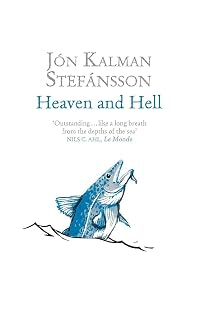
"Stefánsson shares the elemental grandeur of Cormac McCarthy."—Eileen Battersby, TLSIn a remote fishing village, a boy and his best friend spend the lonely hours on shore reading and talking about poetry. When the friend, absorbed in a borrowed copy of Paradise Lost, forgets his oilskin one morning and the crew is unexpectedly caught at sea in a savage winter storm, tragedy strikes. Overwhelmed by grief—and his crewmates' indifference to what has happened—the boy leaves the village, show more determined to return the book to its owner. The hardship and danger of the journey is of little consequence: he's already resolved to join his friend in death. But when he reaches the town where he intends to end his days, he couldn't have imagined the stories and lives he finds.
Navigating the depths of despair to celebrate the redemptive power of friendship, Heaven and Hell is an incandescent story of community, resilience, and love from one of Iceland's most celebrated novelists.
. Historical Fiction. Literature. Fiction. show less
Tags
Recommendations








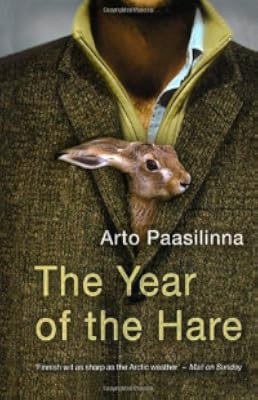


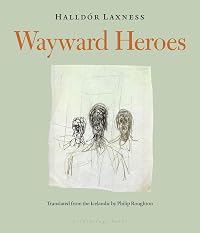

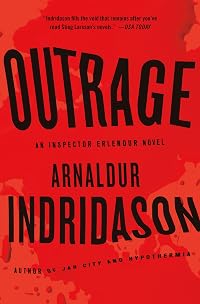
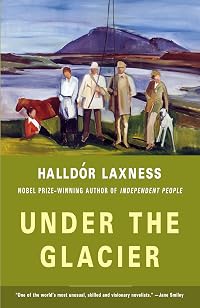
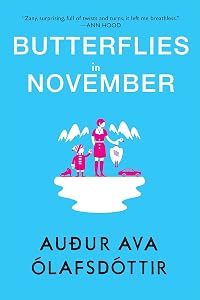


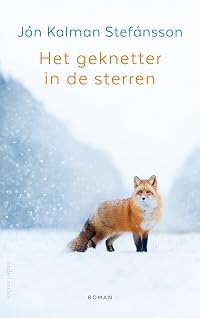
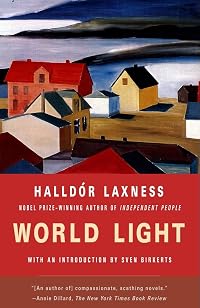

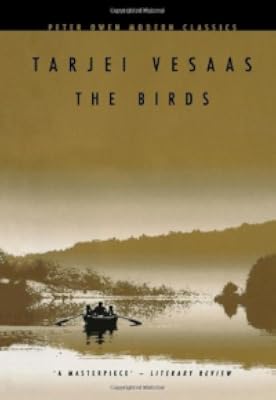







Member Recommendations
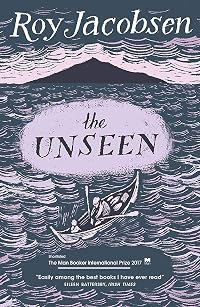
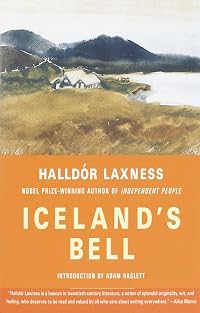
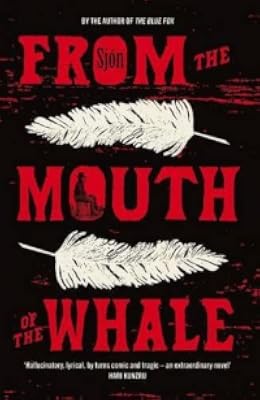
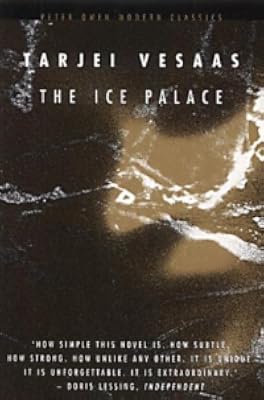
anglemark There's something about the laconic prose and the description of a young person's plight that made me associate these two books with each other.
Member Reviews
“Nothing is sweet to me, without thee.”
“I just don’t know who I am. I don’t know why I am.
And I’m not entirely sure I’ll be given time to find out.”
And I’m not entirely sure what I’ve read.
But I am sure that it was profound, beautiful, and brilliant. A tribute to the tenacity of life and the dark depths of one person’s loyalty, even beyond the watery grave.
“It’s one thing to be able to read and another to know how to read.”
There is a short, ethereal introduction, whose significance I didn’t fully appreciate until later. It then launches into the story described in the blurb: a century ago, a nameless boy of 19 and his bookish friend, Bárður, leave Iceland with four others: experienced fisherman, but show more non-swimmers, in an “open coffin”. Tragedy strikes, after which the boy goes on a perilous journey to return the borrowed Paradise Lost. The reader is hooked as surely as an arctic cod.
But then the tide turns and philosophical digressions and peripheral characters almost swamp the main story. The “we” who narrate, cast their tangled lines through the minds and lives of villagers, all of them lonely, isolated, regretful, and all of whom daily live the pain of the words quoted at the top of this review. And finally, the waters recede, and the narrative returns to the boy.
The harsh and dangerous beauty of an arctic environment is ever present. Dandelions and stars may be kindled, but there is resigned respect for the capricious sea that sustains life - even as it snatches it away; the mountains, too. The fishermen trust God, and “perhaps a minuscule amount of ingenuity, courage, longing for life”. There’s edgy camaraderie, deep bonds of unusual friendships, and the power - and danger - of words, leaving me touched by “snowflakes… born of the heavens… white and shaped like angels’ wings”.
Words as Rescue Teams
“We might not need words to survive; on the other hand, we do need words to live.”
The words of this book spoke to me, especially the words about words.
“Some words can conceivably change the world, they can comfort us and dry our tears. Some words are bullets, others are notes of a violin. Some can melt the ice around one’s heart, and it is even possible to send words out like rescue teams when the days are difficult and we are perhaps neither living nor dead.”
The joy of that is that words can be whispered in an ear, shouted across a room, printed in ink, carved in stone, written in blood, typed or spoken into a computer, and sent across the world, and across time. However helpless we sometimes feel when we see those we love and care about floundering in the treacherous waters of life, we can always cast a net of rescuing words.
Bárður and the boy adore literature, but the captain, Pétur, has a more visceral verbal power, reciting obscene verses: “This is a primitive force, a language with deep roots in a dim subconscious sprung from harsh life and ever-present death.”
Memories, important and comforting as they are, “don’t keep us afloat”. Telling how someone died is almost like resurrecting them:
“break into the kingdom of death armed with words. Words can have the might of giants and they can kill a god, they can save lives and destroy them. Words are arrows, bullets, mythological birds that chase down gods… they are nets vast enough to trap the world and the sky as well, but sometimes words are nothing, torn garments that the frost penetrates, a run-down battlement that death and misfortune step lightly over. Yet words are the one thing this boy has.”
Horizon, Boundaries, Balance
One character dies because of his love of literature, leaving another obligated to live, at least for a while, for the same reason.
Almost everything here is perfectly balanced - except the title. Life and death. Good and evil. Ebb and flow. Winter and summer. Sky and earth. No wonder the horizon is mentioned so often.
* “The sea is the wellspring of life, in it dwells the rhythm of death.”
* “The more light, the more darkness.” And “The light of the moon… makes the shadows darker, the world more mysterious.”
* “The world is gone and a dense black cloud where the horizon should be. The storm is approaching.”
* “Those who live in this valley see only a piece of the sky. Their horizon is mountains and dreams.”
Hell - but no Heaven?
Despite the balance, there are many explicit examples of Hell, but none of Heaven. Heaven comes from the writing itself, and the dedication of the boy.
"Hell is having arms but no-one to embrace."
“Hell is not knowing whether we are alive or dead.”
“Hell is to be dead and to realize that you did not care for life while you had the chance.”
“Hell is being seasick in a sixereen… many hours from shore.”
“Hell is a library and you’re blind.”
Hell is also injustice, where ravens come from, and being too drunk to remember your wife’s name.
Joy is simpler: “It is ridiculously good to have solid ground beneath one’s feet. Then you haven’t drowned and can have something to eat.”
The (un)Dead
This is not a ghost story with supernatural themes. However, a dead person is seen and heard (or imagined), and there are two types of spirits in limbo who are neither seen nor heard. These aspects reflect traditional Icelandic beliefs, as well as being a novel lens through which to see the corporeal world.
“The large group of fishermen who ramble about the seafloor, jabbering to each other about the jogtrot of time, waiting for the final call… Waiting for God to pull them up, fish them up with his net of stars, dry them off with his warm breath, permit them to walk with dry feet in Heaven, where one never eats fish, say the drowned, always just as optimistic, busy themselves with looking up at the boats, expressing amazement at the new fishing gear… but sometimes weeping with regret for life, weeping as drowned folk weep, and that is why the sea is salty.”
“We died and nothing happened… Here we are, above ground, restless, terrified and embittered, while our bones are likely peaceful down in the ground”, with “something invisible between us and you who live”, so we “ask constantly, why are we here? Where did the others go?... Where is God?” It’s not fair that “God certainly called her… while we, who ramble here, dead yet still alive, listen and listen but never hear anything.” Their mission is nothing less than “to save the world” - and the boy - by telling this story. “Our words are a kind of rescue team on a relentless mission to save past events and extinguished lives from the black hole of oblivion.”
Blind Eyes See
Milton was blind when he wrote Paradise Lost, but he could certainly see into hearts and minds. Kolbeinn is a retired captain, now blind. “His dead eyes slip through the boy like cold hands.” His Hell is that he can no longer read his 400 books, something Jorge Luis Borges, who also went blind, would have understood when he wrote "I have always imagined that Paradise will be a kind of library".
* “Eyes are invisible hands that stroke, feel, touch, find.”
* “Eyes must be somewhere… We must think about where we point them and when… They can be canons, music, bird song, war cries. They can reveal us, they can save you, destroy you.”
* “Both of them blind, he physically, she morally.”
* “No living being can stand to look into the eyes of God because they contain the fountain of life and the abyss of death.”
* “Eyes so bright they vanquish night.”
* “A woman staring at nothing, she has big eyes, recalling a horse that has stood all of its life outside in heavy rain… Once, it was a long time ago, she laughed quite often and then her eyes were suns above life… where now is the joy in these eyes?”
The Meaning of Life - and Death
“Is it a loss of Paradise to die?”
"Our existence is a relentless search for a solution, what comforts us, whatever gives us happiness, drives away all bad things... We take cure-alls instead of searching, continually asking what is the shortest path to happiness, and we find the answer in God, science, brennivin, Chinese Vital Elixir."
We often ponder the meaning of life, but this also considers the meaning and the purpose of death - especially for the several characters who consider choosing it. But we are reminded that “When there is a choice between life and death, most choose life”. Most.
Miscellaneous Quotes
* “The evening condenses against the windows, the wind strokes the rooftops.”
* “The sea floods into the dreams of those who sleep on the open sea, their consciousness is filled with fish and drowned companions who wave sadly with fins in place of hands.”
* “Memories turn to nothing, fish come and nibble the lips that were kissed yesterday.”
* “A dead man is so much heavier than one who lives, the sparkling memories have become dark, heavy metal.”
* “It is not possible to thread the tears together and then let them sink like a glittering rope down into the dark deep and pull up those who died but ought to have lived.”
* “April comes to us with a first aid kit and tries to heal the wounds of winter.”
* “She likely only knows the verb to hesitate by reputation.”
* “Bryndis, he whispers softly… as if to get his bearings, discover the taste… The air trembles.”
* “Music is unlike anything else. It is the rain that falls in the desert, the sunshine that illuminates hearts, and it is the night that comforts.”
* “Sometimes one world needs to perish so that another can come into being.”
The author* indirectly credits his country for his lyricism, “There is nothing to see in Iceland except mountains, waterfalls, tussocks and this light that can pass through you and turn you into a poet”.
Three-Volume Novel
This is not a trilogy; it’s one novel in three, very closely-related parts, covering just a few weeks:
1. Heaven and Hell, this book.
2. The Sorrow of Angels, reviewed HERE.
3. The Heart of Man, review HERE.
For a more concrete idea of setting, plot, characters, and writing style, see my overview HERE.
Photo is of Jón Gunnar Árnason’s sculpture “Sólfar” (Sun Voyager).
The photo source is HERE.
Information on the sculpture is HERE.
*Note: “Jón Kalman Stefánsson. The last name is a patronymic, not a family name; this person is properly referred to by the given name Jón Kalman”. From Wikipedia. show less
“I just don’t know who I am. I don’t know why I am.
And I’m not entirely sure I’ll be given time to find out.”
And I’m not entirely sure what I’ve read.
But I am sure that it was profound, beautiful, and brilliant. A tribute to the tenacity of life and the dark depths of one person’s loyalty, even beyond the watery grave.
“It’s one thing to be able to read and another to know how to read.”
There is a short, ethereal introduction, whose significance I didn’t fully appreciate until later. It then launches into the story described in the blurb: a century ago, a nameless boy of 19 and his bookish friend, Bárður, leave Iceland with four others: experienced fisherman, but show more non-swimmers, in an “open coffin”. Tragedy strikes, after which the boy goes on a perilous journey to return the borrowed Paradise Lost. The reader is hooked as surely as an arctic cod.
But then the tide turns and philosophical digressions and peripheral characters almost swamp the main story. The “we” who narrate, cast their tangled lines through the minds and lives of villagers, all of them lonely, isolated, regretful, and all of whom daily live the pain of the words quoted at the top of this review. And finally, the waters recede, and the narrative returns to the boy.
The harsh and dangerous beauty of an arctic environment is ever present. Dandelions and stars may be kindled, but there is resigned respect for the capricious sea that sustains life - even as it snatches it away; the mountains, too. The fishermen trust God, and “perhaps a minuscule amount of ingenuity, courage, longing for life”. There’s edgy camaraderie, deep bonds of unusual friendships, and the power - and danger - of words, leaving me touched by “snowflakes… born of the heavens… white and shaped like angels’ wings”.
Words as Rescue Teams
“We might not need words to survive; on the other hand, we do need words to live.”
The words of this book spoke to me, especially the words about words.
“Some words can conceivably change the world, they can comfort us and dry our tears. Some words are bullets, others are notes of a violin. Some can melt the ice around one’s heart, and it is even possible to send words out like rescue teams when the days are difficult and we are perhaps neither living nor dead.”
The joy of that is that words can be whispered in an ear, shouted across a room, printed in ink, carved in stone, written in blood, typed or spoken into a computer, and sent across the world, and across time. However helpless we sometimes feel when we see those we love and care about floundering in the treacherous waters of life, we can always cast a net of rescuing words.
Bárður and the boy adore literature, but the captain, Pétur, has a more visceral verbal power, reciting obscene verses: “This is a primitive force, a language with deep roots in a dim subconscious sprung from harsh life and ever-present death.”
Memories, important and comforting as they are, “don’t keep us afloat”. Telling how someone died is almost like resurrecting them:
“break into the kingdom of death armed with words. Words can have the might of giants and they can kill a god, they can save lives and destroy them. Words are arrows, bullets, mythological birds that chase down gods… they are nets vast enough to trap the world and the sky as well, but sometimes words are nothing, torn garments that the frost penetrates, a run-down battlement that death and misfortune step lightly over. Yet words are the one thing this boy has.”
Horizon, Boundaries, Balance
One character dies because of his love of literature, leaving another obligated to live, at least for a while, for the same reason.
Almost everything here is perfectly balanced - except the title. Life and death. Good and evil. Ebb and flow. Winter and summer. Sky and earth. No wonder the horizon is mentioned so often.
* “The sea is the wellspring of life, in it dwells the rhythm of death.”
* “The more light, the more darkness.” And “The light of the moon… makes the shadows darker, the world more mysterious.”
* “The world is gone and a dense black cloud where the horizon should be. The storm is approaching.”
* “Those who live in this valley see only a piece of the sky. Their horizon is mountains and dreams.”
Hell - but no Heaven?
Despite the balance, there are many explicit examples of Hell, but none of Heaven. Heaven comes from the writing itself, and the dedication of the boy.
"Hell is having arms but no-one to embrace."
“Hell is not knowing whether we are alive or dead.”
“Hell is to be dead and to realize that you did not care for life while you had the chance.”
“Hell is being seasick in a sixereen… many hours from shore.”
“Hell is a library and you’re blind.”
Hell is also injustice, where ravens come from, and being too drunk to remember your wife’s name.
Joy is simpler: “It is ridiculously good to have solid ground beneath one’s feet. Then you haven’t drowned and can have something to eat.”
The (un)Dead
This is not a ghost story with supernatural themes. However, a dead person is seen and heard (or imagined), and there are two types of spirits in limbo who are neither seen nor heard. These aspects reflect traditional Icelandic beliefs, as well as being a novel lens through which to see the corporeal world.
“The large group of fishermen who ramble about the seafloor, jabbering to each other about the jogtrot of time, waiting for the final call… Waiting for God to pull them up, fish them up with his net of stars, dry them off with his warm breath, permit them to walk with dry feet in Heaven, where one never eats fish, say the drowned, always just as optimistic, busy themselves with looking up at the boats, expressing amazement at the new fishing gear… but sometimes weeping with regret for life, weeping as drowned folk weep, and that is why the sea is salty.”
“We died and nothing happened… Here we are, above ground, restless, terrified and embittered, while our bones are likely peaceful down in the ground”, with “something invisible between us and you who live”, so we “ask constantly, why are we here? Where did the others go?... Where is God?” It’s not fair that “God certainly called her… while we, who ramble here, dead yet still alive, listen and listen but never hear anything.” Their mission is nothing less than “to save the world” - and the boy - by telling this story. “Our words are a kind of rescue team on a relentless mission to save past events and extinguished lives from the black hole of oblivion.”
Blind Eyes See
Milton was blind when he wrote Paradise Lost, but he could certainly see into hearts and minds. Kolbeinn is a retired captain, now blind. “His dead eyes slip through the boy like cold hands.” His Hell is that he can no longer read his 400 books, something Jorge Luis Borges, who also went blind, would have understood when he wrote "I have always imagined that Paradise will be a kind of library".
* “Eyes are invisible hands that stroke, feel, touch, find.”
* “Eyes must be somewhere… We must think about where we point them and when… They can be canons, music, bird song, war cries. They can reveal us, they can save you, destroy you.”
* “Both of them blind, he physically, she morally.”
* “No living being can stand to look into the eyes of God because they contain the fountain of life and the abyss of death.”
* “Eyes so bright they vanquish night.”
* “A woman staring at nothing, she has big eyes, recalling a horse that has stood all of its life outside in heavy rain… Once, it was a long time ago, she laughed quite often and then her eyes were suns above life… where now is the joy in these eyes?”
The Meaning of Life - and Death
“Is it a loss of Paradise to die?”
"Our existence is a relentless search for a solution, what comforts us, whatever gives us happiness, drives away all bad things... We take cure-alls instead of searching, continually asking what is the shortest path to happiness, and we find the answer in God, science, brennivin, Chinese Vital Elixir."
We often ponder the meaning of life, but this also considers the meaning and the purpose of death - especially for the several characters who consider choosing it. But we are reminded that “When there is a choice between life and death, most choose life”. Most.
Miscellaneous Quotes
* “The evening condenses against the windows, the wind strokes the rooftops.”
* “The sea floods into the dreams of those who sleep on the open sea, their consciousness is filled with fish and drowned companions who wave sadly with fins in place of hands.”
* “Memories turn to nothing, fish come and nibble the lips that were kissed yesterday.”
* “A dead man is so much heavier than one who lives, the sparkling memories have become dark, heavy metal.”
* “It is not possible to thread the tears together and then let them sink like a glittering rope down into the dark deep and pull up those who died but ought to have lived.”
* “April comes to us with a first aid kit and tries to heal the wounds of winter.”
* “She likely only knows the verb to hesitate by reputation.”
* “Bryndis, he whispers softly… as if to get his bearings, discover the taste… The air trembles.”
* “Music is unlike anything else. It is the rain that falls in the desert, the sunshine that illuminates hearts, and it is the night that comforts.”
* “Sometimes one world needs to perish so that another can come into being.”
The author* indirectly credits his country for his lyricism, “There is nothing to see in Iceland except mountains, waterfalls, tussocks and this light that can pass through you and turn you into a poet”.
Three-Volume Novel
This is not a trilogy; it’s one novel in three, very closely-related parts, covering just a few weeks:
1. Heaven and Hell, this book.
2. The Sorrow of Angels, reviewed HERE.
3. The Heart of Man, review HERE.
For a more concrete idea of setting, plot, characters, and writing style, see my overview HERE.
Photo is of Jón Gunnar Árnason’s sculpture “Sólfar” (Sun Voyager).
The photo source is HERE.
Information on the sculpture is HERE.
*Note: “Jón Kalman Stefánsson. The last name is a patronymic, not a family name; this person is properly referred to by the given name Jón Kalman”. From Wikipedia. show less
Iceland is an unforgiving landscape at any time. Almost two hundred years ago, a young boy was orphaned and forced to find his way in the world. Fishing or farming were the usual choices, neither of which he was particularly suited for. He was a dreamy boy, and had been taken under the wing of Bárður, the fisherman who read to him from a borrowed copy of Paradise Lost.
This is a tale of the elements, of the heaven and hell that Iceland can be. Nobody has turned the language of the sea and the mountains, the snow and the driving rain, the wind and the waves, into words like Stefánsson. Add to that a Greek chorus of the drowned beneath the sea, and you have the start of an epic. His writing is pure poetry, and his novel reads like a show more saga, complete with its own quest. show less
This is a tale of the elements, of the heaven and hell that Iceland can be. Nobody has turned the language of the sea and the mountains, the snow and the driving rain, the wind and the waves, into words like Stefánsson. Add to that a Greek chorus of the drowned beneath the sea, and you have the start of an epic. His writing is pure poetry, and his novel reads like a show more saga, complete with its own quest. show less
Scandinavian literature has a reputation for being very melancholic and gloomy, and as the cliché goes, this is said to be due to the darkness that dominates that region for a large part of the year. Judging by this book, the first part of a trilogy, the Icelandic writer Jon Stefansson (° 1963) also belongs in that atmosphere. The story is set around the year 1900 in a remote corner of Iceland, where only professional fishing counts, and the villages are filled with widows and orphans of drowned fishermen. The unnamed main character (in the three parts of this trilogy called ‘the boy’) is such an orphan. And death can at least be called the shadow main character, right from the start, because the boy is almost immediately show more confronted with a traumatic event. Stefansson shows himself to be a master in describing dramatic action scenes, interspersed with more contemplative passages, about life and death, heaven and hell, and thus the human condition in general. And then there is also that striking focus on the value of words and literature. The boy is a frail bookworm, who constantly wonders what words can do, what a fantastic gateway to the world they are, but also what damage they can cause. Can literature kill?, indeed appears to be a central question here.
Despite the fact that this first part mainly builds up to the next ones, it still stands beautifully on its own, and certainly makes you want more. I have now finished the entire trilogy, and that definitely is among the best that this century so far has produced in literature. show less
Despite the fact that this first part mainly builds up to the next ones, it still stands beautifully on its own, and certainly makes you want more. I have now finished the entire trilogy, and that definitely is among the best that this century so far has produced in literature. show less
Paradiso e inferno e’ una storia di mare, ambientata in un tempo abbastanza remoto, nel quale gli uomini sono ancora quello che per millenni sono sempre stati. Le loro usanze, i loro utensili, le loro parole non sono ancora entrati nel gorgo distruttivo della modernita’, che rende tutto deperibile e sostituibile. (dalla Postfazione di Emanuele Trevi, pp. 236-7)
Eppure un paio di cose sulla vita le sappiamo, e anche sulla morte, e possiamo dirle: abbiamo fatto tutta questa strada per incantarti e per smuovere il destino. (p. 11)
Il mare e’ blu, freddo e mai calmo, un mostro gigantesco che inspira, quasi sempre ci sostiene, ma qualche volta no e cosi’ noi affoghiamo; la storia dell’uomo non e’ poi tanto complicata. (p. show more 17)
Sigurdur vende medicinali e libri nello stesso negozio, i libri sono talmente impregnati dell’odore di farmaci che sicuramente stiamo bene o guariamo al solo annusarli, e poi dicono che non e’ sano leggere libri. (p. 24)
Or scende la sera
a deporre il manto
greve d’ombre
su ciascuna cosa,
la scorta il silenzio
e gia’ s’acquatta
la bestia in terra
l’uccello nel nido
al riposo notturno. (p. 41)
Ci sono parole che hanno il potere di cambiare il mondo, capaci di consolarci e di asciugare le nostre lacrime. Parole che sono palle di fucile, come altre sono note di violino. Ci sono parole che possono sciogliere il ghiaccio che ci stringe il cuore, e poi si possono anche inviare in aiuto come squadre di soccorso quando i giorni sono avversi e noi forse non siamo ne’ vivi ne’ morti. Ma le parole da sole non bastano e finiamo a perderci nelle lande desolate della vita se non abbiamo nient’altro che una penna cui aggrapparci. Or scende la sera a deporre il manto greve d’ombre su ciascuna cosa. (p. 66-7)
… e una giubba decente e’ mille volte meglio e piu’ importante di tutte le poesie del mondo. (p. 72)
Qualche volta percepiamo un flebile rumore nella quiete notturna, semplici suoni frammentati che sembrano venire da molto lontano. E’ Dio, esclamiamo allora felici, e’ il suono che si sente quando Dio viene a prendere chi ha atteso abbastanza a lungo e non ha mai perso la speranza. Questo diciamo e siamo ottimisti, non ancora del tutto prostrati. Ma forse non e’ Dio, forse e’ solo qualcuno sottoterra che si e’ portato un carillon e lo fa girare quando ne ha voglia. … L’essere umano e’ comunque uno strano meccanismo, da vivo come da morto. Quando deve affrontare momenti di grande difficolta’, quando la sua esistenza va in pezzi, convoca automaticamente la memoria, va a frugare nei ricordi e si mette a rivedere la sua vita come un animaletto che si rifugia nella sua tana. (p. 107)
Ma la realta’ non ti permette mai di allontanarti troppo, non le sfuggi’ per un attimo, ha in suo potere i vivi come i morti ed e’ quindi una questione di salute mentale, di inferno o paradiso, rendere la realta’ un posto migliore. (p. 144)
Fara’ mai davvero giorno, ai piedi di una tale montagna? Il ragazzo indietreggia involontariamente dalla finestra, la chiude, la stanza si e’ raffreddata in fretta, piu’ che altro avrebbe voglia di infilarsi di nuovo a letto, coprirsi la testa con la trapunta per il resto della vita, perche’ che cosa gli riserva il futuro a parte respirare, mangiare, andare regolarmente in bagno, leggere libri, rispondere a chi gli rivolge la parola? Per cosa si vive? Prova a pronunciare la frase a voce alta, come se lo stesse chiedendo a Dio o magari a quella bella poltrona, ma visto che ne’ Dio ne’ la poltrona sembrano intenzionati a rispondergli, si mette a pensare ai libri di Kolbeinn. (p. 148)
… a volte bisogna che un mondo vada distrutto, perche’ ne possa nascere un altro. (p. 190)
Sono stati smarriti per le strade di questo paese il senso della vita, il ristoro del sonno, la felicita’ di coppia, il mio sorriso e ogni mio slancio. Chi li trovasse e’ pregato di riconsegnarli alla tipografia, lauta ricompensa. (p. 192)
L’uomo e’ una creatura strana. Lotta contro le forze della natura, trionfa su difficolta’ apparentemente insormontabili, e’ il signore della terra, eppure ha cosi’ poco comando sui propri pensieri come sui baratri che coprono, che cosa alberga in quegli abissi, come si forma, da dove viene, ubbidisce a delle leggi oppure l’uomo attraversa la propria esistenza con un letale caos dentro di se’? (p. 199-200)
… forse l’inferno e’ una biblioteca e tu un cieco (p. 210)
Borges
Le parole possono avere il potere dei troll e possono abbattere gli dei, possono salvare la vita e annientarla. Le parole sono frecce, proiettili, uccelli leggendari all’inseguimento degli dei, le parole sono pesci preistorici che scoprono un segreto terrificante nel profondo degli abissi, sono reti sufficientemente grandi da catturare il mondo e abbracciare i cieli, ma a volte le parole non sono niente, sono stracci usati dove il freddo penetra, sono fortezze in disuso che la morte e la sventura varcano con facilita’. (p. 215)
Che cos’e’ la vita? Forse la risposta e’ implicita nella domanda, nello stupore che cela in se’. La luce vitale si affievolisce per trasformarsi in tenebra quando smettiamo di stupirci, smettiamo di interrogarci e quando prendiamo la vita come una qualsiasi faccenda quotidiana? (p. 225)
show less
Eppure un paio di cose sulla vita le sappiamo, e anche sulla morte, e possiamo dirle: abbiamo fatto tutta questa strada per incantarti e per smuovere il destino. (p. 11)
Il mare e’ blu, freddo e mai calmo, un mostro gigantesco che inspira, quasi sempre ci sostiene, ma qualche volta no e cosi’ noi affoghiamo; la storia dell’uomo non e’ poi tanto complicata. (p. show more 17)
Sigurdur vende medicinali e libri nello stesso negozio, i libri sono talmente impregnati dell’odore di farmaci che sicuramente stiamo bene o guariamo al solo annusarli, e poi dicono che non e’ sano leggere libri. (p. 24)
Or scende la sera
a deporre il manto
greve d’ombre
su ciascuna cosa,
la scorta il silenzio
e gia’ s’acquatta
la bestia in terra
l’uccello nel nido
al riposo notturno. (p. 41)
Ci sono parole che hanno il potere di cambiare il mondo, capaci di consolarci e di asciugare le nostre lacrime. Parole che sono palle di fucile, come altre sono note di violino. Ci sono parole che possono sciogliere il ghiaccio che ci stringe il cuore, e poi si possono anche inviare in aiuto come squadre di soccorso quando i giorni sono avversi e noi forse non siamo ne’ vivi ne’ morti. Ma le parole da sole non bastano e finiamo a perderci nelle lande desolate della vita se non abbiamo nient’altro che una penna cui aggrapparci. Or scende la sera a deporre il manto greve d’ombre su ciascuna cosa. (p. 66-7)
… e una giubba decente e’ mille volte meglio e piu’ importante di tutte le poesie del mondo. (p. 72)
Qualche volta percepiamo un flebile rumore nella quiete notturna, semplici suoni frammentati che sembrano venire da molto lontano. E’ Dio, esclamiamo allora felici, e’ il suono che si sente quando Dio viene a prendere chi ha atteso abbastanza a lungo e non ha mai perso la speranza. Questo diciamo e siamo ottimisti, non ancora del tutto prostrati. Ma forse non e’ Dio, forse e’ solo qualcuno sottoterra che si e’ portato un carillon e lo fa girare quando ne ha voglia. … L’essere umano e’ comunque uno strano meccanismo, da vivo come da morto. Quando deve affrontare momenti di grande difficolta’, quando la sua esistenza va in pezzi, convoca automaticamente la memoria, va a frugare nei ricordi e si mette a rivedere la sua vita come un animaletto che si rifugia nella sua tana. (p. 107)
Ma la realta’ non ti permette mai di allontanarti troppo, non le sfuggi’ per un attimo, ha in suo potere i vivi come i morti ed e’ quindi una questione di salute mentale, di inferno o paradiso, rendere la realta’ un posto migliore. (p. 144)
Fara’ mai davvero giorno, ai piedi di una tale montagna? Il ragazzo indietreggia involontariamente dalla finestra, la chiude, la stanza si e’ raffreddata in fretta, piu’ che altro avrebbe voglia di infilarsi di nuovo a letto, coprirsi la testa con la trapunta per il resto della vita, perche’ che cosa gli riserva il futuro a parte respirare, mangiare, andare regolarmente in bagno, leggere libri, rispondere a chi gli rivolge la parola? Per cosa si vive? Prova a pronunciare la frase a voce alta, come se lo stesse chiedendo a Dio o magari a quella bella poltrona, ma visto che ne’ Dio ne’ la poltrona sembrano intenzionati a rispondergli, si mette a pensare ai libri di Kolbeinn. (p. 148)
… a volte bisogna che un mondo vada distrutto, perche’ ne possa nascere un altro. (p. 190)
Sono stati smarriti per le strade di questo paese il senso della vita, il ristoro del sonno, la felicita’ di coppia, il mio sorriso e ogni mio slancio. Chi li trovasse e’ pregato di riconsegnarli alla tipografia, lauta ricompensa. (p. 192)
L’uomo e’ una creatura strana. Lotta contro le forze della natura, trionfa su difficolta’ apparentemente insormontabili, e’ il signore della terra, eppure ha cosi’ poco comando sui propri pensieri come sui baratri che coprono, che cosa alberga in quegli abissi, come si forma, da dove viene, ubbidisce a delle leggi oppure l’uomo attraversa la propria esistenza con un letale caos dentro di se’? (p. 199-200)
… forse l’inferno e’ una biblioteca e tu un cieco (p. 210)
Borges
Le parole possono avere il potere dei troll e possono abbattere gli dei, possono salvare la vita e annientarla. Le parole sono frecce, proiettili, uccelli leggendari all’inseguimento degli dei, le parole sono pesci preistorici che scoprono un segreto terrificante nel profondo degli abissi, sono reti sufficientemente grandi da catturare il mondo e abbracciare i cieli, ma a volte le parole non sono niente, sono stracci usati dove il freddo penetra, sono fortezze in disuso che la morte e la sventura varcano con facilita’. (p. 215)
Che cos’e’ la vita? Forse la risposta e’ implicita nella domanda, nello stupore che cela in se’. La luce vitale si affievolisce per trasformarsi in tenebra quando smettiamo di stupirci, smettiamo di interrogarci e quando prendiamo la vita come una qualsiasi faccenda quotidiana? (p. 225)
show less
There is a memorial at Fishermen’s Terminal in Seattle to men lost fishing in the Arctic . I find two things striking about it–just how many names are listed on those tablets, and how these fishermen seem to have been lost in bunches when ships went down. An arresting statue of a fisherman struggling against the awesome power of nature sits atop the memorial. Despite its impressiveness, the small bouquets left at the base are even more striking because they remind us that real people have lost loved ones to the dangerous occupation of fishing in the polar seas. Jón Kalman Stefánsson’s short novel captures this harsh reality and its grim aftermath ashore.
Two young men embark from an unnamed Icelandic fishing village in a small show more boat called a sixereen. Six men row this tiny vessel into the cold dark waters of the North Atlantic in search of cod. The crew encounters an icy gale, and we fear the boat will be lost with all hands. Yet, luck and skillful seamanship save the vessel but not all of its crew. One of the young men—a poet at heart—succumbs to the cold. Remembering a copy of Milton’s “Paradise Lost” but forgetting his foul weather gear seals his fate. The novel’s two-part plot is quite simple: the taut fishing trip and its human aftermath. The surviving young man, known only as “the boy”, returns to the village where his friend borrowed the book. Stefánsson shows how the boy struggles with the intense grief he feels from the loss of his charismatic friend.
In the village, the boy’s mind transitions from ideas of suicide to hope. This place suffers from grim environmental conditions and equally grim inhabitants who are aloof, suspicious and insulated. Stefánsson captures the atmosphere with exquisite detail and a lyrical writing style. In spite of its dark mood, the novel sets a tone of hope as the boy becomes accustomed to some the villagers. One unsettling element in the novel, however, is Stefánsson’s unusual choice or a collective omniscient narration. Easily overlooked are the two anonymous voices from the past that appear in the prologue. These seem to be carried forward throughout. This approach can seem off-putting and excessively didactic. Yet the novel has many strengths. show less
Two young men embark from an unnamed Icelandic fishing village in a small show more boat called a sixereen. Six men row this tiny vessel into the cold dark waters of the North Atlantic in search of cod. The crew encounters an icy gale, and we fear the boat will be lost with all hands. Yet, luck and skillful seamanship save the vessel but not all of its crew. One of the young men—a poet at heart—succumbs to the cold. Remembering a copy of Milton’s “Paradise Lost” but forgetting his foul weather gear seals his fate. The novel’s two-part plot is quite simple: the taut fishing trip and its human aftermath. The surviving young man, known only as “the boy”, returns to the village where his friend borrowed the book. Stefánsson shows how the boy struggles with the intense grief he feels from the loss of his charismatic friend.
In the village, the boy’s mind transitions from ideas of suicide to hope. This place suffers from grim environmental conditions and equally grim inhabitants who are aloof, suspicious and insulated. Stefánsson captures the atmosphere with exquisite detail and a lyrical writing style. In spite of its dark mood, the novel sets a tone of hope as the boy becomes accustomed to some the villagers. One unsettling element in the novel, however, is Stefánsson’s unusual choice or a collective omniscient narration. Easily overlooked are the two anonymous voices from the past that appear in the prologue. These seem to be carried forward throughout. This approach can seem off-putting and excessively didactic. Yet the novel has many strengths. show less
Set in Iceland at the turn of the 20th century, an unnamed boy, and his friend, Barður, set out to sea with a crew of fishermen. They fish for cod, which provides their livelihood. Barður is so taken with reading Paradise Lost that he forgets his weatherproof jacket and dies in the cold. The boy is stricken with grief and debates suicide. He undertakes a journey to return the book, and meets the people living in a small Icelandic town.
I read the English translation by Phil Roughton from the original Icelandic. It is superbly written in a stream-of-consciousness style. The narrator is first person plural, and implies that it is narrated by the spirits of those who formerly lived in the town. It is a book about mortality and finding show more beauty in life despite its harshness: “Human life is a constant race against the darkness of the world, the treachery, the cruelty, the cowardice, a race that often seems so hopeless, yet we still run and, as we do, hope lives on.”
The writing is evocative of a cold, austere environment. The reader can almost feel the elements. “The mountains deepen the calm and they also magnify the winds, which can rush wildly into the fjord, arctic winds full of murderous intent, and everything that is not securely fastened blows away and disappears.”
I think the first half, describing the trip to sea and Barður’s death, is stronger than the second, which tells of the boy’s journey. The journey and aftermath become fragmented and philosophical. It will appeal to those who enjoy descriptive lyrical prose. This is a quiet contemplative book. It is easy to use it as a jumping off point to question one’s own life and attitude toward it.
“What are you, life? Perhaps the answer is found in the question, the wonder that is implicit in it. Does the light of life dwindle and turn to darkness as soon as we stop wondering, stop questioning and take life like every other commonplace thing?” show less
I read the English translation by Phil Roughton from the original Icelandic. It is superbly written in a stream-of-consciousness style. The narrator is first person plural, and implies that it is narrated by the spirits of those who formerly lived in the town. It is a book about mortality and finding show more beauty in life despite its harshness: “Human life is a constant race against the darkness of the world, the treachery, the cruelty, the cowardice, a race that often seems so hopeless, yet we still run and, as we do, hope lives on.”
The writing is evocative of a cold, austere environment. The reader can almost feel the elements. “The mountains deepen the calm and they also magnify the winds, which can rush wildly into the fjord, arctic winds full of murderous intent, and everything that is not securely fastened blows away and disappears.”
I think the first half, describing the trip to sea and Barður’s death, is stronger than the second, which tells of the boy’s journey. The journey and aftermath become fragmented and philosophical. It will appeal to those who enjoy descriptive lyrical prose. This is a quiet contemplative book. It is easy to use it as a jumping off point to question one’s own life and attitude toward it.
“What are you, life? Perhaps the answer is found in the question, the wonder that is implicit in it. Does the light of life dwindle and turn to darkness as soon as we stop wondering, stop questioning and take life like every other commonplace thing?” show less
The words have grabbed hold of me from page one, and I wanted the prose to flow on forever. I read in circles, rereading the same passages, retracing my steps, and advancing over the previous endpoint, and so until the end. As in a Greek tragedy, there is a chorus, a chorus of long-departed voices that murmurs like a subterranean river of memory, "Our words are a kind of rescue team on a relentless mission to save past events and extinguished lives from the black hole of oblivion, and that is no easy task." The story is simple, because, in the end, life, too, is simple: life, love, death, there is little else: "People are alive, have their moments, their kisses, laughter, their embraces, words of endearment, their joys and sorrows, each show more life is a universe that then collapses and leaves nothing behind but a few objects that acquire attractive power through the deaths of their owners, become important, sometimes sacred...". Life unfolds in the grip of the elements, between the sea and the mountains, between the black earth and the distant sky, everything connected in a web of emotions, hopes, uncertainties. "... the body's blood vessels, the arteries, the veins, and capillaries that are nearly four hundred thousand kilometers long, reach the moon and just touch out into the black space beyond it ... Andrea stands between the boat and the hut ... her veins reach to the moon." Life unfolds between heaven and earth. Heaven is "having something to eat, to have escaped the storm, come through the breakers that roar just beyond the land, to hit them at precisely the right second required to sail through them...". "Hell is having arms and no one to embrace."
Stefansson's slim volume is thick with immemorial wisdom, words that will touch you and remain with you for a long time; a wisdom that has nothing in common with the trivialities dispensed by self-help books or "inspirational" drivel that people reach for in moments of desperation, or because they don't know any better. It is as distant from these things as the verses sung by a skipper in the midst of a storm at sea, words that rip deeper and deeper into the soul, to keep the crew warm, are distant from pedestrian rhymes that pass for poetry.
To be able to read, is not as great a skill as knowing how to read, say the voices. To those who know how to read, this book will be most rewarding. show less
Stefansson's slim volume is thick with immemorial wisdom, words that will touch you and remain with you for a long time; a wisdom that has nothing in common with the trivialities dispensed by self-help books or "inspirational" drivel that people reach for in moments of desperation, or because they don't know any better. It is as distant from these things as the verses sung by a skipper in the midst of a storm at sea, words that rip deeper and deeper into the soul, to keep the crew warm, are distant from pedestrian rhymes that pass for poetry.
To be able to read, is not as great a skill as knowing how to read, say the voices. To those who know how to read, this book will be most rewarding. show less
Members
- Recently Added By
Lists

Top Five Books of 2013
1,562 works; 721 members

Recommend the 20 best books you've read in the last five years
2,168 works; 606 members

Top Five Books of 2014
1,064 works; 398 members

Books Read in 2023
5,547 works; 145 members

"We" narration
49 works; 2 members
Author Information

37+ Works 2,144 Members
Some Editions
Awards and Honors
Awards
Series

Belongs to Publisher Series
Gallimard, Folio (5212)
Work Relationships
Is contained in
Common Knowledge
- Canonical title
- Heaven and Hell
- Original title
- Himnaríki og helvíti
- Alternate titles
- Heaven and hell
- Original publication date
- 2007
- People/Characters
- The boy (unnamed); Bárður; Geirþrúður; Kolbeinn
- Important places
- Eyjafjörð, Iceland
- Dedication*
- Questa storia è dedicata alle sorelle Bergljiót K. Þráinsdóttir (1938-1969) e Jóhanna Þráinsdóttir (1940-2005)
- First words*
- I monti incombono sulla vita e sulla morte e su queste case che si stringono una all'altra sulla lingua di terra.
- Last words*
- (Click to show. Warning: May contain spoilers.)Il ragazzo è seduto immobile, fuori le ali degli angeli fluttuano in aria, guarda Bárđur dissolversi piano, finché non resta che un brivido di aria fredda.
- Original language*
- IJslands
*Some information comes from Common Knowledge in other languages. Click "Edit" for more information.
Classifications
- Genres
- Fiction and Literature, General Fiction
- DDC/MDS
- 839.6934 — Literature & rhetoric German & related literatures Other Germanic literatures Old Norse, Old Icelandic, Icelandic, Faroese literatures Modern West Scandinavian; Modern Icelandic Modern Icelandic fiction 1900-1999
- LCC
- PT7511 .J53915 .H5613 — Language and Literature German, Dutch and Scandinavian literatures Modern Icelandic literature Individual authors or works 19th-20th centuries
- BISAC
Statistics
- Members
- 512
- Popularity
- 58,640
- Reviews
- 31
- Rating
- (4.09)
- Languages
- 15 — Danish, Dutch, English, French, German, Hungarian, Icelandic, Italian, Norwegian (Bokmål), Portuguese (Portugal), Romanian, Croatian, Spanish, Swedish, Turkish
- Media
- Paper, Ebook
- ISBNs
- 42
- ASINs
- 10