On This Page
Description
"A great stone bridge built three centuries ago in the heart of the Balkans ... stands witness to the countless lives played out upon it" and to the sufferings of the people of Bosnia.--Cover.Tags
Recommendations

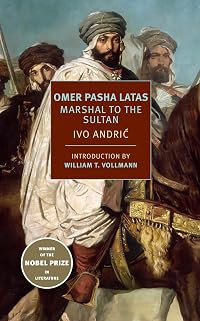
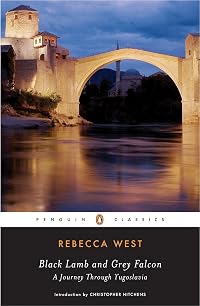








Member Recommendations
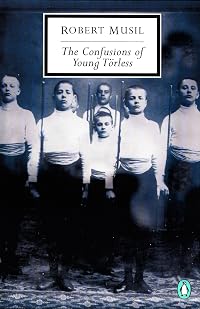
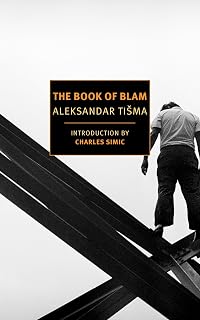
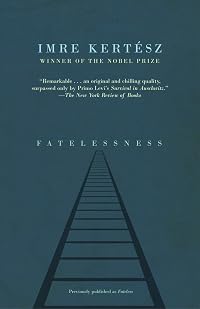
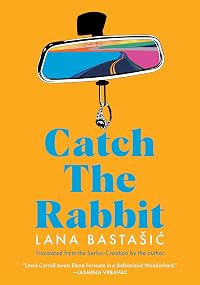
ivan.frade Both books share the same "balcan" mood and a special view over Yugoslavian history.
whymaggiemay Get a more full history of the conflict from this book.


charlie68 Both have a good history of the region.
Member Reviews
Andrić takes us through the history of Bosnia from the early 16th century, when janissaries took a ten-year-old boy from his parents in a village near Višegrad. He would grow up to become the Ottoman statesman Mehmet Pasha and commission, as his pious legacy, the building of a stone bridge and a han at the point where he had been carried over the Višegrad ferry. In a series of vignettes, some linked, some not, we are taken through to 1914, when young people of the author's own generation are facing the opportunities of modern education and communications, and the challenges of the new political situation in the Balkans.
Although Andrić tells us a lot about the big things that are going on in the region over those four hundred years, show more everything is shown through the eyes of the ordinary people — Moslems, Serbs, and Jews; later also Austrians, Hungarians and Galicians — who live in the small town of Višegrad and meet to gossip on the bridge. History is experienced as a series of more or less inexplicable external events that affect their lives, it never seems to be anything they can influence themselves. Gruesome descriptions of arbitrary executions and tragic tales of suicide are mixed up with comic tales of romance and commercial intrigue, or with the minor tragedies of ordinary people's lives. The dignified conservative we see questioning reckless innovation in one story reappears in later ones as the last eccentric stick-in-the-mud holding on to the old ways against all reason, and the bridge constantly reappears as the structure that gives the stories a common thread.
Fascinating, absorbing, and an unusual way of looking at history: despite the long span of years covered it never loses its very human, very local feel: Andrić manages to make all these diverse characters from different cultures and ages into people we feel we know, somehow. show less
Although Andrić tells us a lot about the big things that are going on in the region over those four hundred years, show more everything is shown through the eyes of the ordinary people — Moslems, Serbs, and Jews; later also Austrians, Hungarians and Galicians — who live in the small town of Višegrad and meet to gossip on the bridge. History is experienced as a series of more or less inexplicable external events that affect their lives, it never seems to be anything they can influence themselves. Gruesome descriptions of arbitrary executions and tragic tales of suicide are mixed up with comic tales of romance and commercial intrigue, or with the minor tragedies of ordinary people's lives. The dignified conservative we see questioning reckless innovation in one story reappears in later ones as the last eccentric stick-in-the-mud holding on to the old ways against all reason, and the bridge constantly reappears as the structure that gives the stories a common thread.
Fascinating, absorbing, and an unusual way of looking at history: despite the long span of years covered it never loses its very human, very local feel: Andrić manages to make all these diverse characters from different cultures and ages into people we feel we know, somehow. show less
More a series of stories connected only by the bridge than a novel. The first 100 pages or so take place around the time of the bridge's construction by the Ottomans (actually by unwilling local labour) in 1570-something; I slightly preferred these to the last 200 which are devoted to the Austro-Hungarian era from the mid-19th century to the beginning of WWI. I love Andrić's style, unhurried yet precise, always willing to step back and add background or introduce supporting characters as needed. Turks, Serbs, Moslems, Christians, Spanish and Galician Jews, Germans, Hungarians, Montenegrins, Poles... this is a fascinating depiction of a complex corner of Europe. Its somewhat pessimistic conclusion doesn't seem unreasonable in hindsight.
Time for another title from 1001 Books You Must Read Before You Die!
The Bridge on the Drina, by Nobel Prize winning author Ivo Andrić (1892-1975), is also listed on 'The World's Required Reading List at TEDEd' compiled from books assigned to students around the world, and I've also seen it reviewed at the Global Literature in Libraries blog (where, in 2017, I promised to move it up the TBR where it has been waiting patiently since 2010).
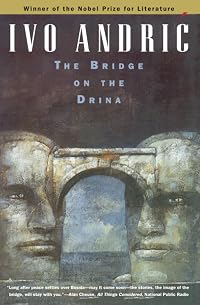
As 1001 Books says, it's more a chronicle than a novel, organised into vignettes describing the life of the local population in Bosnia and Herzegovina and its transformations over the centuries. It's also rather a melancholy experience to read it, because the metaphor of the bridge as a symbol of show more coexistence, as depicted in the front cover image by Wiktor Sadowski, collapses under the weight of recent history.
(I wouldn't be the only Australian who didn't know where Bosnia was until the Bosnian War (1992-95) erupted. But I learned fast. In the 1990s I taught refugee Bosnian children who had fled dreadful experiences, and long afterwards I was still having to deal with unacceptable hostilities towards them from Serbian children in the playground.)
The book begins with the building of the bridge during the 16th-century Ottoman Empire, and ends with World War I, when it was partially destroyed. For three centuries the bridge is cherished by the villagers as a gift of Mehmed-paša Sokolović, the Grand Vezir, a man who—in forced tribute to the Sultan—was taken as a boy from his Christian family, forced to convert to Islam, given a Turkish name, and served three Sultans during his lifetime. When he rose to great power in the Sultan's court, he sought to assuage the pain that had never left him, by building a magnificent bridge in his homeland.
Designed by the Ottoman architect Mimar Sinan, the bridge was a marvel of engineering and until the funding for it ran out in the dying days of the Ottoman Empire, it boasted a caravanserai (a roadside inn) as a focal point for drinking and gossiping. But the building of it was fraught with tension, and Andrić does not spare the reader the violence that was used on the hapless forced labourers who built it. Legends of children walled up inside it are remembered along with the gruesome torture and death of a man thought to be a saboteur.
Andrić's genius lies in his brilliant juxtapositions of humanity at its best and its worst.
To read the rest of my review please visit https://anzlitlovers.com/2021/06/17/the-bridge-on-the-drina-bosnian-trilogy-1-by... show less
The Bridge on the Drina, by Nobel Prize winning author Ivo Andrić (1892-1975), is also listed on 'The World's Required Reading List at TEDEd' compiled from books assigned to students around the world, and I've also seen it reviewed at the Global Literature in Libraries blog (where, in 2017, I promised to move it up the TBR where it has been waiting patiently since 2010).
As 1001 Books says, it's more a chronicle than a novel, organised into vignettes describing the life of the local population in Bosnia and Herzegovina and its transformations over the centuries. It's also rather a melancholy experience to read it, because the metaphor of the bridge as a symbol of show more coexistence, as depicted in the front cover image by Wiktor Sadowski, collapses under the weight of recent history.
(I wouldn't be the only Australian who didn't know where Bosnia was until the Bosnian War (1992-95) erupted. But I learned fast. In the 1990s I taught refugee Bosnian children who had fled dreadful experiences, and long afterwards I was still having to deal with unacceptable hostilities towards them from Serbian children in the playground.)
The book begins with the building of the bridge during the 16th-century Ottoman Empire, and ends with World War I, when it was partially destroyed. For three centuries the bridge is cherished by the villagers as a gift of Mehmed-paša Sokolović, the Grand Vezir, a man who—in forced tribute to the Sultan—was taken as a boy from his Christian family, forced to convert to Islam, given a Turkish name, and served three Sultans during his lifetime. When he rose to great power in the Sultan's court, he sought to assuage the pain that had never left him, by building a magnificent bridge in his homeland.
Designed by the Ottoman architect Mimar Sinan, the bridge was a marvel of engineering and until the funding for it ran out in the dying days of the Ottoman Empire, it boasted a caravanserai (a roadside inn) as a focal point for drinking and gossiping. But the building of it was fraught with tension, and Andrić does not spare the reader the violence that was used on the hapless forced labourers who built it. Legends of children walled up inside it are remembered along with the gruesome torture and death of a man thought to be a saboteur.
Andrić's genius lies in his brilliant juxtapositions of humanity at its best and its worst.
To read the rest of my review please visit https://anzlitlovers.com/2021/06/17/the-bridge-on-the-drina-bosnian-trilogy-1-by... show less
“The common people remember and tell of what they are able to grasp and what they are able to transform into legend. Anything else passes them by without deeper trace, with the dumb indifference of nameless natural phenomena, which do not touch the imagination or remain in the memory. This hard and long building process was for them a foreign task undertaken at another’s expense. Only when, as the fruit of this effort, the great bridge arose, men began to remember details and to embroider the creation of a real, skillfully built and lasting bridge with fabulous tales which they well knew how to weave and to remember.”
Published in 1945, this book chronicles the historic forces that changed the lives of people living in Višegrad, show more Bosnia, where the bridge was built by the Ottoman Empire in the mid-16th century. The story spans hundreds of years (1500s to 1914). The bridge is wide, and contains a kapia in the center, where people can sit and chat. Over time, the bridge becomes both a community meeting place and a focal point for conflicts.
The narrative is centered around the enduring presence of the bridge. The characters come and go. Some are followed over several chapters and others disappear quickly. Their stories incorporate political, social, cultural, religious, and economic changes that occur during their lifetimes. The Ottoman and Austro-Hungarian occupations, Bosnian and Herzegovinian rebellions, and Austrian annexation are incorporated into the narrative. It also portrays the fallout after the assassination of Archduke Franz Ferdinand. Be aware that it contains a particularly gruesome description of torture and execution.
The book is beautifully written using descriptive language. I read the English translation from Serbo-Croatian by Lovett F. Edwards. It is easy to envision the bridge, the town, and the surrounding landscapes. It is a book to read gradually in order to fully digest the content. It is a wonderful example of an author using fiction to inform readers about history.
Memorable quotes:
“But misfortunes do not last forever (this they have in common with joys) but pass away or are at least diminished and become lost in oblivion. Life on the kapia always renews itself despite everything and the bridge does not change with the years or with the centuries or with the most painful turns in human affairs. All these pass over it, even as the unquiet waters pass beneath its smooth and perfect arches.”
“Every human generation has its own illusions with regard to civilization; some believe they are taking part in its upsurge, others that they are witnesses of its extinction. In fact, it always both flames and smolders and is extinguished, according to the place and the angle of view.” show less
Published in 1945, this book chronicles the historic forces that changed the lives of people living in Višegrad, show more Bosnia, where the bridge was built by the Ottoman Empire in the mid-16th century. The story spans hundreds of years (1500s to 1914). The bridge is wide, and contains a kapia in the center, where people can sit and chat. Over time, the bridge becomes both a community meeting place and a focal point for conflicts.
The narrative is centered around the enduring presence of the bridge. The characters come and go. Some are followed over several chapters and others disappear quickly. Their stories incorporate political, social, cultural, religious, and economic changes that occur during their lifetimes. The Ottoman and Austro-Hungarian occupations, Bosnian and Herzegovinian rebellions, and Austrian annexation are incorporated into the narrative. It also portrays the fallout after the assassination of Archduke Franz Ferdinand. Be aware that it contains a particularly gruesome description of torture and execution.
The book is beautifully written using descriptive language. I read the English translation from Serbo-Croatian by Lovett F. Edwards. It is easy to envision the bridge, the town, and the surrounding landscapes. It is a book to read gradually in order to fully digest the content. It is a wonderful example of an author using fiction to inform readers about history.
Memorable quotes:
“But misfortunes do not last forever (this they have in common with joys) but pass away or are at least diminished and become lost in oblivion. Life on the kapia always renews itself despite everything and the bridge does not change with the years or with the centuries or with the most painful turns in human affairs. All these pass over it, even as the unquiet waters pass beneath its smooth and perfect arches.”
“Every human generation has its own illusions with regard to civilization; some believe they are taking part in its upsurge, others that they are witnesses of its extinction. In fact, it always both flames and smolders and is extinguished, according to the place and the angle of view.” show less
Un ponte, opera umana eppure immortale, gesto di pietà del potente visir che fu, bambino, parte del tributo di sangue che i popoli conquistati pagavano ai turchi.
Una comunità che si sviluppa, vive, muore, cresce e subisce gli sconvolgimenti della storia all'ombra del bellissimo, inalterabile ponte.
E in virtù dell'immutabilità di questo manufatto anche la comunità è immutabile, e qualsiasi sconvolgimento si placa, come onda del mare.
Ma i secoli passano e la storia continua, si ritira l'impero turco dalle terre di Serbia e di Bosnia, e avanza la storia, avanza l'Europa, troppo inquieta per queste terre più orientali che europee, e semina i suoi venti di corruzione e tempesta.
E verrà il terribile giorno in cui un principe show more ereditario verrà ucciso in terra di Serbia, e questo atto porterà con sè l'inizio della fine della comunità e del ponte, e darà avvio alle tragedie che viviamo ancora oggi.
Un capolavoro. show less
Una comunità che si sviluppa, vive, muore, cresce e subisce gli sconvolgimenti della storia all'ombra del bellissimo, inalterabile ponte.
E in virtù dell'immutabilità di questo manufatto anche la comunità è immutabile, e qualsiasi sconvolgimento si placa, come onda del mare.
Ma i secoli passano e la storia continua, si ritira l'impero turco dalle terre di Serbia e di Bosnia, e avanza la storia, avanza l'Europa, troppo inquieta per queste terre più orientali che europee, e semina i suoi venti di corruzione e tempesta.
E verrà il terribile giorno in cui un principe show more ereditario verrà ucciso in terra di Serbia, e questo atto porterà con sè l'inizio della fine della comunità e del ponte, e darà avvio alle tragedie che viviamo ancora oggi.
Un capolavoro. show less
The Bridge On The Drina is about ordinary life in a small town, over several centuries. However, while the people of Višegrad are like those in any small town, Višegrad itself is not ordinary. It is on the border of the Bosnian and Serb territories, and its bridge - built in the sixteenth century - is an important communications link for the Ottoman Empire.
Great historical forces lead to political upheavals, imperfectly understood in the town but with inevitable consequences.
Much of the book is focused on the bridge itself, including the terraced area midway across where the townspeople pass the time, and the caravansarai to one side. Serbian villagers try to disrupt the construction of the bridge and are made examples of. Refugees show more cross the bridge, driven out of their homes. After the shift from the Ottoman to the Austro-Hungarian empire, women start to take the air on the terrace, much to the disgust of the men who used to smoke their waterpipes there. Guards appear and question the people who are crossing.
As this shows, the book is interested in the way that the great political changes are experienced in daily life, and especially in the way that the town changed with each wave of new influence - whether that was in a new way of reckoning weights and measures at the market, or a different shape of horseshoe. And the influence goes both ways:
"Many of these officials, the fiery Magyar or the haughty Pole, crossed the bridge with reluctance and entered the town with disgust and, at first, were a world apart, like drops of oil in water. Yet a year or so later they could be found sitting for hours on the kapia [terrace], smoking through thick amber cigarette-holders and, as if they had been born in the town, watching the smoke expand and vanish under the clear sky in the motionless air of dusk; or they would sit and wait for supper with the local notables on some green hillock, with plum brandy and snacks and a little bouquet of basil before them, conversing leisurely about trivialities or drinking slowly and occasionally munching a snack as the townsmen knew how to do so well."
This extract also shows the poetry of description which is another feature of the book.
I don't think I've ever read anything which looked at the sweep of history in such a human way. Highly recommended. show less
Great historical forces lead to political upheavals, imperfectly understood in the town but with inevitable consequences.
Much of the book is focused on the bridge itself, including the terraced area midway across where the townspeople pass the time, and the caravansarai to one side. Serbian villagers try to disrupt the construction of the bridge and are made examples of. Refugees show more cross the bridge, driven out of their homes. After the shift from the Ottoman to the Austro-Hungarian empire, women start to take the air on the terrace, much to the disgust of the men who used to smoke their waterpipes there. Guards appear and question the people who are crossing.
As this shows, the book is interested in the way that the great political changes are experienced in daily life, and especially in the way that the town changed with each wave of new influence - whether that was in a new way of reckoning weights and measures at the market, or a different shape of horseshoe. And the influence goes both ways:
"Many of these officials, the fiery Magyar or the haughty Pole, crossed the bridge with reluctance and entered the town with disgust and, at first, were a world apart, like drops of oil in water. Yet a year or so later they could be found sitting for hours on the kapia [terrace], smoking through thick amber cigarette-holders and, as if they had been born in the town, watching the smoke expand and vanish under the clear sky in the motionless air of dusk; or they would sit and wait for supper with the local notables on some green hillock, with plum brandy and snacks and a little bouquet of basil before them, conversing leisurely about trivialities or drinking slowly and occasionally munching a snack as the townsmen knew how to do so well."
This extract also shows the poetry of description which is another feature of the book.
I don't think I've ever read anything which looked at the sweep of history in such a human way. Highly recommended. show less
amazingly evocative writing
By sally tarbox on 21 April 2011
Format: Paperback
not exactly a novel, more a series of stories following the 'life' of a Bosnian bridge over 350 years. The book starts with its construction in 1500s, a project of several years where the Turkish overseers conscript the locals into slave labour culminating in the awful description of the impalement of a worker who rebels by sabotaging the bridge. Then Andric takes us through the centuries; the flood when local leaders of all faiths gather in the same house in a heartwarming episode. Yet with the change in frontiers and arrival of Turkish refugees from Serbia, the uncertainty of life is ever in the background. The Austro-Hungarian occupation comes, locals dispute show more whether or not to resist, a guard commits suicide after failing to do his job properly. Life becomes wealthier, and in 1900s the young have time to discuss politics. In the last chapter world war 1 hits the town as a bomb smashes the bridge; this is told from the perspective of a man in a shop and is such evocative writing you feel you are there. Brilliant book show less
By sally tarbox on 21 April 2011
Format: Paperback
not exactly a novel, more a series of stories following the 'life' of a Bosnian bridge over 350 years. The book starts with its construction in 1500s, a project of several years where the Turkish overseers conscript the locals into slave labour culminating in the awful description of the impalement of a worker who rebels by sabotaging the bridge. Then Andric takes us through the centuries; the flood when local leaders of all faiths gather in the same house in a heartwarming episode. Yet with the change in frontiers and arrival of Turkish refugees from Serbia, the uncertainty of life is ever in the background. The Austro-Hungarian occupation comes, locals dispute show more whether or not to resist, a guard commits suicide after failing to do his job properly. Life becomes wealthier, and in 1900s the young have time to discuss politics. In the last chapter world war 1 hits the town as a bomb smashes the bridge; this is told from the perspective of a man in a shop and is such evocative writing you feel you are there. Brilliant book show less
Members
- Recently Added By
Lists

1001 Books You Must Read Before You Die
1,448 works; 1,134 members

Best Historical Fiction
620 works; 261 members

Best of World Literature
436 works; 52 members

Recommend the 20 best books you've read in the last five years
2,168 works; 606 members

Historical Fiction
889 works; 91 members

20th Century Literature
1,161 works; 55 members
1940s
221 works; 25 members

Canon de la narrativa universal del siglo XX
254 works; 6 members
Books That Changed Me
158 works; 47 members

Nobel Price Winners
222 works; 20 members
Favourite Books
1,820 works; 316 members

Top Five Books of 2014
1,064 works; 398 members

Top Five Books of 2018
802 works; 265 members

Harold Bloom - The Western Canon: D. The Chaotic Age
833 works; 24 members
1,001 BYMRBYD Concensus
723 works; 27 members

Most Disturbing Books
124 works; 27 members

Five star books
1,767 works; 110 members

Books Read in 2017
4,249 works; 130 members
My list of 100 books to read next
100 works; 4 members

My TBR Challenge Leftovers
22 works; 1 member

Books Read in 2016
4,666 works; 199 members

Books I've read
87 works; 2 members

Reading Globally
136 works; 16 members

Tammen Keltainen kirjasto
81 works; 1 member

The Books I Read in 2016
54 works; 1 member

Books about the Balkans
19 works; 2 members

Fiction With Familiar Settings
280 works; 93 members

Writers In Public Domain 2026
90 works; 1 member

Books Read in 2025
4,128 works; 98 members

2024 Christmas Gifts
40 works; 10 members
Classics Reading List
16 works; 1 member
Canon de la narrativa universal del s. XX (cicutadry)
499 works; 3 members

100 knjiga
100 works; 1 member

Books Read in 2013
1,630 works; 51 members

The Books I Read in 2017
96 works; 1 member

Dear Nerdfighteria Maybe-Fiction Recommendations
24 works; 1 member

Books written in uncommon languages
97 works; 8 members

My TBR
371 works; 3 members

Not finished Books
7 works; 1 member

History in the long view
55 works; 3 members
Top-Rated Books on LibraryThing
272 works; 117 members
Talk Discussions
Past Discussions
Group Read, December 2015: The Bridge on the Drina in 1001 Books to read before you die (December 2015)
Author Information

Ivo Andric was born October 10, 1892, in Docu, Bosnia. He was raised in Bosnia, a region of violent political turmoil for centuries. As a young patriot, Andric became associated with political organizations, leading to his imprisonment for three years during World War I. He was also under virtual house arrest during World War II. While imprisoned show more Andric wrote his most creative material as he explored the agonies of Bosnia's oppression and exploitation. His World War I incarceration led to Ex Ponto, his collection of prison meditations and philosophy. His World War II house arrest provided Andric with the material and time to produce his most memorable novels, known as the Bosnian trilogy-Gospodjica (The Woman From Sarajevo), Travnicka hronicka (Bosnian Story or Chronicle), and Na Drini cuprija (The Bridge on the Drina). His devotion to truth and morality in times of despair and struggle is one of his strengths. His work has been translated into German, French, Russian, Spanish, and Italian. After the wars, Andric served as a Yugoslav diplomat, deputy, and representative from Bosnia. He was a member of the Federation of Writers of Yugoslavia. Andric was awarded the Prize for Life Work from the Yugoslav government in 1956, the Nobel Prize for Literature in 1961, and was bestowed an honorary doctorate from the University of Krakon in 1964. Andric died March 13, 1975, in Belgrade, Yugoslavia. (Bowker Author Biography) show less
Some Editions
Awards and Honors
Awards
Notable Lists
Series

Belongs to Publisher Series
Dolfijnreeks (6|[6])
Medusa [Mondadori] (442)
Keltainen kirjasto (31)
Ullstein Buch (3050)
Gli Oscar [Mondadori] (119)
Harvill (167)
dtv (12385)
Work Relationships
Is contained in
Common Knowledge
- Canonical title
- The Bridge on the Drina
- Original title
- На Дрини ћуприја; Na Drini ćuprija
- Original publication date
- 1945 (original Serbo-Croatian) (original Serbo-Croatian)
- Important places
- Višegrad, Bosnia; Ottoman Empire
- First words
- For the greater part of its course the river Drina flows through narrow gorges between steep mountains or through deep ravines with precipitous banks.
- Last words
- (Click to show. Warning: May contain spoilers.)On the slope which led upwards to Mejdan lay Alihodja and breathed out his life in short gasps.
(Click to show. Warning: May contain spoilers.)One finds, reading him, the kind of peace to be had only from the works of master artisans. (Afterword) - Blurbers
- McNeill, William H; Perec, Georges
- Original language
- Serbo-Croatian
Classifications
- Genres
- Fiction and Literature, General Fiction, Historical Fiction
- DDC/MDS
- 891.8235 — Literature & rhetoric Literatures of other languages East Indo-European and Celtic literatures West and South Slavic languages (Bulgarian, Slovene, Polish, Czech, Slovak, Serbo-Croatian, and Macedonian) Serbo-Croatian Fiction 1900–1991
- LCC
- PZ3 .A5735 — Language and Literature Fiction and juvenile belles lettres Fiction and juvenile belles lettres Fiction in English
- BISAC
Statistics
- Members
- 2,808
- Popularity
- 6,504
- Reviews
- 68
- Rating
- (4.18)
- Languages
- 27 — Bosnian, Catalan, Czech, Danish, Dutch, English, Finnish, French, German, Galician, Greek, Hebrew, Hungarian, Italian, Japanese, Lithuanian, Norwegian (Bokmål), Polish, Romanian, Russian, Serbian, Croatian, Slovenian, Spanish, Swedish, Turkish, Portuguese (Portugal)
- Media
- Paper
- ISBNs
- 110
- UPCs
- 1
- ASINs
- 33