On This Page
Description
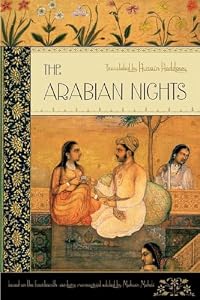
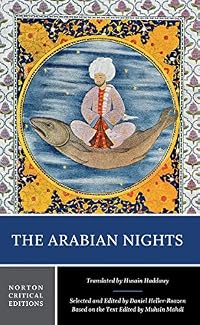
Overview: Husain Haddawy's rapturously received translation of The Arabian Nights is based on a landmark reconstruction of the earliest extant manuscript version. These stories (and stories within stories, and stories within stories within stories), told by the Princess Shahrazad under the threat of death if she ceases to amuse, first reached the West around 1700. They fired in the European imagination an appetite for the mysterious and exotic which has never left it. Collected over show more centuries from India, Persia, and Arabia, and ranging from vivacious erotica, animal fables, and adventure fantasies to pointed Sufi tales, the stories of The Arabian Nights provided the daily entertainment of the medieval Islamic world at the height of its glory. The present new translation by Husain Haddawy is of the Mahdi edition, the definitive Arabic edition of a fourteenth-century Syrian manuscript in the BibliothEque Nationale in Paris, which is the oldest surviving version of the tales and is considered to be the most authentic. This early version is without the embellishments and additions that appear in later Indian and Egyptian manuscripts, on which all previous English translations were based. show lessTags
Recommendations
































Member Recommendations
Member Reviews
This is as good as it gets. I don't know Arabic so there's no way I can judge the accuracy of the translation -- all I know is how it reads, and it reads superbly. I'd rather not get into any "oh, but there's only 271 nights here, what the --" patter. I have the newer, bigger Penguin translation on my shelves too & it presumably uses the (much!) longer Egyptian 'version' (version is the wrong word but I can't think of the right one at the moment) ... but I doubt it could be, well, better than this. What's here is simply the rapture of tales, tales, tales ... and it's a volume that makes it eminently clear why people get obsessed with this thing. I'm a bit obsessed with it, right now.
I enjoyed this much more than I expected to. The stories are constantly fresh and interesting, and I also found it pretty remarkable how sophisticated the storytelling is. A lot of narrative trickery keeps the constant flow of plot entertaining and new; this is nothing like reading a stale collection of fairy tales. Note that this book doesn't contain the tales usually, and apparently spuriously, associated with Arabian Nights, such as Sinbad, Ali Baba, and Aladdin.
While I can't comment on the quality of the translation, The Arabian Nights is a dizzying array of stories within stories within stories, playing with the idea that our narrative impulse is the connective tissue that makes civilization possible. The stories are at their best when they fully indulge in fantasy, recounting tales of demons, transformative magic, and epic romance.
As much as I liked the book, however, I had a few complaints, principally the lack of development in the frame story of Shahrazad and its disappointingly abrupt ending. While her story does exist primarily as a means of telling other stories, I really regretted that after her first night with the king, she becomes nothing more than a chapter break. If The Arabian show more Nights exists as a tribute to her bravery, skill, wit, and inventiveness as a storyteller, I would have appreciated the chance to see her put to use in other ways. The constant interpolations to remind us that she is narrating for her very survival only serve as a reminder that we're learning nothing else about her.
As with any compendium of stories, some are less interesting than others, and I enjoyed the earlier stories a great deal more than those which ended the book. The introduction made mention of the fact that the book was probably the result of a number of different writers, and reading the stories makes that more than plain. The interlocking stories and cliffhanger endings that I found so interesting disappear entirely as the book goes on, to its detriment.
In addition to the sheer pleasure of the book as an exploration of storytelling, I found it a work of great cultural interest as well. Many of the stories have a decidedly foreign flavor, not just in terms of locale but in what the narrator chooses to emphasize. I found myself thinking on many occasions that I wished the Qur'an had been more like this book, as it seems to provide a much greater insight into a culture about which I know depressingly little. show less
As much as I liked the book, however, I had a few complaints, principally the lack of development in the frame story of Shahrazad and its disappointingly abrupt ending. While her story does exist primarily as a means of telling other stories, I really regretted that after her first night with the king, she becomes nothing more than a chapter break. If The Arabian show more Nights exists as a tribute to her bravery, skill, wit, and inventiveness as a storyteller, I would have appreciated the chance to see her put to use in other ways. The constant interpolations to remind us that she is narrating for her very survival only serve as a reminder that we're learning nothing else about her.
As with any compendium of stories, some are less interesting than others, and I enjoyed the earlier stories a great deal more than those which ended the book. The introduction made mention of the fact that the book was probably the result of a number of different writers, and reading the stories makes that more than plain. The interlocking stories and cliffhanger endings that I found so interesting disappear entirely as the book goes on, to its detriment.
In addition to the sheer pleasure of the book as an exploration of storytelling, I found it a work of great cultural interest as well. Many of the stories have a decidedly foreign flavor, not just in terms of locale but in what the narrator chooses to emphasize. I found myself thinking on many occasions that I wished the Qur'an had been more like this book, as it seems to provide a much greater insight into a culture about which I know depressingly little. show less
There are many versions of The Arabian Nights that have floated about over the centuries; this one is a translation of the Mahdi edition, based on the oldest known copy from 14th century Syria. It has 271 “nights”, tales that were collected from Persia, Arabia, and India and containing stories within stories (and sometimes within stories, and so on). The collection was expanded over the centuries to reach the well-known 1,001 nights, including “Aladdin and the Wonderful Lamp", "The Seven Voyages of Sinbad the Sailor", and "Ali Baba and the Forty Thieves" – none of this later content is present in this version.
With that said, it’s an enjoyable read, and there is plenty of 700 year old sex and violence from the Middle East to show more hold one’s interest. :)
The stage is set in the prologue in a way that certainly opens the eyes. There are two kings, one named Shahrayar, the other Shahzaman, who are brothers. Shahzaman is sent for by his brother to visit, but before leaving, discovers his wife in the arms of one of the kitchen boys. Naturally, he strikes them with his sword, drags them by their heels, and throws them from the top of the palace to the trench below. He then arrives in Shahrayar’s domain in a dejected mood. As he’s agonizing over his sorrow, he finds himself a witness to an interracial orgy involving Shahrayar’s wife, ten white slave girls, ten black slaves who had been dressed as girls, and Mas’ud, another black slave who, upon being summoned, jumps out of a tree to have his way with the Queen. Yeah, wow.
Shahrayar can’t believe his ears when he hears of this, and so the two of them have to watch a repeat performance to convince him. They are so disheartened that they decide to take to the road and leave the palace. That night they see what seems to be a giant pillar, one that grows to touch the clouds, emerging from the sea. They flee in terror and hide in a tree, and when they look again discover that the pillar is actually a mighty demon, who approaches without seeing them, carrying a large glass chest with four locks. He sets it down in the meadow beneath them and unlocks it, and what emerges is a beautiful woman, with a face “like the full moon, and a lovely smile.” The demon then proceeds to fall asleep, whereupon the woman notices Shahrayar and Shahzaman in the tree, and asks them to come down and make love to her, otherwise she’ll wake her husband the demon and have him kill them. They comply, one after the other, and she then asks for a ring as a souvenir from each; she’s collected one from each of her lovers and has now reached a full hundred, despite the demon keeping her locked up. Again, yeah, wow.
The brothers decide to return to their kingdoms and never marry again. Shahrayar has his wife and all her slave girls killed, but then formulates a new plan, to marry a new woman each night and then kill her in the morning to prevent her from cheating on him. After he’s done this for so long that girls in the kingdom are becoming a little scarce, Shahrazad (sometimes spelled Scheherazade), the vizier’s daughter, volunteers to marry the king. She is smart and very well read, and her plan for survival is to tell the king a new story each night, but to not finish it, betting on his curiosity to postpone the execution from night to night.
And thus begin the stories, each ‘tale’ or night of which are generally just a couple pages each, but which are grouped into larger stories, such as The Fisherman and the Demon, The Porter and the Three Ladies, and The Hunchback. The prologue is so classic that frankly it’s a tough act to follow, and I have to say the tales tend to get a bit tedious. If you’re not a fan of misogyny or body parts getting lopped off you may not enjoy them, but they are certainly not dry, and there is something special about reading stories this old that provided entertainment for the medieval Islam world, similar to The Decameron or The Canterbury Tales. I prefer those other books to this one, but wonder if the inclusion of the other stories in the 1,001 Nights version would have upped my rating. show less
With that said, it’s an enjoyable read, and there is plenty of 700 year old sex and violence from the Middle East to show more hold one’s interest. :)
The stage is set in the prologue in a way that certainly opens the eyes. There are two kings, one named Shahrayar, the other Shahzaman, who are brothers. Shahzaman is sent for by his brother to visit, but before leaving, discovers his wife in the arms of one of the kitchen boys. Naturally, he strikes them with his sword, drags them by their heels, and throws them from the top of the palace to the trench below. He then arrives in Shahrayar’s domain in a dejected mood. As he’s agonizing over his sorrow, he finds himself a witness to an interracial orgy involving Shahrayar’s wife, ten white slave girls, ten black slaves who had been dressed as girls, and Mas’ud, another black slave who, upon being summoned, jumps out of a tree to have his way with the Queen. Yeah, wow.
Shahrayar can’t believe his ears when he hears of this, and so the two of them have to watch a repeat performance to convince him. They are so disheartened that they decide to take to the road and leave the palace. That night they see what seems to be a giant pillar, one that grows to touch the clouds, emerging from the sea. They flee in terror and hide in a tree, and when they look again discover that the pillar is actually a mighty demon, who approaches without seeing them, carrying a large glass chest with four locks. He sets it down in the meadow beneath them and unlocks it, and what emerges is a beautiful woman, with a face “like the full moon, and a lovely smile.” The demon then proceeds to fall asleep, whereupon the woman notices Shahrayar and Shahzaman in the tree, and asks them to come down and make love to her, otherwise she’ll wake her husband the demon and have him kill them. They comply, one after the other, and she then asks for a ring as a souvenir from each; she’s collected one from each of her lovers and has now reached a full hundred, despite the demon keeping her locked up. Again, yeah, wow.
The brothers decide to return to their kingdoms and never marry again. Shahrayar has his wife and all her slave girls killed, but then formulates a new plan, to marry a new woman each night and then kill her in the morning to prevent her from cheating on him. After he’s done this for so long that girls in the kingdom are becoming a little scarce, Shahrazad (sometimes spelled Scheherazade), the vizier’s daughter, volunteers to marry the king. She is smart and very well read, and her plan for survival is to tell the king a new story each night, but to not finish it, betting on his curiosity to postpone the execution from night to night.
And thus begin the stories, each ‘tale’ or night of which are generally just a couple pages each, but which are grouped into larger stories, such as The Fisherman and the Demon, The Porter and the Three Ladies, and The Hunchback. The prologue is so classic that frankly it’s a tough act to follow, and I have to say the tales tend to get a bit tedious. If you’re not a fan of misogyny or body parts getting lopped off you may not enjoy them, but they are certainly not dry, and there is something special about reading stories this old that provided entertainment for the medieval Islam world, similar to The Decameron or The Canterbury Tales. I prefer those other books to this one, but wonder if the inclusion of the other stories in the 1,001 Nights version would have upped my rating. show less
Ah. So some time ago I had a yen to read the 1001 Nights, and I have only just got around to it, apparently having forgotten that I don't like fairy tales. I appreciate the importance of fairy tales, fables, myths and legends from a cultural, historical and literary point of view. Stories that have been passed down between generations by word of mouth should be collected and collated and written down and shared etc. But all the same, I don't enjoy the style in which these stories tend to be told, so unless I want to study the Arabian Nights, I don't see much point pursuing reading something I'm not enjoying. Literally the first story in this book (the framing device of Shahrazad) is wall-to-wall sex and murder, which are pretty much my show more two least favourite topics for a story, and I flicked to the end of the book and it doesn't even resolve the damn story! It just says 'tradition says this happened...' Ugh. show less
An interesting read as historical artifact. Full of romance and violence and sexism and sentiments like: A woman needs a husband or a grave. Pretty entertaining overall.
The Arabian Nights tell plain crude stories that cater to the basest of instincts: sex, betrayal, alcohol, and thievery to name just a few. But beyond the magical elements and the crudity, the tales themselves claim a higher place as they emphasize the import of story-telling in general, as the tales themselves are tales within tales within tales.
These stories applaud and reverence stories themselves. The original, now anonymous, author of The Nights wrote something that championed a good story teller. And anyone who loves stories can appreciate that.
More detailed review on my blog
These stories applaud and reverence stories themselves. The original, now anonymous, author of The Nights wrote something that championed a good story teller. And anyone who loves stories can appreciate that.
More detailed review on my blog
Members
- Recently Added By
Lists

wish list
61 works; 3 members

1001 Books You Must Read Before You Die
1,448 works; 1,132 members

Overdue Podcast
803 works; 9 members
Author Information
6+ Works 2,077 Members
90 Works 4,710 Members
Some Editions
Awards and Honors
Series

Belongs to Publisher Series
Work Relationships
Common Knowledge
- Original publication date
- ca. 800 - 1300
- People/Characters
- Scheherazade (Shahrazad); Shahryar (Shahrayar); Nur al-Din al-Misri; Badr al-Din Hasan al-Basri; Zubaida; Shams al-Nahar (show all 11); Nur al-Din Ali ibn-Bakkar; Anis al-Jalis; Nur al-Din Ali ibn Khawan; Jullanar of the Sea; Dunyazad (Dinarzad)
- Epigraph
- Bless thee, Bottom! Bless thee! Thou art translated.
--A Midsummer Night's Dream - Dedication
- For Mike, for Myriam, Peter
Christopher, and Mark, and for
Diana and Shahrazad - First words
- Introduction
The World of The Arabian Nights
It has been some years now since as a little boy in Baghdad I used to listen to tales from The Thousand and One Nights.
Prologue:
[The Story of King Shahrayar and Shahrazad, His Vizier's Daughter]
It is related -- but God knows and sees best what lies hidden in the old accounts of bygone peoples and times -- that long ago, during the tim... (show all)e of the Sasanid dynasty, in the peninsulas of India and Indochina, there lived two kings who were brothers.
Classifications
- Genre
- Fiction and Literature
- DDC/MDS
- 398.22 — Social sciences Customs, etiquette & folklore Folklore Folk literature Legendary or mythological persons
- LCC
- PJ7715 .M87 — Language and Literature Oriental languages and literatures Oriental philology and literature Arabic Arabic literature Individual authors or works
- BISAC
Statistics
- Members
- 1,598
- Popularity
- 14,092
- Reviews
- 20
- Rating
- (3.86)
- Languages
- Arabic, English, Indonesian
- Media
- Paper, Ebook
- ISBNs
- 21
- ASINs
- 7
