
Walden and On the Duty of Civil Disobedience
by Henry David Thoreau
On This Page
Description
One of the most famous non-fiction American books, Walden by Henry David Thoreau is the history of Thoreau's visit to Ralph Waldo Emerson's woodland retreat near Walden Pond. Thoreau, stirred by the philosophy of the transcendentalists, used the sojourn as an experiment in self reliance and minimalism... "so as to "live deliberately, to front only the essential facts of life, and see if I could not learn what it had to teach, and not, when I came to die, discover that I had not lived." show more Walden stresses the significance of self-reliance, solitude, meditation, and nature in rising above the the life of quiet desperation lived by most people. that, he argues, is the lot of most people. Part autobiography, part manifesto Walden is a moving treatise on the importance distancing oneself from the consumerism of modern Western society and embracing nature in its place. show lessTags
Recommendations


























Member Recommendations

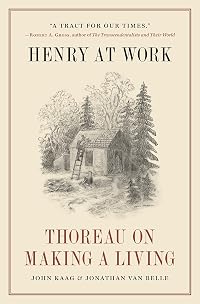
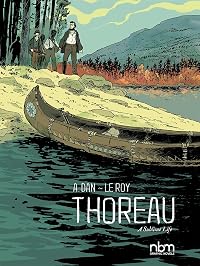
thiagobomfim That is a history of a boy inspired by Thoreau and his masterpiece: Wladen.
25
Member Reviews
"Enter ye that have leisure and a quiet mind, who earnestly seek the right road." (pg. 219)
There's an odd mix of surprise, frustration and satisfaction that comes when you enjoy a book that, in the majority of opinions you have heard, has been casually maligned. The often-adverse reputation of Walden – and its author, Henry David Thoreau – seems to be forged by many in its opening chapter, a long, indulgent ramble into its young author's worldview.
But you should never trust the opinion of someone who can't even finish a book, for not only does Walden emerge from its ramble into open ground, but that opening chapter begins to look better on reflection. Thoreau makes the case for a more even-paced, introspective life, arguing that the show more shift towards industrialization and ever more integrated societies has diminished man spiritually ("while civilization has been improving our houses, it has not equally improved the men who are to inhabit them" (pg. 28)). While never a Luddite, he suggests there is an 'illusion' about our 'modern improvements'; "there is not always a positive advance" (pg. 43). For this, he is regularly cast as outdated, unrealistic and impenetrable (if he was writing nowadays, he would be 'problematic' or 'elitist', maybe even 'reactionary'). Thoreau is often criticised as verbose (is an essayist meant to provide action scenes?) and as workshy (is working around the clock for a corporation just to earn enough to put a rented roof over your head for a time supposed to be preferable?). Most absurdly, he is often labelled a fraud, because his cabin on Walden Pond hasn't been deemed remote enough; it was only a mile from his nearest neighbour, and only a short walk into the nearest town.
I imagine the same sort of people who make this criticism would also turn off At Folsom Prison and shatter the vinyl across their knee, upon learning that Johnny Cash never really shot a man in Reno. For not only are these criticisms absurd, but Thoreau pre-empts and incorporates them into his discussion. Walden is an honest and sincere work; while not rigorously academic, it argues its points lucidly and (surprisingly) playfully. Its general thesis is that modern man has no time to improve himself mentally or spiritually, and that in society we are too often "obliged to dress and train, not to say think and believe, accordingly… [losing our] time into the bargain" (pg. 57). Nevertheless, Thoreau accepts he would seem indolent to a working townsman, but argues that this is because the townsman is living an unnatural life (pg. 92). Even in that opening polemical chapter, which occasionally strays towards bitterness, he acknowledges his "shortcomings and inconsistencies", his "cant and hypocrisy – chaff which I find it difficult to separate from my wheat, but for which I am as sorry as any man" (pg. 41). I suspect people don't like realising that so much of their lives is not their own (we can ignore the ball-and-chain so long as it doesn't make a noise), and so react badly to the one – Thoreau – who points it out to them. Considering Walden contains appeals to abolitionism, social improvement and even vegetarianism (all in 1854), it's odd that Thoreau is sometimes characterised as an idle, head-in-the-clouds misanthrope. Some of the modern criticism of Thoreau amounts practically to character assassination, a countermeasure deployed almost as a reflex.
There is far more to Walden than the general thesis I mentioned in the previous paragraph, though it's hard to isolate the ideas in a way that would allow for a flowing review. There are persistent reflections on life and society, often told in a very quotable way that encourages further pondering on the part of the reader. And for a book that appears at first glance to be quite stuffy and dated, Walden is often bracingly relevant. In our modern rush, we are "determined to be starved before we are hungry" (pg. 75); we don't have the "leisure for a true integrity day by day" (pg. 5) and have "become the tools of our tools" (pg. 31). "We meet at very short intervals, not having had time to acquire any new value for each other" (pg. 112), and we are "in great haste to construct a magnetic telegraph from Maine to Texas; but Maine and Texas, it may be, have nothing important to communicate" (pg. 43). Yes, the magnetic telegraph may be obsolete, but how many Twitter handles are there in Maine and Texas today? "A man is rich in proportion to the number of things which he can afford to let alone," Thoreau says on page 66, hence the simple life in a log cabin by a quiet pond. In light of this, how many of us, with all our competing worries, indentures and petty responsibilities, can be considered rich today? How many of us even have the time to think about it? Let me sit with Thoreau by Walden Pond awhile.
Thoreau's criticisms of the modern way of life won't appeal to everyone, but for those who love to read challenging books not for prestige but for the sensation they bring, and for those introspective types who "find it wholesome to be alone the greater part of the time" and that "to be in company, even with the best, is soon wearisome and dissipating" (pg. 111), Walden will be a very rich experience. At its best moments, it may even be a tonic. Its rich, even pace, its ornate but straight-shooting sentences, and its unashamed advocacy of intelligent living and book-learning over superficial, unreflective scrabbling and junk-reading will appeal to people of a certain mark, and only those of that mark. I am one of them, and if you believe you're of the same mind, then it's "worth the while to see the silver grain sparkle when you split this wood" (pg. 164). It's worth seeing what thoughts you can hew from Walden's trunk.
"Why should we be in such desperate haste to succeed and in such desperate enterprises? If a man does not keep pace with his companions, perhaps it is because he hears a different drummer. Let him step to the music which he hears, however measured or far away." (pg. 265) show less
There's an odd mix of surprise, frustration and satisfaction that comes when you enjoy a book that, in the majority of opinions you have heard, has been casually maligned. The often-adverse reputation of Walden – and its author, Henry David Thoreau – seems to be forged by many in its opening chapter, a long, indulgent ramble into its young author's worldview.
But you should never trust the opinion of someone who can't even finish a book, for not only does Walden emerge from its ramble into open ground, but that opening chapter begins to look better on reflection. Thoreau makes the case for a more even-paced, introspective life, arguing that the show more shift towards industrialization and ever more integrated societies has diminished man spiritually ("while civilization has been improving our houses, it has not equally improved the men who are to inhabit them" (pg. 28)). While never a Luddite, he suggests there is an 'illusion' about our 'modern improvements'; "there is not always a positive advance" (pg. 43). For this, he is regularly cast as outdated, unrealistic and impenetrable (if he was writing nowadays, he would be 'problematic' or 'elitist', maybe even 'reactionary'). Thoreau is often criticised as verbose (is an essayist meant to provide action scenes?) and as workshy (is working around the clock for a corporation just to earn enough to put a rented roof over your head for a time supposed to be preferable?). Most absurdly, he is often labelled a fraud, because his cabin on Walden Pond hasn't been deemed remote enough; it was only a mile from his nearest neighbour, and only a short walk into the nearest town.
I imagine the same sort of people who make this criticism would also turn off At Folsom Prison and shatter the vinyl across their knee, upon learning that Johnny Cash never really shot a man in Reno. For not only are these criticisms absurd, but Thoreau pre-empts and incorporates them into his discussion. Walden is an honest and sincere work; while not rigorously academic, it argues its points lucidly and (surprisingly) playfully. Its general thesis is that modern man has no time to improve himself mentally or spiritually, and that in society we are too often "obliged to dress and train, not to say think and believe, accordingly… [losing our] time into the bargain" (pg. 57). Nevertheless, Thoreau accepts he would seem indolent to a working townsman, but argues that this is because the townsman is living an unnatural life (pg. 92). Even in that opening polemical chapter, which occasionally strays towards bitterness, he acknowledges his "shortcomings and inconsistencies", his "cant and hypocrisy – chaff which I find it difficult to separate from my wheat, but for which I am as sorry as any man" (pg. 41). I suspect people don't like realising that so much of their lives is not their own (we can ignore the ball-and-chain so long as it doesn't make a noise), and so react badly to the one – Thoreau – who points it out to them. Considering Walden contains appeals to abolitionism, social improvement and even vegetarianism (all in 1854), it's odd that Thoreau is sometimes characterised as an idle, head-in-the-clouds misanthrope. Some of the modern criticism of Thoreau amounts practically to character assassination, a countermeasure deployed almost as a reflex.
There is far more to Walden than the general thesis I mentioned in the previous paragraph, though it's hard to isolate the ideas in a way that would allow for a flowing review. There are persistent reflections on life and society, often told in a very quotable way that encourages further pondering on the part of the reader. And for a book that appears at first glance to be quite stuffy and dated, Walden is often bracingly relevant. In our modern rush, we are "determined to be starved before we are hungry" (pg. 75); we don't have the "leisure for a true integrity day by day" (pg. 5) and have "become the tools of our tools" (pg. 31). "We meet at very short intervals, not having had time to acquire any new value for each other" (pg. 112), and we are "in great haste to construct a magnetic telegraph from Maine to Texas; but Maine and Texas, it may be, have nothing important to communicate" (pg. 43). Yes, the magnetic telegraph may be obsolete, but how many Twitter handles are there in Maine and Texas today? "A man is rich in proportion to the number of things which he can afford to let alone," Thoreau says on page 66, hence the simple life in a log cabin by a quiet pond. In light of this, how many of us, with all our competing worries, indentures and petty responsibilities, can be considered rich today? How many of us even have the time to think about it? Let me sit with Thoreau by Walden Pond awhile.
Thoreau's criticisms of the modern way of life won't appeal to everyone, but for those who love to read challenging books not for prestige but for the sensation they bring, and for those introspective types who "find it wholesome to be alone the greater part of the time" and that "to be in company, even with the best, is soon wearisome and dissipating" (pg. 111), Walden will be a very rich experience. At its best moments, it may even be a tonic. Its rich, even pace, its ornate but straight-shooting sentences, and its unashamed advocacy of intelligent living and book-learning over superficial, unreflective scrabbling and junk-reading will appeal to people of a certain mark, and only those of that mark. I am one of them, and if you believe you're of the same mind, then it's "worth the while to see the silver grain sparkle when you split this wood" (pg. 164). It's worth seeing what thoughts you can hew from Walden's trunk.
"Why should we be in such desperate haste to succeed and in such desperate enterprises? If a man does not keep pace with his companions, perhaps it is because he hears a different drummer. Let him step to the music which he hears, however measured or far away." (pg. 265) show less
4/5
A formative book for me in high school that was still good but not quite as powerful on a re-read over a decade later. I think Walden has a mistaken identity. Lots of people view it as a work of nature writing, and while Walden pond and the surround environment play a role, they seem to be a means to an end for Thoreau. This is a deeply philosophical work that has much more to do with Thoreau's opinions on American society and the 'quietly desperate' human soul that he sees in the western man.
The writing is at times long winded and baroque in a way that makes reading tiring over time. It's not the type of book that you can pay half attention to. Thoreau goes off on long tangents about incredible dry topics, like measuring the depths show more of Walden pond or telling which years the water level was particularly high, for example, that I found pointless, dull, and distracting from his actual messages. Some of the time he uses these dry topics as an analogy for his point, but other times they are simply left there without explanation. Because it's age there's some pretty casual racism involved as well, even though Thoreau was an abolitionist. It seems that those views didn't quite make the jump to his opinion about Native Americans. Thoreau sometimes clutches his pearls over things like the railroad that seems downright silly almost 200 years later. What I'm saying with all of this is that it's not a perfect book, not by a long shot.
However, I think it's an excellent book with a lot of substance to chew on, regardless of whether you agree with Thoreau or not. When Thoreau's writing is on topic and lucid, it's some of the best I've ever read. He has a habit of making extremely memorable and beautiful quotes, which I suppose do well within the context of a high school English class. He has a clear and concise vision for what he sees has moral failings in society, and uses his time at Walden as a personal example of how things could and should change for the better. Unlike his fear of the expanding railroad network, a lot of his views feel applicable even today. Thoreau could see even in the middle of the 19th century that American values created a lot of suffering for the working class and the poor. He saw the writing on the wall of where things were headed should the status quo not change, and wrote Walden to attempt to 'wake up' individuals to hamster wheels they are living in.
There's an inherent irony to Walden, Civil Disobedience, and Thoreau himself. He was a privileged white man of his age, and yet felt socially outcast from his peers.Civil Disobedience was written after one spending one night in jail, for which his aunt bailed him out. It wouldn't fault anyone for seeing these kinds of ironies and struggling to take Thoreau or his writing seriously. Yet I do think that within Walden there are some seriously valuable ideas that are worthy of some critical thought. I'm sure I will return to this work in the future, as it's the type of thing that rewards repeated explorations. show less
A formative book for me in high school that was still good but not quite as powerful on a re-read over a decade later. I think Walden has a mistaken identity. Lots of people view it as a work of nature writing, and while Walden pond and the surround environment play a role, they seem to be a means to an end for Thoreau. This is a deeply philosophical work that has much more to do with Thoreau's opinions on American society and the 'quietly desperate' human soul that he sees in the western man.
The writing is at times long winded and baroque in a way that makes reading tiring over time. It's not the type of book that you can pay half attention to. Thoreau goes off on long tangents about incredible dry topics, like measuring the depths show more of Walden pond or telling which years the water level was particularly high, for example, that I found pointless, dull, and distracting from his actual messages. Some of the time he uses these dry topics as an analogy for his point, but other times they are simply left there without explanation. Because it's age there's some pretty casual racism involved as well, even though Thoreau was an abolitionist. It seems that those views didn't quite make the jump to his opinion about Native Americans. Thoreau sometimes clutches his pearls over things like the railroad that seems downright silly almost 200 years later. What I'm saying with all of this is that it's not a perfect book, not by a long shot.
However, I think it's an excellent book with a lot of substance to chew on, regardless of whether you agree with Thoreau or not. When Thoreau's writing is on topic and lucid, it's some of the best I've ever read. He has a habit of making extremely memorable and beautiful quotes, which I suppose do well within the context of a high school English class. He has a clear and concise vision for what he sees has moral failings in society, and uses his time at Walden as a personal example of how things could and should change for the better. Unlike his fear of the expanding railroad network, a lot of his views feel applicable even today. Thoreau could see even in the middle of the 19th century that American values created a lot of suffering for the working class and the poor. He saw the writing on the wall of where things were headed should the status quo not change, and wrote Walden to attempt to 'wake up' individuals to hamster wheels they are living in.
There's an inherent irony to Walden, Civil Disobedience, and Thoreau himself. He was a privileged white man of his age, and yet felt socially outcast from his peers.Civil Disobedience was written after one spending one night in jail, for which his aunt bailed him out. It wouldn't fault anyone for seeing these kinds of ironies and struggling to take Thoreau or his writing seriously. Yet I do think that within Walden there are some seriously valuable ideas that are worthy of some critical thought. I'm sure I will return to this work in the future, as it's the type of thing that rewards repeated explorations. show less
One of those rare books that is both profoundly meditative and fantastically boring yet a necessary work. An odd mix, but in short, this is a brilliant work, so unlike anything else I've read it's startling. Thoreau is at times arrogant, defiant, childish, but also takes turns as philosopher, poet, and unbridled literary and passionate force. I don't agree with everything he posits, but i don't think that's the point, Thoreau's is a unique perspective that deserves to be read and internalized. Truly an irresistible testament to the power of world literature.
During high school, I loved Emerson, read him in depth, but I couldn't for the life of me get into Thoreau, and so I winged it (luckily the teacher didn't test us on it). But when the two were assigned side by side in college, it was all I could do to trudge through Emerson. Instead, I delighted sitting out on my fire escape on a cool late summer evening turning page after page of Thoreau. Yes, I know the real story behind his "live deliberately" ethos wasn't quite so romantic, and yes, I've heard a whole lot about his less-than-savory personality traits, but this is thrilling idealism! I wish I had a tiny version of this book to tote around with me for snippets of empowerment.
Thoreau began living at Walden Pond as an "experiment," not so much in physical self-sufficiency-but in spiritual self-sufficiency. Walden is a document not just of nature writing but of a man face to face with his soul, who wanted to "live deliberately" and not to find at the end of his life that he "had not lived." He was, in his own estimation, "no hermit," but like Emily Dickinson, he held a certain social aloofness, an ability to see his society as they were, having not fully been emerged with them, as society could not see itself. He wanted to inspire others to a life more fulfilling than the lives about him, "the masses of men [who] lead lives of quiet desperation."
I went to the woods because I wished to live deliberately, to show more front only the essential facts of life, and see if I could not learn what it had to teach, and not, when I came to die, discover that I had not lived. I did not wish to live what was not life, living is so dear; nor did I wish to practice resignation, unless it was quite necessary. I wanted to live deep and suck out all the marrow of life, to live so sturdily and Spartan-like as to put to rout all that was not life, to cut a broad swath and shave close, to drive life into a corner, and reduce it to its lowest terms.
Thoreau urged others to do the same, not to imitate him, but to follow the bend of their own genius, however crooked it may be. He believed in the individual and that it was the individual that mattered, to follow their own way, their own conscience, and to go to the beat of their own drummer. show less
I went to the woods because I wished to live deliberately, to show more front only the essential facts of life, and see if I could not learn what it had to teach, and not, when I came to die, discover that I had not lived. I did not wish to live what was not life, living is so dear; nor did I wish to practice resignation, unless it was quite necessary. I wanted to live deep and suck out all the marrow of life, to live so sturdily and Spartan-like as to put to rout all that was not life, to cut a broad swath and shave close, to drive life into a corner, and reduce it to its lowest terms.
Thoreau urged others to do the same, not to imitate him, but to follow the bend of their own genius, however crooked it may be. He believed in the individual and that it was the individual that mattered, to follow their own way, their own conscience, and to go to the beat of their own drummer. show less
«Avevo tre sedie, in casa mia: una per la solitudine, due per l’amicizia, tre per la compagnia». Un classico finalmente letto. Seguire Thoreau sul lago di Walden offre l’opportunità di confrontarsi con un’inattuale attitudine ai temi dell’economia e della sussistenza di base, del rapporto con la natura, della dimensione individuale e sociale del nostro vivere. Non solo una critica della società dell’epoca; soprattutto, un viaggio di auto-conoscenza.
"To read well, that is, to read true books in a true spirit, is a noble exercise, and one that will task the reader more than any exercise which the customs of the day esteem."
Thoreau has to be one of the most complex and most insightful authors I have ever read. Compared to most of us in today's rat race, Thoreau seemed, even back then, to have a great dislike for the hustle and bustle his townsfolk were enveloped in, and sought refuge in a cabin of his construction near Walden Pond for about 2 years. He eagerly describes his surroundings and observations, from a seemingly epic battle between ants, to the different hues of colors he observes in Walden Pond throughout the seasons.
It was one of the most challenging reads of my life, but show more one book I am so glad to have read. Thoreau had a lot of wisdom for someone of his time. What threw me off at times were his references to things like ancient history when he discusses his narrative of whatever he happens to be talking about at that time, which seems kind of random at times. It can be fairly easy to get lost at times, but keep in mind, this was written in the mid 1800's. Sometimes, it felt like reading this book was a lengthy homework assignment. Even still, it was a pleasure to have read this masterpiece. I suggest giving this a read if you have the patience for a deep and enlightening read. show less
Thoreau has to be one of the most complex and most insightful authors I have ever read. Compared to most of us in today's rat race, Thoreau seemed, even back then, to have a great dislike for the hustle and bustle his townsfolk were enveloped in, and sought refuge in a cabin of his construction near Walden Pond for about 2 years. He eagerly describes his surroundings and observations, from a seemingly epic battle between ants, to the different hues of colors he observes in Walden Pond throughout the seasons.
It was one of the most challenging reads of my life, but show more one book I am so glad to have read. Thoreau had a lot of wisdom for someone of his time. What threw me off at times were his references to things like ancient history when he discusses his narrative of whatever he happens to be talking about at that time, which seems kind of random at times. It can be fairly easy to get lost at times, but keep in mind, this was written in the mid 1800's. Sometimes, it felt like reading this book was a lengthy homework assignment. Even still, it was a pleasure to have read this masterpiece. I suggest giving this a read if you have the patience for a deep and enlightening read. show less
Members
- Recently Added By
Lists

1001 Books You Must Read Before You Die
1,448 works; 1,136 members

Unread books
1,063 works; 87 members

Non-Fiction Worth Reading
1,016 works; 262 members

Sonlight Books
1,487 works; 25 members

Books Featured on Gilmore Girls
307 works; 21 members

Five star books
1,767 works; 110 members

American Lit for Eng 11 Research Project
368 works; 6 members

Western World's Greatest Books - Project Gutenberg
295 works; 15 members

Books Read in 2017
4,249 works; 130 members

Wishlist
1 work; 1 member

Spirituality
195 works; 1 member

School Made Us Read It
380 works; 196 members

Books Cited in Blueprint by Nicholas Christakis
261 works; 1 member
Author Information

620+ Works 49,435 Members
In September 1842, Nathaniel Hawthorne noted this social encounter in his journal: "Mr. Thorow dined with us yesterday. He is a singular character---a young man with much of wild original nature still remaining in him; and so far as he is sophisticated, it is in a way and method of his own. He is as ugly as sin, long-nosed, queer-mouthed, and with show more uncouth and somewhat rustic, although courteous manners, corresponding very well with such an exterior. But his ugliness is of an honest and agreeable fashion, and becomes him much better than beauty. On the whole, I find him a healthy and wholesome man to know." Most responses to Thoreau are as ambiguously respectful as was Hawthorne's. Thoreau was neither an easy person to like nor an easy writer to read. Thoreau described himself as a mystic, a Transcendentalist, and a natural philosopher. He is a writer of essays about nature---not of facts about it but of his ideals and emotions in its presence. His wish to understand nature led him to Walden Pond, where he lived from 1845 to 1847 in a cabin that he built. Though he was an educated man with a Harvard degree, fluent in ancient and modern German, he preferred to study nature by living "a life of simplicity, independence, magnanimity, and trust." Knowing this, we should beware of misreading the book that best reflected this great experience in Thoreau's life: Walden; or, Life in the Woods (1854). It is not a handbook of the simple life. Though there are elements in the book of a "whole-earth catalogue" mentality, to focus on the radical "economic" aspects of Thoreau's work is to miss much in the book. Nor is it an autobiography. The right way to read Walden is as a "transcendental" narrative prose poem, whose hero is a man named Henry, a modern Odysseus in search of a "true America." Thoreau left Walden Pond on September 6, 1846, exactly two years, two months, and two days after he had settled there. As he explained in the pages of Walden: "I left the woods for as good a reason as I went to live there. Perhaps it seemed to me that I had several more lives to live, and could not spare any more time for that one." Growth, change, and development were essential to his character. One should not overlook the significance of his selecting July 4 as the day for taking possession of his residence at Walden Pond, a day that celebrates the establishment of a new government whose highest ideal is individual freedom. In terms of Thoreau's redefinition of the nation-idea, "the only true America" is that place where one may grow wild according to one's nature, where one may "enjoy the land, but own it not." Thoreau believed that each person should live according to individual conscience, willing to oppose the majority if necessary. An early proponent of nonviolent resistance, he was jailed briefly for refusing to pay his poll tax to support the Mexican War and the slave system that had promoted that war. His essay "On Civil Disobedience" (1849), which came from this period of passive resistance, was acknowledged by Mahatma Gandhi (who read it in a South African jail) as the basis for his campaign to free India. Martin Luther King, Jr. later attributed to Thoreau and Gandhi the inspiration for his leadership in the civil rights movement in the United States. Thoreau contracted tuberculosis in 1835 and suffered from it sporadically afterwards. His health declined over three years with brief periods of remission, until he eventually became bedridden. Recognizing the terminal nature of his disease, Thoreau spent his last years revising and editing his unpublished works, particularly The Maine Woods and Excursions, and petitioning publishers to print revised editions of A Week and Walden. He died on May 6, 1862 at age 44. (Bowker Author Biography) show less
Some Editions
Awards and Honors
Series
Belongs to Publisher Series
Work Relationships
Common Knowledge
- Canonical title
- Walden / Civil Disobedience; Walden and On the Duty of Civil Disobedience
- Original title
- Walden & On the Duty of Civil Disobedience
- Alternate titles
- Life in the woods; On the duty of civil disobedience
- Original publication date
- 1854-08-09 (Walden) (Walden); 1849 (Civil Disobedience) (Civil Disobedience); 1960 (Riverside collection) (Riverside collection); 1999 (Signet Classics) (Signet Classics)
- People/Characters
- Henry David Thoreau
- Important places
- Walden Pond, Concord, Massachusetts, USA; Concord, Massachusetts, USA; Massachusetts, USA
- Important events
- Transcendentalism
- Epigraph
- I do not propose to write an ode to dejection, but to
brag as lustily as chanticleer in the morning, standing
on his roost, if only to wake my neighbors up. - First words
- When I wrote the following pages, or rather the bulk of them, I lived alone, in the woods, a mile from any neighbor, in a house which I had built myself, on the shore of Walden Pond, in Concord, Massachusetts, and earned my l... (show all)iving by the labor of my hands only.
- Quotations
- At present I am a sojourner in civilized life again.
As if you could kill time without injuring eternity.
The mass of men lead lives of quiet desperation.
I say, beware of all enterprises that require new clothes, and not rather a new wearer of clothes. - Last words
- (Click to show. Warning: May contain spoilers.)A State which bore this kind of fruit, and suffered it to drop off as fast as it ripened, would prepare the way for a still more perfect and glorious State, which also I have imagined, but not yet anywhere seen.
- Original language
- English
- Disambiguation notice
- Contains both Walden AND Civil Disobedience. Please don't combine with any edition that only contains one or the other of them.
Classifications
Statistics
- Members
- 8,821
- Popularity
- 1,234
- Reviews
- 61
- Rating
- (3.88)
- Languages
- 8 — Dutch, English, German, Hindi, Italian, Lithuanian, Portuguese, Spanish
- Media
- Paper, Audiobook, Ebook
- ISBNs
- 196
- UPCs
- 3
- ASINs
- 142