On This Page
Description
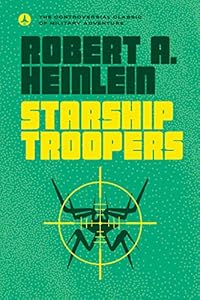
With Earth embroiled in a vast interplanetary war with the "Bugs," a young recruit in the Federal Reserves relates his experiences training in boot camp and as a junior officer in the Terran Mobile Infantry.Tags
Recommendations




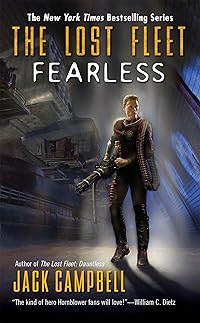
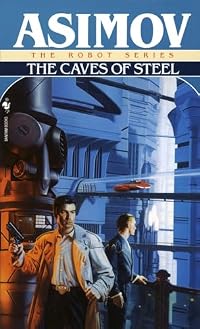
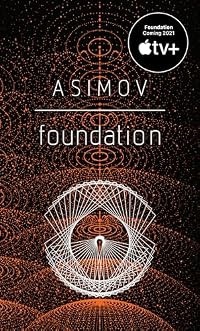
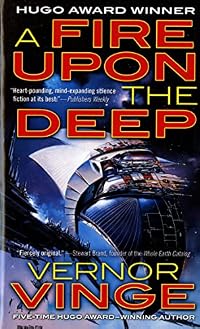
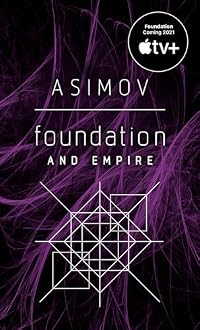
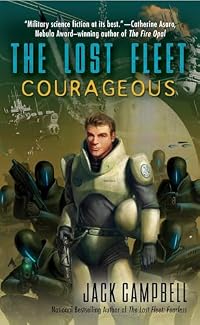
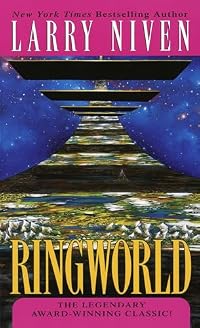
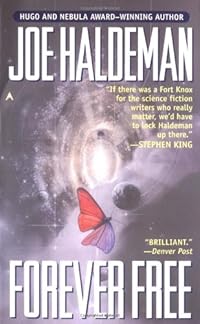
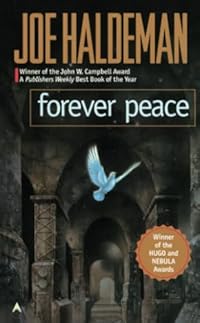

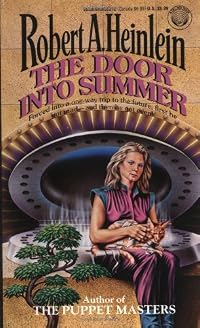
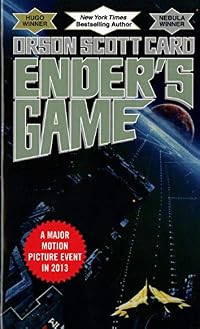
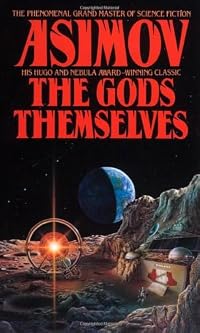

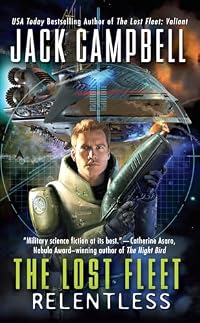
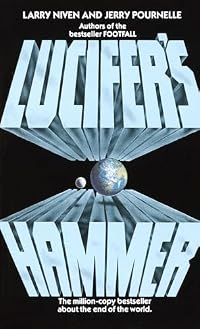
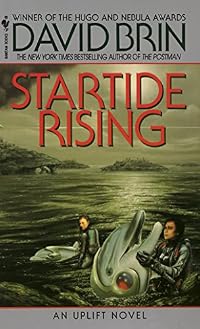
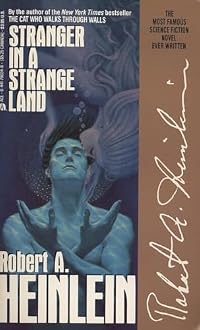


Member Recommendations
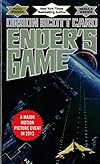
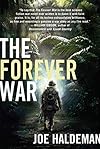
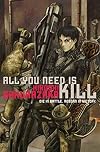
dClauzel Starship Troopers et All You Need Is Kill ont tous les deux la même intensité, avec de brèves périodes de forte violence pour une quête de la recherche du sens.
20

tottman This book reminded me of Starship Troopers, without the aliens. A fun, quick, military romp with a healthy suspension of disbelief.
11

dClauzel Des instantanés de guerre, avec des super soldats humains et des technologies déshumanisantes… ou est-ce l’inverse ? Bonus : des extra-terrestres.
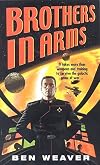

anonymous user Interesting thought on the military and their responsibilities in a space travelling society.
01
dClauzel Des soldats dans l’espace. Des extraterrestres. Des armures de combat. Vélocité. Fatal.
Member Reviews
Very preachy, with long stretches of philosophizing about the problems of "past" governments. Some of my dissatisfaction probably comes from me not agreeing with the author here. Granted, with Heinlein, I expect a certain amount of preachiness, but it's usually easier to just brush the stuff off as being a *character*'s philosophy. But the people espousing the philosophy here are speaking from a clearly successful society that has the advantage of seeing all the other societies collapse, which really makes it hard to distance the book's point of view from the characters' points of view. I might be able to take the militaristic view (successful volunteer soldiers are all people who have demonstrated a willingness to put the lives of the show more rest of society above their own, and therefore they should be the only ones who can vote) more seriously if it wasn't presented with the same level of seriousness as the theory that 20th century western civilization collapsed because we didn't spank our kids enough.
There's also not really much plot, and it's kind of boring. I guess it has that in common with real military life. I have never been in the military, so I can't really judge whether Heinlein has picked up on anything truly fundamental about military life. It *feels* alternately somewhat accurate (but not terribly earth-shattering) and ridiculously naïve (the (presumably straight) male soldiers, after being starved of female contact for months at a time seem to have little to say about sex other than that girls are pretty to look at). show less
There's also not really much plot, and it's kind of boring. I guess it has that in common with real military life. I have never been in the military, so I can't really judge whether Heinlein has picked up on anything truly fundamental about military life. It *feels* alternately somewhat accurate (but not terribly earth-shattering) and ridiculously naïve (the (presumably straight) male soldiers, after being starved of female contact for months at a time seem to have little to say about sex other than that girls are pretty to look at). show less
Holy crap, a Heinlein book I liked... whodathunk?
I borrowed this because Michelle told me that it is a good counter-point to [b:The Forever War|21611|The Forever War|Joe Haldeman|http://photo.goodreads.com/books/1167322714s/21611.jpg|423], and I would have to agree.
This book is more military than sci-fi... in fact, it feels more military, using sci fi "bug" wars to cover boot camp, military life, officer's school and war. You could probably discuss the nuances and topics in this book for days, but at the same time enjoy it on a more shallow level.
It's very *FUCK YEAH!* propaganda, and serious, but a shit tonne of fun at the same time. Maybe it's my military family background that made me appreciate it more? I don't know, but it is one show more of the more enjoyable military-sci-fi-classic pieces out there, imo. show less
I borrowed this because Michelle told me that it is a good counter-point to [b:The Forever War|21611|The Forever War|Joe Haldeman|http://photo.goodreads.com/books/1167322714s/21611.jpg|423], and I would have to agree.
This book is more military than sci-fi... in fact, it feels more military, using sci fi "bug" wars to cover boot camp, military life, officer's school and war. You could probably discuss the nuances and topics in this book for days, but at the same time enjoy it on a more shallow level.
It's very *FUCK YEAH!* propaganda, and serious, but a shit tonne of fun at the same time. Maybe it's my military family background that made me appreciate it more? I don't know, but it is one show more of the more enjoyable military-sci-fi-classic pieces out there, imo. show less
***Re-read November 2021 for a book club
I've read this book in my early twentieth, but apart from the general idea of a hero waging a war on some bug-like aliens I didn't remember a thing. So the re-read was in many ways a rediscovery of this book for me.
Short, fast-pacing and with some exhilarating battle scenes this book actually has very little plot movements. The hero, young man Juan Rico, in a spur of the moment decides to enlist and the apparent drive to this decision is his desire to get a franchise, which is limited to people who served in the military for a period of two years. The bigger part of the text is dedicated to discussing some moral and philosophical points of social organization. While the aggressive anti-communist show more position is understandable for an American author writing during the Cold War, some other ideas are really mind boggling.
One is the clear idolizing of the military in general and the over-the-board promotion of the battle experience as the epitome of feelings and the ultimate way to understanding the meaning of life and everything. This is especially troubling for a book written so soon after the World War II.
Another is the statement that any contact with another sentient civilization has to result in war.
Yet another, and the most troubling for me, is the social structure of the depicted society. The worldbuilding outside of the military world is very limited and made in few broad strokes.
We're to understand, that all the important governmental positions can only be taken by the veterans and they're the ones that can vote and be elected. It is mentioned, that the non-franchise citizens are protected by the law, but this is not expanded and I just don't believe there could be a just system that would work in such a society.
There is a corporal punishment, even public corporal punishment both in the military and for the non-franchise for administrative offenses. Rico and one other recruit go through such a public procedure during their military training and the scenes are awful.
There are almost no women in this world. All we know is that women make better pilots and that Rico's mother had to defer to her husband's decisions when it came to writing to her son. And how exactly would they perform public flogging on women?
And there is no opposition movements in this society. The only political decision everyone has to make is either to enlist or not. All the governmental decisions are taken as good and reasonable one, there are no anti-war movements and etc. Have you ever seen a society like this? show less
I've read this book in my early twentieth, but apart from the general idea of a hero waging a war on some bug-like aliens I didn't remember a thing. So the re-read was in many ways a rediscovery of this book for me.
Short, fast-pacing and with some exhilarating battle scenes this book actually has very little plot movements. The hero, young man Juan Rico, in a spur of the moment decides to enlist and the apparent drive to this decision is his desire to get a franchise, which is limited to people who served in the military for a period of two years. The bigger part of the text is dedicated to discussing some moral and philosophical points of social organization. While the aggressive anti-communist show more position is understandable for an American author writing during the Cold War, some other ideas are really mind boggling.
One is the clear idolizing of the military in general and the over-the-board promotion of the battle experience as the epitome of feelings and the ultimate way to understanding the meaning of life and everything. This is especially troubling for a book written so soon after the World War II.
Another is the statement that any contact with another sentient civilization has to result in war.
Yet another, and the most troubling for me, is the social structure of the depicted society. The worldbuilding outside of the military world is very limited and made in few broad strokes.
We're to understand, that all the important governmental positions can only be taken by the veterans and they're the ones that can vote and be elected. It is mentioned, that the non-franchise citizens are protected by the law, but this is not expanded and I just don't believe there could be a just system that would work in such a society.
There is a corporal punishment, even public corporal punishment both in the military and for the non-franchise for administrative offenses. Rico and one other recruit go through such a public procedure during their military training and the scenes are awful.
There are almost no women in this world. All we know is that women make better pilots and that Rico's mother had to defer to her husband's decisions when it came to writing to her son. And how exactly would they perform public flogging on women?
And there is no opposition movements in this society. The only political decision everyone has to make is either to enlist or not. All the governmental decisions are taken as good and reasonable one, there are no anti-war movements and etc. Have you ever seen a society like this? show less
Starship Troopers is a science fiction classic, a great military coming of age, and simply an incredible book.
You know the story. Boy joins space marines, learns how to use exotic weapons, meets interesting aliens, uses exotic weapons on them, becomes a hero. The story opens in media res, with a heart pounding combat drop and raid onto a planet held by the Skinnies, a secondary alien power. We meet the surface of the book: powered armor, atomic rockets, jump jets and flame throwers. But unlike a lot of military science fiction, this book is not about the battles. It's about the making of man, in high school, boot camp, barracks-room bull sessions, officer candidate school, and finally combat command.
I've never been in the military, but show more I read way too many combat memoirs and histories, and everything about war in Starship Troopers strikes me as exactly true, from the importance of building up esprit de corps, to the burden of command and the confusion of battle. It's a brilliant execution of the premise of "what does it take for infantry to survive on the modern atomic battlefield", and one that has inspired more than a few real military research programs in powered exoskeletons.
But Starship Troopers is so much more than that. It had been a while since I'd read it, and two things that I'd forgotten is how excited Johnny Rico is about everything. His enthusiasm for his world is infectious; you really want to see what happens next. Second is how taut the writing is. I don't think there's a single misplaced word in the first hundred pages, and the rest of the book slackens only slightly. This is Heinlein at the height of his powers as a wordsmith.
This book is controversial politically. I wouldn't go as far some people in calling it fascist, but Heinlein delivers body blows against some of the core conceits of liberal democracy, like universal voting and social work. Due to the basic flaw of an imbalance between authority and responsibility, society broke down in the late 20th century, helped along by a global war between an American-Anglo-Russian alliance and China. In the wake of this catastrophe, society was rebuilt by committees of veterans, which after several centuries has stabilized into a franchise granted by federal service. Service is probably military, but could be anything from hard labor terraforming to "counting the hairs on a caterpillar by feel." Anything to make it clear that the franchise is dearly bought.
This book is determined to drive through its core thesis that the only thing that matters is survival, but that the instinct to survive is best harnessed to moral sensibilities for the common good. That's the core ethos of the Mobile Infantry, in their extreme esprit de corps and mantra that "everybody drops, everybody fights." It seems to work, their organization is lean, self sufficient, unbelievable destruction, although I wonder how well it would hold up to the messy ambiguities of counter-insurgency and pacification rather than a war of extermination against the perfect communism of the alien Arachnoids.
This strong philosophical grounding separates Starship Troopers from its imitators, which postulate a universe of war without asking why. A second thing that's interesting is the lack of a gun fetish, aside from the Marauder Suit, which is mostly sketched at (you wear it, it's tough and can fly and has atomic rockets), there's very little of the overwrought descriptions of destruction that characterize the genre. As the book says, there's no such thing as a deadly weapon, only deadly people. Juan Rico is probably the nicest deadly person in fiction. show less
You know the story. Boy joins space marines, learns how to use exotic weapons, meets interesting aliens, uses exotic weapons on them, becomes a hero. The story opens in media res, with a heart pounding combat drop and raid onto a planet held by the Skinnies, a secondary alien power. We meet the surface of the book: powered armor, atomic rockets, jump jets and flame throwers. But unlike a lot of military science fiction, this book is not about the battles. It's about the making of man, in high school, boot camp, barracks-room bull sessions, officer candidate school, and finally combat command.
I've never been in the military, but show more I read way too many combat memoirs and histories, and everything about war in Starship Troopers strikes me as exactly true, from the importance of building up esprit de corps, to the burden of command and the confusion of battle. It's a brilliant execution of the premise of "what does it take for infantry to survive on the modern atomic battlefield", and one that has inspired more than a few real military research programs in powered exoskeletons.
But Starship Troopers is so much more than that. It had been a while since I'd read it, and two things that I'd forgotten is how excited Johnny Rico is about everything. His enthusiasm for his world is infectious; you really want to see what happens next. Second is how taut the writing is. I don't think there's a single misplaced word in the first hundred pages, and the rest of the book slackens only slightly. This is Heinlein at the height of his powers as a wordsmith.
This book is controversial politically. I wouldn't go as far some people in calling it fascist, but Heinlein delivers body blows against some of the core conceits of liberal democracy, like universal voting and social work. Due to the basic flaw of an imbalance between authority and responsibility, society broke down in the late 20th century, helped along by a global war between an American-Anglo-Russian alliance and China. In the wake of this catastrophe, society was rebuilt by committees of veterans, which after several centuries has stabilized into a franchise granted by federal service. Service is probably military, but could be anything from hard labor terraforming to "counting the hairs on a caterpillar by feel." Anything to make it clear that the franchise is dearly bought.
This book is determined to drive through its core thesis that the only thing that matters is survival, but that the instinct to survive is best harnessed to moral sensibilities for the common good. That's the core ethos of the Mobile Infantry, in their extreme esprit de corps and mantra that "everybody drops, everybody fights." It seems to work, their organization is lean, self sufficient, unbelievable destruction, although I wonder how well it would hold up to the messy ambiguities of counter-insurgency and pacification rather than a war of extermination against the perfect communism of the alien Arachnoids.
This strong philosophical grounding separates Starship Troopers from its imitators, which postulate a universe of war without asking why. A second thing that's interesting is the lack of a gun fetish, aside from the Marauder Suit, which is mostly sketched at (you wear it, it's tough and can fly and has atomic rockets), there's very little of the overwrought descriptions of destruction that characterize the genre. As the book says, there's no such thing as a deadly weapon, only deadly people. Juan Rico is probably the nicest deadly person in fiction. show less
Robert Heinlein's tale of Mobile Infantry member Juan "Johnnie" Rico's journey from a student unsure of his future to an experienced, but still nervous when it counts, 2nd Lieutenant and veteran of "The Bug War," treads a very fine line between satire of and love note to militarism. Heinlein's writing at times glorifies and honors the bonds built between soldiers as shown with Johnnie's relationships to his superior officers and his own father. But at other turns he lays out plain what so often rampant militarism can cause: soldiers with missing limbs, men dying in battles and wars that they don't even understand the purpose of, a war time atmosphere at home that can stifle civilian industry and rip families apart as men and women are show more drafted to replenish those lost at an unsustainable rate. Starship Troopers does well to demonstrate a lot of the mixed feelings people feel about war and veterans: an opposition to war and what it costs, but veneration for those who serve in it for their sacrifices. show less
It had been many years since I read this, and it's just as fascinating, infuriating, confusing and inspiring now as it was then. There are a lot of political overtones here, but it's not fascism or even militarism. Nor is his disdain for Marx hidden, or his disgust with Plato. But it still defies easy pegging - Heinlein was neither round nor square, and consequently trying to peg him often leads to a mismatched hole.
Some of the contexts are dated - some vague racism and superficial sexism, but read in the context of later Heinlein efforts you can certainly see the germination of his overall philosophy here.
Should be required reading for any high school History and Moral Philosophy class...
Some of the contexts are dated - some vague racism and superficial sexism, but read in the context of later Heinlein efforts you can certainly see the germination of his overall philosophy here.
Should be required reading for any high school History and Moral Philosophy class...
“The only good bug is a dead bug.”
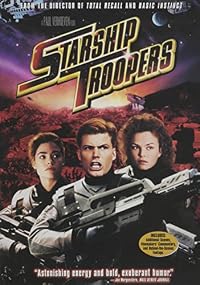
Fans of the 1997 movie that shares the name “Starship Troopers” will grieve to learn that this memorable phrase never occurs in the book. In fact, there’s so little common ground between the two that they might as well exist in different universes.
Paul Voerhoeven’s film is an anti-war satire that soldiers love because it makes war look cool. Robert A. Heinlen’s novel is something else: an experiment (in spaaaaace!) in extrapolating what could come after if the inherent instability of democracies overwhelms the stabilizers and tears them apart.
Democracies are prone to collapse because they’re prone to mob rule. This was the problem that kept men like James Madison and John Adams awake at show more night during the Constitutional Convention. Their solution, to separate powers and force a self-correcting competition for that power, has worked so far.
Plenty of dystopian sci-fi has explored democratic collapse and the rise of totalitarian empire. Heinlen offers something unique in his system of democratic militarism. Suffrage and political office are open to anyone who has served in the military and earned an honorable discharge, and military service is open to everyone. Thus anyone can have a voice in government, but no one gets that voice who hasn’t put their own skin on the line, proving their willingness to sacrifice their own interests for the collective good.
Heinlen makes the most positive case possible for such a system. If you choose not to serve, you can still lead a productive and fulfilling life. The narrative protagonist comes from generations of non-citizen non-combatants who are highly educated and wealthy. Not serving doesn’t make you a subservient underclass; it just means that individualistic civvies can’t game the system for their own selfish ends.
You can make a strong case from history that such a system wouldn’t work, but I appreciate the thought experiment. And really, I don’t think this is the beating heart of the novel (even if it generates the most arguments among fans and detractors as to whether or not this is proto-fascism).
This is really a love letter to soldiers set in a speculative political framework. It’s not even really a military thriller: if you’ve seen the movie and hope for loads of gung-ho action and bug guts, you’ll be crushed when you learn that half the novel is set in boot camp and the other half in OCS.
Sprinkled throughout are brief action sequences and vignettes about the deepening disaster of the war against the Pseudo-Arachnids. But despite cheering for humanity because I’m human, I couldn’t figure out who’s right and who’s wrong. Both the Terran Federation and the bugs are expansionists who want the same planets, so there’s little to distinguish the combatants in terms of their war aims.
In my reading of the novel, what transcends all political systems and all wars is the individual soldier. He trains, he learns his limits, he finds out what he’s made of. He fights for his unit, for his buddies, and for his leaders. He goes where’s sent, he kills what he’s told to kill, he survives the boredom, and he hopes to survive the excitement long enough to reminisce down at the veteran’s hall.
There’s a reason Heinlen dedicates the novel to a personal sergeant friend “and to all sergeants anywhere who have labored to make men out of boys.” Politics come and go. Nations rise and fall. Wars start and end. The soldier abides, and will abide, with honor, come what may. show less
Fans of the 1997 movie that shares the name “Starship Troopers” will grieve to learn that this memorable phrase never occurs in the book. In fact, there’s so little common ground between the two that they might as well exist in different universes.
Paul Voerhoeven’s film is an anti-war satire that soldiers love because it makes war look cool. Robert A. Heinlen’s novel is something else: an experiment (in spaaaaace!) in extrapolating what could come after if the inherent instability of democracies overwhelms the stabilizers and tears them apart.
Democracies are prone to collapse because they’re prone to mob rule. This was the problem that kept men like James Madison and John Adams awake at show more night during the Constitutional Convention. Their solution, to separate powers and force a self-correcting competition for that power, has worked so far.
Plenty of dystopian sci-fi has explored democratic collapse and the rise of totalitarian empire. Heinlen offers something unique in his system of democratic militarism. Suffrage and political office are open to anyone who has served in the military and earned an honorable discharge, and military service is open to everyone. Thus anyone can have a voice in government, but no one gets that voice who hasn’t put their own skin on the line, proving their willingness to sacrifice their own interests for the collective good.
Heinlen makes the most positive case possible for such a system. If you choose not to serve, you can still lead a productive and fulfilling life. The narrative protagonist comes from generations of non-citizen non-combatants who are highly educated and wealthy. Not serving doesn’t make you a subservient underclass; it just means that individualistic civvies can’t game the system for their own selfish ends.
You can make a strong case from history that such a system wouldn’t work, but I appreciate the thought experiment. And really, I don’t think this is the beating heart of the novel (even if it generates the most arguments among fans and detractors as to whether or not this is proto-fascism).
This is really a love letter to soldiers set in a speculative political framework. It’s not even really a military thriller: if you’ve seen the movie and hope for loads of gung-ho action and bug guts, you’ll be crushed when you learn that half the novel is set in boot camp and the other half in OCS.
Sprinkled throughout are brief action sequences and vignettes about the deepening disaster of the war against the Pseudo-Arachnids. But despite cheering for humanity because I’m human, I couldn’t figure out who’s right and who’s wrong. Both the Terran Federation and the bugs are expansionists who want the same planets, so there’s little to distinguish the combatants in terms of their war aims.
In my reading of the novel, what transcends all political systems and all wars is the individual soldier. He trains, he learns his limits, he finds out what he’s made of. He fights for his unit, for his buddies, and for his leaders. He goes where’s sent, he kills what he’s told to kill, he survives the boredom, and he hopes to survive the excitement long enough to reminisce down at the veteran’s hall.
There’s a reason Heinlen dedicates the novel to a personal sergeant friend “and to all sergeants anywhere who have labored to make men out of boys.” Politics come and go. Nations rise and fall. Wars start and end. The soldier abides, and will abide, with honor, come what may. show less
Members
- Recently Added By
Lists

Best Science Fiction Novels
816 works; 430 members

Best Military Science Fiction
57 works; 26 members
Survey of Classic Science Fiction
171 works; 48 members

NPRs your picks: top 100 Sci-Fi/Fantasy books
297 works; 79 members

Hugo Award Winning Novels
63 works; 23 members
Read the book and saw the movie
1,170 works; 192 members

Best First Contact Stories
33 works; 16 members

Hugo Awards - Best Novel
69 works; 10 members

S.F. Masterworks (Complete)
229 works; 15 members
Amazon's 100 Science Fiction & Fantasy Books to Read in a Lifetime
87 works; 23 members

SF Masterworks
193 works; 8 members

Easton Press Masterpieces of Science Fiction
30 works; 2 members

Science Fiction
42 works; 7 members
SF Masterworks
22 works; 3 members

Survey of Science Fiction and Fantasy
101 works; 13 members

75 Books Challenge Halloween Read "Official" Selections
71 works; 7 members

Libertarian Books
102 works; 19 members

Isaac Arthur’s Book Recommendations
98 works; 3 members
Speculative Fiction: The Award Winners
27 works; 5 members

Books Read in 2012 (Numbered)
168 works; 6 members

Books Read in 2004
198 works; 7 members

Recommended Science-Fiction Books
40 works; 3 members

Classical Conversations Challenge I Exposition
20 works; 1 member

Books Read in 2023
5,547 works; 145 members

Books We Love to Reread
688 works; 296 members

AbeBooks: 50 essential science fiction books
50 works; 6 members

Books Read in 2019
4,052 works; 108 members

You Couldn't Pay Me to Read That (Take 2)
203 works; 86 members

Books Read in 2010
631 works; 10 members

SWORDS GUNS BATTLES
30 works; 3 members

Blue Pyramid 1,276 Best Books of All Time
1,248 works; 32 members

Fiction For Men
142 works; 11 members

Generation Joshua
115 works; 3 members

Watched the Movie, Probably Won't Read the Book
185 works; 34 members

Read the Book, Hated the Movie
30 works; 24 members
1950s
340 works; 22 members

Books Read in 2012
815 works; 34 members
Favorite Science Fiction
452 works; 216 members
Author Information

461+ Works 173,934 Members
Robert Anson Heinlein was born on July 7, 1907 in Butler, Mo. The son of Rex Ivar and Bam Lyle Heinlein, Robert Heinlein had two older brothers, one younger brother, and three younger sisters. Moving to Kansas City, Mo., at a young age, Heinlein graduated from Central High School in 1924 and attended one year of college at Kansas City Community show more College. Following in his older brother's footsteps, Heinlein entered the Navel Academy in 1925. After contracting pulmonary tuberculosis, of which he was later cured, Heinlein retired from the Navy and married Leslyn MacDonald. Heinlein was said to have held jobs in real estate and photography, before he began working as a staff writer for Upton Sinclair's EPIC News in 1938. Still needing money desperately, Heinlein entered a writing contest sponsored by the science fiction magazine Thrilling Wonder Stories. Heinlein wrote and submitted the story "Life-Line," which went on to win the contest. This guaranteed Heinlein a future in writing. Using his real name and the pen names Caleb Saunders, Anson MacDonald, Lyle Monroe, John Riverside, and Simon York, Heinlein wrote numerous novels including For Us the Living, Methuselah's Children, and Starship Troopers, which was adapted into a big-budget film for Tri-Star Pictures in 1997. The Science Fiction Writers of America named Heinlein its first Grand Master in 1974, presented 1975. Officers and past presidents of the Association select a living writer for lifetime achievement. Also, the Science Fiction and Fantasy Hall of Fame inducted Heinlein in 1998. Heinlein died in 1988 from emphysema and other related health problems. Heinlein's remains were scattered from the stern of a Navy warship off the coast of California. (Bowker Author Biography) show less
Some Editions
Awards and Honors
Awards
Distinctions
Notable Lists
Series

Belongs to Publisher Series
Signet SF (D1987)
Tempus fugit (8)
Artefakty (36)
Urania [Mondadori] (276)
J'ai lu (562)
SF Masterworks (New design)
Work Relationships
Is contained in
Has the adaptation
Has as a study
Common Knowledge
- Canonical title
- Starship Troopers
- Original title
- Starship Troopers
- Alternate titles*
- Starship Troopers
- Original publication date
- 1959-11-05
- People/Characters
- Term Lance Cpl. Juan 'Johnnie' Rico; Career Ship's Sergeant "Jelly" Jelal; Sergeant Charles "Charlie" Zim; Carmencita Ibañez; Ted Hendrick; Capt. Ian Frankel, MI (show all 12); Lt. Jacques Spieksma, MI; Pat Leivy; "Kitten" Smith; PFC Dutch Bamburger; Emilio Rico; Bernardo "Bennie" Montez
- Important places
- Rodger Young; Camp Arthur Currie; Sanctuary; Camp Sergeant Spooky Smith; Luna Base; Espiritu Santo, Sanctuary
- Related movies
- Starship Troopers (1997 | IMDb); Starship Troopers (1997); Roughnecks: The Starship Troopers Chronicles (1999 | IMDb); Uchû no senshi (1989 | IMDb)
- Dedication
- To "Sarge" Arthur George Smith - SOLDIER, CITIZEN, SCIENTIST - AND TO ALL SERGEANTS ANYWHERE WHO HAVE LABORED TO MAKE MEN OUT OF BOYS. R.A.H.
- First words
- I always get the shakes before a drop.
- Quotations
- Anyone who clings to the historically untrue-and thoroughly immoral-doctrine that 'violence never settles anything' I would advise to conjure up the ghosts of Napoleon Bonaparte and of the Duke of Wellington and let them deba... (show all)te it. The ghost of Hitler could referee, and the jury might well be the Dodo, the Great Auk, and the Passenger Pigeon. Violence, naked force, has settled more issues in history than has any other factor, and contrary opinion is wishful thinking at its worst. Breeds that forget this basic truth have always paid for it with their lives and freedom.
"The noblest fate that a man can endure is to place his own mortal body betwen his loved home and war's desolation." - Last words
- (Click to show. Warning: May contain spoilers.)"To the everlasting glory of the Infantry—"
- Original language
- English
- Canonical DDC/MDS
- 813.087623
*Some information comes from Common Knowledge in other languages. Click "Edit" for more information.
Classifications
- Genres
- Science Fiction, Fiction and Literature
- DDC/MDS
- 813.087623 — Literature & rhetoric American literature in English American fiction in English By type Genre fiction Adventure fiction Speculative fiction Science fiction Military science fiction
- LCC
- PZ7 .H368 .S — Language and Literature Fiction and juvenile belles lettres Fiction and juvenile belles lettres Juvenile belles lettres
- BISAC
Statistics
- Members
- 13,486
- Popularity
- 560
- Reviews
- 252
- Rating
- (3.84)
- Languages
- 21 — Catalan, Czech, Dutch, English, Estonian, Finnish, French, German, Greek, Hungarian, Italian, Korean, Polish, Romanian, Russian, Serbian, Slovenian, Spanish, Swedish, Turkish, Portuguese (Portugal)
- Media
- Paper, Audiobook, Ebook
- ISBNs
- 117
- ASINs
- 71