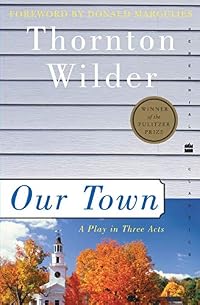
Our Town
by Thornton Wilder
On This Page
Description
This beautiful new edition features an eye-opening Afterword written by Tappan Wilder that includes Thornton Wilder's unpublished notes and other illuminating photographs and documentary material. Our Town was first produced and published in 1938 to wide acclaim. This Pulitzer Prize-winning drama of life in the small village of Grover's Corners, an allegorical representation of all life, has become a classic. It is Thornton Wilder's most renowned and most frequently performed play.Tags
Recommendations



Member Recommendations

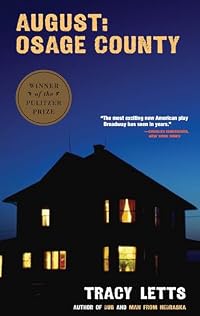
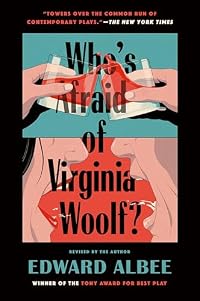
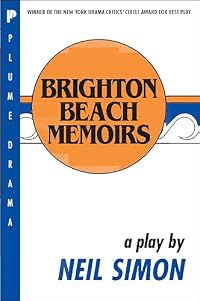
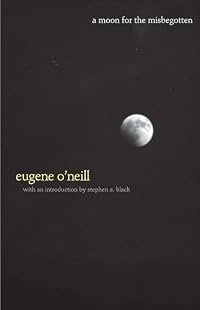
CGlanovsky Both (in vastly different tones) play with the awareness that the events are part of a play
CGlanovsky Especially the final graveyard scene.
Member Reviews
The last time I read this was in AP English back in 1983. 😳 After reading TOM LAKE, I had to revisit it, and I'm so glad I did. I remember finding it pointless at the tender and stupid age of 17. What the hell was wrong with me? Such a poignant reminder to carpe diem--especially the most mundane moments of our lives because going about our daily business is the life of living and we must cherish every single second. Thanks, TW, for the reminder.
I absolutely love this play, but seeing it performed again this summer was an emotional experience. It was the 25th anniversary of my Mom's death and she performed as the lead in high school. The play is a celebration of life, both its simple routines and its big moments. Seeing it and rereading it was incredibly moving. I can't imagine experiencing this play and not appreciating the beauty of life a bit more when you are done.
"I can’t.
I can’t go on. It goes so fast.
We don’t have time to look at one another.
I didn’t realize. All that was going on in life,
and we never noticed.
Take me back – up the hill – to my grave.
But first: Wait! One more look.
Good-by, Good-by, world.
Good-by, Grover’s Corners.
Mama and Papa. show more
Good-bye to clocks ticking.
And Mama’s sunflowers.
And food and coffee.
And new-ironed dresses and hot baths.
And sleeping and waking up.
Oh, earth, you’re too wonderful
for anybody to realize you.
Do any human beings ever realize life
while they live it? – every, every minute?" show less
"I can’t.
I can’t go on. It goes so fast.
We don’t have time to look at one another.
I didn’t realize. All that was going on in life,
and we never noticed.
Take me back – up the hill – to my grave.
But first: Wait! One more look.
Good-by, Good-by, world.
Good-by, Grover’s Corners.
Mama and Papa. show more
Good-bye to clocks ticking.
And Mama’s sunflowers.
And food and coffee.
And new-ironed dresses and hot baths.
And sleeping and waking up.
Oh, earth, you’re too wonderful
for anybody to realize you.
Do any human beings ever realize life
while they live it? – every, every minute?" show less
George: “Ma, I don’t want to grow old. Why’s everybody pushing me so?”
Emily: “Why can’t I stay for a while just as I am? Let’s go away…”
The groom and the bride lament to their respective parents on their wedding day – that universal desire at some points in a person’s life – to stay young, if only time would stand still just for a moment.
“Our Town” is an engaging and unpretentious play both in story and in style. The plot is life – from the daily lives, to love and marriage, and finally to death covering 13 years, ending in 1913. (Notice anything?) While the pace of life is slower than ours, the town folks, complete with a town drunk, is a comprehensible Norman Rockwell kind of mix. The stage setting is show more equally guileless, with sparse furniture, and a narrator as the stage manager speaking to the audience. Reading the words, I recreated the entire play on stage in my mind.
The most intriguing and I assume to be groundbreaking at the time of its first production in 1938 is its messages of death. It’s one thing to be coming out of WWI, having survived the Great Depression, and at the cusp of entering WWII, but it’s quite another to have the normalcy of death presented on stage. The affinity that the audience develops towards the cast members is instead affronted with an assault of reality that one comes to the theater to escape. I love this quote from Thornton where he challenged the norm of theatre then:
“In his 1957 introduction ‘Three Plays’, Wilder wrote of the loss of theatergoing pleasure he began to experience in the decade before writing ‘Our Town’, when he ‘cease to believe in the stories [he] saw presented there… The theatre was not only inadequate, it was evasive… I found the word for it: it aimed to be soothing. The tragic had no heat; the comic had no bite; the social criticism failed to indict us with responsibility.’”
“Our Town” is not meant to be soothing. While the ladies of the 1938 “emerged red-eyed, swollen faced, and mascara-stained”, I, slightly hardened, felt the emotions slowly seep through my body as I processed Thornton’s words. The dead repeatedly emphasized the living does not SEE their lives, blindly living their lives, not in a meaningful way, never comprehending. The living does not understand. It’s as though life is wasted on the living!
In today’s time, I sit in sold out theaters of family friendly shows that leave me drenched in artificial sweetener. Or I sit in partially filled theaters of heavy-subject shows where I exit feeling as though I was smacked upside the head, and I still want to discuss it endlessly. I choose the latter. I choose “Our Town”, or perhaps “Our Lives”.
Some Quotes:
On Life or On Death? – you decide:
“You’ve got to love life to have life, and you’ve got to have life to love life… It’s what they call a vicious circle.”
And
“Oh, earth, you’re too wonderful for anybody to realize you.”
And
“Yes, now you know. Now you know! That’s what it was to be alive. To move about in a cloud of ignorance; to go up and down trampling on the feelings of those… of those about you. To spend and waste time as though you had a million years. To be always at the mercy of one self-centered passion, or another. Now you know – that’s the happy existence you wanted to go back to. Ignorance and blindness.” show less
Emily: “Why can’t I stay for a while just as I am? Let’s go away…”
The groom and the bride lament to their respective parents on their wedding day – that universal desire at some points in a person’s life – to stay young, if only time would stand still just for a moment.
“Our Town” is an engaging and unpretentious play both in story and in style. The plot is life – from the daily lives, to love and marriage, and finally to death covering 13 years, ending in 1913. (Notice anything?) While the pace of life is slower than ours, the town folks, complete with a town drunk, is a comprehensible Norman Rockwell kind of mix. The stage setting is show more equally guileless, with sparse furniture, and a narrator as the stage manager speaking to the audience. Reading the words, I recreated the entire play on stage in my mind.
The most intriguing and I assume to be groundbreaking at the time of its first production in 1938 is its messages of death. It’s one thing to be coming out of WWI, having survived the Great Depression, and at the cusp of entering WWII, but it’s quite another to have the normalcy of death presented on stage. The affinity that the audience develops towards the cast members is instead affronted with an assault of reality that one comes to the theater to escape. I love this quote from Thornton where he challenged the norm of theatre then:
“In his 1957 introduction ‘Three Plays’, Wilder wrote of the loss of theatergoing pleasure he began to experience in the decade before writing ‘Our Town’, when he ‘cease to believe in the stories [he] saw presented there… The theatre was not only inadequate, it was evasive… I found the word for it: it aimed to be soothing. The tragic had no heat; the comic had no bite; the social criticism failed to indict us with responsibility.’”
“Our Town” is not meant to be soothing. While the ladies of the 1938 “emerged red-eyed, swollen faced, and mascara-stained”, I, slightly hardened, felt the emotions slowly seep through my body as I processed Thornton’s words. The dead repeatedly emphasized the living does not SEE their lives, blindly living their lives, not in a meaningful way, never comprehending. The living does not understand. It’s as though life is wasted on the living!
In today’s time, I sit in sold out theaters of family friendly shows that leave me drenched in artificial sweetener. Or I sit in partially filled theaters of heavy-subject shows where I exit feeling as though I was smacked upside the head, and I still want to discuss it endlessly. I choose the latter. I choose “Our Town”, or perhaps “Our Lives”.
Some Quotes:
On Life or On Death? – you decide:
“You’ve got to love life to have life, and you’ve got to have life to love life… It’s what they call a vicious circle.”
And
“Oh, earth, you’re too wonderful for anybody to realize you.”
And
“Yes, now you know. Now you know! That’s what it was to be alive. To move about in a cloud of ignorance; to go up and down trampling on the feelings of those… of those about you. To spend and waste time as though you had a million years. To be always at the mercy of one self-centered passion, or another. Now you know – that’s the happy existence you wanted to go back to. Ignorance and blindness.” show less
Profound. Ground-breaking. ‘Our Town’ is sometimes disliked because of its simplicity, but I think that misses the point. Wilder made conscious, artistic decisions to avoid a lot of adornment and action because that would have taken away from his messages about the human condition. Putting the phases of life into a skeletal framework and adding occasional cosmic and prescient perspectives are what force the audience to see how brief our lives are, and from there introspection can begin. As early critic Brooks Atkinson of the New York Times put it, the play “transmuted the simple events of human life into universal reverie” which contained nothing less than “a fragment of the immortal truth.”
Donald Margulies points out in the show more introduction to this edition that Capra’s ‘It’s a Wonderful Life’ owes a great deal to ‘Our Town’, without expanding on that. I don’t disagree, but I think that while they ask some of the same questions, such as what’s the meaning of this life and do we make a difference being here, Capra’s answers are positive and joyful and sentimental, whereas Wilder is on the fence, or at least, he lets us interpret. It’s in our power to some extent, but we really need to open our eyes to appreciate what we have and the people around us in our everyday lives. However, our lives are going to be all-too-brief and all-too-small in the grand scheme of things regardless. And yet, he says, “There’s something way down deep that’s eternal about every human being.” We are both meaningful and meaningless at the same time.
This is not ‘Our Town’, it’s ‘Our Lives’, or ‘Our Humanity’.
The first audiences that saw ‘Our Town’ performed had lived through WWI, were just getting through the great depression, and saw the world careening towards WWII. They were living in the age of radio, not television or the internet. I think the conditions were right for such a play, and audience members responded in many cases by openly weeping at the end. It’s harder to translate such a quiet, introspective play to the present world, which is focused more on action and movement, and to youth especially, because it helps to have perspective that comes with having lived more of life (and I don’t say that to be snarky). As with Beckett’s ‘Waiting for Godot’, it may evoke the reaction that “not enough happens”, but think about it.
Lastly, a note on the connection discovered to the book I read previously, which was Erica Jong’s ‘How to Save Your Own Life’ (which I thought would be quite a stretch) – Jong thinly veils Henry Miller in her character Kurt Hammer, and in the notes to ‘Our Town’ it points out that the first New York performance on February 4, 1938 was held in none other but the Henry Miller Theater. Go figure. show less
Donald Margulies points out in the show more introduction to this edition that Capra’s ‘It’s a Wonderful Life’ owes a great deal to ‘Our Town’, without expanding on that. I don’t disagree, but I think that while they ask some of the same questions, such as what’s the meaning of this life and do we make a difference being here, Capra’s answers are positive and joyful and sentimental, whereas Wilder is on the fence, or at least, he lets us interpret. It’s in our power to some extent, but we really need to open our eyes to appreciate what we have and the people around us in our everyday lives. However, our lives are going to be all-too-brief and all-too-small in the grand scheme of things regardless. And yet, he says, “There’s something way down deep that’s eternal about every human being.” We are both meaningful and meaningless at the same time.
This is not ‘Our Town’, it’s ‘Our Lives’, or ‘Our Humanity’.
The first audiences that saw ‘Our Town’ performed had lived through WWI, were just getting through the great depression, and saw the world careening towards WWII. They were living in the age of radio, not television or the internet. I think the conditions were right for such a play, and audience members responded in many cases by openly weeping at the end. It’s harder to translate such a quiet, introspective play to the present world, which is focused more on action and movement, and to youth especially, because it helps to have perspective that comes with having lived more of life (and I don’t say that to be snarky). As with Beckett’s ‘Waiting for Godot’, it may evoke the reaction that “not enough happens”, but think about it.
Lastly, a note on the connection discovered to the book I read previously, which was Erica Jong’s ‘How to Save Your Own Life’ (which I thought would be quite a stretch) – Jong thinly veils Henry Miller in her character Kurt Hammer, and in the notes to ‘Our Town’ it points out that the first New York performance on February 4, 1938 was held in none other but the Henry Miller Theater. Go figure. show less
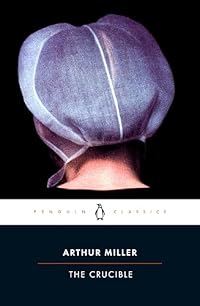
I said about The Crucible that it communicated, in the book, a frenzied action best of all plays I’ve read. I’d like to add an addendum: Thornton Wilder’s Our Town is the best play I’ve read. Ever.
Own Town is very straightforward in concept: It’s Americana. It’s the Normal Rockwell of plays, a small New Hampshire town around the turn of the 20th century, untroubled by the inconveniences of the modern day like telephones, automobiles, and television. No, there are no people of color in this play, but that’s a historical effect more than a racial one. Birmingham this isn’t.
Our Town is not very straightforward in presentation. It begins with no set and no curtain, a blank stage, the house lights up. The stage manager (a show more character, not the actual stage manager) brings out the props, signaling the play has begun. Immediately he breaks the fourth wall. Turning to the audience, his first line is “This play is called ‘Our Town’.” It continues like this, with the stage manager describing aspects of the town, Grover’s Corner, and it’s inhabitants, primarily two families but other minor characters appear as well, such as the church choir director and the town policeman.
As is explicitly said in the play, the first act is about daily life, the second act is about love and marriage, and you can guess what the third act is about. The third act is Thornton Wilder’s Tour de Force. He rips your heart out. Characters you like but didn’t know you care about will make you weep. Underneath it all, the dead have a curious, secret knowledge that is inherently unknowable during life. A newly-dead woman, faced with a brief glimpse of her old life is brought to tears and utters “I didn’t realize. So all that was going on and we never noticed.”
Thornton Wilder responds, “The saints and poets, maybe—they do some.”
Lines I loved:
- "People are meant to go through life two by two. 'taint natural to be lonesome."
- …I want you to try and remember what it was like to have been very young. And particularly the days when you were first in love; when you were like a person sleepwalking, and you didn’t quite see the street you were in, and didn’t quite hear everything that was said to you. You’re just a little bit crazy.
- We all know that something is eternal. And it ain't houses and it ain’t names, and it ain’t earth, and it ain’t even the stars… everybody knows in their bones that something is eternal, and that something has to do with human beings. All the greatest people ever lived have been telling us that for five thousand years and yet you’d be surprised how people are always losing hold of it.
- “Oh, earth, you’re too wonderful for anybody to realize you. Do any human beings ever realize life while they live it?—every, every minute?”
“No. (Pause) The saints and poets, maybe—they do some.”
- I never realized before how troubled and how... how in the dark live persons are.... From morning till night, that's all they are — troubled. show less
Own Town is very straightforward in concept: It’s Americana. It’s the Normal Rockwell of plays, a small New Hampshire town around the turn of the 20th century, untroubled by the inconveniences of the modern day like telephones, automobiles, and television. No, there are no people of color in this play, but that’s a historical effect more than a racial one. Birmingham this isn’t.
Our Town is not very straightforward in presentation. It begins with no set and no curtain, a blank stage, the house lights up. The stage manager (a show more character, not the actual stage manager) brings out the props, signaling the play has begun. Immediately he breaks the fourth wall. Turning to the audience, his first line is “This play is called ‘Our Town’.” It continues like this, with the stage manager describing aspects of the town, Grover’s Corner, and it’s inhabitants, primarily two families but other minor characters appear as well, such as the church choir director and the town policeman.
As is explicitly said in the play, the first act is about daily life, the second act is about love and marriage, and you can guess what the third act is about. The third act is Thornton Wilder’s Tour de Force. He rips your heart out. Characters you like but didn’t know you care about will make you weep. Underneath it all, the dead have a curious, secret knowledge that is inherently unknowable during life. A newly-dead woman, faced with a brief glimpse of her old life is brought to tears and utters “I didn’t realize. So all that was going on and we never noticed.”
Thornton Wilder responds, “The saints and poets, maybe—they do some.”
Lines I loved:
- "People are meant to go through life two by two. 'taint natural to be lonesome."
- …I want you to try and remember what it was like to have been very young. And particularly the days when you were first in love; when you were like a person sleepwalking, and you didn’t quite see the street you were in, and didn’t quite hear everything that was said to you. You’re just a little bit crazy.
- We all know that something is eternal. And it ain't houses and it ain’t names, and it ain’t earth, and it ain’t even the stars… everybody knows in their bones that something is eternal, and that something has to do with human beings. All the greatest people ever lived have been telling us that for five thousand years and yet you’d be surprised how people are always losing hold of it.
- “Oh, earth, you’re too wonderful for anybody to realize you. Do any human beings ever realize life while they live it?—every, every minute?”
“No. (Pause) The saints and poets, maybe—they do some.”
- I never realized before how troubled and how... how in the dark live persons are.... From morning till night, that's all they are — troubled. show less
All I knew about this play before reading it was the following: the title was Our Town, it was set in Grover’s Corners, the main character was called the stage manager, and it was written by Thornton Wilder. And honestly that’s the best way to go into this play, without spoilers, because I had no expectations and was totally blindsided by the third act. It seems like the sort of play that is made or broken by the production you see it in or perhaps the teacher who teaches it to you, if it’s taught in school. It’s done with a minimalist set and characters miming a lot of their actions, which may seem silly but seems to have a dramatic reason. Overall, I’m glad to finally have seen what the fuss was about. It was a lot more show more serious than I thought it would be, and it is certainly worth reading.
I’d like to read more about its development to really appreciate its place in drama history, particularly its breaking of the fourth wall. The foreword in the Harper Perennial Modern Classics edition is a good starting point, but there has to be a book about drama history in general or U.S. drama history in particular that goes into more detail. show less
I’d like to read more about its development to really appreciate its place in drama history, particularly its breaking of the fourth wall. The foreword in the Harper Perennial Modern Classics edition is a good starting point, but there has to be a book about drama history in general or U.S. drama history in particular that goes into more detail. show less
Rereading Our Town was a breath of fresh air. I remember having mixed feelings about the play in high school. However, I have a much improved impression of it as an adult.One common criticism of this play is that nothing seems to happen. However, I would suggest that the important elements in the play do not depend upon what happens. The action of the play is not the “thing.” Instead we are really treated to the emotion and reactions of the characters. And somehow, this provides the action of the play. It is the memorable reactions of the teenagers about to get married that engage the reader rather than the marriage itself. It is the character’s reaction to her own death that is gripping, rather than her death itself. The other show more element of the play that is exceptional is the way the author draws the reader into the heart of the town in a folksy, homey authentic manner. It does not feel coerced. Rather, one feels invited into the play like an invitation to a friend’s house. While the play is dated in certain ways, it does not affect its ability to feel like a play about any person in any city. show less
Members
- Recently Added By
Lists

Plays I Like
230 works; 31 members

1970s
657 works; 23 members

Books Mentioned in The Wedding Planner's Daughter series
107 works; 2 members

Five star books
1,755 works; 107 members
1:28 p.m.'s 350 Stage Plays Challenge
94 works; 3 members

Well-Educated Mind
150 works; 3 members

Books Read in 2022
5,164 works; 113 members
Best Books of the 20th Century
193 works; 5 members

Greatest Books, allegedly
484 works; 9 members

AP Lit
363 works; 6 members
Essential/Recognized Stage Plays
115 works; 4 members

The Well-Educated Mind, Susan Wise Bauer, 2016
179 works; 3 members
r/acting on Reddit - Essential Plays
44 works; 2 members

Recommended Reading : 600 Classics Reviewed, Editors of Salem Press, 2015
634 works; 6 members
Books in Riverdale
123 works; 3 members
My Play Collection
769 works; 3 members

Next Plays / 2025
352 works; 1 member

Plays I Saw / 2025
37 works; 1 member
School Made Us Read It
380 works; 196 members

Wishlist
71 works; 1 member
Recommendations by Peter Kreeft
45 works; 4 members

Every Non-Musical Play Nominated for a Tony Award
64 works; 3 members

Writers In Public Domain 2026
90 works; 1 member

Books Read in 2004
196 works; 7 members
Stage Plays/Screenplays/Dialogues/Anything Dialogue-Storytelling Related
81 works; 2 members

New England Books
101 works; 10 members

Books set in high school
89 works; 6 members

Books You Read During High School (For School)
301 works; 53 members
Books Set in Small Towns and Villages
278 works; 16 members
Women's Stories
88 works; 13 members

Sonlight Books
1,487 works; 25 members
The American Experience
173 works; 18 members
Best of American Literature
146 works; 9 members

Meditations on Death
18 works; 3 members
American Lit for Eng 11 Research Project
368 works; 6 members
Blue Pyramid 1,276 Best Books of All Time
1,248 works; 32 members

100 Most Recommended Works
100 works; 11 members

1930s
262 works; 5 members
Favourite Books
1,817 works; 316 members
Small Town Fiction
66 works; 13 members

Mensa for Kids Excellence in Reading Award Program (Grades 9-12)
116 works; 5 members

2018 ED Reads
4 works; 1 member

Dead narrators
50 works; 4 members
Mensa for Kids Excellence in Reading Award Program (Grades 9-12)
116 works; 3 members

1964 College Preparatory Reading List
202 works; 8 members
The Well-Educated Mind Reading Challenge
75 works; 7 members

Tom's Bookstore
346 works; 2 members

Read the book and saw the movie
1,170 works; 195 members

bound
100 works; 1 member
Author Information

One of the most honored and versatile of modern writers, Thornton Wilder combined a career as a successful novelist with work for the theater that made him one of this century's outstanding dramatists. It was an early short novel, however, that first brought him fame. The Bridge of San Luis Rey (1927), a bestseller that won the Pulitzer Prize in show more 1927, is the story of a group of assorted people who happen to be on a bridge in Peru when it collapses. Ingeniously constructed and rich in its philosophical implications about fate and synchronicity, Wilder's book would seem to be the first well-known example of a formula that has become a cliche in popular literature. His attraction to classical themes is manifested in The Woman of Andros (1930), a tragedy about young love in pre-Christian Greece, and The Ides of March (1948), set in the time of Julius Caesar and told in letters and documents covering a long span of years. Heaven's My Destination (1934), is a seriocomic and picaresque story about a young book salesman traveling through the Midwest during the early years of the Great Depression.Theophilus North (1973), Wilder's last novel, disappointed many reviewers, but it provided its author with opportunities to offer some wry observations on the life of the idle rich in Newport during the summer of 1926 and to ponder in the story of his alter ego what might have happened if Wilder had stayed home, so to speak, instead of becoming Thornton Wilder. As a serious writer of fiction, Wilder's main claim rests on The Eighth Day (1967), an intellectual thriller, which the N.Y. Times called "the most substantial fiction of his career." It won the National Book Award for fiction in 1968. (Bowker Author Biography) show less
Some Editions
Awards and Honors
Awards
Series
Belongs to Publisher Series
Work Relationships
Is contained in
Has the adaptation
Is abridged in
Inspired
Has as a supplement
Has as a student's study guide
Common Knowledge
- Canonical title
- Our Town
- Original title
- Our Town
- Original publication date
- 1938
- People/Characters
- The Stage Manager; Doc Gibbs; Mrs. Gibbs; Mr. Webb; Mrs. Webb; George Gibbs (show all 13); Emily Webb; Howie Newsome; Si Crowell; Simon Stimson; Mrs. Soames; Sam Craig; Joe Stoddard
- Important places
- Grover's Corners, New Hampshire, USA
- Related movies
- Our Town (1940 | IMDb); Uri dongne (2007 | IMDb); Our Town (2003 | IMDb); Producers' Showcase: Our Town (1954 | IMDb); Our Town (1977 | IMDb)
- Dedication
- To Alexander Woollcott of Castleton Township, Rutland County, Vermont
- First words
- This play is called "Our Town."
- Quotations
- Emily: Do any human beings ever realize life while they live it? - every, every minute?
Stage manager: No. (Pause) the saints and poets, maybe - they do some. - Last words
- (Click to show. Warning: May contain spoilers.)Hm...Eleven o'clock in Grover's Corners. - You get a good rest, too. Good night.
- Blurbers
- Albee, Edward
- Original language
- English
Classifications
Statistics
- Members
- 5,872
- Popularity
- 2,190
- Reviews
- 80
- Rating
- (3.70)
- Languages
- 9 — Catalan, Dutch, English, French, German, Italian, Portuguese, Spanish, Turkish
- Media
- Paper, Audiobook, Ebook
- ISBNs
- 51
- UPCs
- 3
- ASINs
- 53