On This Page
Description
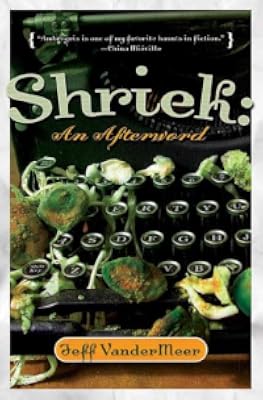
An epic yet personal look at several decades of life, love, and death in the imaginary city of Ambergris—previously chronicled in Jeff VanderMeer’s acclaimed City of Saints & Madmen—Shriek: An Afterword relates the scandalous, heartbreaking, and horrifying secret history of two squabbling siblings and their confidantes, protectors, and enemies.Narrated with flamboyant intensity and under increasingly urgent conditions by ex-society figure Janice Shriek, this afterword presents a vivid show more gallery of characters and events, emphasizing the adventures of Janice’s brother Duncan, a historian obsessed with a doomed love affair and a secret that may kill or transform him; a war between rival publishing houses that will change Ambergris forever; and the gray caps, a marginalized people armed with advanced fungal technologies who have been waiting underground for their chance to mold the future of the city.Part academic treatise, part tell-all biography, after this introduction to the Family Shriek, you’ll never look at history in quite the same way again. show lessTags
Recommendations


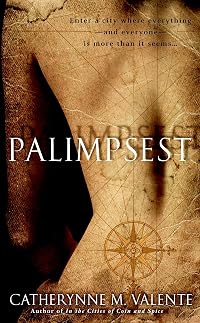
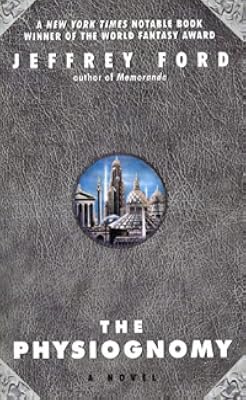
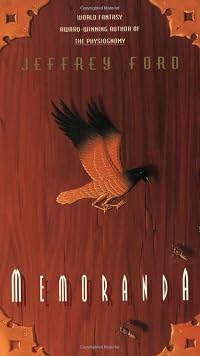
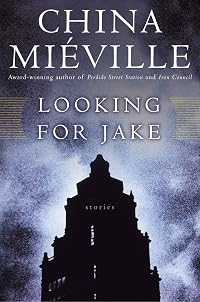










Member Recommendations

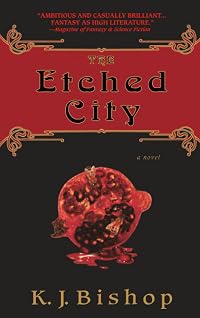
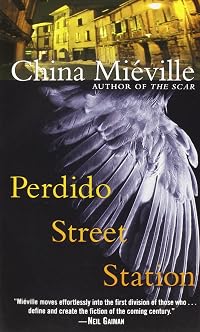
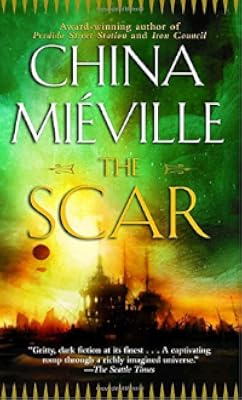
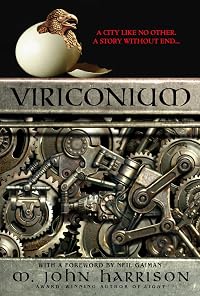
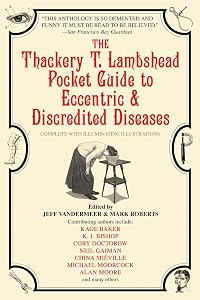
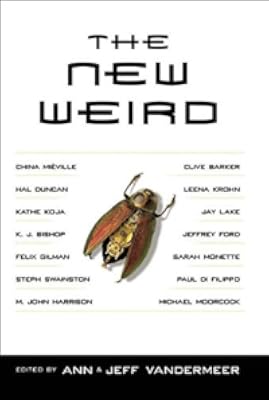
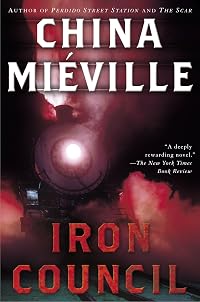
kinsey_m Two works by the same author, maybe his best.
Member Reviews
Janice Shriek narrates the story of her brother, Duncan's life, his rise as an eminent historian and his long fall as his theories about the relationship between Ambergris and the city's original inhabitants the Grey Caps prove too strange and terrible and weird. It's also about Janice's life, peaking as the head of the New Art movement before dwindling to her own long ignominy, and, of course, a brief history of Ambergris in the years before during and after a terrible war, and the even more terrible things that seem to be about to happen.
A Proustian exercise in the evocation of memory and emotion through a glittering slice of social, political and cultural upheaval, this is a marvelous approach to fantasy, powerfully and compellingly show more and beautifully written, informed by a singular vision with deep undercurrents of horror and unease. show less
A Proustian exercise in the evocation of memory and emotion through a glittering slice of social, political and cultural upheaval, this is a marvelous approach to fantasy, powerfully and compellingly show more and beautifully written, informed by a singular vision with deep undercurrents of horror and unease. show less
A fictional biographical account written about a fictional person by his fictional sister which also includes history and anecdotes about the fictional city of Ambergris in the form of an afterword to a fictional book. With me so far? Then I shall endeavour to fill in the details to make it more clear. Let's start with the narrator and her subject. Janice Shriek is our guide and while not being entirely likeable she doesn't skip the parts which show her in a bad light. We first met Janice and her subject, her brother Duncan, in City of Saints and Madmen though you don't really need to read that one to understand what's going on here. Duncan is a historian whose thoughts and theories have been vilified to the extent that he's no longer show more welcomed at the publishing houses anymore and would probably have become a forgotten part of current events if it wasn't for his former student and lover, Mary Sabon, who has become his greatest critic and who is currently the toast of the town.
The first part of the book details the history of the family Shriek. The death of their father at an early age, the subsequent move to Ambergris, the rise and fall of both Duncan and Janice within society's movers and shakers and Duncan's research including trips underground into the world of the Grey Caps and the subsequent invasion by the spores into his body. The second part chronicles the internecine war between the publishing houses and the aftermath of that catastrophic event for Ambergris and its survivors. What really makes the book stand out though are the comments and revisions provided by Duncan himself. They add colour and insight into what would otherwise be a one-sided view of historic events for the family and the city itself. Not what I would class as an easy read as the narrative jumps through events haphazardly and if it wasn't for Duncan's interjections I would probably mark at least a half point lower. show less
The first part of the book details the history of the family Shriek. The death of their father at an early age, the subsequent move to Ambergris, the rise and fall of both Duncan and Janice within society's movers and shakers and Duncan's research including trips underground into the world of the Grey Caps and the subsequent invasion by the spores into his body. The second part chronicles the internecine war between the publishing houses and the aftermath of that catastrophic event for Ambergris and its survivors. What really makes the book stand out though are the comments and revisions provided by Duncan himself. They add colour and insight into what would otherwise be a one-sided view of historic events for the family and the city itself. Not what I would class as an easy read as the narrative jumps through events haphazardly and if it wasn't for Duncan's interjections I would probably mark at least a half point lower. show less
If you've read Jeff VanderMeer's City of Saints and Madmen, you'll understand what I mean when I say that its quasi-sequel, Shriek: An Afterword (Tor, 2006) is a reading experience unlike most others. VanderMeer's fantastical universe with its mysterious and murky city of Ambergris comes to life in this book - fetid, dark, mysterious life.
Written in the form of an afterword to a work by controversial historian Duncan Shriek by his sister Janice, but with Duncan's own bracketed additions to the text included, Shriek effectively chronicles several decades of life in Ambergris from the perspective of a woman made bitter by the (fairly severe) obstacle course that life has thrown in her way ... and from the perspective of her brother, whose show more own track was hardly free of hindrances.
Janice's text is on its surface a defense of her brother and his historical theories about Ambergris (its origins and its fate), but, given her penchant for a good tangent, it's also a history of the city itself, a strong polemic against her brother's fellow historian, ex-lover and greatest critic Mary Sabon. And for us, her readers, it's a chance to discover more - a few hints and suggestions at a time - about just what's going on in Ambergris that makes it such a strange, vibrant, and utterly bizarre place. This, you understand, is a city where commercial publishing houses go to war, where historians find their homes are stopping points for tourists, where there are statues of opera stars and festivals for squid.
VanderMeer's grasp of the fantastical is astounding; one of the most fascinating things about this work is the way that he's built in such a strong sense of suspense, of growing darkness, of freakish creatures waiting for their moment to strike. Normally I can read a couple books at once, alternating between them as I liked; when I read this, I could pick up nothing else until it was done. Not an easy read, but a rewarding one if you like to travel off into dank, dark corners of a fictional world.
http://philobiblos.blogspot.com/2010/09/book-review-shriek-afterword.html show less
Written in the form of an afterword to a work by controversial historian Duncan Shriek by his sister Janice, but with Duncan's own bracketed additions to the text included, Shriek effectively chronicles several decades of life in Ambergris from the perspective of a woman made bitter by the (fairly severe) obstacle course that life has thrown in her way ... and from the perspective of her brother, whose show more own track was hardly free of hindrances.
Janice's text is on its surface a defense of her brother and his historical theories about Ambergris (its origins and its fate), but, given her penchant for a good tangent, it's also a history of the city itself, a strong polemic against her brother's fellow historian, ex-lover and greatest critic Mary Sabon. And for us, her readers, it's a chance to discover more - a few hints and suggestions at a time - about just what's going on in Ambergris that makes it such a strange, vibrant, and utterly bizarre place. This, you understand, is a city where commercial publishing houses go to war, where historians find their homes are stopping points for tourists, where there are statues of opera stars and festivals for squid.
VanderMeer's grasp of the fantastical is astounding; one of the most fascinating things about this work is the way that he's built in such a strong sense of suspense, of growing darkness, of freakish creatures waiting for their moment to strike. Normally I can read a couple books at once, alternating between them as I liked; when I read this, I could pick up nothing else until it was done. Not an easy read, but a rewarding one if you like to travel off into dank, dark corners of a fictional world.
http://philobiblos.blogspot.com/2010/09/book-review-shriek-afterword.html show less
He said: "A machine. A glass. A mirror. A broken machine. A cracked glass. A shattered mirror." I remember now the way he used the phrases at his disposal. Clean, fine cuts. Great, slashing cuts. Fractures in the word and the world.
"Some things should not be articulated. Some words should never be used in exact combination with other words." My father said that once, while reading a scathing negative review of one of his essays. He said it with a tired little sigh, a joke at his expense. His whole body slumped from the words. Weighed down with words, like stones in his pocket.
A machine. A glass. A mirror. Duncan's journal, with the advantage of distance, described his discovery much more gracefully...
Let's start with some [a:George show more Orwell|3706|George Orwell|https://d.gr-assets.com/authors/1374989696p2/3706.jpg], shall we?
Autobiography is only to be trusted when it reveals something disgraceful. A man who gives a good account of himself is probably lying, since any life when viewed from the inside is simply a series of defeats.
This is, appropriately enough, the opening of a rather savage critique of [b:The Secret Life of Salvador Dalí|91724|The Secret Life of Salvador Dalí|Salvador Dalí|https://d.gr-assets.com/books/1328868326s/91724.jpg|636832], worth reading in its own right just for sentences like "Dali is even by his own diagnosis narcissistic, and his autobiography is simply a strip-tease act conducted in pink limelight." (Warning for homophobia at the link, but few people do scathing like Orwell.) But I digress. And maybe it's rather pompous to pull a real world quote into the review of a fantasy book. Even though there is not a single other quote in the world that better captures this book. Not even this one:
You'll doubt me now, dear reader, even if you didn't already, even though this is all true. I doubt myself. I doubt the evidence of my eyes. Doubt was a great friend to my father. To Jonathan Shriek, it was the Great Ally. "Doubt," he would say, raising a finger, "is what will see you through. It is a great truth." Dad doubted every word he'd ever written. He told me so once, in the living room, at the end of a long, exhausting day. Every word. I thought he was joking, but now I can see that he wasn't.
Let me start over. This is a fantasy book. Some people read fantasy for escape. (Nothing wrong with that!) Most of the time, I read it for what is true. All books are ultimately constructs, all books are ultimately fictions; sometimes you can get closer to the truth by making a whole world a fiction, by constructing the whole reality from scratch. Sometimes you can see more clearly who and what we really are if the real world isn't getting in the way. The city of Ambergris (the real protagonist of this series) can tell us the truth better precisely because it is a fantasy.
We make up stories to understand ourselves and tell ourselves that they are true, when in fact they only represent an individual impression of one individual fingerprint, no matter how universal we attempt to make them.
No, that's not right either. After all, this is not just a fantasy book. It's an afterword to a fantasy history, "The Hoegbotton Guide to the Early History of Ambergris," written by Duncan Shriek and published in [b:City of Saints and Madmen|230852|City of Saints and Madmen (Ambergris, #1)|Jeff VanderMeer|https://d.gr-assets.com/books/1390260432s/230852.jpg|522014].(Well, partially published, apparently.) The author of this afterword is Duncan's sister, Janice, who also wrote some art criticism of her own, "A Short Overview of The Art of Martin Lake and His Invitation to a Beheading," for the Hoegbotton Guide to Ambergris, 5th edition, snippets of which were published in "Martin Lake," also in COSAM. Except now it's not clear whether it was Janice who wrote the snippets published, or Duncan. I am only mentioning this to say 1) you should probably read COSAM before you read this book, and 2) VanderMeer is here attempting some literary derring-do: taking a rather unlikable character from the first book whose demise is already known to readers of the first book and making her the historian of the second book. Fortunately, he did not leave her on her own, and Duncan will be there to grouse at her the whole way. And she will need a lot of grousing. In ostensibly relating the story of how her brother came to write his history, she feels compelled to pour out all their failures, all their disgraces. (And still almost manages to leave out her nadir!) Can you love a snitch? Can you love an addict? Can you love a vain, self-centered, shallow and bitter woman? Can you love a teacher who seduces a student? Can you love an innocent who becomes an unrepentant racist through sheer cowardice? (I know I'm forgetting several venial little things here, but you get the idea.) I can't say it will work for everyone, but I love them. That's the point.
Every human being is a puppet on strings, but the puppet half controls the strings, and the strings do not ascend to some anonymous Maker, but are glistening golden strands that connect one puppet to another. Each strand is sensitive to the vibrations of every other strand. Every vibration sings in not only the puppet’s heart, but in the hearts of many other puppets, so that if you listen carefully, you can hear a low hum as of many hearts singing together… When a strand snaps, when it breaks for love, or lack of love, or from hatred, or from pain…every other connected strand feels it, and every other connected heart feels it—and since every strand and every heart are, in theory, connected, even if at their most distant limits, this means the effect is universal.
Or maybe it's not. Maybe I can begin again. Janice and Duncan and their lives (and the lives they connect to) are but the window (maybe it's a door) into the end of Ambergris. Or the rebirth of Ambergris. (I'm not sure which at this point. The story is not perfectly clear.) Ambergris is a city founded on a xenocide, followed by what was assumed to be a retaliatory genocide. (The story of both can be found in Duncan's history in COSAM.) The reckoning is long overdue. But what if it isn't? What if the gray caps (I still prefer Sporn) are not after a reckoning? What if they are so Other that the inhabitants of Ambergris really can't know what they want? (And, what if many inhabitants of Ambergris don't want to know? What then?) This book will not answer any of those questions. (Maybe it will only suggest the shape of the proper questions.)
"Such a web of words, Janice. I have never used so many words. I used so many there weren't any left to write with. And yet, I still had this fear deep in my skull. I couldn't get it out." {I still can't get it out of my head, sometimes. Writing a book and going underground are so similar. That fear of the unknown never really goes away. But, after a while, it becomes a perverse comfort.}
It will begin (as I am beginning, again) to sketch the beginning of the end. I think. I'm not sure. But it seems to be in there. At the heart of this twisting story that Janice keeps starting over, keeps approaching from every different angle, spiraling in closer to a personal tragedy or triumph that seems to have no bearing on this larger story. Or maybe it does. What is truth? What is history? What is an afterword? Is it the moment when the whole thing comes together and lies glistening and golden in your mind? Or is it the getting there?
{Not that it matters to anyone anymore. History is about to catch up with us, and what I've really learned is that anything connected to the printed page becomes a kind of tombstone, marking the death of the past.}
If it's the getting there (and if you were patient enough to stick with me through my lame attempt to emulate Janice, even without Duncan's wry comments to liven the whole thing up) you might just like this book. I enjoyed it thoroughly, but then this sort of spiraling, asymptotic approach to the truth is kind of my thing. Read [b:City of Saints and Madmen|230852|City of Saints and Madmen (Ambergris, #1)|Jeff VanderMeer|https://d.gr-assets.com/books/1390260432s/230852.jpg|522014] first. If you like that one, read this. It is a very different book, but you will be coming home to Ambergris and that will be good. (Ambergris will be eating some people you will probably like by the time they are eaten, but you knew that, right?) As for me, I will be reading the next book in the series, [b:Finch|6582496|Finch (Ambergris, #3)|Jeff VanderMeer|https://d.gr-assets.com/books/1388254308s/6582496.jpg|6775967], very soon.
Bonus content:
Shriek the Novel: official site with excerpts, interviews, alternate versions of certain chapters, and links to Shriek the Movie. show less
"Some things should not be articulated. Some words should never be used in exact combination with other words." My father said that once, while reading a scathing negative review of one of his essays. He said it with a tired little sigh, a joke at his expense. His whole body slumped from the words. Weighed down with words, like stones in his pocket.
A machine. A glass. A mirror. Duncan's journal, with the advantage of distance, described his discovery much more gracefully...
Let's start with some [a:George show more Orwell|3706|George Orwell|https://d.gr-assets.com/authors/1374989696p2/3706.jpg], shall we?
Autobiography is only to be trusted when it reveals something disgraceful. A man who gives a good account of himself is probably lying, since any life when viewed from the inside is simply a series of defeats.
This is, appropriately enough, the opening of a rather savage critique of [b:The Secret Life of Salvador Dalí|91724|The Secret Life of Salvador Dalí|Salvador Dalí|https://d.gr-assets.com/books/1328868326s/91724.jpg|636832], worth reading in its own right just for sentences like "Dali is even by his own diagnosis narcissistic, and his autobiography is simply a strip-tease act conducted in pink limelight." (Warning for homophobia at the link, but few people do scathing like Orwell.) But I digress. And maybe it's rather pompous to pull a real world quote into the review of a fantasy book. Even though there is not a single other quote in the world that better captures this book. Not even this one:
You'll doubt me now, dear reader, even if you didn't already, even though this is all true. I doubt myself. I doubt the evidence of my eyes. Doubt was a great friend to my father. To Jonathan Shriek, it was the Great Ally. "Doubt," he would say, raising a finger, "is what will see you through. It is a great truth." Dad doubted every word he'd ever written. He told me so once, in the living room, at the end of a long, exhausting day. Every word. I thought he was joking, but now I can see that he wasn't.
Let me start over. This is a fantasy book. Some people read fantasy for escape. (Nothing wrong with that!) Most of the time, I read it for what is true. All books are ultimately constructs, all books are ultimately fictions; sometimes you can get closer to the truth by making a whole world a fiction, by constructing the whole reality from scratch. Sometimes you can see more clearly who and what we really are if the real world isn't getting in the way. The city of Ambergris (the real protagonist of this series) can tell us the truth better precisely because it is a fantasy.
We make up stories to understand ourselves and tell ourselves that they are true, when in fact they only represent an individual impression of one individual fingerprint, no matter how universal we attempt to make them.
No, that's not right either. After all, this is not just a fantasy book. It's an afterword to a fantasy history, "The Hoegbotton Guide to the Early History of Ambergris," written by Duncan Shriek and published in [b:City of Saints and Madmen|230852|City of Saints and Madmen (Ambergris, #1)|Jeff VanderMeer|https://d.gr-assets.com/books/1390260432s/230852.jpg|522014].
Every human being is a puppet on strings, but the puppet half controls the strings, and the strings do not ascend to some anonymous Maker, but are glistening golden strands that connect one puppet to another. Each strand is sensitive to the vibrations of every other strand. Every vibration sings in not only the puppet’s heart, but in the hearts of many other puppets, so that if you listen carefully, you can hear a low hum as of many hearts singing together… When a strand snaps, when it breaks for love, or lack of love, or from hatred, or from pain…every other connected strand feels it, and every other connected heart feels it—and since every strand and every heart are, in theory, connected, even if at their most distant limits, this means the effect is universal.
Or maybe it's not. Maybe I can begin again. Janice and Duncan and their lives (and the lives they connect to) are but the window (maybe it's a door) into the end of Ambergris. Or the rebirth of Ambergris. (I'm not sure which at this point. The story is not perfectly clear.) Ambergris is a city founded on a xenocide, followed by what was assumed to be a retaliatory genocide. (The story of both can be found in Duncan's history in COSAM.) The reckoning is long overdue. But what if it isn't? What if the gray caps (I still prefer Sporn) are not after a reckoning? What if they are so Other that the inhabitants of Ambergris really can't know what they want? (And, what if many inhabitants of Ambergris don't want to know? What then?) This book will not answer any of those questions. (Maybe it will only suggest the shape of the proper questions.)
"Such a web of words, Janice. I have never used so many words. I used so many there weren't any left to write with. And yet, I still had this fear deep in my skull. I couldn't get it out." {I still can't get it out of my head, sometimes. Writing a book and going underground are so similar. That fear of the unknown never really goes away. But, after a while, it becomes a perverse comfort.}
It will begin (as I am beginning, again) to sketch the beginning of the end. I think. I'm not sure. But it seems to be in there. At the heart of this twisting story that Janice keeps starting over, keeps approaching from every different angle, spiraling in closer to a personal tragedy or triumph that seems to have no bearing on this larger story. Or maybe it does. What is truth? What is history? What is an afterword? Is it the moment when the whole thing comes together and lies glistening and golden in your mind? Or is it the getting there?
{Not that it matters to anyone anymore. History is about to catch up with us, and what I've really learned is that anything connected to the printed page becomes a kind of tombstone, marking the death of the past.}
If it's the getting there (and if you were patient enough to stick with me through my lame attempt to emulate Janice, even without Duncan's wry comments to liven the whole thing up) you might just like this book. I enjoyed it thoroughly, but then this sort of spiraling, asymptotic approach to the truth is kind of my thing. Read [b:City of Saints and Madmen|230852|City of Saints and Madmen (Ambergris, #1)|Jeff VanderMeer|https://d.gr-assets.com/books/1390260432s/230852.jpg|522014] first. If you like that one, read this. It is a very different book, but you will be coming home to Ambergris and that will be good. (Ambergris will be eating some people you will probably like by the time they are eaten, but you knew that, right?) As for me, I will be reading the next book in the series, [b:Finch|6582496|Finch (Ambergris, #3)|Jeff VanderMeer|https://d.gr-assets.com/books/1388254308s/6582496.jpg|6775967], very soon.
Bonus content:
Shriek the Novel: official site with excerpts, interviews, alternate versions of certain chapters, and links to Shriek the Movie. show less
Jeff VanderMeer's wildly inventive new novel is the afterword to the nonexistent history of a fictional city. After completing the classic The Hoegbotton Guide to the Early History of Ambergris, controversial historian Duncan Shriek disappeared, leaving his sister Janice Shriek to supply the much-needed afterword.
Janice Shriek's piece evolves into a memoir of the siblings: their family, their loves, and, most importantly, their failures. Banned by the Court of Kalif – this reality's Catholic Church – as heresy, Duncan's first book, On the Refraction of Light in a Prison, a critical and financial success, made him a minor celebrity. Ironically, later in life he would work as a professor for a Kalif university. Duncan's second book, show more Cinsorium: Dispelling the Myth of the Gray Caps, on the mysterious fungal beings living beneath Ambergris, destroyed his fledging career, furthered his notoriety, and affords the most humorous scene in this book. In a spot-on parody of the publishing world, the publisher of Duncan's previous effort berates and blames him for all the problems of the world, society, and, quite possibly, existence itself.
Duncan's relationship with the Gray Caps and his subsequent books intertwines with Janice's life, which finds her becoming a successful art gallery owner and eventually a bitter, disillusioned old woman. After Janice finished the afterword, her brother resurfaced and added his commentary to her work. The interaction between the siblings throughout grounds Shriek and elevates VanderMeer's story above the works of his contemporaries. Their relationship reads more true than many in so-called literary novels. Readers will recognize the bickering, love, and trust that could only exist between siblings.
VandeerMeer first introduced Ambergris in an intriguing series of novellas, collected as City of Saints and Madmen. Shriek: An Afterword is his first full-length novel set in the mythical city. With literary stylings, a complex plot, and ideas that lesser writers could not imagine, it further establishes him as the finest fantasist of his generation.
(This review originally appeared in The Austin Chronicle, June 30, 2006)
Link: http://www.austinchronicle.com/gyrobase/Issue/review?oid=oid:380825 show less
Janice Shriek's piece evolves into a memoir of the siblings: their family, their loves, and, most importantly, their failures. Banned by the Court of Kalif – this reality's Catholic Church – as heresy, Duncan's first book, On the Refraction of Light in a Prison, a critical and financial success, made him a minor celebrity. Ironically, later in life he would work as a professor for a Kalif university. Duncan's second book, show more Cinsorium: Dispelling the Myth of the Gray Caps, on the mysterious fungal beings living beneath Ambergris, destroyed his fledging career, furthered his notoriety, and affords the most humorous scene in this book. In a spot-on parody of the publishing world, the publisher of Duncan's previous effort berates and blames him for all the problems of the world, society, and, quite possibly, existence itself.
Duncan's relationship with the Gray Caps and his subsequent books intertwines with Janice's life, which finds her becoming a successful art gallery owner and eventually a bitter, disillusioned old woman. After Janice finished the afterword, her brother resurfaced and added his commentary to her work. The interaction between the siblings throughout grounds Shriek and elevates VanderMeer's story above the works of his contemporaries. Their relationship reads more true than many in so-called literary novels. Readers will recognize the bickering, love, and trust that could only exist between siblings.
VandeerMeer first introduced Ambergris in an intriguing series of novellas, collected as City of Saints and Madmen. Shriek: An Afterword is his first full-length novel set in the mythical city. With literary stylings, a complex plot, and ideas that lesser writers could not imagine, it further establishes him as the finest fantasist of his generation.
(This review originally appeared in The Austin Chronicle, June 30, 2006)
Link: http://www.austinchronicle.com/gyrobase/Issue/review?oid=oid:380825 show less
I love mushrooms. Shiitake, chanterelle, among others. This book is about mushrooms. It's also about the trials and tribulations of being an artist in a highly centralized local scene. Maybe it's just the fact that we are both Tallahasseeans, but I feel that VanderMeer nailed it. All of it. The rise and fall of fortunes, the harsh realities of the art world-like having to know the right people, and of course the incredible and deadly power of gossip. Though these qualities can be found just about any city, they seem to ring especially true here in a smaller city like Tallahassee.Beautifully written, though maybe too experimental for some readers. And I would definitely recommend reading [b:City of Saints and Madmen|230852|City of Saints show more and Madmen (Ambergris, #1)|Jeff VanderMeer|https://d202m5krfqbpi5.cloudfront.net/books/1390260432s/230852.jpg|522014] first as it will provide some background and help acclimate you to VanderMeer's unique writing style. Overall Shriek: An Afterword was a magical, though sometimes tiring, read. Eight toes up!!! show less
I love mushrooms. Shiitake, chanterelle, among others. This book is about mushrooms. It's also about the trials and tribulations of being an artist in a highly centralized local scene. Maybe it's just the fact that we are both Tallahasseeans, but I feel that VanderMeer nailed it. All of it. The rise and fall of fortunes, the harsh realities of the art world-like having to know the right people, and of course the incredible and deadly power of gossip. Though these qualities can be found just about any city, they seem to ring especially true here in a smaller city like Tallahassee.Beautifully written, though maybe too experimental for some readers. And I would definitely recommend reading [b:City of Saints and Madmen|230852|City of Saints show more and Madmen (Ambergris, #1)|Jeff VanderMeer|https://d202m5krfqbpi5.cloudfront.net/books/1390260432s/230852.jpg|522014] first as it will provide some background and help acclimate you to VanderMeer's unique writing style. Overall Shriek: An Afterword was a magical, though sometimes tiring, read. Eight toes up!!! show less
Members
- Recently Added By
Published Reviews
VanderMeer’s previous novels are part of a fantasy sub-genre, often categorized as the New Weird. While Shriek certainly contains fantasy elements, it doesn’t fit into any strictly delineated genre. There are more ideas here than flights of fancy; VanderMeer owes more to Borges than Tolkien.
added by paradoxosalpha
Lists

Read These Too
458 works; 9 members

New Weird Fiction
69 works; 12 members
Author Information

162+ Works 39,511 Members
Jeffrey Scott VanderMeer was born in Bellefonte, Pennsylvania on July 7, 1968. He is an editor, writer, teacher, and publisher. He is the founding editor and publisher of the Ministry of Whimsy Press. He is the author of several books including City of Saints, Madmen, Finch, and The Southern Reach Trilogy. His novel Annihilation won the Nebula show more Award for Best Novel in 2014. (Bowker Author Biography) show less
Some Editions
Awards and Honors
Notable Lists
Series

Work Relationships
Is contained in
Common Knowledge
- Canonical title*
- Shriek
- Original title
- Shriek: An Afterword
- Original publication date
- 2006
- People/Characters
- Janice Shriek; Duncan Shriek; Mary Sabon; Sirin; Andrew Hoegbotton; Cadimon Signal (show all 41); Daniel Griswald; David Frond; David Sabon; Dr. Grimshaw; Dr. Priott; Dr. Strandelsohn; Dr. Taniger; Edward; Gale Shriek; Henry Abascond; Henry Bonmot; Henry Hoegbotton; James Lacond; Jessica Hoegbotton; John Batte; John Franghe; John Lewden; Jonathan Shriek; Judith Aquelus; Kinsky; Lionel Frankwrithe; Martin Lake; Mathew Daffed; Merrimount; Mortar; Pestle; Mr. L. Gaudy; Raffe; Ralstaff Bittern; Rebecca Verden-Sabon; Samuel Hoegbotton; Sarah Cryller; Sonter; Sybel; The Nameless Writer
- Important places
- Ambergris; Stockton; Morrow; Blythe Academy, Ambergris; Religious Academy, Morrow
- Epigraph
- No one makes it out - Songs: Ohia.
If you live a life of desperation, at least live a life of loud desperation - Dorothy Parker.
We dwell in fragile, temporary shelters - Jewish Prayer Book.
The dead have pictures of... (show all) you - Robyn Hitchcock. - Dedication
- for Ann & for Heather Morhaim who sold it, Jim Minz who bought it, Liz Gorinsky who edited it
- First words
- Mary Sabon once said of my brother Duncan Shriek that "He is not a human being at all, but composed entirely of digressions and transgressions."
- Last words
- (Click to show. Warning: May contain spoilers.)It is, oddly enough, of Janice in that room in the Spore, calmly typing away -- from the bar folks' perspective, in a sliver of green light between the doorway and the corridor as once they saw Duncan, but farther and farther away, across green glass and green grass, and fading, fading as the light fails once more.
- Publisher's editor
- Gorinsky, Liz
- Original language
- English
*Some information comes from Common Knowledge in other languages. Click "Edit" for more information.
Classifications
Statistics
- Members
- 858
- Popularity
- 31,789
- Reviews
- 33
- Rating
- (4.06)
- Languages
- English, German, Polish
- Media
- Paper, Audiobook, Ebook
- ISBNs
- 18
- ASINs
- 7