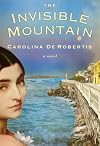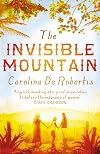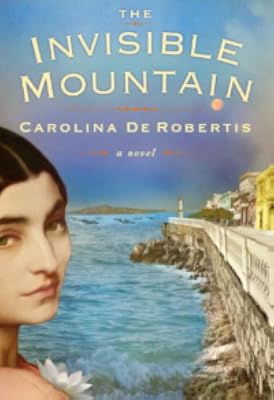
The Invisible Mountain
by Caro De Robertis
On This Page
Description
On the first day of the year 1900, a small town deep in the Uruguayan countryside gathers to witness a miracle—the mysterious reappearance Pajarita, a lost infant who will grow up to begin a lineage of fiercely independent women. Her daughter, Eva, a stubborn beauty intent on becoming a poet, overcomes a shattering betrayal to embark on a most unconventional path. And Eva's daughter, Salomé, awakens to both her sensuality and political convictions amid the violent turmoil of the late show more 1960s.The Invisible Mountain is a stunning exploration of the search for love and a poignant celebration of the fierce connection between mothers and daughters.
. show less
Tags
Recommendations





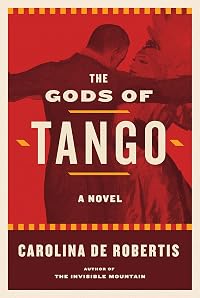








Member Recommendations
Member Reviews
First off, I'd like to exorcise a song that's been stuck in my head for a couple weeks--when my parents saw me reading this, they started singing Donovan's "There Is a Mountain," and every time I picked this up since, it would loop in my head incessantly. Maybe I'm free now?
But seriously, this is a wonderful book. It is lush and evocative, set primarily in Montevideo and focusing on the cultural and political life of Uruguayans. I was also utterly ignorant of this country--part of the reason I chose it for this year's Read Harder challenge--so all the events were shocking and enthralling, sending me to do some research of my own. It was painful for me to take so long to read it because every time I opened the book, I just wanted to curl show more up on the couch with a cup of hot tea and lose myself in the atmosphere and tumultuous lives of Pajarita, Eva, and Salomé. (This is saying something for me--a light spoiler alert/trigger warning:each woman suffers physical and sexual assault as well as psychological abuse --if I wasn't so invested in their lives, I would have had to put it down.)
It was a slow burn of a book, I must admit...there is SO MUCH covered in 360 pages. I would say it is plot-driven, and this bugged me a little in the beginning as I felt I needed to get to know the characters a little better. However, as it went on, the characters deepened (at least for Eva and Salomé--perhaps Pajarita is meant to remain inscrutable), and by the end, I was crying for everyone in the book. I was wondering how De Robertis would wrap up these storylines by the end, and boy, did she ever...and so beautifully.
I first became acquainted with De Robertis after reading her essay, "Every Day of Her Life," in [b: Count on Me: Tales of Sisterhoods and Fierce Friendships|13259259|Count on Me Tales of Sisterhoods and Fierce Friendships|Las comadres para las Americas|https://images.gr-assets.com/books/1339799786s/13259259.jpg|18460758], and after this, I am certain I will be reading the rest of her work. I can't wait to lose myself again.
********
Read Harder: A book set in Central or South America, written by a Central or South American author show less
But seriously, this is a wonderful book. It is lush and evocative, set primarily in Montevideo and focusing on the cultural and political life of Uruguayans. I was also utterly ignorant of this country--part of the reason I chose it for this year's Read Harder challenge--so all the events were shocking and enthralling, sending me to do some research of my own. It was painful for me to take so long to read it because every time I opened the book, I just wanted to curl show more up on the couch with a cup of hot tea and lose myself in the atmosphere and tumultuous lives of Pajarita, Eva, and Salomé. (This is saying something for me--a light spoiler alert/trigger warning:
It was a slow burn of a book, I must admit...there is SO MUCH covered in 360 pages. I would say it is plot-driven, and this bugged me a little in the beginning as I felt I needed to get to know the characters a little better. However, as it went on, the characters deepened (at least for Eva and Salomé--perhaps Pajarita is meant to remain inscrutable), and by the end, I was crying for everyone in the book. I was wondering how De Robertis would wrap up these storylines by the end, and boy, did she ever...and so beautifully.
I first became acquainted with De Robertis after reading her essay, "Every Day of Her Life," in [b: Count on Me: Tales of Sisterhoods and Fierce Friendships|13259259|Count on Me Tales of Sisterhoods and Fierce Friendships|Las comadres para las Americas|https://images.gr-assets.com/books/1339799786s/13259259.jpg|18460758], and after this, I am certain I will be reading the rest of her work. I can't wait to lose myself again.
********
Read Harder: A book set in Central or South America, written by a Central or South American author show less
As far as I'm concerned, this is a perfect book. It tells the story of three (or four) generations of the one Uruguayan family, and in particular three women: Pajarita, her daughter Eva, and her daughter Salomé. It's very left-wing, with most of the characters having leftist sympathies of some description (but not, unsurprisingly, wealthy Argentine doctors) and there's representation of transwomen and same-sex attraction.
I guess in large part I loved it because it talks about the struggles of working-class women in twentieth-century Uruguay, and the women here are defiant and bold and determined to define their own lives. They do suffer, but they bounce back. It is frustrating, as a reader, when injustices happen that are never really show more avenged, but it's also satisfying to see these characters moving on with their lives and not, for the most part, just being crushed.
The book ends on a sad note, but for me it was really touching, and I even started crying about five pages from the end. I really recommend this book, particularly for anyone interested in South America and its history – and especially if you've been to Montevideo or Buenos Aires, because even though I haven't been to either place for long it evoked them very well – gazing out at the endless blue of the Río de la Plata from La Rambla in Montevideo, or the stark contrast between the Buenos Aires neighbourhoods of San Telmo and Recoleta. Its depiction of Rio de Janeiro is probably similar, although that one I can't say.
A parting note though – even though it was definitely worth it, trying to get a copy of this book was really damn hard (although, as I discovered, not as hard as trying to get a copy of de Robertis' second book, Perla!). I prefer not to buy paper copies of books because then I have to find room for them in my overly-cluttered house and they're usually much more expensive... but getting an electronic copy was a nightmare. For some reason, not only has the publisher decided it has to be absurdly expensive ($12!) but it's also decided to put geolocks on it, such that most ebook sellers won't sell it to Australians. Eventually though, I found that I could buy it from Diesel eBooks, and I breathed a sigh of relief. I'm not really sure why Random House is so intensely determined to prevent people from buying their books, but uh... yeah. That was by far the worst part of this book. Get your act together, Random House. show less
I guess in large part I loved it because it talks about the struggles of working-class women in twentieth-century Uruguay, and the women here are defiant and bold and determined to define their own lives. They do suffer, but they bounce back. It is frustrating, as a reader, when injustices happen that are never really show more avenged, but it's also satisfying to see these characters moving on with their lives and not, for the most part, just being crushed.
The book ends on a sad note, but for me it was really touching, and I even started crying about five pages from the end. I really recommend this book, particularly for anyone interested in South America and its history – and especially if you've been to Montevideo or Buenos Aires, because even though I haven't been to either place for long it evoked them very well – gazing out at the endless blue of the Río de la Plata from La Rambla in Montevideo, or the stark contrast between the Buenos Aires neighbourhoods of San Telmo and Recoleta. Its depiction of Rio de Janeiro is probably similar, although that one I can't say.
A parting note though – even though it was definitely worth it, trying to get a copy of this book was really damn hard (although, as I discovered, not as hard as trying to get a copy of de Robertis' second book, Perla!). I prefer not to buy paper copies of books because then I have to find room for them in my overly-cluttered house and they're usually much more expensive... but getting an electronic copy was a nightmare. For some reason, not only has the publisher decided it has to be absurdly expensive ($12!) but it's also decided to put geolocks on it, such that most ebook sellers won't sell it to Australians. Eventually though, I found that I could buy it from Diesel eBooks, and I breathed a sigh of relief. I'm not really sure why Random House is so intensely determined to prevent people from buying their books, but uh... yeah. That was by far the worst part of this book. Get your act together, Random House. show less
This excellent debut novel tells the story of three generations of women - Pajarita, Eva, and Salome - against the backdrop of Uruguayan history of the 20th century. The structure of a multi-generational family story that tells personal stories with an epic sweep is familiar in Latin American literature, but this novel goes more for gritty rather than magical realism. This is a fascinating novel and I enjoyed learning more about each of the women as their story develops, and sad when they are reduced to background characters when the narrative moves on to the next generation. The final section with Salome imprisoned by the brutal Uruguayan dictatorship is particularly gripping.
The Invisible Mountain by Carolina de Robertis
Carolina de Robertis writes with a passion as deep and intense as the tango, the thread that holds so much of South America together. The Invisible Mountain is a lyrical narrative on the tides of life in Uruguay throughout the twentieth century. As symbolic as the traditional shared cup or gourd of mate, Ms. de Robertis has a unique talent that embraces everything within the lives of three generations of women and their families. She conveys imagination and imagery exquisitely.
The novel begins with the introduction of the main characters' origins prior to 1900 to set the background for the story to come. A young man escaping a brutal life in Italy, and an infant girl whose mother dies in show more childbirth and is blamed by her father for the death. A miracle happens New Years Eve at the turn of the century which saves her life. From this point on the real story begins. This is the first generation, and the baby, Pajarita, will become the glue that binds the generations.
The book is divided in three sections: Pajarita, Eva, and Salome. Separate yet intertwined, these three women, grandmother, mother, and daughter, live through the turbulence of coups, revolutions, despair, hope, passion, and always the rhythm of life and country. Three very distinct women. Pajarita keeps her family fed when her husband disappears by selling the herbs and treatments she has learned at the local butcher shop, along with her personality and advice. Though set primarily in Montevideo, Uruguay, Eva, a poet, moves and marries in Buenos Aires, Argentina in the regime of Peron, before fleeing with her husband and family in the night back to Uruguay. Salome, in her teens, wants nothing more than to save her country and becomes a Tupamaro, a revolutionist.
This book is inspirational, historical, powerful and passionate. I became deeply invested in it, even feeling the music running through the background as if to say I am here, I will not be forgotten. Listen. Feel. show less
Carolina de Robertis writes with a passion as deep and intense as the tango, the thread that holds so much of South America together. The Invisible Mountain is a lyrical narrative on the tides of life in Uruguay throughout the twentieth century. As symbolic as the traditional shared cup or gourd of mate, Ms. de Robertis has a unique talent that embraces everything within the lives of three generations of women and their families. She conveys imagination and imagery exquisitely.
The novel begins with the introduction of the main characters' origins prior to 1900 to set the background for the story to come. A young man escaping a brutal life in Italy, and an infant girl whose mother dies in show more childbirth and is blamed by her father for the death. A miracle happens New Years Eve at the turn of the century which saves her life. From this point on the real story begins. This is the first generation, and the baby, Pajarita, will become the glue that binds the generations.
The book is divided in three sections: Pajarita, Eva, and Salome. Separate yet intertwined, these three women, grandmother, mother, and daughter, live through the turbulence of coups, revolutions, despair, hope, passion, and always the rhythm of life and country. Three very distinct women. Pajarita keeps her family fed when her husband disappears by selling the herbs and treatments she has learned at the local butcher shop, along with her personality and advice. Though set primarily in Montevideo, Uruguay, Eva, a poet, moves and marries in Buenos Aires, Argentina in the regime of Peron, before fleeing with her husband and family in the night back to Uruguay. Salome, in her teens, wants nothing more than to save her country and becomes a Tupamaro, a revolutionist.
This book is inspirational, historical, powerful and passionate. I became deeply invested in it, even feeling the music running through the background as if to say I am here, I will not be forgotten. Listen. Feel. show less
It's difficult to believe that this is a debut novel. The prose is exquisitely rendered but never overdone, and the characters seem to come to life on the pages.
Covering the lives of three generations of women: Pajarita, Eva, and Salome, the novel moves from Uruguay to Argentina and back again, tracing wars, revolutions and history as it traces the lives of these three fascinating women. It is well-researched and effectively transports the reader to South America.
This is a book that you can truly disappear into; I found myself almost disoriented when it was time to put the book down. To me, this is the mark of a great writer-- when the reader can truly live inside the story. A very highly recommended novel.
Covering the lives of three generations of women: Pajarita, Eva, and Salome, the novel moves from Uruguay to Argentina and back again, tracing wars, revolutions and history as it traces the lives of these three fascinating women. It is well-researched and effectively transports the reader to South America.
This is a book that you can truly disappear into; I found myself almost disoriented when it was time to put the book down. To me, this is the mark of a great writer-- when the reader can truly live inside the story. A very highly recommended novel.
This novel should have a two-star review based on the first 250 pages, but I bumped it up a star for its strong ending. I couldn't escape the thought that I was essentially reading Marquez-lite - which isn't a fair comparison, but one that The Invisible Mountain invites. Particularly irksome is the emphasis on the poetic skills of some of the characters, but when we actually get to read some of the poetry it seems overwrought and amateurish. This is the same criticism I had of _The Song is You_ - if you're going to talk about someone writes brilliant poetry/lyrics, your examples better support this assertion.
Despite these complaints, it was interesting to learn about Uruguayan history, and the ending was powerful and unsentimental. show more Worth reading, but nowhere near a classic. show less
Despite these complaints, it was interesting to learn about Uruguayan history, and the ending was powerful and unsentimental. show more Worth reading, but nowhere near a classic. show less
This extraordinary debut novel tells the recent history of Uruguay through the lives of three generations of women and their friends and families. Pajarita, born the youngest child of a small rural family, vanishes mysteriously while still an infant. On the first day of the 20th century, she reappears in a tree—the miracle child who heralds the change of centuries. Her daughter, Eva, is forced to leave school when she is only ten to work in a family friend’s shoe store. Suffering years of abuse at the hands of this supposed friend, Eva finally escapes the store to work as a waitress in a bohemian café where she makes the acquaintance of the poets who congregate there and finds her own creative aspirations soaring. Eva’s daughter show more Salomé, raised in the ground-breaking 1960s and inspired by the revolution of Ché Guevara, finds herself recruited into a cell of Tupamaros, extreme revolutionaries seeking to overthrow the oppressive regime now in power in Uruguay. Captured eventually, Salomé is tortured and imprisoned for over ten years before being released into a new and very changed Uruguay.
Enchanting, with touches of the magical realism so characteristic of South American literature, “The Invisible Mountain” is also funny, heartbreaking, and beautifully written. These generations of women come alive on the page and, through them, so does the history of an entire country and its diverse peoples. Highly recommended. This book stands with the finest of South American literature, rivaling Allende, Cisneros, and Alvarez for lyricism and power. show less
Enchanting, with touches of the magical realism so characteristic of South American literature, “The Invisible Mountain” is also funny, heartbreaking, and beautifully written. These generations of women come alive on the page and, through them, so does the history of an entire country and its diverse peoples. Highly recommended. This book stands with the finest of South American literature, rivaling Allende, Cisneros, and Alvarez for lyricism and power. show less
Members
- Recently Added By
Lists

Recommend the 20 best books you've read in the last five years
2,168 works; 606 members
Author Information

8+ Works 1,665 Members
Carolina De Robertis is the author of Perla, The Invisible Mountain, and The Gods of Tango. She is the recipient of Italy's Rhegium Julii Prize and a 2012 fellowship from the National Endowment for the Arts. (Bowker Author Biography)
Awards and Honors
Awards
Distinctions
Common Knowledge
- Canonical title
- The Invisible Mountain
- Original title
- The invisible mountain
- Original publication date
- 2009
- People/Characters
- Pajarita; Ignazio Firielli; Eva Firielli; Dr. Roberto Santos; Salome Santos; Eva Perón
- Important places
- Uruguay; Argentina
- Epigraph*
- Ein Schweigen, so tief, dass Hoffnungslosigkeit verblasst. Berge, so hoch, dass Hoffnungslosigkeit verblasst.
Clarice Lispector, Nahe dem wilden Herzen - Dedication*
- Yaya und Pam - dieses Buch ist für euch
- First words*
- Manche sagen, sie flog, andere sagen, sie fiel.
- Last words*
- (Click to show. Warning: May contain spoilers.)'Victoria', schrieb sie, 'mein liebster Schatz, endlich!'
- Original language
- Spanish
*Some information comes from Common Knowledge in other languages. Click "Edit" for more information.
Classifications
Statistics
- Members
- 343
- Popularity
- 92,465
- Reviews
- 26
- Rating
- (3.99)
- Languages
- 7 — Dutch, English, French, German, Italian, Norwegian (Bokmål), Spanish
- Media
- Paper, Audiobook, Ebook
- ISBNs
- 30
- ASINs
- 6